Episode 44 - Vijay Somannavar
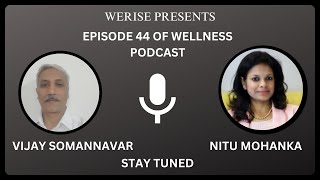
In this episode of Veerai's Wellness Podcast, host Neetu interviews Vijay Somannavar, a former senior IT executive who transitioned into the wellness space after two decades at IBM and Kindred. Vijay shares his personal journey of feeling unfulfilled despite career success, which led him to explore self‑awareness through Vipassana meditation, a compassionate meditation coach, and corporate mindfulness programs. He describes how the practice of mindfulness reshaped his perception of work, relationships, and personal well‑being, highlighting the detrimental effects of perfectionism and over‑identification with outcomes. Vijay explains how he later built corporate wellness initiatives—mindfulness, yoga, stress‑management, and emotional‑intelligence training—citing client transformations such as reduced insomnia, pain, and rumination. The conversation delves into why many people avoid sitting with themselves, the lack of self‑awareness training in traditional education and Indian Gurukul systems, and the need for a “self‑awareness is the master key” mantra for corporate wellness. Practical advice is offered for over‑thinking and acute stress: shift from mental narration to direct sensory awareness, accept emotions without resistance, and cultivate compassion toward oneself. The episode concludes with Vijay’s call to live fully in the present moment, embracing acceptance and awareness as pathways to creativity, productivity, and holistic well‑being.
Chapters
Hello everyone and welcome to a new episode of Veerai's Wellness Podcast. And today we have Vijay Somanar with us. Vijay is a software developer and he has been in the corporate for a very long time, but he has moved to the wellness industry. So Vijay, this is something which is very interesting, and because this is a wellness podcast, we would love to hear about what you were doing earlier and why you moved into this wellness space now. A huge welcome to you, of course. Uh, yeah, so our audience is excited today. Huge welcome. And coming back to my question, because this is something I am very excited to know about.
Yeah, thank you, Neetu, for hosting me on this podcast. Um, as you said, I'm from IT industry, started my journey as a software developer and then went on for about 20-25 years in that industry. Lastly, I worked for IBM Kindred and as an associate director, and it was enough, right? Almost 2 and a half decades of work. A lot of learnings happened basically, um, in this 20-25 years. Um, uh, did a lot of work in the outside world and It so happened that I had everything, and then still something was missing in me. That satisfaction was not there, always felt lacking something. So it's a problem if I don't have many things, then if I'm unhappy, that's okay. But if I'm unhappy even after having everything, if that fulfillment is not there, if that contentment is not there, then It's really painful.
I understand. And relatable.
And that made me start thinking about, uh, what happened, what was happening. And one side, but what we are, what I am, uh, is on the other side. So the journey started inside and towards self-awareness, because all the time I was seeking, I was doing, I was thinking, all the time in that mode of performing, etc. And looking mostly at the social expectations, corporate expectations, family expectations, more outwardly driven, trying to convince everyone trying to create impressions, etc. So self-awareness, once I started thinking about it, started taking steps back, and, um, it's an ongoing journey, but the inner journey and the way I started looking at the work changed. I was basically a perfectionist. From the work perspective as well as in the social environment, and I had believed strongly in certain aspects, and I used to set high standards for myself and of course expect the same thing from others as well. So it was impacting my team, it was impacting my own personal relationships, including friends circle and all. But later on, I realized that everyone was trying to accommodate me and trying to manage it. Otherwise, it was not helping anybody. And first of all, I was hurting myself by putting such standards and then not understanding others' requirements or the needs, including myself. It affected my own close circle, including parents, spouse, kids, close friends, and close colleagues. And then when I realized, that sense of openness, spaciousness started arising inside.
How did this awareness come and where did the transition start? Something must have happened when you finally like, okay, now I need to figure out, now I need to move on from this old me to the new me. What exactly happened at that time?
Yeah, there were a couple of things that happened simultaneously. One was related to like enough is enough, right? Uh, that striving is going on and, uh, seeking for something which, um, exactly can help. And I really know that, yeah, this is not all right. Whatever is happening, it's not all right. Something is missing and there is something being looked at. Always seeking for something that helps me. And then came across a couple of elements. One, luckily I would say, one was Vipassana meditation at that time, and also got associated with some other organizations like Pyramid Valley, etc. And I came across one more lady who was a meditation coach and who took a session for us In fact, the first session I attended was in a family function. It was a busy function, and in the corner of a room or corner of the hall, she was conducting a meditation session for 5 or 6 people. And somebody told me, 'Yeah, Vijay, you are interested in this, no? There is a meditation coach, go there, attend.' In this house, how come one can conduct meditation session in the middle of wedding? Yes, in the middle of— it was housewarming ceremony, in fact, and she was conducting a session. There were hundreds of people, but she was conducting it only for 5 or 6 people who were interested. And I went and sat there. I hardly listened to whatever she said, but she was still so compassionate and, uh, so much connected. And then realized that About 8 years before that, she had multiple issues with her personal life as well as professional life, and she had multiple cancers, she had multiple suicide attempts, etc. It happens with many of the high-performing individuals. And then she had given up hope, and then somehow she came across meditation and survived and From her story, I understood that for the last 8 years she had not taken even a paracetamol. That was the transformation. And she was so charming, and you cannot believe she went through such a bad phase of life. It was amazing. And then I felt, yeah, this is what I was missing, right? And then, of course, the journey continued from there. And at the same time, there were caught wellness programs, and, uh, there was— there were community services that were happening during— within IBM and Kindred. I was a community lead, a mindfulness community lead, and also went through some programs that were conducted by Oxford and International Organization for Science and Mindfulness, etc. There was a tie-up And that made me think deeply into it. And wow, in the span of about 7 to 8 years later on, I came out and then started on my own. So basically into training space, personality development, executive traits development, and then of course stress management, emotional intelligence, organizational development, etc. So it's—
yes, so I just want to know, because you mentioned such a nice story about of being introduced to meditation, you know, in that family function. When you first experienced meditation for yourself, how did it make you feel? What was the feeling like?
For the first time, it was not much different for me because of the experience that we had there. It was not the right environment, I would say. And it was, of course, done by a very compassionate teacher. And later on, I requested her to conduct one such session within IBM. It was wonderful, actually. Her session was wonderful. She took it for about 30 minutes. And at that time, I had a team of project managers, and we all had gathered for that session. That was really amazing, even though I did not continue with that practice at that time, but it was wonderful. But more than that, the influence the teacher created on all of us was enormous. The transformation that she herself had gone through and the way she explained the things, it was so heart-touching and transformative in nature. And that made all of us think, start thinking twice about what exactly we were doing and how, how we should continue to work rather than what. What was all right, whatever we were doing, it was all all right, continuing with our own learnings and being professionals, but on the sideways how to do what we are doing, what we were doing, that those attitudes, attitudes of mindfulness, it started pitching in, right? Anyway, I have a lot to spend working on, on the profession, but can I do the same thing with a sense of alertness, with a sense of mindfulness, with a sense of being there rather than doing to complete the work.
Yes. So Abhi, uh, when you are doing these corporate, uh, programs on mindfulness and yoga, so are there any stories that's coming up where people are feeling transformation because of these wellness, uh, you know, activities?
Yes, definitely. Uh, of course it was my personal journey to start with. I myself experienced it, and then the same thing is experienced by various clients at different levels. In the sense, there were people who had issues with— mental issues, basically, and that was affecting their physical well-being. It could be starting from anywhere, starting from sleeplessness, insomnia problem, pains, excessive amount of pains in the body, and various types of depression type of types of symptoms. From there, sitting comfortably for 1 hour during the meditation sessions and allowing the things to happen. Otherwise, they were struggling to sit even for 5 minutes. For meditation. And also, um, always that resistance to the experience was there. Mindfulness is all about noticing, not seeking. It's all about being instead of keep on doing, doing, doing. It's about sensing instead of thinking. That overthinking part of it— thinking is okay, but Thinking for the sake of thinking, doing for the sake of doing, one after the other. It so happens, right? Uh, I don't have any work today, or work now, for now. What should I do? I need some TV, or I need some mobile, or I need somebody to talk to. That's the mindset. And if that's so much of compulsive thinking, compulsive doing, compulsive seeking one after the other, our own wants. It, it was, it was, it creates a lot of problems, and it was experienced by a majority of the clients, majority of the participants.
Do you feel it's more about people, uh, being scared of spending more time with themselves And that is why they keep seeking to do something else so that, you know, they do not have to sit with their own mind and, you know, be a party to whatever is going on there. Is there a possibility that this could be a reason why we are seeking, you know, all the time?
Yeah, that's true. We always seek. I was looking at your— one of the posts as well today related to friendship. It was an insightful post. Thank you for sharing it.
Find your tribe one.
Yes, yes, it was wonderful statement, right? So in the same way, there is a tribe here also, right, sitting. And see, whatever the relations we might have, be it friends or other relatives, They are there only for a particular time period, and most of the time I'll have to spend time with myself anyway. So what helps is what relationship do I have with myself? Am I so bad to even spend a minute with myself? Otherwise, we are always seeking something else, even to spend time. So there, once self-awareness started kicking in, I started realizing that there is an experience inside me, or we can call it as me, and it is seeking for— it is also seeking for something, some recognition, somebody to listen to it. The body is always talking to me, but am I listening to it? It is talking to me through various ways, through the sensations of the body, through the emotions in the mind. It wants to say something to me, right? It is even creating so many toxins inside because of being the stress or whatever it is. In a way, it is saying something. It is trying to say something to me. Can I listen to it? And how do I listen? Simply being aware.
So Vijay, sorry, I'm cutting you in between because I will lose this line of thought. So we do understand this awareness is important, but everybody, all of us, you know, even you and me, we have come across this at a very late age, right? Why do you think we are not trained to think this way already? Because this is the way of life, right? So why do you think— where are we failing? What is going wrong? Why are we not aware of being aware of ourselves?
Yeah, I think in our entire education system and even our family systems, society It teaches us to do the things. It teaches us to learn the things. From where? From the books, from our external experiences, and from based on the hands-on, whatever the work I am doing. But it never teaches us to listen to ourselves. And in my class, I keep asking Do you know how many times you felt agitation at that moment? It will be known only after a few minutes or sometimes few hours. Yeah, somebody said to me at that time, probably I was agitated. It is not self-awareness, it is just self-information. But am I feeling it now? Is the agitation is here now? Whenever it arises. In the same way, other mind states as well. This element, this, um, information, or this education is not at all available anywhere. Even in any of the books, it's not available, unfortunately. But in the West, it is a lot more acceptable in the name of mindfulness. I keep hearing most of the sports persons there and the professionals in the field of army and other defense areas, they have been regularly practicing mindfulness meditation. But in the East, I mean, it is lacking due to some reason. I don't know what happened.
You think, you know, the English STEM system being brought in actually killed our Gurukul system. Because I'm a big, you know, fan of the Gurukul system and, and the, you know, exact syllabus. I'm not— I haven't completed the whole syllabus myself, but I have read a lot about the Gurukul system and how the focus was on building the person itself, building the talent that the person has innately. But I think that is being overlooked a lot by, you know, the regular education system where everybody has to go through the same process. Despite people being different, despite children being different, and more so, I think, uh, life education is missing. I, I strongly believe that. My daughter is homeschooled, and, uh, you know, I know, you know, and my son is schooled, by the way. So I can totally see the difference, you know, on how both the children are growing up. And, um, and it has got nothing to do with the kids, right? It's more about the environment they are getting. So possibly, yes, we can, you know, circle back to the education system again someday. But today, because most of our viewers are from corporates, I would like to know, uh, what is your mantra for corporate wellness? One-line mantra.
Again, the same thing. Self-awareness is the master key that opens the door for well-being, overall holistic well-being. The moment there is self-awareness, it's something like this. Awareness is a powerful— I can call it a superpower that human beings have, because cognitively I cannot understand what is right, what is wrong. It is just my perception, what is good, what is bad. There is no way to understand it correctly for me because based on my perceptions I'll be deciding. But awareness is such a powerful tool, you don't need to be worried about good or bad, right or wrong. In the sense, for an instance, if there is anger in me, the moment the awareness is— there is awareness of anger, at least the reaction part will stop. And instead of reaction, there will be a response. Thoughtful, skillful response will be there.
That I am being angry.
Yes, there is anger in me, and then I'll be reacting thoughtfully.
Because I disassociated myself with the anger, that okay, there's anger and this is me. So now we are separate, and immediately, you know, the emotion comes down. I think that's what you are trying to say.
Yes, yes, the emotion comes down, right? Anger emotion. On the other If there is gratitude— gratitude is also another emotion. What happens when I am gratitude and when I am aware of it? It increases. Just see the beauty. When the emotion is negative, when the awareness is added to it, it decreases. When it is positive, when awareness comes to it, it increases. So there it is, taking care of everything on its own. We just need to trust that self-awareness and go ahead. It shows us the path. So being present, being attentive, alert, that opens up the space in us, and that makes us more creative in whatever we do, right? Not thinking Thinking, busyness, etc., will not help us being creative or being more efficient. It is only the spaciousness, that awareness that we bring into the work, that helps us to be more productive and also more creative. And also, as we are non-judgmental in that alertness, we allow the things to happen and we collaborate easily. We are fine with anybody's opinions. We don't judge them. It is non-judgmental attitude, right? And there is a sense of curiosity. So automatically the relationships will start improving. So there is no I there who is trying to prove oneself, right? So it's just awareness is there.
Yeah, I think also this is, you know, better said than done. For those who have not experienced it, so say for example somebody who's watching this podcast and the person is going through overthinking problem, right? So what is a tip that you would like to leave for that person so that he can, you know, immediately control his emotions of overthinking? What is it that one should do, you know, without help, and somebody that that person should be able to help for himself in that time?
Yeah, overthinking is basically happening in the mind and it is related to the events and the people that caused that event. It is about them, it is not about me. And it will be that rumination or overthinking will keep happening and it is— most of it is imaginary. Okay, this person said that thing and this happened. What next, etc. So it is actually not there. None of it is there if we explore the experience of overthinking. What is there? Yes, I am sitting here. There is some work or whatever it is needs to be done here. Whatever I can sense, whatever I can feel. I can sense pressure in my head maybe at that time, right? There is some pressure in my head. And I can sense disturbances of sensations in my body. That I can sense. That is real, right? So whatever is directly, directly experienced— my experience at the bodily level, in the mind, and the sensations— that is real. Whatever I am seeing, that is real. Whatever I am hearing at this moment, that is real. Whatever I am touching or sensing That is real. So it is all about moving from thinking to sensing, sensing my own experience, sensing whatever the senses are saying here now in this moment. This clears majority of the problems related to overthinking. At this moment, I cannot think anything. If I am sensing something, yes, I am sensing. If it is cool, it is cool. If it is warm, it is warm. There's nothing to think about it, nothing to judge about it, right?
So this, what I have learned is that overthinking is the first step, you know, but then what happens is with these, you know, continuous patterns of overthinking, people move on to the second stage, which is acute stress. So if somebody is in that stage, what is your suggestion to that person to untangle himself or herself and come out of that stress situation at that time?
Yeah, uh, stress is something, um, it's a negative emotion. I would say the problem with all these negative emotions is that of course it's not actually a problem, uh, I make it a bigger, bigger problem by trying to push it away. So I habitually I have created a relationship with that emotion which is in such a way that I don't want this. Somehow I need to get rid of this. It has built into my memory and into my personality. Whatever I don't like, I want to push it all the time. But this stress, the experience of stress There may be pressure here in the mind, there may be some kind of pressure in the heart, everywhere that stress is being felt. It is no different than I. It is part of me. And if I am trying to push it away, trying to avoid it, I am trying to avoid myself and I'm not helping there. The stress is one part of it, but more painful is trying to avoid it, trying to come out of it. So what helps is listening to it. Okay, this is stress, it feels so and so.
All right, awareness and then acceptance.
Yes, acceptance. This is me. It's not somebody else's. Whoever caused the stress is different. It is like something happens to my finger because of some event and some people. Will I cut this finger and throw it out? No, it is part of me.
Part of me, totally, right?
This pain of stress or this experience, which is direct, direct one, not imaginary experience about the person or the event what happened. Is me, part of me. I don't— there is no need to throw it out or avoid it or resist it. The moment I learn to accept it as it is, 50% of the problem is solved, and it stops doing the harm to the body, whatever it was doing. Like, for example, increased heartbeat, And creation of a lot of toxins at that time, they get created because the body doesn't know whether it is physical threat or actually mental stress. So it creates a lot of toxins inside so as to protect ourselves from— it feels like external threat because I'm fighting and trying to resist something. The body thinks there is somebody else I am fighting with. But actually I am fighting with myself.
True.
Yeah, body doesn't understand that difference. It will— glands will do their work. So accepting it, acknowledging it, letting it be. It is okay not to like it. Yes, here is the pain, I don't like it. But can I be compassionate about that pain instead of trying to resist it? So if somebody else feels the same thing, that stress and trauma, what do we feel about that person? I feel compassionate towards that person. But if the same thing happens to me, instead of feeling compassion, I am feeling anger towards it. Why this is happening? I don't like it.
Amazing, amazing insights, Vijay. And I think, uh, you know, it's about time that we start acknowledging that, you know, these are the emotions I'm feeling it and it's okay. It's okay to feel the way we feel and just accept, become aware of it. And once you do that, then you can start working on it. But first acceptance, you know, first awareness and then acceptance needs to come.
Yes.
Then only we can, you know, work on resolving the issues. So I think great, great insights and this has been a learning that everybody would benefit from. Any last piece of advice with your, you know, decades of experience that you would want to leave for our audience, Vijay?
This is the moment, and I have an appointment— appointment with the entire cosmos. It's not small, right? And let's live this moment in the presence in the entire cosmos. It's not something to be lost. This moment will not come back. Yeah, not spend this moment seeking for something else in future or trying to impress somebody or something like that. Not doing, simply being, being one with myself, allowing everything, accepting. The moment acceptance is there, the resistance will reduce the resistance with the whole world and resistance with myself. So let's simply be the being and enjoy the life and do the doing. Then once we are being, then doing becomes easier.
Such words of wisdom, Vijayan. Thank you so much for coming and sharing your experiences with us. I'm sure the audience will take a lot from this podcast, and I hope even if, you know, one life gets transformed from this conversation. I think this is worth it.
Yes, definitely. It was wonderful.
Thank you so much for all the services you are doing.
Continue to do that. We will continue to walk in this path of self-awareness.
Thank you. Thank you. Have a great day.
More from Nitu


Eliminate Decision Making Fatigue. #growthmindset #hacks #positivevibes #life #motivation


I left my 3-year-old son in a store and I don't regret it...#corporate #parenting

The Box technique to control anger. #hacks #growthmindset #angermanagement #techniques #life

Plan your Sleep Cycle. #hacks #growthmindset #planning #shorts #sleep #lifecoach #positivevibes


How to get rid of Negative Thoughts. #growthmindset #negative #thoughts #positivevibes #hacks

Easy hack to track water intake. #hacks #growthmindset #positivevibes #techniques #lifeisbutadream

I earned 30 LPA at Deloitte, PwC, and Accenture but I still never got promoted. #growthmindset