Episode 7 of wellness with Sarita Mehra Pandey. #podcast #growthmindset #leadership #training
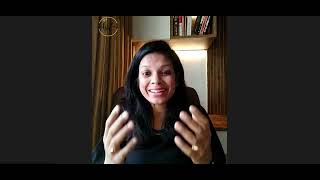
In this episode of Veerai's Wellness Podcast, host Nitu Mohanka interviews Sarita Mehra Pandey, a Chartered Accountant with 17 years of corporate experience who has transitioned into a core‑skills trainer. Sarita explains how her corporate background exposed gaps in accounting fundamentals and soft‑skill readiness, prompting her move from technical accounting to training. She discusses the breadth of her training portfolio—business communication, leadership, personal growth, and image transformation—emphasising that all core skills are inter‑linked and especially vital after the COVID‑era shift to remote work, where grooming and professional presentation regained importance. The conversation delves into the "generation gap" in today’s workplaces, highlighting how Gen Z’s desire for autonomy, rapid career moves, and digital resources clash with traditional hierarchical expectations, creating leadership challenges around empathy, communication, and conflict resolution. Both hosts stress the need for leaders to be empathetic, clear in expectations, and open‑minded, especially when younger leaders manage older teams or startups. Sarita shares personal wellness insights, noting that sleep, mental health, and balanced life dramatically improve productivity and relationships. She recounts a concrete training impact story where a senior manager resolved a hostile colleague relationship after a communication workshop, illustrating the practical value of external trainers who synthesize literature, provide customized solutions, and nudge participants toward action. The episode concludes with Sarita’s advice to professionals—especially Chartered Accountants—who consider a career shift: age is not a barrier, hard work, openness to learning, and embracing versatility are essential. The dialogue is conversational, supportive, and peppered with anecdotes, offering listeners actionable perspectives on leadership, soft‑skill development, and personal wellness.
Chapters
Hello everyone and welcome to yet another episode of Veerai's Wellness Podcast. Today we have Sarita Mehra Pandey with us. She is a Chartered Accountant with over 17 years of corporate experience. She is a military daughter, a military wife, and a core skills trainer. She is also a mother. So welcome, Sarita. Really happy to have you today. And please tell us about what you do in your own words.
Thank you so much, Neetu. Thank you so much for inviting me. Truly, uh, it's a pleasure to be here. Um, and well, yeah, uh, you've, I think, covered, uh, from one base to another, you've covered everything about me. Uh, so yeah, just like you, I'm also a Chartered Accountant. Um, my 17 years of experience that you just mentioned has been in corporate. I was in private practice then technical trainer, and now into core skills as a core skills trainer. I've been majorly operating in the corporate domain because that is what I— that is where I come from. And I think it was my— really my experience in corporate which made me understand that truly a gap existed, that it needs to be addressed. So I think that's somehow, you know, got me into this whole, uh, journey of being a corporate trainer from a chartered accountant.
Great, great. So, so many trainings that you organize, right? From business communication to leadership training to personal growth, uh, image transformation. I mean, which one is it that you feel most happy doing?
I think all across, um, See, until you are able to make a difference, uh, you are able to add value to the, uh, to the lives of people, whether it's on the professional front, is the personal front, um, it is a gratifying profession. And I think when we talk about core skills, uh, I really do not think that one is higher than the other, one adds more value to the other. I think they all build upon, uh, each other, you know, uh, Right from when we talk about leadership development, we talk about communication, we talk about etiquette, you talk about grooming. You know, with this, I think last 2 years of COVID 2, 3 years now, we saw people working from home and then, you know, the dressing up for work just went down the drain. And I think we have been continuously in that entire debate of, you know, does it matter? Does it matter what I wear? Uh, sorry to break everybody's bubble who thinks it does not, but trust me, it does matter. It does, because I think, yeah, so when you're talking about that deep down what you are, how you are, that matters, and your projection outside into the world, uh, matters. So, um, so yeah, so I think because even with the most successful people, you know, you, you, the grooming definitely something that, that sort of captures your imagination. And it is also something—
you don't want to walk into a room and see a person has not taken a bath for 3 days, right?
So while I may respect the fact that the person is probably a genius into his or her own domain and really have a lot of respect, yeah, that is probably not the kind of person I would want to hang around for a very long time. All respect, but I'm sorry, not my cup of tea. We get it. So Sarita, tell us your journey from being this chartered accountant to a trainer?
I mean, what has been the transition like? And I mean, what triggered you basically to move from this one very, very technical role to this soft skill training role? How was the transition and what was the trigger?
So I think the transition itself, um, very challenging, um, painful, but extremely gratifying. But I think at the end of the day, it was also, uh, something that was very necessary for me, uh, as a professional. Uh, you just mentioned in my introduction that I'm a military wife, and, uh, I was, I was into corporate sector, and then I had my son, and I, I went on a sabbatical. And as luck would have it, that was also, uh, the kind of time when, you know, my husband, uh, just moved a lot. At that point in time, since I was also on sabbatical, I kept moving with him. And, uh, I would take on— then I shifted into private practice because that I felt was something that could be managed better, you know, instead of, uh, of a job, of, you know, what I had been doing, uh, for until that point in time. And then we went to really smaller places, and that is, I think, that is where I sort of found the entrepreneur inside me, you know, where I would walk into this small, small offices, you know, expecting that they would have some sort of accounting, some sort of accounts department, and literally ask them for projects. So that is how it started. However, what happened over a period of time was that, um, Um, I realized that I was literally working from project to project. If I looked at a trajectory, a career, a progression, I did not see that growth and progression in myself. Except one wonderful thing happened during those years was that I got into, uh, strategic content writing. So I was associated with a lot of— I had been writing for a very long time, but that was the time I picked it up professionally as well. Uh, the other beautiful thing that happened, uh, during that time was that I started taking technical trainings. Uh, it had not happened for a long time, but it was— it somehow began, um, as an initiative from my end, uh, because I realized that a lot of my clients who would, you know, uh, onboard me for their finance and accounts— I realized the finance and account— their accounts would always be in a lurch because the people who were creating and making those accounts were not trained enough. They did not know, like I told you earlier also, they did not know debit from credit. They had learned some entries during their graduation days and they were just trying to like copy-paste everything here. So then I realized that concepts, that fundamentals were completely— they were just not there. And, um, I mean, come on, and the entire accounts is just on those 3 pillars, you know, and then once you know those 3 pillars, you are done, like this entire accounts, but nobody really concentrates on those 3 pillars. And I think that is how the technical training part of it started. And then they started spilling into core skills training for their customer-facing and client-facing staff. And I realized that I felt nice, you know, because like I said, when you're making, you see that you're making difference to people's lives, whether they're professional and personal, Um, that sort of made me take this, uh, decision that I will probably move to this side of the trainings as well. Uh, that was the whole idea I wanted to do. I did not want to move away from being a technical trainer, but I think, yeah, over a period of time, this was destined. So past 2 years or so, I've been purely into— in fact, now if a technical training session comes to me, I generally refer to people. I don't, I don't take it.
So it all started with accounting and then training for accounts, and then, you know, from that department you moved on to other departments, it seems, and then to the leadership. So you have seen the complete corporate ladder but in a different aspect, in a very, very different way.
And I mean, even during, uh, but I have to give it to the, my corporate association right at the beginning of my career, because I work with a lot of MNCs, MNCs with very strong value and, uh, values and systems. I learned a lot with them. uh, with very high standards of quality that they maintained, you know. Um, also my own role in corporate was that, uh, which sat between sales and marketing, uh, and finance. So it was never a purely finance and accounts role. And I think I have to really thank my initial bosses to have recognized this thing in me that, you know, she could sort of, uh, be good— she's a good communicator and she could sit here and not pick up a fight with everybody else.
So our stories are so alike. I mean, it's like I'm talking to my mirror. Wow, great. So Sarita, in your experience with, you know, training the leadership teams, uh, what do you think is the main core problem right now with the leadership in corporates?
Problem pretty much Neetu has, or is the same that always has been. Now it has become more pronounced, and I'll tell you why. I think the biggest problem is the same problem that happens at homes also. It's called generation gap. Okay. So I think every generation has this, uh, different way of working. Now, you know, when we talk about ourselves, we were conditioned by parents, uh, who, for whom work was, uh, was a need. You know, we, this generation ourselves, we moved from work being a need to work being a passion and a need. So, you know, it sort of fulfilled a lot of our— and we, I think, are the generation who started moving from one job to another. Hamsa bhaiye, people used to be like, they would join a company and they would either die from that company or, you know, they would get retired from that company. I think we just changed that entire thing. You know, we started changing companies. We started looking at personal growth also, maybe on a professional— in a professional arena. You know, for us, learning something from the job was important. So, you know, say at that point in time, if I told somebody that, you know, I'm leaving my job because I don't know, yeah, I'm, I'm not, I, there is not enough challenge.
I, I left one company because of the same reason. It was a KPO and within 4 months I got so bored because there was no challenge. There was no work. Most of the time we were dancing to prepare for the town hall. And I was like, no, I can't live my life like this. I have to move on, otherwise I'll become redundant. And, you know, coming from the kind of, uh, you know, uh, background that we come as chartered accountants, we are just so used to working hard that suddenly when you do not have that, you feel that gap and it's uncomfortable.
Absolutely. Because you're continuously learning, you know, those 4 years, 5 years, 6 years, whatever years you take to finish that course. Every day, every hour, I think you're learning something because otherwise you can't really complete the course, right? Absolutely. So I think so. Now when we talk about the generation gap within corporates, I think it is more glaring, uh, because this— the next generation, when we're talking about, uh, Gen Z, uh, they do not see— I think for them work has a very different meaning, you know. They have like— I think they're not— many of them are purely pursuing it for the passion They are not scared to jump the boats. They are not even scared. For me, the whole decision of shifting from being a CA to a core skills trainer, it happened over a period of time, maybe 10 years or so. This generation is not scared to do that. If it catches their fancy, they will immediately jump the boat. Also, I think the whole culture around how we looked at our gurus or how we looked at our bosses, That's completely—
now, now it's very, uh, so much resources now at the click, at this, you know, single click, and they can reach globally wherever they want. They can freelance. I mean, I think the Gen Z is just way more advanced than we could ever be.
Absolutely. And I think it is— this is why, you know, now when we talk about leadership, I think there we have to strike that balance, uh, you know, where even these young people are heard. Because let me be very, very— and I tell this to a lot of people, you know, uh, A lot of people, when they look at me when I'm entering, and you know, you're talking about leadership, right? So they do get a little this thing about the age because they want an aged, maybe a white-haired person to take leadership development or leadership training. And I always tell them that, you know, the biggest of revolutions that have happened in this world was started by fairly young people. You know, in fact, I think I'm on the wrong side of the age. So are you. So revolutions are not going to happen there. But yeah, I think, uh, experience, uh, cannot be negated at all. Uh, it's extremely important. So I think what's really happening right now is the, the whole way of doing things is so different that you now see that gap happening, and especially from during this COVID time, work from home, where, you know, the younger people sort of self-groom themselves. They were not groomed by their managers, they were not groomed by the leaders. So I think you see a lot of that independence, uh, the streak of independence and freedom, and they, they want that autonomy, they want that autonomy to take their decisions. And I think that has to be somewhere granted. And because of that, but however, you know, what happens when the person is not a right fit to that job, or the person is making mistakes? What do you do then, right? So that is where I think communication And the way things are being communicated has to change. You think you're going to be annoying as a leader? You think you can shout at someone and just get away with it? Ah, that is going to become very, very difficult because, um, this is one generation, parents, you know, they don't, they don't listen to their parents anymore. Why would they be listening to a random oldie?
You know, I think as a leader, this is topmost, uh priority to become empathetic and, I mean, understand the other person's problem also. That person must be going through something that you're not able to comprehend, and maybe that person is making mistakes because of that. Just sit, have a conversation, communicate properly, make your expectations clear. Because many a times, the onus is on the leader that they are not able to make their expectations clear. It happens to all of us. It happens to all of us, but the idea is in understanding that there is— could be a problem with us also.
Exactly. I think we have to be open-minded like that. And this is with the, uh, leaders with whom you have a generation gap. And now with startups coming in, we have very, very young leaders. There the situation is extremely difficult. They're so used to being that hustler, and I get it, you know. When even now, like, if I have to set up my own business and all, I know that I have to give in 14, 15 hours of my time to this. But then I have to understand the other person who I have employed doesn't necessarily have to do the same thing.
Absolutely.
So I think, and now you being in the, you know, the mindfulness and wellness space, you will, you will be able to appreciate this, that we are literally creating more and more hustlers, which is not a great thing. I do understand.
I have totally understood after having my own two startups. One of them completely failed, that sleep is the topmost priority for any human being to be productive and be able to do something properly in life. So right now, I mean, I think my topmost priority is always to my sleep, because if I can do that on time, everything else, you know, falls in place. So with a lot of hustling and, you know, being on that grind, I have understood that, no, your personal mental health, your personal productivity completely depends on how much you can sleep.
Honestly, I do think that these young people, young leaders should actually now go and sit with older leaders. No, really, I mean, I think they will get a better perspective because, you know, when you are young, you just feel, you know, but what you don't understand is that, you know, those 10 years are not— you're not— I'm not I'm not in my 20s now, I'm not in my early 30s, and I know the things I would have enjoyed doing at that time— now the time for doing those things is gone. I don't even have any interest in doing those things, that's a different thing. But you know, these are— I think life has to be lived in an entirety.
Yeah, life is all that one can ask for. If, if your career is the only thing that you're looking for, maybe, you know, it's good for you But in the long run, if you are not taking care of your family, your health, you know, your personal well-being, it will catch up with you.
Absolutely. Because I think having people around, people you can, you know, you can rely on, that is one important thing. But you don't see a lot of people, you know, giving that sort of importance to the relationship sides of the things, or people not giving any— this thing, look at DP. I think high blood pressure is something that's ailing every— everyone. It's ailing.
I have studied this subject so deeply because I was also having, you know, issues with my blood pressure, and I developed, you know, some chronic cholesterol problems also. So I started studying what is this, why it happens. It's all a construct of our mind. If we can start managing our mind, these problems absolutely goes away. Believe me, my diabetes, my thyroid, my BP, my cholesterol, everything is fixed now. Because I gave my health my topmost priority. And once I started doing that, everything else is falling into place, be it my relationship with my husband, with my children, with my friends, uh, those friends actually, uh, you know, who I want to keep in my circle, because not everybody needs to be in my circle of influence. Anyway, I mean, I have such good friendships. And then my work, my— I mean, it has doubled, tripled actually, just because I started taking care of my health. So I think having a well-balanced life is what we should strive for.
It is, it is great, great.
Sarita, tell me one thing. When you are taking, you know, these leadership trainings and when you are on stage, so has there been any moment, any event that has ever occurred where you were like, okay, this is it, you know, this is what I'm made for? Anything that you would like to share?
Um, wow. So I think I can think of quite a few, but I will just give you a very general, uh, this thing. Um, so there was, uh, quite some time back, uh, I had, uh, I was training these, uh, leaders. And, uh, so they were these top, uh, HODs and, uh, one level below those HODs, basically. So they were, uh, managers and their assistant, uh, managers. Small group, about 10 to 12, 10 to 15 kind of a group, if I remember correctly. And, um, so the— our— so we had these series of trainings, and one of those trainings was on communication and conflict. So, uh, so I was— I delivered that module, and, uh, then I think after another 15 or 20 days, we had the second, uh, training, which was to build upon that first training. And, uh, one of the, uh, HODs, actually, he said— he came to me, and it was a very simple thing. He said, you know, Last time you took that session for us, I, I was having this very conflicting, hostile kind of a relationship with one of the persons, and we used to— I used to, from my side, just avoid talking to him. So whatever was happening was happening on emails. And he said that you took that session, and the second day I called this guy to the conference room and we had a one-on-one talk about things that had— so there was certain baggage because of which their relationship had like permanently gone sore at that point in time. And he said, you know, I called him and I— we spoke about— and I told him that, you know, we are in professional environment. And, and he said now things are so smooth because now we talk to each other.
I think wellness is all about, you know, having the right environment around you, having supportive people around you. And we spend one-third of our life in, you know, our offices. Imagine not having the right kind of people around Just because something happened and we could not just get let go of that thing. I think a lot of people need this training.
And, and this is the reason when we, when we talk about trainings, we tell people that, you know, we are going to tell you what you probably already know, but you need that nudge and you need somebody to reinforce that belief. Maybe you have been thinking about, you know, going and talking to this person. A trainer comes into that equation. And there is a chance, there is a big chance. The chance just goes from maybe a 10% to an 80% that you will actually take that step and probably go. Yes. So, so this is one example. And then there are, there are so many, um, uh, cases, you know, where on LinkedIn, uh, I'm very active on LinkedIn. So a lot of these people, they, they, they approach me on my, on LinkedIn. Uh, they get on chats. Uh, there are times when I don't even remember having trained them, but then they, they come back and they say, you know, that This is something that made a difference in how we are at the workplace. It's not only at the leadership level, but it's like all across, you know, with the participants. I have a lot of participants who, when they know, quite a few of them, they know that I have been into content creation. A lot of times, you know, they come, they ask for your advice on these things. They are— if there is a communique that needs to be— that's going to go, they would want you to, you know, like take a look at it. First, ma'am, could you just— does it make sense? Is it making sense to you? So I think that is how you know that, you know. And of course, you also see how wonderfully, uh, they have developed those skills from that last time when you met them. And you know that they are making that endeavor to becoming better. And if they're asking for your advice, you know, they're, they're reaching out to you and they're asking for it, that means, you know, they see that value that you are adding to them. So, uh, so like I said, there's so many examples, but yeah, mostly when people just come back to you and they, they talk to you and they tell you that this is how you've made a difference to their lives, or they tried doing this and this was— and, and at times, you know, we try to do this but it did not work. Now that becomes a learning for me that it may not work every time, you know.
Wow, you're so open to learning. Really, really proud of that. And what are the most frequently asked questions that you get in these training workshops?
See, it really depends what kind of module you are sort of, you know, delivering, what kind of session you are taking. However, what I have seen with all of them is that they are looking at practical application of things. You know, we may talk about, listen, 4 matrixes of that time management and, you know, urgent and, you know, the base, the quadrant of base stage. And you may keep talking about it. Um, it's not going to help them until they understand how to apply it. So a lot of questions that come during these sessions, um, are to, you know, to really to, to understand themselves better and how to apply them.
And many a times I think they're also looking for an inspiration that, okay, if that person is able to do it, then maybe I can also do it. So I think being a leader, at least a coach for leaders, you have to be someone who's already doing that. I think that is when people start believing you and they start, you know, looking at you as an inspiration.
Um, I, uh, so, uh, uh, need to, uh, at the outset it does look very, um, what you're saying, yeah, it makes sense that if you have an experience in that and, you know, uh, however, I have seen a lot of leadership coaches good ones, uh, who have not had any leadership, uh, you know, uh, it is their zeal to learn and understand more. It is their zeal to, uh, probably expose themselves to that kind of literature. It is their zeal to, um, to deep dive into a certain topic. See, uh, when it comes to coaching, uh, in fact, when it comes to, uh, even training, uh, why are trainers needed? Uh, you do have people within the organization who can probably deliver a module on business communication. Why is a person who's going to come from outside, uh, going to do it? And I'll give— and the answer for that is, when I am already having a job and a home, it does not give me a lot of time to go through this tremendous literature on leadership tremendous literature on communication, public speaking, presentation. It does not. So what a trainer generally does is, uh, it's my work. It's my work to go through all that literature. It's my work to read. It's my work to try out things on myself, sometimes even on the participants, and see what is working, what is not working, right? And then bring all of that. Giving it to the participants, which is readily usable for them. See, as trainers, we are not— we don't give lectures. We are not professors. We are not teachers for sure, right? What really sets us apart is that we can try and make a very real difference into the way people do what they do, right? Right. It's not about, like we were talking about, it's not about me telling somebody in spoken English, listen, past tense present tense, past continuous, present. No, I'm never going to tell you that, but I will tell you where you are going wrong, and I can give you very customized solutions for that. Yeah, I think that is practical applications. Absolutely. We are— so most of the people, especially when in the corporate, they are— they do not want a lot of gyan. They are— they themselves, they're reading newspapers, they're doing everything. So they obviously are not again—
they want Right.
But how at that point in time when you're in the heat of the things, how do you control yourself? Forget about controlling yourself, can you do something which will not lead you to that particular point where you have to finally control yourself?
Right, totally.
So yeah, so I think practical application, uh, and real solutions, solution-centric, uh, thinking is extremely important, you know, when it comes to, you know, when you have to really give answers to the corporates because they come from everywhere.
Great, I'm so inspired by your work, Sarita, honestly. I mean, this is so, so inspiring. Any parting words that you have, you know, where any other chartered accountant, or maybe not a chartered accountant, if they want to take that transition in their life and try and make impact in someone else's life, what would your suggestion be to that person?
I think one thing that I can tell you is that for all of those who are going to be watching this podcast, I think you're never too old to make a transition. You are never— I'm certainly not old. However, neither am I. Hum hum, jawan hai.
Arhamisha rehenge.
So it's not really my own journey, I think, uh, you have to understand— stop, pause, and understand the person you are. You might be doing something and you might be like really good at it. For me, uh, being a Chartered Accountant, I mean, when it even came to our core areas of finance and accounts, uh, I love doing what I was doing. In no way was it— but I think sometimes you have to be practical. And I think as a person, you are so versatile. You know, every person is versatile. I, I, I don't believe for a minute that each one of us is born to do just that one thing.
I want to do 100 things. Absolutely. And fail at maybe 99, but it's okay. At least I tried 100 things of which I know that one works.
I, I have tried so many things. I failed on in so many things. I have, I have had so many starts. I have had so many restarts. Me too. It's, it's not funny because of the kind of situation, because I'm, I'm, you know, I'm associated with the military guy. So there have been so many restarts, there have been so many starts for me, um, but all of that now has come together, you know, in this particular profession. Because your experience as, as a person, your experience becomes so rich. The way you communicate with people, that maturity shows, uh, Mobi cheese. So, you know, sometimes, believe me, I've—
if you are somewhat like me, if you have to go back and change something, you wouldn't want to change a thing.
No, absolutely.
Because it made me who, who we are today, you know. It made us who we are. So I think it was needed for us to go through that entire journey to be here.
Absolutely. I think the two things really required is one, you should not be scared of the hard work that you have to put. And if you think it's going to happen without hard work, then let me tell you, even the richest of the people they can blow that entire stash of money in a day, you know. If so, the hard work has to be there. And second, I think that my— you have to open your mind to possibilities that we do not know everything, you know. There will always be somebody who will come into your life and then show you an entire different picture, and you would be like, oh, so I think if you're open with that, yeah, it's, um, that is all you need.
I think, uh, yeah, I think the biggest killer of growth is I know everything.
Oh yes, leadership trainings.
Great, superb. Sarita is so nice to talk to, always, always. You're so inspiring, and the, the vibe that you give is somehow just so, so good. Thank you so much for, uh, coming today, and, uh, I think, uh, we'll, we'll connect more and we'll do some work together soon.
For sure, for sure. Thank you so much. I think, uh, it was fun talking to you, and it is always wonderful to, uh, to talk about things that we are, you know, we are passionate, uh, about. And it's— it was always, um, actually wonderful to see and meet people who have had a very, I think, similar experiences, who started with, you know, like, we come from— and every time I meet another fellow Chartered Accountant, you know, and it's like, uh, oh wow, okay, how did you come here? Why are you doing this now. So I think that curiosity is, uh, is always there. And, uh, thank you so much for inviting me. It was—
thank you for coming, Sarita. This is something that I really cherish. Thank you.
Thank you.
Take care. Bye-bye.
Bye-bye.
Bye.
More from Nitu


Eliminate Decision Making Fatigue. #growthmindset #hacks #positivevibes #life #motivation


I left my 3-year-old son in a store and I don't regret it...#corporate #parenting

The Box technique to control anger. #hacks #growthmindset #angermanagement #techniques #life

Plan your Sleep Cycle. #hacks #growthmindset #planning #shorts #sleep #lifecoach #positivevibes


How to get rid of Negative Thoughts. #growthmindset #negative #thoughts #positivevibes #hacks

Easy hack to track water intake. #hacks #growthmindset #positivevibes #techniques #lifeisbutadream

I earned 30 LPA at Deloitte, PwC, and Accenture but I still never got promoted. #growthmindset