Werise Wellness Podcast Episode 27 with Ritu Goyal
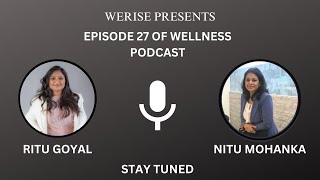
In this episode of Veerai's Wellness Podcast, host Neetu interviews Ritu Goyal, founder of Ease India Travel and self‑described eco‑travelpreneur. Ritu explains the concept of "eco‑travelpreneurship," describing how her company curates hyper‑local, experiential trips that prioritize environmental stewardship while preserving authentic cultural immersion. She shares her background as a 17‑year journalist, the family influence of road‑tripping, and the evolution of her business during COVID‑19. The conversation delves deeply into the personal challenges of entrepreneurship: a lopsided work‑life balance, burnout, and the need to set boundaries, delegate, and treat the company as an entity separate from self. Ritu recounts a pivotal two‑day retreat to an ashram to reset, and outlines her self‑care regimen—flexible routines, listening to her body’s sleep and nutrition cues, occasional dhyana (meditation), regular workouts, and the importance of not being a slave to rigid schedules. She discusses menopause, a hysterectomy, and how these health changes reinforce the need for self‑compassion. The dialogue also touches on the pressure on solo female founders, funding hurdles, and the misconception that ambition must equal relentless, dogged focus. Ritu advocates redefining ambition to include balance across personal health, family, and business goals, encouraging founders to adopt individualized well‑being practices and to view setbacks as opportunities for recalibration rather than failure. The episode concludes with practical advice for founders to prioritize mental, physical, and relational health alongside business growth.
Chapters
Yeah.
Hello everyone and welcome to a new episode of Veerai's Wellness Podcast. Today we have Ritu Goel with us. She is an eco-travelpreneur and she's the founder of Ease India Travel, where she curates experiential travel with inclusion and compassion. Thank you, Ritu, for coming to our show today. We are so excited to have you here.
Thank you for calling me, Neetu. Thank you so much.
So what is this Eco Travelpreneur, uh, if I may ask?
Um, so travelpreneur is the term that, uh, you know, became very popular about 2 years ago, I think in the pandemic time. So, uh, entrepreneurs in the travel space are called travelpreneurs. I wanted to add the eco to it because it's a very big part of what we do, uh, as a company. We always always— see, you can't force somebody, but we always, you know, when we send out emails and, you know, when we welcome people to the trips that they take with us, we always tell them that we are gently making some suggestions so you can start, you know, eco-friendly travel. Travel by its very nature is not friendly to the environment, you know, jet fuel and how much of pollution it causes, and the carbon footprint is really high. But we kind of like, you know, gently, like I said, tell people to save water and how they can do that on a holiday without, you know, marring their experience. So this is what Eco Travelpreneur stands for.
Oh wow! And if I have to go to one of your curated, you know, destinations, so what kind of experience can I expect? Sorry, this is a little off topic from wellness because the whole program is around wellness, but I got so excited, you know, listening to this. That I really want to know. I mean, what kind of experience can I have as, you know, someone who is visiting for the first time through you?
So let's put it this way, that we offer a lot of, you know, unknown destinations, and we also offer unknown experiences in known destinations. So what you can expect on a trip are hyper-local experiences, going in depth into the place, because I feel that you know, to uncover a place, you just— you don't need to be ticking off sites from your bucket list or from your wish list. You should be able to understand the very soul of that place. So interacting with the locals, you know, experimenting with the cuisine, even if you're a vegetarian. I'm a vegetarian, so, you know, despite being a vegetarian, being able to eat the local cuisine. And, you know, so those kinds of in-depth experiences are what you would get on a trip if you come with us. And all the itineraries that we build are based on my own travels. So I don't sell destinations that I have not been to. So I will never lift an itinerary off the internet just to sell it, which is why we have limited destinations, but we do the best we can in those destinations.
Travel is therapy, right? So I can already imagine myself at a place where, you know, I'm so disconnected and I'm just trying to connect with the nature. When you started about that, and I'm like, oh, this is therapy.
Yes, it is. It's definitely therapeutic.
So why, uh, you know, Ritu, uh, I mean, um, I feel that there is something that has been on your mind, that you are so passionate about travel, you're so passionate about, uh, you know, being eco-friendly. What is the connect? I mean, I'm not able to make that connect, uh, about, about your passion for this whole thing, experience, and then somewhere you have yourself been It seems like you're just so true to yourself.
Thank you.
But what makes Ritu so true to herself? What, what is the story behind it?
I, um, that's a tough question for me to answer and pretty unexpected question too. So, um, I, I think, uh, you know, prior to starting this company, I was a journalist for about 17 years. So the one thing that, uh, uh I've always tried to do is bring an element of passion, not— and at the same time, I also say that I always tell young entrepreneurs that passion is highly overrated because when you start a company, at the end of the day, passion can only take you so far. But I think the reason why I'm continuing to do what I do despite the pitfalls, like COVID was a massive one for us, and despite the hurdles and the roadblocks, and there are so many challenges in our business. Because, you know, I come from a family where, you know, we— my parents were avid road trippers when they were young, when we were children. So I guess it is also that connect to, you know, the whole adventure and the enthusiasm when it comes to travel. And, you know, this whole idea of experiencing, because we never stopped ourselves from, you know, experiencing, you know, all the things that come along as part of the whole deal of travel. So I try to bring that into my business, and that's That's why there's so much of focus. It's a very customer-centric business. We are very, very focused on our client, on our guest. And I feel that when somebody gives me the money to execute a holiday, I have to do the very absolute, the very best that I can. There is no way that we could do second best or we could just say that, oh, we're not able to pull this off. So promises are made to be kept. So that's you know, so in a way, yeah. So yeah, I would like to say in a nutshell that passion is what is making me run the company. But beyond a point, passion is of no use. You have to, you know, be very conscious of number crunching and a lot of other host of things to run a lot of sustainable company.
And a lot of self-regulation also, because this needs discipline. Yes, I mean, you must have set up so many processes. So tell me, I mean So much work. How do you manage all this, you know, and manage your physical well-being and mental well-being? Because this is a wellness podcast, I really want to ask this, because founders these days, I have realized, do not understand the value of managing their mental health as well. And that manifests, uh, you know, as diseases in their physical body, which, which they come to know of very later in life. So now that you have seen so much in entrepreneurship We would really love you to share, how do you manage all these things along with your mental health and physical health?
Um, so Neetu, uh, I was like any other new entrepreneur when I started the company. I was, uh, you know, very, um, I led a very lopsided lifestyle. Uh, I, uh, used to get too carried away. I was available, uh, 24/7, uh, for, you know, even for inquiries, and I would, you know, literally be laboring away me at the laptop. I had a small team and steadily, of course, I built the team and I started delegating. But even while I was doing that, I somehow felt that I had to be in control of a lot of things that were happening. Managed to along the way understand that we need to set processes and we need to start delegating and we need to separate ourselves from the entity, which is your company. It could be your baby, but at the end of the day, it is an entity. So we have to start doing that. But in the process of doing that, I was still not able to mentally disconnect myself 100% when it was required. And it led to some moments of burning out. It led to like, you know, like this. I remember just some 8 months after starting the company, I had to run away to an ashram near Pune where I live, you know, for 2 days and cut myself off from the world without internet because I was like, there was just so much of chaos happening in my head and there was so much of noise. That I needed to get away. And of course, my children were much younger back then. 6 years ago, they were both teenagers. So also, you know, all of that. So to answer your question, it's so essential for entrepreneurs to realize that while we advocate a work-life balance for members in our team or, you know, in our company, and we are trying to build a corporate culture as a startup, we don't do it ourselves because somewhere we feel that if we disconnect ourselves from our company for even a few moments in a day or maybe a weekend, we are doing disservice to the company. So the first step for me was to realize that this is an entity, this is I, and I have my own needs and I need to be able to strike a balance when it comes to my needs, my physical, mental, emotional needs. And I cannot be available 24/7/365. So that was the first step. It took me a long time to come to that state, but eventually I have, and I don't feel guilty anymore when I do not reply to messages, or I send gentle replies to some people and say that I'm sorry, but this is my weekend. It's very precious for me and my family. I'll see you on Monday, and I'll make sure I'll call you on Monday morning. So it has taken a lot of conscious, deliberate effort. It did not come naturally.
Yeah, because it seems— I mean, earlier you were— I mean, when you were saying that, I, I could actually visualize you that you were running after your clients, and then you realize that, you know, to try to catch up with them, you actually burnt yourself out. But now that you are not running after someone, you're letting people come to you. And you have calmed down. This is the vision that I got about you when you went.
Yeah, yeah, I have calmed down a lot.
Yes, you look so calm and peaceful. So I mean, that's very commendable because not many people can disconnect. They don't understand the value of disconnecting. So yesterday only I was talking to someone else and I was like, how do you manage all this? You have just started a fund. And how do you manage all this? So he's like, I go for breaks. That is my only way to disconnect. I mean, I just disconnect from everything. Even if I can go out for 2 days, I just go out and I disconnect, and that's when I come back and, you know, rejuvenate. So that's his way of managing, managing his mental and physical well-being. Mine is having a routine, a discipline that works for me. Daily meditation works for me. Any spiritual practices that you follow, Ritu?
I, uh, not as a compulsion. Um, I do, so, um, I wouldn't call it meditation exactly, but yes, I was learning from a guru and I do a bit of dhyana. Uh, but again, it's not a compulsion. So the one big learning for me that's been, um, through this journey of entrepreneurship and, you know, being in an industry that, uh, that works on weekends and that thrives on that pressure you know, in that pressure situation. One of the biggest learnings for me was, you know, that I needed to focus inwards and on myself, and only then my output would be better. So while I started taking it easy on the weekends, in the sense that I would give myself the leeway— and there is no hard and fast rule. So I, I, I even— I thrive in routine and I love routine, but at the same time, I am not bound or a slave to routine as well. So for example, like, you know, I've, for the longest time, I've started waking up very early in the morning. So I wake up in what is called the Brahma Muhurat, and that is something that happened to me when I started listening to my body. And my body said, you know, my— so my body is one that wants to get into bed by 7:30 in the evening. By 6, I'm done with my dinner, and by 7:30, 8, by 8:30 I am in la-la land most of the times. I have just gone off into deep sleep and I wake up without an alarm. So sometimes it could be as early as 3:30, sometimes it could be 4:30, but I have not bound myself down to even an alarm system, you know. So I wake up whenever my body is ready to wake up. When my eyes open and I see the time and I'm like, okay, you know what, so be it. If I'm not sleepy, I do get up, I get out, get out of the bed. So one thing I've done is follow my body, what my body wants, listening to it. And I've done the same thing with food, you know, eating what it wants rather than eating as per time and as per a regulation. And, you know, not— I would say like not guilty about also, you know, sometimes whatever, binging or whatever you want to do. So the bottom line is that I'm following a routine, but I'm not a slave to it. So that has really helped me. So which is what has happened even in work. So, uh, I'm saying that I don't work weekends, but there are times when I take a Friday off and I will work on a Saturday, or I take, you know, based on what is the requirement of that current, uh, you know, of that week in particular. Like maybe my daughter wants to do something special on a Thursday, um, so I'll be like, okay, you know what, let's take the Thursday off and I can work on a Saturday or I can work on a Sunday. So I have stopped binding myself down to a routine, which has really helped me mentally because I'm not feeling compelled. I'm not like looking at the clock all the time, looking at the watch all the time. I was doing that when I was a journalist. And really, I think my kids have really put up with, you know, like a completely absentee mother because I would be absent from their lives, from their routines. Even, you know, like attending their school events was like a compulsion. Oh my God, I have to like skip work and go, you know, that kind of thing. So passion is useful because, you know, you feel so committed to your work. But at the same time, passion can also be this where you are, you know, mentally away from the space that you want to be in, which was happening to me with respect to my kids when they were younger. Now that they are older, I think I'm also more relaxed, but I've started to follow these couple of things. So yes, I do some dhyan in the mornings, but there is no hard and fast thing. There are days when I wake up and when I sit down to do dhyan, I'm already feeling sleepy. So then I get up from there and I go and do something else. I potter about in the kitchen maybe, and I go for a workout, or I go for a long walk, or, you know, I work out with a trainer. So I do that as— that is as per routine, of course, because he has timings that he needs to follow. But most of the times, my morning wake up waking up and the routine that I follow subsequent to that for about an hour, hour and a half has got no particular fixated or fixed things to do. I listen to my body. There are days when I'm just listening to some like a podcast in the morning and I'm just doing my chores, or there are days when I'm doing dhyan, there are days when I'm not. So nothing is fixed. And I think that flexibility as a person, that is something I enjoy. I've always enjoyed being very flexible. Somehow starting the company had bound me down in a way because I had to, you know, be available, go to office every morning as per timing because the rest of the team would come and all of that. But yeah, I have kind of mellowed down even in that regard. And anyway, since the pandemic, we are all working from home. I'm still working from home, so I'm hoping to start an office space maybe in 6 months from now, maybe next financial year. But when that happens, obviously there will be a routine setting which will happen again. But for now, I'm enjoying this flexibility and I'm enjoying, you know, that I get time with myself as per, you know, my requirements, as per what my body wants and is asking for. And of course, you know, I'm sure you'll understand, I'm going to be 50 next year and I had, uh, you know, a hysterectomy 2 years ago, so I am in menopause and that really has impacted a lot of things in my life. And I, I think menopausal women need to, to need to take it easy a bit and not put ourselves through the grind. You can't do it if your body is telling you no, stop it. Just stop it. Just listen to it.
Yeah, that's nature's way of telling you that you need to slow down, probably. And that, that's very, very spiritual of you to be able to listen to your body and actually acknowledging and respecting what it's telling you. So that's something. And, uh, with your experiences, of course, I mean, you don't look 50, definitely, but then kind of experience you have, I think, uh, you have realized that you need to balance out your life, not just at work but in your relationships also, in your health also, in your personal development also. So I think once you have figured that out, that has calmed you down. Because we all think that work is most important, but it is just a part of our life. It's not our whole life. The moment we start focusing on all other areas of our life, it becomes worth living. I mean, I have also realized this in last 2 years that I, I mean, it's not just work that I'm living for. I have to live for my family, for myself. My health is my number one virtue. I mean, If I'm not healthy, I'll not be able to keep anybody around me happy and healthy, right? So these are the aspects that we need to look at, definitely. And once you started doing that, things started getting better for you. And this is the message we need to pass on to other founders who are struggling, feel stuck, and they are not able to figure out why it is not working for them. It's not working for you because you're focusing on only one thing. and that is why the other parts are struggling and it's falling off. You need to focus on every area of your life and create a balance. Appropriate your time properly, give time to everyone and everything, look at things from different perspectives, look at perspectives of other people. What does your wife want, or a spouse want? What do your children want? What would you leave them with when you leave this world? Once you start looking at it, things from this point of view, then, then, you know, it's like, why am I doing this? This is not as important as I think it is. It is important, work is important, of course, but it cannot be our whole life.
Correct. I think the problem is, Zanitu, that, you know, uh, we've begun associating, uh, ambition with relentlessness. So if I'm ambitious, I have to be very dogged and I have to be very relentless and I have to be single-minded and I have to be, you know, all of those adjectives that we associate with it, you know, like you have to be dedicated, you have to be responsible, you have to be committed, you have to be this, this, this, this, this. And just because I am giving priority to one aspect of my life that deserves attention right now does not mean that I have given up the ambition to do something with my company that I started out with. And I think that is the moment that switch happens in your head is when you start balancing it. So it's not like we don't have challenges. It's not like I don't have a challenge. I may look calm, but I do have a lot of challenges in my life. It's not like I have not come to a point or a juncture where I had felt that my very, let's say, my persona as the owner of a company and as an entrepreneur is in jeopardy. It's not like that has not happened, because, you know, things happen in people's lives. You have so many personal challenges, you may have some other professional challenges, but you may even have mental health issues. You may, you may, you may find yourself at a juncture where you are questioning the reason why you're doing what you're doing, and is it really worth it. But just because you think that, you know, I am going to be perceived as someone who has given up, uh, who is not ambitious enough, or who is not able to pull it off, that I can't shift my focus to what is required and I have to just continue doing this like this, you know, which I feel is, uh, is the wrong message that unfortunately has been given to us. I call, uh, especially me, I'm a '70s kid, we are a sandwich generation, and especially women entrepreneurs, because we have so much to prove, we have so much to do. We cannot be perceived as failures if you have started something with which, uh, you know, has tried to break a glass ceiling. So we, we have so much of pressure on us to, not just for ourselves, but to women who are following you on social media or are interacting with you or are, you know, uh, or are enamored by your journey, or, you know. So you sometimes, you do feel all these pressures as well. Like, you know, like I came to a crossroad, uh, 2 months ago, but I was like, uh, 'You know, should I shut the company? Should I just continue doing what I'm doing?' Because there was a lot of stuff happening in my personal life. But then you— I had to take 2 steps back and prioritize. And I did not work for almost 3 to 3 and a half months because of this personal issue. But then, did that— does that mean that the company doesn't mean what it means to me? Does that mean that I have lost my vision, my focus, or I am not dedicated to it, or I'm not committed to it? I think it is the contrary, that I am so dedicated and committed that I've come back to it despite the pitfalls. So I think that we need to stop equating ambition with this, this whole thing of just being doggedly focused and not striking a balance. And when you don't strike the balance, it is because you're constantly telling yourself— even when I was always available to my team or to my clients or whatever, it was not that much to do with you know, oh, they need me. It was to do with, I have an ambition, I want to take this company like to XYZ, this is my goal, this is my revenue goal, whatever, whatever. And if I miss this, then I will not be able to— I'll miss a good, uh, you know, like a good, uh, chance to make this much revenue for the company. And you know, we all work on monthly targets, annual targets, bi-yearly targets, right? So you have— so you're constantly thinking of those things. I was constantly thinking of all that. But now I have— there's so much that has happened in my personal life as well that I've just decided that, you know what, it's not worth it. The company is also an entity, and if I have laid a good foundation, which means that I have been— I have a sustainable business model, I am able to disrupt whenever need arises, and I am able to deliver the goods that I promise, I think the company will sustain itself and I have to stop obsessing over whether it will or it will not. And it's not like I'm devoid of ambition, I still have an ambition, I still know what I want to do with the company 5 years hence, but I'm not willing to do that at the cost of my health, mental, physical, and emotional Uh, not anymore. So I— maybe it is not sustainable. And you know, there have been times when I've been told, uh, like, so 2019-ish, before the— before COVID hit, um, I was not looking for funding, but I would get a lot of interest from VCs because they found the business model to be something that they could possibly invest in. And And I was always told that, you know, single founder startups don't get funded because, you know, single founders, I mean, we are under so much pressure and they're right. We are under so much pressure, but it is up to us to be able to strike that balance. So possibly that the goal I had set for myself, which was like a, you know, 10-year goal has now become a 12-year-old goal. Maybe I'll achieve it in 12 years instead of 10. But I will be a happy, hale, hearty, healthy person to be able to reach there. I'm not going to be like, you know, someone who is on BP medication or, you know, diabetic or whatever and other, of course, other mental health issues. So that's a call you have to take, you know, when you are heading a company.
Absolutely. I think a lot of founders will find insight in this. And it's not saying that, you know, you do not be ambitious, do not go after your uh, you know, vision, do that, but strike a balance. I think that's, that's the whole crux of this episode, that we need to strike a balance as founders and, uh, take care of not just our work but also our physical, mental well-being, our relationships, and everything else that makes us happy, right? So why not?
Yes, absolutely. And it could be anything. There is no one-size-fits-all. What works for you may not work for me, and what works for me may not work to my friend. But whatever, you have to find that thing that works for you. For me, like I said, waking up in the morning works for me. There are people for whom, you know, exercising works. I know other founders of startups for whom, you know, like a cycling expedition works better. Like you mentioned someone you interviewed yesterday who said that, you know, taking a break works for them. So it could be anything. It could be anything, even, you know, spending time with your family, with your parents, with your children, with, you know, your spouse. It could be anything. So you have to find what works for you. But essentially, we have to start realizing the value of, you know, being a productive and I think a very, you know, happy part of your own company mentally. And, you know, the ultimate outcome which we are all waiting, which we all hope for, which is, you know, to hit the good times.
Hit the good times. Yes. Thank you so much, Ritu, for that. And with that, we'll bring this to a close. Thank you so much for your insights. And founders, please take insights from people who have been in the business for a very long time. Business is compulsory, but please take care of your mental and physical well-being as well and your relationships. To. Thank you so much, Ritu. Thank you so much for coming today for the show.
Thank you so much, Neetu. It was wonderful. Thanks.
More from Nitu


Eliminate Decision Making Fatigue. #growthmindset #hacks #positivevibes #life #motivation


I left my 3-year-old son in a store and I don't regret it...#corporate #parenting

The Box technique to control anger. #hacks #growthmindset #angermanagement #techniques #life

Plan your Sleep Cycle. #hacks #growthmindset #planning #shorts #sleep #lifecoach #positivevibes


How to get rid of Negative Thoughts. #growthmindset #negative #thoughts #positivevibes #hacks

Easy hack to track water intake. #hacks #growthmindset #positivevibes #techniques #lifeisbutadream

I earned 30 LPA at Deloitte, PwC, and Accenture but I still never got promoted. #growthmindset