Fractional and Decentralized Leadership Systems With Joseph Frost of yorCMO
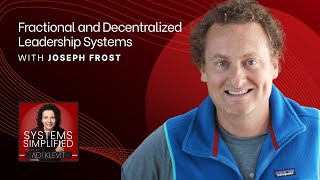
In this Systems Simplified Podcast episode, host Adi Klevit interviews Joseph Frost, MBA, co‑founder of YourCMO, the first fractional and decentralized leadership franchise, and founder of the Fractional Professional Association. Frost explains how a gap in strategic marketing expertise led him and his partner to create a fractional CMO model, which they later turned into a franchise to ensure full‑time, committed fractional executives. He outlines the key criteria for hiring fractional CXOs—trustworthiness, fiduciary responsibility, avoidance of hidden agendas, appropriate experience level, and alignment with a client’s processes. The conversation delves into the importance of clear communication cadences, meeting structures, and audit methodologies for integrating fractional leaders remotely, as well as the cultural challenges of decentralized teams. Frost discusses the pros and cons of fractional executives, highlighting cost savings and cross‑industry insights versus limited availability and integration hurdles. He introduces a productized “Marketing MVP” service that pairs a full‑time outsourced marketer with light‑touch CMO oversight at a low price point. The episode also covers backup and continuity planning, the distinction between strategic fractional roles and tactical hires, and resources such as the Fractional Professional Association and Frost’s LinkedIn profile for further contact.
Chapters
Welcome to the Systems Simplified Podcast, where we feature top leaders who share stories on how to successfully systemize a business. Now let's get started with the show.
Hello, Adi Klevit here with the Systems Simplified Podcast, where we interview top entrepreneurs, founders, and thought leaders about systematizing a business. And this podcast is being brought to you by Business Success Consulting Group. At Business Success Consulting Group, we create custom processes and tailor-made business systems so businesses can thrive and grow. All right, and today's guest is Joe Frost. Hi, Joe.
Hi, how are you?
Good. It's so good to have you on the podcast. We're going to have a fantastic conversation about fractional and decentralized leadership. But first of all, let me give our listeners a little bit of a background of who you are. So you are an entrepreneur, speaker, ideator, and thinker, and bringing the fractional and decentralized leadership model into the future of work.
Yes, that sounds like a lot, but it's pretty cool.
And you are the co-founder of YourCmo, which is the first Fractional and Decentralized Leadership Franchise Business. And you are also the co-founder of Fractional Professional Association, which is the only community for fractional executives and leaders, which I think it's very important because that's probably part of like when you are a fractional CMO, a fractional CFO, you know, you're not really connected to the leadership. You are connected, but you're not part of it. But you have to have your peers as well, which I think is very important. And you're the founder of Frost Media Group, you're co-founder of Guided Outsourcing Inc., and a board member at EO Nebraska. So what are you doing in your spare time, Joe, with all of that going on?
Oh, well, I love to travel. I have 4 kids and a beautiful wife, and when I combine travel with my family, it's a bonus. So this Next month, I think I'm heading to see the World Cup in Qatar with my son. So I'm super excited about that trip.
Oh, wow. That sounds super exciting. So, you know, you are definitely a busy man. So I think you are the perfect person to ask about all those things because you obviously get them done. So how did you— how did that idea of decentralizing or fractional leadership come about? How did you become involved in that area?
Yeah, that's a good question. So the fractional CMO work came first about 6 years ago. My business partner and I were sitting down trying to figure out what we could do together in marketing. He was a consultant, he did a lot of strategic marketing work, and I owned a video production company. And we both saw working with clients a gap in their understanding of marketing. From a strategic standpoint. And many of our clients and friends had successful businesses that had grown to a certain level based solely on sales acumen and networking and word of mouth and had nice healthy businesses. But to get to that next level, there was just a real gap in strategic marketing expertise. And so to fill that gap, oftentimes what was happening is clients were chasing tactics, you know, the latest fad, the TikTok or QR code or this, and you know, that had minimal impact. And doing it yourself by chasing different tactics wasn't working. Or, you know, they went the other route and hired a big agency. And a lot of times the big agencies, their strategies are to sell you more agency work that you may or may not need. They're not very strategic in why you need the creative work, but you just need more design and copy and video. And then sometimes they were hiring like marketing unicorn, somebody that can do both the tactical work and the strategic work. And it doesn't usually happen that one person does both well, although a lot of strategic people have done tactical work in the past, but that's not where they want to live and that's not where they thrive anymore. So we looked at the models that were out there and we saw the fractional CFO model had been around for a while, and it was an interesting way for businesses to get access to strategic financial individuals in a fractional way. That's interesting. Could we apply that to marketing? There are some differences, namely, the amount of time that a marketer needs to be involved with a client is much more frequent. You need to be there weekly, if not daily, to be effective. On the finance side, it's probably monthly or quarterly. You can get away with it. Fractional CFOs. So we had to rebuild a structure and a framework. So we started working together to build that. The other problem that we saw in the industry was there were a lot of consultants, and my partner was one of them, that were strategic, that wanted to do that level of work, but were having a hard time building a practice around it because what they would do is they would go and find a project, it would start strategic, and then it would slowly transition into tactical, in-the-weeds work, and then they'd have to go on and find the next project. So there's a big up and down, and we thought, could we marry the two? We have a framework for fractional CMOs that provided that value for the client, and can we provide a better way for consultants to run a practice around the fractional CMO work? And so we developed our system to do both. We ran it for a couple of years, Sure enough, people liked it. It was effective and clients paid us money and kept paying us money. We knew that was working, so we started to add new CMOs to our team. We realized the CMOs had a different need. They needed lead generation. Believe it or not, marketers make the worst marketers for themselves. It's like the cobbler's shoes. They needed help with lead generation to build their practices. They also wanted support for that project-level administrative tactical part of the consulting work that they had to do. And they were looking for a peer group. This will be the second— first of two peer groups we started to learn from and to share experiences. And no marketing challenge is the same, but so a lot of times having someone else you can bounce ideas off can help solve those client problems. That ended up turning into a back office that looked and felt a lot like a franchise. We approached a couple attorneys and sure enough, we were encroaching in what would be considered a franchise space. So then we had to decide, what are we gonna do? We can pull back our solutions and services, or are we gonna go all in on the franchise route? So we decided to franchise. And so now all of our CMOs, our fractional CMOs, are franchisees. And what that really means for our clients is that they are full-time, which is one of the big things I think is important for anybody considering a fractional professional. You want somebody that is full-time committed to a fractional lifestyle, fractional work style, if you will, because you don't want somebody who's in between full-time jobs. They'll come in, they could help you out, but then they're not staying long. So, somebody that's in between is not necessarily a sustainable fractional solution for you.. And you also don't want somebody that's working full-time for a large corporate company and then doing fractional on the side because that's not going to give you what you need. They're not going to be on demand when you need them. They'll be doing their full-time job, which pays the bulk of their bills. And you don't want somebody that's a glorified freelancer. So somebody that is a consultant or a copywriter or a designer that just calls themselves a fractional. You want somebody that's truly committed to the fractional CMO way or fractional CXO way full-time. So our franchisees, because of the investment they make and the requirements, are full-time. So it actually works out really well for our clients and our CMOs. So that's how I got into the fractional business.
Right. No, that's a great story. So I was actually going to ask you one of the questions that I'd like to know is if I as a business owner looking for to hire a fractional, as you say, CXO, CFO, CMO, whatever, like a fractional person that can help me in different areas and maybe fractional COO, what are the key things that they have to look at? So you already mentioned 3 of them.
I think the key thing is, by starting back, stepping back a little bit, as, as business owners and executives, a lot of times there's a distrust of marketers. I like to say people have marketing PTSD because they've been burned by or had a bad experience or overpaid and received a lot less than they expected from marketing. It is very much real for marketing, but it's also for other services at times, development being one or accounting or IT or any type of professional service. People have then if you've been around long enough, you've had a bad experience. So the biggest thing you have to be able to do is trust your person that you're hiring is going to be a fiduciary that's going to have your best interests at play. And so for that reason, I think it's really important to find fractional professionals that don't have another agenda. They don't have anything else to sell. There are a lot of posers out there that might have a fractional CXO front person, but what they're really doing is selling software or other services, and the fractional person is just their way in the door. And so we have to be aware of those different professionals that are out there that are really just there to front for another service. They're not truly fiduciary because the solution they always come up with is going to sell this other service. So our fractional CMOs are not incentivized. We don't have any monetary ties to any agency work, any vendors we use, any software we use. It's just sheer— you're getting strategy that is tied to your bottom line and best interest as a real fiduciary. So I think that's one thing. The other thing is, I think in the fractional space, you find a lot of highly well-established professionals that have been in the space or business or career for 30+ years. And you just need to watch out for somebody that's got too much of that, what I call pedigree. If they're so far up in the C-suite that they haven't actually done work in 10 years, they also don't make a very good fractional professional because even though we stay strategic, there is a lot of hands-on tactical stuff that a fractional professional has to do. And sometimes those higher-level pedigree people have been sitting in an office way too long. They don't really know how to, to do some of that tactical work to any level. And so that's somebody you've got to watch out for as well. The other thing I think that I find very common is that business owners and executives in some cases, but mainly owners are afraid to truly let go and trust. It's back to trust. But you give the hat away to somebody else, but you don't let them actually do it their way. You want them to do it your way. And I think— I forget who wrote the book Who Not How, but it's a great book about as entrepreneurs, we're taught to solve the problems, figure out how to get something done. It's how we have built our businesses. The how is our way. But to really scale your business, you have to find the whos that are going to do it for you. And when you find a who, in this case, a Fractional Professional, how they do it is their way and you can't have them do it your way or expect them to do it your way. You have to respect that kind of established how that has gotten them where they are. So we, we have a core value called trust the expert or value the expertise. Sorry, trust the process, value the expertise. I always get them confused because it's important that you trust the CMO or the CFO or the CTO, but you have to value their process too, because everyone's going to take a little bit of process. So I look for fractional professionals that have a process and then understand that I need to let them run the course.
For sure. But what happens if you have, you know, you're a successful company and your CMO left for some reason or another, but then you do have good processes in place, right? But then you're looking at, all right, I am good on the strategy. I need a little bit, obviously I will need help for strategy for next year and for expansion, etc. So I'm not, you know, you never can be stagnant on the strategy, it has to be looked over, but you do have successful actions, you do have best practices, you have a thing going and the company is doing well. Wouldn't that fractional CMO will need to also, if they're, well, I mean, I would assume that if they're smart and they're professional, they would not come and change everything according to another process that worked for another company. I think it's the differentiation whether you are going to a company that is actually being successful or a company that is struggling and need to change something.
Right.
So I think that's the differentiation between the two because I mean, I know that for myself, if I have like a process that is working, I'd like somebody to come in and follow the process, right? Because, you know, I'm all about processes. So if I have the process and we actually had a discussion before the call, like, you know, I have a process I want to bring a marketing assistant. So it's not a CMO, but it's still a fractional marketing person that they will follow the process because it's been very successful. I just need somebody to follow it and then improve upon it. So is there any room for that in your opinion?
Absolutely. I mean, every business has got its established set of core processes, some well-documented and and some not. But when I say trust the process, like there is a methodology that a fractional professional is gonna come in to provide his or her service to your business. And their process should— and their process of optimizing, or maybe it's even their process of identifying your processes that have problems, and then their process about determining what the recommended fixes are and their process then to do the implementation. I mean, those are processes that are unique to maybe their approach, but they're not changing your core processes. They just have a way of doing their CMO work or CTO work. So we have a, we have a way that we do audits. We have a very particular way that we do research into customers. We've got a particular way that we do a competitive analysis, and we do it. We have a particular way that we do a digital footprint analysis. That's our proprietary process, but that— and that doesn't matter whether you use HubSpot or Salesforce or Google Analytics, or you've got 2 agencies or 10 agencies, or you've got internal teams, you've got email marketing processes internally. We're not touching any of those. That's not the process I'm referring to. It's, it's our methodology to evaluate those in this case and and have that audit. We have a process for how we plan. We have a 2-year goal that we set, and we use 90-day quarterly sprints to achieve that goal. That's our process, but that's not changing your strategic planning process. Oftentimes our clients are using EOS Traction, or they're using Scaling Up, or they're using Four Disciplines of Execution, or some other tool. We'll adapt and embrace their process for the implementation and recording of that and documenting of it. But we have a process where we develop our priorities. We have a process for how we build our scorecard metrics, and then we use their tools and established process to manage within their organization.
That's perfect. Now, it made me think because, you know, I'm trying to create here the process of how you're going to choose the right fractional CMO, CTO, CIO, like whatever fractional executive you're looking at. And, you know, and you mentioned the You know, you have to look at somebody that does that, that they're used to the fractional lifestyle and that's what they are. So you don't— they just don't move off one day. They're not part-time, you know, they're not overqualified. Then, you know, the pro— in terms of the process, I think in the discovery time you really have to see, okay, what you have to— as a business owner, you have to bring it up in terms of like, what is your process of evaluating my processes? Yeah, absolutely. How would you integrate with that? You know how, and then you can see if it's a good fit or not. But you also have to realize that you are hiring an expert for a reason and they are going, you can't micromanage them, right? So that is like having that discovery and see if you are, if it's a good match, it's very, very important. So I think that can be definitely a step in realizing that and recognizing whether that person is a good one or not for your organization.
Absolutely. We have a process. We're a franchise company, so we got a bunch of processes too. Yes, we have a process. We have a process for communicating, like how— what's our cadence of communication? We have a weekly check-in. We have an agenda for that check-in. We continually like revisit, is that process working? Are we— is the client getting the right communication at the right time, but we need to enhance things. And so we're always working on our processes to deliver that value. And I think any fractional professional— so this kind of segues into how I got into decentralized leadership— we are decentralized leaders physically most of the time. We're geographically separated from our clients, so most of the work we do is virtual, with, with a few exceptions. But the biggest challenge when you're separated is communication. And culture that comes with that. There's so much space physically and then time that you don't have around your colleagues, your other peers in that organization, whoever you're reporting directly to, the owner or the CEO often, or your direct reports, people on that team. So communication is the only way to overcome that. And then Being more intentional about time and how you use that time together, meeting time. One of the biggest things that we've kind of uncovered is that the traditional corporate meeting, whether if you take— let's just use EOS as a good example. Many people are familiar with Traction. It's a 90-minute meeting. It's a very rigid 30-minute agenda, 5 minutes on segue, 5 minutes on priorities, 5 minutes on scorecard, 5 minutes on updates, and then 60 minutes on problem solving, which is a good meeting in general. I enjoyed their methodology. But when you're remote and you're— when you're not seeing each other every day, when you're far, far away, uh, that sometimes isn't enough time for team building. So what we've done is we've changed that 90-minute meeting so that the first 15 minutes is just team building. We have a different activity every week. We spend more intentional time with each other, getting to know each other, because you don't see each other before work, after work, happy hours, down the hallway. You can't step into somebody's office easily. There's just no time. So we have to be more intentional about the meeting time to give us that team-building time. So that's one of the things that I think we forget. Maybe people that are considering fractional don't really understand how the communication is different and therefore the culture is harder to start adhering to both ways. It's a difficulty.
Yeah, totally. So I think it's like part of like the theme of the process or the theme of how to choose the right fractional executive that works with your organization. So going through those, through that list that you mentioned. So one of them is Can they adapt to the existing processes? What processes can they bring or what is the area of expertise? How do they evaluate processes? But then also ask like, what is your process for meetings? What is your process for communication? What other processes should an entrepreneur check when they are engaging with a fractional CMO, CTO, et cetera, other than communication, meetings, what else would you recommend?
Backup. Like, what happens if you're sick or hit by a bus? What's this, you know, where's all my information stored? Like, how do I get access to anything? You know, some of those things are easily overlooked when you're looking at somebody outside the organization that's a one-off person. But there's a lot of fractional organizations out there that are, have multiple people involved with them. Like, our team has a full-time marketing coordinator to support, so there's never a single point of failure. But we also have a dozen other CMOs that can jump in and fill the gap. And I mean, not easily, but because the way we record everything, it's, it's a little easy to transition. But if you're looking to hire a fractional CFO and he's— he or she's a one-man, one-woman band, what happens if you're hit by a bus? Where's all my information? Who do I go to? How do I archive it? How do I figure it out? And people that are in the business full-time have answers to that. People that are in between jobs, they're like, I don't know, I haven't thought of that. But people that have been there for a few years, they have answers for that, and they just have to work for you.
Absolutely. Any other processes that you can think of that we should look at?
Um, you know, the, the biggest thing is, is understanding how that interaction works, that that trust is established and maintained, and the intentionality around that. And at the end of the day, that trust and communication are the two things that matter the most.
Absolutely. Absolutely. So we touched a little bit in terms of the advantage, the pros and cons of having— I think we talked more on the pros of having a fractional executive. So let's summarize it in terms of really looking, okay, here are the advantages. Say our listeners are entrepreneurs that are growing, scaling, and they want to expand their team and they're thinking about, okay, we should hire a fractional CMO. Makes total sense. What are the advantages of it, but also some disadvantages that they need to look at so they can evaluate if this is the right choice for them?
Yeah. Well, the obvious, advantage is cost. You're gonna get access to a fractional professional, CMO or otherwise, at literally a fraction of the cost. So that is the biggest advantage. Some of the other advantages that I think people don't quite maybe understand at first is that variety. When I say variety, as a fractional, they're working for multiple companies, which sometimes you can feel like, oh, well, gosh, am I gonna get equal attention or enough attention because he or she's got multiple clients that they serve. And that's true. You want to understand how somebody manages a handful of clients. But because they're also in a bunch of different businesses, they're able to take learnings from those other engagements and apply them to you. So they have this larger variety of client problems that they're solving and that they can bring in and add value to you. I think that's, that's a big value that people sometimes don't quite understand. The probably the biggest disadvantage is you're not full-time, so you don't have 100% control of their time and you're always wondering what are they doing. I get that a lot. Like, So what did you do last week? What did you do last month? 'Cause you just don't see it. It's not under your, they're not in your office, they're not 100% in your world, whatever systems and processes you have set up. They're by definition always an outsider, even though they wanna be an insider. And that lack of control, if there's not enough trust, can gnaw at somebody. And it depends on the culture of the organization. Does that not other people in the organization as well that you might not think about? Is the salesperson or the sales manager going to want that same level of flexibility and freedom as the fractional CMO has? Or is the HR person going to have trouble explaining why this person doesn't have to show up to things but you do? So there's that kind of integration that comes with having any type of non-full-time person part of the company.
Absolutely. But I think it can also be resolved with our points we discussed earlier in terms of the one about the reporting, wondering what they're doing, right? So one of the questions if you're interviewing or looking at hiring a fractional executive is also figuring out, establishing ahead of time, how are we going to know what you're doing, right? I mean, they're contractors, they're not employees, but still, what will be the communication cadence and what will be the content of the communication if you establish that expectation ahead of time, I think that will mitigate that risk or that concern. And yeah, and I think it's all about communication. And really, but those are good points that if your culture does not allow for that flexibility, it's probably not the right solution because like anything in life, it's not, not everything is a solution for everything, right? And it has to work. It has to be a solution solution for both sides.
So, and you don't want to hire somebody, um, to solve the wrong problems. A lot of times marketing is my example. Marketing, if you don't have a real strategic need, you're not trying to figure out how to go into a new market or how to launch a new product or how to really scale at pace, um, you probably don't need a CMO. I mean, CMOs shouldn't be the ones there to just come in and try to get you, um, a higher ranking on Google or, um, optimize your email campaigns or write better messaging content for your website or your blogs. Like, those are more tactical niche agencies type work. Um, but you don't know it. Most clients don't understand that separation or difference. And so when You know, part of our process is, you know, an intro conversation just to understand what the true challenges of the organization is and if a CMO is even a right fit. And if they're not, then we tell them that, like, you don't need a fractional CMO, you need a marketing manager, you need a part-time marketing manager. Maybe we could help you bridge the gap between getting there for maybe a 3-month project to find somebody that is long-term what you need. But some people wouldn't necessarily separate the two and just jump in as a CMO and do a lot of the tactical work, which never ends up well.
Right. So I think it's really understanding whether you need that position or not, right? It's the same thing will apply with a CFO. Do you need— and I've done many podcasts with fractional CFOs, really understanding what is it, a CFO? Do you need a CFO, a controller, a bookkeeper, an accountant? I mean, you know, there is an argument to that every business, especially businesses that are growing and scaling, they do need that C-suite level executive that can look at things strategically. And then again, getting a fractional one, you can actually get a very high caliber person with that knowledge, but paying fraction of this price because you might not need, let's say, a CFO full time, but you do will benefit from a CFO that can work on your company for 10 hours a month. You still get the same level of person that can be a— that is a CFO, that could be a full-time CFO, but you're just getting them for what you need. So I think that can also be a way to look at it, right?
Yeah. And what we were— what we found is there were enough tactical problems that people were reaching us out to solve as a CMO that we started another service line. We call it the Marketing MVP, and it's that kind of marketing unicorn that I described earlier. It's a full-time outsourced professional, usually from Mexico or the Philippines. That's where we source our team members from, that gets direction and weekly oversight by a CMO. So the CMO is just there to give direction to the full-time resource and check in weekly to say, see that they're on the right path, and then does a quarterly sync with the clients to make sure that these are still the same priorities that this person's working on. So we've bundled a full-time outsourced resource with a CMO that's very light touch, and that price point turns out to usually be about $3,500 a month, which is insane. It's less than what you'd pay for a full-time marketing coordinator in the US, and you're getting the best of both worlds. You get a full-time outsourced person doing, and you get a little bit of the strategic direction. It was because there was just a lot of companies that need more tactical operational lift behind the scenes, and they need more than that, than the strategy.
Absolutely. So I think, you know, Joe, really what's— you have an understanding of what the market needs, and it's not one size one size fits all. It's not, you know, you don't only need a CMO. Maybe your business is in a certain size or a certain phase that, you know, you might need, you might benefit from a little bit of strategy, but definitely tactical execution. Or maybe you're heavy on the strategy or you need a marketing assistant, which is also something you can find, you can help find, or somebody to alleviate your load and a virtual assistant. So that's why you have your other company where you do that. So it's really identifying the need of where you are. Do you need strategy? Do you need tactics? Do you need both? What is heavier than the other? Maybe you need both of them are heavy. Maybe one of them is lighter and the other one is heavier. So it's really understanding the needs that will lead to success in this process.
Yeah. And then by working in both spaces, the outsourced space and the fractional space, The challenges are the same. That's where the decentralized leadership work has emerged. The idea that outsourced people are remote also. They have the same challenges. They're not with you as much. The time is a constraint. The communication is important. The culture is important. So how do you build all of that remotely, both on the executive level and then on the outsourced kind of mid-level team members? And it's all the same fundamentals that we're finding. That are making up this kind of movement of decentralized leadership that I'm spearheading. And it's amazing when you start just breaking it down into the very small fundamentals, it's pretty simple. People want to be treated like leaders at all levels of the organization. So I like to say everyone in the organization is a leader. We have teams of leaders, not leadership teams. And if you just kind of take that simple approach Leaders are expected to make decisions, they're expected to communicate, they're expected to build and develop each other. Assume positive intent that everybody wants to do that also. Then you approach your team differently when they're outsourced in the Philippines or Mexico. It's a leader that wants to be part of your culture, that wants to develop with you and alongside you and help others in your organization develop. They want to communicate well. They want to be part of the leadership direction of the company. So you take that positive intent. And then the constraints are time and geography and cultural differences. And so you've got to create those spaces, those meeting spaces that I talked about, to allow for that intentional additional time to get to know one another better, to build the team during the weekly meeting as opposed to What usually happens is outside the meetings is when people convene and get to know each other and become friendly. We have to do that inside our meetings with a decentralized leadership approach. Those are the tools that we're building that support both the fractional business and the outsourced business. They work very well because they're simple, fundamental stuff that most traditional processes around meeting and operating systems for traditional companies just aren't built that way because they didn't have to have a remote geography. They didn't have to have time zone differences to come into play. They worked under one roof.
It's just different. Absolutely. And it's more and more common. I mean, I've done many podcasts where I interviewed CEOs and founders of companies where they had to change, of course, during the pandemic even more so. And then after the pandemic, they did not go back to the in-person, you know, brick-and-mortar building, but they actually saw that they can operate from different aspects, different places. You know, one of the interviews that come to mind was I interviewed the CEO of Ruby.com, which they provide receptionists to businesses. So that's, again, it's a fractional model because you can hire a fractional receptionist that is dedicated to you, but you can have many— I mean, that receptionist can serve many businesses, several businesses, but you still have a receptionist. And you pay a fraction of the price that you would pay for a full-time receptionist. So Ruby.com, the CEO, Kate Winkler, she went over what is successful for them in terms of creating that culture. And it's very similar to what you mentioned in terms of communication, in terms of culture, team building, et cetera. So that is definitely very important. So Joe, before we end off, we have to give a shout out to Dave Blanchard, which is one of your franchisees. Yes, Dave's terrific. Absolutely. And he operates in the Portland area and he's one of your CMO.com franchisees and he's the one who connected us. So thank you, Dave. And then if our listeners would like to get a hold of you, find out more, because we mentioned so many, we mentioned the different businesses that you have, you also have the, um, the group for fractional executives, right? Maybe they want to find out more about that. Where is the best place to go, or the contact information? And I will include it also in the show notes.
I think the best place to find me is on LinkedIn, Joseph Frost. Uh, so you can search LinkedIn for me, and, uh, that's usually— that, that showed— shows off all my decentralized personalities on LinkedIn as well.
Fantastic. Well, Joe, it's been a pleasure having you on this podcast. I think we had a great con— I mean, I definitely learned a lot and it really helped clarify for me what you have to look for when you want to hire a fractional leader and why. So thank you so much for being a guest on this podcast.
Yeah, thank you, Adi. It's been great. I appreciate it.
Thanks for listening to the Systems Simplified podcast. We'll see you again next time, and be sure to click subscribe to get future episodes.
More from Joseph
Unlocking Business Growth with CRM and AI– Tony Bagdy with host Joseph Frost- EP #77
Unlocking the X Factor in Fractional Business – Introducing Cuppa Joe- Joseph Frost– Episode #29
Navigating Business Growth Challenges - Steve Thornton with Joseph Frost- EP 75
Energy Over Time: Maximizing Your Impact with Joseph Frost #TimeManagement #EnergyManagement