How Does An Ex-Con Get Past His Fear of Judgment and Start His Personal Brand?
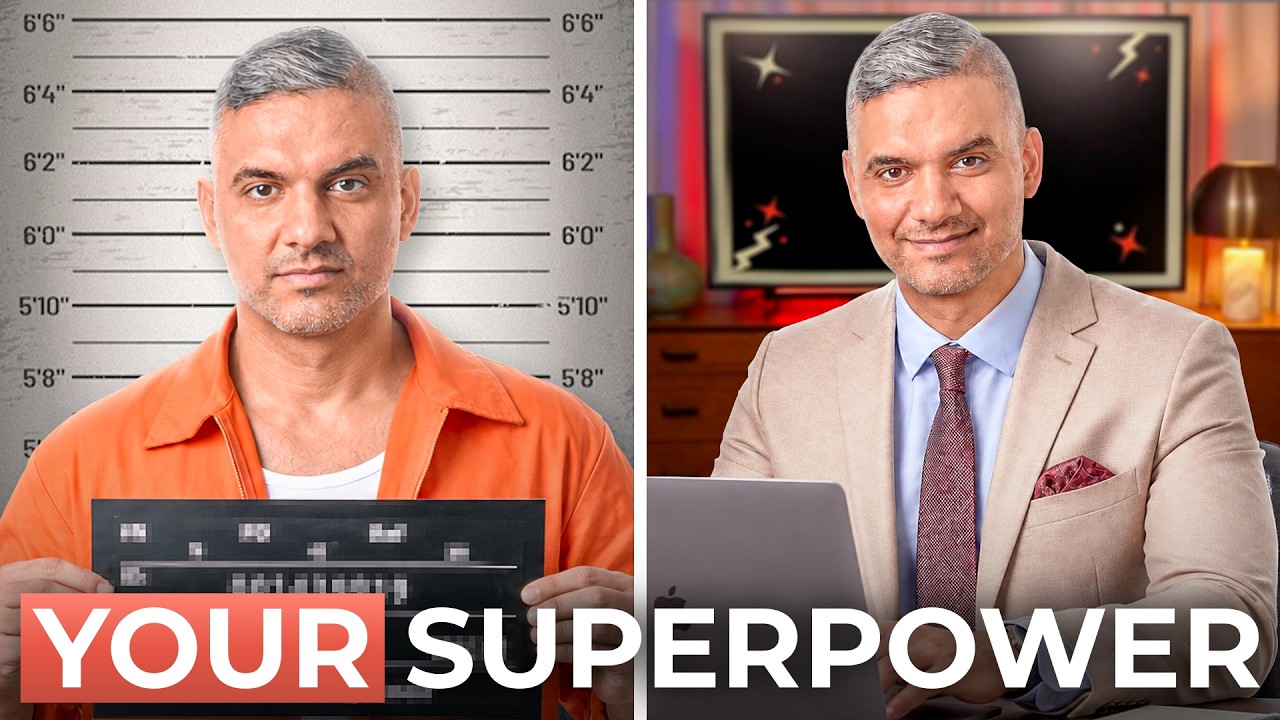
Ralph, an ex-con wanting to build a personal brand, fears judgment about his past. Omar Zenhom shares how he overcame similar doubts as an immigrant leaving a stable job, and explains that authenticity removes an invisible burden and becomes a brand superpower. The challenge: publish one raw video or post this week that owns your story.
Chapters
When I left my teaching career at 32 and told people I was moving to New York City and starting a business, the reaction was not exactly what I was hoping for. Most people thought I was crazy. Some people thought I was straight up stupid, and a lot of people thought I was both. And I don't blame them. I had my own doubts. You know, I'm a brown man with Arab Muslim immigrant background. Name one successful entrepreneur you know that has that background. I'll wait. Exactly, you can't, right? I'm not exactly Tony Robbins. There was no blueprint. There was no one who looked like me or sounded like me that had done what I was trying to do. And the judgment was real, I felt it. But I wanna tell you what I decided to do about that judgment because today's question from Ralph brought it all back for me. And Ralph, this episode is for you, but I think it's also for a lot of people who are listening that are worried about something about themselves from the past that might come back and haunt them and is keeping them from succeeding in business. Nicole, take it away.
Thanks, Omar. Happy to be here. I'm here to ask the questions that you'd be asking if you were sitting right next to Omar. As Omar just said, we're answering Ralph's question today. Ralph asks, I'm an ex-con trying to build a personal brand. I'm terrified of the judgment that comes with my past being public. 'How do I get past the fear and put myself out there?' First of all, Ralph, thank you so much for asking that question publicly. I think it took massive courage. I'm sure it took massive courage. And Omar, I know you just said that it landed differently than most questions that we get.
It did, because underneath Ralph's question is something I recognize completely. Not the specific circumstances about prison, but the fear. You know, the fear that you, who you are, where you came from, what you have been through, what you've done in the past even, will disqualify you from even getting started or even having any level of success in whatever dream you have. This fear is real, and I want to speak directly to it. But first, I want to reframe something completely. Ralph, I want you to hear something from Robert Greene. Robert Greene is one of my favorite authors, and he's one of the greatest thinkers and strategists when it comes to human nature. And he says, "If you want to create interesting work, live an interesting life." Now, going to prison is not a joyful experience and nobody's pretending it is. But it is interesting. It is remarkable. It is something that has tested you at a level that most people will never be tested at. And surviving it and reforming your life and deciding to build something and deciding to show up and be seen, this is— not a liability. It's not something that you should be hiding from. This is one of the most compelling origin stories I've ever heard. Brené Brown, a very popular author, says, "Make your mess your message." Your mess is real. Your message is waiting. It's a good question. And here's the thing about vulnerability that most people do not understand until they try it. We all have things that we're ashamed of. We all have decisions that we've regretted, okay? Anybody who says otherwise is lying, okay? And we all have chapters of our lives that we wish we could rewrite in some way. When you stand up and say, this is what I did, this is what happened, this is who I became on the other side of it, people do not look away. They lean in. It's interesting. People love the after picture because they've seen the before picture. Because you're saying that the thing that most people are too afraid to say about their lives, that they have the courage, and they could have the courage to create real change.
Yeah, and that's key because it's what you just said there. It's about what's happened on the other side. You've processed that pain, you've processed the situation, you've processed this thing that you're ashamed of, and the lessons that you derive from it, that's what you're sharing. That's what's super valuable to the audience or to people that, you know, are interested in your story.
Yeah, and every great movie, every great story has a story arc. And the reason why it's so engaging is because of how far you've come. And obviously you've come a long way. Let me tell you something that I had to learn the hard way. When I was starting to build my business and my brand, I was surrounded with people that did not believe in what I was trying to do. They thought it was a pipe dream, right? I'm talking about former colleagues, talking about friends, even family members that were close to me who thought I was really like throwing away a stable career for something that would never work. People who looked at me saw every reason it would not work, right? And they would sometimes verbalize it and tell me, "This is not gonna work because so-and-so and this reason and that reason." And here's what I eventually understood. Those people were never my audience. Right? They are not the people I'm trying to serve. They're not the people that believe in the vision I have. Not then, not now. The people I am here to serve are the people who need what I have to offer. And those people didn't need what I had to offer. The entrepreneurs who are starting from absolutely nothing, these people are often faced with this problem because they feel like they have no track record. They have no proof that they can make this work. The people who came from the backgrounds that the mainstream business world does not see I represent. The people who were told it cannot be done but chose to do it anyway. Those are my people. Those are the people I serve. The people who judge me or doubt me, these people are not the ones that I'm meant to serve. So Ralph, and anybody else who's listening, the people who will judge you for your past or what you've done, uh, previously in another life, they're not your people either, okay? They're not the audience you are here to serve. And this is going to happen as you grow. You're going to have a lot of people that just disagree with you, and that's okay. They are not the community you're trying to build. Anyone who defines you by your worst moment in life and decides that this is your whole story, they already disqualify themselves from your world. You don't need their approval and you never did.
Omar, I'm going to challenge you a little bit because that might sound like it's easy to say, and you've experienced this, you've alluded to this. If the people that are judging you are people that you really care about, the people that are the closest to you, especially in that time when you haven't built your network, it's your friends, your family. How do you deal with that emotionally?
That fear is real. And we're not talking about trolls here. We're not talking about strangers online. The fear that your past will cost you real business and the people that are closest to you are the ones that are doubting you. It's a tough one.
I think in those moments, because I remember in those early days, we experienced that judgment from people closest to us. I think that's when you start to find your people that will support you. You start to start looking out to people that will be cheerleaders versus, what's the opposite of a cheerleader?
Haters.
Hater, exactly, a hater.
Yeah, and I think this is a very important step in the entrepreneurial journey where you need to surround yourself with the people that are already doing it, people that are in your world that are achieving the success that you wanna achieve. When you're around these people, it's not strange to be successful. It's like the standard. And when you're around people that are doubting you, you just are reinforcing this idea that this is a dream and it's impossible. But there's plenty of people that do exactly what you want to do.
And I think once you get past and you manage to deal and overcome the emotions of those haters being the closest people to you, I think to Ralph's question, he's probably also alluding to what if that judgment comes from people who are going to be your paying customers? Are they going to be willing to pay you for a product or service if they know about your past? That could be the fear that's underlying his question.
It's a real fear because these are real opportunities, and especially in the beginning, these opportunities are really important because you need to make money to pay your bills. Here's my honest answer. Some people will walk away, and I'm not going to pretend otherwise. This happens. You know, people are just not meant to be your customers. But what I know from building businesses as a minority, as somebody that maybe doesn't look like the typical person, that you see online. Uh, you know, a lot of people don't understand, like, why is his face sounding like this? And they expect me to have an accent or something like that, uh, and all that, right? But these people are always going to disagree with you. They're always not going to be your customer. You're not going to worry about them. They're not going to really see the value in what you have to offer. Because the client who needs you to be something that you are not in order for you to do business with them is a client you'll always be uncomfortable to serve. Somebody that you just don't want to be around because you can't be your real self. The clients you want are the ones who will stay and refer other people and come back, and the ones who choose you specifically because of your story. Those are the ones you're going to find are going to be your best customers and the ones that really resonate with you. What's great about your story and about your background is that it's polarizing, right? It's very clear that people are either going to love you or they're not going to love you. Okay, I don't want to say hate, but they're not going to be turned And yes, there's going to be people that are going to judge you for that, but there's going to be plenty of people that are going to admire you for what you've done and what you've gone through. So my message to you and everybody who's listening: own your story. The right people will run towards it.
I couldn't agree with you more. But I know in that moment there's a mindset shift that's really required to not let that situation derail you. Someone does walk away because of your story. It's gotta hurt. How do you not let it derail you?
Well, let me get specific about what I mean by owning it, because owning your story does not mean leading every conversation with your criminal record or with something that you regret that you've done in the past or something that can be found on a Google search. Okay. It does not mean making your past the only thing people know about you. Okay. That's not what you want to do here. All it means when I say own it is means that you're not hiding it. It means that you're not building your brand on a foundation of omission, or I'm going to forget about this past and I'm gonna pretend that this does not exist. Because here is the psychological cost of hiding something significant about yourself. Every time you show up, every piece of content you create, every client you call, every introduction you make, there is a part of your brain that is, you know, camasking a secret that you're kind of keeping it behind closed doors. And that has a toll, that has a cost. You're monitoring what you're saying. You're calculating the risk. You're bracing for the moment that somebody is going to find out. That's exhausting, right? That is an invisible force that you are fighting every day. And guess what? It's invisible to everyone else except you. OK? When you own the story, that weight is off your shoulders because there's nothing you have to manage. There's nothing that you have to hide. There is only the truth of who you are and what you have been through and how you made it through and what you're building now. And this is going to liberate you, right? It's going to allow you to really be yourself and show your personality and resonate with people. You know, when people say you got to be authentic, This is what authentic means.
It's authenticity is the word that comes to mind, but it's also that exhausting energy that is so sapping when you've got this facade or this thing that you're trying to hide constantly. It's like, I don't think people realize how much it really takes away from the energy that you could be spending on other things of putting yourself out there and other things in your business. If you're just worried about that piece that you're worried about. Keeps, you know, keeps you— keeps holding you back.
Yeah, and it's going to limit what you can and cannot do. I'll give a good example, you know. You know, a lot of people that come from my background try to hide their background. Like, they just feel like, oh, Arabs and Muslims, they have a bad PR, so I'm not going to, like, talk about that, you know. But I like to share photos of my family. I share photos of my grandmother when she was around, you know, rest in peace. I like to share photos of my mom and the lessons she's taught me. You know, and you know, they're wearing more modest clothing. My grandmother and my mother, you know, cover their hair. So this is just part of who I am. It's part of my background. I can't deny it. I can't change it. And it's made me who I am. So by me just pretending that doesn't exist, it limits how much content I can put out. It limits the context I can share with my audience about who I am.
And it alienates the people that are your people. You know, which is the crux of this, too.
Hope you're enjoying the episode. I just want to quickly give you a heads up. We need you to subscribe because we have an upcoming episode we don't want you to miss. By hitting subscribe, as soon as the episode's out, you'll be notified. So what's this episode that I'm talking about? It's called Low Cash Flow. Do you have low cash flow? Well, I'm going to give you 3 simple steps to get your business making more money. Now, this is like the jumpstart that you need to get your business making more revenue. I know a lot of people right now are suffering from a tough economy and they're looking for easy ways. And I'm not going to say these are easy, but they're simple. There's something that you can follow and follow through. So subscribe so you don't miss that episode. So like I mentioned, I grew up in an immigrant household. My parents were immigrants from Egypt. They migrated from Egypt to the US in the late '60s, and they struggled financially because it was very tough for them to get on their feet, get their degrees all over, find a job, learn a new language, new country. It was tough. And I do not look like the people who typically get held up as the entrepreneurial success in the business world. I do not sound like them. My background is not their background that gets featured on, you know, the COVID of Forbes magazine. And for a long time, I felt like I was at a disadvantage. I felt like, you know, this is impossible and something that I had to work around. Something that I had to manage carefully and tiptoe around. Then one day I just said, "I've had it. I've had it. I've decided to just do the opposite." I decided just to own it completely. And I would say, "I am going to be the first one I know from this background that looks like me to build something that is significant in business. And I want to be the one that proves it's possible. I want to be the person that other people can look up to." And that decision changed my brand. Not because my background suddenly became an advantage in a conventional sense, but because the people who needed to see someone like me doing what they want to do found me. And it's not just, you know, people of my background. A lot of minorities follow us. A lot of women, because women in a lot of ways are a minority, follow this podcast and follow what we do. And they resonate with the fact that, hey, I feel like an underdog. I feel like I don't have the advantages. And the honest truth is the only reason I was able to do this is because I stopped making excuses. I started to own it. And I took ownership and said, "Hey, I got to own the solution." Ralph, your background is different from mine. But the principle is the same. You're going to become the person that someone like Ralph, somebody else who has been to prison, is going to look up to. And there's plenty of people just like you. And by the way, I— gave a speech to some prisoners that was at a convention when I was living in the States, in California. And there were ex-cons. I don't— they weren't prisoners in prison, but they came out of prison. And many of them have a lot of strong business skills because they were businessmen in the street, right? And there were men in the group, and they understand the principles of business, but they just don't know how to structure it in a legal way. And it doesn't take much for you to understand that. And there's a lot of people that are looking for guidance from people from your background. People want to see people come out the other side, regardless of the fact that they went to prison or not, or they had a rough beginning of their life. They want to see someone who's built something real, who proved it was possible. They want to see a comeback story. They want to see a brand. They want to see a mission. They want to see somebody that is building something that's worth building.
I think we forget, and you alluded to this concept, the underdog story. We see it all the time in movies. It's a far more interesting story than someone who's just had it easy from day one.
And I love the fact you brought this up because a lot of people know that one of my favorite movies of all time is Rocky, the first Rocky. And the reason why that movie is so touching to me is because it shows you the typical underdog story. You know, he's not supposed to be playing or fighting the champ. He just kind of got lucky because the person got injured, and he just wants to be able to compete. He wants to be able to go toe-to-toe with him. But really what that movie is about is the cost of chasing a dream, right? It talks about what sacrifices you have to go through. And I'm talking to you now directly, Ralph. There are going to be some sacrifices, and you getting over, um, this fear is one of them, right? And sacrificing maybe some people that are dear to you, some friends, some family, and you don't have to like completely disown them, but maybe it'll be healthy to just have some distance from them until you get on your feet, until you kind of get some momentum with your business. Now, I want to give you as much guidance as possible before we wrap up. So I'm going to ask you to do something this week, Ralph. Before I give you the challenge, I need to address something. You do not get past fear by thinking about it longer. Okay? You don't get past it by planning and perfecting a strategy. OK? You get past it by doing the thing that scares you and finding out that you're going to survive, that nothing really happened. So what I want you to do is I want you to shoot a video. This is going to take a bit of courage, but I know you can do it. This is not a polished video. It's not a highly produced video. It doesn't even need to be a scripted video, right? It could just be a real video where you're just looking at the camera, sharing your story. In this video, share who you are, what you went through, what you learned in the process, and how are you going to use it to help other people. And then I want you to post that video. OK? And here is what's going to happen. Most people are going to scroll past it. A lot of us, we think that everybody's paying attention. Most people are not. But what's going to be great for you is that now it's out there. Now it's off your chest and now you're actually showing people how you're going to use your mess as your message. How are you going to use your experience to help other people?
All right. So most people will hear that. Most people are going to scroll past it. They could either be relieved, but they could also be deflated. But I think what you're edging towards is that when you're starting out, that's actually not a bad thing.
100%, because this is your first message to the world, and maybe it's not perfectly delivered, and maybe it's not exactly what you want to say, but over time you'll perfect it. And one of the things I love about being a beginner is that no one's really watching, right? And that's your advantage. You can get some reps in so that you can feel better and better about it. And by the way, those reps are more for you than anybody else, so that you can feel more confident with this message. You can feel more confident with who you are and how you're showing up in the world. And yes, some people will scroll, but some people, the right people, will watch it and they'll feel what you're feeling and they will connect with you and they will comment and they might even share with friends and they'll send that message to you that says, hey, I needed to see that today. I'm telling you, anytime I've shared something personal or struggle or something that really resonated with somebody, I remember sending an email where I was just sharing like a little anecdote about You know, immigrant parents being really strict and really hard on you, but, you know, you can't blame them. They're working with the tools that they have. People reply to me all the time. They're like, hey, that's exactly my story. You know, thanks for sharing that. I don't— I feel seen. I'm not alone. And the moment the fear breaks, it's not because the judgment disappears. That's the thing. It doesn't go away. It's because the judgment does not kill you. You realize, oh, I'm stronger than I thought. And the connection that comes from the people that it does resonate with really starts to feel like, "Wow, I found my people." And that discomfort of worrying about your story kind of ruining your future starts to loosen up. Like that story doesn't have any legs anymore. So, Ralph and anybody who's listening and watching today's episode that wants to get past something, I want you to do this exercise this week. Don't put it out or don't put it off, I should say. I want you to do it even if you don't feel ready. This week is a good deadline. Like, you got 7 days to do it. Okay? And it allows you to just say, hey, this is a line in the sand. This is a point of no return. This is where I start my new life.
It might not have to be on camera. It could be a post, a written post with a photo. If someone's not comfortable to make that first leap on camera and sharing the story verbally, I think even publishing a blog post or a post on social media would be just as effective.— I think to have it out there in the world, right?
Yeah, that's fine as well. I mean, you can even maybe post some photos, kind of showing your story in the timeline and with some captions. There's a lot of ways you can deliver this. And I'm just kind of the person that like, I just want to get this over and done with. I was going to go straight to the jugular and go for the video and just talk to people directly. But of course, do what's comfortable for you. But the point is, do it. Ralph, I'm going to wrap it up for you. Your past is not your liability. It's your story. It's a part of who you are and who you've become. And it's probably one of your most valuable assets that you're not utilizing. The people who are going to judge you, let them judge. Okay? You don't need them. They're not your audience. And the people who do need to hear from you, these are your audience. These are your audience members, I should say. And hiding your story is costing you more than you think. Right? You need to own it so that it can become your superpower. It becomes your origin story. It becomes the before of your after picture. And the first video, the one that you post this week, or if you post a message or a blog post or whatever format you decide, is the beginning of your brand. It is the proof that you are someone who does the hard thing anyway. Right? It's tough to do that and put yourself out there. And people recognize that. This is your brand. Go build it. Ralph, thank you for asking this question publicly. Uh, that was the first act of courage of building your brand. Now your second act is to share your story publicly. And if you want to send your own question, if you're listening, you're like, hey, I got a question I wanna ask on a different topic. Go ahead and submit it over at 100mba.net/q. If you want to continue learning, we have a recent episode that you should check out. It's called How I Grew My Podcast to 300 Million Downloads. I share the exact playbook of what has worked and what has not worked over the years, as well as how podcasting is changing over the years. If you want to start a podcast, this is a must listen. Go ahead and check it out.
Ralph, we're cheering you on. Hope this episode helped. We'll see you in the next episode.
Yep. See you guys in the next one. Take care.










