How I Grew My Podcast to 300 Million Downloads
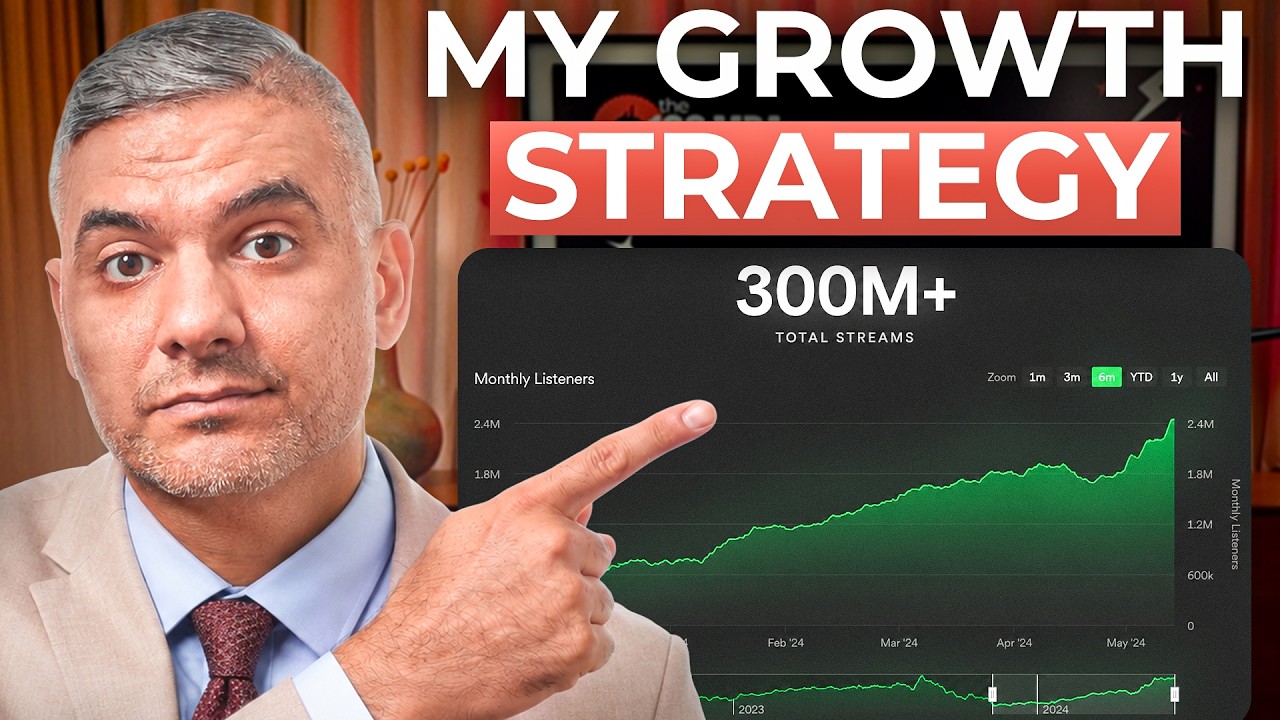
In this solo‑host episode Omar Zenhom walks listeners through the complete playbook that turned his second‑ever podcast, The $100 MBA Show, into a show with over 300 million downloads, 2,800+ episodes, and multiple industry awards. He begins by dissecting his first failed podcast, People Who Know Their Shit, to illustrate why a clear competitive advantage is essential. He then outlines seven numbered lessons: (1) launch with a bang – produce the best possible first five episodes and blast them to every personal contact; (2) grow through guest‑spotting – appear on other podcasts (especially new shows) and coordinate release weeks to amplify algorithmic momentum; (3) test everything – treat each episode as an experiment, assign a dedicated tester, and iterate on titles, thumbnails, hooks, and format; (4) build an organic video engine – clip “mic‑drop” moments into short‑form reels, use ManyChat automations to funnel comments into full‑episode links, and staff the process with a video producer and social‑media specialists; (5) spend on paid promotion – run host‑read ads on complementary podcasts and boost high‑performing reels, with cost‑saving tips for ad platforms; (6) be maniacal about consistency – publish on a strict schedule, batch‑record, document SOPs, and hire to protect the cadence; (7) invest relentlessly in yourself – voice, acting, public‑speaking lessons, reading, courses, and studying other podcasts to improve delivery. Throughout, Omar shares anecdotes (road‑trip soda‑stand promotion, early‑stage team building, algorithmic insights) that illustrate each principle. He concludes by urging listeners to subscribe, keep learning, and treat the podcast as a long‑tail business that rewards years of disciplined effort.
Chapters
This podcast has over 300 million downloads and counting, over 2,800 episodes, and we were awarded Best of Apple Podcasts and been mentioned in pretty much every publication from Forbes to Inc to Entrepreneur to Time magazine to Huffington Post. That's all great and all, but I wanna tell you something that most people in my position would not say out loud. I almost didn't make it. Not because of the competition, not because the market was too crowded, but because my first podcast was a complete failure. And everything I'm going to teach you today, every principle, every strategy, every lesson in the playbook I will share got us to that 300 million downloads. It came from understanding exactly why that first podcast failed and what to do differently with this podcast. So let's start there. This podcast isn't my first podcast. My first podcast was called People Who Know Their Shit. It's a pretty good name, right? But unfortunately, the podcast was shit. The concept was pretty simple. We interviewed interesting people in business. We asked them to share their knowledge and we published it and we thought it was a pretty good idea. The problem is that every other podcast was doing exactly the same thing. We had no differentiator. And on our best episode, we had Gary Vaynerchuk on and we had 400 downloads, which wasn't so impressive because I was getting more people to my blog post back then. Now, around this time, Nicole had a filming gig that she had to do in New York, and we were living in San Diego and we drove across country so that we can save some money and have the open road to discuss why this is not working. Why is this podcast failing? We had to get honest with ourselves. We looked at the top business podcasts at that time and we saw people like Tim Ferriss with The Tim Ferriss Show. I mean, this guy has 5 New York Times bestselling books. All this guy does is win. So he has a huge audience, right? There was people like Pat Flynn who'd been podcasting way before us and has raving fans. We had people like John Lee Dumas of Entrepreneurs on Fire who was publishing a podcast episode every single day, 7 days a week. We had people like Jordan Harbinger who was podcasting before the iPhone, like 2006. How are we going to compete with these people? How are we going to compete with other interview style podcasts? And it really just dawned on us that we're not really leveraging any of our strengths. And that's really the biggest takeaway that we got from this whole Reflection exercise. Nicole and I are former educators, right? We taught in the classroom for over a decade each. And I asked myself, why am I interviewing? Maybe I should be teaching on this podcast. Maybe I don't have all the clout of the other people that we mentioned, but I probably am a better teacher than the rest of those guys. You know, I have a master's in education. I've, you know, taught 5 classes 5 days a week for 10 years. So I'm pretty good at breaking down complex ideas and making them digestible, and easy to understand. The other thing that we realized is that we needed to add something to the genre of business podcasting, try to innovate a little bit. You know, Nicole loves language learning, and one of her favorite podcasts is Coffee Break French. She also likes Coffee Break Spanish, which are small bite-sized language lessons. And we thought, hey, no one's really doing this in business where you can learn a quick lesson, implement, and come back for more. I start with this story because before you launch your podcast, you need to ask yourself, what's your competitive advantage? Why will somebody listen or watch your podcast? It's much easier to succeed if you're actually fulfilling a specific need for a specific person because you're really gonna be able to speak their language. And with the Under $100 Million Show, we built a crystal clear answer to that question. You know, who are we speaking to? Well, we're speaking to small business owners that are looking to get better every day and try to grow. And actually they were growing with us 'cause Every time I learned a lesson in my own business, I would share it on the show. The other thing we realized is that entrepreneurs are busy, right? We're all busy, so we don't have a lot of time to go through a 3-hour interview. So we wanted to make sure our episodes were bite-sized, 20 minutes, so you can listen to an episode on your commute, try to implement it, and then come back for more the next episode. So the point of me sharing all of this is that you really ask yourself the question, what's the unique value you're adding to your show? Why will people listen or watch your, uh, podcast episodes? Maybe it's your experience, maybe it's the format, maybe it's even just your personality, but you have to add something unique that makes people wanna tune in because everything else I'm gonna teach you today will not work. Because if you market your show and then no one comes back, you're really just filling up a leaky bucket, right? You're gonna lose your listeners as fast as you gain them. Now, having said that, Let's start with lesson number 1, and that is to launch like you mean it. Launching your podcast for the first time is an opportunity that only happens once, right? You only get to launch once, so you ought to make sure that you make it count. You take advantage of this situation, you know? And a lot of people, they just kind of launch in a whisper and they kind of tell their friends and they put it up there and they're almost like not proud of what they put out there. You need to be super proud of what you put out there and make sure that you tell as many people as possible and market that first push because this is your chance. To get as many listeners as possible to learn about your show, learn about your story, and get subscribed. What we did is we made sure our first 5 episodes were the best episodes we could ever create. I literally rerecorded these 5 episodes probably over a dozen times because I wanted to make sure that when our listeners first listened or consumed our show, they wanted more. They really felt like, "Hey, this is really valuable." And like they say, you only have one opportunity to make a first impression.. You want to make sure that you nail it. Number 2, when you launch your show, tell everyone you know. I'm talking about literally everyone. I literally went in my phone, I scrolled into my contacts, and I looked at everybody— family, friends, people I met once at a conference. I either called them, I either sent them a text message. If I had their email, I emailed them. If I didn't have their email, I DM'd them on social media. I added them on posts. Literally, I had no shame. Why? Because I only have one chance at this. And if you have any positive feelings towards me and you like me or you met me and you had a good impression, then this is the one thing I'm asking you to do is to hit subscribe, follow, give us a review. I literally wanted to make sure that anybody who ever met me in my life knew that I was launching this show. Now, a lot of people skip this step and it's a huge disaster if you do so. Why is this a big mistake? Because when you launch your show, the algorithm is trying to help you. About is trying to find your audience, whether it's Apple or Spotify or YouTube or whatever it might be. So you wanna give them as many signals as possible. Wanna give the algorithm a chance for them to see, oh, there's people interested in this, there's people subscribing all of a sudden. And what I decided to do in this moment is when I shared it with everybody, I asked them to try to subscribe, try to review all in the same week so that it was a compounded effect. So it created a great strong signal. Let me tell you a little story. Nicole and I, we wanted to learn more about who are the people that would be listening to our show, who would subscribe, and not friends and family that were gonna listen are not gonna sugarcoat what they say. We wanted to talk to strangers. So what we did is we filled up our esky or our cooler with ice and we went to the supermarket and filled it up with soft drinks, Coca-Colas and Sprites. And then we went to the boardwalk in San Diego. We were living in San Diego, California at the time. And we just stood there with a whiteboard we literally just pulled off our wall in the office and wrote on the whiteboard, "Free cold drinks for iTunes love." And at the time podcasts were on iTunes. And we just held up this whiteboard and people just walk by the boardwalk and there's like hundreds of people walking by and they're like, hey, what's this all about? Like, hey, I asked them, would you like a cold drink? And they would open up the cooler and they would take a can of soda out and they'll start drinking the soda. And I say to them, hey, do you listen to podcasts? And be like, oh, some people are like, oh, what's a podcast? Remember, this is 2014. And I would explain it to them and I say, search our shows, what our show is all about. Have you ever thought about starting a business? Do you have any dreams? And we have a small chat and they would subscribe to the show. And I said, hey, if you like the show, leave us a rating and review. And we literally did this like over 100 times to random strangers until the cops shooed us away. But it's okay. We had a lot of fun and we, most of all, we got to put a face to the people that we were serving. We understood what the people looked like, what their stories were, what's some of the businesses they're trying to build, and prove to ourselves that we were proud of what we built, that we would actually share with people that we'd never met before. So my advice to you is when you launch your show, or if you're just early on in your stages of launching your show, Get your first listeners. Start with your first 5, then your first 10, then your first 100, then your first 1,000. Literally meet them in person if you can, because this is gonna allow you to understand who you are serving, who you're building this podcast for so that you can grow for them. Lesson number 2, get on other podcasts. One of the best ways to grow your podcast is to be a guest on other podcasts. Why? Because if you add value to that podcast, if people like your interview, people like what you say on that show, and they know that you have a podcast, it's much easier to convert them to your podcast since they're already on the platform. So they're like listening on Spotify and they hear your interview and they're like, oh cool, let me check out this person's podcast. It's not a huge leap. They don't have to open up a browser. Maybe they're driving their car. It's easy for them to find your show. Now, there are two things that really worked for me when it comes to this strategy. Number one is that we made sure that whenever I got on a show that I was well prepared, make sure that I understood the audience very well. I would listen to all, or at least most of the episodes of that podcast to understand where are the gaps, where is the audience being underserved, where are they not getting what they need? And maybe I can fill that gap. So then when listeners are listening, they're like, oh, this person's different. This person's adding unique value. I'd like to learn more from them. And number 2, this is a little bit of a ninja move. What we did is that we batched all the interviews and asked them to make sure they publish the interview the same week we launched the podcast. So I literally did like 20 interviews on on other podcasts, but my only kind of requirement was like, hey, I'd love to be on your show. I'm happy to do it for free. I'm happy to do whatever I can to support your show, but I need you to release this episode on this week, right? During this week. 'Cause that's the same week we were launching our show. So what would happen was it almost felt like we were everywhere that week. Everyone was like, oh, I heard about you on this podcast. I heard about you on this podcast. And then people would subscribe to the show and it would push the algorithm in those early days to allow us to get some momentum. A quick note about this strategy. Please don't be precious. Please don't go to podcasts and say, oh, your audience is not big enough, you're new, you don't have enough reviews. No, you're nobody right now. All right. You need to make sure that you're not picky and you give as much value as possible. By the way, new podcasts are really good places to get started. Yeah, they don't have a big audience, but they have a loyal audience and they are new to podcasting. Often when they listen to a new podcast,. And if they like what you have to say on the show, they're going to want to subscribe to your show and see what you got. Till this day, we use this strategy. Cindy, who's on my team, she books all the shows that I want to be on. A lot of people now reach out to us and we try to fit it in my schedule. But what's really good is it allows me to really talk to different audiences, not just my audience at the Hunter Lambie Show, because we often get on other podcasts that are not in the business space, maybe in other genres or other markets. So that I can add value in a way that will help those people, not just my people. And when you do this, this expands your audience. It allows people that you normally would not reach out to or would serve to learn about you. And for example, I would get on a podcast for mommy bloggers, moms that run blogs in their free time. And this is not my core audience, but it became part of my audience because I got on a lot of shows that serve that audience. And now I'm happy to serve those audiences. And learn more about how I can help them and learn more about their business so that our lessons and our strategies will apply to them. This strategy works not only because it's free, you're not spending any ad dollars to get on anybody's show, but also you're learning how to be a guest on a show. It's a totally different dynamic when you are answering the questions rather than asking them or delivering your lesson like I'm doing with a solo episode. So this is a skill in itself that is worth building. Lesson number 3: Test everything. This is the lesson that separates the podcasts that plateau. They hit a certain level and they can't grow past that. And ones that keep on growing. Experimentation is our middle name here at The $100 MBA Show because we understand that it's hard for us to know what works without trying a lot of different things. So we literally test everything. Episode titles, thumbnails, hooks, topics, even what I wear on camera. The format of the intro, everything. And I'm gonna tell you a little secret about this. Experimentation is one of those things in your business where you're like, "Yeah, I know I have to do this, but it's kinda hard," and it never gets done. It's kinda like the too hard basket, like, "I'll get on experimentation later." The hack of this is you need to hire somebody for this. You need to actually get somebody on your team that will be responsible for experimentation. And we have a rockstar on our team, Shinae, who takes care of all of this. She's dedicated to helping us test and optimize Everything. We test reels against each other to see what topics work before we even publish the episode. So literally we'll do a reel and we'll test this reel with a trial reel and we'll see, does this topic resonate with people? And if it does, let's create an episode about it. Why do we do this? Well, because it takes a lot of effort to publish a podcast episode regardless of your cadence or your frequency. So we publish 3 days a week, which is a lot, but because it's so much effort, why spend all that effort if you don't know what you're about to do is not going to work or work. So you want to get as close as possible to a hypothesis that, hey, we have some signals here, we have some data, we have some information that people like this topic or interested in this topic, or this is quite engaging. So once we know that, then we start building out a script, we start building out a theme, we understand how to develop this episode so that we can make sure we cater to that need. Now it's an experimentation, so sometimes we create the episode and it doesn't do as well as we hoped, but that's okay. It gives us data, tells us what works and what doesn't. Some things that don't generally do well, like say for example, we publish an episode that didn't have as many downloads as our typical episode. You know, it's a, it's a low outlier. What that tells us is that, you know, there's something here that didn't work. But sometimes in a failure there are things that do work. Like we realize, oh, the retention was pretty good, but people, you know, dropped off after a certain period of time and we realized after that they stuck around. So maybe the beginning needs to be fixed, you know, the hook or the start or the intro of the episode. So this is how granular experimentation orientation is when it comes to making sure you publish a great podcast episode after episode. Now this only works if you are iterating every time you're creating a piece of content. This means every time you put something out, you're changing one little thing, one little variable to see if that's going to work or not. But if you're just doing the same thing over and over and over and expecting a different result, it's literally the definition of insanity, right? You don't want to do that. What you want to do is you want to change one little variable. Maybe it's your intro, maybe it's the music, maybe it's the way you frame the shot. All these things can change so that you can learn if that works or it doesn't. Does it improve things or not? Sometimes you're not going to get any kind of signal. That's okay. Just keep experimenting. Keep iterating every time you produce an episode. I hope this episode is valuable for you and you're seeing behind the curtain and really understanding what it actually takes to grow a podcast that is somewhat successful, right? I'm really proud of what we've done and I want to share with other people. Now, a lot of people ask me, like, why do you do this? Okay, why do you share all your secrets? Well, because I kind of know most people are not going to do it. It takes effort. It takes commitment. And those who do do it, I think they deserve to win because I want to see other people win as well, because I think rising tide raises all boats. And that's great. So I want to see you win. And that's why I want you to subscribe to the podcast, because we have an upcoming episode I don't want you to miss. It's all about how Netflix grew to a $366 billion beast. I share with you Reed Hastings' secrets, who's the CEO of Netflix. So hit subscribe so you don't miss it. For more lessons, let's go. Lesson 4: Build an organic marketing engine. Listen, you got to treat your podcast like a product, like something that you're selling, because it is. You are selling in exchange for people's attention. You want to make sure that people are aware of your show, so you have to market your show. So over the years, we've built a machine that consistently puts the show in front of new people. We found out what works best and what doesn't, and we realized that you really need to invest in video content. And in a lot of ways, you probably noticed this already on Instagram, TikTok, but most podcasts are moving into video because it's very hard for you to market an audio podcast without a visual. Okay? In the early days, people used to just do like these audiograms and they're kind of cheesy and it's not really stopping people from scrolling. Video is a good way for you to promote, even if you just have an audio podcast. So you need to make sure that you are investing in your video content. Specifically, I'm talking about short-form video, talking about Reels on Instagram, TikTok videos, YouTube Shorts. These are really powerful for organic distribution. You got to see this more like a billboard. Okay, this is not going to give you direct listeners, but it's going to create an awareness of your show. It's going to create a brand around your podcast. And you're going to start seeing people knowing what to look for when they open up the app. So for example, if I'm seeing a lot of reels of a particular podcast, in the back of my mind, I know that this is a podcast I should check out. So the next time I open Spotify or Apple, it's probably the first thing I'm going to search for. What is that show all about? For example, this is how I discovered a lot of my favorite comedy podcasts. I saw a lot of reels of Theo Von's podcast on Instagram, and then one day I was on the treadmill and I was looking for a new podcast to listen to, a new comedy podcast. I thought, oh, Theo Von is funny. Let me check out his podcast. I've been seeing his reels recently. Short-form video on social media is a branding play, and it's a way for you to get more exposure so you're top of mind. Now, I know a lot of you like to geek out and make sure that there's some sort of return on investment for all your work. So here's a little strategy that has worked in the podcast game. What you want to do is you want to clip up your episodes so you find the mic drop moments, the good moments that really get people hooked into your show. And you make a 60-second clip out of that portion of the show. So maybe you'll have 4 or 5 clips per episode. And what you do is that you post that on social media, whether it's Instagram or TikTok or whatever, and you can create what's called a ManyChat automation. ManyChat is an app that integrates with social media so that when people respond or comment on that thread, and you might have noticed this already, somebody say like comment, you know, a keyword, like for example, comment marketing. And then when they comment marketing, they instantly get a direct message to the full link of the episode, the full episode that we can watch it on YouTube, or they can listen to it on Apple or Spotify, wherever it might be. This automation allows or encourages people that are just passively watching your videos to engage with your videos and to comment so that they can get the full conversation. What's great about this is that it runs continuously, and once you set it up, it's kind of set and forget. You don't have to really revisit it, and you don't have to comment or you have to reply to every single person that puts a comment in that post. I gotta be honest with you, over the years we've built a team to make this sustainable. Now, of course you could do this yourself, but you know, I wanna make sure that I empower other people on my team to make sure I don't have to worry about this and I can just focus on the content. So Wendy and Mac on our team, uh, are able to focus on these automations and build out these posts. Even Josh, who's our video producer, he makes sure that we shoot these clips to make sure that we have some content to put up on social media. So it helps to have people to help you out. But at the start, you might be doing this yourself, which is okay because it allows you to know what you have to do to train somebody else when they join your team. I wanna reiterate, Nicole and I started this podcast by ourselves. We edited the first 300 episodes. It was just me and her trying to grow this thing on our own, and we did. And the advantage of knowing how to do everything is that we're able to train everybody that comes on our team. 12 years later, you know, luckily right now all I have to do is sit on the chair and make sure I deliver the content in these episodes and the rest of the team take care of it. But didn't happen from day one. You know, it took time to build. And as our show grew and our sponsor, sponsor dollars grew, It allowed us to be able to hire more and more people on our team to support all the aspects I'm talking about today. Lesson number 5 is also a marketing lesson, and you need to market your podcast in terms of dollars as well. So we talked about organic marketing, but if you really want to grow your show, one of the fastest ways to do this is to put some money behind it. When it comes to paid marketing, two things has worked for our show. Number one is running ads on other podcasts. If your ideal listeners are already listening to another podcaster, this is perfect because you share an audience and you can attract that audience to your podcast by sponsoring that show. Now you're going to have to create a well-crafted host-read read in this process, meaning you got to tell the host what to say. So when they're doing their ad, it actually converts. They know the name of the show, a little bit about the show. You want to make sure they make it organic. So they maybe reference why they like the show. They give a testimonial and a call to action like subscribe on Spotify or search the name of the podcast and hit subscribe. This makes it a lot more effective and converts higher for you so you get more and more listeners coming to your podcast. Now, this works because the listeners of the show trust the host, and because they've already built that trust, they see this ad as an endorsement, almost like a recommendation. So I find that these really do work, and you can do different kinds of ads. You can you know, sponsor their podcast, but you can also ask them to bundle up maybe an ad on their YouTube channel or maybe a mention in their newsletter. And I literally just reach out to people, DM them on social media. I see up-and-coming podcasts that have a pretty good audience and they share the same audience as us, and I just approach them and say, hey, would you like to be sponsored? You know, do you have any packages? A lot of them are not even approached, so they don't even have packages. So you can negotiate a pretty good deal and say, hey, I'm happy to spend a few thousand dollars. You know, what, what does that get me? And you can work something out. The second paid strategy is boosting organic content that is already working. So for example, if you have a reel on Instagram that is promoting an episode that is doing really well on Instagram, like you got a lot of views, you got a lot of engagement, you can click that boost button on Instagram, put some dollars behind it, and Instagram will find similar audiences that have already engaged with this post and put it in front of them. So this is a really easy hack. Now, if you want to save some money— I'm talking about 30%— make sure you do this on a web browser. So you boost your post on Instagram, for example, on a web browser, because if you do it on the app, the App Store or the Apple Store is going to charge you 30%. So if you want to save 30%, just do it on your computer. Boosting proven content is an easy way for you to get more exposure on something that you know already works. You don't have to hope if it's going to work. You already know it works. Instagram is just going to amplify it. Lesson number 6: Be maniacal about consistency. This is non-negotiable. You have a publishing schedule. People are waiting for your episodes, so you have to be consistent. A lot of people think this sounds simple, but it's actually the hardest one of all. Okay, we've published over 2,800 episodes. That's 12 years of episodes. And every single one of them published despite sick days, holidays, the hardest years in my business, years of doubt, years where my business wasn't growing, and I still had to make sure I produced the content. Every single episode had to go out on time because I believe that when you break promises to yourself, that is a way to crush your confidence because you're proving to yourself that you can't follow through. So even by the mere fact that you're just being consistent to prove it to yourself, that's going to make you better and better as an entrepreneur, but also as a podcaster. Also, the consistency is going to allow you to get better and better. So in the beginning, you're not going to be as good as you would hope or even as good as your tastes. Like you look at other podcasters and say, they're so good. I want to get to that level. You're going to get to that level when you're consistent. One time I got into the car and by some reason, I don't know how this happened, but the podcast app that I was listening to, I think it was Spotify, went back to episode 1. Yes, I listen to my own podcast. We went back to episode 1 and I couldn't find the volume button or the mute button fast enough. Like, it was so cringeworthy. Like, what is this? Who is this person? I always say, if you don't have cringeworthy work, you started too late. It's good to have cringeworthy work because it means you, you're starting at some point and you're getting better and better and better. Now, like I mentioned, Nicole and I started this podcast by ourselves. We didn't have a whole team. It was just me and her for the first 300 episodes. Now, the great thing about consistency is that through consistency, you build systems. You learn how to batch, which means you don't just record one episode a day because you feel like that's the best thing to do. No, you record 3 or 4 episodes a day if you can. So that way, one, you get ahead. Two, you can take a vacation. Three, you have some buffer if you get sick. Or like last week, I lost my voice and I couldn't record. But luckily we're about 4 weeks ahead. You need to make sure that as you are consistent, you are making sure you're documenting what you're doing. So you create what's called an SOP, a standard operating procedure, basically a playbook so that you understand what this takes. What are the steps of creating a single podcast episode? Why? Because you're going to hire somebody one day and you're going to need them to be able to follow that playbook. And what's great about this is that they'll come in and they'll follow the playbook and they'll improve it and they'll change it. And the next time you hire another person, they'll train that person on the playbook. It's worth you documenting everything you learn as you're going along, even if it's just 5 minutes a day writing down one step of the process. Now, what I found is that consistency is not only great for you, it's also great for the algorithm. The algorithm loves consistency. A lot of people ask me, how are you so successful? How does a show, you know, like one of the top business podcasts in 30 countries? And I tell them, well, I've been doing this for 12 years. If I wasn't successful, there was something seriously wrong with me. Like, what's wrong with me if I'm not successful by this this point. You're just gonna beat everybody. You're gonna outlast people when you're consistent. Nicole and I remember all the shows that launched with us back in 2014, and I would say about 95% of them don't publish anymore. They just couldn't stay consistent. And the rest, they're either not as good as they used to be, or they're not even competitive. You know, they're just not— they're just kind of dragging along, and they didn't innovate or grow. And this is what I love about consistency, is that you can just outlast your competition. By iterating, by getting better and sticking to your promises to yourself. Lesson number 7. Okay, number 7. This lesson a lot of people just forget about, and I think it's probably the most important one. We've had over 300 million downloads and counting, and that didn't happen by accident. It's because we are working hard not only on the show but on ourselves. It's impossible for you to create great work if you are not working on yourself. Where are the great ideas going to come from if you're not investing in yourself, if you're not educating yourself, if you're not trying to get better every single day? A lot of people don't know You know that I spent years getting voice lessons, public speaking lessons. I got acting lessons, so I know how to perform in front of the camera. These things have nothing to do with podcasting, but they have all to do with podcasting because they are skills I needed to cultivate. I used to breathe in the mic like I was Darth Vader. I didn't know how to control my breath. I didn't know how to time my words and how to land on my words. So these are things that I invested in and paid good money for to get trained. Because I knew that if I got better, the show would get better. One of the best habits that you could pick up is to read consistently, even if it's just 20 minutes in the morning and 20 minutes at night before you go to bed. That's going to make a huge difference. Take courses, go to conferences. I like to listen to the best podcasts out there. Find out what they're doing right. You might think that they're overblown or, well, I don't understand how this person is famous, but there's got to be something that they're doing that they're doing right. Maybe it's not the podcast itself. Maybe it's their marketing strategy. Maybe it's their promotion. Maybe it's the way they're packaging their episodes. You need just get humble and realize that people that have more success than you have something to teach you. This is all to say that the truth about any content business is that the product is you. So if you want to improve your product, you must improve your knowledge, your delivery, you're able to connect with the audience, you're able to communicate your ideas clearly. Listen, you might know your topic very well, your subject very well. You might be a You might be a sports fanatic and know every stat in the book, and you have a podcast around sports, but do you know how to deliver that content? That's really the important question here, because if you can't deliver it properly, no one's gonna wanna listen. So make sure you invest in yourself relentlessly. Put it in your calendar, schedule time to get better, whether it's time to read or take a course or go to a conference or whatever it might be. There you have it. There's your playbook to grow your podcast. Start with specific value that you can add to your audience. Launch with your best content out there. Get on other people's podcasts so that you can have some really strong organic growth. Test everything and see every episode as an experiment, a way for you to get information, some data to see what to do and what not to do on the next episode. You want to build some organic marketing on social media? Clip up your episodes and share them, and you can use ManyChat so that when people post on a comment, you can instantly reply to them with the full episode. If you have the budget, use paid ads to grow your show, like sponsoring other podcasts or boosting your organic content content on social media. And of course, be maniacal about consistency. See your consistency as like your badge of honor, what you stand for, because it's gonna serve you in more ways than one. And as you can see, there are no hacks here. There's no silver bullet that's going to make your show skyrocket from day one. It takes years, it takes time, and podcasting in particular is a long tail game. You need to put in the time consistently for years to see the return on investment. I found that this show was one of the best investments I ever made in my career. It's incredible all the opportunities that has opened up for me because of it. I get on stages, I get a lot of deal flow. A lot of people want me to be on advisory boards, want me to, you know, invest in their company. I'm allowed to learn more about other people's businesses. They open up their books and tell me about what's going on with them. There's so much opportunity by having this audience. There's so much opportunity that I've been given through the growth of this podcast. It's one of the best gifts I ever had in my life. And to be honest with you, a lot of the accomplishments I've had, whether it's growing my software company, Webinar Ninja, or any of kind of the deals that we've got over the years, it would not be possible without this show. This show has really given me a platform that has helped me in so many ways. If this episode gave you the mindset to build something meaningful that lasts, I am a happy camper. Why? Because that was the whole point of the show. And if you want to say thank you that you got value from the show, all you got to do is hit subscribe. By subscribing, you show the algorithm that, hey, this show is worth watching. It spreads the show to other budding entrepreneurs just like you. Now, if you want to continue learning, go ahead and check out a recent episode that's called The 5 Silent Killers of Success and How to Avoid Them, because you want to make sure that you increase your likelihood of success as much as possible and steer clear from these killers. Thanks so much for tuning in. I'll check you in the next episode. Until then, take care.










