How I Started And Grew This Podcast To Over 300,000,000 Downloads
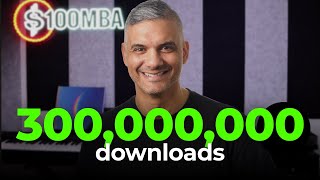
In this solo episode, Omar Zenhom recounts the evolution of his podcasting journey from a failed interview‑style show called People Who Know Their Catchy Name to the wildly successful $100 MBA show, which has amassed over 300 million downloads. He describes the early struggle—46 episodes with only a few hundred downloads, including a 400‑download episode with Gary Vaynerchuk—followed by a pivotal road‑trip with co‑founder and wife Nicole where they realized they were trying to imitate established interview podcasts instead of leveraging their own strengths as educators. The duo pivoted to a teaching‑focused format inspired by language‑learning podcasts (Coffee Break French/Spanish), launching the $100 MBA on August 11 2014 with short, actionable business lessons. Early validation came from topping Apple Podcasts’ “New & Noteworthy” list for eight weeks and winning a Best of Apple award in December 2014, which boosted exposure. Growth was driven by strategic tactics: guest appearances on other podcasts, extensive speaking engagements, paid advertising experiments, and a strong email newsletter. Omar also shares two major mistakes—delaying social‑media engagement and postponing video publishing (YouTube only began in late 2024)—and explains how those oversights limited earlier reach. He concludes with concrete advice for aspiring podcasters: obsess over a unique value proposition, rigorously plan and script each episode, treat preparation as non‑negotiable, and recognize that podcasting gets harder as the industry matures. Throughout, he emphasizes the importance of treating a podcast like a TV show with consistent characters (himself, Nicole, recurring themes) and building trust with listeners. The episode ends with gratitude to the audience and a plug for a recent episode on email open rates.
Chapters
Let me start with a confession. This podcast wasn't my first podcast. And honestly, it's one of the most important reasons why this podcast has worked. Before the $100 NBA show, we launched a podcast called People who Know Their Catchy Name, Fun Idea. But unfortunately, the podcast was. We published 46 episodes, and our best episode, which featured Gary Vaynerchuk as a guest, did a little over 400 downloads. Now, for context, my average blog post at the time was getting more TR traffic, and our average episode here on the $100 NBA show can hit over 80,000 downloads. So, yeah, the podcast sort of bombed. And Nicole and I were extremely frustrated because we're putting so much effort into that podcast and got really embarrassing results. That podcast didn't work because we were trying to be something that we're not. We were an interview show, and I was not good at interviewing. We just did what everybody else was doing because that's what all podcasts were like. They were all interview shows back in the day. Remember, this is 2014. And I remember vividly going to this conference called New Media Expo in Las Vegas. Nicole and I went to this conference. It was a pivotal moment because it was the first time we saw other people doing this podcast thing. We never even considered starting a podcast. We listened to a lot of podcasts. We were avid fans of the medium, but we never actually saw a podcaster up in person. People like Lewis Howser and Amy Porterfield, Johnny Dumas from Entrepreneur was on fire. And we realized, oh, this is a possibility. We can start a podcast, and this could be a way for us to reach our audience. And by the way, if you're curious about what are the best conferences to attend in 2026 in your business, in your industry, in your stage, in business, I'm actually working on that episode right now, and we'll be releasing it really soon, so make sure you're a subscriber so you don't miss it. So we left that conference and started that podcast called People who Know Their. We started immediately, and for the next five to six months, we were just struggling with this podcast. It just was not doing well at all. And like I mentioned, best episode ever on that podcast got 400 downloads. So we really felt like something was wrong. Then Nicole and I had an honest conversation on a road trip. We drove from San Diego to New York. We had to do a gig. Nicole was still doing video work back then. She was a videographer. And we decided to drive just to have the open road to figure out what's going on with this podcast. Why is it not working? Now, before I go deep into the story and tell you what happened on that road trip, I want to make it super clear. This is like a disclaimer, right? This episode is titled How I started and grew this Podcast. But to be 100% honest, I could not, I absolutely could not do this on my own, and I didn't do this on my own. Nicole, who is my co founder and wife, she's also the producer of the show, help me build and create both podcasts. So this is not, you know, a solo project here. I've done it with the collaboration and the help of Nicole. She's one of the biggest reasons why the show even exists or has any success. So I want to make sure that's clear. So the road trip, we're driving down and we're asking the question, why is this show failing? Why is this possible? Podcast just not moving the needle. And then we asked a very honest question. We looked at all the top business podcasts in Apple podcasts back then. That's all there was when it came to podcasts. And we asked a very important question. How are we supposed to compete with the best podcasts in the world? We're looking at all the top podcasts and podcasters. And there was Tim Ferriss, who has four New York Times bestsellers. We saw people like Jordan Harbinger, who started podcasting in 2006. That's before the iPhone companies like NPR, who started a podcast called Startup and had a massive brand and experience in podcasting and radio. Nicole and I had, like, a honest conversation about we're not going to compete with these people trying to be an interview show and trying to do what they are doing because we're not leveraging any of our strengths. And that was the pivotal moment. And this is really the biggest takeaway of today's episode. Ask the question, who am I? Nobody knows me. I don't have credentials. I don't have a New York Times bestselling book. I don't have fame. I don't have any leverage. What am I going to do? And then Nicole and I came to the conclusion, hey, we're educators. We taught in the classroom for over a decade. I literally taught five classes a day, five days a week for a decade. I thought to myself, maybe I'm not the best interviewer in the world, but I'm probably the best teacher out of all these people that I'm competing against in the podcasting world. So instead of interviewing people, I decided to teach and that was the pivot. We scrapped the old show and we started this one, the $100 BA show, which shares the same name as our business. We launched it on August 11, 2014. I remember the day. And we started to teach business short focus lessons. One clear takeaway, one clear outcome for every episode. Now I know that sounds obvious today, but back in the day that was different. No one was doing that. Everybody was doing either an interview show or even like a group discussion banter type of show, but almost nobody was teaching, especially in the business genre. Here's a little insight about something that a lot of people don't know about. Our podcast. The inspiration didn't come from other business podcasts. It actually came from language learning podcasts. Nicole is a fan of language learning, and one of the podcasts she listened to frequently was a podcast called Coffee Break French and there's another one called Coffee Break Spanish, and with short daily bite sized lessons that compound over time to help you learn a new language. And we thought, hey, what if we did the same but for business, for building and growing a business. Not long lectures, not rambly conversations, just clear practical lessons that you can actually use and implement right away, just like learning a new language. And that became the DNA of the show. And I encourage you to discover what the DNA of your show is. If you run a podcast, what's the unique value you add to the marketplace or to your audience when they're listening? When we decided to start the RBA show, we were all in. We fully committed to the podcast, which meant we had to say no to our client work. We had to take about two months to work on the show to build it out, to create the first 20 episodes before we launch so that we have some episodes batch recorded. I was freelancing and building websites and Nicole was doing film work and videography work. And we stopped it all. We said no to money that we desperately needed and we really dedicated ourselves to making this an amazing show. So when we launched the podcast, response was strong. We hit number one in New and noteworthy in business with a category that Apple had where you had eight weeks to get a little bit exposure in this section called New and noteworthy. And we were number one for eight weeks straight. And for us, that was like super validating that, okay, we actually have brought some value to the business podcast world. But it was also terrifying because we knew that New and noteworthy will end after eight weeks. And we felt like that exposure would no longer be there and we'll sink like a stone, right? But when Those eight weeks were up. We were still growing, and the show started to continue to grow. And I remember the day when we hit, like, 5,000 downloads an episode. Then one day we had 10,000 downloads an episode. And I felt like, this is incredible. But it was funny because those first six months, I really wasn't obsessing about the stats that much. I was really just obsessing about creating the best show possible for our audience. And I think that really helps. Even though we had traction, I wasn't entertaining any sponsorship or anything like that, or trying to go after sponsors. I thought to myself, if the show is good enough, sponsors will come to us. And that's exactly what happened in, I would say, December of that year, 2014. That's when we got our first sponsor. Something else happened in 2014 that was really significant in our growth. And in order for me to share with you, let me tell you a little bit about what happened a year before that. In 2013, Nicole and I were going a lot of conferences and talks. And one person that used to speak on a lot of stages about podcasting was a guy named John Lee Dumas, who has a podcast called Entrepreneurs on Fire. Since meeting him back in 2013, John and I and his wife Kate have been close friends of ours. One of the things that we used to see when he was on stage is that he would be announced as a Best of Apple winner or Best of Itunes. Back then it was called, and it's an award called Best of Apple Podcasts. And. And it's awarded to about a dozen podcasts a year. It's like winning an Oscar in podcasting. And every time we would hear that in his intro, Nicole would nudge me and say, don't worry, we're gonna win that for our podcast one day. I used to just downplay and be like, yeah, whatever, Nicole. But In December of 2014, exactly a year later, when we had our own podcast, the 100 RMBA show, and been around for about six months, we woke up one morning with the announcement on our phone. We got a message saying that we won Best of Apple. And it was huge for us because it allowed us to get incredible exposure. We're on the front page of Apple Podcasts, and we were there for a bit of time because they make this announcement, they keep it up for a few months. On top of that, we also won a couple other awards from Apple, like the Work Smarter Podcast. And it really allowed us to get some momentum. But to be honest with you, the biggest win was we just got some Validation that we built something that actually works, that people like, that actually resonated with people. And it was really an honor to win this award alongside some of the biggest podcasts of all time, like Serial and Startup and the Tim Ferriss show. So it was really a great moment in our history, but we really felt like, okay, this is great and all, but how do we keep this momentum going? How do we keep the show going and we're not just like a flash in the pan? From that point on, I felt like our job became harder. We had to improve the show every single time we published. We wanted to improve the audio quality and refine the pacing and sharpen up the topics and make sure they're appealing to our audience. We rethought our broadcast, clock the format of the actual show, what happens at every minute mark of the show, to make sure that it's not only engaging for the audience, but also adds a lot of value to the experience for our sponsors as well as our listeners. And that's a really hard thing to balance, by the way, but we worked hard at it. But above all, we are obsessing about making sure the show had unique value because I'm highly aware of the fact that our listeners and now viewers on YouTube can consume any kind of content. It's not just podcasts. They can consume music, they can listen to audiobooks, they can watch the news, they can listen to the radio. Radio still exists. Other podcasts, right? Netflix, you are constantly competing with other pieces of content. So this is why you gotta take your show seriously. You gotta see your show just like a TV show with a clear promise and a consistent tone and strong, familiar characters or even structure. Believe it or not, your podcast has characters referred to Nicole, she's a character. I'm a character in the story. Basketball is a character. Something I enjoy, right? I talk about poker as a character. So you gotta see yourself as creating a show, a production, something that is worth people's attention. So if you're looking for a growth hack to market your show, the number one thing you can do is create an incredible show so that if one person listens to it, they have to share with other people and that creates that virality. So that's the number one hack that you can do. Now, in terms of other marketing activities you could do that has worked for us. Let me share some. Number one is you can appear on other podcasts. If someone hears you deliver great value on an interview in another podcast, it's easy for them to want to check you out. And check out your podcast, since they're already on the medium, right? They're already on Apple Podcasts or Spotify. So it's easy for them to go and check out your show and subscribe. So try to get on other podcasts as much as possible. I also spoke on a lot of stages. Nicole, too, spoke on many stages. I remember one year I spoke 13 times in 12 months, and I was traveling a whole bunch. And it was quite exhausting, but it was quite powerful and impactful for the show. It really got people that never heard of us familiar with what we do and the show and our promise, and it created a loyal following. Number three, paid marketing. Listen, the podcast for us is our product, right? We see this as our business and we want to expose our product, our show, to as many people as possible. When it comes to paid marketing, you have to test, because every show is different, every production is different. You want to make sure that you test all kinds of different ads, podcast ads, like you're sponsoring other podcasts, Facebook ads, display ads, Spotify ads. Some worked for us and some didn't. You need to test it out. And through a lot of testing, we figured out what are the things that do work for our show, and we leverage those things as much as we can. But if you want a loyal following, you want to build a relationship with your audience, and the one of the best ways to do that is through email newsletters. We make a lot of effort into growing our email list so that we can continue to share with our audience the episodes that we published last week through our newsletter. That habit kept listeners engaged and coming back for more and more content. Now it's not all sunshine and rainbows. I made mistakes and I'm sharing them with you today so that you don't have to make those mistakes. There are two big mistakes I made. The first one is I ignored social media for a very long time. I made zero effort to grow my social media following. I only started to take it seriously about a year ago. A big reason why I didn't do it is because I didn't really love it. I didn't understand it. I didn't have time for it. I was running a daily podcast. The show, by the way, was daily for nearly eight years. And I was also building a software company for 10 years, which was no joke, and building a team and trying to make sure I don't screw that up. But I wish I started earlier. I made time for it because especially when it came to video, our reach would have been much bigger today. But hey, can't dwell over it. Just gotta start and make it happen. The second mistake I made is I didn't start with video earlier. We only started publishing our episodes on YouTube in 2024, late 2024. So we've been doing this for about maybe 18 months. To be honest with you, I think the show would have benefited a lot, especially when it comes to the marketing of the show, if we published video episodes at least four or five years earlier. The reason why I say this is because it's very hard to market a audio podcast without video. How do you market an audio podcast on social media without video? And by having video, you're able to really leverage the power of video and reels and stories and all that kind of stuff to drive traffic to your show. I didn't really dedicate the time and effort, but I should have figured that out because I'm now making up for lost time and we're like beginners again on YouTube. But it's all good. We're going to try to crack it as well and grow through video as well. Now, if I was starting a podcast today, this is what I would do. I would obsess over the concept of the show. I would define what my unique value is as a podcast. I would plan every episode, understanding that the more time I use in the planning, the better the outcome will be, the better the episode will be. That includes, like, scripting, thoroughly understanding the concepts, and understanding how am I going to deliver these concepts in a way that really resonates with my audience. And I would treat prep as a non negotiable. So I want to make sure that you understand that this stuff matters. Winging it rarely works unless you're some sort of trained improviser or standup comedian like Amy Poehler or Theo Vaughn, and most of us are not. I believe that podcasting doesn't get easier over time. It actually gets harder because the bar rises not only for yourself, but the whole podcasting world. Every year gets more and more competitive. But that's also a good thing because it makes you better and it's also still worth doing because I believe it's one of the best decisions Nicole and I have ever made is to start podcasting. It's made me a better communicator. It's helped me grow my audience. It's helped me express myself creatively in so many ways. And after 300 million downloads, I genuinely feel like we're just getting started and that we can do better. Before I go, I want to thank you. Honestly, I want to thank you for listening right now, for being a part of our story. I want to thank you for every single time you listen to the show, every download, every message you've sent me. Means so much that you are a part of our journey. I don't take this lightly. When I plan and record an episode, I'm thinking about you, literally the person who's gonna hit play and is hoping to learn something useful from that episode. So my job is not only to earn your trust, but to keep it. And I don't take that in vain. And I really take it seriously. So thank you so much for being here. And if you found this episode interesting, we got a lot more for you to listen to on the podcast. As you know, we have over 2,700 episodes in our back catalog. One episode you might be interested in, that published a couple weeks ago, is called How Do I Increase My Email Open Rates? I think you'd find it really important because I find that if you're sending out emails and no one's opening it, it's waste of time and energy. In that episode, I give you a full, detailed plan on how to get more opens in your email list and share with you everything that has worked for us over time. So check it out. Thanks again for tuning in. I hope today's lessons were helpful and I hope to see you in the next one. Take care.










