How to Be Funny in Your Marketing
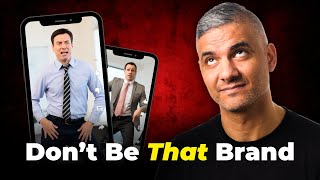
Omar Zenhom explains why humor works in marketing: it lowers resistance and makes people remember you. The rules are simple: be relatable not random, clever not cute, tie jokes to your product, and stay authentic. Desperate or off-brand humor backfires.
Chapters
There's no doubt about it. Humor in marketing is powerful. But let's be honest, cringe is also a real thing. Nobody wants to be that brand that's trying too hard to be funny, coming off like the business version of your uncle trying to do TikTok dances. So how do you use humor in your marketing? In a way that's natural, that's strategic and effective without looking desperate? Why use humor at all in the first place? Well, I'm going to tell you firsthand from using humor in my marketing, it helps lower the resistance automatically. When you're talking to potential customers, your audience, there's a resistance. They are judging you. They are kind of holding back and trying to make a decision, should I trust this person? And humor breaks those barriers and allows them to ease up a little bit. It also builds trust because, let's face it, we start trusting people that we laugh with and. And like being around. But what I found the most powerful thing about humor is that it makes your message stick and be memorable. When people smile or laugh at something that's going on in your marketing, they remember it because that behavior is linked to the message. According to a Nielsen study, 47% of global consumers say humorous ads are more effective. But the key is to make the humor fit you and your brand without being cheesy or corny. But how do we do that? Well, I'm going to give you some rules to follow that's going to help you be funny, memorable, but not a cornball. Rule number one, be relatable, not random. Great humor connects through a shared experience. Through that, humor is a connection. Talk about the struggles your audience faces. Make light of them in a way that says, hey, we get you. We're human, too. An example of this is that at Webinar Ninja, we ran a campaign joking about the chaos of managing different webinar tools. To run your webinar with 12 tabs open. It worked because every webinar host knows that pain. Spinning all those plates at one time, managing everything, making sure nothing breaks. You got to see humor as a bridge, not a disguise. You're not trying to distract people. You're actually trying to connect with people. Don't hide the value. Use humor to really illustrate the value. And usually the best way to do that is, is to have a little fun with the opposite of your solution, the pain point. Rule number two, be clever, not cute. If your humor doesn't support your message, it's just a distraction. Like I mentioned, okay. For example, if you're selling accounting software don't make random Llama jokes, okay? Instead, make jokes about receipts that are exploding out of your shoebox. Again, the pain point of accounting for receipts. The best brands use wit to highlight the problem they solve and customers start thinking, wow, they're funny and they get me. They understand what I'm going through. So don't try to be funny just to be funny. Use your humor to highlight your solution. Rule number three, tie the punchline to the product. Funny is great, but funny and effective means your joke leads directly to a value proposition. And that's just a fancy way to say that your joke lands not only in a funny way, but in an intellectual, valuable sales way. So I'm going to give you an example, and this one might be pushing the envelope a little bit, but it's good to kind of push the limits a little bit and be a little cheeky. Say, for example, you have a product that makes it easy to send proposals via email. You can have a little fun with this and say something like, still sending proposals with a PDF in 2025. You might as well fax it too. Then you can introduce your sleek proposal builder. Contrast is great for humor, but it's also great for sales because it shows the before and after when you consume your product. Humor should nudge the sale, not steal the spotlight. Okay, we're just kind of giving them a hint. Hey, you might want to consider this instead. I want to give you a bonus rule here that a lot of people kind of forget. When you're trying to be funny and you're putting together a humorous ad, don't do something that is not you. Be authentic. For example, if you don't use swear words in your everyday language, then you should not use it just to try to be funny. People can see through that and be like, oh, that's not that person, that's not that brand. This feels forced. You don't want that. In fact, if you are as a person, just a cheesy dad joke telling person, own it and make it a part of your campaign. Make it part of the humor. Now there's something we need to address, something that we need to avoid and that is desperation humor. Here's what desperation looks like. Overly edgy or off brand jokes. Forcing memes into the message. Kind of just like cramming things that just don't make any sense. Acting like the cool kid when it's clearly not your tone. Basically being something you are not, it wreaks insecurity. Instead, lean into your brand personality. Like I mentioned, if you're quirky, be quirky. If you're dry and sarcastic, own it. Just be consistent. It's going to be jarring. When your humorous ad has nothing to do or it's not congruent with your brand or your website or your products or services. The truth is, your audience wants to connect with a real human, not a faceless company. And humor, when done right, is an act of vulnerability. It says not perfect, but we're here to help and we're gonna make you smile and we're gonna have fun with this a little bit. Don't be afraid to show your personality. Don't forget that your first goal is to serve first. And part of serving first is having a little fun with your customers while staying real, while staying true to yourself. And lastly, if after this whole episode you are telling yourself, you know what, Omar? I'm just not somebody that feels comfortable trying to be funny. I'm not somebody who mixes humor with my business. Good. That's good that you recognize that you don't have to be funny, right? You don't have to try to do this. If this is not your brand, is this not what you do? Is this not what you feel comfortable with? Don't force it. But this lesson is really for somebody who wants to be funny, is kind of jovial in their own life, in their personal life, and wants to kind of infuse that in their business and brand a little bit to leverage the power of humor in marketing. There's other ways to market. There's other ways to use different sales psychology. You don't need to use humor if it doesn't feel natural. Thanks so much for tuning into the $100 MBA show. If you want to help growing your business with creativity, with confidence, and you want something consistent, then you should join my three Things newsletter. It's absolutely free and it's my way to coach you from afar. Every week I send you an email with three things. One, Something to think about, something to help improve your mindset. Two, Something to do so that you're progressing in your business week after week. And number three, something to learn so you're skilling up and becoming a better entrepreneur. And every single day, let's go. Let's grow together with our Three Things newsletter. Just go to 100mba.net and sign up for any of our templates or guides and you'll be part of our weekly newsletter automatically. Again, it's free and it's just my way to be able to connect with you outside this podcast. Thanks so much for being part of the show. If you enjoyed this episode, you found it beneficial. You found this podcast very helpful. The best thing you could do to say thank you is to share it with somebody else, somebody that you're thinking about that could benefit from this. Go ahead, tell them that you're thinking about them. Send them a link to this episode. Or you can just send them to our show page where all our podcast episodes are.100mba.net show super simple. Thank you in advance for doing that and I'll check you in the next one.










