How To Be More Natural on Camera
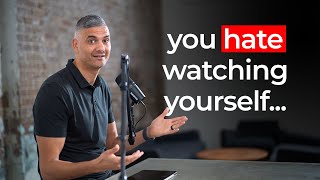
Omar Zenhom shares tactics for looking natural on camera after filming hundreds of lessons. Imagine talking to one person instead of an audience, use bullet points instead of scripts, and try his 30-day challenge: record and post one 30 to 60-second video daily.
Chapters
If you feel like the moment the camera turns on, you're not alone. If your voice changes, if your shoulders tense up, if you suddenly forget how to act like a human being, welcome. You are normal. Today I'm going to show you how to be more natural on camera so your videos feel like a conversation and not a performance. First things first, you're supposed to feel weird at the start when you're on camera, because when you talk to another person in real life, you actually get feedback, feedback that you don't get when you look at a lens. Like, you see their eyes, you see their body language, you see them reacting to what you're saying on camera. You get a piece of glass and a blinking light, and your brain just reads this as not a normal situation, not something that you are accustomed to. What happens is you go into performance mode and your voice might go up an octave. You might start overthinking every single sentence that comes out of your mouth. It's if you stumble, you really get angry inside, and you start to feel less confident. You start to want to be professional instead of trying to be yourself. So if that's you, it doesn't mean that you're not good on camera or you can't get better. It means you just haven't had enough reps yet. A lot of people ask me, hey, how do you feel comfortable on camera? And honestly, it's a skill that I had to build over time. I've shot probably over a million hours of video. I'm not joking. I've shot over 500 different video lessons for the program. I've done over 500 webinars, live webinars on camera. So I'm very, very used to being on camera. It's something that I had to really work on. But when I first got started, it didn't feel great. It didn't feel natural, and I didn't feel like I was doing a good job. But what I'm trying to convey to you is that this is a skill, like any skill, where you can break it down and you can learn it and you can practice it, and that's what we're going to do in today's lesson. If there's one tip, one hack, one strategy that I want to give you today that you could take away and use and leverage and make things so much easier for you, it's this one. It's my favorite trick of all. And that's when I'm talking on camera, I try to pretend I'm on a FaceTime call with a friend or family member. I literally think of a specific person and all I do is I imagine that I'm just updating them. I'm explaining something to them and not the audience, right? Instead of thinking, hey, I'm recording a video for social media, I think, hey, man, let me show you something that really works, something that's going to help you do xyz. That subtle shift does a few things. Your tone becomes more natural, your face starts to relax, your body language starts to soften so you're more approachable and you stop trying to sound smart and you start trying to be helpful. This is huge. This allows you to stop trying to sound smart and instead you're just focusing on helping somebody. You can even write their name at the top of the notes or like with a post it note. This video is for Sara, who's just starting her business or starting her fitness journey and feels xyz. This kind of puts this free frame of reference, this in your head before you start shooting, so you know how to present yourself and allows you to really deliver on camera feeling more natural and also just being more authentic. So when you hit record, you're not speaking to followers, masses of people. You're speaking to Sara. There's gonna be thousands of people just like her or just like this person that you're talking to. And it's gonna resonate a lot more deeply with them because it's not generic information. It's not generic. One of the biggest mistakes people make on camera is that they think they need to be a Persona. They've seen gurus yelling at their phones or talking like a game show host and they think, oh, I guess I have to do that. I guess I have to put on this bravado, I have to put on this confidence. It's not really helpful for you to be something you're not. It's just not. And it's going to feel unnatural to you and you're going to focus on the wrong things. The secret I found out was that what people actually want now is personality, not a Persona. They want to feel who you are. And you might be saying to yourself, oh, I'm not interesting, I'm not funny, I'm not suave, whatever it might be, don't worry, just be who you are. And guess what? There's lots of people that can resonate with somebody who's just a normal, you know, run of the mill person that is trying to help them out because they see them in their life. They can, you know, relate to that. And they can also appreciate the fact that you're not putting it on. You want to be the person that you are when you're just hanging out with a friend, having a coffee. The best content online, in my opinion, is the content that when you watch it, you forget that you're watching a video and you feel like you're in the conversation. So a good rule of thumb is don't turn into a different human when the camera goes on. If you're calm in real life, be calm on camera. For example, I talk with my hands a lot. That's because it's who I am as a person. It's part of my background, my culture. My parents immigrated from Egypt to the U.S. so Arabs, they move their hands a lot when they talk and they're very expressive and, and they use a lot of volume sometimes. And that's how I am sometimes in restaurants and we're having dinner and, you know, Cole and Nudge would be like, hey, you know, like, lower your voice a little bit. And she's right, I'm making too much noise. But the point here is, is that that's who I am and that's who I. I try to be as much as possible on camera and forget about the cameras rolling. It's okay to be a slightly more energized version of yourself on camera, but don't be a different character. Don't be something that you're not used to. Can I get 30 seconds of your time? We love guiding you on your business journey and we want to help even more people build their dream lives. So if you could hit the subscribe button, it would be greatly appreciated. It's completely free and it helps us out more than, you know. Thanks. Another reason why people sound stiff on camera is they're trying to remember a script word for word. You can hear them thinking like, okay, what's the next sentence? What do I have to say next? What are the exact words? Instead? What I want you to do is switch to bullet points. Before you record, write down three to five bullet points. Know that you have to cover these bullet points and just deliver them in a natural way. This could be like the hook. Two or three key points and a takeaway or a call to action. Those are very easy. General five bullet points that you can cover. When I speak on stages, at events, one of the things I try to do with my, you know, 20 minute, 30 minute, 40 minute talks is not script it word for word, but to link everything with stories. Because I know my stories, I know things that happen in my life, I could tell that story over and over again. And it's just easy for me to know what to say next because one story leads to the next. For example, for this episode that you're listening to or watching on video, I have four bullet points. FaceTime, Trick, Personality versus Persona, Practice Reps Challenge, and Simple CTA. So those are my four bullet points. As you can see, I've talked about half of these and I've gone into some stories and talked about some examples, but I generally know what I'm talking about and this is where I'm sticking to these bullet points. Now take note. When you're speaking a natural language and using bullet points, you will make mistakes. Sometimes you'll stumble on your words. Sometimes you'll say something that's grammaric, grammarically grammatically incorrect. There's a perfect example right there. So it's okay. That's how normal natural speech sounds like. Remember, the goal is connection with your audience, not perfection. Here's the part nobody wants to hear, but it's the most important part. The only way to be more natural on camera, in my experience, is to spend more time on camera. It's just that simple. You can listen to tips all day, but if you don't feel what it's like while you're on camera and course correct, you're not going to really get better. You don't feel different until your body gets used to it. Right? You have to build that muscle memory. So I want to give you a very simple challenge that you can do with yourself. It's called the 30 Day Video Reps Challenge. Super simple. For the next month, I want you to record one short video every single day. This is a short video, under a minute. And that's great because most reels or shorts on social media are a minute around the minute. Mark, I want you to post these videos. Those videos don't count if you just keep them on your phone. You got to post them on Instagram stories or on reels, or on TikTok or on YouTube shorts. Even if it's just to a small following that you have, that's okay. The point is, is that you want to put it out in the world that makes it real. You're going to get some feedback and you're going to also just get used to just publishing and putting it out there. Meaning like, I'm going to record, I'm going to get it done, I'm going to publish and I'm going to put it out there and I'm going To move on to the next one. The point of this exercise is to not go viral, okay? The point here is to get the nerves out of your system. You're just getting used to producing content, getting more comfortable in front of camera, using the strategies and the techniques and the tips I gave you today. While you're doing it for 30 days and putting it out in the world by week three, I'm telling you, you're going to start saying to yourself, wow, this felt terrifying a couple weeks ago. Now it's just another thing I do. It's something that I'm used to. And that's the first sign that it's becoming natural. Part of what makes you stiff on camera is the pressure you put on yourself. For each video, you say to yourself, this has to be amazing. This has to perform. It has to go viral. This has to represent my brand forever. No, it doesn't. This is just a rhetoric that you're putting in your brain. That's not helpful. Okay? Here's a better belief you should have when you put out these videos. This is just one of a hundred videos I'm putting out in the near future, right? I'm going to make a ton, and my job is just to get 1% better with each video. When the stakes go down, you start to relax. You start to have a little bit more of a sense of humor. You start to just be yourself and just enjoy the process because the more fun you have with it, the more you're going to do it. So before you hit record, tell yourself, this doesn't need to be perfect. It just needs to be honest, helpful, and done right. It has to get created and be put out in the world. Let me give you a few more quick tactical tips that you can use today to feel more natural. Let's go. First one is I want you to stand up if you can. I'm standing up right now. Most people are more expressive when they're standing. Your breathing opens up, you have more energy, your gestures feel more natural. Personally, I like standing up because of that energy feeling. And it just feels more natural because I was a school teacher for 10 years and I was standing when I was teaching. And this is just something that I've been doing for a very long time. So I like standing. Tip number two, look through the lens, not at your own face. So if you have a webcam above your screen or your monitor or whatever it might be, don't look at the lens, you know, video feed of your face because you're going to be very Critical about what you look like, you're going to be thinking about your face. This is especially important if you're looking at your phone. Look at the lens, right? If you even flip the camera so you don't even see yourself like the back of your phone like this. That's even better. Listen, we've all been guilty of staring at our own image instead of the lens, checking ourselves out, making sure that we look presentable. But do that before you hit record because that really kills connection because you're not really making eye contact with the lens. And therefore, when somebody watching the video, they feel like you're talking directly to them. It's okay for you to take a first take, right? The first one doesn't have to count. You don't have to hit record. You can just say what you want to say before you hit record, then hit record, then start to talk. Even if that first take after record is not the way you want to do it, that's okay. Do it again while it's rolling and you can edit later. Tip number four, Warm up your voice and face a little bit. I know that sounds silly, so. But it really works, you know. Shake out your shoulders a little bit, roll your neck, feel a little bit more relaxed. Say a few sentences out loud before you film. Smile really big and relax. This kind of allows you to warm up your face muscles. I find this incredibly helpful because it allows me to enunciate my words a lot better when my face muscles are a little bit more triggered or I've kind of used them a little bit before I hit record. Tip number five. My fifth and final rapid fire tip is to record shorter videos. I hinted at this before. You should just aim to shoot 30 to 60 second videos. It's okay if they're short. Nail a short punchy video first and you'll get confidence because you're like, hey, that was pretty good. The longer your videos, the harder is for you to have a video that you're satisfied with because there's more room for error. There's more room for you to kind of go out of bounds. So. So start with shorter videos. Before I wrap up, I just want to just address the elephant in the room. Why does this all matter, right? Because I believe video is one of the fastest way for you to build trust with your audience, to stand out, to grow your business beyond just great products, but having a great brand. Most people will never get comfortable on camera because they're not going to put in the practice and the work that we talked about. Today, which means if you do it, you'll already be ahead of them. When you're natural on camera, magic happens. People feel like they know you. I can't tell you how many times people have stopped me in person or seen me at a conference and they say, like, I've been listening to you for years. I feel like we've been friends. They feel like they know me because of how I've constantly worked on this, trying to be myself on camera or even just on audio with the podcast. When you work on this, people start binging your stuff because they start to feel like they want to build that relationship, but they're enjoying the content more because of your delivery. They think of you. When they have a problem to solve, they go to your podcast, they go to your website, they go to your products or services. And when you make an offer or call to action, it doesn't feel like a stranger selling to them. It feels like a friend recommending something that can help them out that's incredibly powerful. If you found today's episode helpful, help somebody else by sharing it. Share with somebody you think is struggling with being on camera or is on the same journey as you. Send them a message that you use that share button that's on the app that you're using right now to consume this episode and go ahead and share it with them. I'm sure they'll thank you for it. Also, if you want to learn more from me, you might want to sign up to our weekly newsletter. Every week, I personally write an email to you. It's sort of like my journal, sort of my way to give you something to think about, something to do so that you can improve every day. It's short and sweet. It takes less than 5 minutes to consume. So go ahead and sign up over at 100mba.net newsletter. Before I go, I want to leave you with this. If you invest in this journey, in this practice, this 30 day challenge, I'm telling you, it's not only going to make your videos better, but you're going to be a better communicator. You're going to be better at sales, you're going to be better at just being somebody that people like being around because you have practiced the art of communication. In my opinion, communication is the number one skill because you can have a great product and have a great service, but if you know how to communicate it, then it's pretty much worthless. So throw away this idea that you're not good at this or you're not talented. No it's reps plus intention. That's what I found. That actually makes a difference. All right, I'll check you in the next episode.










