How To Build A Personal Brand Quickly With Dain Walker
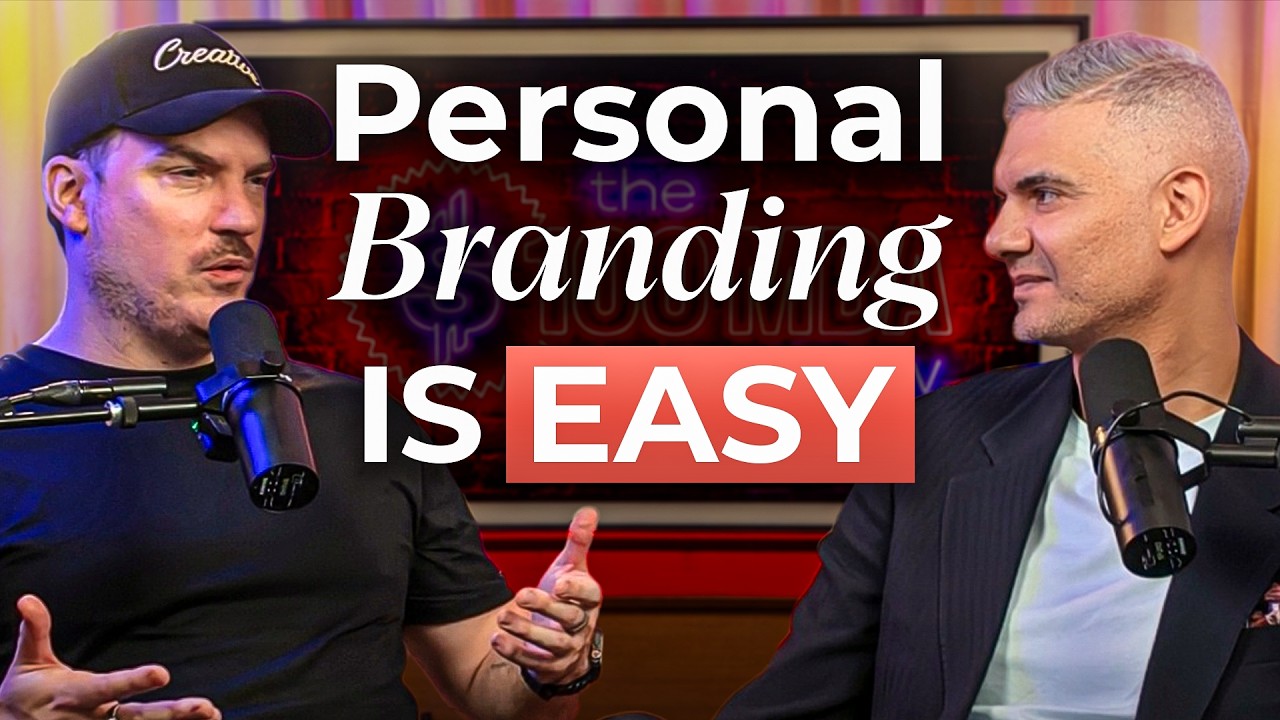
Dain Walker, author of The 90-Day Brand Plan, breaks down branding versus marketing and shares a workshop exercise where you map your brand to a car, drink, character, and song. He warns against bland brands and walks through real client rebrands like Andrew Schultz and Nutrition Warehouse, plus a four-pillar sales framework and an imposter syndrome self-audit.
Chapters
I'm about to sit down with the branding master, Dane Walker. He is the author of The 90-Day Brand Plan and the host of The Agency Podcast, a podcast that absolutely has blown up recently with over 1.5 million subscribers on YouTube. We're gonna talk about a lot, especially when it comes to how to develop your own personal brand, get out of your own way, and make sure your brand helps you with everything you do, including your marketing and your sales. He's worked with big brands like Nutrition Warehouse, Culture Kings, and the very funny Andrew Schultz. He's going to share with you the same exact strategies he used in helping build their brands so that your brand is better by the end of this episode. Let's jump right into that conversation with Dane Walker. Dane Walker, so good to have you here, man.
Omar, good to see you, my friends.
Love it. I love the fact that you're here in Sydney and you're so good at what you do.
Thanks, man.
I want to start With the fact that, you know, you to me are one of the best people when it comes to branding. And I'm sure you get a lot of people that come to you that wanna work on their personal brand, but they think they have a marketing problem. How many, in terms of like, give me a percentage, how many, you've helped thousands of people. So out of a percentage, how many people actually have a marketing problem and how many people have a branding problem?
That's a great question. I think oftentimes people look at branding, marketing, advertising, and sales, mash them into like one big Play-Doh ball, but they're actually different colors of Play-Doh, if you will. I think when you look at branding, for me, you know, branding is really the experience, the feeling you get in your gut, how something is perceived, how you associate it to belonging to something. Whereas marketing for me is the framework or the structure to make something happen.
Mm.
The best analogy I could really put together for people to understand the difference between all of these systems is that let's say you're driving down the road and you see a big billboard for a Mercedes dealership. And let's say there's a new C-Class car. That's an ad. The advertisement is out in the world talking to you. You might see the ad through Meta or Google or like pixels show up somewhere that says, hey, there's a product that exists that you should buy. In that advertisement, there are branding assets. Colors, fonts, typography, logos, and those elements are there to create an association. So you might go, wow, that looks prestigious and sophisticated and cool. Whereas if you see a Red Bull billboard or ad, you might go, wow, that's like human potential, pioneering, and rebellious. Whereas, you know, even if you have the same product, let's take Virgin Airlines and Qantas. The associations I'd have with Qantas you know, heritage, national pride, and, you know, Australia's home. Whereas if you look at—
Losing your bags.
Yeah. And losing your bags, of course. And terrible customer service. And then if you look at Virgin, it's, it's the exact same product at the exact same location with the same color palette, the same, you know, everything's the same. Like it's the same plane and the same process and system and everything. But the brand feels totally different because the association with the logo and with Richard Branson is that this is a brand of entertainment, fun, and rebelliousness, and kind of youth. So these associations are carried through advertisements. Yeah, that's brands. The advertisement itself is the frame where the brand's experienced, typically out in the world. Now back to the analogy with Mercedes. If you go into the dealership because you see the ad, now you're in their marketing system, right? You walk through the dealership, each Even though it's a retail experience, it's a marketing system. You walk on the car lot, the product's sitting there with price tags hoping that you buy the car, and maybe you ask a sales rep, take me for a drive in one of these cars so I can experience it. You're in the sales process in the marketing structure or system.
Yeah.
So the fact you went to the dealership is because of the marketing system. The marketing is like the conductor that sits behind all the advertisements that uses the branding to pull you in to buy. The product. So whether you're Alex Hormozi selling books or seminars, or you're Mercedes selling cars, or you're, you know, an airline trying to get people to buy your ticket instead of the competitor's ticket, the thing that really separates people is the brand. So when you ask the question, how many people mistake marketing for branding and how they know the difference, you can't just rely on a marketing system devoid of branding and expect to win. You need these systems to work together like cylinders in a car engine. They all have to work together in a simultaneous, like, kind of orchestra, if you will.
So would you say somebody that's marketing their business, marketing their products without even spending time on working on their brand, are they wasting their money?
Not always. You know, I've met plenty of entrepreneurs that make $10, $20, $30 million without really making an effort to build brands. Sometimes people can be really great at logistics or they have a really potent network or they're in a market that has a deficit. So, for example, if you're the only manufacturer that makes toothpicks, no other competitors make toothpicks, maybe you don't need to build a brand because you're the only toothpick factory in the country.
Yeah.
So, you know, I think it's like glitter is— there's like 2 companies that sell all the glitter in the world. They don't really need to do a lot of branding. So there are these outliers where they don't do a lot of like branding in the way we know branding. They still have a brand, they still have a reputation. People still trust these companies. But essentially, for most of us, like, we don't have a logistical moat around our brand that allows us to do something that others can't. If you're in an industry where you're competing and other people are offering the same thing or near the same thing or an adjacent thing to what you're offering, if you're not investing in branding, you're not tuning your car to be as fast as possible. So, let's look at this from the analogy of a racetrack. If you're building a vehicle, which is your you know, representing your company, one would assume that you would want to have the most efficient, fuel-efficient, and fast and maintainable and secure and safe vehicle on the track.
Right.
If your vehicle's not safe, you're running a risk of like not even being in the race. If it's too slow, you can't keep up with the competitors in the market. If it's not cool enough, maybe the fans might not buy merch and cheer the brand on.
Right.
So let's imagine the racetrack analogy. Let's imagine you're building your own vehicle, which is your company. Why would you not want to have a beautiful design? Why would you not want to have the cleanest vehicle with the best methods and the best processes? I think for me, if you want to build a company that's mature, that can fight in the market, that customers care about, you should look at the design.
Why?
Because it's communication. If you want to sell as much as possible, it's really the art of communication. And if you think about a logo, that's a piece of communication. A color palette is a piece of communication, a tagline, even the font you choose. So imagine I had a piece of paper, and on that piece of paper we use like old school type, like a typewriter type. And I type out the words, I'll be waiting for you. It might be like, oh, it's a poem. If I get a crayon and like scratch it on the page and create a different looking font and says, I'll be waiting for you, in big bold letters, now that's like a death threat.
Yeah. All of a sudden, right?
So like just changing the font, that's an extreme example, but like if you just—
No, but it's a good one. Right.
If you look at different fonts, like some fonts are a bit heavy and funky, other fonts are like slim and elegant. Fonts, typography, even like negative space, how you curate photography, These are all just signals that associate with people viewing it in an immediate heartbeat, like, hey, we're kind of rebellious, or we're kind of sophisticated, or we're kind of cool. Most brands don't really have a personality in their associations. They tend to rely on some pretty basic associations. So for anyone listening right now, what I'm about to say might offend you. So let's just put a big warning label on that. So these are the associations that everyone brings up in a workshop. So Not to impress anyone listening, but to impress upon the magnitude of this. I've done thousands of workshops across the world for about 7 years, and something I've noticed is that in a brand workshop, the same things get said in every workshop.
I can't wait to hear this.
Right. And the associations are usually this. When I ask the client, like, who are we as a brand? Why should the customer choose us? Why are we fantastic? The resounding response It's almost always, well, we're trustworthy and we care about the client because we have integrity and we're honest and we're authentic and we want to do innovation in this industry and we have the best products. And it's— there's nothing wrong with any of those things.
But everybody's saying—
Yeah, but those associations are benign. They're, they're, they're, they're not interesting at all. The problem with being benign is that people won't choose you if someone else is exciting. Okay, let's let's use an example here. Sir, what's your team member's name again?
Josh.
Okay, Josh. Josh is behind the camera here. Now, Omar, if you raise your arm and tickle your own armpit, is is that funny?
No.
That's pretty benign.
Yeah.
But if Josh, if I got you to come over here and tickle Omar's armpit, that would be a violation.
Yeah.
Right. But the idea of it is kind of funny.
Yeah.
If you actually got up right now, you'd be like, well, this is kind of. It's kind of inappropriate. You need your brand to not be benign and to not be a violation unless that's what you're going for. It needs to sit somewhere in between. It needs to evoke an association.
Josh has got to use the feather.
Yeah, use the feather, right?
Yeah.
If you use the feather, that would be kind of super weird and whimsical, but those associations will be different, right? But it's a weird analogy. But I think what people tend to do with these associations is they tend to just Pick the thing that's kind of weirdly safe.
Yeah, vanilla.
And it's not interesting. And you know, there's an ancient Chinese proverb that says, if the nail that sticks out gets hammered. And people read that like a negative, but I'm like, well, you want to be the brand that sticks out and gets hammered with leads and attention. If you want attention, stick out. Yeah. Yeah. With these associations, what we spend our time doing is we work with clients to figure out, well, what other associations could we build? And there's a quick exercise. If anyone cares to do this, yeah, let's hear associations. Okay, so let's do it with your podcast.
Yeah, real quick.
All right. So number one is if this podcast were a car, what car would it be and why?
That's a good question. Probably a Lexus.
A Lexus?
Yeah.
What color?
It would be black. Black.
And what model?
LX470, which is like the four-wheel drive.
Okay, very specific. I like that.
Yeah.
And what What are you trying to— what message are you trying to send if the— let's say you wrap that car in this brand. What would you hope people look at and go, oh, that brand is kind of what?
It's practical, it's reliable, and it's actually a little bit upscale and thoughtful.
Yeah, it's kind of like a little sophisticated, a little cool. Like how you dress, you always dress very sharp, very elegant, but there's a bit of an edge. You have a sneaker with a suit and a plain shirt. So, so there's a sophistication to you, but then there's like a, uh, like a down-to-earth, like relatable, um, not humbleness, but like a cool factor, right? You're a cool dude and you're funny and you're like with it. So there's a few associations. Let's do another one. If you were a drink, doesn't have to be alcoholic.
Probably maybe like, um, some sort of electrolyte drink, like a sports drink.
Okay. Why?
It has use. It hydrates you. Uh, you feel better afterwards. Epic.
Okay. And then if you were a movie character or anime character or some fictional character or superhero?
Jackie Chan.
Why Jackie Chan?
Because Jackie Chan's willing to do what it takes to get the shot.
Break the ribs, jump off a balcony. Exactly. Yeah.
And lots and lots of reps. He's got like thousands of movies.
And you do that in your show. You like, you put in a lot of reps into everything you do. All right, we'll do one more. Let's say, okay, if you were a song, What song would you be and why?
That's a tough one because I love music.
So, start with a genre, then maybe pick an artist, and then come down to a song.
This is a tough one. Because I'm a huge Michael Jackson fan, so I have to go with Michael Jackson. And if I had to choose a song from him, it would be Man in the Mirror because it's self-reflection. Yeah.
Okay. So then, if you put those analogies together, you can start to create a mood board.
Yeah.
So, we've got some photos of Alexis, got some photos of Michael Jackson on stage, Jackie Chan. We started thinking about Man in the Mirror. Like, you start to put these pieces together. I know this sounds a little weird, but what we do in these workshops with these clients is we start to pull this material together and then they kind of reveal their associations. So, when we ask ourselves, okay, what 2, 3 words exist in this montage of material that explains who you are? It's not trust. It's not usually like honesty or authenticity. There's something else.
Yeah.
So, then we look at that material and go, okay, cool. Why isn't this showing up on the website? If this is the energy of the brand, if this is the aura, like, is this coming through the photography? Is this coming through the font? Is this coming through the content on your social media feed? Yeah, on the social media feed, in your emails. I want to see you like kicking a table over and like screaming. And then, and then there's some music in the background and then you're saying something hilarious like Jackie Chan would. So I think if you think about, as silly as this is, if anyone sits down and just does this, if you were a car, what would you be? If you're a drink, If you're a character or movie star, if you're a song, if you're a sport, if you're a place, if you were a hotel chain, you know, you could kind of do this with anything. If you're a household object, doesn't matter. Just write down 6 or 7 of these things, write down the associations. And here's the trick with the associations for anyone who wants to take us to the next step. Are there any visuals, colors? Is there textures? Like, can you feel things? Is Is it grainy and textural or smooth and polished? Is it bright? Is it dim? Is it daytime? Is it nighttime? Are there smells? Are there sounds?
Is it loud?
Is it quiet? Is it messy? Is it calm? So, you just have to look for this material and then just look at your website and look at your content and go, it's not there.
Right.
So, the client usually realizes in a moment of like 20, 30 minutes of doing these exercises like, man, we're off-brand. We don't have a brand. It's like, yeah, we need a personality. You can still do serious business and still be trustworthy and still do these cool things. But have some energy to it. Because if you look at a brand like Harley-Davidson, they're not trying to be trustworthy. People trust that they're like some of the best motorcycles in the world, and everything they do is kind of rugged and masculine.
Yeah, and freedom and open road. Yeah, all that.
Because trust is a result of you relating to someone.
Yeah.
So you're a funny dude. If you meet someone else who's funny, you're gonna have more trust for that funny person you met than someone who's maybe a bit stiff.
Yeah, yeah. I have a hard time getting along with people that don't have a sense of humor. Yeah. But I love that exercise because it takes people outside the mundane day-to-day business talk.
Yes.
And gets them to think and be a little bit more playful and to just have fun a little bit. And that brings the personality out.
Yes.
And I love what you just did. And I think that's an amazing exercise for everybody to do. Don't just listen to it. Do it, guys. Take out a paper and pen and rewind and go through it because That's one of the best pieces of advice I've seen when it comes to branding.
Yes. And this is something that we find brings energy into the room. So there's a quote we have at Rival, and it's that, what does it mean to be creative? For me, the definition of what makes something creative, because some people think to themselves, I'm not a creative person, for whatever reason. I believe everyone's creative, especially when we're children. It's just kind of beaten out of us usually, right?
100%.
You know, when you're a kid, you're imagining stuff and creating stuff all the time. So, our definition of creativity is just intelligence having fun. So, when people come into workshops and they're building a brand, it's serious. They're like, we need to make money, we need to get leads, we've got to pay bills and do overheads. And it's like, yeah, but we can have some fun at the same time.
Yeah. And why not? Why not do it and have fun? Because otherwise you're miserable. Why would you want a business like that? Awesome. I mean, you've worked with so many companies and so many brands. One of the things I noticed on your website is that you have a testimonial from Andrew Schultz. The hilarious comedian. I want to read his testimonial because it's absolutely hilarious. He says, the difference between a rat and a squirrel is branding. Dane will turn your rat into the most beautiful squirrel you've ever seen. What did you learn from working with Andrew?
I love Andrew. Uh, yeah, so, so it was about 3 years ago, I got a DM, uh, from a comedian. His name is Mark Gagnon and he's a cool cat. He's based in, um, Brooklyn in New York. And He's like, dude, love your shit. Can we connect sometime? I was like, sure. And I remember like getting on a call and I had blue light glasses at the time, these big, thick, cool blue light glasses. And he gets on a call. He's like, dude, he's like making fun of me immediately. I can't remember what he said, but he was like roasting me. I'm like, man, this guy's rad. And he's like, hey, man, I edit the Flagrant podcast with Andrew Schultz and Akash Singh. And he's like, hey, man, like, we want to work on the branding for the show. And I was like, For sure. Uh, I remember asking him like, what does Andrew want? He goes, he just feels like YouTube has YouTubiness, like where the thumbnails were kind of, uh, YouTube-ish. And he said that Andrew doesn't care if he gets less views, but he wants the brand to be cooler. And this is around the time, if you watch the Flagrant podcast with Andrew Schultz, he went from the old set to the new set, like the subway station set.
Mmhmm.
And they were like, we need to figure out like what the brand identity should be. Anyways, long story short, we started working with Andrew. He's a blast to work with, man. He knows exactly what he wants, the way he wants it, but he's just a funny dude. And he came to Australia with Mark, and I remember I bought tickets to the first night, and I text Mark. I was like, hey man, like great show. He's like, dude, come to the green room. And I remember like freaking out because I'd worked with Andrew online, but now it's like, oh my God, I'm going to the green room. Andrew Schultz is going to be there. And I went in there, and the dude's like super humble. Came over to me, gave me a hug, and was like, man, thank you so much for all the help on the branding. Like it's sick. I gave him a jacket, um, and then, uh, Andrew looks at me, he goes, what are you doing now? I was like, uh, I don't have any plans. He's like, you come with us. I was like, holy crap. So then I'm like, you know, hanging out with Andrew Schultz and his posse for the night and getting to know the guy a little better. And, um, he said something really prolific to me that, that really stuck with me. And, uh, he said to me, um, we're on this boat in the harbor in Sydney and we're hanging out talking And I asked him, I was like, hey man, like, what is like, what is comedy? Like, what, what even is it? Because he's a deep thinker. So like, you see him on stage, he's saying unhinged, like degenerate, like jokes nonstop. But then offstage, the second he gets into the green room, it's business. Like his team huddle around him for about an hour and they're debriefing every joke, every beat, every minute, everything. It has a meticulous feedback loop. And I was like, these guys are executing. He's calling shots. He's telling his videographer what to edit. He's like, this clip needs to go out tonight. Like he's doing business. And then we're hanging out and then he's talking like this deep philosophy and I'm asking like deep philosophical questions. And he explained to me, he goes, Dane, when you're on stage and you're, you're a young comedian and you're bombing nonstop, what happens is you go out on stage and you're just testing stuff because you don't know who you are. You don't know what your jokes are yet. You're trying to figure out What's funny? What's not funny? Who am I? Am I funny? Can I make the career or not? This guy is drunk and hates me, but she's laughing way too hard. So, he's like, it's just an intense environment. But he said, what happens is at the beginning, you're trying to make material that you hope the audience loves.
Yeah.
And he said, inevitably, the greats— and he said, not everyone gets to this point— they do what he phrases as finding their voice. So, he's like, what you should do as a comedian every time you go on stage, whether you're a content creator, a musician, a podcaster, whatever, you should have the goal in your mind to poke another brick out of a metaphorical wall in front of you and reveal just a little bit more of yourself every time you go on stage.
Wow.
And I was like, wow. And he goes, eventually the wall comes down and you can just be yourself. And he said that that's been his experience in doing anything is if you wanna be great at it, you have to go on this journey. But then he'll say the most unhinged, insane thing, like the quote he's got from me, but he's, Deep.
He's super deep, yeah.
Thoughtful, and, um, he has an interesting brain where he just knows how to recognize patterns. He knows how to teeter the line to the very edge.
I was gonna say, like, he's such a good example of that branding thing you talked about where it's like he's not vanilla, but he's also not going completely— he's tightwalking the line.
He's right on the edge of violating constantly.
Exactly.
And sometimes he goes a little too far and he comes back and he fixes it. But I think that's where comedy has to live. And I think that's honestly where any content creator needs to live. Yeah, you got to live on the edge of like what's seen as acceptable, because otherwise you're just going to fit into the pack and you're never going to have that moment where something's going to really crack the internet.
1,000%. And I always say the worst thing in business is being ignored. You know, most people, they live in this space where they don't offend anybody. Yeah, but if you're not offending anybody, you're not really Attracting your audience. You're not really showing people like, hey, this is who I'm for and who this is, who I'm against.
Exactly. And there's a few things you can use to amplify your content. So if you want me to dive into that a little bit. Yeah. Okay. So whatever you're doing, whether you're, you know, trying to podcast or you're trying to create a piece of material, everything should be considered to be amplified using a couple mechanisms. So here's a few of them. Number one is familiarity. Okay. So For example, we're talking about comedy because I know you love comedy. So like you're like, dude, this is really relevant to me. This is familiarity. Like I want to hear this story. Like I care about these things. When you watch content on the feed, let's say you're a parent and you have a newborn and you're watching content of other parents who have newborns. That's just familiarity. Just like we're in the same boat together content. Then you have things like nostalgia. So like remember when Nokia brick phones were a cool thing? We used to play.
Snake.
Yeah, we used to play Snake. We used to like make our own ringtones. You see that content? They're like, yeah, dude, I totally forgot about that. Then you have futurism. So this is going to happen next, and you'll see that happen with politics or marketing. There's always predictions of the future. Then you have inflammatory— people creating arguments, trying to trigger you or gaslight you. That's going to get attention. Dangerous things, humorous things, weird things, mystical, esoterical things. Like, you have to think If you're trying to get attention, you have to amplify it with a bit more than just trying to be trustworthy.
Right.
Humans like fireside stories. We like movies. We like music. We like drama. Like, put a bit of flair, a bit of theater into whatever you're doing in business. And that's all I'm saying. I understand that, like, business is about getting money. I totally get it. But like, you're going to get way more attention if you understand the art of communication and how to make things interesting to consume.
Yeah, and lean into the parts of you that are a little bit different, a little bit unique, whether it's your story, your background, your experiences, your failures. I think that that's great advice. I want to shift gears a little bit. In the last couple of years, a lot of people have used AI to do their branding. What are your thoughts on people just trusting ChatGPT or Claude to like come up with their logo or their branding kit?
That's a good question. I think, um, you know, there's, there's a, uh, a guest I had on my podcast who, who had the funniest way of phrasing this, and his name's Frank Grief. And he said, um, you know, he calls it the AI slop cannon. And the unfortunate thing is, if you put in a prompt and it spits something out, it's probably— unless given really good instruction— it's going to be a little benign. I don't have a problem with someone creating a logo in AI or using ChatGPT or these systems to like build brand assets. I think it's a good thing that creativity is becoming commoditized and that more people have access to this. I like to think about, you know, imagine someone logging into the internet for the first time and they're 18 and they want to build a business and they've got a little bit of pocket money and they want to create like whatever the thing is that they want to create.
Get started.
Dude, awesome. Like they can punch a prompt in for free and get a logo and like, I've seen 12-year-old kids do lawnmower logos and then go print the shirts out with their mom's credit card and then start a little lawn mowing business. And I'm like, that's amazing. Like, kids couldn't really do this stuff like not too long ago. So I love the fact that creativity is becoming more accessible and people are utilizing these things. I think where it gets a little slippery is when big brands get a little lazy. Like, if you've got a budget and you can build something like legitimate and you're trying to build a multimillion-dollar business, maybe don't use AI. Yeah, maybe just even if you use AI, like at least go talk to an expert or do some consulting because they might notice a few things about what you're doing that aren't that great. So oftentimes we get a lot of inquiries where someone's built a brand using AI, but the challenge is branding is so many skills stacked together. It's experiential skills. It's tactile packaging feeling skills, uh, it's attention activation skills, marketing skills, copy skills. It's super difficult for, uh, most people to understand enough about these different art forms to curate a good taste to then tailor something that the customer loves. Yeah, so I don't sound like I'm bashing AI. I think it's cool.
Um, but it has limits.
It has limits. And I think if you want to get the most out of it— and we use AI Oftentimes, behind the scenes to like help portray what a brand could look like for a client. You know, we can we can do really cool stuff now with AI. I think it just needs to be you need to be mindful. Like how do you put more creative energy into something? So we call it soul crafting. When you're creating something and you're using intelligence, you're having fun. There's going to be material. If if you do anything, start there and then use AI.
Right.
Like, use your own mind first. Like, go talk to your own customers first. Go be a human and get something first to then give AI context.
1,000%.
Because then you'll get a better result and you'll probably get something that's a bit more curated for what you're trying to use it for.
Yeah. We talked earlier a couple weeks ago and we were talking about the idea of like, AI does have a stench a little bit. Like, you kind of can snuff it out.
It's getting better though.
It is getting a lot better. But in the meantime, we're gonna play a little game, okay? We like to play a few games here on the show. This game is called Spot the AI. So what we're gonna do is we're gonna show you a logo, a branding, and you tell me if you think it's AI or it's human-made. Ready to go?
I like it, yeah, let's go.
All right, this is a coffee roaster called Northbound.
I'm going to say, Human. Correct.
This is an aerospace company.
I'm going to say AI.
It's actually human.
That's human?
Yeah.
Okay.
One win, one loss. Here we go. Independence Australia.
Independence Australia. This feels AI.
It's actually human.
It's just a bad logo.
Wow. What about this branding?
kit going on.
Definitely AI. It is AI.
100%.
That's definitely AI. It's very convoluted and trying too hard.
Yeah, it's over the top.
Yeah.
Yeah.
And the last one, AI or human? This is a branding for a hot sauce.
Interesting. It feels AI to me again.
You're right. AI.
Yeah. Something feels a little off.
Not bad. Not bad. Very good, Dane. It feels a little, you know, like doesn't have— It's like almost human. Yeah, yeah, exactly. I love it. Thanks for playing along.
You're welcome.
We have another game coming up later, but I wanna talk a little bit about, um, when people are, are trying to build their brand or even like rebrand, do you think it's easier to start from scratch or do, or is it easier to rebrand?
This is a really good question. I think it's always easier to start from scratch. Rebranding's actually harder in many cases, especially if you have a really established brand. So, you know, 2 of the Probably three of the hardest rebrands we four actually four of the hardest rebrands we did was Coach Kings. Simon was a star, like yeah, he was so fun to work with. Talk about someone who makes immediate decisions. I remember being on a call with Coach Kings presenting a logo change. Silence hits the room. Yep, sounds good. Let's lock it in. Okay, like the brand had been around for eleven years and they're like yep. Let's move fast. Wow, let's go. Uh, but the challenge was like trying to make sure we understood everyone because in inside their internal team they had a lot of, uh, creatives and a lot of opinions. So that can always be difficult is when you go to an external company and say, hey, we have our own internal creatives but we want to outsource this. You can get some challenges with that sometimes. Yeah, when we recently worked with Mad Mex, uh, the, the entrepreneur who owns it, his name's Clovis. Cool cat from California, and he he'd been around in the market for about sixteen years, I believe. And they they were really nervous to make changes because they're like we don't want to go backwards; we want to go forward. So it can be quite a stressful thing for an entrepreneur to have retail frontage, signage, staff, employees, and then they're changing their logo, and they're adjusting their color palette, and they're changing their packaging. So rebranding is always about what do we keep, what do we challenge the client to do away with, and what do we bring in? And the way we start the rebrand process is always I sit down with the founder and I ask the question, do you have any sacred cows?
Hmm. I like—
What are your sacred cows? Are we keeping the logo or are you open to changing it or are you opposed to changing it? He said, look, I think it'd be cool to explore it. And I'm like, okay, like, that's okay. We'll start there. What about the colors? Oh no, the colors need to stay. All right, that's fine. Fonts? Yeah, we can change the fonts. All right, great. What about the mascot? Oh, we hate the mascot. Can we change the mascot? Okay, great. So you go through this list and you just literally ask them, is this a sacred cow? Are you open to changing it? Are you opposed to changing it? Are you excited to change it? Like, we want to get a rating on all this stuff. So then when we sit down and do a rebrand, It's a bit easier to go, okay, cool, like stay away from the palette.
Right.
Maybe make a couple suggestions sneakily, but let's start with the mascot. Let's get the client excited about the mascot, then let's talk about fonts. So, I think when you're doing a rebrand process with any company, whether you're working inside as a CMO or whatever, just make a checklist of literally everything and agree with it upfront.
Yep.
So, then you're not working from ambiguity, you're working from a place of clarity. Building a brand from scratch is way easier than that. You basically sit down and go like, What do you want this to become? The challenge sometimes can be, well, we don't know. Yeah, we need to work through that. But I find it a lot easier to build from scratch because you can kind of pull something that doesn't exist into reality. If you're good creatives and you've got a great team, that's a bit of an easier process than sometimes the bureaucracy or the internal structure or the belief systems of the team. Now, Nutrition Warehouse, this was the hardest one because I think 38-odd staff members had the logo tattooed on them. What?
That's a cult.
So when we're like, we're going to change the logo, the CEO was like, oh man, people have this tattooed on them. I'm like, yeah, but that's kind of cool because they have the old legacy. Legacy. Yeah, I like it. I like the phrase. I remember him being really apprehensive about changing the logo, mainly because he was like, man, you know, this is going to cost me like $3.6 million in signage, right? I was like, yeah. Yeah, he's like, you think it'd be worth it? I'm like, probably.
Yeah.
He's like, all right, let's change the logo. Yeah, rebranding is tough. But I think if anyone's listening to this and wants to do it with a heritage brand that's been around for a decade, yeah, you have to pay homage. You can't do away with the past if people love the brand. Yeah, you have to bring some of the essence forward. Otherwise you can, you can lose the respect of your clients.
I love it. You remind me of a quote by Tiger Woods. Tiger Woods says, I can take somebody who's played golf all their life and make them a champion in 5 years. If I had 5 years with them, I can make them a champion. But if you've never played golf, I could do it in 2 years.
Yes.
And the whole idea is that you have to unlearn a lot of habits, a lot of things that you picked up along the way, weird thoughts or weird tendencies that you just inherited through the journey of your business and your brand. Do you ever have like a, a branding session and then they say like pretty much everything's a sacred cow and they're like, what are we doing here?
Yeah, we have had that happen, but we always come back to the reason with, which is like, well, why are we here in the first place? Well, we don't, we're not cool anymore. And we had one, uh, real estate we worked with and, um, we went through and they said, we're open to everything. Then we started pitching stuff and then they said, we're not open to any of this. And we sat back down again and said, hang on, why are we here? Yeah, well, we want to be cool. Okay, but your brand's not currently cool. We know that. Yeah, we have to make changes. Yeah, but we're afraid. We have to let go of the past, guys. Yeah, we have to embrace the future. People have this fear that if they change their brand, they're going to turn into a werewolf and, like, scare away all their customers. If you do it right, what tends to happen when you do a really great rebrand is all your old customers lean in, they go, oh, this is a sign of something good. Yeah, usually a rebrand is a good signal. It's a signal that like we're innovating, we're adapting to the future. If it's done well, people, you reintroduce them into the ecosystem, you re-pique their interest. Every time Apple redesigns their logo or Pepsi redesigns their logo or whatever, people lean back in. You do have legacy brands like Coca-Cola I don't think would ever rebrand because they've just created something epic from the start. But it's important to have an honest conversation with the founder and challenge them on their beliefs and go, look, in service of what is the greatest question I've ever asked any entrepreneur is like, okay, we're changing the branding in service of what? Well, we want to be cool, want new customers, want to attract better talent to the business. We want people to respect us. We want to intimidate the competitors. Okay, well then Are they good enough reasons to do this? Yes. Okay. Are your sacred cows that you want to hold on to helping or hindering this process? Oh, they're hindering it. Okay. What do I need to get in front of you to let go of these sacred cows?
Yeah.
I want market research. We can do that. What else? I want to see more concepts. We can do that. What else? No, that's it. Okay. So if I can put evidence in front of you and I can give you more concepts, you'll be open to this. Yes. Now here's one more trick for any strategists out there is what I call mild, medium, spicy. So get the new brief.
Yeah.
And mild is exactly what the customer ordered. So let's just say you run a restaurant and the customer says, I just want 3 eggs and a little bit of salt and pepper. Just do that. Don't do any garnishes. Don't do anything crazy. The first plate that comes out is like, hey, I did exactly what you asked. Here's 3 eggs. Here's a little bit of salt. Here's a little bit of pepper. I took a liberty and I made a second plate. The second plate is 2 eggs, 1 sausage, a tomato, and a little hash brown. And they're like, okay, so it's not crazy, but it's like, you sure you don't want to try this dish? And they're like, well, actually, I kind of like want to try that one. This one seems a little boring now. So this is what I call the mild, medium, spicy technique. Spicy is you bring something out. And what I typically tell my team is You became the CEO. What are you going to do with this brand if you owned 100% of the company? Oh, well, I would do it like this. I'm like, go to town.
Yeah.
So, uh, I get— what I get my team to do is do the mild and then go absolute balls to the wall, go to town, and then do something in the middle. So when we come back to the client, we go, here's mild. Okay, cool. Here's medium. Oh, that's a bit better. Spicy might be like, hey, I kind of reinvented the breakfast. What you have in front of you here is a beautiful egg parfait, and then next to it is a nice beautiful piece of toast, and then here's a beautiful soup, and whatever. You change the entire makeup of the dish. What tends to happen is the client goes, that's really exciting. I really want to try the spicy stuff, but I'm a little afraid that it's a bit too pompous or whatever. But what happens is we get a Frankenstein. So if you show them mild, medium, spicy, the client usually goes, Hey, can I take 2 or 3 things out of the spicy thing and like half of what's in the medium and like one of the boring things? And can we, can we recreate a dish based on those ingredients? For sure. Now the client feels in control. They're letting their sacred cows go because they've seen an array of options that stem from safe through to risky.
Yeah.
And from like benign through to violation. And you get to find out like if a violation is a 10, And benign is a 1, you're like, where do you want to go? Do you want to become a 7 or 6? So when we worked with Mad Max and Stone Real Estate, Stone Real Estate were like, we want to be a 6. Mad Max actually surprised me. They're like, we want to be a 9. I was like, all right. So then we allow the client to drive.
They are spicy.
They're super spicy. We allow the client to drive, but we want to make sure we do it in a way where they feel like they're a part of the creation process.
Yeah. 2 things on this. I love this. This example because I think, you know, Rafal, we worked with Rafal with our rebranding on 100 All In BA.
Yes.
And he did exactly that. He gave us the 3 dishes and we did exactly that. Like, we really like the spicy, but could we have something between spicy and medium or— yeah, the medium dish. And it reminded me of something I just heard from Cliff, who's the co-founder of Canva. He was on stage at Stripe Tour last week and he was mentioning that with Canva, AI prompts doesn't really work for design. Like, people don't really know what they want. They need templates. They need to see things to say, oh, I like that. I like that birthday card. I want something like that. Maybe modify it a little bit. So that example you just gave with branding is that people need to see some choices.
Yes.
To say, that's more my vibe. They can't come up with this idea on their own. That's not their job. That's your job, right? So I love the fact that you give them a menu and you also, like, push the envelope a little bit so that They get a chance to see what it looks like to reinvent themselves, which is fantastic.
And even if they don't want to choose it, it's like, this is what it would look like if we did do that.
Yeah.
And I think, you know, to the point about Canva, this is really important when you're working with a client, even in the sales process. If you're selling something, it's like you have to make sure that there's some structure or some framing to what they're looking at buying. Right. And I have a bit of a controversial opinion around sales. Yeah.
Tell me.
And it's that the price is a myth.
100%.
If a client says this is too expensive and the salesperson believes that, you need to retrain your salesperson. And this is going to get people in a lot of hot water. I've had debates with people over the years on this, and I believe in my heart of hearts there's 4 things that will get a sale across the line. And in this case, I'm talking about like how to convince a client to pick something for branding purposes, right? How to lock in a logo, whatever.
It's in their interest.
Yeah, that's in their interest. Number 1 is the person. Do they like you? The person. If you— if they don't trust you, they don't like you, you give them the ick, you piss them off for whatever reason, they're probably not going to listen to your opinion.
Right.
But if they're like, man, I really like Omar. He's like a nice dude. He cares about me. He's invested. I'm not sure about this logo, but man, he really— he's a really good dude. So, I'm going to give you more brownie points for that. 2 is the product. I have to look at the product and go, this is a good product.
Yeah.
You designed something really good here, whatever your product is. 3 is the process. Is the process fun or is it annoying? Like, did they enjoy— did you enjoy getting presented with options instead of being told, tell us what you want?
Yeah.
It's kind of annoying if you're told all the time, like, what do you want?
Yeah.
Like, imagine walking in a restaurant. They're like, hey, what do you want? You're like, is there a menu? Like, nope, you need to tell us what you want. You're the customer. Like, whoa, man, this is kind of too much pressure. I'm just gonna go to the next cafe. That's right.
Exactly.
You need a good process. You need a menu. And then the final thing is proof.
Yeah.
Like, what have you done previously that you can bring to this equation? If you, if you can go into any negotiation situation and they're like, I like the person, I really like the product, I like this process, this person has proof. The price is not the priority anymore.
Right.
If you can light those 4 things up and have those 4 things like really exciting.
Yeah.
People will go on a payment plan. They'll borrow money off their mom. Like, I've had crazy stuff where people have like sold their car, remortgaged their house. I don't ask people to do this stuff, by the way. to work with me. And it's because it's like, if you can tick those 4 boxes, man, you can, you can move mountains.
You can— they believe.
Yeah, you can get a brand who's, uh, hell-bent on not spending $4 million doing their signage.
Yeah.
To go, maybe we should— this guy's kind of smart. Like, let's do what he says.
Yeah, I trust what he's saying. And you mentioned something else earlier about giving people the options, like saying, hey, if you don't do this, this is what's going to happen. This is what the competitors are going to do. in terms of your competition. One of the things that we used to teach, you know, we ran a webinar software for a very long time, and we used to run these workshops. And the biggest problem that our users would have was, I don't know how to transition from workshop to sales pitch. And when I do the sales pitch, I don't know how to close the pitch so that people can buy my product or service. So we used to teach them this idea of like, you have to tell them what the options are, not the plan ABC. This is what you can, you know, these are the payment plans, or these are the tiers of our plan, but the option of, hey, You can end this webinar and you cannot take action and you can continue to get the results you're getting right now. Or you can go on our free trial, buy our product, get a result, change your state, change, you know, what you're, what you're doing and what you're getting out of it. That's your choice. You have to make a choice right now. Some people just don't see it clearly in their head when they're being sold. They're kind of just like, oh, it's like buy or not, but they don't really understand the consequences of not buying.
Yes.
So I think that that's a really good tip that you gave where you You talk to the client and say, hey, the consequence of not rebranding is XYZ. Like, you're coming to me for a reason. Things are not working.
Exactly.
And I love that fact because a lot of people don't make it easy for people to see the choice they're making when they buy.
Exactly. And I think you're, you're hinting at something else here, which is like, you have to believe it for the client.
Mm-hmm.
Right? If you're on a call and a client says to you, ah, this is kind of expensive, and you believed what they just said, game over. You're not gonna sell anything. Right. And like, just the amount of times I've seen someone pull into my office in a G-Wagon with a Rolex and a $200,000 handbag and sit down and tell my team, oh, we don't really have much money right now. My team are like, oh, okay. I'm like, did you not see the bag? And then what? Like, literally take the watch off your wrist and buy, build a brand.
Yeah.
What's more valuable right now? Building your company or the Rolex on your wrist?
Yeah.
And my team are like, oh, that's kind of harsh. I'm like, no, it's like if they got money to pay for a Rolex and a G-Wagon, right? Like, you have to believe that that person is going to give you money, but you have to be the person and showcase the product and the process and the proof that they need to see at their level of altitude for them to give you money.
100%.
Because I think a big problem I see in the sales space is just the lack of belief of the salesperson believing in the client for the client.
Wow.
You know, when you get these questions where the client goes, oh, do you really think I can do this? It's like, yeah, yeah, of course. Like, sign there. Let's go. Like, how much more proof do you need? I'm afraid. Why are you here right now? Because you have to talk about the consequences of not doing it. Some would say, well, that's peer pressure. I'm like, no, don't mistake pressure for passion.
Yeah.
If you truly can see the light at the end of the tunnel for the client, it's your duty and obligation to take them to the light. Sometimes clients just won't go there. And some painful questions you can ask to exacerbate this is like, all right, like, Mr. Customer, How long have you been in this situation of this frame of thinking? Oh, about 2 years now. So, you've been dealing with this for 2 years. You're dealing with insomnia. You can't eat. You can't sleep on the weekends. You're stressed out. Your team aren't listening to you. Like, how much more pain do you need to go through for you to make this decision? You know what, man? Let's do it. And then they sign the contract. This can be uncomfortable for a salesperson, but so can marriage. So can being a parent. So can going to the gym. Everything's painful.
Yeah.
Helping your clients make decisions can be a painful experience, but if you believe in your products and you believe in your company and you truly think your stuff is the best, you need to fight for it.
And that's a perfect example of showing them the options. Like, you can just keep suffering, or you can sign on the dotted line and we can help you with all this anxiety. You know, I love that because you have to have clarity. You have to have a clear picture in the mind of the customer. The customer has to see that what the after picture looks like. This is why the before and after pictures in like the health and wellness space work so much, 'cause people see what they can be. So if you can't paint that picture for the customer in whatever you do in your service, your product, it's very hard for them to say yes.
I like this. What you're talking about here is world-building.
Yeah.
Are you familiar with like the branding zeitgeist of like world-building?
Oh, tell me about it.
A little bit? Okay, so essentially let's say you're starting a fashion label. If you were to say, okay, this suit that you're wearing right now is a beautiful suit, If you were to say, hey, I got a beautiful suit, look at the fabric. It's made out of cotton. It's 100% recycled, upcycled, whatever. It's good for the environment. I'd be like, okay, like fair enough. Like if I care about those things, I might buy it. What's more powerful than that is world-building. So let's say you do a photo shoot and there's an aesthetic, you're in a place. So world-building is like places and surfaces. So where are you? Oh, you're on a beach.
Where?
In Monaco. and it's sunset and it's kind of like cool weather and you're wearing a pair of shades and it's reflecting off the shades. All of a sudden you have an aesthetic.
Mm-hmm.
And the viewer is like, I kind of wish I was in that world. That's gonna raise their, their ambition to click purchase now.
Yes.
'Cause they're like, man, I really wish I looked as cool as Omar in this photo shoot, right? Then there's other things like objects. So are you interacting with objects? What are the citizens? So, are there different characters in this world that look like they're having a good time in a certain way, right? So, if you look at Red Bull citizens, they're all rebels, they're all human pioneers. If you look at Versace, Louis Vuitton, Culture Kings, Saint Laurent, like they all have these citizen worlds that they build out. Ralph Lauren has like this nepo baby, preppy New York kind of thing going on. It's useful and it's cool and it's like, I look like I'm from a rich family.
Old money, yeah.
Old money. So, you see this aesthetic, you see these citizens, you feel this temperament, and then all of a sudden you want to step in and buy the products.
Yeah.
A lot of people forget that when you're selling a product, you're building a world and you're inviting people to come in and be a part of that world.
Yeah.
Whether that's the world of Canva or the world of Instagram or the world of TikTok or the world of, you know, this podcast, it's like you have to immerse people in these heightened senses to make them care about things.
I love that you just said that because a lot of people I've noticed like, oh Omar, you're dressing differently. I got a stylist. I got a personal stylist, Riri. Shout out to you.
Shout out, Riri.
Riri.
I need to meet Riri, by the way.
Yeah, she's great. So Riri, when she would style me and try this on, and she would say things like this. She would say like, yeah, yeah, yeah. This is like George Curly-esque. This is you know Milan Cafe.
Yeah.
You know old money. Tom Ford. Exactly. And I don't know why those things. Really allow you to feel the brand or feel the style.
Yes.
Like okay, instead of like you know navy blue looks nice on you, it's more like you know oh yeah yeah this is Ben Affleck in that movie da da da da. Oh yeah, I'm Ben Affleck now. I'm Batman.
You know so yeah these associations.
The associations really matter. Yeah, 100%. Yeah. I want to move into you know you have your personal brand Dean Walker. You have the agency podcast brand. I have the $100 MBA. I also have my personal brand. How do you balance that? How do you know what to invest in when it comes to your business brand and your personal brand?
Okay. So, there's different realms for branding. And I'm just gonna go through the realms and then talk to how they're a little bit different. And then we can come back and maybe if you want to bonepick some of these things that you're looking for here. Okay. So, there's 5 realms of branding. The first realm is your core, your family. So, real quick example, I was on stage with Daniel Priestley, Stephen Bartlett, November last year. And I remember coming home after this high of this trip, like people were opening doors for me, private security, cars, like 5-star hotels, first-class flights. Like I was treated like royalty. And then I come home and reality sinks in because my partner Ellie, the second I come in the front door, I'm like, hey baby, like I had the best trip in the world. Oh my gosh. And she's like, dude, can you please do the dishes? The kids are screaming. Joey needs a bath and we got to get these kids to bed.
Yeah, they don't care about Stephen Bartlett.
They don't care about Stephen Bartlett. No one's opening doors for me. I'm not royalty anymore. So your core, it's not about like who you are in the world. It's who you are at home. You know, she just wants a partner to help her. My kids just want their dad. It's about character. That's the first world. The second— the first arena. The second arena is your workplace. Okay. So you come to workplace with Josh. Now, if you said something to Josh yesterday that you would— that he definitely needs you to get done today, and then you didn't do it, he's gonna be like, damn, dude. Like, I don't know if I can rely on Omar. Like, I wish he did that thing. 'Cause now my day's like thrown out because of that thing. So—
Or you never play like you like Josh. Never play that game.
No, no, no, no one's— he's like, I got to play you like that. But if on the other side of that, if you're like, I don't play that way, Josh always gets what he wants. Josh is like, dude, I got a lot of trust. So in your workplace, it's all about the transaction of like promises and like deposits and withdrawals. So like, yeah, like I need this done. Okay, cool. Here it is. So it's very interactive and transactional in that space, right? So in your workplace, your personal brand is all about like, did you do what you said you were going to do? Are you like fun to hang out with? And like, do I care about you or not? Or do you piss me off? So they're the main things that tend to happen in that space. Move out another layer, then you have your community. So are you part of a basketball team?
Mm-hmm.
I understand. Maybe you train at a wellness club, you hang out with your stylist. Like there's communities where you're, you're creating a place of belonging. It's not about transaction or getting things done anymore. It's about like, I want to commune, I want to hang out, I want to talk, I want to kind of let my hair down. That world's about fun, spontaneity, celebration, togetherness, conversation, insights, right? That's storytelling. That's where that kind of exists. Move out another layer, then you have your industry.
Yeah.
So then, okay, you have a podcast, I have a podcast, we're in the same industry together. So we can either collaborate or compete or both. We can be frenemies, but I love you. So yeah, I'd rather collaborate.
Buddies for life. Yeah, right.
So if you look at your industry, The personal brand's a little different because you're either seen as someone who's worthy of being collaborated with or someone who's worthy of destroying and competing with. Then you go out another layer, and then there's just the public and the general populace. So let's take a famous brand like Stephen Bartlett. You know, we know a little bit about his private life, um, and that's his core, and he's very kind of private about it. Then you know a little bit about his team because he basically films a television show about him and his team. Yeah, behind the scenes, all the interactivity around his team. So If you watch behind the diary, he's building that arena. He's like, hey, this is where we work, this is how I work. And he's showing you that maybe a curated version of that, but a very real at the same time version of that. Then community. So sometimes you see little bouts of him doing collaborations or, you know, going out on people's podcasts or going on stage and doing keynotes and stuff like that. That's a bit more community-led branding. Then you see him partnering up with other celebrities or doing a podcast with someone he admires, that's industry collaboration. And then there's the general public where, you know, people can feel like they can get access to all these arenas. So back to your question about like, how do you build these brands? You have to ask yourself the question of like, what is each version of my brand in service of? So for example, my Instagram is a service of educational, little snackable pieces of education. My podcast is about the guest, so it's in service of let's get other people's stories so that they can share their expertise. I'm launching another YouTube channel, which is me teaching in 20-minute format. That's a bit more deep lessons that are a bit more tactile and tangible. So my question for you is like, what's the, what's the function of each of these versions of your brands?
Right. That's a really good way to look at it because they kind of feed off each other. The business brand and And your personal brand.
Okay, so then there's a flywheel, maybe. So let me paint the picture of my flywheel. So I have my personal brands, I make content on social media.
Yep.
That generates content that people can consume. If the content's good, it'll generate fans of the content. If that's really— if the fans like, man, this dude's stuff is really valuable, they might look at my product brands or my company brands and go, hey, I might want to work with Rival, or I might want to like download or buy Dane's book or whatever. Yeah. If that thing is purchased and then consumed, and then here's the next step— endorsed. Let's say they go, wow, that book was great. I'm going to tell other people to go buy this book.
Yeah. Or leave a review or whatever.
Yeah, right. So they're no longer a fan. They're now an advocate. An advocate is someone who's like spruiking your products for your benefit. And then guess what happens? The flywheel comes back to your personal brand. So if you have a cool company, That has proof and accolades and evidence of success, then all of a sudden your personal brand is a lot cooler, and then the flywheel continues. So why is it that Alex Hormozi or Gary Vee could put a 30-second video together and they just say, "Hey, if you want to have a great business, just go out there and hustle." 40,000 comments, like 10,000 reshares. Like if I said the exact same thing, no one will care. Right? Why do they get? all this extra amplification. It's like, well, they've gone around that flywheel a million times.
So many times.
Gary Vee's gone around that flywheel 40 times a day for like 16 years.
Yeah.
So then he has a hall pass to kind of say other things because he's already built so many advocates, so many fans, that whatever he shares gets like a secondhand effect of amplification. At the beginning, you don't have that same advantage.
Yeah.
You have to kind of earn those fans. And earn those advocates. Now here's the conundrum: is if you're only making a 60-second piece of content a day, you're earning one minute a day per fan.
Not enough.
It's not enough. So the game of entrepreneurship right now is like, how do I get more minutes per day? So that's where podcasting becomes important. That's where long format content becomes important. Like how else can people consume you if it's just a 60-second snippet? It's not enough material to build a relationship. So the last thing I'll say to this is, do you know what a parasocial relationship is?
Yeah.
Okay.
I feel like they're connected even though they're not.
Yeah, exactly right. So I remember being at LAX. I turned around one day and there's like a 7-foot giant behind me and it's Lewis Howes.
Wow.
And I turned around and I was like, oh my God, Lewis Howes. And I freaked out and I fangirled and he got nervous. He's like, who the hell is this random dude? I went straight for the dap and he's like, Bro, like, okay. Like, he was like, hello. Uh, and, uh, my mind was like, he's my best friend.
Yeah.
But in reality, he's like, you're a complete stranger. I don't know who you are. So, what was that? It's like I consumed 10,000 hours of his content. He's never met me. He's at zero. So, when you're making content, how do you have that reaction I had with Lewis with your fans is you gotta give them enough material to consume. How much? I've, through my studies, found out it's about 150 hours.
Wow.
Of consumed content Is what is required to create a true fan.
Yeah, that's not an insignificant amount of time.
It's a lot. Yeah, it's a lot of time, but that's how you create a fan. A fan is someone who's going to drive 6 hours or fly countries to come see you speak.
Totally.
Yeah.
Yeah. Um, and I actually witnessed what you just talked about. Uh, I was on holiday with Ramit Sethi, who's an amazing personal finance guy. He's got a Netflix show. Uh, we're in Tokyo, Japan, and people are coming up to him asking for photos. And I'm not a guy taking the photo, right? And now it's like, and he was so gracious about it, but it's like people just felt entitled. Like, hey, you're me. How you doing? Like, let's take a picture, you know? Like, and he's just trying to enjoy his lunch, you know? Like, it was, I thought it was really interesting because that, that's definitely a thing. The parasocial relationship. Um, I wanna jump into another game.
Let's go.
Okay. So This game is called Offer Table. This is a game that we play here on the show where I'm gonna give you an offer and you tell me deal or no deal.
Ooh, okay.
Okay, I'll just read them out to you.
All right.
All right, so the first offer is you get to spend a week on a yacht with your 5 biggest business heroes, but you can never talk about it. Deal or no deal? Will you take that deal?
Deal.
All right.
100%, yes.
Next one, your business makes $250 million a year, but you must only use Comic Sans font For everything for the rest of your life.
You're a horrible human being. Deal.
Deal. Take it.
Yeah, yeah, yeah, yeah. I'd be stupid not to.
When I was making this, I thought Comic Sans, Papyrus, which one's worse?
I think Comic Sans is the worst, but I think the irony and the hysterical component of it would— I'd have enough capital to make it worth my while.
Yeah. You, you would make it your thing. Yeah. I love it. Next one. No internet for a month, but you get an extra year of your life.
It has to happen right now?
Yeah.
Oh man, that's tough, man. I'm thinking about my kids selfishly. I would choose the internet, but I love my children. So I'd, I'd have to choose, I'd have to choose an extra year of life.
Okay. You'll take the deal.
I like it.
Yeah. Next one. Netflix calls and wants to make a movie out of your life, but they want Vin Diesel to play the role. You taking this deal?
Which era of Vin Diesel?
Modern-day Vin Diesel.
Yeah, deal. I would love to watch that.
Okay.
Yeah. Watching Vin Diesel run brand workshops.
Yes. It's like Boiler Room, right?
Yeah.
And finally, you never need to sleep, but you must only wear purple every day.
Oh, that's awful. Uh, I never need to sleep. Yeah. Deal. I just dress like a wizard. Yeah.
I love it. Thanks for playing along, Dane. That's awesome.
These are great deals.
Yeah. Yeah.
Yeah. They're all horrible, but I'd take all of 'em.
I love it. Yeah. So there's something that we chatted about earlier. This is something that you see people struggle with a lot when it comes to building their personal brand. You talked me through like how you guys go through it in the workshop and I was like, hey, Why don't you do it on the show? Let's, let's get you to do it on the show. So we're going to jump onto the whiteboard and you're going to walk through how people can get over that imposter syndrome through your exercise.
Let's go.
Let's do it.
Let's do it.
So this exercise is called the Imposter Syndrome Check, and Dane's going to walk us through how to kind of go through this. I'll be the subject. I'll be the person that will be embarrassing themselves. If you're listening to the podcast right now, go ahead. If you want the full experience over on YouTube, just go to 100mba.net/youtube. So, you can watch and listen, but if you're in the car, don't get into an accident, just keep listening and you can check out YouTube later. Dave, I'm gonna let you take over. Here you go.
Alright, let's go. So, yeah, let's go through one at a time. A couple rules. Number 1 is you have to be really honest.
Okay. Okay.
And imagine someone you care dearly is in the room and calling you out if you lie a little bit.
That's true. Nicole's here, so she can do it.
And number 2, I want you to apply this generally. let's say half the time you do, half the time you don't do the thing, give yourself like a 5. Okay, so for each thing we're going around the wheel here on, we're going to give ourselves a rating on a scale of 1 to 10. All right, so what you're looking at here, there's a diagram in front of us about how you show up as a personal brand, and these are typical, these are typically the things that will show up when you feel like you're an imposter.
Right.
So for anyone listening or watching this who feels like, man, I just, I want to do this thing one day. I want to build a personal brand, but I just, I feel like I'm not the person I need to be yet to be able to have the life I want.
Not good enough.
I'm not good enough, right? So then this is a quick thing you can do to audit yourself or anyone around you and do it with love, but also make them be honest.
Okay, great.
So first on the wheel here, we have perfectionism.
Yep.
Okay, let's assume one is that this doesn't show up in your life at all, right? You're never a perfectionist. Nothing has to be perfect. A 5 is half the time this is really a problem, like this is really showing up and I'm trying to make everything perfect.
Right.
The other half of the time I don't care at all. And then a 10 is, hey, almost everything in my professional life is attached to perfectionism.
Okay.
And, you know, perfectionism might not be a bad thing, but we just want to see how—
It's a thing.
It's a thing, right? So, okay, so if we're gonna rate your personal brands, And your professional self on a level of 1 to 10 with perfectionism?
6.5.
6.5?
Okay, cool. Hold me accountable.
6.5, right?
Yeah.
So we'll just put a 6.5 there. Okay, let's say people pleasing.
Uh, 4.
4? And if you're listening at home, you can play along. 4. Okay, let's talk about procrastination. On a scale of 1 to 10?
10 being it's a real problem?
10 being it's a real problem.
1.
1?
Okay.
So just to cap these off real quick, perfectionism often shows up where people are trying to make something perfect before they deploy it.
Yeah.
And this can be something that sometimes connects to other things. People pleasing, oftentimes with imposter syndrome, is I'm afraid that other people aren't going to be pleased with my activity or my behavior, therefore I need to like finesse it before I come back and do it. So these things are all kind of joined at the hip. So let's say, yeah, perfectionism is 6.5, people pleasing is a 4, procrastination is a 1. You feel like you just get straight to the heat of battle.
Alright.
Periodic is about are you really hot sometimes and then really cold other times. So you go all out doing a thing, then you get tired of it, and then you lose momentum or lose passion for If I'm up and down, that'd be a 10?
Like really up and down?
Yeah, so really up and down would be like really hot, really cold, really hot, really cold. 5 would be like, oh, sometimes I am, sometimes I'm not.
I'm not that periodic. I'm pretty consistent. I'm very careful what I choose to do, so I'll probably say a 1 or a 2. 1 or 2?
Okay, so let's say 2.
Yeah, cool.
Let's say pessimism. Pessimism is about Thinking, what's the point? It's not gonna work anyway. It's probably gonna break. It's gonna take forever. There's gonna be all these problems ahead. It's predicting kind of the worst-case scenario always.
I would say I'm a 1 on that. I'm pretty positive. That's good.
Okay, great. Some of you at home might be really high on that. All right, projection. Projection for me is putting the blame on outside external factors. I can't build a personal brand because I don't have time. I can't build a personal brand because I don't have resources. I don't have a team. I don't have the knowledge or the skill set yet. It's— you're projecting it's not me, it's this outside thing I need to do first before I can succeed at the thing.
Yeah. If I'm being completely honest, probably more like a 3 on that one.
Okay.
Not completely free of that.
Not completely free?
Okay.
Posturing is not wanting to do something unless you look exceptional at doing it. So I've had students I've worked with that have done $100 million, $200, $300 million businesses, then they want to go build a personal brand.
Yeah.
And they're afraid that they're going to look stupid because they've got this big successful company, but now they look like an amateur again. So the posturing piece comes back in because it's like, well, I need to show my car, I need to show my house, I need to show, you know, like you feel like you need these things, these objects to make it, or a vanity metric Yeah. Or followers to make something worth doing?
1 or 2, maybe.
Yeah.
Yeah.
That's 'cause you lived in poverty and you didn't care.
Yeah, I failed a ton.
I failed a whole lot.
Yeah.
Okay, pride. Now pride's a tricky one. Pride is the willingness and the ability to take on feedback.
Ooh.
And the stubbornness to go, no, I know what I'm doing, everyone just needs to do it my way, versus like, actually, maybe I suck at this, maybe I have an ego problem, maybe like—
Yeah.
Like sometimes pride can be sneaky. And people can find this one tricky to answer because almost everyone wants to say, oh no, I don't have pride. But like, sometimes we do have egos, we do have things that get in the way.
I do hold strong opinions, so I'd probably say I'm more of a 5.5 here.
I can see your wife nodding her head in the background.
Yeah, okay, cool.
Yeah, okay, 5.5. Yeah, okay, looking at this wheel now, you're very successful, you're a very proficient individual. For those of you at home, you might rank like an 8, 9, or 10 out of some of these. The question I want you to ask yourself is which one tends to feed the other ones?
Yeah.
Okay. So, in my flywheel, I'm like a 10 out of perfectionism. Like I get super stressed out about things being a certain way. Even in the car drive over here, my team like, hey man, like you don't need a set to like film that thing you want to do. Like how about we just start filming it? I'm like, no, we need a set.
Yeah.
And it's my perfectionism coming back in.
Yeah.
Because I want to please my audience. And therefore I get to procrastinate about it and I'm periodic because I'm gonna wait to do it later. And I'm like, well, what's the point in doing it anyways? So for me, what tends to feed my imposter syndrome is the desire to be perfect so I can please people.
Right.
That's my recipe. That's tend to what triggers me. Yours might be different. If you had a hunch as to what feeds your wheel negatively, what might it be at times where you fly out of control and your ego gets the best of you and things don't go your way?
I think what I've had to work on over the years is probably the prideful stuff.
Yes.
I think it's the idea of like, I can always get better, getting the data to learn objectively what's going right and what's going wrong, having a team to correct me and not just rely on myself and say, hey, it's working, you know, let's keep rolling with it. It's that admitting to yourself that maybe you're not as good as you think you are. Okay.
So, we'll put a little Pac-Man symbol here. So, your feeder is pride, which is okay, it's not a bad thing. We're human beings, like we're, you know, creatures of emotions and feelings. So, if you were to ask yourself the question, would you want to change these numbers? And if you're like, nope, these numbers are cool, want to keep them exactly where they are, that's fine. But if you wanted to change some of these numbers, what would you like to change? We'll use a different color.
Yeah, I'd want to change, like, what I'm working on the most is the prideful one.
Yes.
So I'd wanna like reduce as much as possible.
Okay.
Where?
What number would you like it to be?
Ideally 1.
1?
Yeah, just like zero ego involved.
Okay. So what are things in your life showing up right now that trigger this, that bring this to the surface? Or where does this tend to show up most? When people are trying to give you feedback, you're like, hey, I don't need feedback. I'm good.
That's a good one. Maybe something I've been doing for a very long time, whether it's basketball. I'm open more to things I'm new at.
Yes.
Like, for example, we're new at YouTube, I'm new at poker, you know, like, I'm— I want to learn because I'm aware of it, but I'm—
Maybe it's not showing up there. So where is it showing up?
It's showing up in things I've done for a very long time, like podcasting or business, and where I have the illusion that I know more than them.
Okay, where is that illusion showing up? Because that's very specific language.
Yeah.
And your posture changed there.
Yeah.
And your tone of voice changed a little bit, right? So this happens in our workshops where people's framing changes, and that's okay. But is it podcasting or business for you?
Probably business.
Okay, so business.
Because I've been doing that for longer than podcasting.
All right, so when you said the illusion happens, what's the illusion?
I might not Be immediately open to other people's perspectives when it comes to how to approach something in business.
Yes.
Yeah, they might have a different perspective, a different angle, a different experience, and I need to be a little bit more receptive to that.
So you want more reception?
Yeah.
To other people's perspectives?
Yeah.
This is really important, right? So this is real. Now the conversation's gone from let's rank things to, okay, let's just try to identify the problem. So for anyone listening to this, this might be different for you. This might be posturing, projection, pessimism. It's okay. It's not about attacking you or belittling yourself. It's about bringing the scary thing to the surface.
Right.
So there's this great quote from Grant Cardone. He says he used his fear as a compass. So let's imagine right now that this isn't a flywheel of imposter syndrome, but this is now a compass. And the compass is pointing towards pride and it's saying, hey, If we want to become a stronger, better, smarter, cooler business person, maybe the illusion of I know what I'm doing and the lack of taking on other people's perspectives isn't a bad thing, but maybe it's blinding you to some learnings.
Yeah. Okay.
What do you think could be learned if you were receptive to other people's ideas, whether or not you agree with their ideas and their views? But the reception alone, what would that add to your psyche? What would that add to your business?
At the very least, I'd be more of a well-rounded entrepreneur. I would understand other people's perspectives and know how to approach them, because whether they're giving me advice, I can— that advice is coming from somewhere. Like, there's other people that had those thoughts, and those people could be my listeners, they could be my audience members. I think it would also allow me to experiment with new things and reinvent myself as an entrepreneur. I think primarily this comes from maybe people that are less experienced than me, and I'm not as respect— like, if I read a book from like, you know, Phil Knight or something, you know, like the founder of Nike, then it's like, this guy's the boss, of course I gotta listen to what he says.
Yes.
Like somebody who's just been doing business for a few years and they say like, you know, you should be doing this, this, and this, and it's like I'm less receptive, but like there could be some wisdom in there that I'm neglecting. Yeah.
So there's a quote from, I think it's Abraham Lincoln, he said, you can learn from everyone, Most of the time what not to do. So even learning the thing that you definitely don't want to do, still learning, right?
Yeah.
Okay, so when we do this exercise and we drill down into each wheel, we ask 2 questions. One is, therefore what? Therefore, uh, if you were to do this, therefore what would happen?
I'd be better at what I do.
You would be better? Could you be more specific?
Uh, I would— I think I'd be better. I also probably think it would be more fun. It'd be Ooh. I would enjoy it more because I'd be trying new things.
Cool. Even if it's an uncomfortable thing to hear, oh, I don't like this person's advice, right?
Yeah.
I'll still listen to it. Okay, what is one action that you can repeat every day that is going to start the process of this becoming a part of your business acumen?
It reminded me of something that Mark Manson has said before. It's like, Reminding myself that if I look back at my former self like 10 years ago, I probably would say, oh, that guy was such an idiot. Well, that probably is what I'm gonna say 10 years in the future, so there's a good chance I'm wrong about my strong opinions right now. So it's a good reminder, just to remind myself like, hey, there's a good chance a lot of things that I'm doing right now, I'm gonna think was stupid.
Okay.
Yeah.
What's something that is one action a day we can actively put in your calendar that you can track?
Hmm, in my calendar, maybe have a conversation with somebody that maybe differs in opinion of me when it comes to their approach in business. Cool. Yeah.
5-minute conversation, 10-minute conversation?
5 minutes is plenty.
5 minutes minimum?
Yeah.
Cool. So how many days in a row could you do that challenge?
I can do it at least for 5 days in a row, yeah.
5 days in a row? When would you like to start?
I can start September 1st.
September 1st. Okay, September 1st, you're gonna make the challenge every day. It has to be in your calendar, pre-scheduled, a time where you find someone to have a conversation with. Could be a team member. How could you find people to talk to about this challenge?
I mean, we got a lot of businesses around here. I can go to the cafe, I can go to the restaurant.
You can do like on-the-street interviews once a day. That's kind of interesting. So then how do you turn this into a container that might be used for content?
Yeah, it could be like a Vox Pop, it could be like interviews, like you said. Yeah.
Yes. So what we found with our students in our program is that the thing that they're most scared of, how do we turn it into an actual problem? Then how do we look at the impact? So joy and enjoyment in your life, how do we make it a challenge? And then how do we make it a piece of content? Because then you're taking the scariest thing and you're making it part of your universe.
Yeah.
And you're sharing it in your community. And what we find is when people start to do this, they start to loosen up on everything.
Yeah.
Right? The feeder that kind of impacts the whole wheel, when they focus on the main one, all the other ones tend to come down and their enjoyment and satisfaction tends to go up.
Yes.
Yeah, cool. Well, thanks for doing the exercise.
Thank you, guys.
But yeah, what we can do is maybe give you a PDF of this, and if anyone wants to do this at home, you could download the PDF and do this exercise for yourself.
Cool. We can put a link in the show notes. And don't judge me, guys. Don't judge me. I tried. This is great, man. This is really good. Let's get back in there. Okay, so that was a very confronting exercise, but I gotta be honest, and this is for everybody who's listening, you're gonna get the PDF, you get to do it yourself. If you're honest with this exercise, it's gonna be uncomfortable. And it was uncomfortable for me, to be honest, to admit those things on camera too. But I wanted to get the most out of the exercise, and therefore I kind of had to be real about the whole pride thing.
It can be really tricky, I think. There's something really powerful about like honest self-reflection. And when you can truly sit there and ask yourself these hard questions, because in the PDF you download, there's like descriptions, there's a bit more of the exercise you can do as well. It's really about taking ownership of the things that are in the way.
Hmm.
When you think about imposter syndrome, we try to externalize it as this outside thing that is preventing us from making content or producing a personal brand or chasing our dreams, whatever the thing is that you're like, I need to go do the thing. There's these things in the way, and you're very successful. And I meet entrepreneurs all the time that are super successful, and they sit down with this exercise and like, this kind of sucks. Like, man, I didn't realize this was showing up. So the same way pride's showing up for you, it's showing up for me a lot right now in business. Because you get to this point where like 7 years into my business, I'm like, I got a lot of wins. And then I feel like I'm sitting down taking advice from like team members sometimes. They're like, man, you need to focus on this, you need to focus on that. I'm like, Man, I'm kind of sick of taking advice right now. I think everyone should just listen to me. But again, that's ego. Yeah. So when you sit down with this exercise and you ask yourself these questions, it's uncomfortable and it should be. But there's something cathartic and powerful about getting it out of your head and writing it down. And Tony Robbins has this amazing quote. He says, if you're in your head, you're dead. If it's in your head, it's game over. Write it down and sit there and read it. And then you kind of You know, you'll read this tomorrow and you'll laugh at yourself. You're like, yeah, this is a problem. Yeah, like I'm kind of excited about this, but you know, how do we have fun with these things? So that's why I said to you, like, therefore, like, how do we make it a plan? That's something you can do every day. And then how do we turn it into content, make it fun, and then share it? And then other people are going to see that content and go, hey, this is kind of spicy content. This is real. This is something that's coming from a real place with a real problem that Omar has, even if you don't post it.
Right.
You'll find that there's material in that and an honesty about being vulnerable. Now, one thing with personal branding that I learned from Chris Do, and this is really powerful, and he teaches this notion that you should wear and expose your vulnerabilities publicly. And he did this exercise where we wrote down a list of things we're really strong at. And on the other side, we wrote down an opposing list of all the things we're vulnerable at, right? And for Chris, he was explaining this to me. He said, Dane, my biggest weakness is I'm an introvert. He's like, I'm such a painful introvert. Like I go on stage and I shake for 10 minutes. I meet someone who is cool and I get intimidated and I get flustered and my heart palpitates and my hands shake and my brain goes foggy. And he's like, it's just happened my whole life. That's his great vulnerability. And he's embarrassed about it. He feels like sometimes he can't control it.
So endearing 'cause it's Chris Do. Chris Do is the man.
He's the man, right? So then he goes, well, what am I great at? He's like, I'm really loud. I wear loud outfits. I have these loud ideas. I'm opinionated, but I'm cool once I warm up. So he essentially taught us that if you take a really cool strength and a really like embarrassing vulnerability, and then you put those 2 things together, you create what he calls a 2-word brand. And his 2-word brand is like, hi guys, my name's Chris Do. So when he walks out on stage, the first thing you'll notice Chris Do says is, what's up guys, my name's Chris Do and I'm a loud introvert. And people usually laugh. They're like, what do you mean a loud introvert? And he goes, can I get a hell yeah from all my introverts in the house? And everyone laughs because no one puts their hand up, right? And he's like, that's my point, right? And it's a joke and it's a nice intro. And I think we, we need to take ourselves less seriously sometimes. And when we do these exercises, we're finding these vulnerabilities and we want to, we want to hide them. We want to look perfect. We want to make sure we look cool. The coolest thing to do, I think, is honestly exposing that you're a real human. If you look at all of our favorite TV characters, movie stars, they always have flaws. They always have vulnerabilities, and we love them anyways.
Why?
Because it's way more relatable to look at a human who's a bit of a mess, who's also winning and figuring it out, kind of. Yeah, to go, I kind of relate to that way more than I relate to Messi or like this perfect, like, superstar.
Totally.
So for you, man, I think it's about like, how do you converge that part of you that feels a little bit like, oh, How do I put this out on stage and make content about it?
I love that you bring up like characters and stories and shows and movies. I immediately thought of Walter White in Breaking Bad, where the whole time you're watching the series, this guy is getting darker and darker, but people still empathize with him because you feel like he's doing this all for his family. People hate his wife more, even though he's a drug dealer killing people. And you know, like his wife is like sensible, trying to tell him like, you know, like maybe you should stop killing people.
And we're all like, shut up. Shut up. Yeah. Let me get out, back out there and do more violence.
But then when you look at that perspective, it's like me sharing that, you know, I'm a bit prideful when people give me advice when, when they're less experienced. It's not as bad as being a murderer, you know, like it's like, it's fine. I'm, I'm, I'm, I'm gonna survive sharing that with the world. So, yeah, I love that. We covered so much today, Dane. You've given so much great value and helped our audience here at the $100 MBA Show. We're all about being practical, Taking action. What is one action you want our listeners to do as soon as they finish this episode?
Ooh, one action. How much time do we have?
As much as you want.
Okay. If there were one action each viewer of today's episode would be is is what I'm about to go through right now. Like, give yourself a minute to to go through this. Metaphorical exercise. We can do this right now.
Let's do it.
So, Omar, like, let's— and viewers, close your eyes. I want you to imagine you're in the cockpit of a Boeing 747 and you're wearing a pilot's uniform and you're looking around at this beautiful ornate dashboard and all these dials. You've got this cool headset on and it's just you in the cockpit. And behind the door behind you is your whole family. On board. And you know, at the end of the runway, you're going to take off and you're going to fly to the destination of your dreams. And I want you to think about what is that place?
Yep.
Think about that place. It's 3 to 5 years from now. And when you arrive, who's there? Where are you? How much money's in the bank? What are you doing? What are you wearing? Do you have a business? Are people working for you? Like, just take a moment to like think about what that place is. Then you look at the windshield on the dashboard of this Boeing 747 and the window is painted black.
Hmm.
And you need to take off. And what happens is all the fear comes up. Well, I can't see the runway. Am I flying straight? I don't really know how to fly a plane yet. What happens if we crash and burn? What happens if we die? What happens if it doesn't work? Well, what happens if you don't take off? So, every time you want to build something, it's like flying down that runway. There's only one way to do it. Foot to the gas, to the floor, and get as much speed as possible, and then yank that joystick back. There's only one way to get altitude, and that's speed.
Yeah.
Speed in the right direction. Now, the metaphor here is as that plane starts to take off, what does a plane need to take off? It needs resistance.
Yeah.
It needs winds. If you want to succeed in business, you need resistance. You need winds, you need headwind, you need things to push against you so you can create lift. If nothing's pushing against you, you're not learning anything. You're not growing, you're not adapting, you're not twisting and contorting yourself to fit the market. You need resistance. And as the plane starts to take off, the windshield paint starts to strip back. You start to see a crack like, oh my God, there's clouds ahead. I don't know what clouds they are. I don't know where I am compared to the ground, but I'm not running toward a tree line anymore. I'm at least looking at my goals. The hardest thing in business is to start. If you look at the equation of fuel economy on a flight, it's between 30 to 40% of the fuel is burned. Getting to altitude.
Ooh.
So most of fuel by the time just the next time you're in an airport and you get on the plane, get to altitude. I want you just imagine 40% of the fuel tanks empty, gone just to get to altitude, and you're still flying over the city. Yet you can fly from like Sydney to Dubai or New York to London on the remaining 60% of the fuel, almost on autopilot. And guess what happens after all the resistance lifts you up to altitude? There's nowhere near as much resistance and you can kind of cruise. Occasionally you get turbulence, occasionally you think you're gonna die. Um, but every now and then you like course corrects and the cart comes back out and you can eat another Mars bar or get another wine or some cheese and crackers. Business is like this, like business is tough. So like if I could get anyone on this, uh, podcast to do anything, like the thing, you know, you need to be doing, like start.
Hmm.
Like all out war. Like, Like pedal to the metal and pull that joystick because like it's you in the cockpit. No one else is flying the plane.
Yeah.
No one's on the radio trying to help you. Your family depending on you, your kids, your wife, your spouse, your colleagues, your team members. They're all looking at you to go, I hope he doesn't crash the plane.
Right.
That's what it feels like to be an entrepreneur, a content creator, somebody who creates something different. But you have to get comfortable being the pilot. You're not the copilot. You're not a passenger on this journey. You're the pilot. You're choosing your destination. Now, what happens if you fly 13 degrees in the wrong direction? Course correct it.
Yep.
Mid-flight. So many people spend their journey trying to get the right direction before they hit the runway. But the runway usually only puts in one direction and sometimes it's the wrong direction.
Yeah. You have to loop around.
You can loop around, but like take off. Like my business, my first business was like a content creation agency, which I hated. I flew in the wrong direction. But like when I was at altitude, I was like, well, I got money in the bank. Well, these clients that like me, let's just turn the plane in the other direction and let's do branding instead. People just need to start. Like if I could let anyone do anything, it's just like, just hit the gas, man. Like take the chance.
I love it.
Take the risk. In the worst case, crash into the trees, get back out again. You're not going to die because it's a business. Yeah, it's just content. It's not a real scenario.
Yeah.
And then get on another plane and Do it again.
Yeah. Life is way too short not to go for it. Yeah. I love it.
Yeah.
I love that exercise. I got a couple other pieces of homework for everybody who's listening, watching. Number 1, check out The Agency Podcast by Dane Walker. It's an amazing podcast. It's got over 1.5 million subscribers on YouTube. Number 2, download, uh, the exercise we did on the whiteboard with the imposter syndrome, uh, so that you can do that as well. And number 3, you gotta pick up Dane's book. The 90-Day Brand Plan. This is— I was introduced to this book about a year ago when I met you in Manly at the— at Dane Martell's and Taki's event. And you did some of the exercises in this book on the whiteboard, and I thought they were like really practical and like, wow, this is so good to do even for branding a new product that you're coming out in your business. So awesome, easy read. Give it an order on Amazon. Dane, it's been amazing to have you on the show.
Thank you so much.
I had a lot of fun, and thanks for playing along with us with all the games.
Oh, thank you, man. You're a ton of fun. I appreciate you so much, dude.
Love it, man. Take care.
Bye for now.










