How To Overcome Your Fear Of Public Speaking (Steal My Strategy)
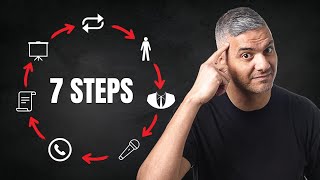
Omar Zenhom answers a listener question from his sister Mona about overcoming nerves when speaking in public. His core prescription is heavy rehearsal (he says he rehearses new talks ~30 times) plus a seven-step preparation process: (1) write a tight script, (2) create minimal slides from the script (≤10 words each), (3) rehearse and refine, (4) add blocking (intentional stage positions), (5) rehearse in the clothes/shoes you’ll wear, (6) perform a tech check, and (7) do final run-throughs immediately before presenting. He also gives delivery guidance—make eye contact one person at a time, slow down and pause, use stories, and avoid relying on slides—and frames the mindset as serving the audience. He closes with a call-to-action for his newsletter and Escape Plan resource.
Chapters
Today's Q and A Wednesday is an extra special one because it's a question that comes from someone that's very close to me, my big sister, Mona. Now, Mona is an avid listener of the podcast and big supporter. Thanks, Mona. She's also an amazing human being. She's an educator. She's a manager at her school and a proud Guns N Roses fan. More about that later. Now she's preparing to give a presentation to other teachers at her school. And a lot like other people who have to give a presentation, she's nervous. She doesn't want to get anxious, she doesn't want to forget what she has to say, and she definitely doesn't want to keep keep looking back at our slides every two minutes like a PowerPoint robot or somebody who doesn't know what they're talking about. So Mona asks, how do I stop getting nervous when I speak in public? We're going to break it down in today's episode because if you got a presentation coming up, if you've got a pitch, a talk of any sort, this advice is going to save you real quick. If these episodes help you in any way, hit subscribe. It helps us keep bringing you practical business insights three times a week for free. Thanks. Let's start with the only cure for nerves that I know works a hundred percent of the time. And that's not positive thinking. It's not just being confident. It's rehearsal, practice. I rehearse every new talk I give fully around 30 times before I actually deliver it live on stage. Yes, 30 times. This is not an exaggeration. If it's a 30 minute talk, I'll rehearse that talk five times a day for six days straight. That means saying every word out loud, clicking through all my slides and knowing what's coming next. Practicing all my transitions and how I'm gonna land with those transitions. I rehearse my timing, even where I'll stand when I say each part of that talk. You might be thinking, Omar, 30 times? Yes, 30 times. Trust me. Do this and I promise you, you're gonna walk on stage or in front of your crowd. Calm, prepared and in control. Why? Because you're actually confident. Because you know it so well. Because your body already knows what to do. You've practiced it over and over and now it's just muscle memory. Think about it, Mona, my very own sister, you know the words to Sweet Child of Mine from Guns N Roses. Not because you wrote those lyrics, right. It's because you've heard it so many times. Repetition is retention. And the same goes with public speaking. The thing I have found is that most people just do not rehearse enough. They say, I'm nervous. And I ask them, how many times have you rehearsed? And they're like three or four times. No, that's not nearly enough. Three or four times is just filling out the content. I rehearse so much that I test myself to go on any random slide, like slide seven. And do I know exactly how to start this slide, what to say, what stories am I delivering? How am I saying it, where am I standing? And it's just a way for me to see how well I know my content. If I can't do that, I don't know it enough. I need to keep rehearsing. Next thing I want to share is my seven step process for preparing for any talk. So this is how I get ready to make sure I deliver the best talk, Keynote speech, workshop, whatever it might be that I'm asked to deliver. This is the exact framework I follow every single time. So here it is. It all starts with number one. I write the script. Every good anything. Let me say that again. Any good anything starts with a great script. Okay, Any good play, any good movie, any good show, any good song starts with great words, with what you're communicating. And that's why I spend a lot of time just getting all my thoughts in order. And it might be messy at first, but I just write down like I'm talking to a friend, right? And I just put all my information down, all the things I want to communicate, all the things I want to say, and then I can organize it and then kind of, kind of mold it into a proper script or speech. And I literally write my script word for word, what I want to say when I'm up there. Why? Because the words I want to communicate will drive everything. It will drive everything about the speech, about the tone, how am I going to say it, the slides, the visuals. Even if I'm going to offer a handout or something like that later on, all that comes from the script. So I start with a very strong script. As much as possible. I dedicate myself to having a script that's tight, that is natural, but also delivers on the promise, which is the title of your talk, whatever your title of your talk is, that's the promise to your audience. I want to make sure that by the end of my script that I fulfill that promise. If that title is how to start a YouTube channel. And at the end of the talk, people don't Know how to start a YouTube channel. Then I didn't deliver on my promise. I want to make sure the script is delivers. The second step is I create the slides from the script. I go through the script and I create slides based on what I want to communicate. Now, I never put more than 10 words, no more than 10 words on a slide. If people can read your slides and get the whole talk without you presenting, you are not needed. There is no point in you giving a speech. What I like to say is that your slides should be a supplement to your message. They should be a visual aid. They should be a way to improve. Prove your talk. It's not the talk. Step three. I rehearse about three to four times, then refine the script and the slide so I actually go through the speech and rehearse it as if I'm on stage. And this allows me to cut any fluff, find better transitions, find better ways to communicate what I'm trying to communicate. Maybe refine some of the stories that I'm telling and just make everything tighter. I understand that at this point, my slides, my script, it's still a work in progress, right? It's going to change. It's going to morph into something a little bit different, and that's okay. Step four. Now I start adding blocking. Blocking is a word I learned when I took public speaking seriously and learned that this is where you stand when you're on stage. And this is used from the theater world. And it's very important that you're not just walking around haphazardly like a caged lion. You know, on stage, it's very distracting, right? You want to make sure that you're intentional about how you move in each part of your talk, because the way you move will enhance or it will actually deter from the message. It also helps you feel anchored and actually deliberate. Often these placements where I'm going to stand for each point actually help me remember my content and also allows me to drive home that point in a way that makes me feel like I'm taking a stand here. I'm making a point that's important to me. So I'm being intentional with everything I do. Not only my words and my visuals, but my body as well. Don't sleep on blocking. It actually is one of the things that a lot of people neglect. And it's actually that polish that makes a big difference. Step 5. I rehearse in stage clothes. So whatever I'm wearing that day of that presentation or that talk, I wear those clothes. I Walk around in those shoes, I get comfortable with the outfit that I'll be wearing one. It just gets me in the mindset that this is happening, right? This is going to happen, this is what I'm going to be wearing, this is what I'm going to be doing, this is how I'm going to be looking, all that kind of stuff. It also allows me, when it's the day of the speech and I'm wearing those clothes, not to feel so uncomfortable. It's not the first time I'm wearing these clothes, not the first time I'm wearing these clothes and giving this speech. It feels like I've done this before and it feels just a lot more comfortable when I'm on stage knowing that I have seen this before, I've seen this episode before and I've already rehearsed this, I already have done this. It gives you a little bit more confidence. Step 6. On the day or the day before of the actual talk, I do a tech check. Now, it depends on the event itself. If you're able to kind of pop into the auditorium or whatever it might be to do a tech check, you know, maybe the night before and you're giving a speech in the morning, or maybe you're giving a speech in the afternoon and that morning you can go and do a tech check. I love to do this because I don't like surprises. Listen, you might have some tech problems regardless, but it's your job to do the tech check, not the organizer, not the mc. Nobody but you. If you're using slides, you know, test the clicker that they give you or bring your own clicker if you prefer. One, test the screen, test the mic. Know if you're going to have a handheld or if you're going to have something that's going to be like, you know, on your face or on your head, then you're going to be hands free. So you know what you're going to be doing with your hands. Like, because if you have a clicker and a mic in your hand, then you need to know that both hands are going to be occupied. And are you going to be keeping that mic close to your mouth and all that stuff. The tech check is great because it prepares you mentally, physically to, to have no surprises. And of course, if you have any videos or audio in your presentation, you want to make sure that that plays properly in the tech check so that there's no hiccups. Sometimes that doesn't get transferred over in the file or whatever it might be. One of the things I recommend is if you could just take your laptop and plug it straight in, knowing that, you know, it works well on your laptop and just putting that HDMI cable in or whatever it might be. Sometimes I just do that because I. It's just a safer bet because I know that my presentation works perfectly on my computer because that's what I've been rehearsing off. And finally, step seven, I rehearse a few more times. And that's just literally at my chair at the conference, right before I'm being called up, or maybe an hour before my talk. And it's basically, I have my slides on my phone, right? Just put them on my phone, and I go through my phone, flipping through the slides like flashcards and testing myself again. What am I going to say to start this slide? What am I going to say to start this slide? And usually I just need the start, so then I can just move into, you know, that segment, that story, that point. For each one, I just link a first sentence I want to say with that slide because that's really something that really triggers me and gets me into action for that part of the talk. It's a killer way to mentally lock in with your flow and everything before you get on stage. And I never use any cue cards. I never have anything in my hands to remind me. I don't even use a confidence monitor when it's presented to me because I just know my material so well. I know my slides so well because I've rehearsed it so well. And trust me, it makes a huge difference. When you're on stage and you're presenting in that manner, people automatically feel connected to you because you're not looking back at your slides, you're not looking down, you're not looking at cue cards. You are looking at them. You are delivering something that you have worked on from your heart straight to them. You look like a pro because you're switching slides without looking. What's that slide? I know what the next slide is. I've rehearsed it three times. Right, so. And you're just transitioning right into that part of that speech. It's a magical experience for the audience because it's so rare that somebody's that prepared. Now, let's talk about presence. If you want to stop looking nervous, here's what I do. When you are presenting to the room, don't look at the whole room at once. A lot of people get overwhelmed. It is overwhelming when you have, you know, dozens of eyes or even hundreds of Pairs of eyes looking back at you. Right. It's a little bit unnatural to have to take that all in at once. So my recommendation is don't look at everybody at once. Instead, look at one person at a time, speak to them for one sentence or two, and then move on to another person. And this is a great technique because it allows you to connect with every single person in the room throughout the speech and they feel like they connected with you. And at the end of the day, when you're looking at one particular person, it's just like a one on one talk. It's a lot easier for you to kind of have that conversation rather than trying to speak and make eye contact with everybody at once. Like I said, this makes your delivery feel intimate and confident. And the added bonus is it calms your nerves and allows you to deliver your talk with a lot more presence. Next tip. Slow down. All right? We all tend to speed up when we're nervous, but your audience can't absorb everything at the speed of thought. You have to remember you know your information, you know your topic, and now you know it even more in depth because you've rehearsed it 30 times. So you can't expect people to pick up what you're putting down as quickly as you're saying it. All right? You gotta allow people to take time to absorb the information. Remember, they're listening, they're watching you, they're looking at your slides, they're thinking, they're processing. They're also, you know, looking at other people. There's other things happen, there's other stimuli happening in the room. So you need to slow down. Don't be afraid to pause and take a breath. If for any reason you don't know what to say in a particular moment, just pause. People are going to think that you're just allowing them to think and you're making a point and then pick up where you're going to left off. I find that when you pause, it's easier to remember rather than just going, um or blah, blah, blah, or making up something that doesn't belong there. So slow down, pause, breathe. Let this really simmer. Right? Let everybody kind of take the information in a way that allows them to think. My next tip is to use stories and examples. You don't need to memorize every single word that comes out of your mouth. Now, I've done that before, and because there's certain lines I need to deliver in a certain way to have the impact I'm looking for. But for the most part, if you're sharing stories and examples, they don't have to be word for word because there are stories and examples. You know them, right? If you have three or four solid stories, you can connect them to the points you're trying to make and you'll always have something to say. Okay? They're a lot easier for you to remember, and they're a lot more engaging and easier for the audience to remember. Think about it. Think about the last talk or speech or TED Talk you saw. You. You may not remember all the points they're making, but you'll remember the stories they shared. Now, a quick word about looking at your slides. I'm a big believer in never relying on your slides or relying on the fact that you can always just look back at your slides. If you're looking at your slides every few minutes, it tells the audience you don't know your material. You need to read it, just like they need to read it. You're both students here, and it doesn't really look good, but it also doesn't sound good. When you are talking to the slides and not to them. That's not the message you want to send them, right? So practice, rehearse until you don't even need to look at the slides. You know what that slide says already. And obviously if there's less than 10 words, it's easier to remember. And you know what to say when that slide is up there because you've done it so much. At the very least, you know, if you want to go in beginner mode here, slides should just cue you and not carry you, right? They should just cue you to say, okay, this is time to share the story. This is the time for me to say this line. If you took a glance at your slides and you're just trying to get your feet under you, that's fine. But it's a good way to kind of just cue you and say, okay, now it's time for this. Instead of you having to read what's on the slide so that you could say those words. When I design slides, I make sure that they're short, they're visual, and prompt a thought or a story that I have already rehearsed and know very well. They're like scene changes in a movie. The audience sees a new slide and they know, ah, okay, we're moving forward now. We're moving into a new part of this talk, a new idea, a new concept. Or we're going to maybe reinforce what we just talked about through an example. Mona, I know you. I Know that you care about your students. I know you care about your teachers. And you've got something to say. The goal of a great talk isn't to impress people, it's to connect. It's the share and it's to serve. When you put the people that you're trying to serve, in this case other teachers first, when your job is, hey, I'm trying to serve these people, you are not thinking about yourself anymore. You're not as self conscious. And the rehearsal also going to help with the nerves. So my advice is just to always remember, I'm here to serve, I'm here to help. They're the people I need to pay attention to. And you'll step into that room ready to do just that. Because you're so prepared. Now, will you still feel a bit of nerves, a bit of adrenaline? Sure I do. And that means you care. It means that you are really looking forward to, you know, nailing this and helping these people out. But don't let it derail you. Let it energize you. And remember, you have put in the work. You are ready. You're not just giving a talk, you're giving something valuable. You're giving something that might transform somebody's life, even if it's just in a little way. And when you come with that energy, people will feel it. So if you got a presentation coming up, a talk of any sort, treat it like a performance, in my opinion. I love doing that because it allows me to respect the craft of being on stage or presenting. It allows me to respect my work and respect what I'm trying to do in my realm of influence in my career. So it's actually worth investing the time and energy to make sure you knock it out of the park. And yes, it's a lot of work and a lot of preparation, a lot of rehearsal, but I feel like it's worth it. I definitely feel like it's worth it when I get off stage or finish that presentation, knowing that people have gotten the best I can give them. And people come up to me later and say, that was really great and I really enjoyed it and I wrote down so many notes and I'd love to learn more from you. And that for me is just like, okay, I've done my job. I've done my job where people actually were engaged and got something out of it. If you love this episode, then you'll love our three Things newsletter. Every week I send an email out to help you go deeper with this journey of entrepreneurship. I send you three things. One, something to think about to improve your mindset. Number two, something to do so you are building upon action. And number three, something to learn so you're skilling up. It's absolutely free and it's my way to coach you from afar. All you gotta do is go to100mba.net escape which is our escape plan. Download Escape Plan so that you can learn a little bit more about how to become an independent entrepreneur and you get added to our newsletter automatically by joining our email list. Mona, go rock that presentation and if you forget a line, just hum. Sweet child of mine. No, I'm kidding. You're going to be great and I'm so proud of you and I'm so happy that you asked today's Q and A Wednesday's question. I'll catch you guys in the next episode. Take care.










