How to Run Google Ads Without Wasting Money with Aaron Young
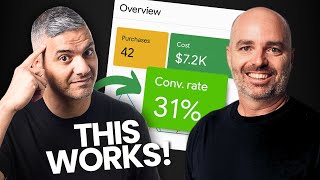
Aaron Young, founder of Defined Digital Academy, breaks down how to run profitable Google Ads campaigns. He covers the metrics that matter most, why your landing page structure tanks conversions, and how Google's AI changes are shifting what works in search and display ads.
Chapters
You don't need a big audience to have a big business.
Aaron Young.
Aaron Young.
Aaron Young. He's the founder of Define Digital Academy. His YouTube channel has over 100,000 subscribers.
And more than 420 videos, all laser focused on helping business owners master the.
Art of Google Ads.
Without the fluff, you don't need a lot of views. If you do it right, you can connect directly with your audience.
What is like one of the most common mistakes people make when they get started?
Big mistake that people do.
Are you struggling with Google Ads? Or maybe you want to get into Google Ads but don't know where to start. You've heard good things, but you don't want to waste your money. Totally get it. And that's why I'm excited about today's guest on the show. As you know, every so often I bring out an expert to teach their area of expertise because I can't cover everything. Today we have Aaron Young. And Aaron Young is the leading Google Ads educator in the world. He literally has the largest Google Ads YouTube channel. Three things you should know about Aaron. Number one, Aaron is a friend. I've known Aaron for months now. I've gotten to know him. He's actually in my mastermind group. And when I learned about his expertise in Google Ads, I said to myself, I got to get him on the podcast so that you all could benefit. Number two, Aaron's business, which is called Defined Digital Academy, lives in a very interesting space. Most online businesses can't afford a $10,000 retainer to pay an agency to run their ads. So he's built a system and a service called Done with you, which is far less expensive but allows you to spend most of your money on the ads themselves so you can get results quickly. I love that business model because he's really serving an underserved market. And the third thing you should know about Aaron is that his YouTube channel has blown up in the last few months. Like I mentioned, he has the largest Google Ads specific YouTube channel. And he'll be sharing in our conversation what really works and what doesn't work when it comes to YouTube. And a lot of it has to do with his experience in Google Ads. A lot of the stuff that works in Google Ads works with YouTube. And as you know, YouTube's owned by Google, so that makes total sense. So I'm excited to jump into this conversation and share with you. Hang on to the end because you're going to learn how you can get Aaron's free optimization checklist. You can optimize Your Google Ads easily. I'm also going to show you how you can check out Aaron's YouTube channel. But for now, let's jump into that conversation with Aaron Young. Aaron, so good to have you on the show. We've become fast friends. We are in the same mastermind group. I got to know you about six months ago and I learned a little bit about Your entry into YouTube, your entry into Google Ads. You haven't been doing this in terms of your current business for a very long time. About four or five years.
Not even that. I launched my first YouTube, launched my first YouTube video January 2022.
Yeah. So most people don't reach this kind of success that quickly. I kind of like to tell people, like do it for 10 years and then talk to me. I'd love for you to like rewind the tape and point out two to three things that you think that really helped you succeed in this span of time.
Well, I think the first thing, I think regardless of what niche you're going into, the main thing you need to know is know really, really clear your audience and what they need. And I guess that's where I had a real clear vision on what I wanted my YouTube channel to be. I sure will get into it, but my experience was, was go ads and I had been doing, I'd run my first Google Ads to launch my own business back in 2010. We then moved back. That was over in Indonesia. We then moved back to Brisbane and I basically went into consulting to larger digital agencies as their head of digital, head of marketing, head of search. A whole heap of different roles and we're just about to start our own full service digital agency. I had some boutique clients and freelancing and all of those things as well. And then that thing we don't like to talk about anymore, but Covid hit and it basically just made me to stop and refresh and really look at what we're doing. And in that time, about midway through 2021, I really looked at and the agencies that I'm dealing with in terms of the directors, my current setup, I was working a lot less, but because I knew the cost of their staff, their costs of the revenue, I basically knew how the business was running. I was going, I'm earning more than what they are, but just a lot less stress and a lot less work. The second thing I really saw from there was that there was a real big need in the market. And what that need in the market was was for business owners who have maybe less than sort of $10,000 for total marketing, some even less than that. The agency model isn't a good fit for them. That's not saying that agencies are bad, it's just that the way that agencies are kind of modelled and the way they have to work their revenue and their teams, the clients with the larger amounts of management fees get priority. But also on top of that, for success with Google Ads, you need two things. You need to know how your business works. You need to know how Google Ads works. So I went, well, if I talk directly to business owners and teach them how Google Ads works, they've already got their business knowledge and that's essentially how it grew so quickly. So the first thing I've learned is I had a very, very clear avatar or marketing Persona of who I was talking to. So that really allowed me to come in without trying to prove how smart I was. I wasn't trying to even prove myself as an industry leader. I was purely wanting to help business owners learn how to grow their own business with Google Ads because that was my journey and how I started my first Google Ads campaign. So I think the first thing that definitely helped, knowing I had a real click picture of my audience. I think the second thing from there as well is that regardless of whether you go on YouTube, podcasting, social media, all of these platforms, if you can work out what they want, there is actually an unfair advantage in a sense of, you know, once they trust you as a creator and once they trust your content, you will get like a boosted results because you're serving their need for YouTube. Worked out that what YouTube want is time on the platform. And even if it isn't on your channel, like if your video becomes like kind of like a gateway to them spending longer time on the platform, you get boosted up. So there's some key little strategies that I went through to go with that. But that was my, you know, I just became a data nerd, I guess, essentially on YouTube and every 20 videos I was going through and just looking at my data, I think I watched every single YouTube video on how to grow a channel. So I think that is really, really important. You've got to kind of be unbalanced about it a little bit and just look to learn as much as possible. And then I just look to get better every single video and make sure that I was presenting well and doing it in a way that was helping engagement.
Yeah, I really love your first point of understanding who you're serving, understanding your niche. I would probably add, just from getting to know you and getting to Know what you do in preparation of this interview, you had an underserved audience, an audience that was hungry for a solution. You know, most people that have a total budget of ten grand are not really being served. I know this firsthand because, you know, I work with a marketing agency, and that's a little bit. We pay a little bit less than that just to hire the agency. That's not spend, that's not the creatives, none of that stuff. That's not like a no marketing budget. It's. It's reasonable amount of money. $10,000.
Yeah.
But at the same time, they need that money to go a long way so they can reinvest and grow. So I think that is a very interesting point of differentiation, is like, you have an audience that's hungry for a solution, that's willing to roll up their sleeves a little bit, but at the same time need some expertise. What are the common mistakes you see your clients or people that are working with Google Ads make? Because I found in my history with using Google Ads, like, we ran a lot of Google Ads when we ran Webinar Ninja, the software company we ran. And when it works, it works like, it's just. It's like an atm. But when it doesn't work, it feels like a pit. It feels like you're just like chasing your tail. So what is like one of the most, you know, common mistakes people make when they get started?
I would say there's a couple of there. The first thing that I would say is that there is a real mismatch. And what I mean with that is that you can get on and we could set up a Google Ads campaign and you'd start seeing your ads in, you know, two, three, four, five hours from now. And people expect that because, you know, you can go into Google Ads and I think because it gives you so much data, you can go, look this. They're searching highly relevant terms, they're clicking on my ads, they're going on the website. Why are they not converting? So I think that's the first, I guess, frustration with it, where people are going, like, I can see my ads are visible. It looks relevant to me. What you need to think about there too, is that even though some people are searching highly relevant searches and they're clicking on your ads, they may not still be ready to buy for another two, three, four, five weeks. Depending on your product. They could be three months down the track. So there is that mismatch that you have to get used to, especially in when you're talking about SaaS products talking, you know, low value products, you know, e commerce, service based industries, you know, that problem isn't as real but for especially educational based products, software as a service products, there is sometimes a really big lag. So I think a big part of the problem is people just don't give Google enough time. I can show you account after account after account where the first month they may get one or two conversions, second month they may get 10. And then like by the third, fourth, fifth month that could be going from 30 to conversions, 50 conversions, 150 conversions the next month after. So there is really a time learning loop that needs to happen there. The other thing I think too is that a lot of the times the problem is in Google Ads, the problem is just the confusion on the landing page and this is a lot of the time where we speak people through is that you've got to always think about it in the customer journey. So if they're searching for a certain term, they're seeing your ad copy and then they go into a landing page where, which isn't highly relevant back to that first initial search term, you just lose them straight away. So with Google Ads, one of the things that I do see especially for a service space or software as a service industry is that you need a whole collection of different landing pages which speak specifically to, to the ad, speak specifically to the ad and speak specifically to the user. A lot of the times when we're trying to fix Google Ads accounts that aren't working, we're spending a lot more time outside of Google Ads and a lot more time on the landing page. You know, there's a company that we've worked with which has done over two they're based in Australia, they've done over 10,000 live user tests and the biggest, they've broken it down to five core elements, the really clear headline and sub headline which is speaking to a need or a want. I mean sometimes we Google Ads as well, people think it needs to all be keyword focused. It doesn't. We're not. You know, they kind of go because Google Ads is so data driven and analytical. They go, well, we need to make this page data driven, analytical and missing. The core elements of you still need to drive desire, you still need to solve a problem and you need to have your authority markers in there and you need to make it a clear, easy checkout process. So that would be the main things I'd look at. The other things that we do see technically as well is that people don't take a step back before they start Google Ads and actually have a clear strategy. Many cases you need a lot less campaigns than what you think and you need a lot less ad groups than what you think. And people like to over complicate things. A framework that I give everyone that I speak to about Google Ads is my absolute goal for a Google Ads campaign would be one campaign with one ad group. Now that has never happened and I don't think it will ever happen. But if you start with that as your framework, you're then having to justify why you've got a second campaign, why you've got a third campaign. That's another big thing is just people just don't take a step back and will have that real strategy to how they want to operate Google Ads.
I think it's important for us to address like the nature of Google Ads is a bit different from any other type of, you know, display ads. Whether it's like meta ads, Facebook, Instagram, where, where people are scrolling and they're being fed an ad based on their interest, things like that versus it's. It's more of a poll type of situation where somebody's searching for something, they're looking for something and therefore it prompts this ad to show up. How does a business owner need to change their mentality when it comes to that type of dynamic of showing an ad based on an algorithm with Instagram or search?
Yeah, there's two things there. I'm sure we'll get into how Google is changing because there's very, very real push of what I'm calling the metarization of Google Ads because it is definitely changing in that way. There is definitely still a search aspect in there. I think what I mentioned before is that people assume because someone's searching a highly relevant search term, click on your ad, they think the sale's done and they kind of just get impatient with it and they kind of still not treat them like that meta ad so that Facebook or Instagram ad. Remember when people come in from Facebook or Instagram, they've seen a video ad or an image ad which has told a story. So it's told a brand story, it's told a product story, it's given some benefits. Whereas if they're just searching, doing a keyword search, you know, they see a little bit in your ad copy once again with that landing page, if you're not capturing them and really getting their attention. So you've got to kind of go to do it in reverse in Facebook and meta, you're Getting their attention, you know, from a scroll, before they even go to your website. In Google Ads, you're doing it, you've already paid for the click, you've got them in the website and you've got to maintain their attention. So it's actually in reverse of what you're looking at doing on the other platforms. Yeah, which is, which is why when you come to it, you generally have different landing pages for Google Ads to what you have in a social media platform. And your messaging needs to be different there as well.
I also have found in my experience over the years that the leads that come from Google Ads are way more qualified. Like these people are pretty much ready to buy in the next couple of months, depending on your LTV and what your price point is. But people will sign up for anything on a Facebook ad and have no interest. They're just curious or they want to see what your funnel looks like or whatever. It's not the same in Google. I feel like you may pay more per lead on Google depending on your niche, but I feel like the quality of the lead is much higher. Would you agree with that?
Yeah, definitely. And that's why generally what I look at, and I guess one of the frameworks that I give business owners is what I call when I look at a structure for Google Ads, let's build what we call a bottom up funnel. So in Meta and Instagram, things you do traditionally you do a top of funnel, middle of funnel. In Google you want to do the opposite. And what you want to do is you want to basically really focus on a smaller budget, a budget that is sustainable. So you do need a minimum. Like you want to be getting at least 3 to 500 clicks through a month. If you've got budget for more than that, you know, definitely you're going to get the results faster.
That's going to be roughly like how much, how many thousands of dollars?
It depends on your cpc. So if you're in a, you know, if you're in an industry which has a CPC of, you know, $10 a click, you know, it's, you're looking at three or $5,000 a month to start with. If you've done it a dollar, two dollars a click, it's five to six hundred dollars a month. But what you want to do from there is you want to essentially make sure you've got these two core metrics. Now I'm assuming some of your audience are already running Google Ads. So the two core metrics I'm looking at is get your click through ratio above 10% and get your conversion rate above 5%. Now let's explain those two. The reason why I say get your click through ratio above 10% is because there's a company called Wordstream that released data for all of 2024. The average click through ratio across all campaigns, all industries was just under 7%. I think it was 6.7% in 2024. So if you're at a 10%, you know that you're outperforming the majority of the competition. You're giving Google a reason to show your ads. They get paid when people click on your ads.
So when they click through, you're talking about when somebody searches for a term, your ad gets displayed, somebody clicks it.
Yeah, 10%, how many impressions. So if your ad gets shown 100 times, you get 10 clicks click to ratio 10%, then your conversion rate. The reason why we say 5% is generally once again the average across was 5%. Now we want both those metrics to be higher. But once you're happy with those conversion metrics, so if you've got a budget say at $3,000 a month or $500 a month, you're happy with your cost per conversion if you've got a low search impression share. So this is another metric that you can get which basically tells you that if you've got a search impression share of 10%, that means that out of every available 100 searches that you could appear on for the keywords that you're targeting, the location you're targeting, if that's at 10%, that lets you know that you can then scale. And that's what I love about Google Ads is so that you can, you can then once you get now it may take sometimes it takes six months to crack that bottom of the, you know, that bottom of the search campaign. But once you've got those metrics going, you can then profitably scale pretty, pretty rapidly. People try to over complicate Google Ads, but if you can think about, and this is just not only for Google Ads, but it's any type of campaign, there's a market which is ready to buy your product. So the easiest way to scale to them is purely by once you're happy with the conversion metrics, increase your spend, then when you tap out of that market because it's only a limited size market, you start going to colder audiences. And that's when with Google Ads you start going down to what I was calling the metarization of Google Ads. You start going into YouTube ads or display ads. Or Gmail ads where you're reaching people who don't really know your products don't even know about you much earlier in the buying cycle. But that's the way I guess conceptually I think about it. For service based industries, we're going to.
Get into how Google Ads is changing and Google in general is changing in a moment. But one of things I want to bring up is something that a lot of people don't realize is a kind of hidden benefit of what I found when I was running Google Ads for years is that it creates a great way for you to build brand equity. Like the people in your industry will hear about you because they're searching about your topic constantly. You're going to see your ads constantly, your competition seeing you constantly. So what I found is that like when we were running Webinar Ninja, my software company, everybody knew our brand just because you're running a lot of ads and they saw our thing. And then more importantly, your competition knows you exist and know that you're around. And most of the time you're going to get acquired by your competition. So if you're looking to exit your company at one point, they want that brand equity. They want it. That's a value point when you're going to negotiate a sale of your business where it's like, wow, I want to be able to piggyback behind that brand and be able to sell more of my products and services behind that brand as well, or sell your product to my audience. So there's kind of an intangible value that a lot of people don't realize that happens when you run ads on Google because of your, you become like, I would say like a star in your market. And that has value in itself.
Yeah. One of the things I always like to remind people, and especially when you look at not only Google Search, but Google Display, which is the image based ads like it is the only that I know of. It's the only marketing platform that allows you free advertising because you only get charged when someone clicks on your ad. So if you want to hire a billboard somewhere, you've got to pay for that space for however long you want.
It, regardless if they look at it.
Or not exactly right. In a display campaign, you can shotgun your images and your brand across everywhere. And people always go, well, the display campaign is not converting. And I go, yeah, but it may not be converting. But look at your branded search like your brand search uplift is gone up and it's 100% agree with you is that people really underestimate how well you can use Google Ads to really get your branding message out there.
100%. Nowadays, I would say the last six months when I do a Google search, I'm finding myself scrolling a lot less because of the Gemini aggregated answer. Especially when I'm asking a question like what's the best solution for this problem? Or how do I evaluate this product or whatever. And it will come up with some pretty good summaries. I would say I scroll about 60% of the time, 40% I don't scroll. It gives me what I want. What does this mean for ads? What does this mean? What's the future look like now?
So we're recording this sort of, you know, April 2025. In the next two months, especially in the US market, Google's going to be rolling out what's called Gemini 2.0. Now Gemini 2.0 is going to be closer to the experience in ChatGPT than what it is in Google search. So what's going to happen is at the moment those AI overviews that you're talking about pretty much come in what we call a non transactional search. So like, you know, if you do a test straight up now, if you do search on, you know, men's black T shirt, you'll get ads. But if you were to what's the best men's black T shirt for me to wear in summer in a certain country, you'll get the overview because it's not transactional.
Right. Which, which is impeding on blog content.
Yeah. Now what will happen is that the responses that you will get will be multi answered question and there's going to end up, there's going to be coming a time where your ads will be embedded into the response. So it'll be basically a prompt of here's a product that I'd recommend for you or here's a service that I'd recommend for you. So that's going to be the next move. Now what will also happen as well is that as Gemini is released more and more and more, you'll find very, very soon too. That's why bing has acquired ChatGPT and there's the partnership there because they're eventually going to roll out ads within their responses as well, but also there from there as well is if you're using the same profile all the time, it's already going to intrinsically know a lot about you, Omar, know about where you're going, what's happening, what you like, what you don't like, what you bought. Previously, what you haven't brought previous, the effect is going to be really, really profound for Google in that cpc. So the amount that you're paying cost per click is going to skyrocket. So if you can think about this and it's just pure economics at the moment, in a search campaign, if you were to target a search ad, you got the four ads at the top and then you've got the six ads down below, that's the placements you're paying for. So if those four placements, even at the top, go from four placements to one or two placements, what's going to happen? You know, it's just pure economics. Then take on top of that, if you're using smart bidding inside of Google Ads so like where you can bid more for people that you think are going to convert, that's going to skyrocket it even further. Which comes back to what I'm talking about now for businesses who want to survive in this new upcoming wave of search. Search is still going to be really, really important, but it's going to become a lot more unaffordable for brands that don't. Only don't start investing in display and video right now, because if you've had someone who's seen your ads and Google knows that they've seen your ads, you may have interacted on one of their video ads, you may have clicked on one of their display ads, or you may have just seen their ads, if they then do that really targeted search, you've got more chance of getting that click. Also as well, if they mention your brand name because they've seen your brand name through videos and display all the time, you're going to get your ads displayed anyway.
Is there any memory integration with Chrome?
I think there will be, yeah. I don't know the full ins and outs of it, but it will be coming through. I mean, a lot of it already happens now within you, especially if you've got a Google account or.
Yeah. If you're signed into your Chrome.
Yeah, yes, yeah, yeah. So I would say they did start releasing this when it was at Google Marketing Live last year. They did already start to release this. The other thing as well. It's going to be voice integrated as well. And also the image integration is going to go further as well. So the Chrome lens.
This is so interesting. I got so many questions. Yeah, yeah. A lot of our contemporaries came up in the blog world. You know, came up were blogging was.
Yeah.
How you got traffic, SEO and you know, when I was running Ads on Google. With Webinar Ninja, we would actually run ads for blog posts that were really ranked really high, like best time for a webinar, all that kind of stuff. And then there would be a lead magnet on that page. We capture the lead. How is that effect now that AI is answering, you know, Gemini is going to be answering questions, aggregating answers.
Yeah.
If you have a thriving blog that was getting you traffic and getting you the customers just through search and through, even if you're monetized through ads, what does that mean for somebody who's not going to get that traffic anymore? What do they do?
I think what a lot of people miss inside of this conversation is that Google saw this coming a long time ago, so this isn't something new to them. But what is going to change and what it means for people who are in the blogging space and that space is that rather than running search ads, successful Google Ads campaigns will be, you'll have a lot more spent on video and display and that's how you'll drive the traffic through to those blog ones then also as well from there, like I said before, if you are running search ads, remember how I said that bottom up funnel, that's where it becomes important. So you're running your video and your display ads at the top. So what you're hoping and that they've seen your ads a lot, that they are then searching either your term, that you're giving them like a product knowledge term, like a little niche word that's around your unique selling point or they're searching your brand and that's how you're going to survive. So you're going to have to hit people a lot earlier. Historically, especially for SaaS businesses, they could have got away with maybe search and display. Now I'm saying you probably need search, display, video and potentially like a performance max campaign as well. So you basically running everything through there and that's becoming what we're calling the metaverse search.
Incredible. So I just want to shift gears just a little bit. You've had a lot of success on YouTube. You have well over 100,000 subscribers on your channel, which I think is a feat in its own. Just because of your subject matter. You know, you're doing Google Ads, you're not, you know, doing trendy topics or movie reviews or anything like that. So typically this is a dry topic. Why does anybody who's listening right now need to jump on YouTube and start creating videos?
Now put this in context. I've got a Google Ads only channel so like 99% of my content is Google Ads. Now there's larger channels, they have digital marketing. But in terms of Google Ads only the next largest channel apart from Google Ads is only channel is I think 40,000. And some of these guys been going for years and years and years. So the reason for why, I think, think regardless of your niche of why you should get involved inside of the Google sort of YouTube is the ability to connect with your audience. Now some people think because my core sales and coaching business has grown so quickly, it happened off the back of a Google Ads campaign. I didn't start Google Ads until on our own on this, on this business until we were already doing $80,000 a month in revenue at that time as well. We hit our first 100k month when we had a YouTube channel that was under 20,000. I think it was 19,700. We hit our first $5,000 a month with 1,700 subscribers. We hit our first $10,000 a month with 2,700 subscribers. So the thing I love about YouTube is that you don't need a lot of views. If you do it right, you can connect directly with your audience. And the way I like to think about it is this is that if you go to the method of you just wanting to help your audience, you know there's a need, you're wanting to help them, they just start to reach out to you and you know, there's some mechanics you've got to do it in the right way. You know, you got to be strategic about it. Like all of my videos from day one have always had a call to action. So they can download a free so and then it's just a matter of just me emailing and having starting conversations with people who had downloaded some of my free resources. So the thing I love about Google Ads is that you don't need a big audience to have a big business.
I like that. So by running videos on YouTube you can obviously take those videos run ads. So those videos show on YouTube as an ad to grow your channel but grow your presence, but also just grow your awareness of what you do.
Yeah. So I don't recommend you running ads to grow your YouTube channel. And the reason for that is because if you think about the YouTube algorithm, it wants people to stay on that video for a long time. Yes. YouTube is search based. You know, people throw out the stat that it's the second biggest search based platform in the world. Which is true. That is a fact. I'm not denying that. But what they miss in that is that 70% of all views don't come from YouTube search, they come from recommendations and they come from home screen placements. So if you're going to grow your YouTube channel After the first four, five months, I no longer worried about SEO on my YouTube channel. For me it's all about creating engaging content that I can link people up to watch not just one video of mine, but two or three videos of mine in the same session. Now where that also gets to and this is a thing that especially if you're selling like an educational type product or even if you're serving a software as a service, if you can help someone with their first four or five problems and they apply your teaching or they apply your recommendations and it gets them along the road, they're not looking anywhere else to buy, they're coming to you. On top of that as well is they're willing to pay a higher price because there's a level of trust there. You've already helped them so they're not looking at any. So you're not getting into price wars with other people. So I would go if you're running a, a SaaS product and you can, if you're willing to like give away your knowledge and give away and to truly, truly help people, growth will happen. Some of my first videos that still rank are absolutely terrible in terms of production, audio, all of those things.
Yeah.
But they still win most in my top ranking videos because Google just because people engage them. So I've got this kind of saying is that high value content covers over a lot of flaws. If you can truly help people, that comes back to your motivation as well. Remember how I said for me I knew my market and I felt so connected to them because I was them 15 years ago when I was first launching my first business in 2010, we had put on other agencies, I had money down invested in my business that I was going to lose if we didn't generate enough. So I had a high level of I just need to make this work. So that's where they're my people that I want to serve. The people who are starting their business, launching the product, you know, bootstrapping a brand or whatever they're doing together. We may be in a different industry but I know how you feel and I want to give you the knowledge and people are happy to pay for that knowledge.
I'm going to share a couple of pieces of ROI return on investment I would say since starting with YouTube. We just started YouTube in August 2024. And I would love to hear a little bit about your ROIs as well. So my first ROI actually was when I did the math. You know, like when I was starting out, we were not getting a lot of views. I mean, in a month we'd get like 10,000 views or something like that. But then I did the math. How much would it cost me to get 10,000 views if I paid for it? It cost me something like $3 a view or something like that, which is $30,000. Like, oh, wow, okay, this is actually worth doing, number one. The other thing is that by doing YouTube, by having full length videos on YouTube and we do it for the podcast, we then have so much content that we can then take those pieces of content, break them up, put them on Instagram, put them on TikTok, find the best moments, but not just to, whatever, grow your audience in those platforms, but just to know what will resonate with your audience so that you can create more content like that. I'm incredibly surprised always when I see what actually blows up. Like I have a video on TikTok that got 134,000 views in three days and it's the most basic thing ever. It's like, it's not even mind blowing. I would rank it as like one of the worst worth of information I shared. But people love it. People are just like, yes, amen, 100%. All this, you know, like so much engagement, so much, you know, so much sharing. I'm like, what? And it just makes me think, okay, maybe I need to understand who my audience, what really resonates with my audience. Maybe bring it down a couple levels and just go a little deeper rather than going so wide. And I wouldn't be able to do that and find that out if I didn't actually create the videos in the first place for YouTube. So those are the ROIs for me.
Yeah, yeah. And the thing I love about YouTube is that, you know, if you go into like YouTube Studio, you can see the drop offs and you can see the dips. So you can see where people in, you know, eight or 10 minutes, however long your video is, you can go, people are dropping out here. You can also also see where people scrub back to. So if you see like the line going down and then you see it go up, you know that people are coming back and watching that time and time again, then that's why as well, like you can get so much data about what hooks are working, what introductions are working. Things that I do in a video that people just go, don't like that and drop off. Yeah, no, it gives you so much more information that you can do. The other thing I love about YouTube as well is that it is truly evergreen content in that I get caught in this all the time where I see a funny reel or something like that. I won't pretend that it's deep, it's literally something stupid. But I can't find it again because you're searching through all of Instagram to try and find it and you search it, you can't do it. YouTube, you don't have that problem. There's an easier way for people to connect on YouTube with you.
I'm always astonished how bad search is on social media. Like I personally don't consider YouTube social media because it's so good at search. Not only searching for other videos that like say for example, I saw a funny stand up comedian give a little bit and I know a few words that he said.
Yeah, yeah.
I don't remember the person's name but I just search, you know, like funny comedian talking about his in laws over Christmas. And it will come. The first thing on the, on the list of search results is that video. I can never do that with Instagram, I can never do that with TikTok. It doesn't work the same way. And that alone I think is a huge superpower.
Yeah, I mean I even go with the social media platforms, even if they had, have had a filter on what you've watched previously to easily be able to access it. But yeah, you're exactly right. And that's, that's why now it also to like, I'm not dogmatic about any of these platforms in the sense of I'm not going to be a, you know, you only do this or you only do that. But you just got to be aware of the pros and cons of each one. And that is a Definite Pro for YouTube.
Okay, let's say somebody's listening right now. They're like, okay, I want to go all in on YouTube, I want to start a YouTube channel. What are some resources that they can dive into? Where do they start? Like do they do a video a week? What's your advice to them?
I always like to look at it in the long term where you go, you know, YouTube isn't a one month investment. You're not going to, it's not like, and this isn't me saying it, you know, Mr. Beast, the largest YouTuber, he says no one's going to watch your first video. No one's going to care who you are. So it is very much a long game in it now. There's always people who, you know, blow up faster. But any channel that has reached a level of success, I've always seen growth is basically like flatline, flatline, flatline, flatline, flatline, flatline. You know, skyrocket. I think when I was at a conference last year, Colin and Samir, I don't know if you're aware of that great channel five and a half years before their current channel went off.
Yeah, I believe it. I believe it.
Yeah.
Because they're so good at what they do. I feel like they probably were undiscovered for a very long time.
Yeah. Now someone like me, now they're a much, much larger channel and a much, much larger niche. I got that skyrocket in nine months. And I think what it comes down to is this is that first step of you've got to have a real, real clear defined need of who are you talking to and who you're reaching out to. Now the good thing about it is people go, well, I'm in a really, really small niche. A lot of the times it's actually easier to get cut through in that smaller niche. Now the rebound probably isn't as high, like once you get there. But if you can start really going. And I always come back to, I go, for me, it was with Google Ads. If I was starting my first Google Ads campaign, what are the core elements of education that I need to know to be able to run my first Google Ads campaign? So for whoever's listening, if you go, whatever it is that you want to start teaching on, whatever it is you want to do, you know, what are the five core bits of information that you need to be able to complete that task? One thing I would say, just for longevity, I do think you need to do at least one video a week. I started with two videos a week. But the more thing I look at, what would be worse for you is to start three videos a week and then burn out after three months. So I kind of go, what's the right cadence? That works for you? Where you go, I can do this for the next two to three years before this, before I see any investment on it. So I generally go. For most people, that's going to be one or two videos a week. The other thing I go about it too. Unless you're doing podcasting, like long form, if you're doing more educational style videos, you really want to be hitting it at about 8 to 12 minutes and I'll break Down to why that is the case as well. But one of the main reasons as well is if you've got like a three step process, rather than releasing it all in one 30 minute video, you're better off releasing it in three 10 minute videos. So then you've got three weeks of content as opposed to one week of content. And then there are actually some real other clear algorithmic. I think that's the right word or I think that's a word algorithmic, we made it up benefits for it. You need to be having a minimum watch time of a video, four minutes. That's kind of like a golden like initial marker that YouTube gives. If you can have a watch time of four minutes, they go, yep, that's a pretty good video that they're watching. The other core metric on that is an average duration or an average duration of the total length of video of 50%. You can get away with 35%, but 50%. So now you start thinking about if you're a new YouTuber, what's going to be easier for you to release an eight minute video? So if you can get 50%, that's the four minute mark that you need. Is it going to be easier for you to keep someone's attention for 50% of your video on an 8 minute video or a 30 minute video? And then from there, the other flip side from that is as well is rather than you having one video, you've got three videos. And what you can even do from there is you can link up those videos at the end. Remember how I was saying it's all about watch time, right? So generally, what a big hack that it wasn't from me. I picked it up from another YouTuber that you basically release, especially in the teaching space. You release once part of the journey and then you go now to watch the next step, go through and watch this video. And I physically say at the end of my videos, so let's just say, for example Google Ads, we do a video on keyword research. We go, okay, the next step is ad copy. Go through and watch this video right here. And I literally say it at the end of the video because I'm wanting to link people up to watch not just one of my videos, but multiple videos. Because then that's basically what the algorithm wants. It wants you to stay on the platform. So I'd say start with at least one video a week practically as well. There's some great tools like Tubebuddy, which is only available within YouTube. If you're not on YouTube, there's also answer the public where you can go and write your topic and it spits out all the different questions that people are searching and people asking they're great too cheap or free resources that can really help you launch it out. For anyone who's wanting to start, what I'd say is get a Google sheet open and come up with your first 50 videos. The other thing I'd say too is for example, a core teaching on how to set up a Google search campaign. I release three videos of that every year. So don't be afraid to release the same video over and over again, just with a slightly different topic, slightly different angle. And you can do it time and time and time again.
Should anybody worry about if they should focus on long form? When I say long form, I mean like the normal YouTube videos, like the 8 to 10 minutes or should they be doing shorts as well? Should they focus only on shorts? Is shorts something that they should be worrying about or does it depend on their business?
Depends on their business. So I would say if you've got a really good Instagram or TikTok profile, you're crazy not to bring that over to the shorts platform on YouTube and just start seeing what sticks. You know, if you're coming from the podcasting top platform like you, it makes sense to go straight into long form podcasting on YouTube if you're really, really like what I did with Google Ads, you really want to teach people. I think a better way of doing that is through that 8 to 12 minute, what we still call long form, but long form educational style teaching on YouTube. And the reason for that is because especially if you're taking people through advanced steps and what they need to do, that's really, really hard to do in a one to three minute video. So that's why I think that sweet spot. So it just comes back to once again, like I started with 8 to 10 minute videos, I've now just started, I've done the reverse. Rather than starting a podcast, I've just started an interview series on YouTube which I'll then release to a podcast later down the track.
So I want you to put on your therapist, therapist hat or maybe a coach hat or whatever you got. I'm going to share with you a challenge. Maybe it's a more of a personal challenge that I'm having on YouTube, something that I've discussed in depth with my team, maybe even had some pretty lively discussions about it. I have a visceral, you know, effect or reaction to this Mr. Beastification of YouTube. Everybody looking like the same. Everybody in my niche's thumbnails look exactly alike. They got the title with the blue background and the big face on the left. And, you know, and I have a hard time with just doing something just because it works. Oh, it's working for them. Let's just do the same thing. And then we're. And you just become vanilla. I just don't want to do that. And I know it's probably hurting my channel. I don't want to also just kind of look like a caricature of myself. I want to elevate my brand. I want to make sure that I'm not just doing things for the sake of. That's what the algorithm wants or whatever it might be. Am I mistaken? Am I? And for me, I feel like YouTube is more of a branding exercise.
Yeah.
As much a branding exercise as it is a, you know, search or traffic or, you know, views type of thing or content marketing exercise. Am I wrong to not want to do that?
Okay, so a couple things I'd say that I think the most underlying principle of all is this, is that you just have to be yourself. So, you know, I'd speak to that straight the same way. If you're not that type of person, don't do it because you're going to end up burning out. And ultimately, after a time, people see whether it's real or whether it's fake. That comes through. However, having saying that as well, I think the core prince, everyone's just kind of thought, Mr. Beast is this. You know, his thumbnails are stupid and all of those things. He thinks just because he's kind of created the caricature, what he actually created was that that is actually data driven for him. So he went through, I think at the number was something like him and four other creators spent a whole summer. It was some. I went through like a thousand different thumbnails and broke out. So it was very much data driven. So that's where people just kind of, you know, you get the creators, then you get the copiers.
Yeah.
All right, let me bring it back to me. And so one of the things in my niche, I'm kind of known as the guy who's got the silly thumbnails. Now let me sort of break that down as to why I did that. I'm a dad of three daughters, so I've got the daggy, like, I just lean into the fact that I'm a, you know, daggy dad. Jokes that unfortunately, I got that gene.
This is true, guys. I hung out with him.
Yes. So unfortunately that is me and that and that works. Now the other thing I would say from there is as well is that in my niche, before inserting the Google Ads niche, before I came through, all of the thumbnails were super, super boring. Same background, all of those things. So I went, there's actually one that kind of fits my personality. I don't mind being the little bit of an idiot. My actual goal was to try and make Google Ads a little bit more exciting. So you can kind of see that it fits within the actual scope and the brand of what I do. Now when you break through that, if that's not you, you shouldn't do that now. So what I look at and I've actually broken and sort of broken down. I did my own review of all of my thumbnails and to work on the highest click through ratio. And what I actually found was, I call it my rule of three when it comes to YouTube thumbnails. The first thing is you want to have some level of contrast. And what I mean by that is that you either have a dark background and a light foreground or, you know, if you've got a dark background, you want to have bright fonts. If you have a, you know, a light background, you want to have dark fonts. But also what you want to do before I release a thumbnail, I do a YouTube search on what other videos are in that theme. And if all the other thumbnails are black, I'll do a yellow, yellow or red or green.
Interesting. You do something different.
Yes, do something different. I did it yesterday when I was releasing a thumbnail. So I've got to give my thumbnail. Okay, do a Google search. Look at what the other ranking videos are. Our video, our thumbnail needs to be different. All right, so when you think of. So when you think about it, you don't then need to do the silly face because if you're using color as a differentiation, it's just that contrast. So it's not only the contrast within your individual thumbnail, but it's the contrast of your thumbnails versus other people's thumbnails.
Yeah, definitely. I like that a lot. And the reason why I say that is because in my niche, business education, more and more everybody's just trying to look like Hermosi. Alex Hermosi.
Yeah, yeah.
You know, people wearing the good person, but, you know, be your own person. Like, I just feel like, yeah, yeah.
It works for him. You know, I'm seeing other people now wearing the black Nose things and all those things. Yeah. So that's. That's the first thing. The second thing I would say, too, is this is a big mistake that I see with thumbnails is that people put too many words. So I tried. Very, very rarely do I have more than three words on my thumbnails. Now there are. People will go after this channel, go, he's lying. Look, this one has. Yes, there are always. Sometimes where four or five. And, you know, but as a general rule, I like to have no more than three words on my thumbnail. The other thing is the thumbnail text needs to be different to the title, but they need to be related. Big mistake that people do is, especially in the educational space, is that they repeat it so you're missing an opportunity. And also the other thing I want to do in my thumbnail. So that's the first one's contrast. Second one is the three words. The third one is you need to build some level of emotion or some level of reaction. And you can do this in two ways. You can do this with the stupid face, or you can do this with the text. So, you know, some of my best related thumbnails have one word on it, and it's literally like keywords with a question mark or, you know, those type of things. So what I look at is I go, the easy option out is to just do a stupid face and create emotion there. But if that's not your personality, you go, well, how else can I create emotion in my thumbnail? And the best way of doing that is with the word. So I think about, if you take a topic, can you make a controversial statement or ask a question which goes against the common theme on this topic? And if you can do that, look, the one thing I do say, there is something definitely powerful about the eyes. And having your eyes being able to see on the thumbnail just for that connection, that definitely does make a difference, I've found. But, yeah, you don't have to do silly faces.
I love this advice. It echoes the advice I got from an old friend of mine, an old og, Brian Dean from Backlinko. He gave me a piece of advice that really unlocked this idea of thumbnails on YouTube or any videos in general. Even if you're posting on Wistia and you have a thumbnail, is treat it like a Facebook ad. And I was like, what? He's like, yeah, if you created a Facebook ad and you were gonna put some text on the image and you're gonna create, you know, description and a title, just like on an ad, what would you do to get somebody to click or to learn more on that Facebook ad? I was like, oh, that's a good way to look at it.
Yeah.
So I love the fact that you don't have to do what everybody else is doing, you know, your audience just do something to get them curious.
And it's funny now that you know, because I've got the largest channel on my niche, people are now copying what I'm doing and doing. So I'm basically seeing and it's over time. I wish I'd taken more screenshots of where. Where thumbnails used to be. Yeah, I don't know if that works on YouTube. We'll have to see. But where thumbnails used to be in my niche to what they are now. And I've spoken to other creators in the space and I go, you know, I've actually, because I'm pretty open with my knowledge. Like I don't really, you know, because I know knowledge is one thing, but if you're not going to enact it, the knowledge is useless. So I tell them, I said, look, why are you doing that? And they go, because I saw you do it and you got a good click to ratio. But I went, but you've got to, you know, does that match who you are? Have you gone through all of those things? So, yeah, just I'm a big believer. Be yourself. The other thing I'd like to say as well is think of your thumbnail against nine other thumbnails. So 3, 3, 3. All other different creators. If you weren't you and you were doing a search, which thumbnail would you click on? Now I learned this very, very early. That's why I think running Google Ads for 15 years before gave me a really, really head start, good head start to YouTube. Because click through ratio is super, super important in Google Ads and it's also super, super important in YouTube. And one of the earliest things I learned about ad copy was we had a villa resort over in Bali and we were like, I used to always joke that our advertising budget wouldn't even match the coffee budget of some of our competitors on the same street. We had hotels like the Sofitel, you know, the Sheraton, the Marriott and you know, a whole range of brands. And in Bali there's this big thing of one bedroom pool villas. So everyone had an ad copy, one bedroom pool villas. You know, some would even range out to private pool villas. So I went, how can I say the same thing in a different way? Because I don't have the budget to match them. So every time my ad gets shown, I need to get that click because if I can start getting that click, that increases my ad rank. So then I get that unfair advantage. So we phrased this adword copy of. Rather than saying one bedroom pool villa, we actually phrased it to skinny dip in your own pool saying the same thing. And we knew this ad copy was working because we were getting emails back of people asking us, how high is the wall to make sure that they could actually skinny dip in their own private pool. It's 2 meters, in case anyone's wondering. But yeah, so it's. It's. And that. Yeah, high enough. And that's what took. That's what I took over to the thumbnail. So I go, okay, so in my text, how can I say something that no one else is saying or no one else is prepared to say that's going to drive that click? And the good thing in YouTube now is you can actually split test three different thumbnails in the same video. So run three different things of text and see which one works.
And what I love about this is, is you're gonna be up against big players and a lot of people feel like that's a disadvantage, but your advantage is that you're willing to run an ad like that. I don't know if the Sofitel is gonna get approval for that. No.
Yeah, I don't know. I got that from. Did you ever read Malcolm Gladwell's book David and Goliath?
Yes, I love Malcolm Gladwell. Great.
Yeah. Yeah. And you know the, the old biblical story of David and Goliath. People think it was like this big miracle that David beat Goliath, but it's basically like it was a sniper going up against, you know, of course he's going to win. So he just said, you know exactly. What you're saying is you, you want to look at your weaknesses and go, how can my weaknesses be a strength? As you said, I had move movability in my marketing message that other brands don't have.
Well, I know that I'm taking a lot of your time, but I want to kind of squeeze in a few quick questions.
Yeah, go for it.
You've run a lot of ads, a lot of ads, only for you, but for your clients. What was one of your best performing ads and what was one of your worst?
Okay, so the best performing one is the one that I just said was the skinny dipper in your own pool. The other top performing ad Is that we had a. And this, this is something that everyone can apply. It runs off that same theme of say something that your competitors can't say or won't say. One of my pet peeves with ad copy is people saying generic terms like we're number one or we're the best or even things like save money or save time. I'm always on. You've got to be able to put facts in your ad copy. So rather than saying you save money, how much money do you save? And we've run test after test after test of rather than saying save money, save 19, save 20%, save 17%. And we got this from a E Commerce brand we're working with at the time. Competitors came in, tried to undersell their market because they were the first people in the market. But they had this unique selling point that no one else had in that they were the only brand that had safety tests for both the EU and the USA market. We put that in the ad copy. Absolute killer. So the key thing I'd be looking at is in your ad copy, what can you say that no one else can say? So it's either an actual subjective fact that you've got proof behind it. So I'm now happy to say I'm the largest YouTube educator on my ads because I am so I'm the largest Google Ads educator because. Because I am on YouTube. So that's a fact that you can say if you are ranked the number one SaaS product in your niche, by all means go through and say it. But you've got to be able to back it up.
We did that with Webinar Ninja because we had this wizard that allowed them to create their webinar really quickly. And that ad killed when we absolutely crushed when we ran an ad that had the headline of create your next webinar in less than 60 seconds. Which was something exactly right. It was actually 30 seconds. But yeah, 60 seconds seem more reasonable.
So the. So the mistake would be people would go create a fast website.
Yeah.
Whereas if you put. So I'm always going what percentage can I put on it? What dollar value can I put on it? And what time can I put on it? So get really, really specific what your core offering is. So they're the best examples and the worst examples is just the opposite of that in that, you know, just wet messaging, weak messaging. The other thing I would say from that is the, the way that you need to think about a Google Ads successful campaign is think about it like a chain. If one of the Loops of the chain fall down, your campaign falls down. So the first loop is you want to get the click. So your ad copy needs to get the click. The second loop of the chain is when you get them on your website, it's not to get a conversion. People think it goes click conversion. No, it's your headline. You just want them, you want them to engage them in the headline so that they're then scrolling down the page. So that other bad example is basically a mismatch between the ad copy and the landing page. So if you could think that through. Is that because we all know regardless of what your product is, the longer that you can keep someone on your.
Website, the better your chances.
Yeah, exactly. So if you can think about the headline, people go, I want my headline to convert them. No, I want my headline to engage them to read the next section of my website and then I want that next section of the website to get them to read my authority markers, to read my case studies and then come down to my price.
Right. Love it. What do you think is the biggest, most underrated skill in 2025?
For me it's very much coming down to, I think at the moment, just with, with, I mean it's very, very real in my niche in Google Ads at the moment. But with AI, if you're not actively working AI into your workflows, I think you're going to get left behind pretty, pretty quickly. I had a great employee, she's been amazing. She's still on team with us, but we've reduced her hours by 50% now. I just didn't do that overnight like there was a long six month journey because we wanted to keep. And it also fit with her as well because she wanted to start branching out into picking up some more clients. But we've replaced her with AI processes. So for me I think the biggest thing is being willing to adapt and to change and then I draw that down into the Google Ads sphere as well. Is that looking at the way that I run Google Ads campaigns now is very, very different to how I did it three years ago. So for me, I think the biggest them of, for any business is now is a big time of adaption and a change that you need to be looking at all of, not only your processes of how you manage your time, especially if you're a one man team or one woman team or one person team, but also to how does that reflect in the strategy at work that you're doing?
I would echo that. I would say that it's so important for you to constantly have your finger on the pulse when it comes to AI, be using it daily. There's something new happening every day, whether it's deep Researchers, ChatGPT I think ChatGPT 5 is coming out in months and it's going to change all the ways you choose the different types of models and all that kind of stuff. So just by using it every day in any shape or form, whether it's with copy or whether it's with, you know, research or just getting some advice, if you're going to the doctors or something, you know, it's actually great just to use it and get used to it.
The thing I'd say there too is don't get, don't be afraid of it and don't be weary of it. I listened to a, I think it was a five hour podcast from like Lex Fergman, if you don't want to listen to all of it.
But yeah, I've seen, I don't know.
If you listen to the same one. Yeah, and he was very much on, he was very much that. Still a long way away before actually replacing all of us. But what he did say though is that any person with individual knowledge, like industry knowledge that isn't leveraging AI right now is going to get left behind. And the example that I look at it within my niche of Google Ads and I speak a lot with agencies is that AI is allowing people to. So now agencies that used to be teams of 50 could probably run just as effectively on teams of 10. And freelancers that could only manage 50 clients could potentially now manage 150, 200 clients if they fully leverage into AI. And that's where I guess the damage is going to be. For businesses or individuals who don't leverage into AI, their cost model isn't going to work, or their cost model in terms of their product servicing and what people expect or, or they're actually, they're overstaffed for what they need. So then because they're overstaffed, they have to charge higher prices and then they get priced out of the market.
Love it. Aaron, for my final question, I like to ask this question to my friends, people that have been doing business for a long time. And that question is, what's the end game for you? Why are you doing all this? What are you working towards? What does winning look like for you?
I would actually even say I'm probably partly in my end game at the moment.
It's good to recognize it.
Yeah, yeah. So, I mean, I'm mid-40s, so I'm 45, so I'm not, you know, I still see myself working for it for many decades to come. I started this up as my actual plan when I was starting the YouTube channel and defined Digital Academy. The goal was essentially for me to go if I could just supplement my income, I'll keep freelancing out, you know, 30, 40 hours a week, throw this on the side and then hopefully 10 years from now it'll be at a level where I can step out of that. My 10 year plan happened in about 18 months actually, which is, you know, which is a good, which is a good problem. Yeah. So I mean at the moment, but as part of that, I've already gone down from working five days a week to four days a week. I see within the next two years, sorry, three years. By 2029, that'll be down to three days a week and we'll be traveling a lot. I've unashamedly, you know, been married for coming up 22 years, got three daughters. So I've very much, I've had the, had the blessing to be able to work from home since 2010. So I've been home for my whole daughter's, you know, lives growing up, so.
And you had a grow up?
Yeah, yeah, yeah. So they, so my, I guess part of the end game for me when I look at 10, 15 years from now, I always like to think about it in a perfect week as opposed to, because money and finance and all of those things are important. But I come back to if they don't allow you to achieve your perfect week, but you need that money to be able to achieve your perfect week. So you can kind of see that they're hand in hand. So I don't, I don't really have a dollar value. I more have a, like a perfect week for me would be out on the water fishing once a week, exercising three or four times a week, traveling at least, probably being out of the country at least for three months of the year and having at least, you know, one good meal with my wife. I mean, you know, we're out for a nice restaurant, you know, once or twice a week. And that's, that's I guess essentially my end game, little level down from that. I definitely want to continue to help more people. I definitely want to get involved more and as I see, I'll probably be less hands on and get more into like speaking and those type of areas just because of the reach that you've got from there and being able to incorporate travel into that would be the, I guess the main goal. But I don't really see myself ever sort of retiring and never working again. I definitely don't want to be doing the amount of hours I'm doing now when I'm 65, 70. I think, I think my more thing is looking at how can I mentor more people as opposed to physically doing the work myself.
Yeah, I definitely think that if you don't use it, you lose it. I think the late Charlie Munger is a good example of that. Super sharp at 99, Warren is still going strong. But yeah, having to say no to a lot of things so that you could say yes to the important things is part of the challenge as we get older.
I love what you said there and that's actually been a bit of a motto of my life and it's something that me and my wife always spoken to is that, you know, whatever I say yes to, it means I'm saying no to other things. And I've always truly known that whatever I say yes to my business, it generally means a no for my family. But then if there's a follow up yes to my family, then it makes sense. So you kind of go, yes, I'm taking on this client. It's going to mean that I'm going to be having to add an extra 5, 6 hours work to my week, but that's allowing us to take the girls over to a European holiday at the end of the year. I'm happy for that payoff. But if you always just think that a yes means a no, I like that.
Aaron, it's been a pleasure. I'm so glad that I got to know you over the last few months and it was great to get you on the show and help our audience and we've talked about so many things but I really appreciate your time, appreciate your willingness to share.
It's been an absolute pleasure and thank you so much for having me on. Omar.
What a information rich episode. Aaron, thanks so much for your time. If you want to learn more, if you want to optimize your Google Ads and you want an easy checklist to do so if you. Aaron was generous enough to share that with our crowd. So just go to definedigitalacademy.com optimize and of course the links will be in the show notes so you can just scroll down on whatever podcast app you're listening to or in the description if you're watching on YouTube. You can also check out Aaron's YouTube channel to learn more about Google Ads and continue your learning beyond this episode just go to Aaron Young Google Ads One of the other things I love about Aaron is he's just a down to earth Aussie guy explaining complex things and an easy way to understand. And that's one of the takeaways I got is that just keep things simple, simplify it for people. If you're teaching people anything, make it easy, make it down to earth, make it relatable, have a little fun. Thanks again Aaron and thank you for tuning into the Hundred Dollar MBA show. If you want to continue your learning, sign up for our three Things newsletter so that you can continue to grow week after week. It's absolutely free. Every week I send you three things to help you grow as an entrepreneur. All you got to do is go to 100 MBA net, sign up for any of our freebies, any of our guides and you get added to our newsletter automatically. Thanks again and I'll check you in the next episode.










