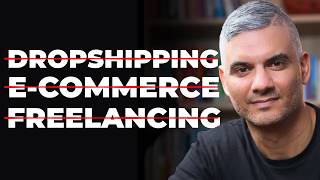
In this 25‑minute solo presentation, Omar Zenhom reflects on 25 years of entrepreneurship, during which he launched over 20 ventures but only three generated lasting wealth. He attributes the success to choosing the right type of business rather than working harder or being smarter. The three high‑value models are: (1) a premium service business – high‑price, narrowly‑targeted services that deliver immediate cash flow and high margins; (2) a recurring digital/SaaS business – subscription‑based products that provide predictable, long‑term revenue and leverage; and (3) a media company – consistent content creation that builds trust, influence, and multiple monetisation pathways. Zenhom illustrates each model with personal examples (custom blogger websites, the Webinar Ninja SaaS, and the $100 MBA podcast/media brand), explains why they are less stressful and more scalable, and contrasts them with the 17 failed ventures that suffered from low margins, one‑off sales, and misaligned lifestyle goals. He then offers a decision framework (cash‑flow now, long‑term stability, or influence) and warns against spreading oneself across multiple models simultaneously. The talk concludes with actionable advice on focusing, building, and then stacking businesses, and a reminder that failure often signals a mismatched business type rather than personal incompetence.
Chapters
I've started over 20 businesses over the last 25 years, and only 3 of them made me wealthy. Not because I got smarter, it definitely not because I worked harder, but because I stopped choosing the wrong type of business. The irony is, is that the 3 businesses that paid me the most were actually less stressful and more predictable and frankly almost boring. Today I'm going to give you the shortcut I wish I had 25 years ago. The only 3 business models that actually are worth your time. Business number 1, a premium service business. This was my first real breakthrough, and it sounds boring, which is exactly the point. This is why it works. A premium service business means that you're solving a specific painful problem for a specific type of client at a high price point. Not cheap and cheerful, not anyone with bulls. Okay. Premium. My early failures, I tried to do everything for everyone, and that is a recipe for disaster. I tried to build websites and logos and copy and do marketing for them. I did low prices, high stress, endless revisions, and then something clicked. When I raised my prices and narrowed my focus, everything changed. I got better clients. I had better conversions and conversations with my clients. I had better margins, which allowed me to keep more money. And the whole thing was just almost like night and day. Like all of a sudden I was like, wow, this is what business should be like. And here's the secret most people miss. High prices don't scare off good clients. Confusion does. Okay, actually high prices attracts a lot of great clients, the best clients you can find. When someone understands exactly what you do and who it's for and why it matters, price becomes really secondary. Premium services really work because you are cashflow immediate. You make profit immediately, right? You learn fast about how to improve your product or your service. And most of all, you build confidence and skills quickly because you have some money to invest in your skills and gain some confidence. And that's the whole key. If you're not making enough money to reinvest in yourself and your business, it's very hard for you to grow and scale. This business didn't just make money. It taught me how value actually works. Now, for me, what I did is I created custom websites for entrepreneurs. And then I niched down to just focusing on building websites for bloggers. So this is 2012. So 2012, blogging was all the rage and bloggers were making a lot of money. So they were willing to invest in building a beautiful website that was very functional. I had a standard base price for a standard website that included 3 pages, and then every additional page had an add-on fee. This made things a lot simpler for me, but it also allowed me to have more additional revenue per customer as they wanted to add more pages to their site. Later on, after the project was over, I can charge them as an add-on and I would make more and more money from customers I've had for years. I also offered a recurring fee where my customers can host their websites with me. I can host them and they don't have to worry about hosting or paying for that. Every single month I would update all their security protocols and make sure their site was secure and they would pay me a monthly fee for that. And this allowed me to have recurring revenue. Because I worked hard to get that customer. Let me make sure that I keep them and have them paying me month over month. So every time I got a new customer, I got more recurring revenue. And that leads me to business number 2, a recurring digital business. This one changed everything for me because one-time payments is very exhausting. Like I mentioned, you sell, you celebrate, but then you realize you got to do it all over again. You work hard and get a new customer so that you can get paid. You have to reinvent the wheel over and over again. You're starting from zero with every new customer, and that is really exhausting. Then I built a software business called Webinar Ninja. It was a SaaS business, a software as a service business, and it's exactly what it sounds like. People would pay me monthly to use the software, and this was a novel kind of concept back in the day, but now it's kind of the standard. So customers paid us repeatedly for ongoing value. This is where I built real leverage. So instead of me waking up every morning and saying, how do I sell more today? I would ask myself, how do I keep my customers happy for years so they can continue to pay me? That shift alone changes how you think about business. Recurring revenue businesses are high-value businesses because it's predictable revenue and it's sustainable. It's also long-term, You know, people understand how much money you're going to make in the long term. And this makes your company a whole lot more valuable. When a buyer comes to buy your company, they're going to say, oh wow, this is recurring predictable revenue. I know how much money this company will make in the next month and next year, next 5 years. But let's say, for example, you're an e-commerce business and you're selling physical products. Okay. And you are selling these products by getting customers through ads on Facebook. Or maybe you're using SEO, or maybe people are finding you through ChatGPT. What if that stops happening? What if the algorithm changes on Google? What if ads become too expensive for you to be able to run them and be profitable? You don't have any more customers. It's game over. You don't have recurring revenue of customers you've already established. And that's why recurring revenue businesses are so valuable. This is how I built wealth that didn't require me to burn the midnight oil every single day. And yes, this is where Webinar Ninja, my software company, came in. And it didn't happen overnight and not magically, but steadily and patiently and intentionally. And it took 10 years, but it changed my life. After 10 years, we sold Webinar Ninja for life-changing money, so I never needed to work again, but I was too young to retire. I was 43 and I went all in on my third type of business that I want to share with you. Before we get into that third type of business, I want to ask you, are you getting value from this show? If you are, then I have news for you. We have an upcoming episode that you don't want to miss where I break down why podcasting is now moving to Instagram and why that matters for you as a content creator, or if you're building any kind of business. Hit subscribe so you get that episode automatically when it comes out. My team is just doing the final touches on it. It's going to be amazing. Business number 3, a media company. I got to be honest, this one really surprised me. Okay. I didn't set out to build a media company. I really just wanted to teach and share what I've learned over the years. But I found out that media is really powerful. When you consistently create content that educates, that helps people, that motivates them, that builds trust with them, you don't just get attention, you get permission. A media company allows you to launch products effortlessly. It tracks the right opportunities. It builds this long-term influence that you don't really expect. You know, I run live events. I love in-person events. And when we throw a live event, they sell out immediately. It's so easy to sell these events because of the influence and the impact we make with our media. The $100 MBA, this podcast didn't explode because we got lucky, right? It grew because we showed up every day and helped people to earn their trust. Media starts to compound over and over. You know, a lot of people realize You know, we've been running this podcast for over 11 years. We've published over 2,700 podcast episodes. Then we moved into producing videos in 2024. And one video becomes 10 clips and one podcast becomes a library and one idea kind of lives forever. You know, this is one of the things I'm most proud of is that my work is documented and then when I'm dead and gone, I can still make an impact. And here's the most underrated part of building a media company. Media gives you choices, right? You can sell, you can partner, you can invest, you can step back. It's not just income, it's leverage over your future and your life. But let's address why the other 17 businesses failed. Looking back, those failures had certain patterns, certain repeatable things that I noticed, and here they are. Low margins. I wasn't making enough profit. One-off sales and one-off products dependent on me forever. There was no way for me to scale the business without me involved. And then built on hope instead of math. The math has to work out. You have to actually be able to write down the numbers of your business and say, yep, I can see how I can make money and profit year after year. In the moment when I was building and running those failed businesses, I felt productive. I felt like I was doing something important. But the truth is the business was just simply not scalable. I wasn't able to hire more people to get me to grow the business and improve my bottom line, how much money the business was making. And they weren't really aligned with the life I wanted, right? The business kind of was a mismatch with the life I wanted to live. And that's the real lesson. Success isn't just about effort alone. It's about choosing the right vehicle for the journey you want to go on. So how do you choose the right business for you? You need to ask yourself some important questions. Do I want cash flow now, right? A premium service will give you that. You will have more money in the bank and have more cash flow to invest in your business and in yourself with a premium service because the margins are so high. Ask yourself this question: do I want stability and leverage in the long term? Well, that's a recurring digital business like my software company, Bookerner Ninja. Do you want long-term influence and options and different doors you can go down? Well, that's a media company. Like with my media company, you know, I get to speak on stages, I can write a book, I could travel and make mini movies and document what I'm learning along the way. And please don't do all three at once. Okay? Choose the one that works for your lifestyle right now, what you want out of life right now. Because when you spread yourself thin, when you try to do more than one business at a time, you're really forgetting the fact that you're competing with people that are 100% focused on one business. So don't ask for trouble. Choose one and focus. Build it properly. Then after you've built that, stack it to the next one. Once you can scale that and hand it over to other people to manage, that's how wealth is actually built. Before I go, I want to leave you with this: failure doesn't mean you're bad at business. It usually means you picked a business that was bad for you, that didn't actually work in terms of what you need out of life right now. When you choose the right type of business, work starts to feel lighter and progress is visible and momentum starts to build. And suddenly success feels almost kind of boring because you get it now. You know, it's like you're playing a sport that you're really good at and you're just repeating the patterns so that you can keep winning. And in my book, I'd rather have a profitable, strong, valuable, boring business than one that's exciting. It gives me heart attacks. Okay, so strive for that. Strive for a consistent, repeatable, reliable business. If you want to go deeper on this, check out a previous episode that pairs perfectly with today's topic. It's called How to Make Your First Million Dollars in One Year Without Getting Lucky, No Matter Your Circumstances. Thanks for tuning in, and I'll see you in the next episode. Take care.