MUST READ: Everything You Need To Know From The Innovators Dilemma (In 15 Minutes)
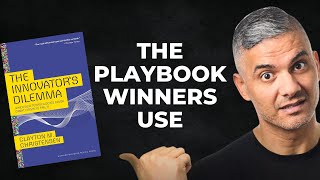
Omar Zenhom breaks down Clayton Christensen's The Innovator's Dilemma in 15 minutes. Successful companies get trapped serving current customers and miss threats from cheaper, simpler competitors. Disruption rarely comes from better technology, but from new business models that start in ignored niches, like Netflix against Blockbuster or Tesla in electric cars.
Chapters
Ever wonder how the iPhone beat Nokia? Or how Netflix beat Blockbuster? Or heck, how did cars beat horses and buggies? Well, it's all about a concept called the Innovator's Dilemma. In today's must read, I'm going to break down one book that explains why giants fail and scrappy newcomers that come into the market really are able to thrive and what it means for your business. And that book is the Innovator's Dilemma by Clayton Christensen. I'm going to share with you three key insights, three takeaways I got from this that you can learn and apply right now. Number one, this is what the book is really about. And that is that great companies, they get crushed because they are improving on what today's customers want, but they're ignoring what tomorrow's customers will demand. It's a dilemma because you as a product builder, as a company owner, you're getting feedback from customers. You're getting and they're telling you, we would love to see this. We want that. And if you do do that, you will make more money because you are actually supplying demand. So what's the problem? Where's the danger here? Well, the problem is, is that often as business owners, we listen to our customers and we just do what they want blindly because we feel like that's just going to add revenue to the bottom line. And it will. In the short term, what we do is we start upgrading the things that we're known for, the hits in our business. Right. But at the end of the day, when you do that, you're not really innovating. You're not really bringing in something new to the market and you're not actually staying ahead of the game. This often looks like doubling down on what works. And I'm telling you right now, it is natural to feel like this, hey, this is working. Let's continue to do this. Let's continue to make money here. But the problem here is that you're not innovating and somebody's gonna come and take your lunch because they are not just listening to customers what they want. They're actually more focused on the problems that customers are having. And they're going to solve these problems in a better way than you are, because again, they're innovating. The best companies in the world do this to themselves. They cannibalize their own products. For example, the ipod by Apple got replaced by the iPhone. When they came out with the iPhone, they knew the ipod would not be able to be a product in their product suite anymore. No one's going to buy it anymore. But they rather cannibalize their own products than get wiped out by their competitors. They. The second biggest insight that is actually counterintuitive, but makes total sense that I want to share from the book, is that your disruptors, your competitors that are going to come and take your business, they're not obvious. They don't come out of the gates being amazing. They actually come out of the gates looking worse than your product. Yes, they start out worse, but they start in a place where the big players ignore, where people are not even noticing that they exist. For example, when smartphones started to have cameras in them, okay, like if you look at the first iPhone's camera, it's horrible. No one would use that camera instead of a professional camera instead of a dslr. So camera companies were not really worried. They're like these guys, they're a phone company. They're like a technology thing. They're like a little ipod. It's not really my competitor. Real people that love great photos are always going to use my cameras. And guess what happened? The technology in those phones got better and better and better. The companies that did do this, like Apple and Samsung, they realized that, hey, yes, it's bad right now, but once this technology gets better and better year after year, people are going to use our product because it's in their pocket all the time. And people are going to prefer to use their phones than a professional camera. And because it's convenient, it's easy, and it takes brilliant photos. I can tell you right now, when I go traveling, this is the camera I love using. I have all these fancy cameras. I have, you know, 360 cameras. This camera is the easiest and best camera I have. And it wasn't always that way. Just a decade ago, you wouldn't say that same thing happened in the car industry. People laughed at Tesla and laughed at electric car companies saying, no one's going to buy an electric car. You know, the range is horrible. You can't go anywhere. It's not fast, it's not fun. No one wants to drive your car. People love driving and they're going to want to drive, you know, gasoline cars. Guess what happened? The technology in these electric cars were horrible. In the beginning, it was not great. No one, you know, were saying it was great. But it improved very rapidly. And soon enough. People prefer electric cars on a lot of markets because they're incredibly fast. The torque is incredible. There's no gears. It's just go, you know, zero to 60 in less than three seconds in a lot of these cars. And all the latest manufacturers are now just manufacturing their new cars are all electric because it's just so incredible, and people want that now. So because Tesla was an innovator and started early on, when people caught on and the technology started to get better, they had a huge lead upon every other car and manufacturer. That's why Tesla is the most viable car company in the world. Another example is Netflix got laughed out of the room by Blockbuster. They wanted to sell their company for a billion dollars. Blockbuster just totally laughed in their face. Okay, Netflix started out by you just sending DVDs back in the mail. You would be able to rent three DVDs at a time, and then when you're finished with them, you can just go ahead and put them back in the mail. The funny thing is that they innovated because you had no kind of deadline. You can keep those for as long as you want, but you can't rent anymore until you give back one or many or all of them, right? So Netflix really innovated in this area. And people realize, oh, I want to be able to have access to my media and watch it whenever I want. I don't want to feel this, like, pressure of returning it after two days. And then they moved their media to the web, right? And now they have streaming services. Even when they started out, people didn't really love Netflix because Internet speeds in most homes were not that fast. So therefore, it wasn't the best experience possible. You know, the. The quality of the video wasn't great. But quickly, we're talking about a matter of a few years. Internet speeds got faster, and therefore Netflix became so much more convenient. You never have to leave your house. You don't have to go to the post office. You don't do anything. Blockbuster got obliterated. The crazy thing is that these little competitors, they grow quietly until suddenly they hit a tipping point. They. And they go bananas, and they're huge. I just wanted to take a quick second to say thank you for being here. You're a learner, you're a doer. You're my kind of person. And if you want to join people just like you and our growing community of entrepreneurs, hit subscribe right under this video. You grow, we grow. We all win. Thanks. Third, big insight. The rule. It's not the tech, it's the business model. Disruption almost never comes from better technology. I think this is very, very important. It comes from a better business model. A model that is simpler, cheaper, more accessible to the customer. It's also more accessible way to deliver value to the customer. Think, for example, Amazon. Amazon's not a better bookstore, right? They didn't start out as a better bookstore. It was just a simpler, more accessible way to get the book. Somebody recommends a book to you, you don't have to drive down to a store. You can just order it right from your phone. If you order an Uber today, it's not necessarily better than a taxi, but it's simpler, it's more accessible. It may not be cheaper, but it's just easier, right? When you reduce friction from a customer's buying journey, it's usually the choice they make. I use this example, Uber, because I travel a lot internationally, and I often use Uber because I don't know what the local situation is when it comes to taxis. You know, do I have to negotiate my rate? Is there a meter? Do I pay them up front? Is it afterwards? How much do I tip? There's all these factors that are different in every country in the world. But if you use Uber, it's unified, it's easy. I know what to expect. There's less friction here, and therefore I will use it because I'm always going to optimize for convenience. So if you really think about it, they're not really changing the product. They're not innovating with the product itself. They're changing the model within. They deliver the product to the customer. Netflix is another example, right? They didn't invent movies, they didn't invent TV shows, right? They existed beforehand, okay? And they still exist. And they still put movies that are produced by other production houses and other producers, but they change the way you consume that movie, how you consume that show. When we were building webinar ninja for 10 years, we ran into the same exact dilemma ourselves. You know, competitors were producing new features, and our users kept asking us to match those features, even if it wasn't aligned with our vision. But what I soon realized is that if I keep trying to chase the big guys in the market, you become a weaker version of them. We focused more on simplicity, and we made it easier to use because it wasn't bloated. So our product was made for somebody who's going to be running the webinar by themselves and didn't have a team of people to manage everything behind the scenes. If you needed every bell and whistle and every feature that requires multiple people to run your webinar, then that's for a bigger team. But if you're a solopreneur, you're an Author, you're a speaker trying to sell your products or services. That's overwhelming. So we went the other way so that we don't have to compete with trying to come out with a feature every single second that would actually make our product more confusing and harder to use for our customers that we were serving. And that's how we grew, by niching down and focusing on the people that we are meant to serve. So the author explains in his book, your best customers unintentionally steer you into the past. They want what's safe. They want what they know. So what does this look like? Well, it looks like them saying things like, I want more features, I want more power. I want. I want more performance. These are the things they understand. But disruptors in the market come from less simpler, smaller, cheaper, more accessible. So as an example, you want to build a Kindle and not an iPad. An iPad does a lot. It's a lot of power, has a lot of apps, a lot of features, okay? But the Kindle does one thing better than anybody else, and that is being a book reader. You can read books off a Kindle, and it's more enjoyable, and it's a better experience, and it's lightweight and it's got 40 days of battery power. So it does incredibly better than anybody else, incredibly well. So you want to focus on those types of products because that allows you to have less competitors and allows you to continue to innovate and be ahead of the curve. You're solving a problem, a specific problem. For people better than anybody else, winning isn't about improving what already exists. It's about betting on what doesn't exist. And that's where the dilemma lies. Do you focus on what your customers want today or what you believe they'll want in the future? Because you have to understand that once you start working on the future, whatever you offer is going to be not so great at the start, because it's still not there yet. But your future success depends on building the things your current customers don't even want yet. So they won't be asking for it. So just keep that in mind. It's super important. Now, my opinion is to do what Apple has done for years, is serve your customers. But a good portion of your effort, time, and money is spent on the future, so they are able to continue to serve them in the future. So you're going to be releasing products and ideas and features that people will be like, oh, I didn't even know I wanted that. That's really smart. So I Want to give you an exercise to put this into action this week. Do a disruption scan. Ask yourself three, three questions. One, what's a tiny toy in my industry, everyone is ignoring? What is a small little thing that no one's actually thinking about or working on that maybe I can pay attention to? What do beginners want that experts dismiss? What are beginners in my niche looking for or need that experts don't really care about? And number three, if I had to build a product that costs 1/10 the price, what would it look like? This forces you to simplify. Your next business breakthrough is probably hiding in one of those answers. So this book, this must read book, the Innovator's Dilemma, is one of my favorites that I've read this year because it really wrangles with this idea that we all need to be aware of. Like we may fail because we're clinging to what has worked for us, what makes us money, right? We can't continue to just do just that. The great ones, they let go of something before it's too late and they build what's next, not what's now. So it's your job to balance that. One of the things that I learned from the company Atlassian, that's an Australian based company, they have a 20% rule where they spend 20% of their time in the company innovating, doing crazy new ideas. And they may fail and they may not do well, but it allows them to explore what's possible and what the future needs. So even if it's just 20%, you don't have to put all your eggs in one basket. You don't have to just flip your whole business and risk everything. What you can do is slowly do that. That's what Apple did, you know, they didn't just dismiss all the product lines or computers and their phones and they said, hey, okay, this device, we're going to replace it with this device in the future because we believe that's where the future is going. It's not going to be so awesome. You know, if you look at the first iPhone, I had the first iPhone, it didn't do anything very well. It actually did a lot of things poorly. The camera was poor. There was no app store. You know, the resolution of the screen wasn't fantastic. The battery life was horrible. It was much worse than a typical phone. So it really didn't do anything. Well, the phone itself was not that great. Like you couldn't even hear phone calls. The speaker wasn't super loud. So what does that mean? It means that that was just a starting place because it turned the phone into a tablet, turned into a screen thing that no one ever saw before. It was just always this, like hard keys. And now your phone doesn't have any buttons anymore. We had one button at the time. But the point here is, is that they took that product line and innovated with it. They still continued to sell their laptops. They're in their desktops, you know, and then they, you know, came out with the iPad and all that kind of stuff. So this book, I highly recommend it. Pick it up. The Innovator's Dilemma. This book is not about big companies like Netflix and you know, how successful they are. It's a warning. It's a warning to every entrepreneur that if you don't disrupt yourself, someone else will. If this episode has given you any insights or has made you think a little bit differently about things, share it. Share with a friend. Let them know that you're thinking about them. Send them on a WhatsApp or personal message, or just tell them in person. Thank you in advance for doing that. And if you want to continue to learn from me, join our Three Things newsletter over at 100nba.net Newsletter it takes 5 minutes to consume real insights every single week. Before I go, I want to leave you with this. This book is very challenging and I love books that challenge the way you think because it really makes you feel like, oh man, I need to do something differently because what I'm doing right now may not serve me in the future. That's scary, okay? And it's confrontational. But if you don't expose yourself to these ideas, you will get caught by surprise. You don't want that. You don't want to lose everything you worked hard on. Make sure you're continually to grow your mindset through challenging books. Thanks so much. I'll check in the next one.










