Stop Choosing Between a Business and a Life
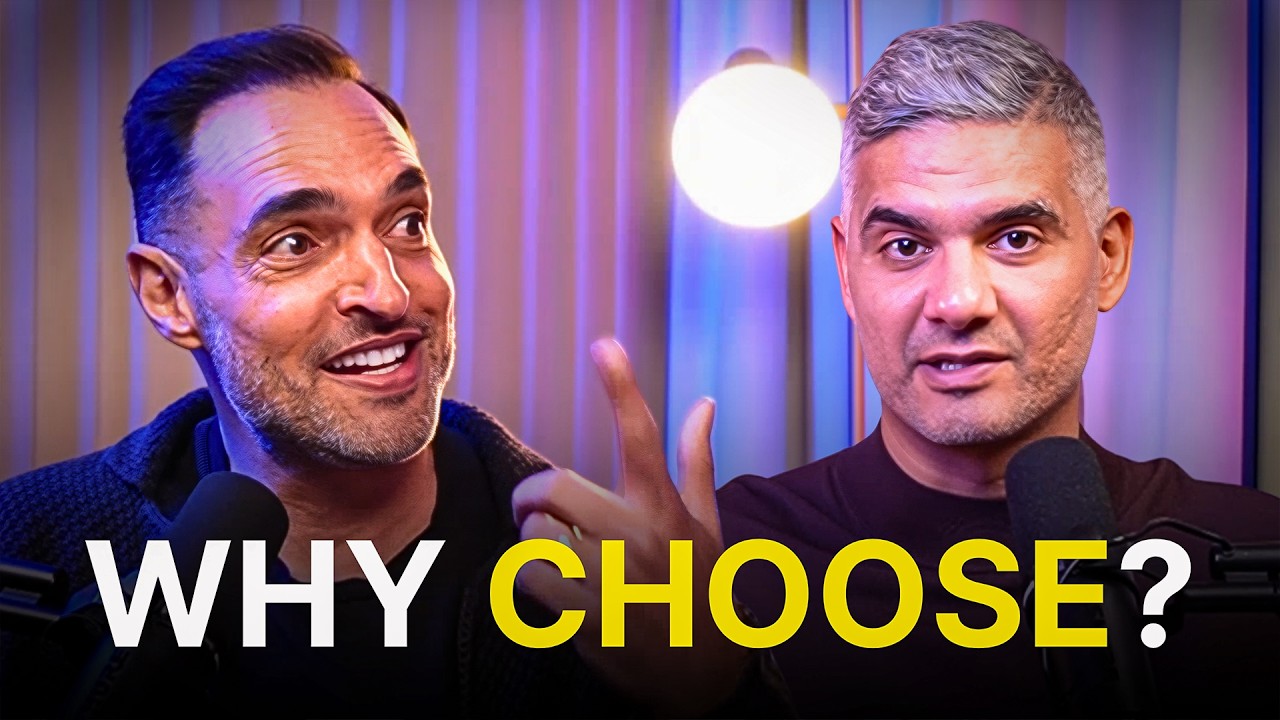
In this interview, host Omar Zenhom and entrepreneur Taki explore the concept of a "lifestyle empire"—a business model that blends the scale and impact of an empire with the personal freedom and fulfillment of a lifestyle business. Taki argues that the binary choice between empire and lifestyle is a false dilemma; instead, businesses should be deliberately designed to meet specific life‑outcome criteria. He shares anecdotes about Dan Martell’s Empire Builder event, Rob Nixon’s 15‑rule framework for a next‑stage business, and his own journey from building Webinar Ninja (an empire built to solve his money problem) to creating a purpose‑driven, flexible venture that supports family, health, and personal growth. The conversation also delves into practical habits: identity‑based motivation for fitness, micro‑habits (tiny habits), and the importance of incremental mastery over time. Taki emphasizes long‑term, slow‑growth thinking, citing examples like the Perennial Seller mindset, the Steven Bradbury metaphor, and the value of persisting for years without immediate reward. Throughout, the tone is conversational, supportive, and reflective, offering concrete frameworks (rules, identity framing, tiny habits) that listeners can apply to design their own lifestyle empire.
Chapters
We talked a little bit about it, but I want to go a little bit deeper on your concept of a lifestyle empire.
Yeah.
You had some conversations with other entrepreneurs and they asked you this question. They say, are you building an empire or a lifestyle business?
Yeah, it's so insulting. So, I've got many, many thoughts. This first came up when Dan Martell, who's got a lot more airtime on this episode than he probably deserved, asked me to come speak. I'm kidding, Dan, we love you. Asked me to go speak at an event in Kelowna. And the event's called Empire Builder. I'm like, this sounds great. I'd love to come speak. What's it about? He goes, well, it's for empire builders, not lifestyle businesses. And my mouth said, that sounds great. And my gut said, oh, it's like, why should you choose? I mean, every business is a lifestyle business because every business kind of impacts your lifestyle. And if you can have both, I think you should have both.
What is your definition of both? Of what's an empire in your head? What's an empire business versus— just so anybody who's listening—
So, there's a lot of like, business dudes who've got a business and that's kind of all they got and they're obsessed about it. And that's fantastic. Honestly, again, back to the conversation before, I'm much more interested in how your business feels to you than how it looks to anyone else. So if that's what you want, amazing. But if I've got a great business but my life sucks and my family's in trouble and I'm not healthy and I'm not sleeping and I'm stressed and I'm like, what have I really got? Yes. So I think traditionally an empire is something big and a lifestyle business is something small that allows you to live a great life.
Right.
And I think if you do, you know, we're in this lucky position where we get to choose and design whatever we want. And if we can design whatever we want, why don't we make something where we get the best of both worlds?
Right.
In Australia, I don't know how well this would translate for international, but there's a brand of taco shells that you buy at the supermarket called Old El Paso.
Yes.
And they've got this commercial going back a few years where there's a Mexican family and they're fighting over, we want the soft shell tacos and we want the hard shell tacos. And they're like this Beef happens, and the little girl goes, "Por qué no los dos? Why can't we have both?" Like she's my spirit animal, that girl.
Yes.
And so if we could do both, I think we're great. We talked before about Jason Fried from Basecamp.
Yeah.
His business partner is a guy called David Hanemeyer Hansen.
DHH. Yeah.
He was just on the David Senra podcast, and they brought up this lifestyle business thing. He goes, "Yeah, I have a business and a lifestyle. What have you got? Just a business? Ew! Right?
Yeah."
I think let's just set this thing up deliberately so that you get the balance of both that is right for you. And I think that changes. Like for me, you know, a great business has got really great money, really good meaning. So you're doing work that you care about with people that you love and to help people, you know, like it's meaningful and then freedom. And I think we want to design it so we get both. I've got this epic client, longtime friend now called Rob Nixon, who's up in Brisbane. Right. You would love Rob. Built this big company, maybe a team of 30 or something in an office in Brisbane. Super swanky. I spent a day there and it was extraordinary. Very profesh. And they'd have like the daily standup and all the things. And then he brought in a CEO and a board. And one day, a bit like Steve Jobs, they conspired and they booted him out. And so all of a sudden he's— yeah, so he's got no access to the database, can't market and sell to the— like, he's just like out, out, starting from scratch. So he flies down to Sydney and we're at the Opera Bar just under the Opera House.
Yeah. Great pizza. Great pizza there.
Yeah. I didn't have the pizza, but I'll try it next time.
Yeah.
He's like, I'd love your help thinking through the Yeah, my next business. I'm like, all right. He goes, well, I've done some thinking. I've got a list of like 15 rules that my next business must have.
Okay.
And I love this because most people just go, what do I do? And he's like, these are the criteria to know if it's right. And the criteria was— I don't remember all of them off the top of my head, but there was like this amount of money, this amount of days. I want to be able to travel first class. And so like we designed business through the lens of I want these outcomes for life. And so now he works 13 days a quarter. Every 90 days he works 13. Does like $5 or $6 million a year, 85% profit, team of like a couple, living his best life.
Yeah.
Because he did it intentionally. And I think most people build their business sort of by accident rather than by design.
One of the things that just came to mind when you just said that, we had Ramit Sethi on the show.
I don't know Ramit, but super smart.
We got to introduce you to him. He's a good friend of mine and he loves Japan just as much as you. So you probably could meet up in Japan. Yeah. So Ramit was on the podcast. We actually, had the episode in Japan. And he has this line that, that was really impactful. And he says, every entrepreneur needs to ask the question, what am I getting? What do I get in my hand for everything I'm about to do to start this business? All the sacrifice, all the time, all the money, all the whatever, like, what do I get? And it's like, a lot of us, we don't stop to say like, what do I want to get out of this? What's the endgame? Yeah. You know, and if you don't mind me sharing, you know, like my lifestyle empire, journey was a little bit different. You know, like, as I mentioned, you know, I didn't come from money. So, like, I wanted to solve, like, the money problem in my life. And that's why I went empire with Webinar Ninja for a very long time. We built it for 10 years. And Dan Martell, again, was our coach and helped us kind of scale our operations in the software game. Sold that business, solved the money problem for us with that sale. Don't have to worry about money. Love it. Thank you so much. Yes. A lot of people ask me, like, did you feel amazing? Like, I felt relief. I felt like I didn't mess it up. But I was no longer the webinar guy anymore. And now, I had to like put all my effort and energy into the podcast. And I had a chance, Nicole and I had a chance to sit down and be like, what do we want to do now? Like, how do we want to live our life? What kind of business do we want to build?
What do I want to be when I grow up?
Exactly. And that's when the Lifestyle Empire concept started to come to us. It's like, well, how do I do what I love, do my secret sauce, and not have to do anything else? And that's kind of the journey we're on right now, like building out the team, You know, making sure that we have all the tools required. Da da da da. You know, and I just want to have like fun, have interesting experiences, have so I can learn from these experiences so that I can share them on the show. And yeah, and and you can grow a really really big business with that in mind.
Yeah.
But you just have to like allow yourself to do that.
Yeah, and it starts with what do I want or what do I don't want?
Yeah.
And then everything else kind of trickles down from that.
And I want to just preface that through like, oh, Omar, you know, you're starting from a very comfortable space. You know, like you had the money problem solved. Da da da da. But it's a good exercise to say, even if it's not your start. Yeah, go ahead.
Yeah, I would say a lot of people go, well, you know, it's easy to do afterwards. Like, because everyone who says like money's not important to me, usually they're the billionaires who like, it's not important to me now. Of course, dude, that's fine.
Yeah.
But I've been like, I've got off track a couple of times. But I like, I deliberately built this business the way we did recurring because plus or minus 10%, I know what's happening for the next few months. Constrain the hours because Ethan, who's now 26 and healthy, thank God, started his journey very different. Like we're in hospital for, you know, Westmead Kids Hospital for 10 weeks. And I was like, how do I run a business from beside the thing? And it's got to be flexible enough. So we built it for freedom first, but originally it was like freedom so I can look after my kid in hospital. And now it's, now he's healthy and well, so now it's freedom that we can go be wherever. Yeah. I think it's a mistake to believe that, yes, there's seasons and when you start, you probably put more time and energy and whatever into it. But I think believing that I have to work really, really hard so that one day I can make it fun, that's just 1950s called and they want their plan back. That's not true.
Yeah.
I love Tim Ferriss talking about taking retirements early, mini retirements along the way. And so, I think especially now, it's so easy to, like technologically, You could be anywhere. We've got like a recording studio in our pocket. I think if you start with the rules, what's okay and what's not okay and what do I want, what do I not want, you can build whatever you want the way you want it from day one.
Yeah, because you don't want to be stuck with a business you hate. I mean, you're— then you're an indentured servant, you know, like running after your tail and trying to figure out how to, yeah, you know, keep it going. And then they're done. That's not fun.
Not fun.
Agreed. 100%.
I had a couple of years in the wilderness and it wasn't great.
Yeah. So one of the things that Nicole and I like to do in interviews, not podcast interviews, but actual new team hire interviews, is like, you know, we ask them a bunch of questions and then at the end of the interview we ask them, do you have any questions for me? So I'm gonna ask you, do you have any questions for me?
Yeah. Tell me about like, you're great at basketball.
I wish I was great.
No, you are, dude. Well, compared to me, you're great at basketball. And you seem quite healthy, at least every experience I've had with you. How do you— do you go to the gym?
Yes.
Okay. I want to know how you find/make time. And do you enjoy the gym? I'm hoping the answer is no, but you go anyway. And if so, how do you make yourself go? But if the answer is not that, then I'll take whatever you got.
This is a fantastic question because I thought about it a lot.
Okay. Because I don't enjoy the gym and I should go, but I don't enjoy the gym, so I don't go.
I think a big part of it is identity.
Yep.
Is like, I identify as a person that goes to the gym, or I identify as somebody who is an athlete or as somebody who is healthy. And who do— like, what do athletes or healthy people do? They go to the gym. So like, I'm doing it because I don't want to be a liar.
Yeah, right.
So I think it's really hard to get people to do something if they don't— it's not part of their identity.
Yep.
So you either choose that's your identity, or you choose something that you enjoy. It doesn't have to be the gym. It could be like pickleball or whatever.
Yeah.
You know, I
think that's the hack for me. Is if I was going with a mate,
yeah,
I would go every time.
Yeah,
everything good in my life is mostly because I've got a date with a dude.
Mm-hmm.
And I choke because I don't want to let the dude down, and then I have a great time as soon as I'm there. But the identity thing's really interesting.
Yeah, and I would tie it to something that you really enjoy outside the gym. So like, if every time you go to the gym you go get a coffee, like that, like there's a motivation there. Or maybe you just love the beach, so let's do the workout at the beach. Yeah, you know, like something that ties it together. But for me, it's identity. And I do think that micro steps really matter. So, for example, if I hated the gym, like I go 4 days a week, but let's say I hated the gym and I wanted to start going to the gym, I would just set a goal where I would say, my whole job today is just to walk to the gym, go in the gym, go home. That's it.
Yeah.
Right? The next day, I'm going to do 5 minutes on the treadmill. The next day, right? Like what happens is that, yeah, you just, you win by just showing up.
Okay. That's funny because you've given me 2 lessons. Yeah. Like one, make it— combine it with something fun and be micro that I do in other parts of my life and having it. I hated my first 8 YouTube videos. Like the experience was not fun. And then I was chatting with Caleb Ralston and he was like, the thing you want to do, can you peg it to something you love to do, which is outside beach coffee shops? So now I shoot outside.
That's exactly what you do.
Yeah.
Yeah.
And now I love it. And the micro thing was email after I brew my Have you read Tiny Habits?
Yeah.
Okay. Linda Fogg Phillips, who coaches Tiny Habits, BJ's sister, is in Black Belt. And she told me, after I brew my morning coffee, I will write 2 sentences. And you can't write 2 sentences and then stop because once you've done it, you're like, well, this is kind of good and I'll just keep going. All right. That's helpful. Thank you.
Anything else for me?
Yeah. This is episode 2,830. That's a lot. It's 12 years. How do you find the fun and inspiration? Because most people give up, or most people would go, okay, I've done that. How do you keep it fresh and interesting and fun for you?
The fun for me is the mastery. Like, it's not the actual shooting the videos, it's me seeing us get a little bit better every time we shoot an episode. Maybe we improve one little thing. Maybe it's my intonation, maybe it's the cameras, maybe it's the script, maybe it's the way we edit. Like something small. Yeah, that's good. And I love this idea, and I get it from basketball. I get it like this small little, like not even 1%. It's like, it's not even a fraction of a percent where you're just like getting better every little bit. And I've been doing this for 12 years. We celebrate 12 years this week on Friday, and you're gonna come to the party. So, it's gonna be fun. We're gonna be celebrating here at the studio. But I mentioned that because, you know, I love outlasting people.
Yes.
You know, I have photos of all the, Podcasts that launched when we launched, and I would say 95% of them don't publish anymore.
Yeah, I'm sure that's true. Do you know Steven Bradbury?
No. Who's
that? Okay, so this is a great Aussie reference for you. Australia is really good in the Olympics, not so good in the Winter Olympics. Steven Bradbury won Australia's first Winter Olympics gold medal.
This is the guy that everybody fell and he went through the tape?
Yeah, he's the Outlast guy. He's like, he got to the, the last, the finals. He's like, I probably can't beat these guys. I'm gonna hang back and they'll be so competitive they'll fall over. And yeah, so everyone else fell over and he won. I think that's a great metaphor for sticking at stuff.
And then I know that if I just keep doing it, I will get better. Like, I'm, I'm, I'm more of the camp of— I watched this documentary on Steve Urkel, uh, Jaleel White. Yeah, Jaleel White, the actor. Yeah. All right, Steve Urkel. It's funny because he hates people calling him Steve Urkel in public because like, I'm more than that. Yeah, I just called him Steve Urkel. But, uh, Steve Urkel, Jaleel White, Yeah. It was just a short little documentary about him and he said, the biggest life lesson I got from that experience is that anything that grows very fast comes crashing down very fast and things that grow very slowly, little by little, have a better chance of survival and being there and being prolific and being— what is the title of the book that Ryan Holiday has?
Oh, yeah, like a perennial seller?
Yeah, Being Perennial, Being a Perennial Seller, right? So, I always have that in the back of my mind. I'm okay with slow growth, and that's exactly what has happened with this podcast is like slow, slow growth, but we've been growing every year and kind of like—
If you do it long enough, it's like if you go a long time plus a fraction of a percent better, you can't help but get great.
Yeah. But it also allows to lower the pressure. It's like, I don't have to be great tomorrow. Yeah. You know, like I'm going to just get better over and over and do my best. That's all you really can do. And it becomes a little bit more enjoyable when you don't have the pressure of being like, I gotta go viral tomorrow. You know, we did an amazing job on audio. We've been still doing an amazing job at about 2 million downloads a month. Great growing audience. I love it. Yeah, I'm really proud of that. But I'm a beginner again on YouTube. You know, we're still trying to figure this out and, you know, 2 years in, we just got our first like partnership, first like, you know, sponsor on video. So, it's like a lot of commitment and the thing is that most people are not willing to do that. No one's willing to do something for 2 years and not get a reward, you know? Yeah.
Yeah, yeah, yeah. I think that's that's big. The I'm going to do this for a long time, expecting nothing back, and eventually it'll get good enough that it's worth it. I think that's smart.
I love it.
Yeah. Thanks, man. This is fun.
It's been great, Taki. Thanks so much for all your wisdom and not only on the show, but just like over the years getting to know you as a friend, the introductions you've made, you've been super generous with me. I think one of the qualities that a lot of people don't see because of you know how charismatic you are, but you're actually a really lovable guy. Like you're you show a lot of love, which is your big heart guy. And I think it's very rare to find people that are as successful as you to care so much. So thanks so much.
I think the two are very linked. Like, it's only going well because I care.
I love it. Yeah, we have a saying back, you know, I was a teacher for over a decade and, you know, your students don't care how much you know until they know how much you care.
Yeah, that's true.
Which is, which is exactly what people feel.
Yeah, man.
Love it, man.
Thanks for this.
Great.