The Book Publishing Option Almost Nobody Talks About (And How To Use It)
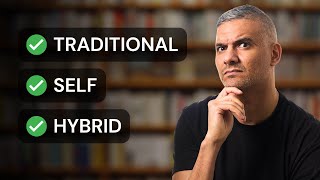
Omar Zenhom breaks down three publishing models for 2026: self-publishing gives you control and high margins but you fund everything; traditional publishing offers advances and prestige but keeps royalties low and timelines slow; hybrid publishing splits the difference, letting you keep rights while getting professional services.
Chapters
Have you ever said to yourself, one day, I want to write a book? If so, this episode is going to save you months of confusion and possibly hundreds of thousands of dollars. Because here's the truth. There is no right way to publish a book. But there is a right way for you, depending on your goals. So today I'm going to break down the three options that I believe are viable options for publishing a book, and I'm going to go through the pros and cons of each. And which one I believe is the best option for most entrepreneurs, creators, and experts today? The first thing I want to say is that writing a book and publishing a book are two different things. We need to establish the fact that writing a book is about writing something valuable, that's compelling, that's fun to read, that's a page turner, that's a thing, that's a skill, and that's something that you're going to need to work on. Today's episode is not about that. Today's episode is about publishing a book. And publishing a book is about getting getting that book into the hands of your readers, getting it out in the world, and making sure that it's available and seen. A lot of people spend a lot of time on the writing part and forget about the publishing part. They forget about actually making the effort of figuring out what's best for them. And what happens is that they spend so much time on creating this great book that no one actually learns about because they chose the wrong option for publishing. And this is what I want you to avoid. And this is why I'm doing today's episode. This is what I want to avoid right as I write my book. In my opinion, there are a few reasons why people fail at publishing a book. The first big reason is that they choose the wrong publishing model. There are three options, like I mentioned today, and each option has pros and cons, and each option kind of leans towards a certain outcome. You got to know why you're writing this book. And if the outcome of the model, of the publishing model doesn't match the outcome that you want, then you're choosing the wrong model. So this is why I'm doing this episode, is because I want to make sure that your goals and your ambitions for writing a book are met through your publishing model. The other thing that causes people to fail in this process is that they don't understand the trade offs. They don't understand that there are pluses and minuses to every single decision in life, including publishing a book. So you got to be okay with the drawbacks, with your choice. And you got to really want the pros for you to be able to choose that choice in the first place. The. The last mistake people make when publishing is that they actually choose the wrong outcome. This is a little bit deeper. Meaning that some people, they're not really sure why they want to write a book. They like the idea of writing a book. They think the book will give them authority and make them feel special, make them feel like an expert, but it actually doesn't make them feel anything when they actually write it and publish it. And they realize that actually what I was chasing, that external validation, is not going to come by just putting a book out in the market. I actually have to get it in some other way. And we'll talk about that in another episode. But that's something for you to think about. Can I get 30 seconds of your time? We love guiding you on your business journey and we want to help even more people build their dream lives. So if you could hit the subscribe button, it would be greatly appreciated. It's completely free and it helps us out more than you know. Thanks. Having said all that, publishing a book can be incredibly powerful and can be incredibly impactful for you. It can build your brand, it can create authority, it can drive leads, it can generate revenue for your business. It. It can open doors you didn't even know existed, like speaking on stages, at events. So this is an exciting time, but it's really important that you choose the right publishing model so that you actually get what you want out of this big project that you're going to invest a lot of time and money and effort in. Many people spend a year, maybe even 18 months, maybe even two years in the process of creating, writing, publishing a book, marketing the book, getting it out in the world, making sure people know about it. That's a long cycle. So you want to make sure you choose the right path. And that's why I'm here for you today. Let's start with option number one, and that's self publishing. Self publishing wasn't a thing like 20 years ago. Okay, this is fairly new. But in the last 10 years, self publishing has really picked up Steam and become really popular amongst a lot of entrepreneurs, business people, creators. Because there are a lot of advantages that now with self publishing, you do everything yourself. You hire the managers, you hire the people that you need to design the book cover, for example, and you use different resources and platforms like Amazon, KDP or Ingram Spark, or you can even sell your book Directly from your site if you want to. Self publishing gives you a lot of flexibility. Here are some big advantages of self publishing, and this one is number one with a bullet. And it's profit margins. When you self publish, the vast majority of the revenue goes in your bank account. Okay? In many cases, 70% profit margins. That's pretty good because if you compare that to traditional publishing, where you might see 5 to 15% profit margins, the difference is pretty massive. I know a lot of established authors that are friends of mine that have books that you see in bookstores, you see in airports, and the book might sell for $25 and, and they get like a dollar or two. So it's not much. The second big advantage of self publishing is total control. You get to control everything because you are the boss. You get to control the title, the COVID the messaging, the pricing, the positioning. There's no committees, there's no compromises, there's no negotiation. You get to do whatever you want. Advantage number three, speed. Speed and timeline. I would say you, you can publish a book as fast as you can write it if you want to, right? You can do it in three months and six months, whenever you're ready. And there's no waiting two years for a release window. When you have traditional publishing, often they have to find a release window because this publishing house might be publishing many nonfiction books, for example, in business. And they don't want to release, you know, competitive products, competitive books in the same publishing window. So you got to keep that in mind as well. So in, in self publishing, you could just release it whenever you want to. That leads me to the fourth big advantage of self publishing, which kind of encapsulates it all. And that's total autonomy. You own everything. You decide when to update the book, when to revise it, when to. You can bundle it with other products and services that you have. You can use it as a lead magnet. This is why many entrepreneurs and creators love self publishing. Because they have total autonomy. There are, you know, very limited trade offs, but there are trade offs. Let's talk about them. You are the publisher, right? That means you have to fund the editing, the design, the formatting, everything it takes to write and create a great book. You have to handle distribution, you have to handle marketing, right? Making sure people know about this book. You carry all the risk right? Now, if you're an entrepreneur, you're probably used to that already, so maybe this doesn't deter you too much. But it's good to know what you're going to be responsible for if you don't already have an audience with your business or a marketing engine, self publishing can be very lonely. It could be very overwhelming. It can also produce very underwhelming results. Because how are you going to sell your book if you don't have an audience to sell to? If you're serious about choosing this option, self publishing, I recommend a book called Published by Chandler Bolt. It's a good place to start and there's a lot of great information on how to self publish your book. Chandler also runs an academy called Self Publishing School. If you want to go even deeper. Option number two, traditional publishing. This is what most people think about when they think about publishing a book. And this is publishing a book with a publisher like Penguin, for example. This is Penguin's little logo. You probably have seen it on a book. They're very popular with nonfiction books. Another publisher is like Wiley, there's Hyper Collins, there's a whole bunch, right? And usually you work with an agent from this publishing house. Now, there are big advantages when it comes to traditional publishing. The advantages are, number one, if you have some sort of authority, you have some audience, you have the opportunity to get an advance on your book. That means they will pay you money to write the book. Your advance amount will depend on the size of your audience, how strong your platform is, you know, how compelling your idea is. And if they want to back this idea of a book, you might receive a pretty significant advance. Some experts with huge audiences like that have big podcasts and YouTube channels. They get like a million dollar advance. Now, that's the other side of the spectrum. You know, advances can start between 20, 30, $50,000. Even now, you need to understand that you only start earning royalties on your book, meaning how much money you get for each sale after the advance is earned back through the sales. So say, for example, a publishing house gives you a hundred thousand dollars in advance. You write the book, you publish it, you don't get paid for the sales of the book until the amount of sales and your cut of the sales goes past $100,000, your advance. The second big advantage of traditional publishing is distribution power. Traditional publishers are still very good at this. Getting your book into bookstores, airports, libraries, corporate offices. You know, sometimes corporations want to buy your book in bulk. This is pretty big, you know, if seeing your book in a major international airport matters to you, then traditional publishing is going to be your route. The third big advantage of traditional publishing is prestige. Endless. Here's a hard truth that I found out in my research. If your Dream is to be on a New York Times bestsellers list. Traditional publishing is essential and it's pretty much the only path, especially when it comes to the New York Times bestseller list. I did some extensive research on this and it's almost impossible for you to get on this list as a self published book. So just keep this in mind if you are only writing a book so that you can hit the New York Times bestseller list, which is the goal of a lot of writers because they feel like that's the ultimate reward or the ultimate prize of being a best selling authority and something that they can leverage and use to, you know, increase their speaking fees or even get on talk shows or even get pitched other ideas or products. Now there are trade offs, so let's get through them. Like I mentioned, much lower margins. The royalties are typically 5 to 15% of the price of the book. Sometimes it's even less. The second big trade off is you lose a lot of control of your book. You often don't control the book, meaning you don't control the, the title of the book, even the COVID the release date, the positioning. Of course, everything is a negotiation and you can talk it out, but at the end of the day they have a lot of power because they are the ones that are going to tell you, hey, we're publishing this book, we know what's best for you, we know what's going to sell and you're going to have to fight through that Third big trade off, and to me this is the biggest trade off of all, is that in many traditional deals, the publisher owns the publishing rights, sometimes international rights, sometimes even audio rights of your audiobook. Now you can negotiate like I mentioned, but the leverage is usually on their side. So you gotta be very careful. And I would definitely use a lawyer in this process to make sure that you keep ownership as much as possible of the IP and the different forms of your book. The fourth trade off is a slow bureaucratic process. I spoke to several authors and many of them who first traditionally published, then went to self publishing, switched to self publishing because of this reason. Books can take up to 18 to 24 months to hit the market. And many entrepreneurs feel that that takes, that's, that's too much time and I want to get my book out sooner. I want to have more control over the timeline. This is especially true if you are writing a book in an industry that is evolving very quickly, like AI for example. So a lot of authors I know have really complained about this. But if it's worth the payoffs it's worth the advantages, then maybe you want to put up with this. Now let's get into option number three, Hybrid publishing. In my opinion, it's sort of the sweet spot. This option is an option that most people don't even know about. Okay. And in my opinion, it's probably one of the best options if you are a business owner that likes autonomy. Now, I've met a few really good authors, people that have sold many, many books using this model. And it's exactly what it sounds like. It's something in between self publishing and traditional publishing. A good example of this is page two publishing, which actually was introduced to me by Alan Dibb, who is the bestselling author of Lean Marketing. He also is known for the one page marketing plan which we reviewed here on the show, which has over like 10,000, 11,000 reviews on Amazon. It's just sold so many copies and if you look on the spine of the book, it's page two publishing. Okay. There are many other books that are published by this publishing house. One of the books I recommend before as well is exactly what to say. And Here is Page 2 Publishing's location. Little logo Picture Publishing or this model. Hybrid publishing gives you a few things. One, you retain creative control, you retain most of your rights, and you retain significant margins opposed to traditional publishing. Now, the advantage is that they provide professional editing, design and production. They also handle distribution. They get you into bookstores, into airports, bulk orders, all that stuff. They also act as a true publishing partner. Now, I can't make a decision for you. You got to choose the right option for you. But let me make it a little bit simpler for you to make a decision. I recommend you should self publish if you want maximum control. You already have an audience you care about, speed and the margins of each book sale, and your book supports your business. I recommend traditional publishing. If your number one goal is prestige, and that's okay to admit that, that's fine if that's your goal. If you want to hit the New York Times bestseller list, that's something that you, you want to just admit to yourself. If that's your goal, then that's fine. Go with traditional publishing. If you're willing to give up a bit of control and margins, that's also okay. If money is not really something you're trying to gain out of this project. If you're okay with a bit of a longer timeline, then traditional publishing is right for you. I would go with hybrid publishing. If you want a little bit of both worlds like you want a good balance of control and credibility if you want a balance of distribution and keeping your ip. If you see your book as a long term business asset, or maybe you just can't deal with bureaucracy and politics. Most entrepreneurs, creators and experts I have found that have used the hybrid approach are really happy. I've heard a lot of glowing reviews of the process and they feel like it's one of the smartest moves they've ever made. That's all the research I've done on publishing a book. Hopefully it was helpful and if it was, then the best thank you you can give me is to share this episode with somebody else you know that's looking to publish a book sometime in the future. Before I go, I want to leave you with this. Your book is not just a book. It's a platform. It's a calling card. It's a trust builder. It's a way for you to really differentiate yourself and leverage yourself out in the world. And the worst thing you can do is publish it the wrong way for the wrong reasons. So give this some thought before making a decision. Choose the path that serves your goals, your life, your business. Okay? Not just your ego. So hopefully I gave you the tools to do that. And if you want to hear more from me and you want to go a little bit deeper, I recommend you sign up for our newsletter. I send out an email. I personally write this email every single week which allows you to kind of think a little deeper about yourself, your business, and how to get better as an entrepreneur. So so go ahead and head on over to 100mba.net newsletter to sign up. It's absolutely free and it takes a few minutes to consume. It's my way to kind of stay in touch with you and give you more value. And if you ever have a question or need any help, you can reply to any of the emails. And I take a bit of time, but I do reply personally. Thanks so much for tuning in and I'll see you in the next episod.










