Why Most People Don’t Want What You’re Selling And That’s OK
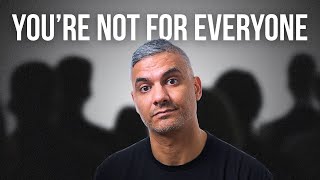
Omar Zenhom argues that trying to sell to everyone is a waste. Instead, nail your psychographics, speak directly to those people, and stop apologizing for who you're not. Webinar Ninja, CrossFit, and Harley Davidson all won by being specific.
Chapters
Here's a truth most entrepreneurs don't want to hear. Most people don't want what you're selling. And guess what? That's completely fine. And in fact, it's expected. It's normal. And today, I'm going to show you why it's not a problem, but more importantly, why embracing it is the key to actually succeeding. You see, when I was starting out in entrepreneurship about 20 years ago, I was trying to talk to everybody. I was trying to serve everybody, and therefore I served nobody. Okay? I didn't resonate with anybody. No one was listening to me because I was too generic. I was too vanilla. I was easily ignored. And that's the worst place to be in business. So if you're sick of being in that state, if you want to be a hell yeah to your ideal customer, then keep on listening. We live in a world of endless choices, and we just need to admit it. Think about it. Not everybody loves sushi. Not everybody likes football. Not everybody drives a Honda. And that's okay. Okay? Because you don't need everyone to succeed. You just need the right people. Business isn't about convincing the masses. It's about finding a few people who already are leaning in that direction. Finding those people that when they find you, they're like, wow, where you've been all my life? You're exactly what I need. This is all to say that your job is not to sell to everyone. That is the wrong mindset. A lot of people, they say to themselves, how can I make everybody like this thing that I'm creating? No, the right mindset is who already wants this and how do I make it a no brainer for them? That shift changes everything. I can tell you firsthand that that shift changed my business. Webinar Ninja, my software company that I ran for 10 years and got acquired by ProProfs in about year two. I really got tired of trying to convince people that webinars are great and webinars can help you grow your business. And webinar sells like nothing else out there. So instead of trying to convince people to do webinars, I sold my software to people that are already convinced, that are already getting wins from webinars, that already are loving the results they're getting. But they're wanting a different solution. They're wanting a better solution. They want a better way to do webinars and want a more efficient way, a way that will actually get them better results. That's why I decided to go after these people. These people don't need convincing. They're sold on the idea of webinars. Okay, I just need to sell them on my solution, my improvement of that experience of webinars. So much easier to make sales. This way you don't have to drag people and convince them and get them to trust you on the concept of what you're selling. Another example is Uber. Uber knew from day one that their ideal customer are people that normally take a cab. But if they can't get a cab on a rainy day in a major city and they want to be able to get into a car that's safe and easily get to their home or get to their destination, then Uber would be a perfect fit for them. It's a better, smarter solution than hailing a cab. It's more reliable. Money doesn't change hands, so therefore it's safer. Whole bunch of advantages. They were not competing with people that take mass transit, people that take the train to work, or people that take the subway to go to their party or go to their event or go to somebody's house. They were not competing with people that walk everywhere. Okay? So if you notice, even till today, where does Uber advertise? Where do you see big signs and billboards and advertising for Uber? At airports. Okay. When you're at, you know, baggage claim at an airport, even international airports nowadays in Europe, you'll see signs for Uber and you're like, oh, great, let me just get an Uber. I know Uber. Uber is easy, it's safe. I could just do it on my phone. I don't have to hail a cab in a foreign country. They are not trying to sell people that are not normally going to take a car to their destination. And in fact, if you notice, if you go to international airports that are well connected with transport, with great train systems like Tokyo, for example, Uber is not really prevalent there. Even though you can call an Uber in Tokyo, in the city, you don't see advertising of Uber in the airport because they know that a lot of people just take the subway because it's so convenient, it's so easy. Most people are just going to go with that option. They're not going to try to fight against the tide. This mentality focuses your energy on serving and not chasing. So instead of trying to water down your offer to appeal to everyone, make it sharper, more specific, more magnetic to the right people, you'll repel some people. And that's good, actually, because when you repel the wrong people, you attract the right ones even harder. They're like, yes, this is exactly what I love let's bring in some other examples like Harley Davidson or CrossFit or, or Apple. They're not trying to win over everybody. They're polarizing in a lot of ways. And that's really powerful and helpful for the brand because they make it clear we are for these types of people. We are for people that are interested in this. We are people with this type of lifestyle. If you are part of our group, you're going to love our products and services. If you're not, that's okay. So how do you lean into this and implement this in your business? Number one, get crystal clear about who you serve. I'm not talking about demographics, I'm talking about psychographics. What do your people believe in? What do they value? What do they want? What keeps them up at night? What worries them? What gets them excited? What makes them happy? What do they actually desire in their life? These pieces of information, the answers to these questions are going to paint a beautiful, clear picture about who your audience is, who you actually need to serve. Number two, speak directly to them. Use language that resonates only with your people and it's okay if others don't get it. A great example of this is a company called AND one. And one was a urban fashion brand specifically for people that like basketball. Now, the general public, if I say and one doesn't mean anything to you, right? But for people who play basketball, play street ball. And one is a very common term. People know what that means. It means end the foul. It means that you are playing through contact, you're making the point and you got fouled. And that's what you would shout out on the basketball court. You would say, and won. So the brand, even the name of the brand resonates with those who get it, who are in the know, that would like to buy those T shirts, those products, those shoes, and it becomes some sort of secret club, so to speak. And it really resonates with people because that term AND one, it's a loaded term, it has so much meaning behind it in the world of streetball. And number three, you want to celebrate being different. Your edge isn't a flaw, it's your advantage. Someone who really is known for flexing this muscle big time is the actor and comedian Kevin Hart. Kevin Hart is a short guy and he uses that to his advantage. You know, he sees that as kind of a deficiency, but at the same time, it's part of his comedy, it's part of his character, it's part of his stand up routines. He leans into it it's not by accident that his co star in many movies is the Rock. Somebody who's like, what, six, five, huge guy, right? The exact opposite. The contrast for him, he's like, hey, I'm going to just go all in on this and own the fact that I'm like, five, two. I love it. I don't want to leave this episode without giving a practical business example like my own business. When I created the $100 MBA, I wasn't trying to win over people who loved a traditional NBA path. Actually, the opposite. We made a lot of jokes and talked about how expensive an MBA is, not only in terms of money, but in terms of time. I was speaking directly to entrepreneurs who said, I don't want a mountain of debt. I want to start now. I want a practical education, a real world business education that allows me to start a business as soon as possible so I can learn through my experiences and get some wins under my belt. And guess what? Not everybody agreed with us now. Everybody love this idea of a more practical, more real, down to earth MBA. Obviously there was people that had their MBA that spent over $100,000 on their degree, two years, and thought, I don't like the sound of this. You know, $100 a month to learn what I learned. That's fine. It's okay. You don't have to like me. We weren't for everyone. We aren't for everyone. And we are for our people. We're here to serve the people that resonate with our message and what we do. And that's why our business exists. That's why we're still around after 11 years. And by the way, trying to be something for everyone is exhausting. Okay? It's not sustainable. So don't try. Just be yourself. It's okay if you're polarizing. It's actually great because you're gonna resonate with your people. One of my favorite ads of all time is a Porsche ad. And in the ad I'm paraphrasing here, they say, Porsche doesn't build cars. They that has something for everyone. But we build cars. That is everything to someone. Before I go, I want to leave you with this. Business isn't a popularity contest. It's a connection game. You don't need everyone's applause. You don't need everyone's approval. You need a few people's deep belief that what you offer can change their life, their business, their future. And when you stop trying to win over everyone, you. You finally win the right ones over. Thanks. So much for tuning in to the hundred dollars MBA show again. If you want to continue to grow with me, if you want to continue to learn from me in a little more of a deeper fashion, you should join my three Things newsletter. It's absolutely free, and every week I send you three things. Something to think about, something to do, and something to learn so that you're growing every single week. All you gotta do is go to100mba.net and sign up for any of our free guides and you get added to our newsletter automatically. Until next time, stay the course. Stay focused. It's okay if you ruffle a few feathers. It's bound to happen if you're doing something right. I'll check you next time. Take care.










