Why You Keep Hiring the Wrong People (And How to Stop)
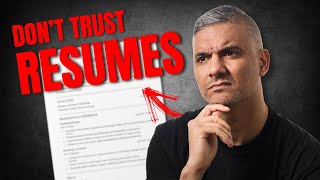
Omar Zenhom breaks down why entrepreneurs keep making bad hires and walks through a three-round process to fix it. He draws on his own hiring mistakes to show what actually works when you're building a team.
Why do I keep hiring the wrong type of people? What I learned the hard way throughout my career is that your job as an entrepreneur soon becomes recruitment. You got to become a recruitment expert because the better people that you hire, the better team you have. The better business you have, the better product you have. It's just the best way to compete in the marketplace. And today I'm going to show you how to get better at recruitment and hire the right people for your company and for the position you're hiring for. But first, I want to say to Fred, who asked this question, everybody who's listening, don't beat yourself up. Hiring the wrong person is not a rare mistake. It's actually the norm in most early stage businesses. And the reason why this happens is because everyone looks good on paper. This is something that I had to learn. Again, the hard way. Everyone looks good on paper. No one states their flaws on their CV or resume. No one states their weaknesses. You know, in an interview. Everyone says the right things in the interview. They are showing the most polished version of themselves. Everyone claims to be a team player and understands the importance of attention to detail and to be a self starter, right? They, they say the right things because they have to. They want the job. But what you need to find out as the employer is how do they actually work, right? How do they actually do the work that you want them to do? That's the real question here. Hiring is a bet. You're betting if this person can actually do the job you want them to do. And if you're placing your bets based on what they give you on the resume or based on what they say in an interview or the way they answer questions, that is not a good bet. You should not place bets based on vibe.
Right?
No wonder why you keep losing money, right? This is just fundamental, you know, game strategy. There's a rule in business I absolutely love. The rule is trust but verify. You've got to verify they can do the job. Think about it this way. You're about to give thousands of dollars to this person every single month. That's not a small transaction. You have to know that there's value on the other side of that transaction.
Okay?
We need to make sure there's value. We need to verify with actual proof. Time out for a second. Just take a minute to think about what I just said.
Okay?
You're about to give this person tens of thousands of dollars, if not hundreds of thousands of dollars every single year so that they can do something in your business. You can use that money Somewhere else in your business. You can invest in marketing, you can invest it in technology. You could take it as a dividend and go on a holiday. That's a lot of money.
Right.
You need to make sure that before you give up all that money that, that you're getting something that is worthwhile in return. The reason why I'm painting this picture this way is because you need to see the stakes here, how important this is. So when you see the importance, you're going to realize, oh, I need to invest more time and energy and effort to make sure I'm making the right decision. Let me tell you a little story so you have an example, as well as how I fix this in my own business. After years, I'm talking literally years of making bad hires and learning the hard way and getting burnt and feeling horrible. I learned how to actually do this right.
Right.
I learned this from mentors. I learned this from coaches. I also learned it through experimentation. And I implemented a new way of hiring in my company, my software company, Webinar Ninja. I still do this in my company now, the $100 MBA, but we use three rounds of hiring. It's a three round hiring process, and this weeds out 95% of the fluff. And I'm gonna share later in the end of this episode why you need to get rid of 95% of of the candidates. So let's start with round one in this interview process. And that's just a quick interview. Now, this is just the interview process, by the way. Okay, this before this, we have people applying. There's an application process. There's questions on the application. There's things that we ask them to submit. We go through that. And once they qualify for an interview, this is when these three rounds start. So round one is a quick interview. This is a 20 to 30 minute chat. It's casual. It's just figuring out if they're a good cultural fit for our company. Are they even in the ballpark?
Right.
Do I even want to hang out with this person? Is this somebody I want to spend time with? Because, hey, I spend a lot of time at work. I want to spend time with people that are cool and nice and interesting and kind and considerate and thoughtful and have good ideas and are inspiring. I want that kind of vibe at my company, not only just for me, but also for my team members and also for. For the person I'm about to hire. Because if I use this criteria with my other candidates, that means I have a team full of people that are really Cool to hang out with. I get a quick just understanding if they know what the role is. And that's pretty much it.
Right.
The reason why this is important is because if they're not a good cultural fit, if they're not somebody that you want to spend time with, that would add value just in terms of their attitude and their personality, then there's no reason for us to figure out if they can do the job technically.
Right.
There's no reason for us to keep on going.
Right? Right.
This is actually a good first interview because this is really important. Because if you don't have the right attitude, then I can't train attitude.
Right.
I can't teach somebody to have a good attitude. They either have it or they don't. So if they don't, we then say, no, thank you later on and say, you know, not a good fit. But if they do, they move on to the next round of interview. And that's round two, called the live project. This is where things get really real.
Okay.
We set up a two to three hour zoom session, sometimes four hours. I'm gonna give you examples in a moment.
Okay.
We give them a real task, a real project similar to what they would do in their job, and they do it live on the call. We watch when I say we. Maybe I'm on the call. Maybe somebody on my team, my manager of that department, will be on that for sure. The point of this is we need to see how they work.
Okay?
We tell them in advance this is going to be two to three hours. If it's four hours, you tell them it's four hours. And I know that's a lot of time, but it's worth it because we're again, we're throwing a lot of money at this hire. We want to make sure that we're making the right hire. The call is also recorded and reviewed by other team members. And we tell the candidate that it will be recorded. And then we say the reasons why. And the reasons why we recorded is because we want to see how you think, how you handle pressure, how you solve problems. And some people are not available for the live call. And they want to see this later on when they can, because of time zones or whatever it might be. They also want to see how you communicate and how you get through a tough problem. We're not hiring based on resumes or CVs. We're hiring for performance. What they can actually do. Let me give you two quick examples of how we implemented this. When we hired for customer support, we would have the customer support manager be on the live call for two to three hours. And they would act like a customer and they would do a live chat, even just using the chat in zoom, as if they were a customer, asking questions about our product, our software, webinar ninja. And we would give the candidate, you know, our FAQs, all our help articles, the website, even access to the software if they wanted.
Okay.
And we wanted to see how they were solving problems, how they addressed the customer, how they would communicate with. Would they check back in with the customer every minute and say, hey, I'm still working on this. I'm going to get you an answer. Don't worry, we're going to solve this. How is their demeanor? Were they empathetic? We were not really concerned if they're giving the right answers because we don't expect them to know everything about the product. They just walked into this, right? They still need proper training, and that's only fair. What we really care about, and we tell this to the candidate, by the way, we say, you know, we don't really grade you or judge you based on your answers. We just want to see how you approach the problem, how you approach the situation. We also did this with, for example, hiring engineers. We would get an engineer, and those were longer. There's about four hours long. We get an engineer to actually code a project, right? An actual project that they might have to do in the job. So, for example, they would code a login module or login page of an app. We wanted to see how they were doing it. This is so important because I want to see how this engineer is writing the code. Are they writing clean code? Are they commenting the code? Are they unit testing? Are they writing the unit test before the. They actually write the code? This is all technical jargon, but this is important for that job, right? We need to know if they can do this the proper way. And the only way to know for sure is to see it. I want to see evidence, real eyewitness accounts of the fact they can do the job. Now, if you get a candidate in the middle of this interview or even before the interview and say, this is not my style. I don't do this. I don't work under this kind of pressure while you're watching me say, hey, no problem. We understand this is not a good fit, then no worries. All the best in your job search. I have no problem doing that. Why? Because I don't want that person in my company. Okay? There's nothing bad about them inherently, but I want the people that, when they are approached with this challenge, like, oh, that's cool. You're gonna record it. Can I get the recording later on? I would love to learn a little bit more of how I can improve. Can you give me feedback? I want somebody who's excited for the challenge, right? I want somebody who's like, this is cool. I never experienced this before. Is there a way I can benefit from this, you know, experience? That's a great hire. That alone would be like, green light. This person is somebody that might make the cut. Round three, final chat and expectations. This interview is just a way for us to confirm we got it right.
Right?
If they nailed round two, we're pretty sure that they're a good hire. But this is where we set expectations clearly on both sides. We talk about salary and compensation. We talk about benefits, time off. We talk about what success looks like in this role, what we expect of them in terms of responsibilities and deliverabilities, what they're expected to do, and their outcomes. You know, we talk about specific outcomes that they're responsible for. We also talk about how we give feedback and how we measure performance so they understand how they will know they're winning.
Right?
We're not trying to close a sale here. We're trying to build a relationship. We're trying to start the relationship in a way, because if they say yes, we're going to make an offer, right? And we both need to know exactly what we're getting into. Now, this next point is super important. There's another reason why you're hiring the wrong people. You're just not seeing enough candidates. Most business owners interview three, four, maybe five people for a role, and then they pick the best out of that bunch. No, this is too dangerous. Okay? This is your company you're talking about. This is the thing that you built, that you sacrificed your life for. Don't just leave it by chance. You need to verify you have the right person. You have to increase the likelihoods that you have the right hire. You know, screen in five people. You interview five people, and they're all below the bar, right? You got to keep going, right? You don't want the best person you interviewed. You want the best person out there in the world. That's why I use the 5% rule. This is a rule I meet up, right? You know, take it with a grain of salt. But this is has worked for me in a lot of ways. Only 5% of people I speak to in interviews will be the right fit, and they're the ones Actually prove it to me. So if I want to get one great hire, I need to actually talk to at least 20 people. I need to get 20 people through the interview stages, all three stages. That's just math. Because if I want to hire one person, one out of 20 is 5%. That means 19 people that I speak to will. Will get a no. They're going to get rejected. And that's okay because you want the best of the best. And hiring is a funnel, just like in marketing and sales. The wider you are at top, the better your chances. So the more applications you get, the more people that you have a chance to kind of filter in for an interview. And the more people you interview, the more chances you're going to get, like, the best of the best for that job. Now, Fred and everyone who's listening, I got an exercise for you. Because we don't want to just forget about the mistakes we made. We want to learn from them. We're going to turn the mirror towards you. Why did you say yes to those people who didn't work out that you felt like were a horrible fit and were a bad hire? Was it a gut feeling? Was it desperation? Were you excited that someone finally said yes or was willing to be part of your company? Ask yourself, in that moment when you made that hire, did I have enough evidence of their skills? Did I see them do the actual job or did I just hear a good story and they impressed me? Hiring is a skill. Just like sales, just like marketing, just like creating a great product, right? You gotta work at it. And you need enough reps. That's why I'm saying enough interviews, enough candidates for you to get better. And what I found out, at the end of the day, if you want a successful business, you gotta learn how to recruit like a pro. You gotta be better at recruitment. You gotta be able to pick the right people to join your team. And hopefully with the framework I gave you today, you'll be able to do exactly that. Look, Fred and everybody who's listening, hiring amazing people takes work, but it's worth it. It's so worth it. Because when you work with great people, everything changes. Your company changes in an incredible way. Your product gets better, your customers are happy, you make more money, you make more revenue. Everybody in the company loves what they're doing. They're working towards the same mission. It's a great feeling. It also frees up your time. It also gains confidence in your whole company. Everybody starts feeling like, hey, this is a great company to work for. Because everybody's amazing here. And most importantly, you got to stop bleeding cash from bad decisions. Remember, when you make a bad hire, that's a really bad sunk cost, right? Because you often don't get an ROI from that person for all that money that you spent. So next time you hire, remember, trust but verify, test, don't guess, and make sure you become the kind of leader that top talent wants to work for. And you will get better as time goes on and you start taking your time and finding that right person for that role. Thanks for the question, Fred. And if you have a question you want to ask here on Q and A Wednesday, head on over to 100mba.netq and ask away and we'll answer it right here on Q and A Wednesday. Until next time, keep pushing, keep learning and keep building something great with a great team. I'll see you in the next one.










