Why Your Content Gets Ignored (And How to Fix It)
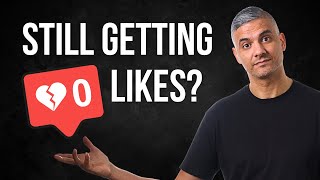
Omar Zenhom breaks down why content flops and how to fix it. Post at least five strong pieces weekly for a year, run volume experiments to find what works, and reply to comments to boost visibility. He grew to 54k on TikTok, 120k on Instagram, and 13k on YouTube by posting daily and prioritizing usefulness over virality.
Chapters
Why is my content not getting any engagement? You're posting, you're trying, you're showing up, but it feels like no one's listening. Right? No one's watching, no one's engaging. And listen, I've been there. I'm going to tell you something that most growth experts won't. You're probably just not posting enough. Yeah, it's the thing that you didn't want to hear. And no, I'm not talking about over posting. I'm talking about giving the algorithm and your audience enough chance to figure out what they really want, what they really like, and what really hits. Here's the brutal truth that I've learned over years of experimentation. You can have the most valuable content in the world, but if you only post one or two times a week, you just don't have enough data, you don't have enough signal, you don't have enough momentum. You're still invisible to the greater audience that you're trying to reach. It's not that your content's bad, it's that it's untested. So I'm gonna cut through the chase and just tell you that in my opinion, you need to post more. At least five pieces of strong content per week for 12 months straight, not missing a single beat. You have to have enough data so that you can know what resonates with your audience. You need to know what topics are sick. You need to know what format performs. You need to know what messaging makes people care. Now, if you want to speed things up, you can post more like I did. I posted more than five times a week. Let me give you a real life example. I've been posting daily for the first time ever, for a full year now on TikTok, on Instagram, and on YouTube shorts. Now, I'm new to TikTok. I didn't even have an account a year ago. But I'm not new to Instagram and YouTube. But because I posted frequently, consistently, and for a straight year, I finally, finally have a few videos that gone a little viral. This is not because I cracked some sort of secret code. It's because I gave the platform and my audience enough swings to find what works. And because of this, in less than a year, I've grown my TikTok to over 54,000 followers. My Instagram's over 120,000 followers. Mind you, I had like 250 followers before this. And our YouTube has grown pretty steadily with just under 13,000 subscribers. So I know for a fact that this works. You have to publish More so you can get enough data to know what works for your audience and what doesn't. Let's get really granular and let me give you a real example of one piece of content that I published on TikTok. Here's that video. The video is all about the key to overcoming burnout using delegation. It hit a nerve, it got picked up by the algorithm, it got shared, it got saved, it got commented on. But here's the catch. That one post is out of hundreds of posts. Look at my feed, okay? If I hadn't been posting daily, it never would have happened. I wouldn't have had the chance to know what's working, what's not, and publish content that's gonna really resonate with the audience. So I wanna give you some homework, some practical advice on how to move forward so you can get more engagement and more growth from your content. So what do you do? Number one, you wanna commit to, to a posting schedule you can stick to for 12 months, five times a week. Now, you could batch this, of course, you can create the content and schedule this content in advance, but you want to make sure that you do this week as a minimum, if you're serious about getting traction. Number two, don't judge engagement on your first three to six months. You're still learning, your audience is still discovering you just keep going, just commit to the consistency. Number three, review your top 10 performing posts and every month. So at the end of the month, you want to look at all your posts on whatever platform you're posting on. And you could do this for all your platforms, whether it's TikTok, Instagram, doesn't really matter. Look at which one got the most shares, which got the most watch time, replies, bookmarks, Double down on that style, on that tone on that topic. And number four, focus on being useful, not viral. Viral is nice, and nice to see that your video is taking off, but the way that that happens is actually just being useful, right? Usefulness builds trust with your audience and trust is what gets you, gets you customers. I mean, remember, we're in a business here. We're trying to get people to come to our website and buy our products and service. But what about the content itself and how you engage with your particular platform that you're posting on? Again, you can apply this to any platform. Instagram, TikTok, LinkedIn, doesn't really matter. Let me give you some quick, fast tips so that you can improve what you post. And as you're doing this five times a week, number one, start with a Strong hook. Most people scroll within one or two seconds. If the first line or the first frame or the sentence that you start with doesn't stop them from scrolling, it's over. Let me give you some quick examples of some hooks that really stop people from scrolling. Here's what no one tells you about your first sale. This one mistake cost me $10,000. Don't do this if you're trying to grow a business. These hooks, what do they have in common? They get people curious. What is the answer to that sentence? What is going on here? I want to learn more. Make people curious or concerned when they hear your hook. Number two, if you're creating intentional reels or content, ask for interaction. Right. Engagement won't always happen organically, so invite it. You could do it in the video itself, or you can do it in the description or the comment of the post. For example, you can ask the question, have you experienced this too? Like, let me know in the comments, which one are you? A or B? Tag someone who needs to hear this. People like being invited to respond. Remember, it's called social media. Number three. Use some of the tools that these platforms have, like polls or quizzes on platforms like Instagram and LinkedIn. Polls can spike engagement because they're frictionless. It's just one click. People can then see the results. They're curious. Don't be afraid. Also to share some controversial opinions. If it's authentic, it also Sparks replies. That TikTok video I talked about earlier, well, it got a lot of engagement because people didn't really actually agree. They're like, no, you got to do everything yourself. No, what if you don't have any money in the beginning, what are you supposed to do now? Mind you, it's a short clip, 30 seconds from a larger episode of the podcast. But it was kind of controversial. It got people talking. It got people kind of hot around the collar. But don't manufacture drama. Be real and stick with what you believe. Number four, Reply, reply to comments and boost the algorithm. I reply to almost every single comment I see. I like comments. I engage with whoever engages with me. Every comment you reply to doubles the engagement count. Also, meaningful replies signals to the algorithm that your post is still active, keeping it in people's feed for longer. So if you're replying with thoughtful ideas and liking posts, it's. It gets the algorithm thinking, okay, cool, this, this thing is still going. Let's keep feeding it to other people in their newsfeed. And don't be afraid to build some relationships and rapport with the people on the platform through the comments. Number five, improve your visuals and formatting. Okay? If you're using carousels, using videos, improve your aesthetics, make the videos look better. You know, we constantly trying to improve our production quality because we know that actually influences people in thinking. Okay, this is actually really well done. I gotta say something. Those are my rapid fire tips. I know from experience that it just takes more content. Back in the day when Instagram was starting out, Facebook was starting out, you could post once or twice a week and you can grow your audience pretty quickly because there was not that many people on the platform. There was less competition, people are posting less frequently. So one or two times a week was a lot. Now one or two times a week is nothing. So I say minimally, five times a week is what's going to help you get traction and do it for a full year. You can do this. Kira, who asked Teddy's question and everybody who's listening. If you're putting in the work and not seeing engagement, don't give up. But also don't expect the world to respond to 10 to 20 posts in, you know, three months. You're not just creating content, you're building a muscle, right? You're building skills. You're getting better being a content creator. You're learning also your voice and your aesthetic. You're testing your market. You're becoming really a tastemaker in your space. Give it time, give it volume and the results will come. If you want to submit a question for a future Q and a Wednesday episode, head over to 100mba.netq and ask away. Also, if you want more practical, non fluff advice to grow your brand and your business, you're going to want to join my three Things newsletter. It's absolutely free. Every single week, I send you three things. Something to think about to grow your mindset. Something to do. So you're getting better and better every single day and moving forward. And number three, something to learn. So you're skilling up every single week. That's how you stay consistent, relevant and strategic. It's absolutely free. It's my way to coach you from afar. Just go to 100- MBA-NET, sign up for any of our guides and you'll get added to our newsletter automatically. Thanks so much for tuning in to the $100 MBA show. I will check you in the next episode. Take care.










