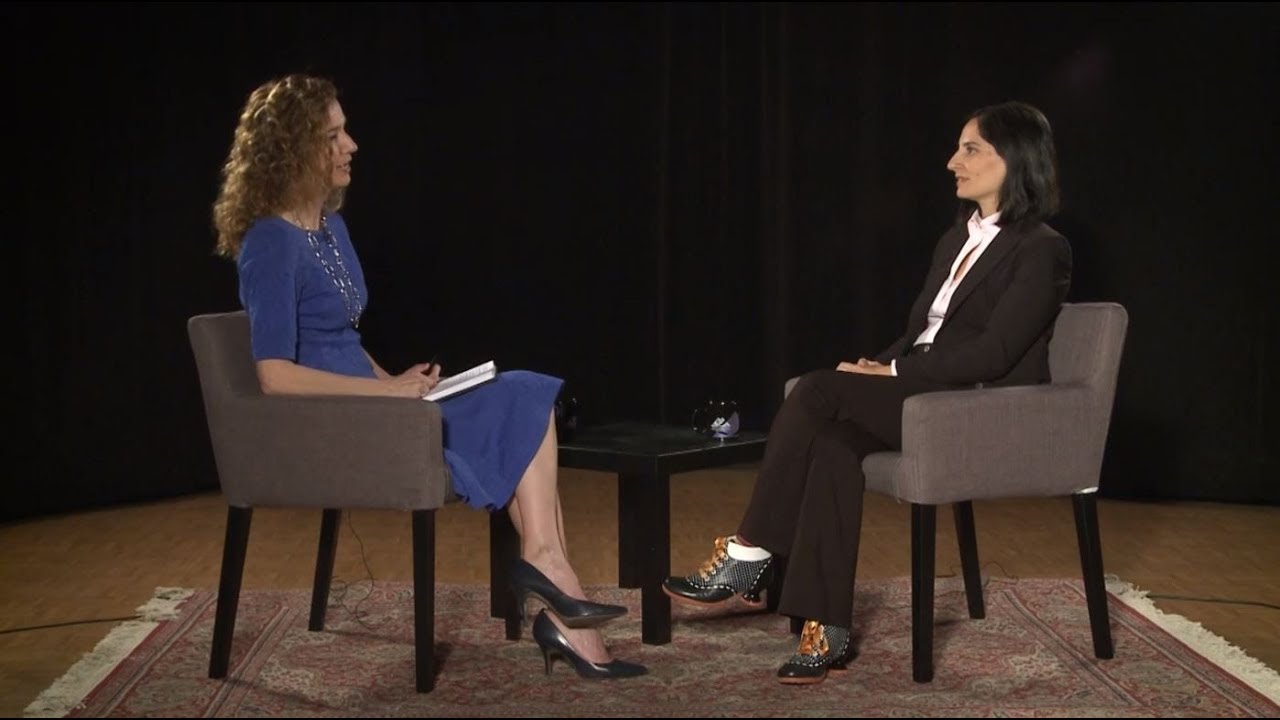
In this interview, Dean Pardis Mahdavi traces the origins of contemporary gender‑based protest movements to a series of youth‑driven, body‑focused resistances that began in Iran around 2000. She describes how a young, highly literate population used everyday acts—lipstick, open‑toed shoes, sexual relations—as a "sexual revolution" to challenge the Islamic Republic’s moral policing, setting the stage for the 2009 Green Movement. Mahdavi links this Iranian trajectory to the Arab Spring, noting similar uses of sexuality to destabilize authoritarian regimes. She then broadens the lens to other global cases: Nigeria’s #BringBackOurGirls campaign against Boko Haram, landmark prosecutions of sexual war criminals in Guatemala, and abortion‑rights victories in Chile. Turning to the United States, she highlights recent high‑school walkouts against gun violence, drawing parallels to Chilean youth activism and emphasizing the role of social media in sharing tactics. A central theme is the "numbers game": collective action—exemplified by the 2004 "Summer of the Cockroaches" protest against Iran’s morality police—demonstrates how majority youth can force policy change. Mahdavi concludes with advice for American youth: organize, leverage allies across generations and borders, and recognize the power of coordinated, body‑based protest.
Chapters
Hi, I'm Laura Frank. I'm here today with Pardis Mahdavi. She is the Dean of the Korbel School of International Studies at the University of Denver. Thank you for being here with us. You have studied the origins of the MeToo movement, including as far back as 2000 when you were a writer for the LA Times Magazine and you went to Iran. Tell us a little bit about what you found there and why you think those are really the roots of what we're seeing today.
Thanks so much, Laura. Yeah, so in 2000, most of the conversations about Iran were very much focused on the regime, very hardline extremist regime. And so I went in an effort to write some more robust stories that told a different side of the story that we don't always hear. When I arrived in Tehran back in 2000, The first thing I noticed was the youth, the youth movement. At the time, and this is still the case today, but at the time, 70% of Iran's population was under the age of 30, which is really huge. I mean, 50% were between the ages of 15 and 30. The population bulge was kind of like a snake swallowing a rabbit with everybody sort of in a similar age range. These young people, highly educated, one of the most literate countries in Asia, and highly engaged, highly involved with pushing back against a regime with which they didn't necessarily agree. Now, the interesting thing was how they were pushing back. Young people, when I got there, I said, oh, I'm here, I want to study about the youth, the women's movement. And people said, you know, what's really interesting is the movement that we're engaging in, which they called a sexual revolution. And by that they meant, using their bodies because for the regime in Iran, in the Islamic Republic of Iran, the body had become the battleground, right? This is a regime that had come to power under a fabric of morality promising an antidote to Westoxication. And these young people were attacking the regime by attacking that fabric of morality using their sexualities and their bodies to speak back to a regime with which they didn't agree. And so that meant anything from, you know, acts of wearing lipstick to pushing back the hijab millimeter by millimeter, to engaging in sexual relations. These were all seen as revolutionary acts, which then laid the groundwork for a more civil rights-type movement that we saw in 2009 with the Green Movement.
It's so interesting that this was sort of the crack that opened up to more movements, like you just said, the youth movement, the sexual revolution leading to a youth movement, leading to a Green Movement, and then what are we seeing now?
So since December, as you probably know, we've seen huge numbers of protests in Iran. We've seen the government respond by relaxing codes around hijab, and we've just seen a mass outpouring of people from all backgrounds into the street in Iran. Another connection that I think is important to make is between the Green Movement in Iran in 2009 and the Arab Spring, which followed very shortly after. And again, with the Arab Spring, you also see these connections between sexuality and sexual politics as providing really fertile ground for a social movement that calls for social change.
And you have studied in depth in Iran, but you've also looked at other places. Tell us a little bit about what you see throughout the world that really brings us, leads us up to the point where we are now.
Absolutely. So, as I mentioned, the Arab Spring is a really interesting case Some people might have known about the hashtag Nude Bloggers of Egypt, where you had a lot of young women as part of the Arab Spring pushing the boundaries on women, on women's bodies, on sexuality. And then beyond that, we see women's movements tied to movements around sexuality around the world. I think everyone's probably familiar with the hashtag Bring Back Our Girls campaign in Nigeria, which of course then First Lady Michelle Obama and the Pope also were involved in, wherein Nigerian women came together to speak out against Boko Haram, which was an extremist group, is an extremist group that, you know, really sidelines women and girls' rights to education, for instance. Young women and women came together in Nigeria to organize, to speak back, to bring back the young women who had been kidnapped, also opened up safe houses so that young women could be educated safely. And as of this past January, 180 young girls have been returned. through the efforts of that campaign. Now, if we move across the, the Atlantic, if you will, to Latin America, we've also seen very significant gains in both Guatemala and Chile. In Guatemala in 2016, there were some landmark cases which involved prosecution of sexual war criminals in the 1960s. And these, these men were sentenced collectively to 360 years in prison, which was a pretty landmark moment speaking out against sexual violence. In Chile, you also had a group of women coming together, and last August of 2017, they made significant gains on abortion access, which of course sexual and reproductive rights are big issues in Latin America, and you see a lot of success coming there as well.
You know, talking about the youth in Nigeria, of course we were talking about the 2014 kidnapping of 200 schoolgirls by Boko Haram. Let's bring that back to the United States and the youth movement that we're seeing right now with the concern that youth have about shooting in schools. You see a connection among all of these things. Tell us about that, please.
Yeah, I think that it's really important for us to look at how young people are leading the way here. They're leading the way. They're using social media, Twitter, Facebook, but they're also using their bodies. They're walking out, right? We were, you know, just a few days ago, very well-organized and orchestrated walkout orchestrated by high school students against gun violence. And you see that young people are drawing inspiration from other youth movements around the world. A similar phenomenon took place in Chile with young high schoolers also organizing against gun violence. And that became a big part of the campaign for President Bachelet, who really drew on the, the young people and their movements and their cries Against gun violence. And so you can see a lot of linkages between young people. And of course, with social media, people are aware of each other's successes. And I like to think that success inspires success. And in this highly networked world, I think people are more and more empowered to speak out and knowing that they have allies across borders and oceans.
Let's talk a little bit more about that because I think you're right that, that there are these connections. Why is it important, other than a bit of inspiration, to know that there are numbers of people out there? Because you've seen an impact with numbers as you've studied these kinds of topics.
I definitely have. You know, I think young people are more and more aware that it is a numbers game. So if I might recall a story from my Iran research, young people were aware that they were the majority, that they had a lot of power. And so I always like to tell the story of the summer of 2004. which many of us called the Summer of the Cockroaches. And there, that was a summer where before that, after the revolution, the morality police and the government had been very firm that women were not to wear nail polish and were not to be seen in open-toed shoes. Now, the punishment for young women or men, anyone wearing nail polish, was that if the morality police caught you, they actually would have buckets of cockroaches and they would dip your hands in these cockroaches They would set the cockroaches free on your toes. I mean, it's pretty gruesome when you think about it. But young women realized that they could use social media and they could organize and outnumber the cockroaches and the morality police, if you will. And so one summer, they all organized, and I happened to be there that summer, and they said, on this particular day, we're all going to go out in open-toed shoes wearing whatever, you know, nail and toe polish we want. And we're going to walk down the street. What are they going to do? They can't possibly arrest all of us. They can't. There aren't enough cockroaches in Iran to set them loose on all of us. And so they organized and they did. And after that day, women could wear open-toed shoes. And let me tell you, in the summer, it's really helpful to be able to wear open-toed shoes. Now, this might seem like a pretty flippant example, but it's a really significant catalyst when you think about what a numbers game it is. I think young people were becoming more and more aware, and that was an important turning point for them where they realized, look, they can't arrest all And so we have power in numbers. And then what you saw was then in subsequent elections in Iran, and it was the same thing in Chile, that presidential candidates suddenly really took the young people very seriously because they realized that if they come together, there is that power in numbers and significant social upheaval will take place.
And so what do you think is the message for youth in America to look at the kinds of things that you've been talking about here? What's the message for them now in that context? What's the lesson?
I think the message would be keep it up, get organized, right? I think one of the really significant moments in the Women's March that was, you know, we saw an anniversary of it this past January, but last January was the sheer numbers. I mean, the sheer magnitude, the organization of it. I think that young people, I would say, come together, organize as they did for the walkout, but I think they can even start organizing more and more and use the power of numbers and use those of us who are championing them, who are supporting them. Use us as your allies. And I think that young people in Iran did do that very well. They knew who their allies were in different generations, people who were in, you know, significant positions in the Ministry of Health, in the Ministry of Education. They made those allies. They made the allyship really a strong part of their organizing. And I would say that for young people today, Know who your allies are, know who your champions are, and know that we're here to support you.
Thank you for being here with us today. I really appreciate your wisdom and, and sharing what you've learned.
Thank you so much for having me. It's been a real pleasure.