Reframing Your Story: Breaking Free from Self-Limiting Narratives (ft. Pardis Mahdavi)
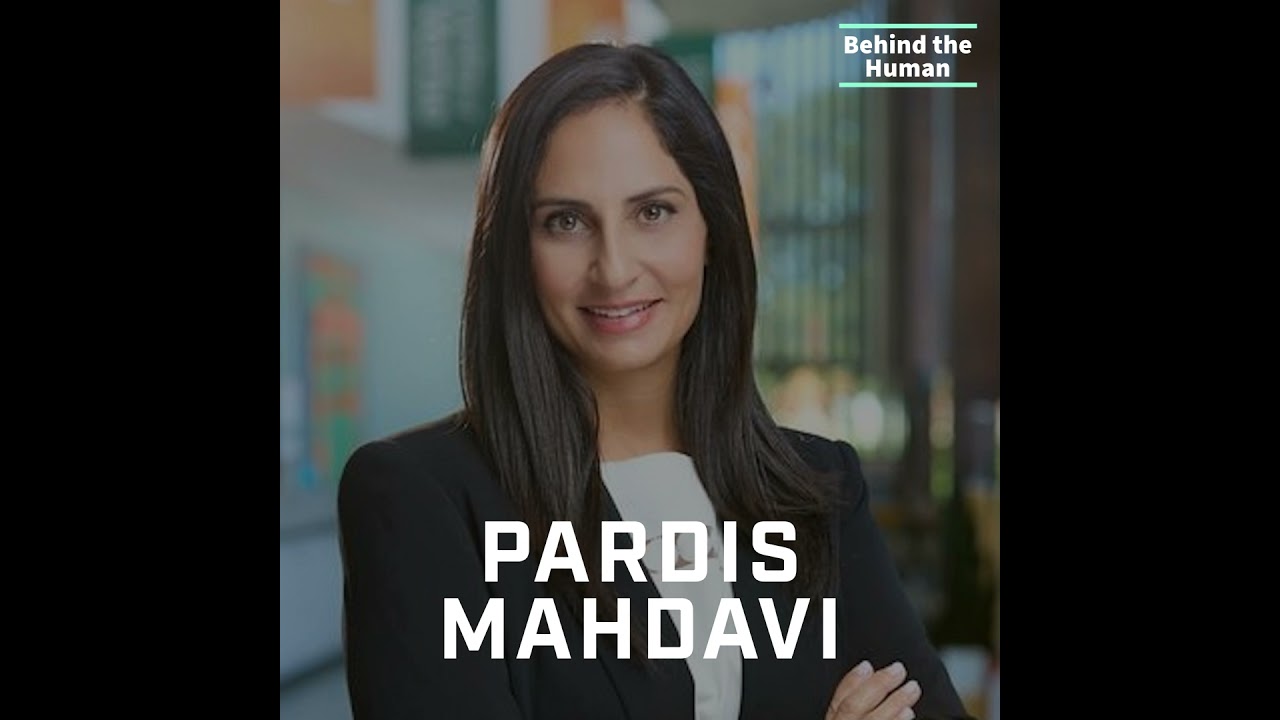
In this episode of the Behind the Human podcast, host Mark Champagne interviews medical anthropologist, author, and founder of Entheon, Pardis Mahdavi. The conversation begins with a playful intro about the "Beautiful Anonymous" podcast before moving into a deep exploration of Pardis’s hyphenated Iranian‑American identity, her upbringing amid cultural conflict, and how early exposure to Persian mysticism (Rumi, Hafiz) shaped her fascination with the super‑conscious, sexuality, and altered states. She recounts her unconventional academic journey—from diplomacy studies, UN work, and a pivotal trip to Iran that sparked an interest in sexual revolution and intimate citizenship—to a distinguished career in higher‑education leadership, culminating in a realization of misalignment that led her to leave academia. The interview delves into her personal healing after a painful divorce, the practice of confronting inner “demons” through self‑inquiry, and the role of writing (both nonfiction and fiction) in uncovering truth. Pardis explains the founding of Entheon, a company that curates retreats at sacred sites (Egypt, India, Peru, Sedona, etc.) and offers toolkits—breathwork, somatic practices, psychedelics, shamanic guidance—to help people develop intimacy with themselves, improve relationships, and access the “super‑conscious.” She emphasizes the importance of location, cultural context, and ancient wisdom in modern mental‑fitness work, and shares how her work impacts individuals, couples, and corporate leaders, arguing that personal transformation also benefits organizational performance. The episode ends with mutual gratitude and a promise to continue the conversation.
Chapters
Hi, I'm Chris Gethard, and I'm very excited to tell you about Beautiful Anonymous, a podcast where I talk to random people on the phone. I tweet out a phone number, thousands of people try to call, I talk to one of them, they stay anonymous, I can't hang up, that's all the rules. I never know what's gonna happen. We get serious ones. I've talked with meth dealers on their way to prison. I've talked to people who survived mass shootings. Crazy funny ones. I talked to a guy with a goose laugh, somebody who dresses up as a pirate on the weekends. I never know what's gonna happen. It's It's a great show. Subscribe today. Beautiful Anonymous.
Welcome everyone to another episode of Behind the Human. I'm your host, Mark Champagne, and it's my job to unpack the stories and mental fitness practices of just exceptional humans living at the top of their game personally and professionally. And today we have a real treat, awesome human, great person, someone I've just met but just feel like we've known each other for a good amount of time and that there's just Like a world of opportunity. And that, that person is Pardis Mahdavi, who has a PhD and is a professor of medical anthropology and the founder of Antheon. Prior to this role, she served as president at the University of La Verne, provost and executive vice president at the University of Montana, as well as dean at Arizona State University and the University of Denver. Hi, Pardis. After serving in multiple roles at, uh, Pomona— is it Pomona College? Did I say that right? Yeah.
Yeah. Okay. Yeah.
Her research interests include sexuality, ancient wisdom and sacred medicine, integrated leadership, and altered states of consciousness. Gosh, that's a lot. It's exciting. Welcome to the show.
Thanks so much for having me, Mark. It's a real honor and a pleasure to be here.
Oh, right back at you. It's an honor. I can't wait to jump in. There's I feel like there are so many topics that we can kind of pull on the threads on, and that just excites me, of course. But before we begin, and I'm actually, you know, as much as I just gave people a little bit of context about your background and so forth, we're going to erase that or pause that for a second just to avoid job titles and whatnot and just jump into, you know, who you are. So that's the question. Who are you? Yeah.
It's the existential question. Exactly. Which I love, and I love the framing. Who am I? I guess I'm somebody who I identify as a proudly hyphenated American. I wrote a book, I've written, I guess now 9 books, but one of my books was called Hyphen. Mostly nonfiction, although I've now turned to fiction, which has been super liberating. That's one of my identities is I'm a writer. Okay. I wrote a book called Hyphen, which mirrors the journey of hyphenated Americans and how that journey of identity mirrors the journey of the hyphen as a grammatical mark. So I always like to say I have these many identities that are hyphenated. So I'm Iranian American, which means I hail from the land of Rumi and Hafez and Sufi mystics. And I think generationally, that's important cartography to locate me, right? Yeah. Because it sort of helps you understand how somebody ends up becoming enchanted and entranced with kind of this world of what I like to call the superconscious. So, you know, I come from a land where questions around the intersections of sex, and psychedelics and the superconscious were just a part of thousands of years of conversations and rituals and inquiry. And so, yeah, I identify as Iranian American. I also identify as a writer, as a founder and CEO of a company called Entheon, and as a mother. I have 3 beautiful children. Mm-hmm. And they are, you know, some of my greatest teachers. So, I guess that's the best way to describe myself.
I love it. Well, and it's also, I feel, I mean, obviously, a lot of that will remain consistent over time, but I'm always interested to explore kind of a who am I question because I feel like it does evolve over time, right? I mean, of course, the founder piece, I think, is probably the newest addition to that answer. And who knows within the next, you know, 3, 5, 10 years or so, like kind of how that will all evolve. And then also, I think equally important to see, you know, what the consistent elements are as well. Yeah. I'm curious around kind of that foundational, I guess, philosophy and how you were surrounded by, you know, the, Like legends, I would say, of like the Rumi's of the world and whatnot. Did you did you ever notice a period in your life where that wasn't the norm?
Yeah, for sure. Well, so it's interesting that you ask me that because I think that you know kind of going back to that part of my culture, that was sort of my attempt to harmonize and alchemize my understanding of Iran, right? Because I grew up in the United States. I'm a child of the revolution. My parents came here when the Iranian Revolution happened. Okay. And I was born in 1978. So child of the revolution, just giving away my age. But I say that because, you know, being born into that and being born into that moment of real disruption and then, you know, growing up in the United States where, you know, in the late, in the '70s and '80s, The images of Iran, you know, there was a real strong antipathy towards Iran. You know, during Iran-Contra, the Iran hostage crisis, you know. So when you turned on American television, you had images of, you know, people burning, Iranians burning American flags, Americans, you know, talking about Iran as like, you know, this ultimate threat. They were referring to each other as Great Satans. I mean, and so, you know— Right. Growing up, I had my two countries and cultures at war, and so the question I was left with is like: If my two countries and cultures are at war, what does that mean for somebody who is Iran and America in one body? And it was always so uncomfortable for me, you know. And and we faced a lot of bullying, harassment, discrimination at school, you know, to the point where we had to leave Minnesota in 1984 and move to California. We were going to move to Tehran, Jelis, or Los Angeles. or Teheranto, Toronto. Yeah. Where there was a big Iranian community. My parents ended up choosing San Diego because it was more sort of synergistic with where my father had grown up on the Caspian Sea. But, you know, we faced a lot of discrimination. And so for me, you know, it was so hard to understand that sort of the Iranian-ness in America and, you know, You know, I think for my parents, it was this sense of dislocation that, you know, they tried to counter by sharing with us all the beautiful aspects of our culture, the holidays, the traditions, the thing, you know, the mysticism, if you will. You know, we celebrated, you know, Persian New Year. Nowruz is the first day of spring. March 21st is our big holiday. Our holidays all fall on equinoxes. So We didn't celebrate Christmas growing up, but we celebrated winter solstice. We celebrated spring solstice, which I always thought was really beautiful.
It makes more sense. I like it.
Yeah, exactly. Exactly. And so it was in and through that that I got introduced to Hafiz and Rumi and mysticism as this other magical side of my culture that helped me to really harmonize my identities and come to be more in love with where I had come from as opposed to, you know, when you, when I would say Iran at school, people were like, terrorist, right? And for me to be able to say, no, it's also this, this world where this beautiful magic comes from. I think that was just always there inside of me.
What a beautiful gift that, that your parents gave. Because even as, I mean, obviously I didn't grow up in a situation like that, but as you're sharing, I can't help but think about just so many things that are going on in the world present day that it's always a one-sided kind of narrative or story. Or I should say, we only see often one side, but forget that, well, wait a second, there, there's a whole other story there, right? And to your point, like, it's not always bad and, and what's being painted, right? Yeah. To just like, to me, it's, it's To me, it's like the ultimate mental fitness around, well, hold on, let's take a breath and a pause, ask some questions and try to educate ourselves, right? Without a bunch of judgment and all of that and taking a fuller picture, I guess you could say. I mean—
Yeah, completely.
I feel like as much as I wish this wasn't the society that we live in, but I mean, I don't see kind of this scenario of just, one-sided stories and whatnot going away anytime soon. So I feel like if that's the case, then let's equip our minds with some tools to at least be able to operate in, first of all, a kinder way. And also, I think we deserve to feel good more days than not. And being plagued with fear and all this craziness and division is not healthy for anyone. So, yeah.
No, thank you. And I think just to your point about mental fitness, it's like, what part of the story do we want to grab onto? Like, to your point, there's these multiple sides. Yes. And we have a choice in terms of what part of the story that we want to interact with. So, you know, I even think about my own story. You know, when we hear the word intergenerational, there's usually something negative that kind of— it's usually like intergenerational trauma or intergenerational poverty, or there's usually a negative thing that comes from it. And for me, you know, part of that, you know, mental fitness was really actually about learning about all of the intergenerational strength that had been passed down in my family. And, you know, I wrote a book about my latest book is called Book of Queens because it's about you know, these horsewomen warriors who, you know, fought the Taliban and fought these most elusive enemies. But, but it was a real mental reframe, right, to your point about, you know, what part of the story. And, you know, as we then examine our own mental fitness, as we examine who we are, we can start to recognize the patterns and we can start to ask ourselves, why are we gravitating Towards the more negative part of the story as opposed to the positive. Where does that get us when we think about, you know, becoming more mentally fit?
Yeah, I love it. I love it. I, I'd like to, before we get into some of your present day work and so forth, I'd love to just continue to paint the picture of your backstory. And, you know, I, I pulled a quote from when we first met. You said, I'm a recovering academic, but I, before we get to the recovering part, I, I'd love to know, you know, What was the journey? What was the path into, you know, a career, a long career in academics?
Yeah, you know, I sometimes call myself the accidental anthropologist. So, I went to undergrad and I studied diplomacy, again, because that was me trying to harmonize my 2 cultures. I've always been a bridge. And so, I thought, well, let me study diplomacy and Go work at the United Nations, which I did. And all of that was about bridging and starting to, you know, how do we create peace? How do we create diplomacy? How do we create global understanding between the Middle East and America, between Africa and Asia? All of these things, right? That was really my focus. And, you know, then I worked for the United Nations and then, you know, worked for the LA Times Magazine and then went to graduate school in New York. And I initially went to graduate school to pursue my master's in international affairs, where I was focusing on human rights. And media and kind of how we can use storytelling to bring and bridge cultures. And I was continuing to work for the United Nations. But just before starting graduate school, I went to Iran for the first time. I convinced some of my editors at the LA Times Magazine to maybe let me go as a stringer. I convinced my parents to let me go to Iran. I said, you know, enough years have passed since the revolution. I want to go see my homeland. country. And I went to start writing stories about the Iranian women's movement. But when I got to Iran, all anybody wanted to talk to me about was the sexual revolution.
Oh.
And I was fascinated by it. And, um, they, you know, they, they were sort of bringing me back to some of the childhood stuff with Hafez and Rumi and sex and sexuality and how sexuality can be such an interesting part of bringing altered states of consciousness, like all of these things around intimacy and, and and this concept of intimate citizenship, right? So here were young people saying, look, in the absence of the ability to work out who we are vis-à-vis the state or religion, we turn to the realm of the intimate to negotiate our identities. And I was fascinated by this.
No kidding.
So I come back to New York. I went to Columbia, I was going to Columbia for graduate school. And I come back like brimming with ideas. I'm like, there's a sexual revolution happening in Iran. It's like a big deal. I'm just like so excited. And my international affairs professor are like, that's not what we really do here, you know? And I remember I had this like one class with a professor and the class was on Iran. The professor was a self-described Iran expert. And so afterwards I went up and I started talking to him in Farsi and he was like, I don't speak Farsi. And I was like, when was the last time you went to Iran? And he's like, I've never been to Iran. And I'm like, okay, I might be in the wrong discipline here. Yeah. You know, you're teaching about Iran and you just mean the government. And there is a whole population of millions of people doing some really interesting stuff and a whole history, you know, that's being eclipsed and elided here. So I stumbled into a class called Gender, Sexuality, Health, and Human Rights, and it was taught by a woman named Carol Vance. And she was a medical anthropologist and she was studying the intersections of sex, sexuality, politics, human rights. And I was like, That's what I want to do. And she said, okay, yes. At the time, you know, if you wanted to study sexuality, it was still in that sort of medicalized framework. But it was medical anthropology, which I think to this day was one of the greatest gifts I was ever given, is that I got to, you know, 24 years ago, I got to study medical anthropology, which meant I was introduced to the, you know, the world of shamans. And I like to say I was introduced to the world of sex. And psychedelics and, you know, and the superconscious, you know, that was my way of, you know, taking what had been sort of in my household as tacit knowledge. And then, you know, learning about it from an academic perspective. And I just, I like fell head over heels in love with the discipline. And so I became an academic and, you know, graduated from Columbia, got a professorship at Pomona College, rose the ranks, you know, wrote a bunch of books. My focus was sex, you know, my first book was on Iran's sexual revolution. And then, you know, just kept, kept really going on in that field. And then somewhere along the lines, I think that this can sometimes happen is like you're sort of succeeding and then your definition of success starts to shift. And so somewhere along the line, I think maybe when I had kids and all these sort of— I had a lot of personal challenges. I had a very bad divorce. And bad for me. I mean, it really hurt me, you know, to be divorced when my daughter was so young. And then, you know, I faced a lot of personal challenges. And so my goalposts for success, I think, maybe shifted a little bit. So I thought, well, success meant higher ranks, higher status, you know, more earning potential. And so I went into administration. I became, you know, I had already been a department chair. Wow. And then I started going down the path of becoming a dean and being, And I was also very concerned with where higher education was going at the time. I was concerned that people were not able to learn the things they wanted to learn, ask the questions they wanted to ask. And, you know, that sort of compelled me to really go into academic leadership. So I did. And then I, you know, I became a dean at the University of Denver and then a dean at Arizona State and then provost, which is— Chief Academic Officer at Montana, and finally University President. But, you know, the higher up I went, the less I felt in alignment with myself. You know, I was getting further and further from the classroom. I was noticing that higher ed was not the place it had once been. It was not the place where, you know, people were asking the questions or being exposed to all these different bodies of knowledge. And somewhere along the line, higher education had started to stray from its mission of upholding democracy. And it just became about sort of keeping up with the Joneses and all of that. And so I started to feel really out of alignment the higher up I went. And by this point, I was a single parent with 3 kids. And it was really, I would say, about 2 and a half, 3 years, it was really 2021. So probably about 3 years ago that I started waking up to just how out of alignment I was. And so, you know, to sort of heal myself, I was reminded of the fact, like, wait a minute, you're a medical anthropologist, like, go back to the shamans. Yeah. And go back to that world of the superconscious and go back to that world of spirituality and find flow, like find the flow state, find the state of ecstasy, like all of the teachings that I absorbed as a child. And then as a grad student, they all came flooding back to me as part of my own Healing from becoming out of alignment. And so in June of this year, I made the decision to step out of academia. And yes, now, now I'm a recovering academic. Sure. As I said to you.
It strikes me like as I'm listening to you, to the story, and of course, you know, it can only pick up so much detail in— I'm sure there's, there's a lot surrounding all of that. But I mean, I think you did a really good job summarizing Many years of your life. But if I'm picking up, you know, the cues in the sense of what you've shared so far, it almost seems like you started in this line of work from a very, I would almost say like a heightened sense of curiosity and just kept following, you know, those cues and whatnot. And then something, well, you mentioned something shifted in terms of personally, and it's like the curiosity kind of kind of slipped away and it turned into more of a, like, a business financial thing. And then, then, then that curiosity came back, uh, in a whole other kind of flavor. And, you know, here we are to get today in a way.
Yeah, no, it's true. And I think you're right about that, that here— I mean, I've always tried to live from the place of curiosity rather than critique. And I think I was watching many of my, you know, colleagues, academia became a space of critique rather than curiosity. It became a space where people entered through critique rather than curiosity. And that was always really challenging for me. But I also, I think I also got curious about my own wounds. That's right. And Rumi has this great quote. He says, the wound is the place where the light enters the body. And so there's this teaching about, don't try to hurry up and close your wounds and don't ignore your wounds. And so I had to get still enough to let the wound be open, to get curious about it, and then to let that, that light enter my body. And, you know, that light was igniting that curiosity.
Sure. So what kind of questions then were you reflecting on for yourself personally to make, make the transition? Because I imagine it's Like, that was— I mean, and you're probably still in it. Like, it's a pretty big deal, right? I mean, you're obviously— there was a— I get the sense there's a bit of an autopilot in the sense of being in the system and knowing, okay, you know, I'm here and I can go here and so forth and kind of climb those, those ranks and so forth. And did that quite successfully. Yeah. Um, which had to have been, even though you felt like you're out of alignment, still a really challenging decision to Like, okay, I've got to make a change. So what, I guess, what questions were you reflecting on or what was being surfaced and how did, how did coming back to some of the shamans and so forth help in that journey?
Yeah, no, that's such a good question. I think I, I started to get a lot more honest with myself. You know, I had just, I'd been living this life of like manufactured image of self. For so long, and so the question I started asking myself is like, who are you doing this for? You know, who who who exactly are you doing? And and like, what point are you trying to prove and to whom? Like, you know, and I and I I would then I would be like, well, it's because I I don't feel like I'm good enough. I'm not good enough, you know. And and and then I would ask, well well. Why? You know, who's told you you're not good enough? And, you know, who placed that yardstick of success at this place, which makes you so— like, when did we get to a place where our measure of success had absolutely nothing to do with how happy we were? Like, you know, I think a lot about, like, for instance, you know, one of the countries that my company is going to be holding retreats in is Bhutan. Bhutan is the happiest country in the world because They measure success by how happy they are, not necessarily by their earnings, not necessarily by the size of their house or their car. It's how they feel. And, you know, I had gotten to a point where I was so out of touch with how I felt. I mean, honestly, Mark, I remember like as I was, you know, I was working with shamans and they, they were asking me like, well, whose story is this? And, and why did you— why is this the story you tell about yourself? Like, Why are you, you know, BSing yourself? Like, and I, and I'd be like, well, these people are all BSing me. Well, why do you think you're surrounded by that? Because you're BSing yourself. You know, you're BSing people. Like, what's going on here? And, and, you know, and then it was like, they would, you know, they would ask me like, who are you? Like the question you asked at our— like, who are you? And I remember having this moment, Mark, where I was like, I don't even know. Like what, how I like my eggs, like in the morning. Like, I don't even know what my favorite food is. Like, I don't even know. You know, it was like waking up to the fact that I had gotten so caught up in the story of myself that I didn't even know who I was anymore, you know? And so when I got quiet and I started like, okay, well, what are the things that bring me the most, most joy? And it was always, always writing. That was always the very first thing that came into my head. It was the one thing I could like, As many twists and turns as my life had taken, it was the one thing I could never give up.
Okay.
You know, and to your point, like life, oh, it puts me in like the most ecstatic flow state that there, like when I'm writing, you know, it was funny, I may have said this to you, like I had this realization recently, like I kind of understood why, you know, mid-20th century writers were day drinkers like Ernest Hemingway, you know, and Faulkner and Fitzgerald. Because like they wrote in the mornings, which is what I, you know, I get up every morning and I write for 3 hours. Yeah. And I am on such a high after, like, I'm just like, I'm like buzzing and I'm like, okay, you gotta come down to earth. And I think Hemingway and his contemporaries, they were like, we're gonna drink to come back down to earth. Yeah. For me, it's meditating. I meditate to kind of come back, but I feel like I am in a space of creation, creativity, and also service. Like, I think I'm— it's important to realize it's important to me not just to have experiences, but to serve experiences.
Hmm.
And for me, writing and telling stories and, you know, helping people come to terms with who they are That's a big part of being in service. So when I write, it's like all the stars have aligned. It's the most ecstatic feeling that I get to have ever. You know,
how has your, your own writing helped you untangle that story that was leading you down the, you know, uh, I guess a misaligned path, or, or, or did it, or I guess, or was there other elements to, to helping? Because you obviously identified that you were living someone else's story or it didn't feel aligned, but then you have to do something with that. And I'm curious about the steps afterwards.
Yeah, you know, I wrote a book. It actually comes out in February. It's called Riding, R-I-D-I-N-G, Riding, because I'm a horse girl. But the book is actually a meditation on how my riding informs my writing and my writing informs my riding. But it was actually a meditation on how I learned so much from falling. So the book almost was called Falling.
Hmm.
And how I learned more about horseback riding from falling than I did from any kind of like winning of any kind of competitions. Like the most I learned was ever from falling. And like, as I wrote that on the page, I was like, holy cow. Like, I'm starting to get more honest and more vulnerable on the page. And it was sort of like this was like an iterative thing. I was getting more honest and vulnerable with myself and then on the page and then on the page and then with myself. And so as I started writing, you know, the book, I'm just— this fiction book that I'm just finishing up right now, as I started writing that, Mm-hmm. I asked myself, what is the thing that I fear most about people learning about me? And I'm going to put that on the page. So it's like, what is the thing that scares you most?
Yeah,
put it on the page. And it was the most embarrassing thing.
In brief, not to give away too much, but what's—
Of the book? Yeah, yeah. the answer for me was just like, just how much I had betrayed myself.
Hmm.
Just how much I had BS'd myself, you know, like, holy cow. Wow. Like, I never realized how stuck in story I was. And I was there, man. And I, you know, I was like, just riding it. And I would just make every excuse that there was, just like I did for, you know, my marriage when it was falling. It was always— it was somebody else, it was something else, it was, it was never me. And, you know, just coming face to face with how many times I'd betrayed myself just to tell a story. I mean, that was such a— Yeah. Such an intense and immense wake-up call.
Were you able to sit— what I pick up or hear from you when you share this, there's an element of just pain and sadness in a way.
Mm-hmm.
Yeah. Were you able to— have you been able to process that?
Oh yeah. I mean, that's what I've been doing for 3 years. And I finally, you know, I finally feel like I've started coming out the other end. You know, I think to process it, you first have to acknowledge it and you have to see it. Like, I, I tell people, you know, a lot of people don't want to face their demons. 3 years ago, I decided to start pulling them out of the basement to get to know them. Like, you know, one of the, one of the, like, fallacies people have about, like, sort of personal transformation, there's this idea that there's, like, one you inside of you that you can find. And it's like, There's no one you. I mean, there's a committee. It's like, it's almost like a dissertation committee inside you. There's a whole committee and different members like are in the driver's seat at different times. They're like the committee chair at different times. And it's like, who's in the driver's seat? And, you know, for a long time, like self-judgment and self-betrayal, those were in the driver's seat. And I was like, okay, you guys, and narcissism, candidly, because it was like, 'Cause narcissism is really just deep, deep insecurity, right? So you build these walls so that nobody finds out who you really are. And I'm like, okay, you guys, obviously they're never gone. You know, my narcissist just now sits on a high top in the corner of my room inside me. Yeah. But I'm like, you guys need to move for a second. I need to like, 'cause you know that the narcissist and had, you know, and the self, self-betrayer had really spun this story. I'm okay, I'm okay. You know, people were like, man, that was a rough divorce. No, I'm okay, everything's great. Wow, you live in a different state from 2 of your young kids. No, it's great, I'm so happy. I'm a university president, I'm this, I'm that, I'm great, I'm doing fantastic. And it was like, no, I'm not okay. Like, I'm not okay. And to be able to like quiet at least some of those committee voices so that you— Yeah. So that you can hear the ones that are like, self-love and self-acceptance. And also the parts of you who are, you know, there are aspects of you who are who you are through relationships, through intersubjective relationships, like with other people, with places. Like I have an intersubjective relationship with the ocean. I have an intersubjective relationship with Kauai, you know, so with my children. And, you know, you can't even meet those parts of you when these other parts are in the driver's seat. And so back to your theme of curiosity, I was like, well, let me figure out who I am and what's drawing me to these different relationships. And let me also unpack like what drew me to wanting to have roles where, you know, like being a president or like what was, what was compelling that? Like, let's get really honest. Yeah. Like what was compelling that? And, and then why did I get to a place of extreme pain, extreme pain. And so, I mean, I will say like 2021 and 2022 were some of the darkest years of my life, you know?
Yeah. Well, thank you. I mean, thank you for sharing some of the details. I really do think it's important because, I mean, in a lot of the work that I try to get out in the world is, first thing that I always say, especially when working with teams, like, I, I am not a therapist and I don't pretend to be one on the internet. My, my job is to at least share different tools to help us quiet the mind a little bit, because I feel like once, and this is what you've been mentioning, once you can zoom out of the noise for half a second and bring in whatever practice that is for you, that, that helps you get there, then we start asking the questions. Right. And it's in usually that self-inquiry and You know, journaling or reflection where then, oh, okay, you know, I need to, maybe I need to go here or unpack here a little bit. And here are a bunch of options, you know, that maybe, you know, maybe it's therapy, maybe it's this, maybe it's a retreat. You know, it's different for everyone. But if we don't ask, to your point, if we don't ask the questions, it's like we just stay in the rat race and the autopilot.
Yeah.
And get to this, eventually we're going to be forced to ask the questions. Because you can only go so long until, you know, you hit a wall of some sort and you're like, how did I get here? Right?
Right. Yeah. How did I get so out of alignment with who I like and how, how did I get, you know, for me, it's a lot about intimacy, you know, and that's part of what drove me into what I, you know, it was like, how do you learn to get intimate with yourself? And, you know, for me, far from being intimate with myself, I didn't even know myself. Like, I had to get to know myself.
Yeah.
So that, and start to get intimate with myself so that I could have more fulfilling relationships with everybody around me. You know, it's like, no wonder my marriage fell apart. You know, like, I wasn't intimate with myself, let alone with a partner. And no wonder my kids felt so distant. Like, they, like, they had a mom who didn't who couldn't be intimate with herself, you know, you know, on an emotional level, let alone be intimate with them.
Sure.
But to your point, I think, you know, that's what I aim to do is I aim to give people the tools to start to get not just curious about themselves, but intimate with themselves. And then how do you then unlock that intimacy as you think about your partner or your colleagues or your kids or any of the relationships How they impact you and how you impact them. And what are the ways that you can, you know, I think a lot of us are kind of waking up to the elevate, the need to elevate the vibrational frequency. I mean, it's a very woo-woo term, but it's a very true term in the sense of how do you create more meaningful connections? Because it's those, it's that connective tissue that brings you back into alignment.
So I do want to ask, because I want to start getting into some of the work that you're doing at, uh, Entheon and, and how that all came to be. But just, uh, I guess maybe this is a good way to get into it. My question is, like, what, what have you learned or picked up from ancient wisdom and tradition and, you know, shamans and so forth? Because I feel like in— it's, it's pretty wild. Like, you've been down this, this journey of probably like 24 years studying this kind of work. It's probably now we're Finally starting to somewhat talk about, at least in North America, in a, in a more open and accepting way. I can imagine for you, it's probably been 24 years of, oh, like, when are we actually going to have these conversations? And, and we're getting there, but there's still, I think, of course, a lot of work to be done and, and whatnot. But I'd love to just, just for the listeners, provide a little glimpse into what's possible and, and just share some of your journey. Like, How, like I said, ancient wisdom and shamans and so forth, like how they've really helped you in, in what I would classify like kind of our like modern challenges that many people I think are, are facing.
Yeah. Yeah. I mean, and to your point, like it's about time, right? I think we've, we've been hurting for long enough that And, you know, some of us are hurting so deep, we don't— we're numb. Like, we don't even recognize we're hurting. Yeah. You know, until you, until you hit a wall, as you were saying, which is why, you know, I love your approach that you're working with young people, right? Because, you know, that's— you can start to catch people and create better habits. You know, I think about couples that I work with. It's like, I would much rather start working with you before it gets rocky. You know, as somebody with a background in public health, I'm like, you know, prevention is always better than treatment.
Yeah.
Giving tools, like giving you a toolkit, like, you know, just come see me 5 or 6 times and then you'll never have to see me again and your marriage, like, you'll be off and running. Yeah. And, you know, you can just come for a tune-up. But, you know, some of the shamans I've worked with, one of the things that I've come to realize, and this is probably, you know, a realization that you have and many listeners have too, but is that, you know, most modern-day religions, most modern-day states governments, systems, right? Education. Most systems that we come into, that we interact with— religion, the state, education— do not give us any tools or disciplines to deal with fear, shame, guilt, and anger, right? Fear, shame, guilt, and anger. They don't give us that. They actually trade on them, right?
Yeah, it's so true.
They actually use them as currency. And What the path that I've been on offers are actual tools to hunt your dark creatures, to meet your demons, to hunt them, to talk to them, to pull them out, to put them at these different corners, you know, inside of you, to recognize them. Having these toolkits because, you know, when you think about ancient times, when I think about Persia, you know, those were the that those were the teachings. Right? Those were the teachings that, you know, people were giving you practices and tools to deal with fear, guilt, shame, and anger. But we don't have that anymore. Like, is there— can you think of any place or system that's doing that? They're not.
No.
And those are the things that really are what are at the root of most of the challenges that we have with the mind today, right? We have these feelings that I'm not good enough, or I'm guilty, or I'm I mean, that's just like, these are the underlying drumbeats. And I think having those tools allows us to become intimate with ourselves and then allows us to connect with other people and start to find those other stories and start to find the good parts of the stories and starts to help us get curious.
Yeah.
So that's really what, what You know, this path has provided for me.
Well, what I love about that too is that, because I feel this as well, people are desperately, and myself included, looking for, for the tools because we are struggling. Like, you, you see it in the overall data for the entire world. I mean, people are stressed and just, you know, mentally kind of just spun out with— it's, it's too much. And we've lost We've lost the ability for the most part to transfer, you know, that wisdom and those tools that— and this is the part that I love the most— that literally have been around since the beginning of time. Like, this is, this is not new stuff. This is tried and tested. Yeah. Like, probably the best of the best. It's just we need to find a way to get back and connect into that wisdom transfer again, which You know, I think I mentioned to you, and we'll probably have to do another episode specifically on this, but this series I've been working on called Demystifying Psychedelics, which, I mean, like the smallest percentage of that series is actually about medicine. And I'd say the vast majority, and this was a shock to me not knowing that space, like really centers around wisdom and transferring, you know, these tools and rituals and so forth. Yes. community and the importance of that and those bonds and so forth. And like, that's what I feel, uh, as a society today, like we really are, are, are, whether we know it or not, we're kind of, I think we're longing for it and trying to find a place to get there, which I know a lot of your work is, is definitely helping people get there. Yeah. So let's, let's talk about that because I don't want to run out of time to make sure that we've got people all, uh, motivated and intrigued around that there are tools. So let's, let's lead people to at least a path to acquiring some of these things, or at least asking some questions to get closer to accessing, you know, some of these tools.
Yeah. Yeah. So, you know, what, what I, you know, through my kind of journey, my twists and turns, you know, I, I'm certainly writing about it in this fiction book, but, but I also founded a company called Entheon. And the word Entheon, if you Google it, it comes from an ancient Greek word. And the word Entheon itself means the journey to find the creator within.
Mm-hmm.
And so it's, it's really about, um, finding, you know, giving people the tools to move in the outer world in a way that brings, like, connects them to who they are, and then going inside so that they can kind of go outside, right? It's that constant dance of the inner and the outer worlds. And so what Entheon does is we organize retreats at sacred sites. So places like Egypt, places like India, Peru. In this country, we do Sedona. These are places known for— Sedona. Yeah, yeah. They're places that are known for being kind of homes of ancient wisdom and sacred knowledge, in some cases sacred plant medicines, you know, in some cases, you know, each retreat is different. And each one kind of focuses on something different. And, you know, at this time, you know, when people are trying to find their spiritual alchemy, I kind of describe myself as a spiritual concierge where I help people figure out what is right for you. And, you know, it's, you know, you mentioned psychedelics. Psychedelics are definitely right for some people, but not everybody. Yeah. And, you know, another really good example is ayahuasca, which is, which is beautiful medicine. But I like to explain to people, you can't go from like your everyday, you know, drinking coffee at Starbucks to I'm gonna drink ayahuasca next month in Peru. You just, you're not, you're not approaching the medicine with the reverence and the context. And so what Entheion does is it helps with that, both the ramp up and then the integration afterwards, right? Yeah. So it helps people to get a sense of, okay, like, is this the right kind of way for me to start to explore, if I do really want to do ayahuasca, what are, what are the ways in which I can prepare myself physically, mentally, spiritually? How do I open my heart to receive the benefits of this medicine? What's the context? Where did it come from? Why do people do it? What can you expect? And then once you do it, on the other side, it's like, how do I integrate? You get all this information, how do I integrate that? Yeah. But again, for— that's not for everybody. Some people, for some people it's breathwork, for some people it's somatic sound healing. For some people, it's meditative work, you know. But what Entheon does is it helps you find your spiritual alchemy so that you can have that sort of menu, that toolbox that we keep talking about, that will help you be not only open-minded but open-hearted. And, and really, it's how do we get the tools that allow you to drop into your heart, your mind, your body, your soul, and Because we have a tendency to really privilege one over the other in different periods of our lives, right? And so it's often, for some of us, we come to that soul part a little bit later when we're like, oh God, the body and the mind are like breaking down. Yeah. Well, yeah, because you have this whole heart and soul thing. But so it, Entheon kind of, you know, through 24 years of work that I've done, I've, you know, developed this global network. And so it taps into the global network of healers Um, approaching things in all these different ways.
I'd love to talk to you a little bit about location and the significance of location. And, and this is something I'd actually personally love to do more work, especially with mental fitness, because I've experienced it a couple times. And the one that kind of sticks out the most for me is I remember just because they were kind of back-to-back events, I was leading some mental fitness for a team in like a traditional like a Hyatt, you know, hotel offsite kind of thing, which we went through all the flows and whatnot, and we're doing some breathwork and journaling and so forth. And, you know, people were feeling good, you know, as expected with, with the practices. But then the week later, I was out with a team with Google in the Catskills, exact same kind of flow, completely different. I want to say half the group was in tears, good tears. And the only thing I can chalk that up to, and I felt it as well, was that we were sitting in the trees, you know, or amongst the trees. Yeah. And not in the city, not in a boardroom. And it was so powerful. And I, I've, I've kind of made a goal and I'm not there yet. I mean, maybe we need to do some of this work together because I just, I want to do more of that. I feel like sometimes it's harder to convince You know, teams and whatnot to actually—
To go.
Yeah, to go. But it's so powerful. It's like you're shortcutting. It's like you're 5, 6, 7 steps deeper automatically just from the location. So when I look at some of your locations here, like Indonesia and Egypt and Mexico and Arizona and so forth, like, how do you go about or how should— what kind of questions should people ask to pick a location?
Yeah. Well, I mean, and to pick a location, I think it's always helpful to consider, you know, okay, as you're going to do the transformative work, what's the approach and where is the approach coming from? So if it's really meditation, we know the home of meditation is India, right? Yeah. And so we know a lot of that. If you go back far enough, you know, you can sort of figure out the homes. With plant medicines, it's easy. Where do the plants grow, right?
Yeah.
And so, and so while you have people who, you know, say, well, you can do, you know, ayahuasca in, in like a Hyatt in New York, yes, but there are people who will say it's jungle medicine. And so you want to do it where it's grown, right? Because you can actually see the plant and you can be a part, you know, that there is a lot of the shamans believe that, that there are these plant spirits and they'll work more with you if you come to— and it's, it's sort of like, you know, if you want to really pay homage or honor a teacher, you go to them and you kind of say, teach me. You go to their home. You're not like, okay, can you please be at my house at 5? You know?
Yeah.
You go to them and you meet them the way that they want you to meet them. And so, you know, with how we pick the locations, we ask, well, where are some of these practices from where are the people who have the knowledge? Where are the local indigenous healers? Where do the people live who have the knowledge? And how do you tap into that? How do you start to harmonize? I mean, that, like, even my own, my own personal trajectory, how do I harmonize my own background, my history, you know, Persia, like everything that's in me, how do I harmonize that? And how do I think about, you know, as I said to you, we are who we are, through these relations, through intersubjective relationships, not just with people but with places. And so, you know, where is the place where I can disconnect enough? Because it can, you know, listen, as we work to turn inward, it can be very difficult to do that, you know, like 10 miles from your house. Because listen, we're human at the end of the day, you know, I'm still a human. So it's gonna be hard for me not to to work, is someone picking up my daughter? Is there groceries in the house? Is there this, that, the other? As opposed to when I, you know, go to Kauai or I go to Peru, I'm really taking that deliberative, okay, I am now just sort of taking a pause from my everyday life to really focus inside. And that change of location can be really important. And then being in the atmosphere Where all of these, you know, these energies, if you will, for thousands of years, people have been doing this exact work that we are now doing in those exact places.
Yeah.
So why not go back to that? You know?
Yeah. It's so—I mean, it's—it's hard. It's hard to put words to it because you—there are no words. I mean, the only thing that I think that comes to mind that's maybe most relatable to people is whenever you visit. something monumental in nature, like you're at the base of a massive, beautiful mountain of some sort, and like you feel the groundedness of that. Or if you're in the Grand Canyon, I remember the first time I was there, I was like, this feels like a painting. Like it doesn't—
Yeah.
It's just, you can't just— and you can't describe that. Like you have to feel it. And I, it feels like it's not, it's not, it's not different in this circumstances, circumstance. And again, like the history and the legacy and whatnot, um, it's got to be so powerful. I'm conscious of time. We will definitely need a part 2 because there's, there's a lot more to talk about. The one question I do have though, quickly, if you don't mind, is—
Yeah.
What, what would you say has been, or where have you, you and the team been most effective in having the conversation around this space with whether that's individuals or definitely in the business community? Because I feel like there's either— because, I mean, we're humans that are typically in jobs of some sort and are becoming more and more curious, but there's still a disconnect around like, am I going to do this? I'm not sure. So like, have you worked with corporate teams or is it all just individuals? Like, what does this look like for you?
Yeah, you know, to your point, you know, I've worked with people who are, who are in leadership. Right, who are kind of at the top of their game. And I think that's really impactful because I think, you know, somebody who's leading a corporation or leading a company, you know, you, you have a lot of power. People are looking to you.
Yeah.
And so when the CEO of a company says, hey, we believe that this is a, you know, that, that, that becoming, you know, conscious, becoming, you know, able to access flow, waking up, you know, accessing the superconscious, not only is that good for you personally, but that's good for our bottom line.
Yeah.
When you hear your boss say that, you're much more willing to go into that space. And I think, you know, the research has shown that it is actually more productive for the bottom line, right? You mentioned, you know, Google is a great example. You know, lots of CEOs, you know, I met lots of CEOs when I was at Burning Man, for instance. The fact that they're at Burning Man, the fact that they're exploring that part of their consciousness, the fact that they're modeling that for the people they work for, think is incredibly significant. So that gives me a lot of, a lot of hope. I think though, you know, I, me personally in the work that my, my team and I have done, probably we're most impactful with couples actually. Oh,
okay.
Not necessarily just individuals, but, you know, in terms of helping people become closer with each other. My gosh, I can't tell you how much I wish I had some of these tools before my marriage fell apart. You know, and I've had people come to me and say, you know, just recently I had lunch with a couple and they're like, you know, we have these 3 kids and, you know, 2 are graduating this year and they would be graduating with divorced parents if it weren't for, for you, which makes me feel good. You know, I don't say it like it's like, so maybe it's not on the scale of like we transformed Google or whatever, but, you know.
Well, it's the ripple effect though. It's significant.
Yeah.
I would never underplay that. You should take that in and let it land in the heart. Wow.
Yeah, yeah. You know, helping people, helping people love.
Yeah.
You know, helping people like find the love for themselves that they can then like spread to their partners and their families. And, you know, some, some couples say like, you helped me have a better relationship with my parents or my, you know, just helping like unlock love. Like, you know, how many people get to say they do that?
No kidding. I was gonna say, what if that's, I mean, I couldn't think of a better way to put a pin on this conversation and say to be continued, but you know, the unlock to finding love. I mean, that's, I feel like that everything comes back to that in some capacity, right? So,
yes.
You are a bright light in this world. I am so grateful that our paths have crossed and I'm excited to continue our conversation and Yeah, thank you. Thank you for what you do. Thank you for going down the journey that you've been down. No, it wasn't easy, but I think you know and can feel again the ripple effect and the impact that, you know, the results of you doing that are having on the world that probably can't even see and measure at this point. And that's really significant. So thank you.
Thank you. And thank you for the work that you do. And thank you for not only doing the work, but sharing the work. And, and being the storyteller, because so much of this work gets lost. And without telling this and like without narrating it and sharing it with the world, the work we do would be invisible. So thank you for keeping it alive. Thank you.
More from Pardis


Author Pardis Mahdavi on Education, Human Rights, Leadership & the Future of Learning

Pardis Mahdavi: The Future of Learning, AI, and Why Higher Education Is Broken


#64: Ancient Wisdom for a New Future: Culture, Women, and the Path to Liberation – Pardis Mahdavi





