Understanding Iran, a Conversation with Pardis Mahdavi
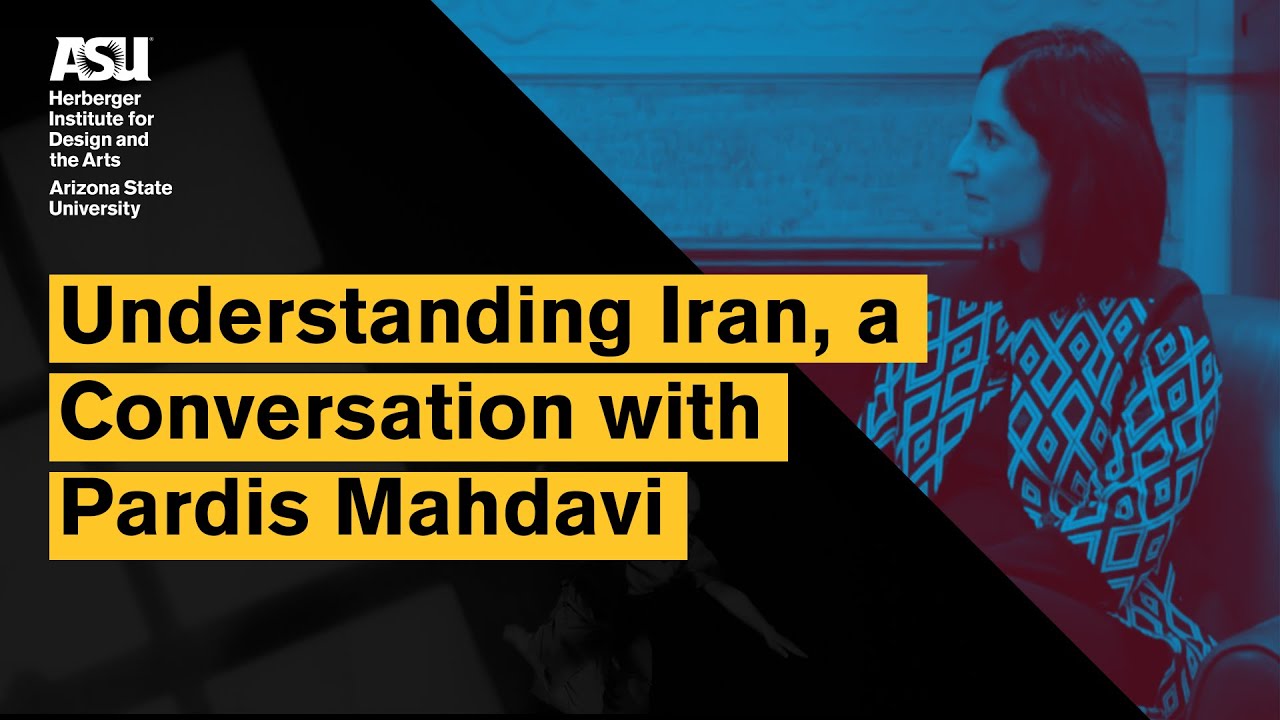
In this recorded conversation, ASU professor Michael Rhode interviews Iranian‑American anthropologist Pardis Mahdavi to unpack the historical, political, and social complexities of contemporary Iran and to explore how these issues affect Iranian‑American families, especially children in U.S. schools. Mahdavi shares her personal migration story—her parents’ pre‑revolution exodus, her birth in transit, and her family’s ties to Iran—while providing a concise history of Iran’s modern era: the 1953 CIA‑backed coup, the 1979 revolution, the Iran‑Iraq war, and the evolution of women’s and youth movements. She explains demographic shifts caused by pronatalist policies in the 1980s and a rapid fertility decline in the late 1990s, highlighting Iran’s youthful, highly educated population. The dialogue critiques U.S. narratives that portray Iran as a monolithic enemy, discusses the impact of sanctions and the killing of Qassem Soleimani on everyday Iranians and on Iranian‑American children’s sense of identity, and calls for nuanced classroom conversations. Mahdavi also reflects on her fieldwork, the banning of her book Passionate Uprisings, her experiences with Iranian feminist activism, and the broader “hyphen” experience of third‑culture kids. The conversation ends with a call for educators to foster belonging and nuanced understanding in classrooms.
Chapters
Hi, I'm Michael Rhode. I'm an institute professor at Herberger Institute for Design and the Arts. I'm a theater practitioner.
And I'm Pardis Mahdavi. I am the director of the School of Social Transformation. I'm an anthropologist by training and have worked on the Middle East for about 25 years.
Pardis and I have become friends since she landed here about 7 months ago, and as we've gotten to know each other, We've just been having conversations about things as colleagues and friends do. And when the events at the end of the year and the beginning of the year began to happen in Iran, and I was asking her questions to help me understand what was happening, deeper than I could understand, both in terms of what the media was telling me here and my own lack of sense of history in some ways, I found the conversation really rich. And I also found Pardis had some frustration at the lack of nuance in public conversation here around these issues and these histories. And as I started asking about it, we sort of said to each other, well, it would be interesting to share this, to have a conversation publicly so we could have a conversation. We could then engage other people in the conversation. But also, we both have kids. in elementary school. And our kids have different experiences for a variety of reasons, but one of the experiences Pardis's kids have been having, which she'll talk about, has to do with the identity that they carry with them through the world and recent events. And we were speaking about how teachers in public schools, maybe all schools, were both afraid to engage in conversations about current events and super uncomfortable with their own kind of lack of knowledge and point of view and how they might talk about this with kids. So we're actually recording this today, both for a podcast and a video that we're specifically gonna work through relationships we both have and try to make it available to teachers. So part of our conversation today is trying to think about the issues we're gonna talk about in ways that might help folks talk to others about them. I'm here as a listener and learner and somebody asking questions, And Pardis, it's really generous of you to spend time. And the other thing I wanted to say, and then I'll talk less, is I wanted to acknowledge that in this kind of conversation, it seems to me a little bit awkward or counterproductive when, for instance, you have one person with a cultural background and you're like, it seems like you're asking them to speak for like a culture or a place or a people. And that's pretty, you know, both inappropriate and not useful and at times dangerous. Right. Right? Because you can simplify or unnuance the thing you're trying to get at. I feel that because you have both a body of scholarship and activism and research and such a complicated personal history that you give us a really amazing perspective. But I ask us to have that conversation not— and for me too, not treating Pardis as if she represents Iran or sort of anyone we might meet. who is Iranian. And that just feels important to say. Thank you. So I'm going to start by asking you, you've done so many interviews lately. Like, you're like a go-to in the media. Folks have been asking you about stuff. And I want to try hard to not repeat those conversations that you've been having because they're easy to access. They're online. So I would like to have a different conversation with you. But it seems like maybe to start by asking you if you would take a moment and tell everyone here kind of a little bit about yourself and how you wound up here at ASU.
At ASU, yeah. I mean, and I think that sense of place is a good question, 'cause that question of place and how many of those who exist in the hyphen, right? I exist in the hyphen of Iranian American, how we end up in the places we end up is also interesting, and how we are either rooted or not rooted to place. But as Michael mentioned, I'm Iranian American. My parents actually came here before the revolution. My father is a surgeon and he came with a wave of surgeons actually when the United States was looking for expertise, medical expertise. He was part of that group that came in the late '60s actually, late '60s and early '70s. And was in Chicago, and I know we share Chicago in many ways, and he was in Chicago and he was actually a chief resident at the University of Chicago Hospital, and he actually met my mom in Chicago, who's also Iranian, but she happened to be visiting her brother who was my dad's roommate, so they met and actually began their relationship, and then they returned to Iran, and I think they were hoping that they might stay in Iran. And then my mom got pregnant with me, and then the revolution was coming, and it was very clear the revolution was coming, and so my mom was 8 months pregnant with me, and she got on one of the last planes out of Tehran in 1978, and so I was actually born in the United States, but I was sort of born in transit, and I— That's amazing. I talk about myself as a child of the revolution because I'm sort of, that is part of my place and how I ended up being born here, but I remember growing up and my family kind of dispersed on my mom's side. My father's family are all still in Iran actually, so my father is one of 10 and my aunts and uncles are all still there and my cousins on my father's side, they're all there in a city called Mashhad. My father was from a town called Sari, which is on the Caspian, for those of you who don't know, and then they moved to Mashhad in the 1960s, early '60s. But my parents growing up, my mother and my grandmother always kept one suitcase packed in the corner of the house. There was always this sense of, well, we're going to go back. I mean, this is happening now, but we're going to go back. And I think my parents had very complicated and yet different relationships to the revolution, to what had happened. I think my mom was very much interested in the revolutionary movement and the moment. There were a lot of women who were interested, who had been reading the writings of Abdolkarim Soroush, who was an Islamic Marxist, and had a very complex relationship. When the revolution was coming, it became clear that some movement needed to happen. My dad said it was time to get out, even though all of his family was staying. My mom said, I think it's time to stay, even though all her family was leaving. And somehow they ended up leaving. But again, with this notion of the bag packed in the corner, and that suitcase was just always there. As long as I can remember, there was this notion of, okay, this happened. The ideal of the Islamic Marxist sort of revolution didn't quite materialize in the way that many people had thought, and when the Islamists came to power, they came to power kind of on this, you know, under this fabric of bringing back morality to what they viewed as an overly West-toxicated system, right? So it was like this anti-West-toxication, or gharbzadegi in Persian.
So I want to just insert a question there. So you're reminding us, saying that in the late '70s, That the revolution, the change, was about people bringing back a more fundamentalist?
It was a sense, initially it was this sense of Iran for Iranians.
Yes.
Right? It was initially this sense that some people felt, and not everyone, and this is why I think nuance is so important. Some people felt that the Shah of Iran, with his deep ties to the CIA, had become overly westernized. And there was a grieving for what had happened in 1953. So it's actually, I think, good to kind of go back to that moment. So some of you are probably familiar, in 1953 there was a CIA-backed coup who overthrew President Mossadegh, who was the elected president.
And it's relevant to say for anyone who's listening, this isn't speculation or a conspiracy theory. This is history-proven fact.
Right.
Whatever that is worth today, we know this to be true.
Yeah. Right. And so I think people were grieving that. There were some people who were grieving that. There were some people who were very much in favor of the Shah because they felt that the Shah was bringing a much-needed— there was a wedding, a yoking, if you will, of modernity and Westernization, if you will.
After '53.
After '53. Well, when the Shah came to power, right? So there was, you know, there was this notion of, well, the Shah is here, he's going to bring modernity, which was yoked uncomfortably with Westernization, right? And so some people welcomed that and were sort of pro-royalist. Others felt this is a bit of Westoxication, right? This is a bit of an over-fascination with the West. The West is getting, you know, they're not to be trusted. There's a very famous Persian Play and book called "Daijan Napoleon," which is like my uncle Napoleon. But there's a very famous line in it where they say "Car cara inglesas." It is the work of the British, right? So there was that kind of imperial critique, that post-colonial critique, and and so you know it was it was a complicated moment, I think, for people when the Shah was gaining power and the CIA had these deep deep ties to the Savak, to the Shah's secret police. So. There was a sense by the royalists that, yes, this is what the Shah's doing and this is good. There was another sense by the opposition saying, yes, but we're losing our sense of Iranian-ness.
And both of those senses grew over the following 20 years. That's right. Both of them. And '78, '79 is one of those kind of growing to a point where it spills and takes over.
And takes over, right. And again, I want to emphasize that you had women at the forefront of all of these movements. So I think it's It's interesting that, you know, in the early 2000s, there was a bit of fascination with, you know, could— is Islamic feminism an oxymoron? It was like, no, you know. But there was that, you know, and it was like, no, there's been a lot of feminisms in Iran. There's been Islamic feminism, there's been more secular feminism, there have been different feminist movements over the years, and they've played a big role even in the '78-'79 revolution. So—
On both sides.
On both sides. Yeah, so that's important to note.
Absolutely, yeah. That sort of on both sides, even the more fundamental side that then kind of got rid of the Shah and took over, women were leaders in that as well.
Exactly. And I don't think women thought that what was going to happen actually, you know— Would happen. Would happen.
Yes.
Right, which is why this moment is another interesting moment that we're in now.
Can I ask you then about that moment? Not to take you off of the personal narrative, 'cause I do wanna come back to how you end up here, but because we've gone into history for a bit, I wanna say, So in '79, which is around the time of the hostage crisis, right?
Right, that was coming up right next. Coming up.
So I know that about a month ago when the president's people went out to the Sunday talk shows with talking points to make sense for the American public of what had happened with the assassination of General Soleimani, yes?
Yes.
In that moment, the Secretary of State and others said to the camera very purposefully, well, you know, we've been at war with Iran for 40 years. So this is just another part of that. When that statement was articulated, can you tell us both what that was like for you, but also what is the narrative that they're trying to spin that they believe has traction, whether or not it's true?
Right. I mean, I would take the second part first. I think the narrative that they're trying to spin is playing on people's Islamophobia, really, right? Which is to say, look, you know, we have been— it's that— it's a really uncomfortable rearing of the sort of Samuel Huntington clash of civilizations, right? That, you know, we have been at war with Islam. It is a, it is a, quote, backward civilization we have been at war with for 40 years. They're sort of playing on that, on that narrative, right? And yet we have not been at war with Iran for 40 years. We have not been at war with Iran for 40 years. Iran was embattled in the Iran-Iraq War for a good 12 years in the middle there, right? And then subsequently there have been a lot of movements in Iran and there have been times when local opposition has has wanted the support in different ways, not intervention, but engagement or support of the United States. And the United States has had a completely hands-off approach.
Opposition to the Ayatollah, opposition to that regime.
Opposition to the Islamists in power, exactly, yeah.
And so when that narrative starts getting talked about and your daughter, who's a 4th grader, When your daughter sees on the front of the newspaper America at war with Iran again, or for 40 years, and is confused about that, talks to you about it, I wanna know what that conversation was like for you. I also wanna know what you wish that her teachers knew or were able to say in response to that confusing narrative.
Right. You know, I think one of the things that my daughter, who's only 9, articulated so powerfully, we were walking through, we actually were walking through the airport, trying to come back here to Phoenix. We were in La Jolla in San Diego visiting my parents and we were coming back home. She saw all these headlines and she said, US is at war with Iran? And I said, yeah. And she, they had the TV broadcasting with that statement from Pompeo, the US and Iran have been at war for 40 years. And she says, so if the US and Iran, she said, if America and Iran are at war, what does that mean for people like us who are Iran and America in the same body?
Because her daughter's rather extraordinary, we need to point out.
But I think, and, you know, I think she and my son, who's a first grader, I mean, they were genuinely nervous about going to school on Monday, January 6th. They were very nervous about going to school. They were worried that their friends would think that they're the bad guy, that because they have Iranian heritage, that And it's complicated for them because Iran for them is only an imagined homeland. They've never been to Iran, right? It's an imagined place for them. And so how do they reconcile? I have tried to really infuse them with that sense of pride about being Iranian. I send them to Farsi school or Persian school up in Scottsdale on Sundays. As soon as I moved here, I found a Farsi school. Believe it or not, I even found one in Denver I had sent them to. But, you know, and we celebrate Nowruz, which is our New Year. We celebrate all of our cultural heritage. I've always tried to infuse a strong sense of why you should be proud to be Iranian. And then this happens, and I remember my son saying, I don't want people to know I'm Iranian. I don't want them to know. And what do I do with that? Like, how do I— all these years of trying to sort of give them the language of pride, it was very hard. You know, it was hard. And I know that their teachers were probably also struggling. And so I asked them, you know, do you feel comfortable talking with your teachers about this? And they said, I don't think so because our teachers never talk about Iran. And I just remember thinking, how great would it be if there could be an open conversation that introduces nuance, that not all Iranians are out to get the United States, right? General Soleimani is a particular character. And I remember actually that the next day, a lot of the TV shows were like, well, he was just a bad guy. Every Democratic candidate almost also was up there, well, he was a bad guy, so we're rid of a bad guy. Okay, but there's some nuance here, right? And there was this sort of like, well, Iran is full of bad guys. And for a 7-year-old boy, what do you do with that? Iran is full of bad guys. Iran is a dictatorship. Yes, but Iran is also a nuanced place where the people have been resisting the regime for decades now. The street politics of Iran are really important, and people don't think about the street politics. People have since 2000 been taking to the streets to show with their body, with their dress, with their slogans, with their voices, their opposition to this regime. And yet very few people in the United States States, we're talking about the millions of Iranians who are opposed to the regime.
Well, and my understanding is, and tell me if this feels accurate, my understanding is that many organizers and activists who are part of the opposition to the current regime actually have wound up finding Soleimani a necessary part of the fabric of keeping Iran safe. So that we describe him as a terrible evil man who's done bad things, and yet it seems that many people who we would want to align with in terms of their desire to make positive, humane change in Iran, are really scared that he's gone.
Right. I think that, yeah. And I think that people were both scared that he was gone and yet had that complicated moment of like, well, we recognize that there were some things he did that were not great, but we also recognize that there were some things that he did that were, you know, that were, yeah, that were great, that were great and that were worth celebrating. It's interesting, and I think I might be one of the only people to make this comparison, but talking to my kids is what actually helped me make this comparison. So we all know Kobe Bryant just died, right? And my daughter was like, why are people talking about Kobe Bryant? What's the big— and so we were talking about Kobe Bryant, and then it happened to be that the TV was on and somebody was talking about some of the not great things that Kobe Bryant did. Right, and somebody was actually on and saying, you know, so much for believe, hashtag believe women, right? I guess believe women goes out the window when somebody dies. And I was like, well, but it's complicated, right? It's complicated, you know, when some, a figure dies, a figure that has such a complex past. And so I was talking to my daughter and I was saying, look, it's complicated. And she's like, right, like it was complicated when Soleimani died. And I was like, yeah. I guess so. You know, it's kind of an interesting—
Very much so. Can I ask you a related question? I would like to go back to when your family first came over in those years between, well, in the late '70s. And I wonder if you could tell us just a little bit about what was it like in Tehran, for example, if you were a family in 1977, what was it like to be a girl your daughter's age? In 1977, and then what was it like in 1987? Like, just a small sense of what changed before and after the rise of the Shah amidst all these forces that were going on before I ask you about what it's like today.
Yeah, so I think Iran in the '70s was, you know, people who are China scholars, they talk about Shanghai disco. I mean, it was like people were wearing, Yves Saint Laurent talked about how women in Iran were wearing the miniskirts before women in New York. It was like Paris, Tehran, then New York. And I recently have gone back into my grandmother's closet. My grandmother raised me, but she passed away 10 years ago now. But I went back into her closet and actually the other day I was wearing this skirt suit and the skirt ended here and someone was like, that's a great suit. I'm like, it was my grandmother's. She was wearing that in Tehran in like 1971. She was out there with her miniskirt. My grandma. Mm-hmm. And Coco Chanel has all these essays about Iranian women, the height of fashion and—
But she could not have worn that in '87, right?
Correct. I mean, she couldn't have even gone there in '87.
Right.
Right. I mean, because my grandfather had ties to the Shah, my grandmother couldn't go. So, right, nobody could wear a miniskirt. So if you just think about comportment, You just think about sort of outer dress, it completely changed. But it was also '87, you know, we're also talking about the Iran-Iraq War and a time of a lot of violence and death, but also a time of, the '80s were when the pronatalist policies, so the government of Iran, so one thing that's important for you all to know about Iran's population today, Iran has one of the youngest populations in the world, right? So 70% of Iran's population is under the age of 30. I mean, that's pretty significant. It's astounding. Yeah, I mean, it's sort of, most of them are kind of 20 to 35, right? It sort of looks like a snake swallowing a rabbit, kind of a bulge. We have a lot of snakes here at work, the metaphor. But what happened is that after the revolution in the '80s, as Iran was going into the Iran-Iraq War, the government encouraged pronatalist policies. And the way that they did that—
Pronatalist means have babies.
Have babies, yes. So what they said was any family that had more than 2 kids got a tax break. and any family that had 5 kids or more got a free plot of land, right? So fertility is like up, up, up, up, up, up, up. Wow. Then we get to the '90s and the government is realizing, oh my gosh, we had this population explosion. What are we going to do? How are we going to handle this? So in 1997, they do a complete 180 and they actually, you know, you have all these slogans, fewer kids is better. And so they actually say that if you have more than 2 kids, we'll tax you. And, you know, more than 5 kids, you'll have an even higher tax. And so the fertility rate for women in Iran dropped from 4.7 to like 1.3 in a span of 3 years, which earned Iran the United Nations, UNFPA, United Nations Family Planning Association, gave Iran the Family Planning Award in like 1998. I mean, people don't know this, but this is true, right? I mean, you know, Iran got the Family Planning Award. So, you know, so you have a big, Boom of young people born between 1980 and 1996, let's say. Mm-hmm. Right? So you have this very young population. Certainly many died in the war, and many of the generation above them died in the Iran-Iraq War. But it's a young population, and as these kids get older, they get more and more educated. So Iran also has one of the highest literacy rates in the world, one of the highest rates of university graduates in the world. 60% of university graduates are women. So, you know, a very educated population.
Which, does this sound true to you? It feels to me like what you're describing runs counter to a sort of majority U.S. perspective. If you asked folks, what's Iran like? People might say, it's a developing nation, everybody's poor, there's not enough food, people can't read. It feels like there's that, narrative, yes?
Yeah, yeah, definitely. And so when I tell people Iran won the Family Planning Award, when I tell people Iran legalized needle exchange before the United States did, people, I mean, people are genuinely surprised, you know, and Iran legalized, for reasons we can talk about that are complex, sex change surgery, legalized and paid for, you know, so people are like, what? You know, how do I square that circle? But to go back to the '80s for a moment.
It's always fun to go back to the '80s.
I totally agree.
But then we'll go forward to the '20s in a little bit. We will, we will.
But to the '80s, again, because I live in the hyphen, I think about, okay, the '80s were a dark time in Iran. The '80s were a dark time for Iranian Americans too. So I was in Minneapolis, is where I was born, and my father, as I said, was a physician. came home one day from school in 1984, and this was at the height of Iran-Contra and the hostage crisis.
And you're young at this point, really.
I'm pretty young, and I came home from school one day and there was a sign outside our door and it said, burn this house, terrorists live here. I was like, pretty sure my dad's a doctor saving lives, but we had to move. We moved, that's when we moved to Southern California. My parents realized it wasn't safe in Minnesota. Now of course Minnesota is much more blue now, but We moved because we knew that, you know, Tehranjilas was right out, you know, over there in Southern California and lots of Iranian safety in numbers. Many of my mom's cousins had moved to Southern California. And so we moved to California. And so I remember the '80s being a really complicated time. Mm-hmm. And then I remember when Khomeini died and watching that on TV just after the years of watching people burning American flags on TV. I mean, how do you live in the hyphen? I mean, my daughter is reliving so much of what I was living in the '80s, you know, like you're an American citizen, you're born and raised in America, you're watching people in Iran burn American flags. Like how do you, you know, and then at the same time knowing that the people in Iran have a complicated relationship to America. So, you know, I was growing up with all of that. So it's probably no surprise that I, you know, as an undergraduate I went into diplomacy, was what my BA was in, thinking that was going to be part of the answer. But I then ended up going for my PhD in anthropology because I felt that some nuance was lacking. And I remember the day I made that decision. I was in an international affairs class at Columbia when I was doing my master's, and there was a class being taught on Iran. And I was like, great. The class was on modern Iran. I went to class, I sat in class, and got the syllabus. And afterwards I went up to the professor And I started speaking Farsi. I introduced myself. I started speaking Persian. I said, hi, my name is Pardis. And he looked at me and he said, oh no, I don't speak Farsi. I don't speak Persian. I was like, what? And I said, well, when was the last time that you went to Iran? He said, oh no, I've never been to Iran. I was like, what? So you're teaching, you're the Iran expert and you've never been to Iran and you're not, you know, you don't speak Persian, you're not, you know. And I thought, wow, international affairs might be a little broken. Maybe not where I want to be. And so I went over into anthropology because that's where I found people who were doing on-the-ground work, kind of real deep-rooted ethnographic work. And I also, leading up to that, I was a journalist at the LA Times Magazine. And so I had started to go to Iran for the first time in the late '90s. And they had sent me initially to cover the women's movement. I'm like, there's not one, there are many. And I was really interested because when I got to Iran, there were a lot of people my age, right, and they were involved in what they called a sexual revolution, engilabegensi in Persian. I was like, a sexual revolution in Iran? I mean, it just totally rocked me, and no one was writing about it. And so I pitched the idea to my editors and they're like, go for it. And so I came back and I went to graduate school and I wanted to write about sexual politics in Iran. I thought it was fascinating how people were speaking back to the regime by attacking that fabric of morality under which the regime came to power, right? So there's that fabric of morality, they're attacking those pillars, they're comporting their resistance, they're told that they can't wear makeup, they're wearing makeup, they're told that they can't, you know, they're doing everything that they're told that they can't do and they're finding a way to speak back to the regime but in their own language, right?
So they're performing resistance in relation to a kind of repression that's been like central to oppression for a long time.
Absolutely. But yet in an Iranian way. So it's not like they started wearing fashion trends from here. It's not like they started wearing that Yves Saint Laurent or the Chanel. You had all these sort of this organic art scene emerge, this, the Iranian film industry, you know, the film scene really burgeoned at this time, an underground music scene that is still very powerful. But again, this, this organic Iranian resistance started to bubble up, and this was in the late '90s and the 2000s under Khatami. So I went to Iran, I started going, and I decided this was going to be my PhD dissertation. So I decided to jump ship from international affairs, take a PhD in anthropology at Columbia, and this was my dissertation. And so I went and I spent 3, 6, 9 months a year there between 2000 and 2007 or '08. So my first book was on sexual revolution in Iran.
What was it like to live there then, and how is it different? I know you haven't been back in a while because you can't, and we'll talk about that. But what was it like to live there then, and when you talk to family who are there now, how is it different now?
Yeah, so I feel really lucky because the Iran that I had imagined in the '80s and the '90s was this kind of dark, kind of very somber, The Iranian-ness that my community talked a lot about was a very, a particular Iranian-ness that involved not necessarily lots of indulgence, although there is that Shahs of Sunset arm of Iranian Americans, which I will not dispute, there is that. But I had a different imaginary, and so I got there, and this was under Khatami, right, so President Khatami was a reformist president. And it was just like people were doing and saying things that I couldn't imagine my own contemporaries doing and saying. They were so fearless.
You mean in the US? Yeah.
When you say my own contemporaries? My contemporaries in the US doing it. People were fearless. They were going up against the authorities in any way imaginable, and these powerful youth social movements really inspired me. I was like, Wow, there are these social movements, this underground music scene, this film scene, this fashion scene, this art scene that I couldn't have imagined. And it was really blossoming under Khatami. And then of course Ahmadinejad comes to power. So I'm doing a lot of my fieldwork under Khatami. My book comes out. I'm a professor at Pomona College. I go back, my book has come out. I go back and so I had started lecturing at the University of Tehran.
Tell them the title of the book.
My book is called Passionate Uprisings: Iran's Sexual Revolution. That was the first.
Contextually, going back, and that's the book that she's lecturing on.
Right, so the book had come out, and while I was writing the book, I had a lot of support for the book initially, and it seemed like there was some change coming in. And at the end of the book, I basically, in the last chapter, and the book came out in 2007, and I predict in the last chapter that the youth movement the sexual revolution was gonna build into a civil rights type movement within 3 years, and then 2 years later, 2009, the green movement happened, so I'm like, I predicted this, right? So that felt good.
But people didn't love that.
But people didn't love my book. Well, the people loved it, but it was banned by the government, so me and Salman Rushdie are in great company. It was banned by the government, but so I went back and I was lecturing about the book, And I, you know, it was under Ahmadinejad, the regime, things had changed, and I was no longer welcome there. And so, you know, I got pulled off stage in the middle of a lecture, and, you know, I found myself face-to-face with the Revolutionary Guard, which was tough. But in 2008, I basically was expelled and told that I couldn't go back. How do you do that? You know, 10 years of going back and forth, of living there, like seeing my family and my cousins on my dad's side, and getting very closely connected to my interlocutors, and then I'm told I can't go back. And that was terrifying. It's still terrifying. And my daughter knows that I can't go back, and so she has this complicated relationship where she's dying to see Iran. And yet she knows that I can't take her there. So, you know, I then shifted my field site to Dubai. I went on to write 4 more books about the Gulf. I shifted to writing a lot more about human trafficking, labor migration. And, but then about 2 years ago, I went back to writing about Iran because I was really interested in the feminist movements that have started to build a lot of momentum. 2006, you had the 1 Million Signatures campaign for women's rights. In 2014, you had My Stealthy Freedom, which was another feminist-based campaign, more secular feminist campaign. So I started writing more about Iranian feminisms as I was watching people, more and more people pour into the streets to fight the regime.
I want to ask you, as we sort of get to this intersection of your story and this moment, Both for folks in this room, but also for folks not in this room. When we talk about a more nuanced conversation, what do you wish folks in the US knew about the complexity of what's happening in Iran right now that they don't know, that the media doesn't share, that our current administration does not include in the narrative at all? What kind of questions or histories or ideas do you wish, like, I just wish folks were thinking about or aware of this?
Yeah. I guess given the recent turn of events, I guess I really wish folks would understand that the more heat coming from Washington, the more pressure that Washington pushes, the more they give, the more weight is given to the Islamists argument about the Great Satan, about the need to protect the people. And the problem is, is that U.S. sanctions hurt the people. The U.S. sanctions hurt the people of Iran, and people don't think about how much the people of Iran are hurting. And I also think, I wish people understood that all of these organized movements, all of these activists who've been organizing to resist the regime, so much, like right now, women's rights activists, human rights activists, are more under threat than ever before because the regime that's in power has been empowered by the sloppiness of Washington's decision-making.
So in addition to that sort of context of what the policy means and what the recent actions have meant, if you were going to offer a couple insights into what it's like to live in Iran right now. You know, you've talked about how the sanctions hurt the people. What is it like for different people to live in the city? What is it like for those struggling to pay bills? What is it like for a middle class? Like, what is life like there right now?
I think it's so different for so many different people. Of
course.
Yeah. And I think that's one other thing I would say I would want people to know is people have a complicated relationship to the U.S. For many reasons, but people have a complicated relationship to the regime too, you know, and people feel that the organic Iranian activism is eclipsed by the hyperfocus on the regime, and local activists continue to wonder why it is that they can't be seen for what they're doing. or supported, right? I think life right now in Iran, it sounds from all the conversations that I've been having day in, day out for the past month, people are really afraid. People are feeling really afraid and unsettled. Because one of the things we haven't talked about, of course, is the— is how the region has been destabilized. Because of course Soleimani was killed in Iraq. Not in Iran. Not in Iran, right? And there was some, a lot going on in Iraq in that moment. And I think we forget that here. We forget that the region itself is, remember there was that 12-year war with Iraq and Iran, right? I mean, and we have to remember that very recent history. And so the region is also destabilized. So, you know, I think people in Iran, they're now suddenly feeling, feeling very isolated, very lonely. Right? Who's going to support the people? They're worried, of course, about another U.S. attack as the election draws closer. They're worried about what the Iranian government will do in response, even though I think, you know, even that is complicated, right? But I think people are genuinely fearful of chaos. And yet these people have been protesting. I mean, there were mass protests in December, right? And nobody talks about that, just before the assassination of Soleimani. People were protesting in the streets. They were protesting rising gas prices and the effects of sanctions. People were in the street protesting. So they're feeling that squeeze, and yet their hope is beginning to evaporate a little bit because they feel that the regime suddenly has more weight and more power to their arguments. Mm-hmm.
I wanna ask you one more question before I invite folks here that have questions for you. But I wanna ask because your work around activism and your anthropological research on violence and trauma and trafficking, I know that that's a global perspective. You're here in the US. Yeah. You're US, you know, as you say the hyphen. Are there any things that you could help us draw connections between movements and oppressions and histories of trauma here in this nation that you look at in relation to the current and past history of Iran that you think are interesting, whether that's because they can help open up empathy across different places and spaces, or it's just something that you think about in your ideas and research? Yeah. But what is your observation of
Yeah, I mean, it's interesting because when you say here, my mind immediately goes to ASU.
Sure.
And how fortunate I am to be at the School of Social Transformation, and I'll tell you why. One of the hard parts about living in the hyphen is it can be frightening and it can be lonely. I think my kids are feeling that loneliness right now of like, does anybody feel the way I feel? as an Iranian American. But one of the unique things about my school is, you know, the School of Social Transformation encompasses African and African American Studies, Asian Pacific American Studies, Women and Gender Studies, and we have Center for Indigenous Education, a number of different centers, and so I'm surrounded actually by people who are living in the hyphen, right? My faculty and students are largely living in the hyphen. And one of the most significant things for me about moving to Arizona has been the opportunity to connect with Native American and indigenous folks because I think we share so much of the same sense of loss, of loss of place, and of those questions of— Identity. Like identity and hyphen. So much of the same questions that plague, I think, myself and those of us who work on Iran are questions that many of my colleagues are wrestling with. And so, you know, it's given me a deeper sense of connection to my colleagues and those of us who are thinking about like, what is it to be a new American? Right, those of us who are hyphenated, right, though one would actually argue that many of us are actually the, not us, but my colleagues are the original Americans, but how do the original Americans connect with the new Americans to create a new American conversation around belonging, and I think it's pretty great to be at the New American University. Having the new American conversation.
Yeah. Thanks for that answer. I have 20 more questions, but I'm going to turn out here and ask if somebody's kind of holding a question that they'd love to hear Pardis kind of think about with you, either because you want more context or detail, or if it's just something on your mind that's come up, something you'd love to enter into conversation about.
I have lots of questions.
Pick one.
Well, I thought maybe I'd put them all out. You could choose what you want. Okay.
Oh my gosh. All
right.
I'll write them down.
But I'd love to know what advice you would give to the US government and how they should go forward. I'm curious to know more about Iran-Iraq relations and what that means in contemporary situations.
Yeah.
Yeah. And Khashoggi.
Oh yeah. I mean, gosh, when you bring Saudi into it, it gets even more complicated.
I sort of didn't go there in our time because I was like, then it's huge. But take it in.
It's good.
Yeah, I mean, Saudi is a complicated— same with the UAE. So let's see. So Iran Iran and the UAE have a pretty long history. A lot of Iranians actually helped build up Dubai, right? Actually, it was a lot of the Iranian merchants and the Iranian investment that made Dubai what it is today, right? And so, and it was this sort of free trade zone, right? And so for many, for me at least, when I could no longer go back to Iran, I was in Dubai and I had— Place in Dubai. I was there. My family would meet me in Dubai. I was working on Dubai for many, many years. And so when the UAE began to align with Saudi and box Iran out, that became a really hard moment because it meant that then the Gulf and the GCC, the Gulf Coast Cooperation, suddenly was at odds with the OIC or the Organization of Islamic Countries, of which Iran was the leader. So then what do you do now when the GCC and the OIC are going to be at odds because Saudi and the UAE are going to move as a bloc? What are you going to do? And then to think, well, where's the U.S. going to come down on all of this? I think actually Saudi is a really good question because that sort of split actually laid the groundwork for then what we saw in January. Because there was this sense of unease about where is the Khalij, where are the Gulf countries going to land, and therefore where does Iran need to start building alliances? Suddenly Iran and Iraq, countries that had been at war for 12 years, I mean, does that need to be an ally? Because the UAE is no longer an ally. And Saudi, what is Saudi going to do? Because Of course, if the Gulf decides to move as a bloc, that can become a real problem for Iran, right? And then of course if they decide to take oil money in a certain direction, then you have the economic reverberations of that. So I think that laid the groundwork for then, you know, someone like Soleimani, who was obviously making the rounds in the region, right? Why was he making the rounds? Well, because you had this destabilizing moment of Saudi and the UAE backed by the United States. So I actually think your questions are, they do go hand in hand because, you know, what led to what kind of thing. Do
you think our government understands what you just said? I mean, seriously, not trying to be joking. Do you think that there are folks sort of at the policy level, your sense from hearing what folks say, can you decipher a comprehension of the complexity of what you're talking about?
You know, I don't know. I want to hope.
Well, sure.
Because it's really frightening if that, if something that's like that basic is not being, but it could very well be the case. You know, it's important to think about the US-Iran, the nuclear agreement, right? Which went away. Under the current presidency. So it was negotiated by John Kerry and by Javad Zarif under the Obama administration. And, you know, that's another one I feel like I sound like such an academic when I say it's complicated because some people felt that, okay, that was a really necessary step. That was a really necessary step towards getting to where Iran needs to be, improving US-Iran relations. And I admire the many people, you know, NIAC and others, Trita Parsi, who were really a large part of that. I have deep admiration for that. I also remember hearing just from interlocutors and people I talked to that people thought, well, but that deal legitimates the regime in a way that people felt uncomfortable with. that local activists and organizers felt uncomfortable with. But going into that agreement, I think that the US government at that moment had a pretty good sense for the nuance of the region. So I have to—
An administration ago.
Yeah, I think so. I think that they did. It's unfortunate. Bolton has always had a bee in his bonnet about Iran. just sort of, that's been his thing. And that's challenging. Pompeo seems to have a similar bee in his bonnet. And that frightens me a little bit, you know?
I think it is legitimate these days to find Mike Pompeo many things, including frightening. Yeah.
It's a tough one, you know?
I'm going to thank you for that. I'm going to come right over here. Yeah. Thank you for sharing
all your information and your personal story today. I hope this question's okay too, but when you mentioned about your family keeping a suitcase in the corner—
Yeah.
Oh, sorry. When you mentioned your family keeping the suitcase always packed in the corner, I'm just curious, what were your conversations like with your family when you started traveling there year after year for research? Or did you ever think about that, or was there ever the possibility that you might move there or live there? Or how that went with whatever family you care to talk about.
Yeah.
Could everyone hear the question? Yeah, okay.
And can everyone hear me? We do, Michael and I do have a microphone here. If you can't hear us, just please let us know. We do have a mic that we can turn on if anybody needs it. Yeah, thank you for your question, because it allows me to talk a little bit about that sense of liminality again that so many of us who live in the hyphen, right, neither here nor there, betwixt and between, don't really belong either. place. So one of the things that was hardest for me when I first started traveling back to Iran in the '90s was, you know, so growing up here as an Iranian American in the United States, I felt like I didn't fit in, right? I was too Iranian. I remember I'd go to school with my lunchbox and I would open my lunchbox and my grandmother made this, one of my favorite stews called kormeh sabzi. It's a stew, it's coriander and— Mmm. Very aromatic, pungent scent. Delicious, but very aromatic. And I remember my classmates making fun of me, like, what is that that you're eating? You know, now I'm like, I tell my kids, like, it's a luxury for you to have that in your lunchbox. But at the time I was like, God, can't I just get a peanut butter sandwich? Right. And, you know, and growing up, I remember my parents had this sense of like, this is what an Iranian girl does and doesn't do, right? And so I remember, you know, I wanted to wear makeup. My parents were like, good Iranian girls do not wear makeup. And then I remember going to Iran and being like, guess what? Yes, they do. And so one of the things that was hard for me was when I went to Iran, I suddenly felt like I didn't fit there either. So all these years, all my growing up, I thought, well, if I could just get to Iran, then I'll fit, then I'll fit in. And then I got to Iran and my headscarf was always falling off. I was like a mess. I was like, I can't get it to stay on. Everybody else's stayed perfectly in place. Their sunglasses were perfect. Their makeup wasn't running in the heat. And I was like, I'm not fitting in. And they were engaged in behaviors that I had been told were un-Iranian. And here are the Iranians in Iran doing it. And so that's, I think, why I got so engaged. I interested think that's a really interesting point. in that sexual revolution because I had grown up with a particular notion and understanding of the Iranian body, especially the Iranian female body, that was totally challenged when I got there. And then yet at the same time people were making fun of me because I had an accent when I spoke Persian. I mean, I'm fluent in Persian to the point where I could be a professor at the University of Tehran, but I had an accent, you know, and how I carried myself revealed that I hadn't been raised there. Mm-hmm. My conversations with my parents were first, A, you lied to me about what it is to be Iranian. And this Iranian imagination that I had was totally— I remember coming back and telling my brothers, 'cause my brothers couldn't go because they would be conscripted into mandatory military service. So my brothers couldn't go.
Have they ever gone?
They have gone subsequently. They were able to kind of find a workaround. But I was the first. I had been going for about 5 years before I took them with me. And I actually, my first time back, I took my mom, and it was really hard for her because all the street names had changed. Mm. And Tehran, which is where she was born and raised, looked nothing like the Tehran that she grew up in. I just remember she just sobbed every day, and I was like, Mom, I gotta get some work done, you know? But she was crying all the time. She'd get lost in her own city. That was really hard for her, I think. For me, I was just, felt like, well great, I don't belong here either, you know, and so that real, that sense of, well, I don't know that I could actually live in Iran because I'm more American than I thought I was, you know, I always growing up I thought, oh, I'm more Iranian, and then I went to Iran and I was like, oh, I think I'm more American than I thought I was, you know, so that sense of liminality, of betwixt and between became such a— such a nodal point for me.
Thanks. Building
off of her question, I know you kind of touched on, you told your family like, hey, this is not what you said it was gonna be. How did your parents react to that even maybe before your mom going or after going? And then secondly, my original question I wanted to ask, have you heard of the kind of like idea of third culture kid? Because once I finally heard that being the child Yeah.
Where
you're not quite Mexican enough, even among your own culture of immigrant and first-gen kids, but not quite enough of that nor quite enough American, and I was like, ah, there's more of me, there's a term for us.
Yeah, yes, I mean, let me take the second part of your question. I mean, that third culture kid, I think it did resonate, and yet the Iranian community in the United States is so painfully fractured. It's so painfully fractured because you have the royalists, you have the— I mean, there are— there's a presence of mujahideen here. I mean, there are the kind of extremists. You have Iranians on different sides of the political spectrum. And then also for many years there was this sort of sense of don't reveal. That third culture, don't reveal that you're Iranian, right, and there's this Iranian comedian who's hysterical, if you haven't watched him, his name is Maz Jobrani, he's very funny, and he talks about how he, when he was growing up, we're the same age, and he would, people would ask him, you know, what are you, and he was like, I'm Persian, because he's like, that sounds like cats and rugs and Persian cats and rugs, who can argue with that, you know. No, he's like, it sounds like a luxury good. Persia, the empire, was great, it was wonderful. He's like, I never say I'm Iranian. And then I also, that was sort of a moment for me. And then I also remember, are you all familiar with the tennis player Andre Agassi? Yes. Right? So Agassi is, right, his father is Iranian. And so I remember he had just won Wimbledon and an interviewer went up to him and said, Mr. Agassi, are you Iranian, Iranian American? He was like, nope, I'm Las Vegas. And I was like, what does that even mean? But I was like, oh, why did he not divulge that? Right, so there were all these other third culture kids or young people who were not actually divulging or embracing. So we were in that fracture and being post-revolutionary and having that sort of those warring factions. And we joke about the Shahs of Sunset. For those of you who haven't seen it, it's a reality TV show based based on a group of Iranians in Los Angeles, which we call Tehrangilas, who live a very extravagant lifestyle. I would probably characterize them as royalists, I would say loosely speaking, they would have probably aligned with the Shah, which is maybe why the Shahs of Sunset. But that was the third culture that also didn't, I was like, that's not me either. And so the third culture for me, I was like, but where's our third culture? It didn't resonate as much for me. It started to when I met other third culture folks who were not Iranian American, but other folks who were living in the hyphen. So my husband is Chinese American, and I started to feel like, oh, we have a lot of similarities, right? And he had grown up in an assimilationist household, and so what do you do with that? And so that's when it started to make sense to me. that third culture. Yeah.
I think we have time for one more question and then we have to break. Again, I can ask one. I want to make sure, I want to see if anyone out here has one. Okay, well, you have a thought? Please.
I was going to say, can you get back to the first one, how did the family react when you were like, this is actually not what I meant?
Yes, yeah, yeah, yeah, you're right. Thank you for that. Thank you for reminding us.
Thank you.
So my family, yeah, so at first I will tell you my family come from a long line of Iranian physicians, and so the first break was like I'm not gonna be a doctor or a lawyer or an engineer. That was the first disappointment, and I will say that actually it's important, and I'll tell you why our education was always so important. I remember when we moved to California, I didn't want to go to school. I was like, you know, I was in elementary school and I was like, I don't want to go to school. And my dad said to me, look, they can take everything from you. They can take your house, they can take your belongings, they can even take your country, but the only thing no one can take from you is your education. They'll never— don't ever let anyone take your mind. And so that drive, people always say, why are Iranians so overeducated? I think so many people had that same like pep talk, right, because it— and I do the same to my kids. I'm like, they might kick us out. If they kick us out of here, I don't know where we're going to go, but at least we have to have our education, right? At least we have to have that. We have to have something that no one can take from us. And so when I decided that I didn't want to be overeducated in terms of the medical or the legal or engineering field, That was already a shock to them. Then the next shock was when I was working for the LA Times, I'm like, I'm writing about the sexual revolution, and my parents were like, oh my God. It was like, oh my God, what is she doing? And it was so hard because in California, the Iranian community, everybody knows each other, and my mom's like, well, couldn't you just change your byline? Write under a pseudonym so they don't have to associate us with you. And then when I started going back and saying, well, this is so different, and at first my mom was like, you know, you're so different, you're so different, and this is about you, not necessarily about Iran. And I was like, no, this is about you lying to me. Mm-hmm. And then my mom came back and I really could see it in her face and in the pain she experienced that she was narrating a different She was frozen in 1974, which is when she immigrated. She was frozen in 1974. And then she was sort of— the Iran that they narrated to me was an Iran that they were piecing together, putting the puzzle pieces together from the snippets that they were also getting from my aunts and uncles. And so they were trying to piece it together too. And so when I started writing about what I started writing about, My parents at first were like, I don't understand how you can get grant funding to go to parties in Iran. You just go to Tehran for 4 months and go to parties. And I'm like, well, I'm studying them. But when they started to read actually my work, it really gave them kind of another layer of relationship to an Iran that even they hadn't allowed themselves to understand. Allowed them to go deeper.
I want to thank you for bringing that question back. And before I thank you, did your hand just go up? Did you want to— oh, I thought you were— I wanted to make space if it did. I want to say as we sort of wrap up that, as I said at the beginning, one of our goals is to make this podcast video available for educators. And so I want to, I want to say, although this is at the end of the conversation, I feel like you've given us the opportunity to think about history, to think about geopolitics, to think about your personal experience of culture and identity, but you've also brought us into conversation about family and generations. Yeah. And how change, whether it means across borders and lands or just sort of our own experience generationally of change and growth, sort of can be a struggle. And for teachers who are working with young people who might be experiencing this, whatever their identity is, Change, background, culture, identity, that hopefully there's some things in this conversation that might help them be willing to listen and be willing to think about the kind of conversations that might help students feel more a sense of belonging in the classroom space. And I really appreciate you giving all of us a chance to have more context as we think about what it means to make spaces of belonging here on campus. So thank you.
Thank you. Thank you for this. It was really— when Micah reached out and offered to do this, it was for me, such an important moment. I was grieving, I was panicking about what was going to happen, and I just want to thank you for reaching out and allowing me this space to share with you and with the community.
It's such a pleasure. Appreciate that. Learned a lot. Thank you.
Thank you.
Thank you everyone for joining us today. Thank you.
More from Pardis


Author Pardis Mahdavi on Education, Human Rights, Leadership & the Future of Learning

Pardis Mahdavi: The Future of Learning, AI, and Why Higher Education Is Broken


#64: Ancient Wisdom for a New Future: Culture, Women, and the Path to Liberation – Pardis Mahdavi





