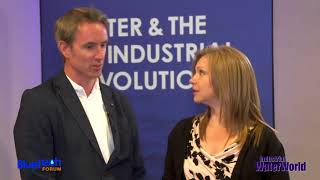
In this interview recorded at the BlueTech Forum in Dublin, Waterworld chief editor Angela Godwin speaks with Michael Corkery, who oversees water management for Nestlé. Corkery outlines Nestlé’s long‑term water‑efficiency agenda, noting a 40% reduction in water use per tonne of product over the past decade and a 2020 target to cut usage an additional 35% versus 2010 levels. He explains the company’s ‘reduce‑reuse‑recycle’ framework, highlighting a flagship project at a Mexican plant that has eliminated groundwater use by reclaiming and re‑using process water multiple times. The conversation then shifts to the value of industry forums: Corkery stresses that such events keep him abreast of emerging technologies and provide a platform for peer learning and knowledge exchange across multinational and smaller firms. The interview closes with mutual appreciation.
Chapters
Hi, I'm Angela Godwin, chief editor for Waterworld magazine and Industrial Water World magazine. Coming to you Today from the BlueTech forum in Dublin, Ireland. Joining me is my guest, Michael Corkery. He is responsible for water management for Nestle, which I cannot even imagine what must go into that. Tell me a little bit about water efficiency and where that figures into Nestle's objectives.
Yeah, I mean, it's a critical objective for us is water efficiency. I mean, we've been working on increasing the efficiency in our operations for the last 10, 15 years. We've already made significant progress. We've reduced our water consumption meter cubed per tonne of finished product by over 40% in the last 10 years. And we have an objective for 2020 to further reduce by minus 35% our water usage versus 2010.
That's amazing. Are there any particular initiatives or strategies that you can point to as helping you to get there?
Well, basically we follow the model of reduce, reuse and recycle the triars. And we have asked our factories to continuously work towards reducing the amount of water they use by eliminating waste and needless use of water in certain locations. We've gone even further and actually invested in latest reuse in recycling technologies, particularly in factories where we have an issue with water availability, water shortage, drought and things like that which has pushed us to go that extra mile. One example is a factory in Mexico where we basically completely eliminated the use of groundwater in the factory by taking the water that comes in with the fresh milk, which is the raw material, into the production, removing the water through evaporation, which we do anyway, in the process, and then treating that water and using it again, and even using it two or three times to basically completely eliminate any need for fresh water.
That is amazing. That is amazing. So now, before I let you go, I do want to ask you a little bit about the BlueTech forum and conferences like these. Why are they important? Why do you think these are a good thing to have in the marketplace?
Well, in my role it's very important that I keep up to date with what is the latest trends in the technology. And I think that's one factor that's very important. And these forums allow you to discover a little bit what's new out there. The other thing which is very important is the fact that it allows me to meet people in similar positions to myself in other companies, large multinational companies and not so large companies as well, and to share a little bit the experiences with them and to learn from them and hopefully also maybe give them some useful information as well.
That's awesome. Yeah. Open up that communication. Right. That's what it's all about. So, Michael, thank you so much for taking time to talk to us today. We appreciate it, and I wish you all the best of luck going forward.
Thank you.
For Waterworld and Industrial Water World, I'm Angela Godwin.