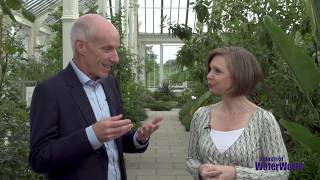
In this BlueTech Forum interview, Waterworld magazine’s Angela Godwin talks with Divesh Sharma, Managing Director of Aquatech, about the often‑overlooked hidden costs of water in industrial settings. Sharma explains that traditional focus on direct operating costs—energy use, membrane life, water consumption—captures only a small slice of the true impact. He highlights intangible risks such as downtime, environmental liability, and brand damage, emphasizing that the most expensive water is the water you don’t have. The conversation moves to how companies can address these hidden costs by aligning corporate strategic objectives with plant‑level operational goals, adopting long‑term process planning, and pursuing low‑hanging solutions like water recycling and resource recovery at specific plant points. The interview underscores the need for a holistic view of water management that integrates risk quantification, strategic alignment, and sustainable technologies.
Chapters
Hi, I'm Angela Godwin with Waterworld magazine coming to you from the BlueTech forum here in London. Joining me this afternoon is my guest Divesh Sharma. He is managing director of Aquatech. Devesh, thank you so much for joining us today.
Thank you for having me.
So I want to talk to you a little bit about the hidden costs of water. You know, it's really common to focus on the operational costs involved, but that can be kind of a short term view. Can you explain a little bit?
Yes. The previous conventions were looking at conventional operating costs of water. You know, how much am I consuming, how much energy am I consuming? Are my membranes, the life of the membranes working correctly? Are the membranes lasting long enough? So everything very much around what's happening in the water plant and you know, sometimes that is okay and that's a good start, but it's really a drop in the bucket or tip of the iceberg when it comes to the real impact to an industrial operation on how the water facility is really impacting their overall operations.
So how do we start to really drill down then and sort of identify, you know, what those risks are? Because the tangible ones we can figure out.
Right.
It's the intangible that we have to sort of try to figure out.
Yeah. The things that aren't visible or that, you know, part of the iceberg under the water is really, you know, we call it the hidden costs of water. And sometimes at the plant level that isn't very much in the limelight, but it is at the corporate level. And the connection of these two is the big challenge in industry today. And you know, there's a variety of risks that you have to look at. The first and foremost is downtime risk. Are you capturing the risk related to what if the system goes down? If the system goes down, what's going to happen to the plant? Is there enough storage or does my plant go down? And if the plant goes down, what's the cost of that? I'm sure it can be quantified and that has to be looked at. When looking at the resiliency of the water system. Beyond that there's environmental risk and it ultimately goes to brand risk, which is, you know, sometimes priceless.
Right, Exactly. I think it was earlier today I recall you saying that the most expensive water is no water.
Yes. I use that a lot. Is that we always talk about what's the cost of water, what's the cost of water per meter cubed. And everybody is a lot of times very focused on life cycle cost or even just capital cost, but really are they looking at what is the cost of not having it, of that downtime? And I like to say the most expensive water is no water.
Yeah, it's so true. So any words of advice or anything you would tell water users out there in terms of maybe low hanging fruit or where they can start or sort of easy things they can look at?
Well, I think this where we're trying to work is the alignment and working with our customers to align the corporate objectives to the plant objectives. And sometimes the corporate objectives are more strategic, they're more long term thinking. But then the incentives and the focus of the plant is the short term balance sheet and P and L of the plant and trying to find the good happy medium between the two. And I think that's where we want to do a lot of our work and then that goes into long term process planning. A big trend that we've seen here today is, you know, a lot of end users don't want to look at end of the pipe solutions. They want to see how they can recycle water and recover resources at specific parts of the plant, how they can reduce their use of water to minimize. And we can help with all of these things. And that's really where we want to try to meet at the connection between corporate and plant level.
That makes perfect sense. Absolutely. Well, Devesh, thank you so much for joining us. We really appreciate it and we wish you all the best of luck going forward.