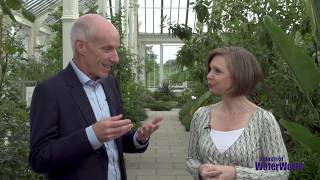
UC Berkeley engineer David Sedlak traces three water revolutions: imported supply, treatment, and wastewater systems. He calls the current shift Water 4.0, where water-scarce regions pursue desalination and recycling while water-rich areas tackle flooding and runoff. Each revolution followed a crisis that forced rapid change.
Chapters
Hi, I'm Angela Godwin with Water World magazine. Joining me today is my guest, David Sedlak. He is a professor of environmental engineering at UC Berkeley. David, thank you so much for joining me today.
Thank you for having me.
Now, I know you recently wrote a book, and it looked into the history of urban water systems. Why was that topic so fascinating for you?
Well, I've been studying the issue of water recycling and water reuse for about four or five years. And what I found was that people were really curious about this topic. And I was surprised by how little they actually knew, not only about the topic of water recycling, but where their water came from in the first place. And so after giving a few talks explaining it, I realized the thing that they were really interested in is knowing the history of how it came about, the problems it's facing now and where it's going in the future. And so rather than writing a scientific paper, I sat down and wrote a book for a general audience.
And in the course of that, you noticed an interesting pattern, sort of a cycle in that history. Can you explain?
Yeah. So I had never thought about this before, but what you see is a repeating pattern in urban water systems. That is, we build them, they serve our needs, and they reach a point where, for one reason or another, they're not doing what we want them to do anymore. And we bump along for a number of decades making do with the best we have, and then suddenly a crisis happens. And when that crisis happens, things change very quickly and the system is completely different. And then it's good. It lasts for a while, and another crisis comes around the corner. Things build up, people muddle along, and then all the change happens in a short period.
Interesting. So you talk about the current evolution that we're in right now as water 4.0. What does that mean?
Well, I decided to describe each of these historic changes in water systems as a revolution. And the idea is that just like when you had a computer system and the operating System went from 1.0 to 2.0, that indicated there was some big change happening. And so we've had three revolutions in water in the wealthy part of the world, the part of the world that many of your viewers come from. And those revolutions were imported water, bringing water from long distances and distributing around cities, drinking water, treatment, taking water that might have made us sick and disinfecting it with chlorine or sand filtration, getting rid of waterborne diseases. And the third revolution, municipal wastewater treatment, purifying the waste after we're done with them so our rivers and aquatic ecosystems are protected. And now we're going through a fourth revolution. And, and that revolution is really the thing that's happening today and that people are really curious to know about.
And where are we headed?
Well, that revolution's different depending upon where you live. So if you live in a water scarce place, that revolution is a water supply revolution. Things like desalination, water recycling, stormwater capture, conservation. And if you live in a really wet place, that revolution has to do with managing all the water that comes down the streets and not just putting it in a storm sewer and letting it flood the city. Right.
So what's next for you? I mean, are you going to continue to research this topic and go forward?
Well, I'm a scientific researcher. I never set out to write a book before and so that book came out five years ago and I think it had a lot of impact on the discussion. In the meantime, I've continued to work with my graduate students on new technologies and studying urban water systems and trying to improve them. But I think in my future there's probably a next book. And that next book is going to tell us. It's going to help me answer that question of where we're going next. Because when I set out to write that book, I actually got the idea to write it nine or 10 years ago. And I always realized it's an incomplete story and I wanted to come back and look at it again, see where we're going. And that's the story that needs to be told next.
Well, we can't wait to hear that story and wish you all the best of luck in telling it.
Thank you very much.
Thank you for joining us today and for Waterworld magazine, I'm Angela Godwin.