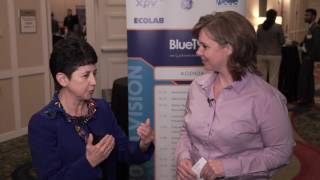
In this interview conducted by Angela Godwin of WaterWorld/Industrial WaterWorld at the BlueTech Forum in San Francisco, EPA’s National Risk Management Laboratory (NRML) Director Sally Gutierrez discusses the agency’s role in fostering water‑technology innovation. She explains why EPA must provide pathways for new technologies to address critical water challenges, outlines how regulatory barriers can impede commercialization and describes EPA’s efforts—through the Clusters program, a water‑technology innovation blueprint, and direct investments in early‑stage companies—to reduce those barriers. Gutierrez highlights a recent shift toward deeper collaboration with industry and other stakeholders, noting that EPA has become more proactive in spinning out agency‑developed technologies and supporting private‑sector partners. The conversation ends with an optimistic outlook that continued cooperation will drive further progress toward safe, clean water.
Chapters
Hi, I'm Angela Godwin with Waterworld and Industrial Waterworld magazine coming to you from the BlueTech forum in San Francisco, California. I am very pleased to be joined today by Sally Gutierrez. She is with US epa, and we are so honored to have you with us. Sally, thank you so much.
Thank you, Angela. It's great to be here.
Well, you know, with your. Your work with the Clusters program has made that your name is synonymous, I think, with fostering innovation and bringing new technology to market. Why do you think it's important for EPA to have a role in providing a path for these new technologies?
So we have a lot of very important water problems to solve in this country and elsewhere in the world. And to make progress in resolving those problems, we really have to embrace new technologies. That's how we solve these problems. So we have a direct role in supporting the development of technologies, research in this area and to work with the private sector toward that common end of having a better world.
Yeah, absolutely. And actually that ties in with my next question. You know, we hear a lot about barriers to new technology, that there are some regulatory issues there that seem to prohibit some companies from coming to market. What is EPA trying to do there to help alleviate that burden?
So I think, as we know from the sector, it's very fragmented. It's a tough area for innovation in many respects, not across the board, but in many respects. And I think the real key to making progress is through this cooperation. And the cluster model is shown to be a model very effective for understanding where you might have issues around progress in the development of these technologies. And you have an approach that is cooperative to identify whatever those barriers are at whatever those levels are, and to work toward that common end. And EPA is very much on board with trying to support initiatives around, you know, decreasing these barriers and to really foster this spirit of cooperation so that we can all benefit. And at the end, we have safe and clean water.
Absolutely. Which is the most important thing at the end of the day.
Right, Absolutely.
Well, you bring up collaboration, and I'm glad, because I wanted to talk more about that. It does seem in the last few years, five years or so, EPA has really made a very concerted effort to be more collaborative and more engaged, I guess I would say, with their stakeholders. Right. How do you feel like that's being received and where do you think it's headed?
So I just feel that, you know, the agency has always had programs in place and so many initiatives that really have been around cooperation, collaboration, trying to advance the mission of the of the agency in terms of protecting human health and the environment. But I think during the last five to six years we have really taken that to a, to a new level and we've come out with technology, a water technology, blueprint, innovation blueprint for the first time. We supported the launch of the CLUSTERS program over that time again, all around collaboration and cooperation. And I think for the agency, we have really begun to even take on much more personally. You know, we have investments in early stage companies that we've begun to recognize, I think more fully during this time. We've begun to be much more serious about spinning out technologies that are developed by EPA researchers and putting them in the hands of those that can commercialize them. Right. In a much more robust fashion than we have ever done in the last five years. So it's an extraordinary time and I think that we've learned a lot during that time. But I believe the best is yet to come and I really believe that the progress that we're going to make is really through collaboration and cooperation.
Excellent. Well, we wish you all the best of luck with that going forward and we'll keep an eye on that too. So thank you. Sally, thank you very much for your time.