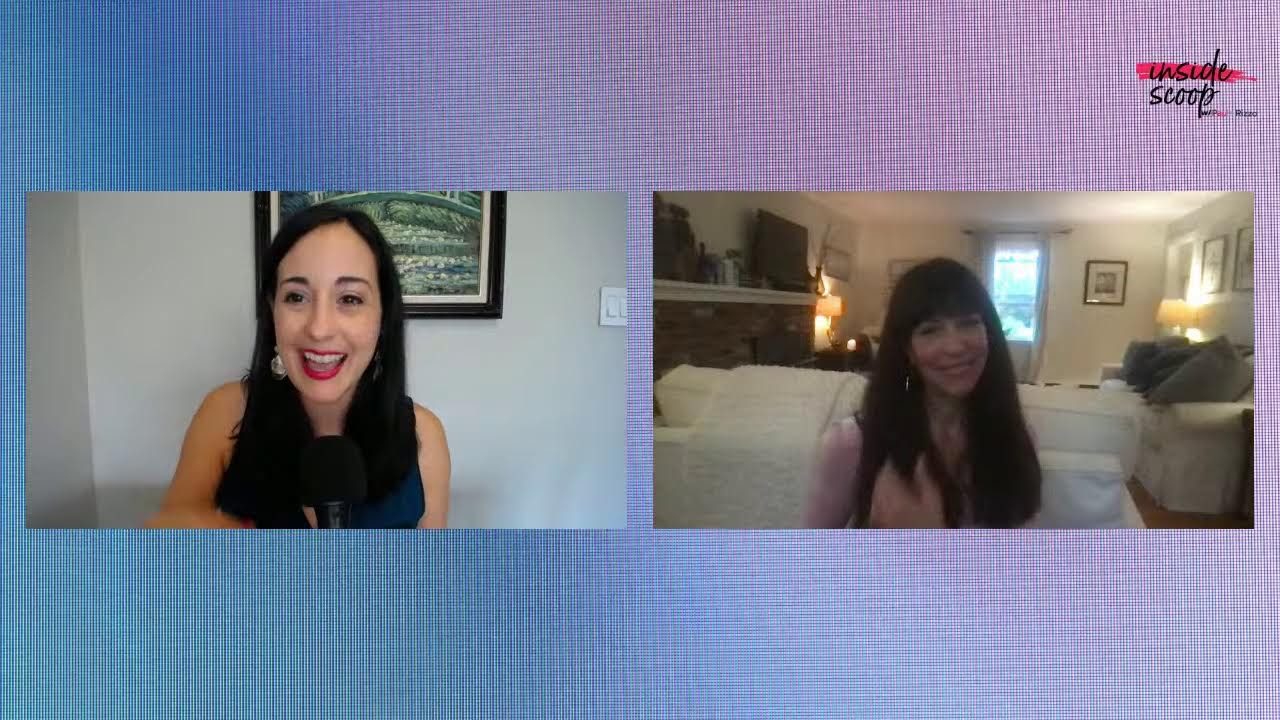
Suzanne Kingsbury, a writing coach and author, shares how to find time for creative projects and finish books. She introduces her Gateless Method, which focuses on what's working instead of what's broken, and explains how retreats and different timing styles like "spurts" help writers overcome psychological barriers and self-doubt.
Chapters
Hello, welcome to Inside Scoop. I'm Paula Rizzo. Let me guess, there's been a time where you've said, oh, I would love to do this, write a book. I'd love to do that, do something creative, whatever it may be. And that was just a fleeting thought, right? You thought it, you never actually sat down to write the book. It is It's so hard to carve out time for yourself to be creative. I get it. I understand. Look, I've written 2 books and only because I have been very regimented that I have been able to do this with accountability and also with a really good roadmap and coaches along the way, which by the way, I'm going to introduce you to a coach of mine, a writing coach, Suzanne Kingsbury, in just a moment, because she's going to help us think through how do you carve out time for creativity, whether that be a book, which we'll dive into. Or anything else that you're looking to do, because there are some things that have to do with your brain and how your brain works and how you can kind of trick your brain in a way to get you to be more productive, to actually get those projects going and then bring them to the finish line. Because it's not enough to just start. We want you to finish as well. And I want to give you a little resource that will help you to be more organized and less stressed. It's my List Making Starter Kit.. And you can grab that if you go to paularizzo.com/list because, you know, I love lists, but it's really helpful when we're talking about creativity and carving out time for yourself. So check that out. I'm also a LinkedIn Learning instructor and I have several courses on LinkedIn all about productivity and list-making. I have one on how to enhance productivity in a hybrid world. So if you go to paularizzo.com/linkedin, you can check those out because I know a lot of you are going back to the office, hybrid work, all of that. And, you know, I would love to hear from you throughout, and so would Suzanne once she's here, throughout the broadcast. So if you have questions, leave them in the chat boxes below and we will get to those for sure. If you're watching the replay, do it too, because we'll be checking back and we'll make sure to answer your questions. And I want you to do something else. I want you to tag somebody. Tag a friend, a colleague, you know, whoever. Who you think will really benefit from this conversation today, who maybe has told you, "Oh, I would love to write a book. It's on my bucket list." Tag them below. Let them in on the conversation. Maybe they can't join us live right now, but that's okay. We'll see them afterwards in the replay, but we want to really help them. And without further ado, I want to bring on the guest of honor today. Suzanne Kingsbury is joining me. She is an author, an editor, a book shaman, a publishing consultant, and writing coach. Suzanne, welcome.
Hi, hi Paula, hi everybody.
It's so good to be in here. Yeah, Suzanne and I met. She's helped me as, you know, a creative person who has already written a book, but I needed a little bit more help with some fiction that I'm working on. So Suzanne has been my book shaman.
Yeah, well, Paula is like an incredible writer, so it hasn't been that hard, but it's fun. Fun to be here to talk about all the ins and outs of the creative process with you, honey.
I love it. Okay. So we're going to dive in on book stuff in a moment. So if you guys have questions on books and how to write books and all that, please put them in the chat. But I want to just like big picture first, creativity in general. How do we carve out? How do we find time for creativity? Because that's one of the things that, because it feeds our soul in such a way that it feels like a, you know, oh, it's a little project just for me and I'm not getting paid to do it upfront. And how do you suggest people actually carve out that time?
Well, it's a great question. And first of all, I think there has to be a certain amount of self-compassion and self-love. We're not carving out that time quite yet if you're in that category. It's because big creative projects yield the most in the long run. Like, you know, for the book example— for the book, for example, the PR media mogul Steve Harrison says it can add like a zero to your salary. And I think that's true of like any big project that's kind of looming on the horizon that you haven't been able to begin. And the reason that the resistance can be so high to those big projects is that it will shift your life inexorably. And there's a part of the self that's like afraid of that, you know, that's sort of— I get very rigid, right, around change, that little part of the self. So just giving a little compassion first to say it's okay if you haven't started yet. It's very normal to have those feelings of resistance. But when we kind of decide, okay, I'm really ready, like, I feel like I'm going to bust if I don't do this thing that I've been thinking about. The number one myth for starting the big creative project is that it's going to take discipline and willpower. Now, that doesn't mean that the lists— lists are different. Lists kind of keep you on track. They get you, um, they get the part of the mind that's organized sort of going on a project, like, I'm gonna make a list about this, and then, you know, to-do list of these small steps or something like that. That's not actually discipline and willpower. That's more just busy work that gets you the banks of the river for this big project, right? But the main thing, Paula Rizzo, that it takes— and I think you and I know this because we've experienced it together— is it has to be fun. It has to be something that you feel like, oh my God, I've had a crush on this big project that I want to do forever, right? It's like, it's like secretly the love of my life, and I'm finally gonna sit down and like have a candlelit dinner with it and just be there and sort of to be very salacious, like make great love to it. So it kind of has to be something that's fun, and that's also how people keep going with it. It's— it has to do with the brain, and we can talk about that later, but that's really, Paula Rizzo, the number one thing has to be a blast.
Yeah, I, I get it totally. It has to feel like you are sneaking away to do this, this project or whatever it is. That's how I feel about writing fiction, you know. I mean, I, I love it. I enjoy it so much. It's such a fun process. I though have always written like that. Like as a child, I was always writing stories and coming up with ideas. Literally just today I saw a news story that was kind of a horrible news story, but I was like, what a great idea for like a novel or a screenplay. I sent it to my producer Allie and I was like, hang on to this, this is a good idea. You know, like I see these ideas all the time. But what about for people who it's not as innate, right? That's not their go-to. What can they do to kind of pull out those ideas and say, hey, oh, I would— this would feed my soul if I was creative like this?
Yeah, it's such a good question because a lot of times people are like, particularly with the book, but with really any creative project, they're like, I know I want to do this, but I don't know how. I don't know where to begin. Like, okay, I can carve out this sweet, like, night with myself that's, you know, salacious or not, but, but then, like, what do I do once I get there? And, you know, what do we talk about? Um, so really, Paula Rizzo, there is um, always something inside the self that's like a kernel of excitement that, that has to do— it's the acorn to the oak. It's like the thing that when you think about this project, it's usually pretty small, but it gets you going. So for writers, it's really like a story that they've always wanted to tell, even a scene or an idea that they want to flesh out on the page. So, and every creative project has that. It's like if creating your side hustle, which is also extremely creative. There's like something within that that turns you on, that kind of gives you that spark that like, if I could do this all day instead of my day job, I would. So you want to identify what is that spark for you? What is that thing that kind of turns you on about this project? Is it like, you know, reaching out to people that you've always admired, or is it more creating the thing that wants to be sold on Etsy and just like taking that little time to do that little thing and and oh my God, I created it. And then the next night you do another one and then the next Saturday you do, and then finally you have this portfolio. What is it that's really turning you on?
I like this because it's also really cause, you have to be mindful in a way. You have to check in with yourself and say, how did I feel when I did this thing? Did I love it? Was I all, and giving yourself the space to do that is important in every aspect of your life. Even when you're working with clients, did I like working with that client? Did I like doing whatever it was? It's really important. To do that. So I love that. Let's talk specifically about book and writing, starting to write a book. I think one of the misconceptions is that people think you have to have the whole idea ready to go before you do anything. But that's not really the flow that you suggest. So what do you tell people who are interested to get started writing a book?
What I've seen that really works, I mean, it worked for myself. I think it's working for you. It's it's worked for pretty much all my authors, is to try not to actually control the process that much.
So, yeah, the scariest part— I listened to her. I, I did. It does work. So for those of you who are like me, who's like, well, but shouldn't I have it written down exactly the way that I'm supposed to be doing? Could you start with step one?
Right.
Just, you have to let that part go. I get it.
You kind of have to let that part go, but, but it's fun to let it go. That's the thing, right? It's like, oh, I get to do whatever I want. I get to start the book wherever I want to start the book. I get to just tell story after story and then find the center, like, sort of theme or rudder where the book wants to go. Yes, essentially. And this is not sort of for amateur writers. This is a very sophisticated way of approaching the craft. That is actually— it takes a lot of bravery. It takes a tremendous amount of courage, Paula Rizzo, because it's allowing yourself to kind of go with the creative urge rather than trying to strangle it and control it. So imagine that night that you have where you're, you know, gonna make love to your muse, and before the dinner even begins, before you're having a cocktail, you say like, but I have to know right now, are we gonna have 2 children or 3? Are we gonna live on the West Coast or the East Coast? Are you gonna go to law school, or am I gonna have to, like, you know, whatever, carry all the bills? So it's like trying to strangle it into what it is instead of just letting it be the love affair that it wants to be and for it to take its course and be super organic and exciting and sometimes mysterious.
I love that idea though. That's so— it is, it's true. It's like you wouldn't just rush, you know, and get married. You're gonna have a little bit of a, you know, let's see if this is a fit, let's see if we like each other. That's a nice way of looking at it because, you know, I think a lot of people are so focused on the end and they miss the actual journey of it. And it is really fun. I mean, I do want to talk about the Gateless Method, which is something that you've created to help people get their best work out. Can you explain exactly what it is and how it does help people to get things out without criticism upfront?
Yeah, that's right, Paul. That's a really good place to go for people so that they have something that you guys can bring back with you after listening. Which is the Gayless method, is really around looking at a writer's strengths, right? Like, where are you already doing something that's really working on the page? And then building up those strengths and giving you, like, all the resources and all the craft tools in order to make the book or the piece of writing or the creative project, whatever you're working on, better. So the old way, right, is to look at something and say, this isn't working, you have to fix this? You know, why do you have this piece in there? It doesn't really work. You know, I remember like hanging out with an artist who said people come to the studio and look at the landscapes that he does and say, like, why isn't there a cow in there? You know, or why don't you put a person inside your landscape? And, and that is not helpful to someone who's first starting. It doesn't work with the brain science, which when we're beginning and also when we're building, what we need to hear is what's working. And it actually actually gives you a tremendous amount of motivation to keep going. That doesn't mean that you don't need craft, and it doesn't mean you don't need a network, and it doesn't mean you don't need a tremendous amount of resources from the industry. But giving that to the writer without breaking them down, without critique, without saying we need to fix this, or there's something wrong with this, or you're not doing this right— there, there's such a beautiful way of teaching without doing that. And, and writers so quickly move to sale when they're taught like that.
Yeah, it is a good motivator to keep going. Because at first you think it— So I've gone to several of your retreats that you used to have in person. Hopefully again, they will return in person when we're beyond this COVID pandemic. We did some virtual ones as well. But the idea is that we would write and then we would share and people would give feedback, but in a way that was very helpful. So they would just talk about what works. They would just talk about what piece they loved, what little snippet. A snippet they really thought was great. And that gives you the motivation to keep going and to, you know, there will be time for criticism later. You will get to the point where you're gonna edit it and it's gonna be like, this doesn't make any sense and nobody even knows what this means or whatever. That comes later, right? But in the beginning part where it's sort of like this precious moment of creation, you need to let it come out first. You need to let it actually happen. I like to write in spurts. So there's something called the Pomodoro Technique, which is, you know, a productivity tool that you can use 25 minutes of targeted time where you're just working on one thing and you put an alarm on, you work only on that one thing, and if you get distracted, you, you stop doing that. Do you suggest working in, in these little spurts, or how do you find that it works best for, for other people?
Well, first of all, I think when we're talking about gateless, you know, really moving towards what's working, we also want to acknowledge that that's when you're best work comes out. So that's when your most potent work is arriving on the page, and that will connect with the reader. So if you strangle it first, they're going to connect to what's strangled instead of what's beautiful. I actually, Paula Rizzo, think the most important thing for a writer to do when they're figuring out how they work— like, do I work in spurts? Do I, you know, do I work— do I binge work on my project? You know, what is my— is to really figure out what works for them, because there's so many— there are so many models of productivity productivity out there. And like, you can feel very controlled and constricted by something that's not meeting who you are, and then you feel like you're failing. Where some people work in spurts, some people, yeah, they take like a weekend every few months where they just, you know, hole up in a hotel room, or they go on 5 retreats a year. You know, one of my writers did that. She just came to every single retreat. She wrote a book and she got an agent recently and sold it. So it's like, what is it that really works? Is it an hour a week where you meet with your friends and you all do your creative projects and you all share it afterwards? And I mean, a book can get done in an hour a week.
Yeah.
Right. You know, all year like that and have a book at the end. So I think it's really finding out what works with your schedule, with your life, with who you are, with what feels good, and not beating yourself up around what you decide.
Yeah, I totally agree because it's about your personal productivity style. You know, we're not going to tell you to become a morning person if you're not a morning person and say like, "That is the best time to write," or, "You have to write after lunch," or, "You have to—" It depends on you. It depends on what really gets you going and allows you to do it. I mean, I know, you know, for me, I wrote my second book in 3 months, which was very fast. I mean, it wasn't a huge book. It was 15,000 words, I think, because there's a lot— it's Listful Living, and so there's a lot of journaling that you do and you fill in on your own. But I did it every Friday. And I had time right there on my schedule every Friday to write it because I had to, right? The publisher was waiting for it, so I had a deadline. But now with my fiction work, I still write on Fridays. And I still have that time dedicated to me because otherwise I won't do it. I know that for myself. If it's not on the calendar, it's not going to happen. So I have that time blocked. And I've been working on that book for about almost— it'll be 2 years because I started it with you in Connecticut. It was the retreat in Connecticut in September, right after my second book came out. And so it's been about 2 years, but talk to me a little bit about timing because I think sometimes people don't realize how much time goes into this, writing a book, for example. To your point, it could be short or it could be long depending on how much you want to stretch it out.
Timing is a good question and it will depend on what your book is about and what you're sort of approaching and how it's laid out. Like you doing a book in 3 months and 15,000 words. Words, you know, that those kinds of books take less time and they can have a huge impact, as yours did, you know, of getting you out there and being a signature sort of for people to know you by. But yeah, the big books, you know, the, the Big American Novel, or, you know, the big how-to that's your œuvre, it takes time. And I think the biggest thing around that statement is you want to give yourself a tremendous amount of comfort in the face of the fact that it's taking you a while. And to remind yourself, like, this is just what it takes. You know, these, these places that offer, like, you know, write your book in a week or write your book in a month, or, you know, it's like, it's a nice idea and it kind of jacks you up to maybe begin the book, but then there's this sense of like, am I failing because I didn't do my book in the month of July, you know what I mean? And it just, it does, it's not like that. The book, it's alive. The book is actually a relationship that you have with, with the work. And it's very exciting to watch a writer really commit to the book and have the book commit to them in a way. And then to, to watch what happens when it moves out into the world. A lot more happens. When there's a commitment to time and when there's the idea of like, okay, I'm in a relationship that I want to give my all to and I'm going to make this the best that I can make it and I'm excited for it. And it's okay, like we're always so constricted around time in our society. But with books, it's almost like going into another world or another landscape where time is like the Old Testament. I mean, it just takes— it just takes on a much different sort of dreamy quality. And what I always tell the writer is, is like one day you're gonna wake up and your book is gonna be finished. Right. If you just follow it, it will finish itself. It's not gonna be like one day you wake up and you still have a third finished book.
It doesn't work like that. Yeah, it's interesting though, publishing does take a very long time. I have to say that's something that I had to get used to as someone coming from TV, live news environment where it's like, it's happening right now in 30 seconds, we're gonna do it and the story's over. It's done. Next story, next thing, next thing. Publishing does not work like that. It takes a very long time for anything to actually happen. I mean, both of my books, I think I handed in early. And the first publisher was like, "You know, we have never gotten a submission early like this. And we will not be looking at it until 2 weeks from now," or whatever the actual due date was. I was like, "That's fine. I just needed to get it out of my hands and to you, because I'm done with it. I'm not going to tinker anymore.
I need to leave it alone." Yeah, that's amazing, Paula Rizzo, that you got it in early because most people are asking for extensions. But that's like totally a testimony to your work as like a list maker organizer. Like, that's, that's very impressive and, and really exciting. They're like, thank God I didn't have to chase after her.
Yeah. And we want to take your questions too. So if you have questions about creativity and how to make time and carve out leave us, uh, questions below. Even if you're watching the replay, that's great. Uh, you know, we're talking a lot about writing books because that's how Suzanne and I know each other, but if you have other creative questions, please leave them below and I'll be grabbing those, uh, in just a, just a moment. But Suzanne, I want to talk about like the finisher's formula, right? So it's one thing to get started and be really excited about this thing that you're doing, and then sometimes it just, you know, life happens or things come, you know, and then you just don't finish them and you end up feeling a little bit, you know, guilty about it. What is your tactic to get to finish the project, like, bring it to the finish line?
So I think it's a good idea to schedule these dates. These dates might be right now because you have kids going to school and you have a busy life. It may only be like a binge, like, okay, I'm going to take this weekend and I'm going to go away and I'm going to write. But I know I'm going to do that. I know I'm giving myself that, or I'm going to write every Thursday night with my friends. Dates. It's just that you want them to be fun. Yeah, right. So like when we're in retreat, we're getting massage, we have a chef that's cooking for us. It's like these beautiful houses by the sea. You, you, you feel motivated to then keep going because what it does to your brain, it's like the opposite of touching a hot stove. If you touch a hot stove, you never want to touch a hot stove again. Whereas if you create this ritual around the writing feels good, which is what we're doing on retreat, or what we're doing in the Academy when you're getting this collective sort of hive and, you know, you're hearing what's working and you're getting inspired by luminaries. It's like your brain just keeps wanting to go back there. You don't have to pull up this willpower, you know, of like, oh my god, now I have to write my book, right? In front of the computer. It's a much more sort of exciting, elevated experience that lets you keep going. So really, number one, joy. Mm-hmm. Self-nurturing, making the project fun, finding ways that it can be, like you said, like a love affair, like an illicit love affair. Like, I get to sneak off and work on my book. Yeah. So then once you kind of— oh, I've done that, and I've done that, and I've done that, now I have this product. Fucked. Like, what do I do? Where do I go? Now what? Yeah, so, you know, there's a whole process to editing. Editing should also be extremely fun and juicy. And there's ways, you know, that's a much larger conversation, I think, in terms of like the revision process and what that looks like. But it's the same energy that you, you brought forth when you were creating. So there's lie really in publishing that editing is hard and creating is— yeah, yeah, it's not like that. Editing is a blast. It's like moving things around. What would happen if I moved my last chapter to the first chapter? What would happen if I like added something like really weird secret to the main character's history? Well, it's, it's a what-if. It's right playing with the material in this beautiful way and then adding craft so that you can you can see the material gets super crisp on the page. It's like, it's an alchemy. It's, like, extremely exciting when that happens. And then sort of gathering your resources to go to sale when you feel like the book matches everything else that you can see that you love on the shelf.
Yeah, and also knowing that, look, this is a process too. You know, you might not get an agent right out of the gate. You're going to get rejected. That's going to happen. That's part of it, you know. But I love the idea of looking at this as a joyful experience and really creating a container for yourself every single time you do this so that it's, it's something fun. Or you have like your writing robe that you put on and it's like take yourself to this special place, or you go somewhere special to write. You know, I do a lot of writing sometimes in Central Park. There's a lot of my scenes from my book that are in Central Park, and so I like to go there and be inspired, and it's so much fun. I enjoy that so much because I feel like I went on a little trip And then I have new ideas and then I can come back and write all about it. And that for me is what I need to keep motivated and to get moving. One of the things that you do on your retreats, and I also went with you to Paris. So we had a fabulous time in Paris for our writing retreat in Paris. But one of the things that you do is towards the first day that you get there, the first thing that you do, you have snacks and you meet everybody and whatever, but then you make us write. And it's kind of late in the day and people moan and groan about it because they're like, oh gosh, already we have to start? I don't, I don't know if I want to. But what is the, the, what happens in the brain at night and when you're kind of sleepy? Why do you do that?
Yeah, well, it's the, it's sort of the similar reason that like Tennyson would drink, you know, before he, a little, um, Tennessee Williams, that's just like a little bit of wine, you know what I mean? It's the same thing as when you're sleepy. The critic runs on this like adrenalized energy, the inner critic. So when you're tired, when you're sort of relaxed and with your friends and like on a very—
excuse me, with your puppy.
Sorry, I'm so sorry, you guys. This is what happens when the critic is like—
he doesn't— Enzo doesn't like the critic. He's upset about it.
Hold on, I'll bring him over. Enzo, what is this thing that I have for you? So this is how we get my dog motivated. We give him a treat. Come here. What is this thing, Enzo?
I'm so sorry, guys. No worries. Mute me. Do you want to go deal with Enzo and I'll talk about the inner critic a little bit?
Talk about the inner critic.
All right, I'm going to do some questions. All right, let's let her get her dog. I know to be true because Suzanne is someone who I interviewed for my second book, book, Listful Living, is that she talks all about how being creative can really happen at any moment. But when you're a little bit tired, when you're a little bit like maybe you had a little bit of wine or you're towards the end of your day, your inner critic, and she can tell you the brain science around it, but the inner critic kind of shuts down. And so the person inside you who says, "Oh no, that's no good. Oh no, you shouldn't write that. Oh, that doesn't make any sense." is kind of asleep, which is awesome for the creative process because you then get to let your work just come out. And so I find that sometimes I will do that at night because I learned this on one of your retreats, but I'll do that at night when I just don't really feel like writing. I'll push myself to do it and I actually get some really good stuff.
Yeah, that's exactly right. It's like the way the critic running on the adrenalized energy means that when you're tired, it's just like, it's not there. It's not around, you know what I mean? A lot of times. Now, you can get frazzled tired, and the critic gets very loud, and it's almost impossible to write. But if you're sort of in that sleepy liminal state, if you're— yeah, kind of had wine, if you're relaxed, if you're in a different place from home, you know, then it can kind of lull you into this place where, oh, here comes the muse. I didn't even have to do anything. Right. Did you get your muse?
Did you find your Enzo? Is he with you? He's here. Let's see him. Let's see his face. You're the one making all that noise. I know.
I'm so sorry, you guys. I'm so sorry, Paula Rizzo.
No worries. I don't know where to put him.
Well, you can just snuggle him.
It's fine. That's what he wanted. So for those of you who are watching live or on the replay, leave us your questions below. We're going to grab those in a second. But I wanted to hear about the Academy. I mean, I know all about it because I was a member of the Academy, which is your writing group, that it's pretty great, you know, as someone who has been with it, through it with you, because, you know, I had a great, I think, a great idea for a book, but it is about having accountability and know-how, you know? So if you can just tell us a little bit about the Academy, it's starting again soon in October. So if you're interested at all in taking your creative project to the next level, Suzanne is amazing at helping you to, to do that. So could you just tell us a little bit about the Academy? Yeah, Paula, the Academy.
I mean, it was so great to have you in the Academy because everyone loves your writing. So thank you. Everybody wanted to be in Paula's pod. So basically what we decided to do was the biggest thing that writers are missing is community and also network within that community. Like, how do I find an agent? I want somebody to read my work. Work. And then they also were really starving for craft, you know, like, how do I actually begin? Am I organizing this right? Like, who are the best agents? Do I need a platform? All that stuff. And so what we did was create this collective, which is the Academy, where you're all writing your books together and you're essentially moving through that process as a whole. Now, some people have the rough draft manuscript and they're going through it. Some people have just an idea and going through. It just depends. But we're meeting live every week, we're sharing work, we're telling each other what's working. There's like, you know, 120 hours, I think it is, of seminars that gives you like, yeah, agents' names and how to do the query, how to write the proposal, how to write a scene, like what you need for a really good how-to book. And then you have these pods where you're very intimate with a group of, of with like 4 other writers and you're just sharing work, you know, all the time and sort of back and forth. We meet in salons and we write together. We used to do that live, but we can't right now. We do it on Zoom, but it's very lovely. And it's 10 months. It started as a post-grad program for people who were coming out of the MFA, and then it evolved into this, you know, sort of very intimate collective of writers who are working. So yeah, anybody who wants to join, I mean, there's an application open period right now, so, um, and I don't think we're full yet, so, so come along. Yeah, check it out.
So go to gatelesswriting.com, you can check that out. And, uh, you know, stick to— if you're on my email list, uh, paularizzo.com/list, you'll get updates about it because I'm going to send out a few updates, um, you know, about an exciting opportunity for a scholarship for my, my listeners and readers and watchers and all that. So if you're interested in, you know, doing this with Suzanne and you want to, uh, perhaps see if you can get that scholarship, uh, I will let you know all about it at paularizzo.com/list. Um, and, you know, check out all of that. But one of the things I will say about being in the group as well is that you do get to know other people's characters, which is really fun, uh, and really nice, you know. Uh, and you miss the characters because now, you know, I've graduated out at this point, but um, it's— the community is always there. So like next week we're having an alumni call, which I'm really excited about actually. So I will, I will be there. That'll be great. Oh good. Yes, of course.
I'm so excited. Yeah, and if you're writing a memoir, then you get to know everybody's like inner secrets. Yeah, exactly, inner secrets. And if you're writing a how-to, you get actualized while you're— I love it.
I love it. Well, I'm gonna look over here, um, because there's a couple of, uh, comments. I don't see too many questions, so if you have your questions, now is the time, stick them in there. But, um, Krista says, this is amazing, I love the Gateless Method. That's awesome, terrific. Tony is saying, this relates to many other creative pursuits besides writing. It's very, very true. This can be applied to so many things for sure. Uh, Amanda says, Paris and fabulous must always be used together. I agree. I agree, definitely. And we have some shoutouts from Amy on Facebook about Enzo and how she loves his little face. We love his face too. Uh, wine shuts down the inner critic. I mean, that's true. It's, uh, you know, use it, use it as you, as you will. Well, Suzanne, this has been amazing. Thank you so much for being here and all your insights and for bringing Enzo along because, you know, he's always a good time. And, uh, being patient with him.
Yeah, he was like barking right when we were talking about the inner critic.
He is the little inner critic. There he is. Uh, no worries at all. Well, thank you, Suzanne, for, for being here. And for those of you who are still watching the replay, leave us questions. We'll come back and check those out, you know, afterwards. Um, and please make sure to check out gatelesswriting.com for all the things about Suzanne and the Academy. And also go to my free list-making starter kit. If you go to paularizzo.com/list, you can get the starter kit and also find out all about the scholarship that Suzanne is giving to my listeners, viewers, watch— watchers, it's not a word, but I will use it. Viewers, that's the word. If you have questions, leave them there for us. And good luck prioritizing your creative projects. We hope that you get them out into the world. So good luck with that, and thanks for joining us, and we will see you next time. See you next time.










