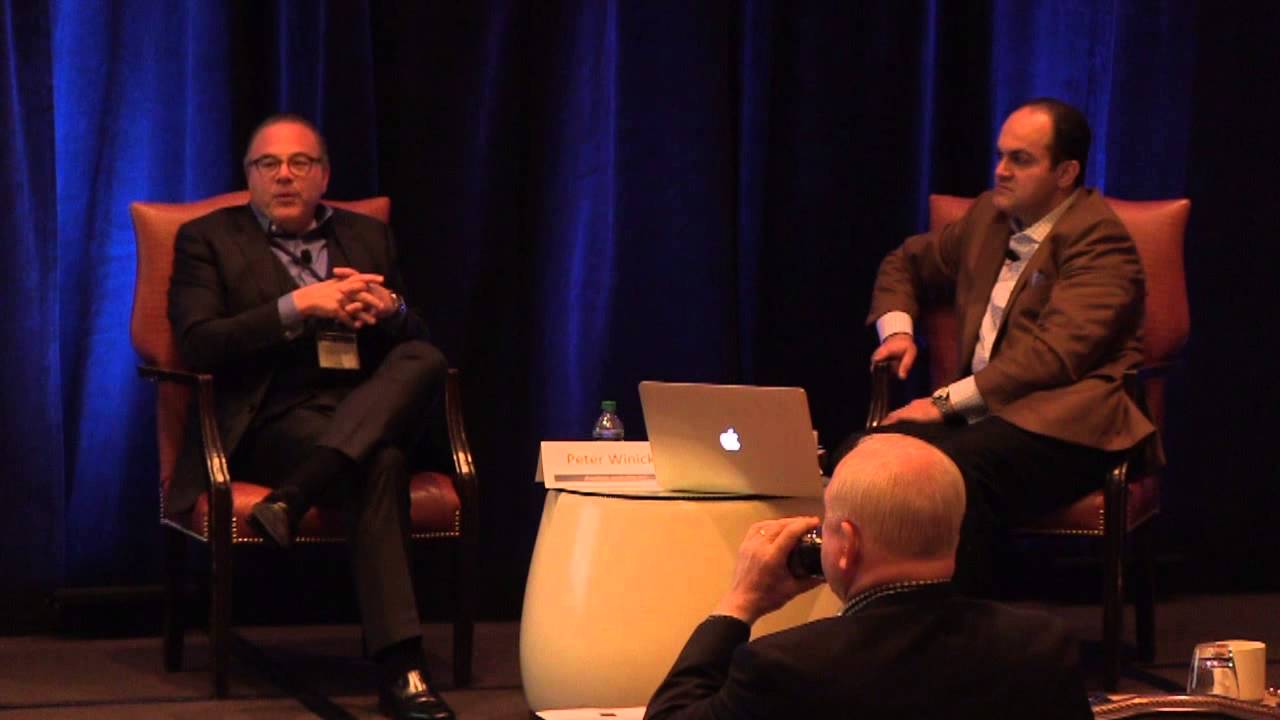
Peter Winick, David Hahn, and Keith Ferrazzi discuss how to build and position yourself as a thought leader. They cover how to frame discovery conversations, research your book content across academic and business sources, decide how often to publish, and tie your services directly to what you write about.
Chapters
Hi, I'm David Hahn from Media Connect. We're also in the book PR business. And Peter's working with one of my clients, Irv Rothman, who's a CEO of HP Financial. Did his first book. He's looking to become a thought leader and leave a legacy, really, of his leadership skills. And Peter's working with him. And Peter impressed me with the way he thought and went about working with Irv and coming up with an idea for a second book. And so I have a 2-part question, Peter. What— how do you frame that discussion? I know it's part of this discovery process. And then once you see content, how do you— what are your research resources to kind of figure out what that content might look like? And 2, on a separate note, I'm always interested in how often business authors publish? And obviously, this room has probably given that a lot of thought. I'd be curious if you've worked with clients long enough, maybe Keith's a good example and others, what is a good pacing for the bringing out of a book? And I'm sure it's different maybe for a consultant versus a practitioner, et cetera. But I'd be curious to hear your thoughts on this as well.
Yeah, so I think on the publishing question, there used to be sort of the unofficial 18-month, 24-month rule to sort of keep stuff going. So if you look at like a John Maxwell back in the day, I think he's had 38 books. They start to look really similar after about book 6. You know, one answer to that question for the author would be as infrequently as absolutely necessary. You know, how was that root canal? Would you like another? Right? So I don't think there's a general rule anymore of, you know, the cycle's 18 months, 24 months. I think the business drives the rule. When do you have something new to say? What's the productization and service offering strategy underneath it? And how does that actually add value to what you're doing? Most authors don't tap the value out of book 1, and they're, you know, I deal with clients all the time, oh yeah, here's book 1, but I've already got book 5 in my head. I'm like, oh geez, like what are you doing that for? To answer your research question, it's a good question. I've developed the research capabilities in my organization, and we look at research sort of 2 ways. One is, 'Cause clients come to me all the time, and I just had a guy write a book, 700-some-odd pages on change. And he said to me, and he was a sitting COO of a company going public at the time, so brilliant, brilliant guy on change. And he said, and I purposely didn't do any research. I didn't want to be tainted by what anyone else thought. Like, wow, okay, that's kind of cool. So now that we're trying to productize all this stuff, I said, let's do 2 levels of research. Academic research, I've got the PhDs and the learning people saying, what is the world saying on this topic? Because by the way, you're probably not that unique. You might have a unique twist to it, and that's all you need. There isn't all that much that's new. It's the value of the application. So first is understanding what's already out there, what people are saying, et cetera, et cetera. And then there's the market. Who else is selling stuff relative to this space, like the networking space, the relationship space? That's getting crowded now, right? people in that space? And then the third is sort of what I would call the business press, which is different than academia. What is Forbes and HBR and all those other people saying about change leadership or whatever? And you just kind of look at all those things and say, ah, where's the gap? Where's the opportunity? Why are you uniquely qualified to deliver this message to this population? Why should I listen to you?
I think of along the same lines a little separately, the traditional S-curve, right? I'm coming up with an idea. I'm going to invest in it. As it spikes, then it'll reach some sort of maturity. For me, books are encapsulation of ideas that I've seen across multiple consulting clients. I got Relationship Economics off the ground. It's still got some sort of a long tail, but then you better be working on the next one. What's the next idea? What are you working on? The other thing is, if I wrote— I was telling another friend, my focus is growth through strategic relationships. If I start writing about cooking, it's going to confuse the hell out of my target audience. What do you really do well?
Well, and that's a great point. I think one is you want to be known as the blank guy or gal. Right, so you might have lots of interests and lots of things that you care about. Marcus Buckingham, we've touched on before, he's the strengths guy, period, end of conversation. If you get to know Marcus at all, there's a lot more to him than that, but from a go-to-market perspective, he's the strengths guy. When I was with Frazee, that's the business relationship guy, right? So a lot of people, like Waldo, when we worked, there's so much great stuff in Waldo's sort of library of stuff. There was leadership, there's team building, there's commitment. I said, how do we make that sort of unique from a content perspective? And we came up with this Commit piece, commitment to self, commitments to team, commitment to vision, commitment to organization. That was sort of the Waldo common denominator, and it all fit under that. So sometimes it's just a way that you communicate it.