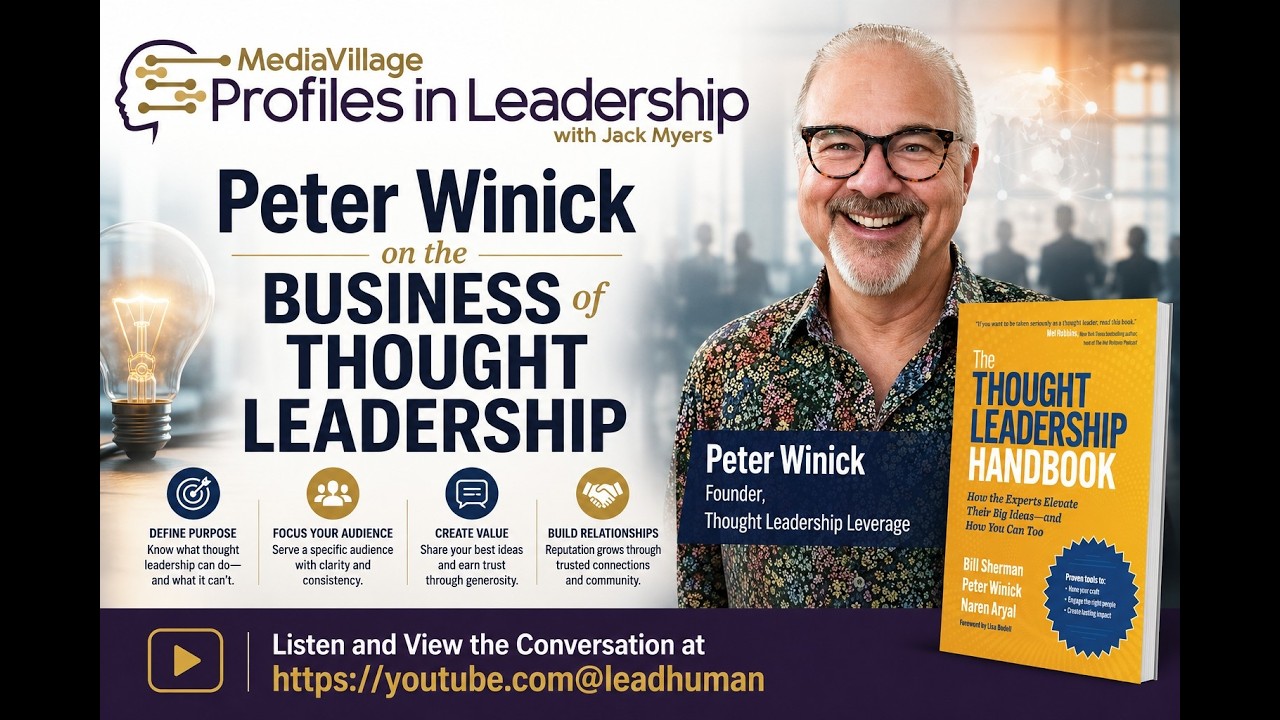
Tom Peters' 1996 "A Brand Called You" told people to wear purple bow ties and bring bagels to stand out. Thought leadership is the grown-up version: instead of gimmicks, you build a real brand by sharing ideas that actually help people.
Chapters
Well, I want to just make a comment on what you said. Yeah, yeah, go ahead. Go ahead. And then I'll answer the question. So I was fortunate enough to have Tom Peters on the podcast about 5 or 6 years ago. And before we recorded, we were prepping and having a conversation, and he was probably the only one I went like, got, you know, like fanboy over, right? Like, I'm like, somebody said to me, he was the only one I reached out to of the 725 and said, please, please, please do this. And, you know, whatever. It took me a while to get him. And what I said to Tom was, I remember in, I think it was 1996, the day A Brand Called You landed on my desk, the Fast Company magazine that was this thick and whatever. And if, you know, you're under 45, Google Magazine and Fast Company and all that, but like it had the big Tide logo and it said A Brand Called You, Tom Peters. And it was in essence the birth of the personal branding movement or whatever we'd like to call it. And what I said to Tom was, hey, when you came out with the idea of personal branding, in essence what you were saying is, in a world where nobody stands out, stand out, right? So if I am a junior analyst, programmer, first-year attorney, whatever, and nobody's doing anything special, be a little goofy. Wear a purple bow tie, bring bagels to every meeting, don't wear socks, anything to stand out from the crowd, right? And that kind of sort of made sense because people go, oh yeah, Peter's the goofy guy with the purple bow tie or whatever. And what I said to Tom is, I actually think thought leadership is personal branding, like whatever we're up to, 3.0, because it's a better way. Because the fact that I wore a bow tie just means like, all right, Here's a narcissist looking for attention versus what is it that I can do that's thoughtful, useful, beneficial to my colleagues, to my peers, to my clients, to the business that I work for and is transportable that will go with me over my career. So maybe it's a definition difference, but I think that thought leadership is the new, and it's not that new anymore, way to express our personal brands that is more impactful,