Experts Spotlight Podcast - Building Influence with Thought Leadership
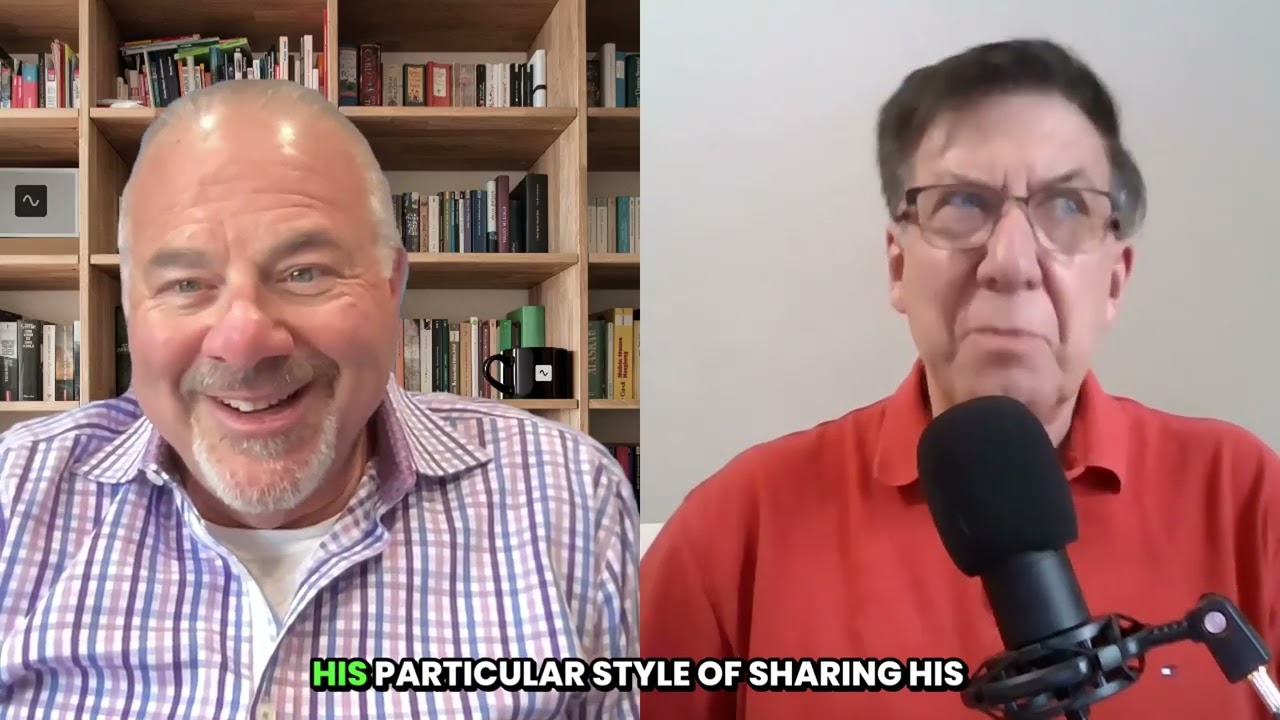
Peter Winick, founder of Thought Leadership Leverage, explains how to turn ideas into revenue. He defines thought leadership as original insights plus the courage to add new value, and says 70-75% of his clients use it as their core product. Most thought leaders stumble into the role by accident and need a deliberate strategy to align their content with how their audience actually consumes it.
Chapters
Well, welcome to another episode of the Expert Spotlight Podcast. My name is Gordon Van Wetschel. I'm your host, and on this podcast we explore the power of strategic marketing, branding, and business growth. So if you're looking to elevate your business, to stand out in your industry and create lasting impact, You're in the right place. Today I've got a special guest I'm excited to introduce. I think this is going to be a really interesting conversation. Peter Winick is the founder and CEO of Thought Leadership Leverage. Thought Leadership Leverage is an enterprise that helps thought leaders build their ideas into businesses and to create revenue streams from their content. So a really interesting topic of conversation. Peter, thanks so much for being with us today.
Thanks for having me, Gordon.
So I'm really interested in jumping into this right away. So if you don't mind, I just want to start. And maybe if you would begin by sharing a little bit of your background and, you know, how your business career happened to evolve into starting Thought Leadership Leverage.
Yeah. So, I mean, I've always been entrepreneurial, right? And then I've always been the, you know, the nice term today might be thought leader, but kind of a nerd, kind of a dork. And I thought those were somewhat unrelated attributes or character flaws, if you will. And then I realized, if you see the world like I do as a consultant in the Venn diagram, that little sweet spot of entrepreneurial and dorky is my superpower. So through a Serendipity, some serendipity and some happenstance and such. I wound up doing a turnaround in a communication consulting firm about 20 years ago. And what was interesting about that at that point, I'd read hundreds and hundreds of business books and magazines. Remember those? They came in your mailbox and whatever.
Yeah.
Yeah. And taking content in, but never once did I stop and say, oh, Good to Great or In Search of Excellence or whatever any of these books were. What's that person's underlying business model? Because quite frankly, I didn't care. I paid a couple dollars for the magazine or $20 for a book. I read it and I was exposed to those ideas and either did something with it or not. Now, pretty much all I do is figure out what is the underlying business model for people that are thought leaders and have ideas, because there's so many cool ways that you can get your work out there, get your thought leadership out there. And there are very, very, very, very few thought leaders that really make their living as a function of number of units of a book sold times some contribution per book. That's not the business model.
Got it. So help our audience understand what you mean when you say thought leadership. That's a fairly new term in business. Define it for us if you would please, Peter.
Yeah. So it is a fairly new term, and it's also a term that somewhat unfortunately gets thrown around a lot. And I think it's important that when you're engaging in a conversation with around thought leadership, either inside of your organization, colleagues, et cetera, that you sort of put down on the table, hey, Gordon, when I'm talking about thought leadership, this is what I mean. You don't have to agree with my definition, whatever. Yeah. Because sometimes somebody's talking about thought leadership, but what they really mean, if they were to better define it, is content marketing, right? I have a product. There's content that supports that product. Doesn't have to be particularly revolutionary. Other times it might be more academic. So what I think about in terms of defining thought leadership is, A, there's 2 use cases. Number one, most of my clients, 70-75% of my clients, The thought leadership is in essence the basis of the products, the offerings, and the services, the way they make a living. They get paid to speak, to write, to consult, validated assessment tools, et cetera. The other 25% are strategically using thought leadership to elevate their brand, stand out from the competition, show the marketplace that they're smart, et cetera. So back to your definition question, because that was kind of a roundabout Answer is, what do you have to put out into the marketplace that number one is thoughtful? That's the thought part. Thought could come from academia, research studies, et cetera, et cetera. Thought could come from life experience. Hey, I was the CEO at Company X or a leader in the pharmaceutical bit or whatever. Here's why I think about this. And because of where I come from, my thoughts are ones that might be more useful to you. than someone who isn't in that field or doesn't have the perspective I do or whatever. And then thoughts could also come from, you know, your life experiences, right? Maybe you're a consultant, advisor, et cetera, or you're sitting on the border of 2 functions, 2 disciplines. And you're like, oh, wait, you know, marketing people think like this, but, you know, supply chain people think like this. I've been on both of those. So I've got some— I'm integrating some of the thinking on both sides. So I have a unique piece. The second part of the definition is leadership. If all you're doing is repeating the things that we already know to be true, that's not necessarily helpful. That's been done before. So leadership is where you have the courage and the guts to add your nuggets to the conversation, right? So what is it that you're adding to the discipline? What is it adding To the conversation. And by the way, not everybody has to agree with you. That's all fine and dandy. It's not a popularity contest. But you might say, the little bit I'm adding to this is this. Now, some people's addition is radical, transformative, et cetera. Some is incremental. I don't know that one's better than the other, but as long as you're adding to the overall pie, if you will, and making it bigger, making it better, then that's a good litmus test.
You know, as I was reviewing your website, I was trying to think of people that I may have read or met over the years that would be considered thought leaders. So your definition is helpful. You know, I think of somebody like Keith Cunningham, whose book The Road Less Stupid I thought was just brilliant. And again, as I think about it, he didn't teach us anything dramatically new. He just taught us a way to incorporate it into our day-to-day pattern of management as business owners. So I don't know if that really qualifies as thought leadership or just sharing his experience in a profound way that at least impacted me, whether it's universally applicable or not, who knows?
Yeah.
Then you look at a guy like Vanderchuk and his particular style of sharing his marketing experience. Again, is that thought leadership?
Yeah. So Vanderchuk is interesting in that There are nuggets of thought, in my opinion, right? Nuggets of thought leadership in what he's got, right? But a lot of it is part of his brand, which is crap. Not crap. Loud, contrarian, in your face, you know, and his target market is young men in their 20s and 30s for the most part with the side hustle and all. And that's all fine and dandy. The level of originality on some of that stuff, not so much, but he does have, you know, a fair amount of original ideas and such.
Yeah, he's got an interesting way of applying what his experience and his knowledge are. But I agree with you, that is his target market, which kind of brings me to the next question. Who's your target market, Peter? When you go out to find new clients to work with, who are you talking to?
Yeah, I think it's a great question and it's a question that I work on with all of my clients because when people say, oh, everybody could benefit from what I have to offer or whatever, I think they're missing the point. So I am totally comfortable. I embrace the fact that I am useless and irrelevant to 99.99% of the world. That's a beautiful thing. And the reason it's a beautiful thing is because that 0.01% if it's even that, that I can be helpful for, that's all I focus on all day, every day, right? So my clients are nonfiction business authors, uh, some academics, keynote speakers, thought leaders, small to midsize, uh, consultancies and agencies, and then a fair number of founders, CEOs, senior executives at public and privately traded firms, as well as, um, people that own the thought leadership function. Inside of their typically large entity, Fortune, think Fortune 1000, high-tech financial services, et cetera. And if they're not in that space, that's okay. I'm not your person, right?
Sure. So tell me a little bit about your secret sauce. What is it that you do that really helps these people that you've just defined? What do you bring to the table for them?
So I think there's 2 things. You know, I've earned the gray hair. So the fact that the practice of thought leadership is quite lonely, right? So if you're standing on the soccer field on a Saturday morning, you know, watching your kid's game, you're standing there, who are you talking to? Well, there's that guy over there is an accountant and that lady over there is an attorney and someone over there is a cop and a fireman. Okay, I get it. So if I'm a cop or an attorney or fireman, whatever, I could, I could talk shop with those people. There aren't that many people that identify on the sidelines of a soccer game As, hey, I'm a published author and a thought leader. So it is lonely. And oftentimes they don't realize there are so many others out there that are trying to do what they're trying to do. Right? So to me, the secret sauce, to answer your question, Gordon, is all day, every day, we start with strategy because most thought leaders are operating either without a strategy, an antiquated strategy, a broken strategy. Why? Because it's not a career that is as deliberate Or logical or linear as most, right? So if you wanted to be an orthodontist or a CPA, there's a path that you follow. You can't just, I can't wake up one day today at 57 years old and say, you know what, I think I'll be an orthodontist tomorrow. I'm going to put up a sign in front of my office and say, Peter the Orthodontist, and maybe I'll do some SEO. And then, you know, golly gee, people will come in and then I'll figure out that whole straightening out your teeth thing. Doesn't work like that, right? in thought leadership, for many, it kind of does. It's this accidental, you know, things that happen, and sometimes it's deliberate, but more often than not, it wasn't the path that they chose. It sort of chose them, or a couple of opportunities happened, and it's like, wow, I never realized I'm a great keynote speaker, or that my style is such that engages people in such a way, or whatever the case is.
So it almost sounds like some of the people you work with kind of fall into thought leadership almost by serendipity. The synergy of all of their experiences and something happens that, oh, here's a whole new opportunity.
Yeah, it's that, or they're trying it and they're going to follow the path that they think others before them have followed without realizing that a lot of what successful thought leaders do, what you see and how they got there are 2 different things.
Yeah, that makes sense. You have a really interesting white paper on your website. Uh, it talks about the 4 elements of thought leadership, and obviously we don't have enough time to go into depth in each of them, but, you know, just quickly share with our audience what those 4 elements are and kind of how they work together. I thought that was a very interesting white paper.
Yeah, I mean, I— the reason that we came up with the 4 elements model, and I'm just pulling it up so I don't, so I don't screw up some of the language because I have a tendency to do that if I don't have it in front of me, is it's a framework, right? So what happens is we're not making this stuff up as we go along. There are models and methods and frameworks and such that we have developed over the years that we find are helpful to give to others and expose to other thought leaders so that they can realize that what they've got There's a method and a methodology here. So the 4 elements of thought leadership are, first, it starts with ideas, right? And an idea could be a couple of sentences. It doesn't need to be a dissertation. What are the couple of ideas that you've got? Then those ideas get moved into content, right? So you've got to do something with those ideas. How do I choose to What is the modality I want to put them in? Do I want to put them into videos? Do I want to write articles? Do I want to use visuals, whatever the case may be? And then a subset of the content becomes an offering, a product, a solution. An offering might have a price tag of a lot of money or no money, but that's the way I'm packaging and positioning and selling it. And then ultimately, all that needs to sit under what we call the platform. Right? So the platform is where the ideas sit under, the offerings sit under, the solutions sit under. So that's the way that we think about it. And a lot of times, you know, a thought leader comes in and says, ah, so what I'm missing is offerings, or my platform is funny. So they, once they sort of see through that lens or are exposed to that, it helps them figure out, like, wait a minute, I'm, I'm spending too much time developing offerings And I haven't really locked and loaded the content yet. Like, I like to just create stuff. So we find it's helpful. People found it helpful along the way.
So when you interact with these thought leaders, you are really helping them codify what it is they have and defining how they might take it to market or use it within their own business or create a business. You're really, You're expanding their minds.
Yeah, it's some and all, some or all of the above. So some people's stuff is really, really well codified. And now it's a matter of doubling down on the go-to-market. Others' folks, the ideas are good, but they need to be locked and loaded. They haven't been pressure tested yet, so they need to be pressure tested and codified. So everybody's got a different starting point, if you will. Like some people think some, wow, that person's a well-known author. They've written 8 books. Okay, great. They still might not have a great go-to-market strategy. They might have awesome ideas and the ideas resonate, but the weird thing about thought leadership as a business is you pick up somebody's book for $20, $30 or whatever. It's got their stuff in there, but why is it that they're willing to pay that same person $50,000 to go and give a keynote for 45 minutes or put 'em on a contract to be a special advisor for hundreds of thousands of dollars a year? To give that? Well, there's different ways that different subsets of the market prefer to consume content. And the answer shouldn't be, well, read my book. You know, like that doesn't, that's, that is an answer, but it shouldn't be the answer.
Yeah, certainly in our business, helping companies with their marketing, we're finding that written content is being appreciated less and less. People want to watch videos. You know, they want that visual and they can learn from a video a lot faster than they can read a book. Yeah.
And I think to me, I think that's largely true, but I also think that everybody has their favorite medium and they may, you maybe thought about it, maybe you don't. I love to read, like I read a book or 2 a week. It just is what it is. Now, if I were to extrapolate that and say, well, everybody must be like me, Right? You know, and I make some assumptions that, well, if the average business person reads 2 books a week, that's 100 books a year, blah, blah, blah. I've probably overstated the market by a factor of about 100. So what I need to realize is it doesn't matter what my preference is other than to me, the market that I'm going after, how do they prefer to consume content? And if I'm not meeting them where they are, that's just smart, right? Like if you say, hey, you know what? I'm in retail, right? I'm Bloomingdale's, but I don't like malls because I don't know, they're noisy and they smell funny and blah, blah, blah, blah, blah. So I'm going to go out and do the Walmart strategy and open my Bloomingdale's in suburban areas 50 miles away from a population center. You're going to fail miserably, right?
Yes.
You have to be where the market is. And sometimes that means it makes us uncomfortable. Like, hey, if you fancy yourself a writer, And you're not comfortable with video and your market is consuming video, you're gonna miss the point. You know, you're gonna miss them. Somebody else will find them there. So you kind of have to get over, identify your own preferences, look at the preferences of your target market and meet them where they are.
Yeah. Yeah, that's great advice. Fish where the fish are is what we say to our clients a lot of times. We'll have people come to us and say, oh, we, we wanna do social media.
Okay.
How many of your prospects are actually looking for you on social media? And frequently the answer is almost none.
Yeah, no, that's it. Like, I'll give you me. So I read these books, right? I listen to a lot of podcasts when I'm at the gym or when I'm walking or when I'm in the car or whatever. I like that. I don't like audiobooks. Okay. Maybe most people that like podcasts like audiobooks. I don't. It just doesn't do it for me. Maybe it's a control issue or whatever. That being said, I know well enough to know that when you're putting out a business book, you should put it out on an audiobook. Because again, I'm an anomaly. You have to look at the data. You have to look at, like, yes, you might have a feeling based on your preferences, but validate that against who really matters. And who really matters isn't you. It's, to your point, it's the target market.
It's the audience. Yep. Yep. Really interesting. I've learned a lot. Both from your website and from our conversation. I want to shift gears a little bit here now, if that's okay, Peter. We've talked a lot about your business and how you work with your clients. Uh, I want to make it a little more personal now and do what we call our lightning round. So I'm going to ask you a question, and I just want you to come with the first answer that comes to mind. You up for it?
Sure. Okay. Careful what you wish for.
Let's do it. First question, coffee or tea?
Coffee, no question.
Cats or dogs?
Dogs.
Yeah.
I don't get the point.
Which one?
I don't get—
yes. I don't—
what's the, like, you know, anyway.
Yeah, I get it. What's one business tool or asset that you just couldn't live without?
Oh, there's so many. Dropbox, Zoom. Yeah.
Powerful tools. What's your favorite quote about business or success?
I would say there's 2. There's the Teddy Roosevelt quote about the man in the arena that I love. And then I can't remember it off the top, but there's 2 from Viktor Frankl in Man's Search for Meaning.
Search for Meaning. Yeah.
I don't want to misquote such an important book, but there's 2 in there that have always stuck out for me.
Yeah, that's a great book. Well, speaking of books, what's your favorite book on business or business growth?
Yeah, I don't have a favorite because, you know, I, A, it's like saying, you know, which is your favorite child? Like whatever. But I think that different books have served me well at different moments In my career.
Yeah.
Right. Some people always go back and say, oh, Good to Great did it for me, or In Search of Excellence. I mean, there are some books that once you read them, you don't see the world the same way again. But then I think there are other books that you don't realize the impact they've had on your style, your way of managing risk, whatever. So I don't have the one favorite. I am constantly recommending books to folks based on clues that I'm getting, insights they're giving me, where they're at, you know, whatever. But I don't have a favorite.
Yeah. Never Split the Difference was one of those books for me. It really changed how I think about a negotiation or even a conversation, even helping my wife decide where we're going to have dinner. What's a bucket list item you've already accomplished?
That's interesting. A bucket list item I've already accomplished. Well, I, you know, I think there's 2 types of bucket lists, the ones that people do and check off, or the ones that somebody accomplished and said, oh, I'm going to put that on my bucket list and say I achieved it.
And check it off. Yeah.
I'm going to go with the latter, which, you know, I didn't know it was a bucket list 30 years ago, but to, you know, do what I love doing, serve great clients, have fun with what I'm doing, and never have that sense of, oh God, it's Sunday night and Monday's work. Like, I used to remember taking the train into the city when I was working in Manhattan for a while. And there were so many people that were just so miserable sitting there. Oh, I gotta go to work. And I'm like, I get to go to work. I love what I do. Like, the fact that I don't have to commute is a different story, but it's like, I don't ever want to wake up and feel the drudgery of, you know, 9 more years till I retire. Like, that's a miserable existence, in my opinion.
Yes. Yeah, that's a horrible existence. Okay, last question. If you could give one piece of business advice to your younger self, what would it be?
One piece of— well, to my younger self, it probably would've been slow down and be a little bit more patient. I think I wouldn't, I don't think my friends or colleagues would describe me as a patient human, but I'm far more patient today than I was 25, 30 years ago. I don't know if that's gravity or not, but whatever.
Well, we can write that off as wisdom as we get to this point in life.
Yeah, exactly. Exactly.
Cool. Well, finally, Peter, if our listeners want to connect with you, what's the best way to do that?
Yeah, the way to get my attention is you wire large sums of money into my account. That will always get my attention. If you're not going to do that—
And that account number again is—
Well, and to get the account number, you could email me at peter@thoughtleadershipleverage.com. You could find me on LinkedIn. You can go to our website at Thought Leadership Leverage and, you know, we're on most of the socials as well.
Cool. We'll have all of that stuff in the show notes for people that are watching.
Everything will be counted.
Peter, yeah, thanks so much for sharing your time and insights with us. I've really enjoyed our conversation, and as I said, I've learned a lot. So that's it for this episode of the Expert Spotlight Podcast, where each week we talk with business and thought leaders. Thought leaders, I got that in, Peter. who are making a difference. So until next time, this is Gordon Van Wetsel wishing you success.










