Leverage Thought Leadership: Peter Winick
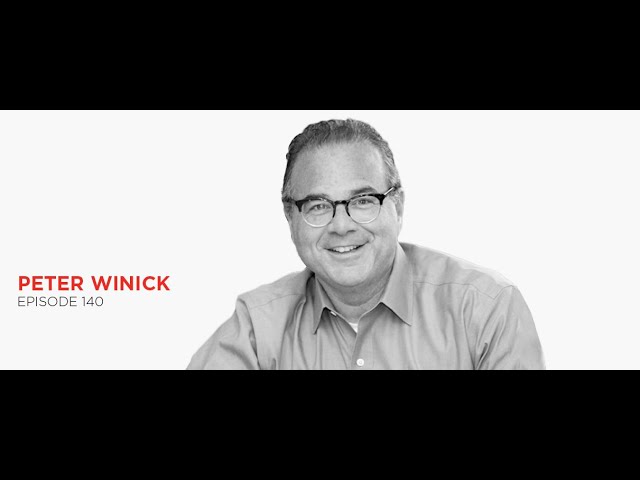
Peter Winick, CEO of Thought Leadership Leverage, explains that real thought leadership means original insight plus the courage to lead a conversation, not just content marketing. He says the old path of book-then-speaking-then-social is broken, and topics like employee experience have cycled out while remote onboarding and hybrid work present new opportunities.
Chapters
Hello and welcome back to Franklin Covey's On Leadership Series. My name is Scott Miller, and as you know, I am privileged to serve as your host and interviewer each week. Delighted to remind our new viewers that this is now the largest subscribed to and distributed weekly leadership podcast in the world. We are delighted at all those of you who are subscribing weekly or perhaps consuming it on franklincovey.com. If you're not already registered, please do so and have your teams join us as well. Great conversations each week where we interview bestselling authors, business leaders, both inside and outside of Franklin Covey. We also like occasionally to interview someone who may not be an author, 'cause this is not a book review podcast, right? This is a podcast where we talk about all things related to thought leadership. In the space around building a high-trust culture, executing on strategy, building leadership capability, and even building your own organizational and personal brand. And in many ways, that's today's topic. Today we have joining us Peter Winick, who is the CEO of Thought Leadership Leverage, as well as the host by a podcast of the same name. Peter Winick, welcome to On Leadership.
Hey, thank you so much for having me, Scott.
Hey, I like your glasses, man. They look a little bit similar to mine. You had to kind of steal my thunder today, didn't you?
I did. They usually wind up on top of my head throughout the day. Same with mine. We'll start with the monos.
I'm right there. We're in the same generation, if you will. So Peter, man, I am very encouraged about today's conversation because although you are not an author by choice, you are very much in the book business because your company and most of your career has been dedicated to the creation of thought leadership, helping authors and speakers and CEOs build their brands, build their influence, build their mouthpieces, and oftentimes it comes from a book that they perhaps have written or an article or such. So you very much have been in that industry for decades. We've been friends for the better part of a year, and I can start with introducing you by saying you are next to me, perhaps a step above me, one of the most articulate people in the world when it comes to really understanding what does thought leadership mean? What is its currency? How do you create it? How do you get anointed one? We're going to discuss all those things in the next half an hour or so. Before I do that, would you just remind our viewers and listeners a bit about your own career path to give them some context for how you came to found and become the CEO of Thought Leadership Leverage?
Yeah, so the short answer is in a totally accidental and nonlinear way. Right? So I, early in my career, I was always entrepreneurial and I like to build things and buy businesses and sell businesses and figure out how to make them work. And then the other side of me, which I thought was a totally unrelated piece, was I was just, you know, for lack of a better term, a nerd. I was just reading business books all day and night and business magazines and anything I can get my hand on. Because if you're an underfunded entrepreneur, which I think is probably a redundant term for most of us. That's the cheapest way to get information into your head, right? So I was in my early 20s and saying, man, you know, how come my people don't do what I'd like them to do? How come this isn't happening? And I'm like, somebody else must have figured this out. So I would just consume everything I could. And then those two paths sort of intersected about 16, 17 years ago, where I got brought in to do a turnaround at a company that was a communications consulting company that was global. And my entire career had been spent building things, and turnaround work I didn't really like because you're really salvaging and it's about disassembling or saving something, which is less fun. But what I learned from that company, which was a pretty well-known communications consulting company, is wow, there's a whole business side to this thought leadership thing, and that's my jam. That's like, I think like a consultant in terms of Venn diagrams. Wow, entrepreneurial piece and thought leadership and content and all that fun stuff and there's a business side to that, like sign me up for that. So here I am.
So Peter, for our listeners and viewers that have heard the term of Kevin Bacon's Six Degrees of Separation, I think it's more like Peter Winick's Three Degrees of Separation because you know everybody. I mean, the books behind me, you know almost all the authors, you know their agents, you know their publicists, you know their editors. This has been the culmination of decades of work and helping to consult with these thought leaders to actually build their voices, build their platforms, build their influence. Build their followers, build their business. Let's start and kind of level set for our audience because we hear a lot about this term thought leadership. My title at FranklinCovey is the Executive Vice President of Thought Leadership. It's one of the few titles in public companies, I think, in the world. I have my own point of view, but since you're right heart in the middle of the business, will you kind of educate the audience on what do you see thought leadership is, what is it not, how does someone become one, Give us kind of your PhD on that.
Yeah, so there's been some what I would call inflation around the term that reminds me of some of the cool and funky terms that were bestowed upon HR people back in the dot-com days of '99, 2000, 2001. They weren't HR people anymore, they were Chief Happy Officers or whatever. But I think true thought leadership as a definition, there's two elements of it. Let's just break it apart. Number one is thought, right? So what that means is whatever you're putting out into the marketplace, whatever you're putting out into the world, has to be thoughtful. It's not parroting what someone else said. It's not, you know, relisting what you've already heard. It's what are you adding to the conversation? What are you adding to the discipline? Acknowledging that you're standing, you know, on the proverbial shoulders of giants. And you didn't just— it is very, very, very, very rare that someone invents an entirely new discipline. So number one is thought. The second piece is leadership. So what that means is What is the direction that you have the courage, the wisdom, the guts to take that conversation to? Right, I'm gonna lead the conversation on innovation, resilience, creativity, leadership, whatever it is, in a little bit of a different direction. My objective isn't that everyone placate me and necessarily agree with me. I might have perspectives or points of view, or my research may have uncovered things that are a little bit different than the current trend. To me, it's the thoughtfulness and the willingness to be a leader. That's what it really means. And I'll give you sort of what it isn't. There is a time and place for content marketing, but that's not thought leadership. You know, content marketing is using great content to deliberately sell or sell a product or support your client base. And the example I always use is, you know, if I was in the business of selling diapers, I would put a lot of content marketing out to new moms about how to avoid diaper rash because that's important to them. Let's not call that thought leadership. Right? That's just not thought leadership, and there's examples of that type of stuff happening in financial services, CPG, etc. I think a lot of smart companies today in high-tech, in financial services, and in professional services are actually investing heavily in thought leadership.
So Peter, for those that are listening and watching today and they hear this term and now they're a little more clear on what it kind of means in their space, what advice would you give for someone who wants to become a thought leader? I always joke, you can't call yourself an expert. Someone else can call you an expert. You shouldn't call yourself a thought leader, but somebody else can call you a thought leader. What is a typical logical path for someone who wants to pursue the moniker of a thought leader? What are the ways, what are the missteps, what are the successes?
Yeah, so that's a great question, Scott, because if you and I were to go to our dentist today, and ask our dentist, how did you become a dentist? We know what the story is. Blah, blah, blah, went to dental school, blah, blah, blah, became a dentist. If you ask, you know, 20, 30 thought leaders, how did you get here? There is no MBA in thought leadership. There is no linear path. There is no certification, right? So I've literally heard everything from I was homeless, I was the CEO of a publicly traded company, I was the founder of a dot-com, I've been an academic at an esteemed university for 30 years, I woke up one day and my boss, was sick and he was supposed to give a speech and handed me the microphone. Never did that before and felt it was my thing to do. So I don't think there is one way, but I think a way to start is number one, what is it that you plan to be a thought leader about, right? So what is it that— what's out there that you think you have a unique perspective, something that is different than what's already being being put out into the marketplace. And I think what a lot of people do is I've seen really, really, really smart business people like CEOs of Fortune 50s forget basic business strategy when it comes to thought leadership. So if you and I were sitting around today, Scott, and said, let's open a little donut shop. Hey, great, that would be great. There's a series of things that we would do before we invested our time, our money, and our effort into do that. We'd say, let's do a little bit of a competitive analysis of the marketplace. Do we want to be in the high-end donut business? Do we want to be in the high-volume donut business? Is it going to be Is it gonna be vegan? Is it gonna be little donuts, big donuts? We'd have some sense of what the competition is, what our pricing is, what the cost structure is, et cetera. And I think a lot of times people sort of jump into the pool and on the way in, take a look to see if there's any water. So I think you need to do some competitive analysis and say, where is there room that's aligned with who I am and what I believe to add my voice? And I always ask sort of somewhat snarkily, Why you? Does the world need another book on dot, dot, dot? And if you can't answer that question really succinctly, then you're probably not there yet.
Peter, what do you think are the areas that are kind of saturated and what are some areas that you think are really looking and craving for individual original thought leadership?
Yeah, so I think that what we have to understand is that thought leadership runs in parallel to the business world, right? There are cycles that happen and patterns that happen, et cetera. So just a few months ago, the things that were quote hot in vogue, it was the employee experience, it was the war for talent. And it's kind of just, to be putting those things out in the marketplace aggressively today would indicate one is tone deaf because we're not living in a war for talent unfortunately. We don't have the resources to invest in the employee experience that we did just a few months ago. So I think there's short-term cycles that you have to look at. People struggling with things like— I was on a call yesterday with somebody. How do you deal with onboarding new people that you've never met, right? That's a first for a lot of us. Like, we've screened them, we've hired them, and now we onboard them. And there's never this face-to-face, come into the office, I have my rituals and traditions, we take you out to lunch, we walk you around, all that sort of thing. What's the impact going to be on culture? How do we need to be mindful of mental health and wellness in our people working under different stresses that we never imagined. That, you know, some people love work from home, some people hate work from home, some people are doing okay in this sort of COVID world, some people aren't. And now, you know, as a leader and as a manager, are you tuned into that in a way that you might not have been before? Because I think good managers and good leaders were tuned into an individual direct reports issues because they tend to happen one at a time. If Scott was having a tough time and he worked with me, I'd be able to, you know, let's go for a walk, Scott, you seem you're not yourself, what's going on? But when everybody's off their game, which is the world we're living in today, How do you manage that effectively? So I think that's an area where we're seeing some people taking a shot at.
Peter, is there space in thought leadership for aggregators? Perhaps they don't have original thought, but they have the wisdom and the collective knowledge of many, and they're able to package it or present it in a way that feels fresh. Do you think that's an excuse for laziness intellectually, or is there a space for that?
Well, I would say, I would ask, You, Scott, you've got a great podcast on it, right? As do I. So I think there's a time and place for aggregation. And I would argue that, you know, why are people tuning into this show? Most of them are your loyal followers, but they know, they expect something of you in terms of the people that you're going to bring on are going to be somewhat interesting, somewhat creative, et cetera. So I think there's a place for aggregation. I don't think it could be the only drum that you beat.
Peter, your firm Thought Leadership Leverage helps organizations, individuals, really kind of create their platform, their strategy, their mouthpiece. Let's talk a little bit about what's changed. You know, it seems to me historically, maybe pre-COVID or even, you know, a couple years ago, there was kind of a bit of a linear route, right? You wrote a book and it launched and then you went on a speaking circuit and maybe then you did your social media. And that's kind of how, you know, the last thousand thought leaders were sort of minted by the marketplace or by their publicist or their agent.
Yep. Yep.
What is still the same and what do you see as being blown up?
Yeah, so I don't come from the book world, right? So a lot of people in this space are former agents or publicists or, you know, senior executive at publishing house. I don't come from the book world. I've been around the book world a long, long time, and I don't believe the book can be the tail that wags the dog. So there used to be some rules that worked for some period of time until they didn't. There was the 18-month rule that if you were a thought leader, you should put out a new book every 18 months. Even if it looked a lot like your last book, right? There was the notion that in order to get to the next level, whatever that meant, the higher level speaking fee, et cetera, you have to have a book. There was a fallacy around, ooh, if you self-publish, that means that all the New York houses didn't think enough of this book to take it on. So I think, you know, there's a lot of things that have changed. Number one is, you know, You have to understand the business of publishing, and you have to understand your business. And there's only, as a thought leader, a short period of time where there's total alignment. So publishers, what do they want? They get paid number of books sold, period, end of conversation. And they want you to be successful. Publishers don't want their authors to not be successful, but only, you know, their only benefit is how many units sold. They make some level of profit per unit. As an individual thought leader, yes, you care about that, but when you look at the end of the year or whatever the time period you're looking at, direct book revenue is represented by, you know, royalties or dollars generated per book sold, is or should be but a small piece of your overall business. So ultimately, there's a lack of alignment there. So, you know, I think that's the other issue is understanding where there's lack of alignment and finding a publisher that makes sense for you. There's a, I think, a dated notion that everything has to be done through a big New York house. And I have nothing against the New York houses, I do work with them all the time, but I think there are instances to consider alternative publishers, et cetera. Some of them are, you know, hybrid. Some of it is about the business model. If you're getting the sense from your publisher that, wait a minute, you're going to be the SVP of sales and marketing on this book because of your followers, because of what you do and how you do it, why do you want a partner that takes 80%? That might just be a business model question and say it's actually better business if I publish that myself and capture the lion's share of the profit.
Peter, it seems like you and I travel in very similar circles. We know the same 1,000 people in the industry and everyone's doing the same thing right now, right? Everyone came off the road on May 15th. Some May 16th, some May 17th, and then they all went home and they stopped earning, you know, $5,000, $10,000, $20,000, $30,000, $40,000, $50,000, $150,000 a day. And everybody's at home and they're trying to sort of regenerate their engagement, their profile. They're either writing more books or they hosted a podcast or they hired a publicist to get them on podcast. What is changing about how thought leaders reinvent their model, their economics, and get their message out?
I would say, short answer, everything. So let me unpack that a bit. So, I can't tell you how many clients back in March I was talking to, clients, friends, colleagues, etc., were literally lost, you know, a million dollars in 2, 3 weeks. Their whole year is gone, right? And there's a couple of different things that you have to think about here. Number one is content. As I stated earlier, is the content that you were putting out in February or March or last year, the year before, the year before, still on point today? And that's a really hard thing to think about. Say, wow, I was killing it. I didn't, you know, this was great, everybody loved it, and now there's no market for that. How do I, what are the adjustments that I need to make to my content to make it as relevant and poignant today, given the drastic change we've had in the world, in the business climate, recessionary conditions, et cetera. Second piece is the format, right? So if I was a really good stage person, and I think the mistake that many, many, many stage people make is it's all about the stage. And we've always been very deliberate and very strategic with our clients to say, listen, the stage is great. Anybody paying you $30,000 for an hour's worth of work, Great, but that should be the beginning of a longer and more profitable relationship with your client. It shouldn't be the relationship, right? And if you don't have the product path to support that, that's a problem. So now what's happened is people that were doing great on stage are going, okay, there's no market for that, what can I do? And it's really hard to just say to the same client, okay, well, just put me on Zoom and I'll be really, you know, golly gee whiz, I'll be really good. And I'm worth that 25 or 30 grand. You have to reinvent the entire experience and you have to figure out what is it, why were they paying you? What were they paying you for? And there are certain things that can be recreated digitally and there's certain things that can't, you know, and I think it's those that are breaking it down to the molecular level and saying, you know, it's not just a 45-minute Zoom or webinar or whatever experience. There's some stuff that we're gonna do in advance. I've got some surveys and assessments, whatever. I'm gonna create a custom video to your people in advance. We'll do the 45-minute thing, then I'll put them into cohorts, but re-examine the whole experience and think about how can you articulate to your clients the impact and the ROI of the investment that they're making in you. Because speaking was fairly easy. What, what was the buyer buying? Entertainment, engagement, and dropping a few nuggets. And, and we're just not in a climate for that, both, both financially and just where people's heads are. That's just not where the world is today.
Peter, take a breath before you answer this next question. I want you to think about maybe one or two thought leaders that have built a big brand. They've built a business, they've had impact, they've changed lives, they've improved businesses, and they've done it really well. And you've also seen them start to pivot in this new economy, you know, post-COVID. Do any minds come, any names come to mind And what is it you think they're doing right that others should take note of? Take your time.
Well, I think that's, I think that's two separate questions. Probably. There have been many that have done it really right. I think it's too early to say who's winning. Yeah. Right? I'm seeing right now a lot of experimentation. And I think that's a good thing. I think we're, there's this odd window and that window won't stay open forever where You can say to your client, you know, I've never done it this way before, but here's what I'm thinking, right? You couldn't say that a year ago because why were they paying you the big bucks? Because you've done it before and you know the answer. So I think a lot of it is experimentation. We're seeing, you know, I am seeing things like masterminds. I'm seeing people being really generous, people listening to what the clients want, speakers moving back into consulting and problem solving, creating multi-pronged events. I wouldn't say I've seen here's the 3 winners that are killing it. I've seen a monitoring of about a dozen people that are doing things that are really, really interesting. I think it's too early. I think that the jury's still out.
So to answer the first part of the question, as you look back at the perhaps 20, 30, 40 years of thought leadership, when it kind of really became a thing with Stephen Covey and Hiram Smith and Ken Blanchard and the rest of the group, who are the ones that impress you the most that built brands that were enduring but also impacted lives in a way that was, you know, more about maybe even mission than just margin? Who did it right?
Well, I mean, number one in my mind would be Covey and Seven Habits. The fact that, to me, the litmus test with a book like that, and there were very few at that level, is if I gave that to someone today, I don't know what the exact timeframe is, 35 years or so.
30 years ago.
30-something years ago, you're going to get that same aha, that same wow that we all had when we opened that. So I would say Covey, I would say Tom Peters is a favorite, Blanchard is a favorite, Trusted Advisor is a favorite, Growth Mindset. There are certain books that once you're sort of exposed to them, you sort of can't take the lenses out of the glasses anymore, and they change the way you think in a good way. And they add, they just add quality to your life, and they enrich your life. And, you know, then there are others that are sort of spiky, like Hey, that was sort of cool for a while and then it sort of went away, but to make it everlasting and to make it evergreen, I think that's a pretty high bar.
Peter, pivot off of perhaps the individual, the thought leader who has some fame and they're growing their own business and move more into an organizational conversation. It seems like there is a developing interest with chief marketing officers and chief innovation officers and CEOs of public and private companies where they're not trying to necessarily build their own fame or their own revenue stream because they're an officer in a firm, but yet they're trying to use that platform to obviously progress attention to the company's brand. What advice would you give people who are in a senior role inside of an organization that they work for? They're an employee, perhaps they're an officer or a senior person. What's that roadmap look like to decide what's right for your company and what steps do you take to build thought leadership, perhaps, perhaps is on your brand, but for the purpose of the organization's brand.
So I think there are two forces at play there. Number one, you have to identify for that organization, what is that organization's platform that is not dependent on an individual? It's not the titled author per se, but so for example, if I'm, if I was running the AI practice at, you know, a big consulting house, what do we have to say to the world? Right, you know, and it would probably line up to the solutions that we provide, that you've got to be, you have to understand AI, it could increase efficiencies, etc. So you have to have sort of the organizational thought leadership question answered, and then you can say either on top of that or underneath that, in order to accelerate that or serve it, what do I do as the CMO, right? What am I out there saying and speaking and publishing, etc., as the CMO that might not be 100% exactly aligned to what the firm is saying, but there's clearly overlap, and I'm clearly being of service to the firm, perhaps with a little bit of a different flair or twist or nuance there. And I think it's a balancing act. There have been some companies that have gotten, quote, burnt by making someone sort of too big for their britches. And I think there are ways to sort of institutionalize thought leadership so that you could as a senior leader, you know, have some of the spotlight, but not put fear in the hearts of your board of directors that, uh-oh, we just, you know, created another rock star and then, you know, they're gonna go out and be a soloist, 'cause that's not good for anybody.
Peter, we're taping this interview in early fall. School is just coming back in the US. And I'd like you to kind of Nostradamus me for a moment. What do you see happening you know, 12, 18 months from now, ideally post-vaccine, do you think the thought leadership industry will come back to how it was? It'll come back halfway? Do you see us having, you know, 5,000, 10,000 person conventions again with speakers and breakout sessions and trade shows?
Sure.
Where's that going?
So I think, yeah, so I think it's going to be very different. There'll be elements that are the same. So I think First off, why were people going to so many events? That's the first question. And I think there's 3 answers to that question. Number 1, if you're early in your career, that's a milestone. When your boss says, hey, you know, hey Scott, I'd like for you to go on behalf of the firm to the annual conference in such and such. And you know, as a young, you know, 30-year-old, whatever, you're like, wow, golly gee, that's pretty, you know, that's an honor and I get to go to Ruth's Chris and you know, all that sort of stuff. However, for most of us, Wait, wait, wait, wait, wait, wait.
I just shed a tear. I just put together travel, a conference, and Roos Kris. That's very nostalgic.
I know, let's have a moment. Yeah, let's have a moment. I didn't even mention Cabernet and all that, right? So yeah, we'll remember those days. We can Google them. But so I think for some it is an acknowledgement, a milestone professionally. But that's a small percentage. The other two reasons we went were content. It was convenient to go to Scottsdale for 3 days in February to hear everything there was to hear about my industry in one place. Technology trends, the latest thinking, and then some external speakers popped in there. But the third piece, and this, this goes into sort of human nature and you— and will not be quelled by anything— is community. I like Scott, Scott likes me, we live in different cities. That's the once or twice a year we actually get to be together, and it's career insurance, and we like to spend time with each other, and we like to share our networks with one another, and we like to just hang out a little bit. So I think the thought leaders that are smart now are dabbling with how do I wrap my content that I know is good because it was good before, and how do I wrap it in some community? And I think that's— we're seeing some really, really cool and interesting things there. Um, other thought that I have is, you know, 2020 speaking's gone, 2021 it's going to be pretty awful, you know, in terms of the event space. So let's say it finally pops back up to some semblance of what it was in 2022 or 2023 or whatever. The longer we do this, the longer we we connect as human beings digitally, the more used to that we're going to get. So, you know, if I was going to, you know, whatever, 2 events a month, I might say, listen, that was a lot, and I got to jump on a plane, and it's expensive, and it's 3 days out of the office. I'm going to pick the 5 or 6 that really blow me away, that are worth my physical presence in a location for an immersive experience. And I think the bar is going to be higher for event planners to say, yeah, it can't just be the rubber chicken and blah, blah, blah, blah, blah. If I'm giving of myself for 3 days, I'm expecting something very experiential.
Peter, in our final few minutes here, talk a bit about your firm, the nature of work it does. If someone is in an organization or they're an entrepreneur and they're looking to raise their brand or their company's brand through thought leadership, how do you work with someone and how can they learn more about that?
Yeah, so I mean, the way we work with everybody, be they a thought leader, an author, an academic, a consultant, or someone on the organizational side, is we're always starting more often than not on, you know, thinking about strategy. What is the strategy here? Because many people, individual thought leaders, did not get into this in a very deliberate and strategic way. It just sort of happened and it worked really well and that was good. But, you know, it's never too late for strategy. So we're always looking at what is the strategy in terms of Who is your target market with a high level of specificity? How do they consume content? And by consume, I don't mean download cat videos, but what are they willing to pay a premium for? Um, what are the problems that you actually solve? What are your— the, the choices that someone has when looking at you versus other solutions? Another solution could be doing nothing, internal, or direct competitors. Um, so we help with strategy, we help with brand and platform, we have full product development capabilities so we can take stuff that started as an idea in your head and landed in a keynote or a book or a workshop or in your coaching and turn it into other things that don't require you to be in the room or in the Zoom for dollars to change hands. And ultimately we support our clients in the long term by taking on active roles in sales, marketing, business development, and business management. So those are the areas that many of our clients either don't enjoy or don't do well, or would rather get that sort of proverbial monkey off their back. So that's sort of the, the suite of things that we do.
Peter, I think it's true, you said it earlier, Franklin Covey is probably one of the strong examples of how we have taken thought leadership and not just built a public relations mouthpiece around it, but really helped provide democratization, if you will, to access our content. And of course, if a client likes it enough, then they can buy our all-access pass and implement it. Sure. Another great example is one of my favorite books ever written is called The One Thing.. It's up behind me. It's from, of course, people at Keller Williams and a friend of mine, Gary Papasan. Here's a book that was written by the founder, co-founder of one of the largest real estate firms in the nation. They wrote a book about how they goal set. And I don't know that that book, which has sold millions of copies, I don't think anybody listed their house because they read that book. But I'll bet you Keller Williams has recruited and retained industry-level salespeople because of the way that book has permeated their culture and has allowed them to list homes and market homes. I'm guessing The One Thing is a great example of thought leadership at the corporate level, made a couple guys famous, but it also had great internal consequences in terms of employee morale and culture.
Yeah, so I'll see your One Thing and raise you a Delivering Happiness, right? We can play nerd poker here. So I think Tony Hsieh, when he came out with Delivering Happiness, Similar thing. That was basically a book about the culture of a call center. Yeah. Like, really? Who would want to buy that? That was really cool. And I think it did a ton exactly what you said about recruitment, about retention, about understanding the culture. And they've actually turned what has always been perceived as a cost center, the call center, into a profit center. People pay money to tour that. Well, they did before COVID but people are actually paying money to walk around the call center. So I would ask yourself as a company, what is it that we have that's a byproduct, you know, that we just do that we might be able to turn into something of value to another population. I'll give you one more. I think the book was called The Ritz-Carlton Way, where someone wrote a book, one of the CLOs of Ritz-Carlton back in the day when that was the penultimate brand in luxury before they were acquired by Marriott, about the Ritz-Carlton Way. And they basically took the training and development institute and opened it up to everybody else ex-hospitality. So taking a cost center, making it a profit center, based on, it's running on the engine of thought leadership of what that company's about and what it represents.
Peter, we're gonna end on this compliment to you because one of the things I like most about you, other than your expertise on something I'm passionate about, is you're a very abundant person. You and I have kind of dueling podcasts. We have a lot of similar but different guests. Talk a bit about your podcast. Who are some of the guests that you've had? Who's coming up and how can somebody register?
Yeah, so the podcast is Leveraging Thought Leadership. I've been blessed that I've had I'm amazed at who we've had. So we've had Dan Pink, we've had Marshall Goldsmith, Stephen M. R. Covey, Ken Blanchard, we're saved with Tom Peters, Chester Elton, Rita McGrath. I mean, go on and on and check the list. What we talk about, which is what I think makes it unique, is only two things. It's not a podcast to go on to just pitch the book. There's 80,000 others to do that. We talk about number one, the journey. How did you get here? And that's because I'm personally fascinated with that. So it's somewhat selfish. And I think others are intrigued by that question. And then the other thing is the underlying business model. So it's been designed to bore the heck out of anyone that isn't really in the business side of this. So it's on iTunes, it's on Spotify, it's on all the usual suspects. And we put out 2 episodes a week. There's so many episodes coming out, it changes all the time.
Well, it's a superb podcast. I highly recommend it. I'm looking forward to listening to the interview coming up with Tom Peters. Peter, thank you for your time today. You're in Manhattan, you're coming out of a couple of months of quarantine. I wish you and your family well and look forward to collaborating with you more on building this thought leadership industry and making sure that all of us are good stewards of it as well. Peter, thank you for your time today.
Thanks, thanks so much for having me.
And thanks for joining us on another episode of On Leadership with Scott Miller. If you're not subscribing, visit franklincovey.com, click on the tab, register. It comes out every Tuesday via email that has this video interview as well as an audio edition including my weekly blog and a Franklin Covey downloadable leadership tool. And you also can subscribe on all your favorite podcast platforms. Thank you for joining us and we'll see you back next week for a new conversation.










