What Thought Leaders Need to Know About the Changing Book Publishing Landscape
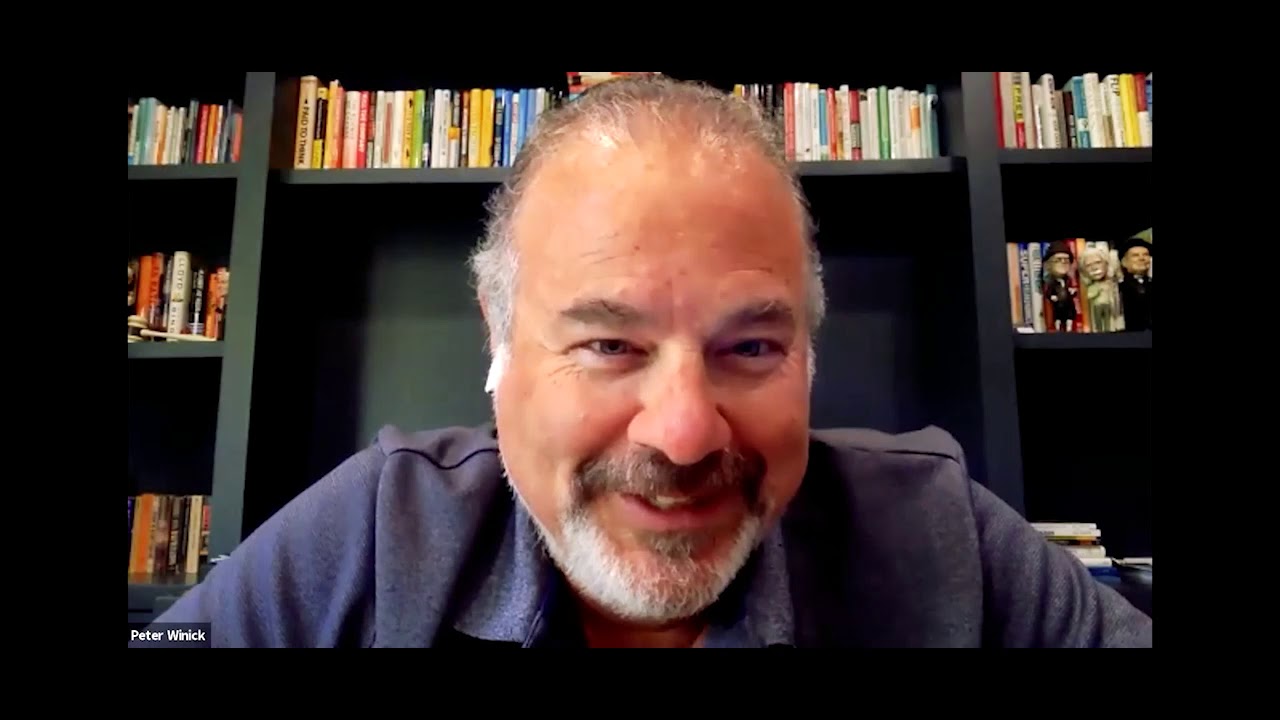
Peter Winick and Naren Aryal lead a panel on publishing strategies for thought leaders, covering self, hybrid, and traditional routes. They discuss timelines, production quality, marketing, pricing, royalties, and how to turn books into recurring revenue through apps, diagnostics, and training.
Chapters
Let's kick it off because we've got it. We've got a nice-sized group here. So welcome everybody. I'm Peter Winick. I'm the founder and CEO of Thought Leadership Leverage, and my friend Darren Arielle is here with us today. And he and I are going to just co-host this thing. It's not going to be formal, so feel free to turn on your mics. You can, you know, if you want to ask questions along the way, either hit the Q&A box on the bottom or wave your hand or hit the raise hand thing, because given that there's not dozens or hundreds of us or whatever, we could we should be able to fairly easily moderate this. So, Naren is the co-founder and CEO of Amplify and Mascot Publishing. So sort of the theme today is sort of the evolving world of publishing as it relates to all of you, to thought leaders. So, Naren, why don't I sort of throw it over to you to just sort of maybe introduce yourself and kick off sort of what you see as the landscape, and then I've got some thoughts relative to sort of, I probably have more of the client perspective and you've got more of the industry perspective. So maybe that's a nice way to kick off here.
Sure, thank you, Peter. Again, my name is Naren, I'm CEO of Amplify Publishing. I've been in this crazy world of publishing since 2003. The parent company is Mascot Books and we publish titles across all genres under our Mascot imprint. But where we really have focused over last, call it, 7, 8 years is in the nonfiction world, specifically with business, politics, current affairs, and what we call big ideas, and I think you all are probably best— best fall into that category. So let's just— what I want to do is just sort of start with the state of publishing right now, if I could. We are a hybrid publishing company. We're one of the pioneers in the hybrid space. There are a few good hybrid publishing companies out there, and you all probably know who they are, and Peter's worked with a lot of them. And just at the highest level, what that means is we're hybrid because we're somewhere between the worlds of self-publishing over here on one end and traditional publishing over here on the other. What's happened over the last, you know, call it 10, 15 years, is more and more authors are being successful reaching their readers directly through self-publishing. But what that's created is a huge number of authors competing in a pool that's filled with self-published authors. And so our value proposition, and there are others, is that we help authors put together content and packaging that is on par with what the largest houses in New York are producing, specifically exceptional editorial quality and book distribution and marketing to match. So I'm not here to say one approach is better than the other. As I said just now, more and more authors are successful publishing than ever before, but there are also more and more authors out there self-publishing, so it creates a really busy pool.
Yeah.
And when we talk about traditional publishing, you all know there are a lot of gateways, including finding a literary agent who's willing to take on your content, and then that's the first step, of course, and then the second step is to sell it to a house. And the world of traditional publishing has been really disrupted over the years, and so we're We and companies like us may not be right for everybody, but there's a growing number of authors that are finding value in our approach, the hybrid, and specifically in the thought leadership/business world. That's an overview. Happy to be here, Peter.
Let me kick it off because I don't come from the publishing world, other than almost all of our clients have written a book, are in the process of writing a book, or need to be talked out of writing a book. Depending on where they are, and some all 3, depending on the day of the week. So to me, I want to just sort of throw out 3 themes and then feel free to pop in and, you know, throw questions at us. This should hopefully be a little interactive, but I think there's sort of 3 things that I think about from a publishing perspective. Number one is quality, and I think the reality is there is a myth that still lingers, probably a decade too late, that the quality of, quote, self-publishing or hybrid publishing is subpar. That is just not true, period. Now, does it mean you never see really crappy self-published stuff? No, but it is incredibly unlikely that if we threw 5 books down on the table that were either Norin's or from another reputable hybrid or self-publisher and 5 from Wiley or Random House, that anyone would be able to tell the difference. So the quality issue is a non-issue. Do your homework. The second 2 themes I have are related is there's a business model piece that's really interesting underneath this in terms of most people don't think about publishing through the lens of what is the business model by which I want to publish? Do I want to take risks? Do I not want to take risks? Am I responsible for selling all the books? Do I have a— well, back in the pre-COVID days where I was doing lots and lots of workshops and can sell back of the room, and why would I want to have a partner taking 9% 90 cents on the dollar? Am I going to get an advance? All this sort of stuff. So there's a business model question. Under business models, obviously speed, you know, am I willing to wait the time? Is speed more important to me? And then the last piece, which is really probably the most important, what are your goals? Why am I publishing this book today? And what does success look like? And when to start thinking about platform and strategy. So I'll just sort of throw all that at everybody and see any thought, question, reflection.
Well, I'll jump in.
Okay, thank you.
And we'd encourage everyone else, again, let's keep this interactive, not a big group. And by the way, you can say dozens because I think we're at dozens.
Okay, there we go.
Um, so, uh, quality is, um, what I want to talk about, right? Um, you as thought leaders You're putting yourselves out there to talk about whatever you're an expert in, whatever industry you're an expert and a titan in. I've seen folks undermine themselves by not really paying attention to the quality aspect. What that means is a terrible-looking cover, poor editing, all that defeats the purpose of having a book out there. The whole point of having a book out there is to say, wow, this guy or gal is a very serious thought leader, knows his or her space, and this book is a manifestation of that knowledge, and I will get something out of it. Whether you hire somebody to do it, a firm, or you are the general contractor in construction, in the book construction that you're undertaking, make sure you hire experts. Specifically, what that means is a book designer and a quality editor. Those things are invaluable.
And Naren, maybe touch on the role of the publisher because I think there's lots of misunderstandings or confusion as it relates to marketing. Where does the— where's that handoff between what your responsibility is as a publisher or any other publisher and where the author's responsibility is relative to getting the book out there into the universe?
Sure. What I always tell authors is, no matter what publishing path you take, you, the author, must be engaged, whether it's a traditional path, hybrid path, or you do it on your own, because you are, of course, the biggest cheerleader for you and your content. Having said that, if you are traditionally published, there's a likelihood that the traditional publisher, unless you're an A-lister, and there very well could be some A-listers on this webinar, they're going to get the red carpet treatment from the large publishing houses. Everyone else can expect, you know, a minimal amount of support, but— and the difference is made up by the author typically. I've worked with many authors that have published traditionally, and they've also, in addition to what the house provides, they retain a PR firm, for example. So this notion of, hey, I got a publisher, and I'm just going to sort of sit back and watch the royalties come my way. It doesn't work that way. You must be engaged. Then, obviously, in the self-publishing arena, it's all you. It's on you, whether you hire somebody to help you or not. You should know that that's critical. In terms of our approach, what we try to do is work with the authors, see what assets they have available. Perhaps they've already worked with a social media person or they've got a PR firm, and so we try to put together a program that takes advantage whatever assets you have and supplement them with what we know is an effective book launch strategy.
Cool. So Todd, you raised your hand and just— Todd is a newly published author, as you can tell by the 50 copies of his book behind him. So what is it, 2 weeks, Todd?
3 weeks now.
Yes.
Yes. Hey Todd, you gotta hold it up and promote though. You gotta hold it up and promote.
Yeah. Get your book.
Congratulations.
There we go.
So yeah, so I looked into all the options of self, hybrid, and Luckily, I was able to get an agent and we pitched it around and it was published by Post Hill Press, Simon Schuster, so has the credibility stamp of Simon Schuster behind it. As you said, they do, they've sent out a couple of e-blasts, which is great in terms of visibility, but beyond that, it really is up to the author. So for those of us B and C-listers who are not names in the marketplace, what are some tips for visibility, say on Amazon? And there's all kinds of manipulation that I hear about from people in terms of Amazon bestseller, because you could pick a niche or a category, you could be number 1 for a half hour, and you could say, I'm number 1 in that category. So what are some of your thoughts on just promotion and different venues for selling? And there's no bookstores right now. So it's like, it's all basically online until people go back to the outside world again. So what are some thoughts there?
Yeah, so first of all, you're an A-lister to this group. Let's talk about it. There's a lot. That's a big question. In terms of Amazon, we've had some success with Amazon AdWords. We've had some success with comp titles, aligning your title with comp titles. I'm just going to give you a couple of things that come to mind. People sometimes think that when you have a book, you're releasing the content and the content speaks for itself. Hey, here's Visual Leadership. It's a great book. Here's who I am. Go buy the book. It doesn't really work that way, and you're probably finding that out right now. What does work, however, is taking the steps on the front end of a book launch to really develop your platform. Make sure that you're blogging about these things, you've got videos about these things well before a book pub date is even established because then when you do have a book, you've done the legwork that's necessary to cultivate your audience and the ask is more subtle. and more authentic. Peter does a ton of work through his company on platform development. The top couple of things that come to mind are those.
Okay, great.
Thank you, Nat.
I'll add a couple to that, Todd. One is I would put a qualifier on the question, meaning, what are you trying to achieve? I think there is this, I don't know, ego fantasy, whatever, of I want to be a New York Times bestseller. Well, Back not that long ago, the question was, how much are you willing to spend to do that? You can write a big check and you can do that.
Right.
That's kind of harder and harder to do. And that's, I don't think that's what most people mean. So I think you really need to understand the goals. And I think it's the right combination of what I would call air cover, sort of general PR exposure, awareness, whatever, as well as ground cover. And I think the ground cover is where people miss the boat, meaning let me get really deliberate and specific and not think about, yes, would you love 20,000 people to buy your book this week? Of course you would, right? But I think the harder question is, Who are the 100 people, if I got this book into their hands today, could change the game for me? Not because, well, I want them to read the book, but because I have a platform, to Naren's point, and from that platform, these are the type of clients I want to serve doing these types of things, et cetera, et cetera. And I think getting really down to the name level. So for example, you know, I'm in the middle of reading your book, Todd. You've got a phenomenal list of testimonials in there. So that tells me you've worked long and hard over the years to develop rapport and relationship with great folks. I don't know, so I don't mean to put you on the spot, have you gone back to everyone that's written a testimonial and supplied them with the social media materials to promote the book on your behalf and say, hey, remember 6 months ago, whatever it was, when you gave me that testimonial? Um, it's showtime, and here's a bunch of stuff you can put on Twitter, LinkedIn, some videos to share with your tribe. Because each and every one of those people, um, has a remarkable following. So I don't know if you've done stuff like that, but that's the, the hand-to-hand combat that people—
Yeah, I'm just starting to do that. I just literally mailed out 60 hard copies to every single person who blurbed the book Just so they have a physical copy, and then we'll follow up with, you know, seeing how they can help spread the word.
And one other hand-to-hand I'll give you— hey, Erica, I see you down there. Um, one other one I'll give you is often asking folks that you admire that meet the profile of the clients you're trying to serve and going to them and say, hey, like, you know Bill, and say, hey Bill, um, these are the people I'm trying to serve. Could you— you got 3 friends that meet that profile? I'd love to send the book on So now, boom, I get a book in the mail from Todd, who I don't know. Our mutual friend Bill thought you might like my book, particularly chapter 7 that I put a yellow sticky on. Those are the, I would say, non-sexy guerrilla, pick a word, low-cost things that actually matter, I think. And Dan, could I throw the mic to you to jump in on the PR angle on this? Because that's your sweet spot, Dan. Your mic's off though.
Sure. Thanks.
Great.
Thank you.
I've been multitasking, I'll be honest.
Okay.
Yeah, there are a couple of different ways you can use press releases to get the word out.
Um, I—
Morgan James runs a lot of their clients' press releases through me. Indie Books International runs a lot of their press releases through me, and they have different tactics. Morgan James does the traditional press release. Here's a new book, here's what it's about, here's the author, here's why she's a credible person to write about this, here's all the publishing data. So it's all the facts that a reporter would need. I keyword it in a certain way that seems to work well with Google, and I'll share my secret with everyone on the line here. It's basically new keyword book helps target audience achieve key benefit. So it's pretty much almost like a positioning statement, but Google loves the fact that new leadership book or new leadership book by Peter Winick shows small business executives How to whatever. That seems to be a formula that works 9 times out of 10. Of course, there are always situations where it's a valuable keyword, it's a competitive keyword, and this won't work. But generally speaking, it works for a lot of thought leaders. The, the second way Indie Books International runs their press releases is they offer tips. So Peter, you know, um, uh, Marketing thought leader Peter Winick: 7 ways CEOs can build their brand. Then it will have more of a listicle approach, and they'll weave in the fact that there's a new book out that has more than 7 tips and goes into greater detail. Those are 2 strategies that seem to work by hybrid publishers.
Cool.
Thank you, Dan.
Thank you.
Hey, Peter, if I could just jump right back in here.
Sure, yeah.
One thing that's critical is to engage your personal networks. Let them know when you've picked a book cover. Let them know when the presale starts. Let them know on the pub date and make a specific ask. That specific ask is, of course, go buy the book or 10 copies of the book or whatever, but go leave a review. Some authors are rather shy about that, and this is not the time to be shy. So ask your network to do those things. I found that to be exceptionally— that's just something that people overlook. Then the second thing that I would say is editorial coverage is always better than you shouting about your book. If I had to put a factor, I would say having somebody else talk about your book is 20 times more effective than you talking about your book. That can take many forms. It could be an Amazon review. It could be a comment on one of your posts. It could just be Anything to get others talking about your book as opposed to you talking about your book. Of course, a review falls in that category from a publication or a podcaster or the like, a blogger.
Great.
Thank you.
Got it. Now, you and I were having a fun conversation yesterday getting ready for today. One of the things that we talked about is a common mistake that we see is people tend to act in linear ways. Let me finish writing the book. Let me get the book out there. And then I'll come up for air, or there's that couple-month period between when I sign off the final manuscript and it's out for release, and I'll figure out the business side of it. What'd we do here? We lost— oh, this will stop it.
Yeah.
Somebody's sharing a screen. Hold on, I don't know how to do that. What am I doing here? Did that go back to normal yet? I don't know what's going on here. How do we— hold on.
This is going to end up being a funny Zoom video that goes viral.
Uh, yeah, we don't want to do that.
Peter, you probably want to stop other people sharing screens.
Yeah, I'm going to do that. Yeah, yeah, there we go.
Cool.
I was looking for something more sort of that would hit the news tomorrow, whatever. Um, so the conversation we were having, Art, is, okay, so people, you know, I write the book, then I got this little bit of relief, then the book's going to come out. And they all think about the, you know, what's the business side of this? So could you touch on that?
Yeah, waiting for the book to be written is too late in terms of the platform development timeline. I tell authors that when you're writing your book, when you're scoping out your book, you're conceptualizing your book, that's when you got to have one eye toward how are you going to market the book. And the first part of that, of course, is deciding who really cares about your book. Sometimes authors come to me and say, hey, I have this great book idea, everyone's gonna love it. And so I, of course, think to myself, that means you don't know your target market and no Nobody's gonna love it. So those are the things that you got to establish early on. And there are some concrete steps and tools that should be utilized early in the game to develop your platform. And it goes back to what I said a little while ago. When the book comes out, you've better done the legwork. So your ask is a little more authentic because you've established a relationship with your potential buyer.
Thank you. And I see Shona, you've got your hand up if you wanted to jump in with a question there.
I do.
Hi.
And you—
I may well be ahead of myself here, but are we going to talk about ebooks versus hard copy books and some strategies around that or thoughts on that?
Sure. Okay.
Doesn't have to be now, just sometime during—
No, now's good. No.
Okay. Okay.
I'm throwing that to you, Naren.
Okay, great. So before the pandemic, we could safely say that physical books were were actually slightly increasing in terms of market share, ebooks were slightly decreasing, and audiobooks were heading up. Post-pandemic, audiobooks continue to rise, so it's a greater market share. I'm a believer of the physical book is going nowhere. All you have to do is look, I'm looking at a lot of bookshelves back there and I see a lot of beautiful books. People still like hardcover books. Having said that, It's important to have your content available in all channels. I think that people generally do the physical book and the ebook, and I think audiobooks are something that some people get and some others you've just got to talk, convince them that this is here to stay.
Great. Thank you. Can I just give a little shout-out to Todd? Never heard of you before, saw your book on LinkedIn a couple of weeks ago and thought, I must get that book. That sounds cool. So there you go, Todd.
Thank you so much for saying that. Nice to meet you. I appreciate that.
Awesome.
Oh, Steve, you had your hand up.
Yeah, I want to ask what may be a stupid question, but, um, so you're a hybrid publisher. I've had books published by a publishing company and I've self-published. What's hybrid?
Not a stupid question at all. So when, when you self-published, um, you I assume you put, uh, you, you hired an editor, you hired a book designer, you did all those things, and you uploaded presumably to Amazon. Is that right?
Right.
Right. And so, um, our value proposition is, uh, we do all of those things in terms of, uh, you know, generating a cover design that is suitable for the genre, um, professional editing, uh, book, book production that is, uh, it's not print on demand, it's, it's on par with, uh, offset printing and what the large houses are printing. So we are a group of experts and we expertly produce beautiful books, I like to think, that are professionally done. And that's not to say that's the only way to do a professional book, but, you know, that's our value proposition for somebody that wants to turn over the production process, the editorial and production process, to a professional that does it, you know, as part of their business. And I should say that that also includes the distribution end of things where, you know, we utilize the same distribution networks that the large houses use, that they use, and we assist with marketing as we talked about previously.
Jennifer, a public health—
Hi there. So continuing to build on that, in terms of timeline, what would be the right point in crafting a book, having figured out the author, and the goals that one wants to achieve with it. At what point would we reach out to a hybrid publisher? What would you want to see? I mean, how discerning or discriminatory are you about what you'll take on board? What would you actually like to see with regard to the book plan at the starting point?
Sure. Let's see, I'll take these in no particular order. So in terms of the book proposal, I love seeing full book proposals that you would send to a literary agent. Those are the best because it shows that you've really thought about not just your content, but the target market, the competition, exactly where your book fits in. So that's the best. If that's not available, something that really speaks to the target market and the synopsis and why this is unique. There's no real form or format for that. So that's the answer to that. In terms of timing, would this be your first book or subsequent book?
I've had invited chapters published in books produced by traditional publishing houses, but this would be my first whole book. I've done lots of papers and things.
Okay. So would you write it yourself? Because sometimes we employ ghostwriters, so that's why I'm asking.
No, it would be me.
Okay, great. So ideally, you know, a year before pub date is perfect. But we don't live in a perfect world, and often we'll operate in 6 to 3 months before pub date. Okay, keep in mind there's a lot of, there's a lot of production work that has to go on after the manuscript is submitted.
Yeah, that's a good call to action. Thank you.
Well, I would say that's actually fast. Traditional publishing, what is it now, probably 18 months? on average.
That's right.
So yeah, um, yeah, it's, it's, you know, if by the time your book comes out you're not sick of the content, then something's wrong. So, uh, JD, you had your patient hand up there.
Hey, how's everybody today?
Good.
All right, uh, so, Naren, um, I have a thought leadership platform in place, and I'm, I'm one of those people who, uh, has emphasized public speaking throughout the last several years. In fact, I've enjoyed a very nice, uh, run as a professional speaker, and now this is an avenue that is closed off to everybody, and leveraging the book as a productized portion of a live event is— ain't happening anytime soon. So how do you factor in, say, post-publication PR? How does one get copies of the book into the hands of people now that events, live events, are stripped away from us?
Hmm, so I think what you're asking is How to replace back-of-room sales? Is that what you're asking?
Pretty much.
Yeah, yeah, I wish there was an easy answer. So, you know, when events start happening again, you'll have that opportunity to come back. But in the meantime, I would say, you know, just it's one-on-one conversations, webinars, and there's just no real answer to that in terms of how to replace the back-of-room sales. I mean, we're just not getting together as a society, much less conferences and speaking.
So there's just no easy answer.
Peter, am I missing something?
No. Well, short-term I would say no, but I would think that given the creativity that I'm seeing out there during this time, I would imagine a new format of sort of a book launch, which is, you know, hey, buy a copy of the book and the author will invite you to a 100-person Zoom call or whatever. I mean, you have to create your own event and make the book the ticket into it, or bundle the two when it's, you know, $20 for a book and it comes with a free something, or I think people are gonna have to get creative. Not just backup room, but I still think, you, you know, the other side of that is bulk sales are critically important now. Yeah. And starting to go down that path.
Well, typically, typically the book sale was used as a point of arrangement between a speaker who may not get his or her fee but was allowed to sell books or made the purchase of X books, the part of the contract. So obviously without the support of live events to get more copies into the hands of more people at once, virtual events, as creative as they get, Peter, and I'm, believe me, I'm noodling this constantly on how to get more creative in doing virtual events, still you're limited to a percentage of people who attend that program who will get the book.
Yes.
Unless the book is made part of the virtual event, you charge for the event and you ship a book.
And J.D., we feel your pain, right? I mean, we do a lot of author events, obviously, either at a bookstore or a private author event, and those aren't happening, and so those aren't available. Creativity is the key. And so if I was Todd, at the end of this, I would say, hey, by the way, anyone on this webinar, use this code, go buy my book and get 20% off.
Well, but that 20% off piece, that's where I was going to go. I do believe you have a lot more freedom when you sell for hybrid relative to incentives and pricing, because I've seen a lot of people disappointed with big publishers when they're out on Amazon and they can buy it cheaper on Amazon than their contract says they can buy it from the publisher. And you don't have that pricing flexibility to entice a bulk buy or something like that.
Yeah, that's right. We got another follow-up question here from Steve, I think.
Yeah.
And then, Shona, we'll get to you. I see the blue hand there.
Steve jumped in. Sorry to jump in. It's a pleasure to be on a call with everybody so similarly focused. In the hybrid model, how do you get paid, or what's the economics of that to make it possible for an author to buy back books or discount books?
Good question. Under the hybrid model, authors pay for services received. And so those services are for things like graphic design, actual book printing, converting files to audio and ebook formats. You know, we have a warehouse where we do distribution, so there are certain warehousing-related charges. And then when the books are printed, you own the books from day one. So there's no— there's no having to buy, you know, author copies. You own the inventory, we have a warehouse, and we do the shipments out of the warehouse, we invoice our distributors, we collect. And because under this model, you're contributing to these— to the production-related costs, you're getting a royalty that's inverted from what the traditional publishers typically pay you. So in other words, with us, you're getting 85% of whatever we receive when we sell through the distribution channels. And we're getting 15% of that as a distribution fee. Now, when it comes to back-of-the-room or private book launches where you sell outside of our network, you're getting 100% because keep in mind, you own the inventory from day one. So it's a trade-off. You're assuming more of the risk on the front end. You're working with somebody like us because you value a beautiful book, And because of your participation on the front end economically, you're getting the lion's share on book sales.
And let me just add a point to that. One of the things I've seen, then I'll get to you, Shona, sorry. One of the things I've seen a lot of the last 2 or 3 years, which is really baffling to me, is what I call the worst of both worlds, where somebody gets a publishing contract from a big house, there's no advance, and then, you know, in 2-point type on page 39 is they have an obligation to buy X number of books at full wholesale. Ultimately, the math works out to the full financial risk is on the author for $30K, $40K, $50K worth of books. And then whenever you break that threshold, then you're in that 15% bucket versus some other revenue model. It's a baffling model to me where you've taken the worst of both business models. And I think part of that is because of the perceived value that the brand may have and the publisher's inability to consistently take risk there. Just let me go to you on that.
Thanks. Yeah, no worries. This was more just a follow-up to JD's question about back-of-room sales because I've had the same question. And just share with everybody, the other 20% off on a webinar, I've done that. It's worked, it's worked pretty well over the last couple of months. The other thing was the online book launch that, Peter, you talked about that I'm planning right now. But I've discovered something else that I'd I'd like to share with everybody is there are companies out there that do produce entire conferences for you, like a one-day con. So I'm working with a company called Q4. They have offices in the UK, the US, and Canada, and they'll produce the entire conference for you. So I'm getting together with some other thought leader author friends of mine to do sort of like a thought leader conference on a particular subject that we're all involved in. and getting them to produce it. So you're not worrying about all the technical background, 'cause it can get, you know, pretty crazy when you've got, say, 300, 500 people, right? And you want chat rooms and all this kind of stuff. So for between— I don't know if you guys are— where are you guys based? Peter and Aaron, where are you based?
Northern Virginia.
I'm in New York.
Okay, so I'm in Canada. So they quoted me a price for a 1-day conference of about $8,000 Canadian, so like about $6,000 US to produce live events. a half-day to a full-day conference with some bells and whistles on it. So there are some ideas I just want to throw out to the group.
That's, that's really, um, awesome. One of our authors is a guy named Rob Angel. Um, he's the inventor of the board game Pictionary, which of course everyone knows. And, uh, um, this week his book came out, but in the middle of the pandemic, because— and it had to come out because it's the 35th anniversary of Pictionary's, um, development, and he's utilizing one of those services as well. So I'd love to hear your feedback after that event.
Great. Great. Do we have any other questions?
If you want to go to Michael.
Sure. Michael, you had a question? There we go.
Well, the question I asked, and, you know, I am a fan of the conference and the Zoom thing. Um, I, I am curious about how one creates recurring revenue, or we're thought leaders. Um, are there ways— who, who has looked at building apps or self-diagnostics or some sort of servicifying or experiencifying the book or a chapter of the book or a particular aspect or element of the thought leadership? framework that you're presenting. Because, you know, just full disclosure, I'm at MIT, and of course classes have become virtual, and we have very good students and all, but, but there do— you do need to create, forgive the word, some degree of persistence as well as presence for what it is you're seeking to teach and the behavioral change you're seeking to Influence or impose. And I'm just wondering if anybody's done any interesting experiments on that in a commercial context, because I can get away with murder in executive ed and an MBA program, but in a commercial context, getting away with murder creates other issues.
Sure. So I mean, I'll take that, and anybody else could jump in. So it's limitless. I mean, so without Tooting our horns. This is what Bill and I do all day is figure out how do you take the ideas that are in someone's head, someone's speech, someone's book, and port it into as many modalities as is logical to scale and increase the velocity of the monetization. So, you know, at the risk of sounding like a consultant, it depends, but it's anything from diagnostic consulting tools, validated assessment instruments, video-based training series. I mean, you have to really know your market, who you're going after. And I think the mistake many people make is to use B2C tactics for hardcore B2B content, and that just doesn't work. I'm going to create a community and people pay $29 a month or whatever.
What's the biggest— I accept everything that you said, particularly because I get the advantage of seeing how different exec ed programs play out from company to company to general enrollment. What's the most useful or insightful thing you've observed about the B2B demand versus the classic book marketing or thought leadership marketing for this persistence thing? Because honestly, I've seen no convergence in my own work, which of course extends to advisory, not just content or materials creation.
So I think the short answer to what could be a very, very long, long answer is it's got— it's about systems and processes, right? So what is that? Who are you serving? How are you serving them? And what is the journey that you want them to take? So somebody buys the book, that's an entree into Michael world. So now I understand who you are, how you think, your frameworks and methodologies. That's the first piece. The next step is what might that look like at a team level? What might that look like at an organizational level? So the mix of actual tools Whether it's app or video or interactive learning, or— it is infinite. It's the one that is the most logical based on what your content is. So for example, you know, I'll use Todd because of the visual nature of his work. If he was going to do something digital, might not need to be a video training series of Todd's smiling face. It would highlight a lot of the visual models that he uses. That's really the star. If I'm pushed back, if I'm not reading the tea leaves right, of your book, it's not so much— you and the voice, but all these models and frameworks, and I could see those being integrated into interactive activities, apps, etc. So, you know, Michael, I think it really depends on the content and the market that you're going after. Do they consume, you know, what does that journey look like? A bunch of short-form videos dished out over a short period of time? Is it, you know, you're trying to get a 3-day workshop in, you know, done distance? But at the end of the day, the big buyer Is the corporate buyer that has 500, 5,000, 50,000 people to train. Right.
And if I could just jump in real quick.
Yeah, good.
Yeah. So in many cases, look, the book is a loss leader, right? What is the book going to— what door is the book going to open up for you? Is it speaking? Is it consulting? Is it some sort of, you know, and I love the question about intellectual property, right? If you're ever able to create some intellectual property around what you're talking about in your book even better. Can you show— this might be a good time to show Shapiro's book. His book, what he's done is— you can read the title there, and then I'll tell you what he's doing with it.
Invisible Solutions.
Yeah, Invisible Solutions, and something like 25 lenses to reframe problems or problem solve. He's building an app and a whole framework, intellectual property, out of what's in that book. And so, you know, the more authors think along those lines, the better the results are going to be in terms of just the book project.
Yep, yep. And again, the timing is think about it before. The timing is to actually talk to your clients before. Let me throw— Bill, do you want to add stuff to the mix on this? Because I know you've got a perspective on this.
Yeah, there are a couple of things if I'm looking at productization going into an organization. You're an external thought leader trying to bring ideas into an organization. Some organizations are going to have that sort of white blood cell, not invented here defense mechanism. What you need to do is package and position it in a way that's easy to implement and adopt. Michael, you talked a little bit about doing the audience analysis and learning and how do you behavior change. The other piece on that is to really understand who your target buyers are, what their pain points are, and what they need to solve. Because if you focus in a B2C world, your buyer and the learner are conflated. Their pain points are essentially the same. In a B2B world, the buyer is a business unit head. It can be division president. It can be a CEO. You might be selling into HR, and the pain points they're trying to solve is different. So you have to do that segmentation on the buyer as well as then how much are they willing to spend to solve this problem. And the spend per head on a frontline versus executive, totally different. Go ahead, Michael.
Yeah, I want to push back on that, and, and, and this will be, I hope, the only jerky thing I say. Everything that you say I completely agree with except for one thing, which is if you're a thought leader, you're not necessarily dealing with a pain point per se. You're dealing with an undervalued or underappreciated opportunity. I have no problem really immodestly doing the pain point thing because we all agree that it hurts, but that's of less interest to me. I'm less interested in, in healing people's pain than pointing out to an interesting opportunity and mobilizing people around that. I've had no problem with my digital stuff in the pandemic environment because people have no choice. You know, no selling is involved. It's what's the most intelligent way to buy. So, so help me draw a distinction between thought leadership as a way of Promoting an opportunity as opposed to dealing with, it hurts, are you the right drug or surgery to do?
Well, I think there's a couple of pieces there. Is— can you, as the thought leader, are the renowned expert in X, whatever X is. So people come to you because you have this deep domain expertise. You're the father of— you're the— you've got all the credentials, the initials, whatever behind that. The trick is to extract from that thought leadership, not the promise that I can make everybody as smart as Michael or as capable or fluent as Michael in X, because I can't. But what are the capabilities that I can develop in whoever— emerging leaders, high potentials, people the first time they're frontline managers? You know, what are the capabilities that I can develop that are derived from your work, right? So nobody expects You know, look at 7 Habits as just an example of a template.
Great example.
Right? So Stephen Covey put that out there and lived it, right? And he actually, if you were fortunate enough to ever see him live or read any of his work, that was his stuff. He lived it. He did it. Now, it's actually a quite simple model to teach people. What are the 7 habits? How do I use them in my life? How do I integrate start with the end in mind, whatever? Doesn't necessarily mean that I'll be Covey-fied, if that's a word, in a week, but I will be better than what I was before in terms of what my baseline was. That answer— does that make sense, Michael? Because I don't, I don't think a logical promise is you can be as smart as or as good as— I agree.
The issue— but I just want to draw a distinction between getting somebody to invest in a capability that they don't have before versus healing or ameliorating a pain point. Those are different sells, those are different buys, and I associate leaders more with the example you offer than the pain point issue, because consulting companies can make money either way. But I don't want to do the pain issue. I want to do the capabilities issue. So that's what I'm— that's a useful framing in getting— designing around capabilities is different than designing around healing.
Yep. Well, although the only thing I would say, Michael, is particularly in this economic climate, why am I as big company X with 50,000 employees inventing a capability capabilities development. I only care about those if there's an ROI on it or it alleviates a pain. So if my people don't know how to negotiate and your stuff's going to make them a better negotiator, that's where the pain was. They were crappy negotiators and we got subpar margins or whatever the case was. So I think you have to connect it to a pain point ultimately. And I think this is where the game has changed post-COVID is you've got to be able to talk the ROI game.
Agreed.
Cool. So let's go back. We sort of veered a little bit off of the publishing world, but I think it's a— that was like sort of one concentric circle away. Any other questions, thoughts that you've got, either mistakes you've made, things you've learned, things in the back of your mind for that book you might write in a year or 2 or 3, or?
Did I see you raise your hand, Todd?
Well, I was just going to say, like, kind of one of the analogies I always use is you buy a toolbox at Lowe's or Home Depot. You can either say, what can I fix with this toolkit, or what can I build with this toolkit? So that's one of the analogies I use, and it's not either/or, it's really both. But we have this toolkit that we have in our possession, how each— and it's tools, tips, and techniques. So I always say, here's a tool or a model, Here's some tips for how to use it, and here are some techniques that will help you perfect it. So it's again just a metaphor, a visual metaphor that I often use, but it's kind of like just commenting on what Michael is saying. It's not either/or. Part of it is preference, like which one we gravitate towards or we are more motivated by. But yeah, I think the key is we have this toolkit and we could use it and repurpose it in a variety of different ways. That's all I was gonna say.
Perfect. Oh, Jennifer, up on top there.
Hi there. In such brilliant company here with so much experience, I want to ask a slightly crazy question, if I may. So I want to commit now. I am partway into committing to writing my book. And my question that I keep coming up against is there's the book that's obvious and relatively easy for me to write because I have quite a legit platform around having worked with some of the leading global employers employers, banks, law firms, STEM sector, and so on, around the specific area of working parents and working carers, how you engage that population and provide for them. There's a fairly straightforward thing there to build on a platform that I have. There's another book that I'd like to write, which is a couple of steps on from there, which is a bit more about meaning and purpose at work. I'm writing the obvious book. But I kind of am looking beyond that to the one I'd really like to write, but I don't yet feel I've made my mark sufficiently to write that, if that makes any sense to any of you. So just any thoughts on that? You obviously can't advise me because everyone has to make their own decision, but I just thought I'd throw it out there.
Well, what I would tell you, what I would suggest is, and don't take this the wrong way, it doesn't matter what book you want to write. What is the book that the market wants? And how do you get proof of concept out there? Because all too often we live in our heads and you could write the greatest book at the wrong time and the wrong reason that nobody cares about. So I would, I would, and I'd love to hear your thoughts on this, Naren, play with both and get out short form, get out blogs, get out short form video, talk to your clients, talk to the market. You might be surprised that there's a third one that's some combination of the two that you didn't even, you know, like listen loudly to the market before, because by the time that FUD hits the desk with 280 pages, it's too late. So I don't know, what would you add to that, if anything, Derek?
Yeah, I think you're thinking about this the right way by choosing book 1 first, because that's your world, that's where you got the most following. It's just going to be an easier path for you. And so there's some things you can do in book 1 if there's some relation to what you're writing about in book 2, to try to broaden your scope a little bit and then follow up with book 2. That'd be my suggestion. It's just an easier path.
Cool.
Thank you both.
Yep. Then the last point I'll make on what you said, and I don't know any of your previous work, is why are you writing book 2, 3, and 4? Have you gotten all the juice out of the lemon of book pre that? Because oftentimes we sit there with assets that are— we've gotten a dollar out of something that could give us 10, but because we're intellectually curious, because our brains are going elsewhere, We don't think like logical business people saying, wait, there's more value to extract from this before I go bake 3 other pies. There's a couple slices over here that are still left.
The bottom line, Jennifer, is you've expended a lot of time and energy in building your platform, and book one sounds like the right move to really do all you can do to get out of that which you've put into it. Yeah.
Very sound. Thank you both.
Cool. Thoughts, questions, tomatoes you want to throw at us? Anything?
Hey, I want to mention back when I— this is Rosemary. I forget who it was talking about the mistakes that you make, but you should take care of them or think ahead. And all I could think about was when I first started writing my books. I wasn't concerned about the editing. I wasn't concerned about the book covers. I picked very generic, just what the publisher had available. And when I presented the whole trilogy, as you know, Peter, the Moro Vampire series, when I presented it to Voyage Media to convert over to movie, the first thing they wanted— they weren't concerned about the marketing or the editing because it was edited well enough, not perfect. They were concerned about the book covers matching, which they did not So, I had to go back and pay a professional cover designer to redo all 3 book covers to make them match. Had I known— that was almost 30 years ago when I wrote that series— I wouldn't have had to waste the time this last year to do all that extra work that it wouldn't have been necessary. So, that was just kind of a point I wanted to make to support what the other gentleman was saying about thinking ahead. And, you know, planning ahead and having all of those things taken care of before the book comes out.
Yep.
Yep. Now, any thoughts that you have on maybe some things that you've seen that you wish you would have been able to tell somebody 6 months before they came to you, or things that you've seen that are like, wow, this is some cool new stuff that people are doing?
I'm gonna go back to something I said earlier, know your target market. It's so important, and know it to a to a level of specificity that that you wouldn't even think was possible. Niche books books that cover niche topics are always better than broad books, so I can't emphasize that enough.
So that that's give an example of like a well-defined target market versus an awfully defined one.
Sure. So you know I mentioned I'm looking at it right now. This book that we did for the founder of Pictionary. It's an interesting story. It's a memoir, but it's an amazing business story. We got to the point where he was infatuated with his personal journey story, and I was telling him, yeah, okay, but I think people that are going to want to read this are really going to want to know the business lessons. We battled. Where we landed is it's a business book, first of all, not a memoir, Number one. Even beyond that, Amazon's got the genres and subgenres. It's a business book, and it's in the entrepreneurial section of the categories. That's another actual tool. When you start thinking about your target market, go on Amazon. Look on Amazon. Amazon. You'll see nonfiction, business, leadership, corporate culture, no to the nth subgenre. That could be where you're going to get your Amazon bestseller ribbon.
Well, let me push on that. If he would have stayed in that example with memoir, and the theory was, oh, everybody loves Pictionary. My kids play Pictionary. My mom loves Pictionary. Everybody loves Pictionary. What might the outcome have been?
Well, the book just released, so the outcome is yet to be determined. But from my perspective, because of course I'm right, I think people The end results would— he would've been disappointed with the end results because while it's an interesting human interest story, fascinating journey, there are some amazing business entrepreneurial tidbits in there that those people that are most interested in entrepreneurial and business books are going to find fascinating. So it wouldn't have achieved what it's about to achieve.
How about that?
Got it. Sam, you've got your blue hand up there. Let me Put that down. Your mic's off.
Uh-oh. Need to do that. Can you hear me now?
The Zoom unmute thing. Yeah.
Yeah. Sorry about that. Should have known better after teaching on Zoom for so many weeks now. I want to ask Doreen on this niche thing. My book, Entrepreneurial Negotiation, shopped it around, eventually got Palgrave to publish it. But the answer I got from many of the traditionals was negotiation is a niche. Entrepreneurship is a niche. You're trying to write a book about a niche of a niche, right? And I was happy being my first book. I was happy to fill a niche. So I kept at it. But now I'm thinking about my second one based on my latest course, which is on multi-stakeholder negotiation for technical experts. And I'm at the same dilemma. Do I narrow it down or do I open it up? And you just mentioned niche, so I wanted to hear more on your thoughts of what—
Yeah, so of course there's no across-the-board right answer and every situation is different, caveat, right? So I guess I suppose there are instances where, you know, the target market, if you quantify it, is exactly 12 people. That might be too nichey. What you're talking about doesn't sound like that to me. I think go with your instincts. Relative to your first book, you found somebody that could see the vision that you had in terms of like, this is the specific market that cares about my book. I don't necessarily believe what these other folks have said, and I think you made the right decision.
Let me add a thought to that.
Yeah, go ahead.
Samuel, I had a client several years ago, fairly well-known IP attorney on the West Coast, and he wrote a book called The Tech Contract Handbook. Nobody would read this book, but it was for a very specific audience of people doing procurement at the Fortune 1000 for technology contracts.
Right.
Nobody's going to read this book, but he made a ton of money. First of all, his publisher was the ABA, so they're able to charge a couple hundred bucks for the book, and he was doing half-day Workshops at $10,000 and $15,000 and a video-based training. So it was a very, very niche market, but it was a market because the problem that he was solving was pretty high ticket. They'd pay a lot of money for that info. So I think it's really not just, is it too narrow for the book, but what is the other monetization path for this IP outside of the book? So I want to share that with you. Cool. Steve in the corner there.
Hi. And I want to ask a question and it kind of goes back to a little bit about what Michael was asking. I'm in the training business, and so all the books I have have something to do with training. I have a new idea for a training book, but the question is about the length. In my case, salespeople who would be the target have almost no attention span, and only 7% of salespeople ever buy a book, so there's that problem. You mentioned 7 Habits. A copy of 7 Habits. You can see it's a little, little tiny book here, and it's like the greatest book ever written. That's why it's right in front of me. Do I need to think about the length of it before I even start, uh, really putting it together? And if so, should I be thinking about a certain length, you know, specifically try to make it short, or specifically try to have short chapters, or, you know, 10 chapters or something like that?
I'll take this. Great question, first of all. It's a balancing act. On one hand, you don't want to have a 100,000-word business book. That doesn't work in the marketplace, on one hand. On the other hand, you got to give the consumer some perceived value, and so you can't publish a 15,000-word book because people might say, hey, I'm not getting enough value out of this. The answer is, What I tell folks is, for a book, the minimum is 25,000 words. If you're going to go on the low end like that, you better make it incredibly readable with charts, graphs, call-out boxes, things that add value to such a low word count.
Yeah.
I'll also say that the typical business books that we work on are thought leadership books, Yep.
Yep. And again, I think, you know, back to Naren's point, it's really know your market, right? If it's a more academic market that you need all the research and all that, if it's, if it's more visual like Todd, you got to just know your market and go with it. So we're, we're hitting the top of the hour here. So if there's any additional questions for Naren and/or I, I'm happy to take them. Yeah, I think we're good. Just shoot us an email and let us know. And we hope this this this was good for y'all.
Thank you.
Cool.
Thanks for stopping by. This was great.
Thank you very much. Very well done.
Bye bye.
Well done. Thanks.
Thanks.










