#90 - From Rock Bottom to Real Estate Wealth with Pete Schnepp
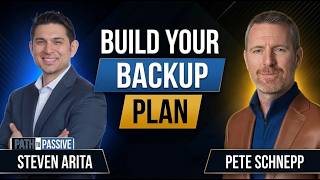
Pete Schnepp went from a 2007 home purchase that ended in short sale to building a multi-property portfolio. He uses BRRRR, seller financing, and cash-out refinancing to buy roughly one property a year, emphasizing the psychological challenge of purchasing when markets are fearful.
Questions this video answers
May 30, 2025
Bought at $800, sold three months later for $500.
Fall 2007 for about $210,000–$215,000.
About $80,000.
Seven properties rolled into a single portfolio loan.
Chapters
The fear was not being able to fulfill my full potential and to live that life. And you know, I think the stock market is really just a scam for most people. It's a place for, for them to park their money and forget about it and hope that everything's going to be all right. But when you truly get to understand the way that the financial benefit compounds in real estate and you get tax benefits and everything, it's, it's, you know, it just blows away.
Welcome to the Path to Passive podcast where we talk about building wealth and empowering lifestyle through commercial real estate investing for tech professionals. I always wish that other tech professionals reaching financial freedom had documented their journey along the way. So I'm doing it for the rest of us. Join as we explore stories, many failures and lessons learned along the way. I hope you enjoy and subscribe. Pete dude, thank you so much for being here. Always, always great to meet other people inside of Raise masters, inside of masterminds, to really connect people that are on similar paths and learn things that you've got going and how we can help each other. Of course, you being here, you're an expert resource to give some value to the listeners too and get some more exposure for yourself what you got going. So for those that don't know you yet, please tell us a little bit about yourself, your background, how you would explain yourself today because you have a long journey which you're going to get to. But what are the couple things about you today that how you describe yourself?
All right, Stephen, great to see you, man. Thanks for the intro. How would I describe myself to the, to the population out there? I am a world traveling family man, entrepreneur, investor.
I love it. I love it. Short and sweet. Yeah, I love it. And you got some of those, you know, some videos on your YouTube too, to talk about those different things too. I saw Family man was one of them as well. I love that. Well, you do have a couple different points here I want to get to, I thought would be great for the audience. One of the things just getting right into it I thought was really cool to talk about is why uncertain markets are the best time to invest. You know, how smart investors capitalize on downturns and uncertainty. You have gone through some downturns as well that you've gone through, survived and are now thriving. Talk to us a little about maybe a little of your story. You know, the rentals that you first got and then some of that downturn and how you kind of learned this lesson as well.
Yeah, good question. I mean, I'M a, I'm a student, I'm a lifelong student that takes action. And so, you know, I am always just trying to understand what are the super wealthy doing, right? And so uncertain markets, it comes down to the famous Warren Buffett quote and, you know, be greedy when others are fearful, and fearful when others are greedy. And it's simple to understand. Buy low, sell high, right? The concept is easy. Everybody's heard it. That's nothing new. But the reality is it is one of the hardest things for any human to psychologically do. It just is, right. When things are going good with your real estate values or with your crypto or the stock market, you just want to ride it out. You don't want to sell, but when things drop, all of a sudden you're like, sell, sell, sell, sell. I can't handle this. It's funny. I have a quick story about crypto. Back in 2014, I bought one Bitcoin for $800. And then three months later I sold it for 500. The value went down from 800 to 500. And I was so scared about it going to zero and losing $800. It's a hundred thousand dollar mistake. And I pulled that up on my, my Coinbase account and I keep showing it to my kids as a lesson learned. Like, you can't be scared, right? But at the moment, I was scared. Too scared to lose $800. But back to real estate, you know, I, I kind of got started in the boom and the bust. I rode that through. Luckily, I was in my early 20s, fresh out of college. I didn't have anything to lose yet. But right out of college, I started building houses for some home builders out here in Phoenix, learning construction, so on and so forth. So I was watching everybody around me get super rich. You know, literally people would sign up to buy a new build home. We would build it in six to nine months, whatever it was. And by the time they moved in, they had made 100,000 bucks in equity and appreciation or more. Unreal. People were getting stupid rich. And then they're buying multiple houses and they're renting them and they're like, well, you know, our, our mortgage is 200 bucks more than we can rent it, but that's okay because we're going to make 100,000 bucks in a year on the property anyway. And then the rug got pulled out, right? And so I had bought my first house, very first house, in 2007. I was young, had no money. I literally had to take money out of my IRA to Pay the closing costs, but otherwise, I bought it for no money down. And I paid 210,000 bucks, maybe 215 in the fall of 2007. A month later, the market just crashed, and I wound up short selling it a few years later for 80,000 bucks.
Wow. Okay.
So that was my first, first experience in real estate. But the reality is, is that, you know, over the years, and I knew that most of the wealthy people out there, the people that I encounter, they all have a substantial amount of real estate. And it was, you know, I just knew that it was one of the easiest paths to a life of freedom and to wealth. But that timing was. Was rough. But seeing what I saw, people lose everything they had, I saw business owners go belly up and bankrupt. You know, it really just shaped my. My journey in terms of how I buy what I look for. And being ultra conservative. And now that we've had this latest market correction, I think it's, you know, I have no distress right now. I did buy some properties, you know, 21, 22, but, you know, I bought them. Right. And I have no distress, no. No issues. I'm not over leveraged. And I think it's because of my. My entry into the real estate market out here just like made me ultra conservative. And so, you know, in hindsight, you always think back and say, well, I should have done this or should have done that. And I think everything is kind of meant to, you know, it plays for me. It played out, you know, for a purpose. You know what I mean?
Yeah, absolutely. So you got to be a builder, and you saw a lot of people just buying homes and getting rich on the equity, just like you were saying. And I mean, it sounds like you took some of that. I mean, you were an action taker. You took action. And did you do that same path there? You said you had to really come out of your IRA to even do a closing on a house. Was that just kind of the. Were you looking at the time and seeing that everyone's doing this, must. This must be the path to do it. And did you also get affected that way, or did you have a different strategy when you were looking to buy your first one?
Yeah, I think I had fomo. You know, I had fear of missing out. I was young and, you know, I went into a lottery to buy a house. It was just. It was nuts. I had no. Never been through a downturn back then, so. But that's what it was. It was fomo. I was trying to get in, you know.
Sure. But I Mean that, that is such a. It's, you know, you can either be, I forget the quote here. You can either be like a warning or like a positive signal type of thing. But, you know, the things that you have learned, this isn't just kind of lip service. Right. It's just kind of like, well, you know, it's. It's tough to buy and be, you know, greedy when everyone, everyone's fearful. You know, the Warren Buffett quote you just mentioned, but you have really firsthand experience and it has made you a better investor today. And so how does that. I know one of the things that you had talked about was the strategy that of at the time, which was buy one, you know, rental property a year. Right. Was that the plan at that time or did you still do that after the whole 08 correction? Or what happened afterward after you buy that property?
So after that, you know, the short sale, I was tied up in that house and then my credit was ruined for a while. But like 09 to 2012, if you know anybody that bought a property in that timeframe, they've done really well on it because they bought it when nobody else wanted to buy or could buy. You know, you either were scared of buying at that time and I remember that because nobody wanted to buy because everything's getting short sell. You think next week or next month it's just going to be a little bit cheaper. You know, the prices are still going down. So there was a lot of stuff, fear in that market. And also lending was tightened up so people that were trying to buy, you couldn't get a loan. But I was locked up because I had bad credit for a while. And I had, at that time, I had transitioned away from the corporate world. I started my own business, a painting company. So I was a painting contractor. And I got into that because it's what I knew best. But it was really the best way for me to provide a decent income for myself too.
Yep.
So along the way, yeah, I met an older couple at a dinner and they mentioned, hey, you should try to buy a house a year. I think I had my first rental property at that point maybe. And at the time I was like, man, how could anybody afford to buy an extra house every year? You know, I was just, I was trying to get by. I was in survival mode. And, you know, I was like, I could, I could barely afford my bills. But it planted that seed in my head and it was a little bit more easy to wrap your head around than seeing guys that are buying like huge deals and really killing it, it was just kind of like it was something you could set as kind of as a target. And anyway, that kind of became my goal as a contractor was, was to make enough money to where I could have enough spread between my earnings and my living expenses to where I could have a down payment. And so it made a nice target. Right. And so at first it was like, okay, if I can make an extra 50,000 bucks, I'm going to live as cheap as I can. If I can make an extra 50,000 bucks, save that up, that's going to buy a property or if it's 100,000, whatever it is.
Yeah. Rinse and repeat from there. Yep, that makes a lot of sense. So when did that kind of change for you? You've obviously got a lot more doors now. You got a portfolio of 100 doors. You know, you've seen some of that. You've had experience through that point with that downturn. You have no doubt been like, you're saying, painting, roofing, still being around in real estate and always having a target to look at buying more and more and more. How did your strategy change over time?
Yeah, there's a couple, couple, I guess, turning points or moments that I can look back to that were pretty impactful. One of them was, well, I got, I got a knock on the door at my house. And after that there was about a year period or so where every time somebody came to my door, my stomach just turned and I felt like I was going to throw up and puke, you know. And also when I went to the mailbox, which should be a good experience as a contractor, you go to the mailbox to pick up checks, people are mailing you the payment. But what happened was one day I got a knock on the door. I went, went outside and I got a process server serving me up with a lawsuit. And there was that we had done a fairly good sized paint job and the client. There was a situation that happened and the client sued me. And it's a big firm, like a big facilities management firm. And so I'm the small guy in this. And the reality is we didn't do anything wrong. We were right. But there were some contractual situation right to where they might have had me on the hook. And so I got served with this lawsuit. Literally. I mean, it's the worst feeling in the world every day thinking that you might be getting another legal notice and that, you know, you never know what's going to happen. And that one day, everything that I had built and worked for for many years, my grinding, my 10 and 12 hour days, the late nights could just be gone and my family would be in jeopardy, right? So at that moment I realized, well, luckily, you know, it was not. They did try to sue me, but it didn't work out. Like I was in the right, like I said. But I knew that the judge makes one decision, it could go against me, but that was where I was like, okay, I really need to have a backup plan for my family. And so, you know, as much as my active income, the contracting income is good. That's my income engine. I needed a wealth engine. I needed some kind of passive income. Even if it wasn't much, I needed something to fall back on, something that I could build quietly and over time. And so that's when I really started getting a little bit more serious about it, I guess rather than just one rental property, a lot of people out there will go buy one or two rental properties and they're done, right? And it's like, oh, we had a couple of tenant issues this and that, but to me, now I had some real purpose to keep going forward. Does that make sense?
Absolutely. I mean, you know, that that's, that's such a wake up call and I think you might have said that, but it is such a wake up call, right? You went from this pleasant feeling because, well, the checks get mailed, mailbox money, and not, not the same ways, but in this case the checks are coming to, you know, getting that associated to, you know, you never know when there's another notice or something coming. And you know, I honestly, that sounds like a, one of those, one of those events where it becomes a massive why to like, well, I need different streams of income and I need it where it's not just active. And I know, you know, we talk a lot about going from that active and passive. And this is part of that bigger story here too, right? So.
Well, even to that note, when I go back to my, my days in the corporate construction, like I worked for a Fortune 500 builder, it was a big firm and we went through the boom and bust and, and I saw people that had been there for 15 and 20 years get laid off. You know, when things started turning. Every Friday was pink slip day and people were getting laid off that were in their 50s, that had families, they had big houses, big mortgages, expensive car payments, you know what I mean? And they had invested their entire life behind a Company, a Fortune 500 company who is stable. And then all of a sudden it's gone, right? They had nothing to fall back on. The, like everybody was just looking for, what am I going to do next? What, how am I? And so I just saw it firsthand when I was younger and then that lawsuit thing and it all just, it all just came back like, I need multiple streams of income and I need, I need some security. Safety net.
Yeah. I mean, is that. So that was the, it seems like the multiple streams of income that is probably one of the biggest takeaways in addition to being a bit more conservative. Right. Because like going back to what you were talking about of uncertain markets, the best time to invest, it's true, but you have to have a lot of emotional mastery in that too, so to speak. What were some of the things that you took away and how did it help you to think about when things aren't going great? How do you stay grounded and steadfast to make money decisions or other decisions to go and invest? What are things you think about and focus on to keep a clear head and go in and know how to invest when people are freaking out around you?
I just want to clarify your question. So are you talking about recently when, like the, the recent market turn downturn.
Or if, if you can apply it to that one, go for it.
Sure. So recently, you know, we had a nice run up from 2020 to 2022. Right. And, and there's a lot of people that bought a lot of real estate that are in a lot of trouble right now, you know what I mean? And they, they kind of had the same FOMO that I experienced back in 0708 and they were making deals that shouldn't have been made. And I bought some properties as well, but I bought them. Right. And I have no distress right now. I'm not over leveraged and I didn't buy a whole lot, but it's because like, I knew, hey, these things just, it doesn't make sense. People are paying way too much.
Right.
But the market has corrected. It has corrected. And so I see a lot of similarities between now and back then, you know, 2007, fall of 2007 is when the market peaked back then follow 22 is when it peaked out here. And then back then, 2008 was the correction year. This year, 2023 was the correction year. Right. And so if you can go back in history in the 2000s at least and pick a time to buy a property, most people are going to say between 2009 and 2012. And so you can't go back that far. But I think right now we're in a very similar era. I think 2023 to 2025, 2026 is the same style era. And so I'm, I'm in full on acquisition mode. I'm buying as much as I can. I'm buying them. Right. I'm not competing against people, which is great. I love it, you know, because so many people are scared or they say, oh, the rates are too high, this and that. Well, you know what, I'm making deals pencil with high rates and if rates go down, it's just going to make them even better. And I'm also structuring a lot of seller finance deals. So you know, I just, I'm taking my lessons learned in the past when I couldn't really, I couldn't really take advantage of the situation back then and I'm taking advantage of it now. And it's, you know, let's be real. The real estate is a long game no matter how you get into it. I'm not the type that's into buy and sell or quick flip. That's just not my game. It's always a long game. But when you, when you can dollar cost average and buy every year and when there's a dip, buy a little bit more, you're going to do, you're going to do all right with the long term strategy.
Yeah, definitely. And it's kind of a really cool like completion to that, that story loop for you too, right? To you know, know learn what you've learned then and really be able to apply it now too. And so what about the, that idea of like, like that, that old advice, that other advice that you were, you were told of buy that, you know, your property, one rental property a year. What would some of your advice be today instead or, or you know, that you would tell up and coming people at dinner at something to, to that, those new people that would be like, all right, Pete, like where do I go from here? Instead of one property a year, what would it be?
It would be one property a year. That's a fantastic goal to start with. Yeah. Anybody that wants, just think about it. If you can buy one property a year for 10 years, how much different would your life be in 10 years? You know? And so wealth advisors, every day your 401k, your IRA are going to tell you to dollar cost average into a mutual fund, put 100 bucks a week, 400 bucks a month, whatever it is, dollar cost average into a mutual fund. But you know what, you can only make so much money in the stock market and in the mutual fund and you're getting taxed and you're paying fees and it's just people don't realize, you know, what a disservice that is. You just can't get wealthy with that strategy. But the dollar cost averaging strategy in real estate, letting that compound over time with all, all the different financial benefits that you can get from real estate, it makes a serious impact over time.
And dollar cost, just to make that crystal clear, dollar cost averaging, when real estate over time, you're saying just buy a little bit of real estate at a time, is what you're referring to.
One a year, at least one property a year. If you can buy more than one a year, then go for it. But the methodology is consistency.
Right, Got it. Clear, Got it. One of the things also is you talk about infinite returns, holy grail of real estate investing. Talk to me about what that means here because I think this is a really important one to using your own money. But at some point, playing with the house's money or letting that money continue to increase, I'd love for you to explain a little bit of that.
Yeah, that's exactly it. It's using the house money. So if you play poker or cards, which I don't, I'm not a gambler, but the house money rule, right, you start with betting 20 bucks, you win 20 bucks, you take your 20 bucks and put it in your pocket and you just play with your winnings, right? And so in real estate, it's a similar concept. There's a bur. A lot of people call it the brrrr strategy. Buy, win, rehab, rent, refinance and repeat. Right? And so the really what it comes down to is if you buy it undervalue, which is really a huge benefit of real estate that you can't do in the stock market. You buy it under value, you fix it up and you add value, which again, you can't do in the stock market. So you're kind of, you know, you're, you're buying undervalue, you're adding value. Then once you add, once it increases in value, you can take out a new loan that you know, in ideal, the holy grail of real estate investing is that you take out a new loan that's big enough to pay you back all of your capital that you put into the project. Now it's easier said than done, so. Right, yeah, easier said than done back when the rates were going down is a lot easier to do. And a lot of people have gotten in trouble trying to do that because they start off with short term loans and so there is some risk to it, but you don't have to do it in a short period of time. To give you an example, I just did a portfolio loan, a cash out refinance. I rolled seven of my properties into a one package loan. Okay. And two of those properties, I had already taken out all of my capital and a bunch of tax free money a few years ago. So they're like double infinite now I took more out because the values have gone up. The other five were cash flow single family homes and I had enough to where they were all. I took out all my capital. So now these seven properties, like basically I have no money left in them and I'm going to redeploy these proceeds into other properties. And so it's kind of the velocity of money. It's really how you scale a portfolio and it's how you, you know, the other phrase to keep in mind is the return on your equity. And so you have some people, the return on your equity is always zero. If you've got 100,000 or a million dollars in equity, that is not working for you. It's just, it's there. What it's doing is providing you comfort and making you feel good, but it's not providing a return. So if you can take that money, let's say you pull, you take it out and you get a 7% interest rate on it. Well, if you take it out and invest it, right. And you get, you know, annual 15 to 20% return on your investment, that's how things start to compound.
Yeah. And that equity you're talking about is, you know, we hear there's like trillions of dollars stuck in people's home equity. Right. So that would be an example, kind of like what you're talking about and the, the idea of having no money in a deal, because I've talked to people sometimes it's like, like what do you, what do you mean? You know, it's not, no, none of your, your own money. So like you were talking about before, if you were had your target of $50,000, you were to buy a house, but over time you're able to refinance or something to get that 50,000 or, or more than you're able to get that money and go do something else with the additional money. Any money over $50,000?
Yep. Yeah, it's scaling and it's, it's, it's a beautiful thing in real estate that you really can't do in the stock Market, you know, maybe you can at a certain point, but it gets really tricky. It's for the average person, you know, when you compound the ability to do that and to leverage properties to buy under market to add value, the inflation hedge, have tenants paying your loan down for you, it all compounds all these different financial benefits from one property. Once you start getting several properties, it compounds really, really amazingly.
So what else did you learn as what, what kind of things that you, you learn from entrepreneurship from these different businesses that you have had and brought that over into real estate. And I asked that and I, I'm kind of, I'm kind of leading the audience, leading you with this one because I think it's such an important thing here too. But we had talked about this book right behind me that you pointed out too, which was who, not how. And maybe that will fit into your answer here. But the question, direct question being what are some of the things that you took from entrepreneurship that you brought into real estate? How has that helped you with your investing journey?
Yeah, I mean, a lot of entrepreneurship is building a team. You know, you can only grow a business as much as the people that you have. And you, you start depending on people. Entrepreneurship, building a business, it's tough. There's a lot to do. You know, frankly, like, I think, you know, owning a bunch of real estate is just so much easier. But yeah, with that book, you know, you've got to rely on people and you lean on each other. And so who, not how is is amazing. Like, I own a painting company, but I don't paint houses, right? And so all of my painters are my who. And you know what, those painters, they don't know bookkeeping, they don't know marketing and stuff like that. They don't know how to sell the job. They know how to do it. So they rely on, you know, somebody else at our team for those things. That's their who. And so whether you know it or not, you've got a lot of who's in your life that are doing things that should be helping you, should be helping you. You're relying on other people for different things. And so with real estate, you know, it's, it's cool because you can, you know, realist. I didn't realize until a couple of years ago that you can, you can really bring in partners and you can split up the responsibilities and leverage off of each other. A lot of times you talk about leverage in real estate and it's a financial leverage because you buy a property with 30% down the bank gives you the rest, but you're making 100% of the appreciation as financial leverage. But you also get people leverage, which sometimes is even better than financial leverage. And so what I'm doing right now, with joint ventures and the different deals we have different partnerships, we're utilizing each other's strengths, you know what I mean? So I've got partners who, they make a ton of money, they've got great jobs, and the best use of their time is what they're doing because they're doing so well at it. But they also know they need a real estate portfolio, the backup plan. So that's. We. We leverage each other. They leverage me to do all the legwork, to find the deals, to put them together, to manage them, to do the value add, all this stuff, and I leverage them for capital, you know what I mean? And there's a. There's a fair trade for the two things.
The.
There's partnerships where I have developers and I leverage them for their development expertise and team. They leverage me for my management and the deal structure, so on and so forth. I leverage people for location. Right. I have one deal that's out of state that we recently bought in Northwest Indiana. Super great deal. It's Chicago msa. But I wouldn't take it on unless I had a partner out there. And so I. So we're leveraging each other. We're each other's. Who's. And that's the beauty of real estate, is really the strategic relationships and strategic partnerships. And in entrepreneurship, there's a saying that goes, if you want to go fast, you do it alone. And that's what I did for the most part as a contractor. I never had partners in the business I was hiring. I was doing it myself, and I was going fast, but I never went far, which with that business. So the saying goes, if you want to go fast, you do it yourself. If you want to go far, you do it with partners. And that's the approach that I'm taking with real estate.
Yeah, I mean, you know, I'm going to clip that. That one right there for you and for everyone to kind of replay over. And I love how you gave some different use cases there, too. Not only about the people that you're looking to work with and that you're serving right now. Right. The people with, they're good jobs that are making their money, and their best thing is to stay focused on there to continue to make great money, especially if they're good at what they do and like what they do to A certain degree to work with you to help build their portfolio. Now I want, I want to, you know, we're kind of break this down a little bit because I think you're going to really serve the audience here with. I still have sometimes these conversations, people, it's like, hey, Stephen, you know, should I do a long term rental? You know, a rental, should I do an Airbnb? Should I go do something else? And I'm like, do you love real estate? Do you want to learn real estate? And then, you know, that's kind of like, well, you know, sort of. But I want, like, is like real estate is the way to invest. I'm like, sure, yeah. But how long did it take you to learn tech? How long did it take you, you know, where is, where's the time? Right? And so I'm kind of teeing this up for you. How much when you're talking about partnership, how important is it for someone to stay at where, you know, this high income earner that you're, you're partnering with, for them to stay and to do what they're good at and do what they like doing to continue that income, to work with someone who is specialized like you, to go and build that portfolio and, and does it make sense for them to go and you know, make all a lot of mistakes too, to start learning real estate? Because it's not a short journey. You've talked about what the 15, 20 years in real estate to get to where you are and how many mistakes you've made too. Like, expand on this conversation for me.
Yeah. Passive income is kind of a myth in real estate. You know what I mean? It's kind of the big thing that people talk about. And the only way that that's passive is if you leverage somebody else to do the active part part, because it is even just managing the manager, making decisions like there is work to be done. And so really, you know, if you're an executive out there or a W2 earner and you're, you know, you enjoy what you're doing, it always just comes down to what's the end goal. You know, it really, that's what it comes down to. And me personally, I love real estate. You know, I could have, I could still be doing it on the side, but I realized the 8020 rule, you know, real estate made the 80% difference in my life. And I just, I just love it. I love the art of the deal. I love the hunt. It's not easy. It is an active business for me. It started off as a side business, but I wasn't doing much. And so, you know, if you're looking to get into real estate, the question is, you know, what do you want out of it? What's the end goal? What do you want out of it? What are you willing to put into it? Do you want to be an active participant? And if so, then, yeah, start off, you know, with the 1:1 property a year goal. Start hunting deals, reaching out to brokers. I mean, it's a numbers game. If you look at 100 deals, make 10 offers, you might get one, one good one to buy. Right? And so it takes time to do that. You're going to learn. And that's exactly what I did. But I just, I love it. And I had the flexibility to do it alongside my contracting business, but I was working a lot, nights and weekends. It was a lot of work. So the other side is, hey, if you really love what you do, you do well at it, but you just want some safety net. You want some passive income. You want to build a portfolio so that one day you can leave that job potentially or just have another way to build up your retirement portfolio, then leverage somebody else that's got their systems down that's doing it. You know, you give up a little bit of equity, but you make it a win win situation. And it really doesn't take any of your time. That's where the who, not how comes in. You know, when you, when you truly craft a partnership with somebody to where your skill sets complement each other. And those skill sets can both be active or one can be. One could be the capital, one could be the deal guy. Right. And so it's a matter of finding people that you like working with and you complement each other and you've got similar goals.
Yeah, perfect. I want to double click into making sure that you know who you're working with and you like working with them. One of the things that I also hear that I'd love to get your take on is that people, like I said, come to me and I have this conversation. They'll say, hey, but, you know, why would I go. And I mean, you answer some of it here. But they're saying, well, if I partner with other people, then I don't get it all. I don't get the entire property. You know, I don't own the entire business, that kind of thing. How would you answer that? Like, Pete, like, yeah, I'm interested. But then, you know, I don't own it all.
Yeah, I mean, I own 100% of my contracting business. And it's a small grape compared to owning slices of equity with a bunch of real estate. And so here's the way I think about it. If you're a corporate level person or an executive at a company, you are, you know, a CEO or whatever, you are tasked with finding the best people to drive that department forward towards its goals.
Right.
And so you're going to go hire the best manager, you're going to hire the best recruiter to bring in the best talent, you're going to go find the best HR person, you're going to find the best business development person. It's the same thing with your finances and your wealth. So if you are an executive, take that same mindset to it like I'm gonna go find the best people to, to, to make my money grow in real estate or you might want to have some exposure to oil and gas and it's like I'm gonna go find the best people to, to create my oil and gas asset allocation, whatever it is. Does that make sense?
Absolutely. I, I fully subscribed that you want and, and, and by the way, that's how you don't the bruises and go through the same trial and error and you know all those things while you can still focused on making your money and that flow of income that you're already getting. Go find other people your who like you were saying to, to work with them.
It's leveraging people, leveraging time and leveraging money. The more leverage you've got, the better position that you're in.
Right. And the faster you can go too, even though you're going further as well.
Yep.
Yeah. So, so tell me about what executives, you know, other people should be looking for when they're looking to find these who's for real estate to help like yourself to build these portfolios. How should they, some questions to be asking. How should they vet them, what they should be thinking about when looking for these relationships.
Yeah. So the beauty with real estate partnerships is you get a chance to date before you get married. Right. And so even though you say a partnership, I know a lot of business partnerships that have gone many years and they end in tragedy like just horrible, horrible breakups. Because a true business partnership really is, you know, it's a long term agreement. But with real estate it generally starts with one deal. So you know, there's a few different ways that somebody could invest passively. One would be as an LP in a syndication.
Right.
And so usually those kind of deals, you know, you get a, you can Invest as little as maybe 50,000 or 100,000 bucks, depending on the deal. And really it takes no time at all. You are literally a limited partner. You just put in some money and then you're going to get some of the upside in it.
Right?
And you want to vet out those operators because a lot of them, you know, really don't know what they're doing. They're just good marketers. But really the other way that I prefer is a joint venture, which is a little bit more, I wouldn't say hands on, but it's a lot more face to face. Let's build a portfolio for you, a little bit more involved. You're a decision maker. So my joint venture partners are decision makers and so that's what I found. Like a lot of the high net worth people that are putting in significant capital, they want to be able to determine when to sell or when to refinance and make those key decisions on their own, but they just don't have the time to do it and they don't have the deal flow and they don't have the desire to go do all the work in the management. So that's where that comes in. But like me personally, I'm generally looking for individuals or small equity groups that can invest at least a million bucks a deal, you know, preferably more, but with the intent of we're going to start with one and make sure that we're good to go and then we're going to keep building a portfolio. And the cadence depends on how much capital they've got or wanting to invest. But that's not for everybody, that's for sure. The other part is really as a limited partner, and that's where you can put in. If you start putting in 50,000 or 100,000 bucks a year as an LP into a deal, over time you're going to have a pretty nice portfolio of real estate in, you know, as an lp that doesn't take any of your time. So you focus on what you do best, what creates the income. You know, I always talk about you've got, you should, you got to have an income engine, right? And so for me, that was my contracting business for, you know, or it could be your tech business or your doctor, whatever it is, you got to have that income engine, but you also got to have the wealth engine. Because once the income engine stops, you know, you don't want your train to stop. The wealth engine is going to continue growing because you're going to have income that creates income that creates income. And then there's tax benefits too. And so once you get both of them working in conjunction, that's when the magic happens.
There you go. I love that. So you have the two options for your. How you're serving people the $50,000 LP, less involved, less control. No control really, except to make the initial analyzation and the decision. And then for the million dollar net worth plus you would say more involved, but more control. Right. Some. Some more decision making, more, more communication, conversation going on as well. So cool. It's cool to see how there's different ways to serve people as well, and different models. You know, people hear about different, you know, syndications and funds, et cetera, et cetera, but different models along the way as well, like you're talking about. So I think one of. We covered some really cool things today. Tell me about how has, you know, to start. It was, you know, you get to do you explain yourself as a traveler and also father, et cetera. How has investing kind of, you know, impacted your personal quality of life too? Cause this is why, you know, why we also do what we do. You got that wake up call right at, you know, with lawsuit, you know, how has this impacted your life? And then I'll kind of ask my last question there to really drive us home.
Everything I do is super intentional. I've done a lot of soul searching and deep dives into my why, who I want to be, what I want my life to look like, how I want to live it, so on and so forth. And one of the biggest priorities for me is to travel the world. You know, I've never done that as a kid, didn't do much, and I don't want to die before really getting to explore and see what's on our earth. So real estate creates the life that allows me to do that. You know what I mean? And it's also what I love. And so for me, it's, you know, it's my icky guy. I don't know if you've heard of that. Japanese doing real estate deals is my icky guy. It's that intersection. The contracting business is a means to an end to buy real estate. It's my income engine. Real estate is the means to an end for me to be able to live the life that I want to live, which is a lot of traveling. And, and I've even taken a step further to really define what, how much traveling is the ideal amount for me. Because I've been at the point to where, you know, you could travel a lot but there's. There's no fulfillment in it.
Right.
And I wanted to feel productive, you know what I mean? And so for me, it's all about really designing my life with intention to where it's exactly what I want.
Yeah, you gotta have the definitions. If you don't, I mean, definitions and those visions for each area of life. If you don't, how do you know what you're really striving for too? Right, right. So the final question here is sometimes each of us need a wake up call. Right. What would you say for people to think about, you know, and they ask. Well, it's like, all right, this sounds great. Pete, you know, got a lot of experience. He's figured this out. He's just told us about how it's personally affecting his, him and his life positively. But it's like, yeah, okay, I can do that later. What are some things that you would tell, you know, someone to think about? Like, no, there is no later. Your wake up call should be what happens if. Or, you know, kind of shaking someone to their version of, they could get their lawsuit here or there, you know, not to have them live in a fear, but like, there's a reality that needs to be thought about that you should invest now for all of these reasons. You know what I'm getting at?
Yeah. I mean, for me, the fear was not being able to fulfill my full potential and to live that life. And, you know, I think the stock market is really just a scam for most people. It's a place for, for them to park their money and forget about it and hope that everything's going to be all right. But when you truly get to understand the way that the financial benefit compounds in real estate and you get tax benefits and everything, it's, it's, you know, it just blows away what you can get in the stock market. And so the fear for me is just like, you know, the fear for me is working forever and never truly being able to enjoy my life, this precious time that we have on earth, to enjoy my family and to pursue things that are meaningful to me. And when you think about all the different ways that, you know, your money compounds and makes money with real estate, and that can put you in a position to where you can live life how you want to and eventually not rely on your main income, that was it for me. I wanted to earn more and work less, and real estate was the best way that I know how to do it. And it's worked out pretty well.
Yeah. Awesome. Well, I appreciate that. The Thing that I think about too is not a get rich quick, but a get rich for sure is the.
There it is. Yeah, exactly. Huh. And it's time in the market. It's a compound effect, you know what I mean?
Yeah. Appreciate you being here today, Pete. There's, you know, lots of good conversation there. Things that I frequently got from people I'm sure you, you know, have, have gotten from people as well. This will serve many others. So I know you have some, some goodies, some gifts for people too, I think some book and a book you have as well. Tell me about that. Where can people learn more, find that and connect with you further?
Yeah, I got to co author my first book recently and we got number one bestseller on Amazon which is kind of cool. So I talk a little bit. It's called the Transformational Journey. And so if you visit my website, we've got a free download of the book there. It's assetstream properties.com. another thing that's pretty cool that I'm working on is I'm hosting something called the Deal Room and it'll be the first session on May 20th and we're going to do it quarterly afterwards. But I've got five to six operators with live deals coming in for a zoom. Live only, high intense energy and each operator has five to six minutes to pitch their deal. So it's for accredited investors where you can come. There's going to be every, every investment is going to be a different asset class. We've got oil and gas, fixed income, private equity, you know, a couple different types of real estate. So it's a really cool way for investors to get exposure to different types of deals. And then afterwards if they want to talk to the operator, there'll be Q and A breakout rooms and they can get some follow up info if they want. But they're not going to get pitched or anything after that. It's not like they're going to get bombarded. So it's a cool way for investors to see what's available and see what they might be interested and, and get to learn more if they want.
Awesome. I'll make sure you want to get.
Some info on that. Just look me up on LinkedIn. There'll be some, some stuff coming out on that.
Excellent. That sounds like it'll be a good one. Learn about a lot of diverse things all at the same time. I'll make sure all those are in the the show notes as well. Go there, click on those and connect with Pete and team. Appreciate you sir. Thank you. For being here.
Thanks, Steven. Take care.
Thanks for joining us on another episode of Path to Passive. We love connecting with our listeners and those on the path to architecting their wealth and improving their lives. Feel free to let us know what topics you'd like to see in future episodes. Get in touch with us through email or Instagram. See you next week for a new episode.
More from Pete



How I Turned $3K Into $300K Tax-Free: Real Estate Wealth Hacks You Need to Know!