Nurture_Podcast_SentinelLetter_Interview_2025-06.txt
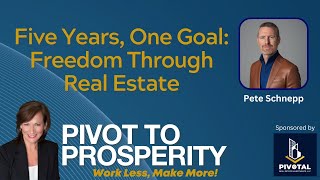
Transcript of a podcast interview with Pete Schnepp describing his real-estate investing journey: moving from single-family/condo ownership to acquiring multifamily (fourplex) deals in 2017, executing cash-out refinances, and reaching a milestone of ~$10,000/month rental income toward his 20,000/month five-year goal. He emphasizes daily habits, living below means, spousal alignment, and using books/podcasts for learning and motivation.
Chapters
You had some experience now with real estate. It was a, you know, single family house, a condo. And then interesting that you said you were scared back in 2015. You know, the market was hot. And, you know, looking back on now, we're like, oh, I wish I would have bought in 2015. You know, and it's. We're in a similar environment now as well. But so you see all this happening, and you're concerned and you think you're secure, but you've seen otherwise. I mean, even, you know, the real estate market was decimated. Mortgage brokers and insurance brokers, they all lost their jobs, even multimillion dollar businesses. You're looking at this going, oh, my gosh, that's insane. And so why did you decide to take action? And how did you do it? Did you continue buying a condo once a year or how did you maybe shift?
Honestly, I think what really helped me is guys like you, Michael, all the free info out there nowadays on podcasts and YouTube and stuff. So. So I made a switch in my head. I stopped listening to Howard Stern when I'm driving around from appointment to appointment, and I started listening to podcasts and books, right? So I revisited Rich Dad. I started listening to Bigger Pockets, Think and Grow Rich, stuff like that. And so every day when I'm driving around doing my job, I was in real estate school, right in my car. And, you know, we're so lucky nowadays to be able to hear everybody's stories. And that sort of, you know, not only does it give you motivation, but it also gives you confidence that, hey, you know, this knucklehead that I heard on the radio, he could do it. I think I could figure it out too, right? So in 2017, you know, I had the three properties. One was my primary, and I was like, I want to buy a fourplex. I had been saving up, saving up, saving up. And a big part of that, too, is living below your means, right? And so I've got to give credit to my wife and my kids now. Like, you know, we live a modest lifestyle. You know, we're focused on expanding our means, and we keep our living expenses pretty moderate. So that, to me, it's like every bit of savings is just saving up to invest, right? So I got to the point where I was like, all right, now I want to get a four plex, and I've got a real estate license. I'm not really acting as a realtor, but I could see everything that comes on the market. I'm trying to buy a property in 2017. And I can't. I'm putting out offers. I'm getting outbid. I'm not on it first, whatever reason. And finally I was like, you know, screw it. I'm going to make it happen this weekend. And I told my wife. So we went out and looked at 10 properties for sale. I put an offer on 10 properties, all 10 of them on a Saturday, within like a four hour span. I got four of them locked up under contract. That weekend. I took them all four through due diligence. And then I moved forward with two that are side by side. I closed on both. I figured out financially how to make it work.
Well, wait a minute. You can't just set out and say, I'm getting deal done. Like, if Garrett could do that, I would say, garrett, stop screwing around. Get a deal done today.
Right.
What was different? Like, explain, did you maybe just overpay to get it done, Pete? Or what was different about that time?
You know, I guess I wouldn't say I overpaid, actually. Oddly enough, on those properties, I got it for asking price. According to my calculations, it's still penciled. It was a decent deal, but the appraisal came in low on those. And so I actually was working with my lender. He's like, pete, put together your rebuttal, get your comps, all your numbers. So I put together my rebuttal. My lender told me it was the best appraisal rebuttal he had ever seen. We got the appraiser to raise it. So it went through no extra out of pocket. And this year, so I did no major capital improvements. Those are just cash flow C class properties. This year I did a cash out refinance, took all my money out, and now I'm infinite on those properties, which, you know, almost didn't appraise back then. Right?
Yeah. So you, you know, so Pete and I know each other fairly well. We're in CEO together. And he's like, hey, I got this situation where I can do a cash out refinance and I think I can get all my money out. He's like, should I do it or just keep paying down the loan? I'm like, pete, that's the Holy Grail, man. That's what you want to do. You want to take that out and go buy a couple more properties. And so I don't know if that was the first time that you kind of had experience. Was it the first time, Pete?
Yeah, it's the first time I did a full on. So I've done some Burrs. Right. But take all my money out. And this one was just, it was just the market appreciation really. I did no major improvements to it. I just sat on it, on them and worked out.
Yeah. So he did the cash out refinance and then he went and, and that's the beauty obviously of multifamily as well, is that it's easier to do that. And then he went in and he just kind of took off like a rock ship. It was like a late law, the first deal. This guy just started cranking through him. And Pete sent me a picture of. He's got a really cool thing on the wall. It's like all these keys. And it was his daughter hanging a new set of keys up on. It's all this tenants a new set of keys up on the wall. It was really cool, I thought. And, and I was like, man, that's so inspiring that you went from that stage and just kind of slowly worked it to get to where you're at right now. So what point did you actually become financially free from your real estate rentals?
I mean, I guess technically it was this year. So in 2018, I set a five year goal for myself to hit a certain amount in rental income. That's how the keyboard came apart, came together and it all actually, I owe it to, I would say I owe it to the Miracle Morning, that book. And I started doing that every day for 90 days and I really got focused and I got clear and that's when I set myself a financial freedom goal. And so for me, financial freedom at that time looks like 20,000amonth in rental income. We live off of about 10. So I figure if I can double it, I would be financially free. But just this year we crossed the 10,000 mark and we're a little bit more. So God forbid if I got hit by a bus and we had to fold down the businesses, but we still had the properties. My family would be able to pay the bills and they'd be okay. And that right there is a huge sense of security. It's not like I'm going to go sell the businesses right now and start traveling the world. Right. But to me that's like level one financial freedom. It's security. And now I'm, you know, how does that feel, Pete?
How does it feel to say that? Because I think we kind of, you know, we're like, we were having our pre call with you and we're like, yeah, you're financially free like I am. I'm financially free.
I didn't Realize it. And it's funny because my goal was set higher, but it's. It's definitely a milestone in my life, something that I want to remember and I'm definitely proud of now that I've thought about it. But again, my goals are higher than that. Right? There's a lot more that I want out of life, and money is a tool that allows me to do good things for other people. And for me to be able to do good things for other people, I need to keep moving forward. My lifestyle hasn't changed much. And when I had the 20,000 in mind, it was pretty much similar to where we were in 2018 when this started versus now. I mean, like I said, we live a moderate lifestyle. I mean, we got a house in the suburbs. It's nothing fancy. We drive, you know, Hondas. And Garrett knows me. I'm fairly cheap, right? Like, he likes to go out to nice restaurants, and, yes, he does. I'm okay with. With Chipotle. You know what I mean? I feel weird at fancy restaurants, but that's just, you know, us. Like, part of that stems back from, I guess, when I was younger, I read. I think the book was the Millionaire Next Door, and it kind of taught me that it's okay to be wealthy and just look like an average Joe, right? I mean, I don't buy fancy clothes. So when I look at 20,000amonth, that's assuming a lifestyle that cost me about 10 grand a month. With a $10,000 buffer, you figure 5,000 for capex, unknown repairs, vacancy, or whatever for the properties, and then $5,000 buffer for traveling, maybe increased living expenses or whatever. Lately, actually, I've been. I've been thinking about that number a lot. That number was established three years ago, and I'm on track to hit it. I'm not there, but I'm on track to hit it. But I think I'd be a lot more comfortable if I got that number to 30.
30K. That's kind of a number, a bigger number for you. And one. One thing that I thought of was, you know, I used to be like, a lot of people when. When they get money or they make money, they elevate their lifestyle. I think so many people just. They do that, you know, Definitely those. That's just how I was. It was like, oh, I made 10 grand. Let's go. Let's go buy a new car. Let's go do something like that. And then I had a big event happen eventually. Like, I. I got. You know, I got kicked down through My big business exit. At a certain point, I had to figure out how to live beneath my means. I started building habits around that. And so, Pete, what I think with you, it's like you've lived this certain way for a while. These habits, these things that are instilled in your head through everything, even if those things start to exceed and hike up, you may not, you may have it set where you're going to elevate things. It doesn't mean you're blowing it out and matching that, that passive income style. Same thing. I have a cousin who was poor for 10 years getting his doctor's, his PhD, and now he's making boatloads of money. He still lives like he was poor, completely poor. So much so that he would go to the Six Flags Great America to get meals because they have an unlimited meal pass. How weird is that? Crazy stuff.
One of the things that really helped me manage that, you know, I'm a business owner. You know, we've got a fairly successful business and at the beginning of that, you know, you just take owner draws whenever you need, whatever. So at a certain, you know, several years ago, I talked to my wife, I said, look, I'm going to pay myself a salary and this is what we're going to live on from here on out. We need to make it work because every month I don't know what we're going to bring in. I mean, painting is a type of business. You eat what you kill. You only, you only get paid when you sell a job and you produce it profitably. Right? And that doesn't always happen. So I established a salary and we've been living off of that salary and making that budget work.
Right. You mentioned it several times. Are you talking to your wife? I mean, let's not close out, gloss over this thing. How do you and your wife get on the same page? Right? Because you can be, you know, watching your dollars doesn't mean your spouse is watching it. Right. Just because you want this financial freedom doesn't mean your spouse wants it. How do you get on the same page with your, with your wife and your family?
Yeah, that's a good question. I mean, just by communicating, she kind of knows, you know, like I'm. She doesn't really, she doesn't really go after buying properties. She doesn't really have the same big dreams that I do, but she understands them and she sees the potential of our future together as a family. And she's on board. She just, she's not high maintenance. She doesn't Need a lot of fancy things. She's, she, she wants me to be available with the family. And, you know, she wants a good family dynamic and it works out really well. I'm really blessed because I know other people that are in similar situations and their cost of living is way higher than ours. And to me, everything that I can save is another property or another investment that I can put money into that's going to help our family in the future, you know what I mean? And so she's on board. And I wouldn't be able to do it without her, that's for sure.
What you have now is you have options. I mean, you like the option of exiting is there. You didn't have that option before. And that's really what financial freedom is all about, is options. And no one I know becomes financially free and sits on the beach. Like, they might do that for a month or two, but long term, that's awful. Like retirement, the idea of retirement, I don't know anyone who does. In fact, most people who are furniture free work more and harder than they did even before because they're doing it on their own terms. And so that's, you know, a main reason that people want to become financial trees, to give them more control of their time and also give them more options. So if you were to think about what advice would you give someone that wants to do what you've done? You want to start doing some deals and start progressing, be larger, cover the living expenses. Like, what do you think would be really useful for someone listening or watching this?
You know, I would. The biggest thing that helped me get where I'm at right now is daily focus. Right. So I mentioned the miracle morning was a big impact in my life. And although I don't do, you know, everything every day I've got my vision board up. Every day I've got my affirmations written out. I used to actually speak them every day. I found an app where I could like record them. I listen to them every day. I meditate every day. I work out as much as I can. I keep my mind and my body and I'm focused. When I meditate, I'm thinking about my businesses, all the businesses, and part of that is getting to financial freedom. What does that look like? So it has become a part of my daily life. And I might not be analyzing properties every day, but I'm constantly thinking about all the business is what I want my life to be like in the future. And getting to this, you know, my 20k target, which is a five year goal. I set that five year goal and that's what my daily focus is. So if I were to speak to somebody younger, getting started, I would say set a five year goal and make it your daily habit to be completely focused and driven on getting it, getting to it.
Sam.
More from Pete






How I Turned $3K Into $300K Tax-Free: Real Estate Wealth Hacks You Need to Know!