SHE BUILT AI THAT WRITES, PLANS & WORKS LIKE A HUMAN| With Polly Barnfield | The Business Spotlight
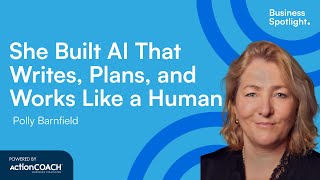
Polly Barnfield, founder of Maybe Tech, built AgentIQ, a no-code platform that lets businesses create AI agents without writing code. She raised £35 million for a previous charity-tech venture and now runs a 14-person UK team that uses AI and integrated tools to automate work and encode expertise while keeping humans in control.
Questions this video answers
Relentless curiosity and ruthless prioritization.
Make your business future proof by building it to scale.
Lenny's podcast on product‑market fit and product teams.
Instantly build a comprehensive plugin ecosystem that connects to every platform.
Chapters
Foreign.
Welcome to the Business Spotlight podcast. My name is Kay Cote and I'm your host for today's episode. And today my guest is Polly Barnfield, founder and CEO of maybe Tech. We're going to be talking about her business, her journey to business ownership, best practices she may have that she's learned as well as challenges she may have faced. To give you that inside look to what it's like to build and operate a business. And if this is your first time on our channel, be sure to like and subscribe to get notified when we drop episodes like this. Welcome, Polly. It's so great to meet you. Thanks for being on the show.
Thanks, Kay. Great to be here.
Well, wonderful. Well, before we dive into all things business, I'd love to share with our audience a little bit about you, so feel free to share a bit about your backstory.
Thanks, Kay. So I spent my career at the intersection of technology and retail and social innovation. Maybe is my latest project and it's really excited, exciting. We're building the AgentIQ operating system, a platform where businesses can build intelligent AI agents that actually work without writing a line of code. And these agents automate work, encode expertise and deliver brand safe outcomes across team sectors and scale. But most importantly, that happens without people having to write code. You don't need to be an expert. And most importantly, we keep your secrets safe, your data safe. It doesn't go anywhere. And I'd just like to add that it's not about AI replacing people, it's about AI helping people do their job better.
I really like that model. That sounds really great. AI is a topic I like to geek out on, so I'm excited to dive in. Okay, so how did you get started in this project or even in. Let's take it back. When did you get bit by the bug of entrepreneurship?
Oh my goodness. That started way back at the beginning. So I had a place to do medicine, had a year out and got really lucky with lent a horse that got shortlisted for a for a British team. So Skip University, spent 10 years riding a horse for a living, then got to a point like, wow, that was a crazy move. Loads of fun, lots of broken bones, some medals. But yeah, yeah, went and worked for. It's the point. This shows my age, but it's a point when the Internet was just becoming a thing. Went to work for an agency, spent a couple years working for them, thought that's not for me. So I started my own agency and ended up founding a business called Give as you live that's raised over 35 million pounds for charity using technology. So without people actually spending money. And after 10 years there, I moved on and started maybe. Maybe has always been about helping businesses make smarter decisions. We won a contract seven years ago to help the UK government understand more about how people were using social media. And we ended up listening to 3.9 million businesses on social media. And so started to use AI that way back then, or machine learning really, to disseminate whether people are happy and sad in high streets across the uk. So that meant I built a team that were really smart at data and machine learning. As a result of that, we started training businesses. So we trained 25,000 businesses in how to get better at digital. And in doing that, we really began to understand that one of the biggest problems with digital was the whole piece of content creation. And it's hard, you know, particularly if you're not a small business, it's hard. You haven't got time. And so we realized that there was a really clever intersection between the problem people had and AI. And remember, this is pre ChatGPT. So before ChatGPT was a thing, we were already using AI to do customer service. We got to the point where we were doing in servicing all these, the, the 25,000 businesses, we got to a 93% success rate with AI answers. So delivering answers in 13 seconds and now we're doing it in multiple languages. So what we've learned with AI is the, that what, what, you know, people worry about, is it good enough. But actually sometimes now is better than good enough. So the idea that you can deliver answers immediately is incredible. So that was a long, long answer to a short question. But yeah, our journey to where we are now and what we're building now is very much been driven by what we've learned by working with a lot of businesses.
Oh, definitely. Well, thank you for sharing that journey. Absolutely love to hear about, you know, how everything came to be. And, you know, I really like that golden nugget that you just shared. You know, sometimes now is better and that is so true. I live by that model and sometimes for better, for worse. But I do feel like now is like acting on the power of now is so crucial to at least like getting, getting the business off the ground. So I think that's huge. Thank you.
My pleasure.
Looking at, you know, the team you're building around, maybe can you share a bit about your team? How many team members do you currently have and what's your company culture like?
So we have a fantastic team. I feel very privileged to work with them. We have 14 full time employees in the UK. We also have colleagues offshore, some in Canada and some in Pakistan. And we all work remotely. We meet up for lunch often. Often. Not often enough actually. But I feel more connected to our remote team than ever. I did when I met in an office, my previous business did work in an office and we all commuted there every day. But I think if you hire the right team then you shouldn't have to be in the same physical location. I believe that you should hire people on performance and not on proximity. And it's all about the skill set. So yeah, we're a remote team. We connect by Slack on Google, we live on Google Docs in Google Meets and we use a lot of AI. So we're now in a position where we really focus on saying can we fill the next role with AI first before we then start hiring more people? We're definitely doing more as a team. With the size of team we are, we're probably outperforming our size because of the way we use AI. But that doesn't mean we won't hire more people. It just means that the people we hire will do things only humans can do so humans get a better job.
Oh, I like that motto and it sounds really, really cool, especially having the remote team. So I'd love to share like what is one of your secrets to success in managing a remote team?
I think it's about communication. Look, I don't get it right all the time we, you know, we have Trello boards live connected to Slack. We use ClickUp as well. Actually I'd love to just convert to also only using ClickUp. But half the team like Trel and half the team like ClickUp linking all the systems together. So our CRM is connected to Slack, Google is connected to Slack, our AI is connected to all of them. So it's about making it really connected and it's making time to talk. So we, we stand up every morning, different teams meet at different times. But we have, we have very productive meetings I think and it's about making sure everybody knows what they're, knows what they're doing. I'm, I always want to make the numbers side better so make it more focused on what's the number you're trying to, trying to hit. But we, we, we because we're very product focused. A lot of the meetings are very much about how do we make it better for the customer. And we love building. We're a team of, we're a team of builders and Product people.
Oh, that's incredible. A good team really just adds so much value. I absolutely love to hear that. And looking at, you know, maybe the beginning of your journey with maybe what are some of the things, maybe something that stands out in your mind that, that challenged you, that you overcame and how did you do it?
Oh, my goodness. So I think the whole, I won't deny actually, but the whole business of building with AI. AI is amazing. It can make you feel very clever very quickly, but then when you scratch the surface, you realize that you sound like everybody else. And so what we focus on is how do we enable everybody to have context so the AI's got context. And the biggest challenge right now is understanding that AI is not like building with code. It's a very different experience. And so it requires a new layer of skill in a way which is not pure dev and is not pure operation. And so there are a lot of people feeling slightly uncomfortable because it's outside of their wheelhouse. And I think possibly because of my slightly non traditional background, I've always been good at feeling slightly outside my wheelhouse. So, yeah, the biggest challenge is creating a product that nobody wakes up in the morning thinking they need working out how to deliver it and then get mass market adoption. We're not at mass market adoption yet. We've got a release that's about to come out that we're very excited about. And I haven't got a crystal ball, but I hope, I hope we'll have new problems we haven't seen yet because we think the mass adoption is just around the corner. But I think, yeah, it's juggling all those balls. It's financing it, keeping current clients happy, building for the future in a world that's moving very fast.
That's huge. And I look forward to. So this mass adoption, mass market adoption, is that something that you're taking, is that global scale or would say sticking to the UK for now?
You can't. We, we, we do everything in British English. Right. But AI means that you can deliver services in any language. You know, we've been delivering support services for a project we're working on right now in two sorts of Chinese, Urdu and Hindi. So, yeah, it will work anywhere where we'll market. It is definitely in the uk. We will market in the US as well. And obviously Europe is on our doorstep. So. Yeah, well, you know, mass market adoption is finding a, a bunch of people that start to talk about it a lot. We have a horizontal platform that serves any business. But what we're doing is working with partners in specific niches. I think where AI really excels is where you can overlay it with specific knowledge. And I think the opportunity for people to monetize their intellectual property is huge. And so we're really focusing on the idea of how can we help people build agentic services to monetize their knowledge. And so that isn't. That isn't bound by geography, it's bound by knowledge. And I think it wouldn't if you rang me up and said, I'm in Mexico. It wouldn't. That wouldn't be why we can't serve you. It's. Of course we can. Yeah, of course we can.
That's huge. And especially, like, how you, how you describe, like, what clients you're looking for. So if I were to, say, walk into your doors, check you out on, or I guess check you out online, you're virtual. How would I know I'd be a good fit for your services?
So it depends when you're listening to this, but if, if we've released what we're about to release, you will be able to come to the front of maybe and start building your agents. And if you go there and you can't do that just yet, it's coming soon, so sign up and we'll tell you when it's ready. But literally the vision is that you can come to maybe and say, this is what I do. This is what I've got. What agent should I have? And if we've got them already built, then you could just plug them in and off you go, or you can build them yourselves. The key for us is plugging into every data source out there. So we have a team that are building plugins to all business services, whether it be a CRM or your finance or really niche data products. Working on one at the moment for a podcaster, where we're pulling in some really unique data, because AI loves data. So our job is to give you the tools to build agents without code and to connect them to the data sources you need to make them super smart.
Oh, definitely. This kind of brings me to my next question that looks at the future of your company. And like you're talking about, you've got this large project you're ready to release soon. What are some of the new challenges that you may face with that launch?
Oh, my goodness. So, well, customer service. I'm touching, touching wood. We excel at making AI deliver customer service incredibly well, so that's not a headache we've got to scale. I think the big Piece that I'm most focused on right now is trust, which is that in an AI fueled world there's a lot of, dare I say it, kind of bad AI out there that's just not, it's just not quite right. So we're very focused on making sure that our team, our human team are delivering as much value as possible. So daily lives with saying come and build your agents, daily workshops involving developers in the whole piece of connecting to their data and really doubling down on the human to human part of it. Because I think a lot of AI services it feels very, it's too hard, it's too, it's too distant and it's too disconnected. So as we scale it's not to lose that human connection and to be approachable and to ensure that every customer, whilst the first line of defense is AI customer support that can get to speak to a human that will help them understand the nuances of their business. Because there's no one size fits all. We've all got individual businesses and AI agents are an addition to your workforce that need to be as personal to your workforce as your, as the people you employ. So you need to as a business owner or a manager be able to in effect brief your AI. And our human to human sessions about helping people understand how to make AI an effective part of their team.
That's really powerful too. I think that human to human component is going to be huge as we grow as a world into the utilization of AI in a responsible way. So I think that's huge that you're doing that and looking at the company in the next three to five years. Where do you see the company growing to in the next three to five years?
Oh my goodness. So we would love to emulate the success of businesses like Lovable or Replit or Cursor. We think we have an offer that is of that sort of scale. Can we do it? Let's see. Maybe I watch this back and three years time think you fool. But you know, we believe that we can deliver agents that anybody can train that do work for you. The key thing is that they're doing work. They're not just doing one thing, they're doing work. So whether it is for a solicitor who has a freedom of information request and all the redactions or whether it's anything stock taking, all of those things that are what I call boring, repetitive tasks that every business has can be so well served by an AI agent. And we're delivering the tools to make that possible for any business regardless of Size or technical capability to deliver, that's our ambition. If we pull it off, then the other sky's the limit. So, yeah, tool about growth.
Oh, definitely. And how are you, you know, when it comes to the human to human part of what you're building, I'd like to dive a little deeper into that because I think there's so much, there's so much knowledge there. How are you keeping that piece of the puzzle focused on or what are some of the things you're doing to keep that human to human portion of it steady and growing through the experience as you're, as you're launching new projects and new parts of what you do?
That's a great question, Kate. So today we have a really strong core team that have grown with the product and the product we're releasing now. We've built because of the pain we've seen customers facing with the way AI is moving. We're all living in a world where everything changes so fast and that in itself is not easy. It's not easy from a team perspective or a customer perspective. And so I think have we mastered it fully? Probably not. But I think the one thing we have learned without doubt is ensure that you answer the question immediately. And that as I said, I feel very comfortable about the human to human piece. Things that we don't yet know the answers to is for example, group calls. Because our product is designed to enable any business whether you're the smallest in land or the largest in land. Obviously if the smallest in the land, we haven't, the, the fun, the, the, the return investment doesn't stack up. You do one on one calls and make it affordable. So for product affordable and offer that human element, it's about doing group calls and this, there's quite a big skill with that because you can have one person that's quite time hungry and others that maybe don't ask questions. So we're really focused at the moment. We have actually taken down all our YouTube content to restart our whole channel to ensure that we have group sessions daily based around different topics and we've done this very successfully with other training programs we've done and then enable that whole library to become searchable so that not only can you get text answers immediately, you can get links to video answers immediately. And. But then if you want to come and talk to a human, you can on the group sessions. But when you come to session, you've probably sent in your question beforehand and then if you're a client at the other end of the scale, then you have an account manager and it's making sure that the level of knowledge and the, the, Because I've, I, you know, I found this with products and quite high end products as well, that sometimes the level of support really lets you down. And so our focus right now is very much on the product, but is making sure that the product can help our humans be extraordinary. Because if you've invested your time to come to a meeting, you want to go away with a solution. And what we're learning is that the problem is normally one of can I connect my data? And so from an operational perspective, we're focusing on making sure that we've got endpoints for pretty much every system out there. So as long as you're using one of the main systems, you can connect your data and then it's a question of show and tell. And most people ask similar questions. So it's that whole business of how do we get you back to the answer that the answer that's already been given, rather than asking our team to keep answering the same question over and over again. So it's about being really smart, about always creating new content that's driven by the answers that the questions you're being asked. So we feed the flywheel based upon what people are asking us, feeds the flywheel of what content we create. Therefore, the content we create, if is then discoverable, becomes a way of answering more questions. So it's a flywheel that feeds itself.
Well, thank you for that. That is, that's huge for what you're building. This has been such a fun conversation, talking about all that you're working on. Before we wrap up our conversation, I'd like to go into a fun part of our Q and A called our rapid Fire questions, where I ask you four questions and you answer very top of mind.
Far away.
All right, question number one is what is the key to success for you?
Relentless curiosity and ruthless prioritization.
Yes, love that. Question number two is what is a piece of advice you have for other business owners?
Make your business future proof by building it to scale. And then in brackets, without you, that's the hardest thing to do. I've not, I've not cracked that yet, but. So number one, make your business future proof by building to scale.
I'm working on that one myself. Number three. Number three is what is the. It could be a book, a podcast, an article that resonated with you most recently.
Oh, I love Lenny's podcast. Just so Lenny's the product market as well, the product team. Lenny, if you haven't met Lenny. Go do Lenny. Yeah.
Awesome. I'll check that out.
Thank you.
And our fourth question is, if you could wave a magic wand and rapidly improve one aspect of your business, what would it be?
Oh, instantly build our plugin ecosystem. We want to be plugged into everything because that's our flywheel for dominance. So to be connected to every platform out there, whether it's Zoom, whether it's Salesforce, whether it's HubSpot, just that the connection's done.
Oh, that's incredible. Again. Oh my gosh, Polly, thank you for answering the rapid fires. Before we get to our final question of the day, how can folks get connected with you and your business online?
Thank you. You'll find me on LinkedIn. That's the place that I'm most active on social. Just go look for Polly Barnfield or and if I miss you, I apologize. So if you want want the team who much more effective than I am, go to maybe tech.com and you'll find all the ways to get in touch with us there.
Wonderful. Thank you, Paulie, for our final question today. What is most inspiring to you today?
For creators, agencies and founders to take the knowledge and turn it into income generating intelligent agents in a single day is the most exciting transformation thing I've ever done and I've ever seen. And the fact that we get to power, it makes it even more exciting.
Well, thank you so much, Polly. It has been a joy to have you on the show today and share your story and connect with our audience. So thanks for being a part of it.
My pleasure. Thank you so much. Thank you, Kay.
More from Polly
Why Most Founders Are Doing AI Wrong — And What It Really Takes to Scale It Across Your Team

Transform Your Business with a Complimentary Digital Growth Bundle for High Street Businesses
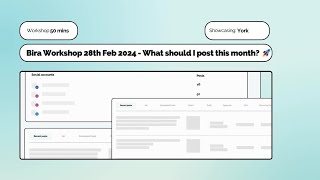
What should I post this month? Bira webinar 28th February 2024, featuring York
Understanding Place Sentiment - February webinar for The High Street Task Force