Why Most Founders Are Doing AI Wrong — And What It Really Takes to Scale It Across Your Team
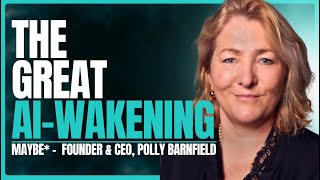
Polly Barnfield, founder of Maybe/MaybeTech, explains why most founders deploy AI poorly: they're overwhelmed by tools and security concerns. Her platform lets users describe tasks in plain language, then automatically selects the right AI model and orchestrates multiple agents to execute workflows. AI should augment workers as a reliable teammate, not replace them.
Chapters
Hi, Polly. Welcome to the show. Thanks so much for coming on.
Hi, James. Great to be here.
Yeah, likewise. I'm really excited for this conversation because, you know, we've got a lot to cover when it comes to AI and everything that you're doing. That sounds really, really exciting. But firstly, sort of take me back to the journey, you know. So you were an, you were awarded an OBE for philanthropy and you also won a gold medal for the British equestrian team. How have those kind of experiences shaped your journey into becoming an entrepreneur and a successful founder?
Well, firstly, unemployable, which I think is a prerequisite, but yeah, and they, they both, those actually feel like a lifetime ago. Yeah, they both taught me that grit beats glamour every time. Riding it teaches you how to fall off and get back up again. And philanthropy teaches you the systems can change lives. And I think both bring lessons to work every day. Entrepreneurship's about grit, it's about being very brave and it's about being prepared to, you know, crack on every day despite, you know, goodness knows what's going on around you. So, yeah, grit beats glamour. That's the rule.
Yeah, absolutely. Absolutely. And you've been, you've been building AI for, you know, quite a few years, seven years or more. More. Which is way before, you know, it became mainstream. You know, ChatGPT was rolled out mainstream. What was the moment that you knew then that AI would basically change the landscape when it comes to business and everything?
That's a great question. So maybe was born out of the idea that we want to help make people, help make people make better business decisions. And it's had a few sort of, it's had a few pivots. But the turning point for sort of our journey into AI really came about seven years ago when we won a UK government contract where we said, yes, I say yes to everything, but that's not to learn. But I. They wanted to understand the sentiment of across every high street in the uk and at the time we were working with a lot of social media data and we started analyzing the data from 3.9 million businesses across the UK and then synthesizing it into the sort of general big conversations in each place. And we started to use AI to make sense of millions of businesses conversation, what was happening online. And we weren't, it then sort of transitioned from where we weren't just analyzing the data. We then started helping local government make real world decisions. And it was then I realized that AI wasn't just a tool for tech companies. It was really offered the Future of how businesses should think and operate and serve their customers. We started using it to help train businesses and we had contracts where we trained about 25,000 businesses. Then ChatGPT launched and I went to the team. This is crazy. The tools that we've got buried deep in our platform are actually what we should be selling. And so suddenly you're on a race because, you know, just over two years ago, the world discovered AI and every day it changes now. So it's really exciting. I think it's a. The future is a blend of human and AI and we're all just figuring, figuring out how to make it work. We are very excited about what we're delivering and yeah, we enjoy serving all our clients.
Yeah, I mean, it is wild. It is kind of, it does feel a little bit like the wild west out there. And, you know, it's almost like, like the, the dot com boom that came around in the, you know, late 90s, early 2000s, and now it's like, it's like that all over again, but for AI. So it is pretty crazy and transformative. And how to navigate that as a, as an entrepreneur, as a business owner is quite, it's distracting and it's not because it's, you know, there's huge leverage. But then it's also like, how do you actually navigate what you can leverage right now? And for businesses that, you know, they're still sort of dabbling with how to just use ChatGPT and basic prompting and stuff, how do, how does maybe really help them, you know, embed AI deeply into their workflows? And what's stopping most businesses from getting serious about leveraging AI?
That's a great question. Honestly, the biggest block is overwhelm. I think businesses are bombarded with tools and jargon. They don't know where to start. And that's really where maybe comes in. We built to change that. We give businesses AI agents that they can create through simple conversation, not code, and that we hope, unlocks action, not anxiety. Spoiler alert. Depends on when you're listening to this podcast. It's a tool that we've been working on for a long time now and we haven't released it publicly yet. But yeah, go wherever you are, go and have a sign up to maybe. Because our mission is to unlock action, not anxiety and it just makes it possible to deliver something amazing. Because right now it is really overwhelming as to what tool, how should you do it? And yeah, we've got something exciting.
Yeah, well, that's really interesting. And we'll Kind of come back to that because I definitely want to know more, because I resonate with that. You know, it is that, I guess that's the overarching dominant emotion that businesses and business owners feel is the overwhelm of, you know, navigating this new territory. So. And you also, you describe AI as the colleague that, you know, the colleague people wish they had. Can you unpack that mindset and how it's changing the way businesses operate today?
Yeah, I think it's a really dangerous rhetoric. So most people don't want AI to replace them. What they want is for it to take the grunt work off their plate. You know, we've all, all got too much to do. Our to do list is always too long. Whoever gets their job done at the end of the day. And, you know, we. Our view maybe is that AI agents are built to work alongside humans, not over them. They must follow your brand voice, they must follow your business rules. They must look after your data. They must understand your priorities. And so think of AI agents as hiring the most reliable teammate you've ever had. And that onboarding them is driven by your instructions. And then they follow them. That's what's exciting. They follow your instructions. Yeah.
Yeah, absolutely. You've founded multiple businesses across, you know, like, like, like philanthropy, and then E commerce was another big one, and then now AI. What, what's like, the connections in the, in those patterns of start founding companies and growing them. What are the big, you know, connecting dots between everything that you've kind of learned?
Well, you missed one out. So I started with riding horses for a living and running a business from that. That really is insane. But actually there's a common thread there because all of it's about understanding, and all of it looks impossible at the beginning of the day. But fundamentally, it's a belief in doing things that make a difference, whether it's turning that raw animal into something that can perform and do something great, or whether it's tracking retailing outcomes so they can raise money for charity, or whether it's building business systems that help achieve more than they think is possible. Yeah, I'm a creator. I. And I'm an inventor, and I love a challenge. And for me, it's always about the team you work with. I'm really privileged to work with a great bunch of people, and that makes it all possible. So, yeah, big mission is, big message is you're only as good as your team.
Yeah, for sure. And that's because I resonate a lot with that. The creator, the Startup getting excited about new opportunities and embracing new challenges. And then you kind of have to build a team around you because otherwise as the visionary you just, you don't maintain systems that maybe need maintaining and yes, so what, so when you, you're sort of hiring your team to, to, to build that around you, that support what, what are the, the crucial things that really help you support your growth?
Ah, great question. So what's interesting is as we grow and as the more we understand about AI agents, each one of us is becoming a manager of agents. So I think the most important criteria going forward is that ability to embrace change and ability to communicate and ability to share and actually people that you like, you like working with. I mean it now sounds silly. We run a fully remote team. We try and meet up for lunch and then have a pow wow in the afternoon once a month. We meet on slack every day, we have standups every day. But fundamentally we all get stuff done. And I think more and more and I believe in remote work. Why should we all get on a train in the car and go somewhere if you can't do it remotely, what's the point? You aren't here. Hire the right people, not because they're in the right place. I want to hire the right people because they're the right people and they're better than me. Yeah, it's all, there's no I in team. And you want your team to be better than you. But most importantly now you want your team to want to make, to replicate themselves with AI. You want, you want your team to think how can I do this better with AI alongside me? And then they'll be awesome. That's the key thing.
Yeah and that's a, that's a real mind shift shift in you know, employees part of a team. That, that's a huge mindset, mindset shift to have because you know I can imagine lots of people as a founder and entrepreneur, it's not really a scary thought to be replaced. It's kind of the, the op you have the opposite. You have like this opportunity, like what's the opportunity? How can I leverage this as much as possible? And I, I always see that in entrepreneurs that want to get know really growth minded people but when you're part of a team, and I'm not saying team members aren't growth minded or anything but it's just, it's this huge mindset shift that you've got to have as not being worried about having your job replaced. Like actually like thinking that you know, how can I have this AI co pilot really helped me enable me to 10x output, 100x output, and just having that and then you get really creative and. And it's like having a superpower.
Absolutely, yeah.
So tell me a little bit more about what secrets can you reveal about this new launch, you know, your new agent builder that you're about to launch, and how does it compare to. There's other tools in the market, right. So you've got like, replit, lovable, there's these sort of, you know, agent builder type tools. How does it compare? What's different or, you know, and what's exciting and what maybe secrets can you reveal about it?
So it's not a bot, it's not like a chatbot, it's not a workflow builder. It's like telling your dream teammate what you want and then them delivering it live in five minutes. It's all conversational and. Yeah, it's just awesome. There's a lot of talk right now around MCP, which is the new protocol for connecting data to LLMs that's heart baked into it. And it's the idea that you can conversationally say, this is what I need to get done. And the agent suggests which LLMs you should be. Well, the agent is not baked into one LLM in particular, it selects the right LLM to use based upon the question you asked. But the agent itself is built conversationally and we have an orchestration layer. That means as a user, you don't have to remember which agent to use because an orchestration agent chooses which agent you should be using. So you're basically building an agentic layer to your business, but without having to build a million workflows that are brittle and break every two seconds. It's really transformative and we are super excited about it.
What do you. What do you have? Businesses. What. What do businesses or. Or team members need to learn to, you know, leverage a tool like that? Because you say it's like, conversational. Do they still need to know how to prompt in certain ways, or is it really just that conversational, you know, easy to work with? Like you would speak to a. A team member, you know, an assistant. Does it really work like that?
It really works like that, yeah. We designed a prompt. We weren't. When did you get a prompt? Engineering school. Where was that in your curriculum? You know, I don't think we had to be able to do all these things. And we just said, this is crazy. You know, it's such a powerful tool. Why can't you become why can't you just say this is my problem, I want to fix, help me do it. And that's what we've built. We're both an agent builder that helps you do that and that you can then tell it when you want those things done and that it can string things together. I can't say too much. You got to get a try. It's amazing.
Who do you target specifically? Is it small businesses, UK small businesses. Who's kind of like your ideal client?
That's a really good question. So we have served everybody from SMEs to PLCs in the UK government, but we're not huge as a business. We want to be. And everybody says you should have an icp, you should have that person that you target. Challenge with AI is. It's such a, almost such a divisive question right now. You've got so many organizations who are talking great game but not redeploying. What you need is a person in the organization that wants to be the champion of change and the person who wants to be the leader of the leader of the change. So we have worked with a number of enterprise clients who want to keep everything secret because they think they've got something game changing. So we can't talk about that. And we are launching it very much as a product like growth product now so that you can try it, use it and then if you need enterprise support, then we can work with you. If you've got bespoke data sets, you want to get into it. But more and more and more we're building that as developer tools that internal teams can use because I think if you do too much directly then you alienate the internal teams. And we want to be the tool that everybody wants to use to be able to deploy their AI. So hence our adoption of mcp because it means that an internal dev team can Safely connect their APIs through their MCP through Tunab and they can manage their layer. So it is a collaborative piece. And back to your question of who do we sell to? We sell to people that want to get AI to be in transformative layer in their business, that they want an ability to enable all of their team, whether that's two people or 200 people, to have AI teammates that they can manage. Because without us, your AI is a sort of separate department. It's not part of your org chart. Whereas we see AI as something that should be part of your org chart. And very much you can treat it like a teammate, that you can re brief it, retrain It. And so, you know, the question about, do you need to be able to prompt to use it? The answer is no, because we believe every team should be able to train their AI to do the job that they're asking it to do in the same way you would a teammate. Because that's where transformation starts to happen.
Yeah, absolutely. How do you. Yeah, so, I mean, it's, it's, obviously it's a challenge because what you do sort of applies to know across the board to, like, practically every business. So it is like, how do you niche down or, or do you even niche down, like you kind of said? And then also, how do you really cut through the noise right now? Because obviously, on the one hand, you've got every business out there, every business owner's, like, asking the question how to leverage AI, but then there's also just a massive amount of, you know, people coming into this space offering all sorts of AI solutions. How do you, as a company, like, really cut through, get that attention and build relationships with ideal prospects that become meaningful clients?
That's really interesting. So we have interviewed, I think over the running total is now 600 businesses that we've interviewed to understand where they are on their AI journey. And thank you to everybody that has been interviewed because we've just had the most amazing response that's really helped us form. Helped us form our product because it helped validate lots of our hypotheses. And genuinely, that's the message, which is we want just one platform. We want something that's safe, we want something all the team can use, and that's created relationships in the most amazing ways that we hadn't comprehended. So it's taken us to global brands, through agencies, to their clients, and not. It's given us both great insight into the product we're building, but also that it's given us great introductions to clients that we're going to work with. Because despite all the AI out there, let's never forget that people buy from people. So, yeah, we are. We're committed to building awesome AI, but we're very focused on building great relationships that enable us to sell our AI. We do believe that our job is to be the provider and we want to build networks that sell it. But first we have to demonstrate it works and work alongside the people that are working with their clients to deploy it. And we've got some very interesting ventures that we're sort of collaborating on to deliver transformative services, and we're looking forward to sharing them with the wider world as they Roll out because maybe is not just a platform to build AI agents with, it's a platform that enables people to build businesses with. And it's those stories that you're. I'd love to come back and talk to you again about another day, James.
Yeah, well that sounds great. Can you, can you give us an example maybe of how, you know, a client has really transformed with the agentic workflows that you've maybe built out right now, you know, so far in that journey?
Yeah, absolutely. So we've got some sort of what I call brand new business models that are not at liberty to share. So I'm simply very boring on that line today.
You keep teasing us, Polly.
But give an example. So from our perspective, we've interviewed 600 people are releasing the white paper at the moment and we didn't write 600 interviews that were automatically transcribed. The team of agents then take the quotes out of them, create the, that have then created. I think the white paper now runs to 100 plus pages. We wanted to cut it up. So much good stuff in there that it's been, it's crafted a really interesting moment in time as to where businesses are with AI and we're not going to start the process right now, but that has enabled us to automatically update a CRM based upon what's being said. Create social content from the back of that. And that's huge. I mean relatively small team have done a huge amount of work as regards answering your question. Sorry to come onto that. We're working with people building grant writing platforms, writing platforms, audiences, interesting projects where we are enabling. Interesting projects where people are delivering knowledge in a new way. I think it's the best way of saying it. So imagine right now you read a book and to remember what's in the book and go and deploy it in your business. Well, imagine being able to ask an agent what you should do now and the agent reading your book and knowing about the business. That's awesome.
Yeah, yeah, it sounds, sounds really interesting. There's definitely a lot of. Yeah, I mean I'm very intrigued to know more and yeah would love to know more as you build these out for businesses. It does sound really interesting and exciting. What, what are the biggest so for businesses and business owners right now, I know that overwhelm, you know, navigating the, the overwhelm is, is a huge, you know, barrier. But what kind of big mistakes may, may businesses be making right now that you kind of seen when it comes to AI adoption?
Oh, technically they can, you know, people get Totally, totally bogged down with security, integration and governance. You know, there's every reason to do it rather than reasons to do it. And then mindset wise, it's fear. Many leaders still think AI is either tricky, too risky or too complicated. We see our job as to make it feel useful, safe and human. You know, we've all got the most amazing tool to do our jobs better with. View it like that. I think an organization perspective. One of the challenges is that if everybody brings their AI to work, you've got a second workforce that you don't control. And that's very much the view with maybe is, well, how can we provide you a platform through which you manage your agents? If you consider for a moment that every platform out there is adding a little bit of AI to it. There's a little bit of AI in your CRM, there's a little bit of AI in your social media tools. If suddenly you're going to point where you realize you've got sort of another team of people that some know your brand, some don't, some data maybe is okay, but not okay, that approach is dangerous because if your team will bring their AI to work and they're not necessarily unpaid for accounts, then you're putting your secrets in the wind. And if the AI on different platforms is doing work for you, possibly doesn't need brand guidelines. And that or Jackie side is where maybe has really focus down on, which is saying how can we make a safe business tool where you put all of your brand, all of your secrets, you can connect it to all of your data seamlessly and then you can connect it to all of your tools. And so start from the point where you own your AI and you're putting it down. So that's why we call it your AI. And then you connect the tools you want as opposed to lift using a little bit of AI everywhere you go. Because then you're not really getting. It's like having a, it's like having a team of part time staff don't get the end result. You need to own your AI and you need to enable your teams to deploy their AI in a thoughtful, strategic way and the same way that you hire a human. You need to think carefully about your AIs.
Yeah, yeah, because it's the context piece when it comes to, you know, the data that you've got and the context that you can feed an AI model and that, that's just really valuable and like the more context you can feed it in in a strategic way, the more valuable the Outputs become. Because it's just, it just learns and fine tunes and then just becomes really more, you know, much more powerful. So is that kind of. Yeah, that's, that was like partly what you were, you were saying. But then there's also, there are the concerns about, you know, that the data compliance and you know, everybody's sort of feeding data into OpenAI right now using ChatGPT and you know, you're feeding a lot of data in there and there's a lot of concerns over privacy of that data. But then you also kind of mentioned owning your own AI. So it's like your own sort of your own platform and database. Is that kind of what you were saying?
Yes, absolutely. Unless you're on a enterprise level of ChatGPT, you are running the risk of your secrets going in the window. And so particularly if your team, a lot of people are using AI in the quiet, why wouldn't you get stuff done faster? But as a company, it's been fascinating interviewing all these people who are still on the fence from what I call an organization point of view, but kind of knowing that everybody's using on side and it's like in the world where we used to bring our own device to work, that doesn't happen anymore. People have systems and they have ways of managing their networks. And so, you know, we see with maybe we're Enterprise, we have SoC2 through OpenAI, the data layer. We provide a completely secure way for people to put their data in. But then we enable them to securely access every other LLM. We let them build agents that are secure. And the key thing with an agent, as opposed to prompting, is that once you've built your agent, it's no longer like casting a fly and fishing, it's like fishing with a net because it does the same thing over and over again. You know, you all don't ask an AI for an answer and it gives you a different answer every time. You know, they're rubbish at maths. But if you build an agent, you've got a much bigger tool set at your hand and that becomes like a human doing repetitive tasks and that's what really matters and it can solve all the compliance issues. Yeah. Next phase of AI is about saying, as an organization, I'm going to do this, I'm going to build an AI team that complements my human team. Maybe let's, you know, let your humans take charge of them because they'll love it. All the stuff they doing, the boring stuff, repetitive stuff, get an agent to do it and they'll do it better, but then you have people do better tasks. I think it's really exciting when you think about it like that. But yeah, for heaven's sake, put your data in a safe place. Don't be a secret in the wind and make sure you're. Yeah, you need to get those things. They need to get those things in a safe place.
Yeah. And that is another important point that you just made about because I noticed that with my own workflows and I've got somebody on my team that builds out automation workflows with AI that. Yeah, so much of the stuff that I used to have to do are the manual repetitive things that can just be delegated to advanced automations through AI agents and it just relieves that and then you can focus on much more higher leverage work and tasks that are more creative. You know, as a, like my background is marketing and sales, so it's just the ideation and putting campaigns together that just puts you in a creative space so that the workflow and the workload is just much more fun from my perspective. But yeah, it's, it's interesting, it's interesting you mentioned, you know, like it is keeping that human element in the, in the team and in the, in the company. It's because it's just very important that, you know, the human has to oversee all this kind of orchestration of AI still and you still need to know what good looks like. You need to know the good outputs in your specialist field, which whatever that is.
So.
Yeah, yeah.
And you need to take the feedback from your workflows, you need to look at what's working, what are the responses to working and feed it back in. You've got to be the think of AI as something you manage, it's not something you run and then leave. You got to look at the outputs well, how are people interacting with it? What's the result? I'm getting back. How can I improve it?
Yeah, absolutely. When it comes to the growth of maybe right now, what's your biggest challenge?
We love building. We love building things. And the interview process has been fascinating because we've had a sort of fire hose of where everybody is with AI, our biggest growth challenge is actually stopping and saying, no, we've done for a bit, but then because AI is moving so fast, we're coming to this. We feel like we've definitely landed on the right planet right now because we love being agile and being innovative and we're not a very big team. We punch well above our weight and we've got a lot now that we've built that we haven't released. And so our biggest growth challenges. In a world that's moving so fast, how do you stop for long enough to ship what you've built? You start building the next thing. Our challenge is one of aligning our product delivery with our marketing push because it's so easy just to keep building. So yeah, becoming a sales team as well as a product team is our biggest growth challenge.
Yeah, interesting. Yeah. And keeping, yeah, keeping those align as well because bringing salespeople into kind of sell AI and keeping them aligned with the product and not, you know, maybe selling things to businesses that, because there's also this kind of business owners might think that, you know, AI is the solution to all their problems right now. And it's got, it's a bit too high level and not in, you know, not in the real world of actually developing product. So it's kind of keeping that aligned with the sales team as well. If, if, you know, not, not over promising stuff that is not in existence yet.
Well, the, the, the, the piece that we're working on right now is, is really fascinating, which is that we're, we're learning that actually the best, the best tool in sales is listening. Who knew that? Right? But what if, what if, what if we could just listen and our AI colleagues could then say, well, these are the 10 agents that would make the most difference for this company, the biggest difference for this company right now. And by the end of the call you can deliver those and you go try them. That's product label. So that's our focus, which is that I don't want to hire a sales team. I want to hire a team of people that ask really great questions, that are memorable, that are interested in helping businesses and that we take the conversation and turn that into the first set of agents for a company to go, hell yeah, they really help. And then they can change them, they can tweak them, they can improve them because it's a conversational interface. But that for us is what winning looks like. That's what's going to fuel our growth. But we're having to be very thorough before we release that because it's massive. It's really big. Really big.
Yeah.
Imagine if you could James, just, just wake up in the morning and say, I really need to get this thing done. Talking to your AI. And he goes, not a problem. I've got these three agents. Would you like to test them? Would you like to set the tasks? And then the next day you wake up and you go, yeah, okay, that's done. How would that be?
J. Yeah, yeah. No, I mean, that sounds incredible because sitting at your computer, you know, clicking around buttons on in dashboards like that, that drains me, that drains my energy. But this, the whole idea of like conversational AI with agents that can, that can do things and just leverage your visionary creativity ideation like that, that sounds. And that's kind of where I move into, in my workflows. But. And yeah, and if there's more, more tools, more capabilities that can do that, it does sound amazing.
I think, I think it's. But I don't think it's dystopian either. I think it's the stuff that is hard to do, annoying to do, frustration to do. We're really fixated on saying, how can we fix that? And I don't think that's very far away. But watch this space.
What big trends are you seeing in AI? The big trends, the big technologies. What are you keeping a close eye on and moving over the next few years?
My goodness, few years. Remember that a few years ago. Okay, so, you know, spoiler alert, that's a dangerous question. But two big ones. Agent orchestration, which is how multiple agents collaborate. And then I think vertical AI, so agents that deeply understand specific sectors. We're building for both. But I think the whole, it's the true agentic piece that becomes interesting. Agents work best if you keep them really narrow, so you can really ensure that you've given the right instructions, you've plugged them into the right data. But then if you want to start to orchestrate tasks, then it's how those things link together. Because a human doesn't want to say, I need to ask this person this, and then this person, this person the other. So you need the agents to be able to hand off. And I think that's what you'll start seeing to happen over the next couple of years. It's exciting. That all starts to be a bit scary too. But I think what scares me most is the gap between those that embrace it and those that don't. Because businesses don't embrace right now. And look, we've sprung 600 of them. I've seen all the data I know where you are is the gap between those that do and those that don't is going to get bigger. So, yeah, get yourself an AI. Get yourself an AI teammate. So much fun.
Yeah, very, very fascinating, very interesting. And yeah, I mean, you do you have pretty, pretty extensive data on the situation of the landscape when it comes to businesses incorporating AI. So I can't really argue with you. So, yeah, it's going to be.
There are some very real fears, James, so that, you know, people have a lot of joke and I, I tend to be quite frivolous about stuff, but there are a lot of people who have very valid concerns about privacy, data, all of those things. And I go, look, you're right. But it's a little bit like when the motorcar arrived, you know, for a while people had to walk in front of the car with a red flag and you weren't allowed to get fast in the horse and most people wanted a faster horse for much longer than they wanted a motorcar. But at some point the flip switched, the switch flipped, the switch flipped and everyone wanted a motorcar. I think we're probably a little bit past the red flag thing in AI, but I'm not sure actually in people's hearts that actually when you get back to work on a Tuesday morning after the bank holiday, you've probably read some AI things in the papers and you suddenly look at your team and think, well, how do I make those two things go together and you go back to the old way. I think there's still quite a lot of that. Has AI touched every business out there yet? No. And I think that's the scary bit. For me, it's not AI is changing the way the big tech companies work, is it yet changing the way that regular businesses work across the uk? I don't think so, no, not yet. But that's the risk because those that do will have twice the team for the same payroll. All employ more people because they've become more productive. So, yeah, it's invite it in, don't shut it out.
Yeah. Well, I really appreciate this conversation, Polly. It's very insightful and yeah, I'm always looking at how to leverage AI as much as possible in my business right now. It's just, you know, it is one of those top of mind things that's just very transformative. So, yeah, really appreciate your insights and, and appreciate you coming on the show. Where can people find out more about you online?
So if you go to maybetech.com you'll find our, our product and there's a, if you hit the button, you can get started and not put your credit card on slot for a bit. It's. Well, if you want to hit me up and go to LinkedIn and you find me there and yeah, I just say for anybody that's thinking about building AI, build it for usefulness not for loyalty. And just focus on solving problems, banishing the boring. And if it doesn't help you, it won't help anyone else. So just think of it like a teammate and come and try it out. Go to maybetech.com we're here to help look the many AI products out there, but we're a team that are deeply passionate about it. If you'd like some advice, anything like that, come and talk to us.
Amazing. Amazing. And I'll put the links in the description. And yeah, really, really. Thanks so much for again for coming on. And I'll be watching the growth of you and maybe with great interest.
Thank you, James, and good luck with what you're doing. It's a great podcast. Pleasure to be on here.
Thank.
You.
More from Polly
SHE BUILT AI THAT WRITES, PLANS & WORKS LIKE A HUMAN| With Polly Barnfield | The Business Spotlight


Transform Your Business with a Complimentary Digital Growth Bundle for High Street Businesses
What should I post this month? Bira webinar 28th February 2024, featuring York

Understanding Place Sentiment - February webinar for The High Street Task Force