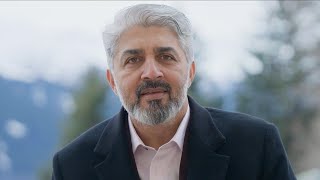
Purposeful Technology for Positive Change: Poonacha Machaiah at TEDxTransmedia
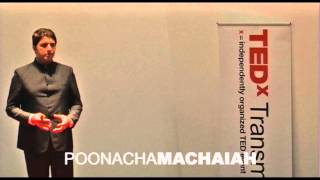
In this TEDx talk, Poonacha Machaiah reflects on a beach encounter in Goa where a fisherman’s ad‑hoc community efficiently hauled a boat ashore without any digital infrastructure. Using this vignette, he illustrates how technology can be purposeful only when it nurtures offline relationships, traditions, and social capital. He identifies three systemic challenges of the information age – virtual relationships that do not translate into real communities, the marginalisation of cultural rules, and a loss of physical play – and links them to biological impacts. Machaiah recounts his own career trajectory from robotics in the US to diverse work in telecom, satellite, ballistic, wind‑energy and healthcare, noting a turning point when his son’s illness exposed the limits of high‑tech solutions. Returning to India, he experimented with low‑cost, context‑aware innovations (e.g., waterproof phone cases, flashlight use in power‑less markets) and developed a framework for purposeful tech: the "Trigger‑Environment‑Awareness" model, a maturity index mapping age, awareness and technology, and the "4 Cs" (Crowds, Communities, Collaborate, Celebrate). He argues that transmedia storytelling—delivering narratives across multiple platforms—can bind heterogeneous audiences, preserve inter‑generational stories, and build social capital beyond mere network connections. The talk concludes with a call to invest in people and community‑centric innovation rather than superficial social networking.
Chapters
I was a couple of weeks ago on the beach in Goa, which is for you guys on the Western shows, and I was watching a fantastic scene. The sun was setting over the coast, and while I was soaking in the sunset, these are some of the pictures I took. There was a small fishing boat called Ave Maria, which was being pulled ashore. And being a technologist, I was fascinated to see how this fishing boat is going to make its way all the way back and be towed. And there are some actually interesting scenes which you guys can look at. There was an ad hoc community which had just formed, and their whole task was to pull this boat back. There was the curator, Mr. Was, who was looking very happy and with an intense look, trying to figure out how he's going to curate the catch of the day. There was another ad hoc network which has formed, which was actually a supply chain management system, which was completely racking and stacking the catch of the day. And then very quickly, within an hour or so, it was actually off to the market. So I was pretty fascinated. I said, "Wow, I got to figure out how this whole thing works so seamlessly." There was no telephone, no network, no Wi-Fi, but everything just seemed to work. So being a technologist, who was trying to look at purposeful technology in our communities, I decided to go spend an evening with Mr. Vaz. So I asked the first question to Mr. Vaz, I said, "Vaz, you know what? You're constantly smiling." He said, "That's simple. Every day I just get back home, I got to smile, because the seas are pretty tough." So that was the first positive outlook, right? We all look at things very differently. And for him, when he said, "When Lord Velankanni blesses me, and I just want to get back home to my family and to my community," And that's the most important thing for him. Second question I asked him, I said, "I'm a technologist, I've done a lot of technology, how do you think I can help you?" He said, "Does the network work when I'm right in the middle of the ocean? Now that's what I would like you to do." Tough problem to solve. The third one was actually very interesting. The third one was, I asked him, "Hey, what are some of your challenges today?" He says, "Poonacha Machaiah, I am the last of my generation. My only son left Goa." and went to Mumbai. He's working in a call center. And if you could really help out, I think technology can help me talk to my grandson every evening, tell him the stories we all share within our community every night. That would be innovation for me. So I said, wow, I think I have a solution for that. That's called Facebook. So anyway, so what I did, I went back that evening to my hotel room, got on Facebook, uploaded all my pictures, started blogging, Updated my Twitter. And I went back home the next day. An interesting thing happened. I told my son, "Hey, I saw this fantastic fishing boat Ave Maria. I spent the entire evening with the captain. I have some good stories to tell you." He said, "Dad, save it. I saw your updates on Facebook." I said, "OK, that's great." So here is one— this is the entire thing which I am kind of looking at in society today. How can we bring in meaningful technology in our communities, right? And the 3 pictures which are on the slide over here are very meaningful to me. The first one is Mr. Waz trying to keep his community of fishermen going. He wants to kind of keep the stories of fishing the Arabian Sea going for generations. The second picture is a picture of me and my father when I was 3 years old, about 40 years ago. And the next picture is a picture of me with my kids when my youngest son was about 4. And there are 3 interesting stories which emerge over here. One is a community trying to keep its tradition going. Second one is a role which my father is trying to pass on his generation to his grandkids. And me trying to interact better with my kids. So technology today is going to be only purposeful if you can kind of bring these kind of communities, roles in society, and relationships and nurture them better. So that's really got me kind of thinking and said, "Why are we having these challenges?" Right? There's so much technology. I mean, there's so much Wi-Fi here, people walk with two phones and all the social networks. But a couple of challenges which I find, that the so-called virtual networks we all are connected to don't necessarily lead to non-virtual communities. It would be great if relationships started on Facebook and actually got nurtured offline. What I'm actually finding is that a lot of relationships start and end on virtual networks. And that to me is a little bit of a challenge. Second thing which I found is that rules are being marginalized. When I go back and I tell my son, "Hey, I went on a great fishing, I saw this fisherman," he says, "Dad, save it." Because you know what, he got all the information, but probably not the experience. So today with information age, I think We are evolving so— technology evolution is so fast, but our biological evolution is not going to catch up. We still need to nurture this as kids. The third one is play deprivation. I think watching the kids play, I think this is going to be a theme. I think we have stopped moving. I think our social play has kind of been limited because a lot of experiences today are virtual. And we kind of tend not to spend enough time nurturing these relationships offline. And at the time, I think this interesting study which I think I read in an article somewhere in London that 209 genes are being altered because of lack of social play. And that to me is pretty disturbing. So the two questions I always asked in my life and I've kind of made corrections and changes as I go along, why and why not, right? So this was a complex problem. As an engineer, I got to figure out I need some data points to kind of solve this problem. So when back looking at my entire life, I started off, I left India when I was 1991. Growing up, I used to watch Star Wars and Star Trek, and I always wanted to go program a robot like R2-D2. So I left India, I said, you know what, I got to go program robots, and that's the only place I can do it is America. So I actually left and got to work on some fantastic robotics technology and went, Started programming robots for a living. Then realized in '92 the economy was dipping a little bit. I said, I got to get a real job now because nobody seems to be hiring robot engineers. So I went and got into telecom, into prepaid, because they wanted somebody to do fraud management. So artificial intelligence, that's me. Hey, let's go use it in telecom. After that, I started working internet data centers, satellite. Before GSM came in, I kind of worked on satellite technology. Just forgot that there's going to be an entire thing called GSM starting in Europe, which is going to really get us into trouble. And finally went on to telecom and mobility. So when I look at the 15 years of my life in the US, I think my life was pretty much like driving on the highway. It gets you from place A to place B. It's really fast. It's very, very efficient. And it's very purposeful in a certain way. Something happened when I was 37 years old. My second son was born with a medical condition. And it kind of completely broke my faith in technology. I said, "Wow, I'm in Washington, D.C. There's Johns Hopkins, there's Georgetown, the top hospitals in the world. There's Mayo Clinic out there, but not a whole lot of solutions." I said, "Wow, something's really not working here." So I said, "I need to get back home to my roots, my grounding, and to the grandparents to kind of understand things and share stories." So I went back to India. Then my journey started 2007 onwards. My first thing was working on social TV. It was very simple. It was because I wanted to do homework with my kids every day, watch Tom and Jerry, but I was always stuck in Bangalore traffic. If anybody has been to Bangalore or India, you'll realize traffic is really a challenge. A 15-kilometer drive takes you about 2 hours sometimes. But I realized I needed technology to bridge the gap, so I worked on social TV. My father was a police officer, so I kind of wanted to work on things which were a little bit more meaningful. And then what happened was there was a Mumbai terrorist attack, and some of the people died because of really bad bulletproof technology. So I said, "Let me go work on ballistic technology." I'm from a small part of India called Coorg, where in monsoon there's actually no cell coverage. It wasn't because there was no power, basically because there's no diesel to power the cell towers. I said, "Wow, but we are in hill stations. We should be able to get wind energy." So I started working on wind energy. So there was kind of an interesting pattern here. I kind of got into healthcare because of some of the things I was exposed to. I said, "Let's kind of innovate on some of these things." So the story over here is that the second part of my journey was like driving in the byways. It gets you from place A to place B. It's very sensorial. You kind of understand, you soak it in. Nicoletta said, "I love motorcycles. Motorcycles are fascinating because I can feel the wind. I kind of feel the earth next to me." I thought I'd go to show you guys a short clip I shot just before I left for TEDx. I told a poor friend of mine to sit behind me and kind of brave the Bangalore traffic. So this is my typical day. So what I want to share with you is environment. Environment is a huge factor to play when we kind of look at technology. When I was in the United States, I was solving very complex problems. How do we replace human beings with robots so we can work in hazardous environments? Nice thing about being back in India now is that I can do very small things. The guy who was actually on the beach as a fisherman, his biggest problem was I want to make sure my cell phone doesn't get wet. How do I just have a nice packaging for cell phones which can kind of protect them from the elements? The second picture was taken in a flower market in Bangalore because the flowers arrive at 3 AM in the morning and there's typically no power. What's the biggest feature? Actually, flashlight on mobile phones. Very simple innovation, right? We all can use our phones to kind of get our way around. So the nice thing about environment is, I mean, in a very stable environment where not a whole lot changes, it is very hard sometimes to look at innovation. We kind of have to move ourselves outside the comfort zone. And if you look at the latter part of my journey and look at— it's actually being outside your comfort zone. Children are always outside their comfort zone. In India, there's a word called "jugad," which is improvise. You don't have all the tools in your hand, so you've got to constantly improvise. There are stories of how a person has taken an agricultural pump and made it into a motor vehicle. The second environment is basically awareness. I think sometimes as technologists, and I've done it all the time, I kind of introduce technology sometimes too prematurely. I think it was too early to do certain things. And I think when we sometimes look at a small thing as a video chat or a text chat, I've seen my young, my son kind of on chat all the time. I see teenagers do it all the time. But typically, you know, it's very easy to break up on Facebook or on text chat. Somebody gives you a hug, you just shut down the session. But interestingly, we are still animals. We have a biological response. Our biological response is a fight or flight response, right? And the moment somebody deletes— forget, deletes me off Facebook, I'll go back, start waiting, are they going to add me again? Are they going to add me again? And what happens, your nervous system kind of kicks in, the stress being built up, which kind of leads to a lot of other disorders like blood pressure, all the kind of things. So my whole thing is that when you look at When you look at an entire generation growing up, I think there's a chance that they're going to grow up with a lack of physical intimacy. It's like how we look at chicken thighs showing up in a freezer pack in your refrigerator, just take it out, you grill it. You never see what really happened to the chicken before it shows up in the freezer. I think there's a generation which is going to grow up which will think social interaction, meeting somebody face-to-face in a coffee shop, is a very awkward thing to do. Like, why do I need to actually meet this person? Because I kind of have this completely virtual relationship, right? So this is a question where I think awareness of what we do, and this is where children are amazing. A 3-year-old will kind of look at the window and just watch the leaves fall outside and be amazed by it. And what happened to me was that going back to India was a heightened sense of awareness. I felt like I needed to give something back. So the question is why and why not, right? So the mantra here, this is the trade secret I'm going to give you guys this evening, this morning rather. Let's have a cup of tea. And tea is actually a very good thing for the soul, but there are 3 acronyms here which are pretty important. I actually was thinking of this when I went to a workshop on persuasive behavior by Professor Fogg from Stanford. I came up with this thing about how do I— so what I wanted to do was to trigger myself constantly to give something back into the community. It's like an alarm clock which would go off inside me, right? So I called it T because for everything you need a trigger. You want to get up in the morning, you need a trigger, an alarm clock. I need to go to work, it's a trigger, right? So the first thing is a trigger. So we need to kind of trigger ourselves subconsciously or consciously. When I figured that I moved back to India to spend more time with my kids, it wasn't happening, that was a trigger. I think, let's innovate. When the Mumbai bomb blast happened was a trigger. I said, let me do something back. When I went to a village and I realized that there wasn't proper infant mortality and maternal mortality was a very big problem, I realized it wasn't the problem of technology, it was shortage of doctors. So we kind of introduced the concept of mobile medical units. So those are triggers. But I kind of, being an engineer, I said, let me kind of plot this in a graph so it kind of makes a lot of sense to everybody. So look at the y-axis, environment, very stable to volatile. X-axis, awareness, low to high. When you operate in a highly stable environment and you're highly aware, that's nirvana, never really happens, right? I don't think that's kind of the state we are all in. If it's very volatile, let's say it's war-ravaged, me being a yoga practitioner in a war-ravaged country ain't gonna help much either, right? So you kind of operate in the middle zone where we kind of work in an environment which is kind of changing all the time. Our awareness is growing, and that's where triggers work, right? So moving back to India, triggering myself, soaking up the environment, getting more conscious was a very important aspect towards building purposeful technology. The next graph is what I call the maturity index. You kind of, we're all maturing as we go and I guess we stop playing. But from, if you look at maturity on the y-axis scale of 1 to 5, And the next axis, age. When you're young, at least in my case, I think for the first 10 years, I was the geek. I could do anything, I could build anything, I could solve any problem. Awareness then kicks in, you're kind of maturing. And somewhere the intersection of awareness and technology comes in. And that happened to me when my son got sick. But then after that point onwards, I kind of made it a point to kind of make sure awareness and technology kind of constantly kept interacting, almost like a sine curve. This is something hopefully will kind of leave you guys with some thoughts like how do we trigger ourselves? How do we put ourselves in an environment? How do we make ourselves more aware? So here's the story. I started off my journey to outer space. I wanted to program R2-D2. I look at it, the power of dreams. The robot R2-D2 and the robot I programmed, Nomad 2000, in 1992 looked almost the same. So I know dreams do come together. Dreams are very, very powerful. The reason I'm here today and I believe in transmedia storytelling is because we are at a time today, and all of us sitting down here can really make impactful change in our communities, right? Transmedia storytelling gives you the ability to kind of tell very dynamic stories to a community which is heterogeneous across different networks, across different devices. And we can bring together a totality of experience. I believe and I dream that one day the only one unifying thing for all of us is probably storytelling, right? Here, a good example could be a mobile app where I could tell a story to my son today because I'm going to be in Rome. I could save it, and then maybe I can share it so children without fathers can listen to the story. Grandfathers who are sitting at home, who have a lot of tradition and stories can now maybe tell a story and share with other grandkids all over the world. The taxi driver sitting in Rome waiting to pick up the next client could probably tell his own stories, save it and share. All of a sudden you might find the next J.K. Rowling or Harry Potter from the social network, right? It's a very powerful paradigm. So my closing thought, which I think I want to sum up and kind of leave you guys with this, is what I call, let's invest Let's invest beyond social networking into social capital. Let's invest in the people. The 1,000 friends I know in my social network don't really matter to a large extent, but the 15 people I should talk and communicate to does matter. So if you're looking at bringing in purposeful innovation, purposeful technology, I think we should look at 4 aspects, what I call the 4 Cs. Let us use technology to enable the crowds. Maybe look at mobility. Let's take the crowds and organize them into basically what I call communities, make them collaborate, and then let's celebrate brands. Thank you. Thank you, Poonacha Machaiah.
More from Poonacha


Your senses are a homecoming no machine can download | The Being Practice — Day 5 #Shorts


Attention is love — what you attend to, you become | The Being Practice — Day 3 #Shorts


Mindfulness, Meditation, and Technology—Poonacha Machaiah—Next Mission Summit 2025
AI in Healthcare with Poonacha Machaiah | A Consciousness-based Approach to Wellbeing

87. Poonacha Machaiah CEO, Chopra Foundation – A Spiritual Warrior’s Guide to Resilience