AI Is Changing Plastic Surgery Forever!
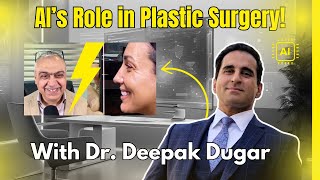
Transcript of a YouTube podcast (Puneet Nanda interviewing rhinoplasty surgeon Dr. Deepak Dugar) exploring Dr. Dugar's background, mentorship, and why he focuses exclusively on rhinoplasty. Key topics: his artistic approach and 'scarless' (endonasal) rhinoplasty technique that avoids external cuts, the functional importance of nasal breathing and septoplasty (60–70% of his cases include a functional component), practice statistics (claims ~12–13k total surgeries, ~3k rhinoplasties, ~6 noses/week, ~300/year), the role of AI/morphing apps and virtual consultations, trends in lasers/Botox/facelifts, celebrity and referral practice, and patient logistics (office in Beverly Hills; website scarlessnose.com).
Questions this video answers
February 10, 2025
About 12,000–13,000 surgeries
About 3,000 rhinoplasties
About six rhinoplasties per week
Around 300 rhinoplasties per year
Chapters
Welcome, welcome, welcome. Today we have one of the best, the best of the best rhinoplastic plastic surgeons of Beverly Hills, the budding star, Deepak Dugal.
So, Deepak, thank you, thank you.
Glad to have you today with me on this podcast. And thank you for taking out time. I know your one hour is probably equal to 10, $20,000, so thank you for that. So, Deepak, tell us a little bit about, about you, like where you are, what you do, what instigated you to be a plastic surgeon? When I was thinking, okay, I want to go in surgery, I want to be a heart surgeon, why plastic surgeon? And why rhinoplasty?
Yeah, sure. So I grew up in Beaumont, Texas, a very small town southeast of Houston. Grew up camping, shooting guns. I was an Eagle Scout, Boy Scout, and I grew up in a very basic, simple, beautiful life. But I knew I wanted to do something in medicine because that's what my parents told me.
And.
And then I knew I wanted to do something in surgery because that's what I wanted to do. I loved the idea of using my hands, doing something physical. So I was gung ho, going to be an orthopedic surgeon. So for all anyone listening who is figuring out your life path, still, don't worry. Sometimes, you know, you pick a path that's not the right path, but it puts you in the right direction for what you end up doing. So being an orthopedic surgeon, vision, I, studying hard, wanted to get good grades. I wanted to be the best orthopedic surgeon I could be. And then along the journey, I found some mentors in the ENT and facial plastic surgery space. One in DC one in New York, and then one in California, who I ended up joining and mentoring with for the past 18 years. And those mentors really taught me that in life, to be really successful, you have to find things that you enjoy to do. If you don't love what you do every day, you're never going to be able to be the best at it. Like, why is Dr. Fresh the best? Right? Why do we all follow. Why do we all. No, but why do we all follow you on TikTok? And why do we follow you on all our social platforms? Because you love doing it. You're not posting out of necessity. You love posting. And so when you have that love and that passion for what you do, you become the best version of yourself within that pursuit. And so I found that the mentorship and the personalities of these facial plastic surgeons aligned with who I was and what I felt versus the orthopedic surgeons, great humans. Thank God. Bless amazing orthopedic surgeons. But it was more brute. It was more like bone broken, fix bron. You know, hip, hip broken, replace hip. It was very, like, you know, basic in the sense of, like, there was. The art wasn't as sophisticated to me. And so that's where plastics really drew a calling to me to have that sophistication.
So it is the art artistic person inside of you that gave you that calling. Okay, I'm going to make a perfectionist kind of a product, like a picacho or whatever they say. I'm not a big art fan, but.
Yeah, yeah, yeah, yeah. And one of my favorite things, like, I truly believe every single person. We are awesome. I don't think there's any human who doesn't have an amazing capability. We all have problems. We have to work through our problems. But we inherently all have the ability to be the best versions of ourselves if we put the work in. And so I think that the same way I look at plastic surgery, look at a face as a painting, you don't look at a painting and say, oh, that's the wrong type of painting. It should be painted this way. No, what you say is, all right, this painting is beautiful. How can I improve it? So a couple of brush strokes on the mountains, or a couple of brush strokes on the grass to make it more green. Like, if you're restoring a painting from 300 years ago, you're not going to just turn it into a modern painting. You'll restore it and so the same way with the face. One of my favorite artists is Michelangelo, and he famously sculpted the David. The sculpture, the David. He said that when he was sculpting the David, it took him nine blocks of stone to find the David. So he didn't create the David, he found the David, found the David within the blocks of stone, sculpting it. And the ninth one is where he found the David. And I love that example because his famous quote is that the sculpture is already complete within the block of stone. My job is just to chisel away the superfluous material. And that's a paraphrasing of it. But the concept is that we're not here as plastic surgeons to recreate or make someone into something else. What we're here to do is restore their deformities, improve their confidence, and make them be the best versions of themselves. And that's the art that I loved about plastic surgery. Doing it in a very artistic, subtle way to. To just make People feel like the best version, but not necessarily become someone else.
So I know from Bollywood actresses to Hollywood, everybody's talking about Deepak, because Deepak is not just that perfect, artistic, rhinoplastic surgeon. He's also the most amazing human. When he talks to people, they come back and say, oh, my God, I had the best experience. I actually sent a couple of my friends to Deepak, and this is. They came back and said, oh, what a great person means the tableside manners are what makes a surgeon and doctor a doctor. And that is exactly what I hear about you all day long. So thank you for that. But that said, why did you choose rhinoplasty? You could have done boob jobs. You could have done butt jobs. Why rhinoplasty?
Yeah. Well, that, again, came down to the mentorship. Something about. For me personally, I like the idea of doing something in the head and neck space because you don't have to disrobe the patient. There's not this intimacy that you have to get involved with. You know, when you do the other body surgeries, patient has to disrobe. There's something about it. Just my comfort level. I love the idea of when a patient walks into the room, they're ready for the exam, I don't have to get them undressed. So I liked that. And then, second of all, I like the nose. Because if you talk to the average plastic surgeon across the world and you ask them what the hardest procedure is, almost every plastic surgeon will agree. If you put all the procedures on the map, the hardest one is the nose.
And.
And so something about pursuing the most difficult procedure within one of the most difficult specialties and becoming one of the best at it just really drew to me.
And I know nose is something that you see it, and for most women, at least as far as I know, face is everything. Like, they care about their face more than anything. And you are known, and I think you trademark it, something called scarless nose. Right. So you create chiseled noses that are scarless. Is that true? Shed light on what is scarless. What do you mean?
What?
Scarless?
Well, everything in the world, whether it's brain surgery or back surgery, everything's going towards minimally invasive. So everything. You know, even now, if you get, like, a big spine surgery, sometimes there's only two needle pokes, and they do all the work through little needles. Brain surgery, they used to cut the entire skin open, pull it down. They don't do that now. They go through the nose or through the ear sometimes, and they do the surgery so everything's going minimally invasive. Except some reason rhinoplasty started going maximally invasive the past 20, 30 years, where everyone's doing what's called open rhinoplasty. They make a cut at the bottom and the sides of the nose, lift up the hood of the nose, put a cookie cutter template sometimes on the nose, and then they recreate a brand new nose on this face. Whether it matches or not, they all look the same. As you notice, if you look online, whoever's watching right now, if you have scrolled on TikTok and you see nose jobs, they all look the same. It's like the exact same nose. Copied and paste, copied and paste, copied and paste. We take a different approach with scarless nose. It's an internal endonasal technique. It's been around for 100 years. Pendulum is swung between open and closed every 10, 20 years. It swings back and forth. In terms of what's more popular but the concepts of closed, scarless rhinoplasty, what I do is finessing your anatomy to be the best version. All the cuts are inside. There's no external cuts. We do it scarlet, scarless. So all internal cuts, we finesse your anatomy, reposition it, reshape it, resize it, deproject, project, rotate, derotate whatever's needed to make it the best version. But it still looks like you. It still looks like your nose, just a refined version with no cuts, no scars, there's no telltale signs of surgery. Just like if you're restoring a painting. Again, like the example I said earlier. If you take a 19th century painting for the Louvre, you're not going to draw a line in the middle of the painting to start your restoration. You're going to do little brush strokes from the behind the painting, make the green a little bit more green from the back, make the brown a little bit more brown from the back. So you do undetectable movements. And that's where my patients want undetectable.
So tell me one thing. Like Bruce Lee once said that I'm not scared of the guy that knows 10,000 ways to kick. I'm scared of the guy who knows how to kick it one right way 10,000 times. Or is practice 10,000 times? So how many times have you made noses in your young career? I'm sure you're like in your early 30s or mid. You look like 20s, but I have to assume you're in early 30s.
I'm in 40s. 40s.
Okay. So how many surgeries have you completed? And sure. How many do you do a week?
Yeah. So I love the Bruce Lee quote, by the way. It's one of my favorite quotes. It's literally on my website. So I have done probably about 12 to 13,000 surgeries now. And within the nose community, within the nose, the realm of noses. I've done about 3,000 noses now, which is pretty significant for the stage of my career because I only do rhinoplasty. I do nothing else. So I'm a master of one. I don't do facelifts. I don't do boobs. I don't do butts. I don't do lipo. Just noses. I do about six noses a week on average. So I do around. Yeah. And around 300 a year on average.
Wow. Means every nose that I'm seeing on Rodeo Drive, maybe 10% of the noses are DD noses. Deepak Dugar noses. Okay, so that's great. So, Deepak, tell me, a lot of people, when they talk about rhinoplasty, they think of just nose job. Is it nose job? I know you do a lot of deviated septums. I know there's other problems, because nose is something that is the most important thing in our body. It means you can live without eating food for a day, a few days. You can live without water for a couple of days, maybe a day, two or two. Without air. You can't live for more than a few minutes. So.
So true.
Most important thing. And it really is the crown jewel of your faith. Can you explain? Is it just rhinoplasty or is it. No, no.
Yeah, absolutely. And I love that you said that. And I love that you, as one of the most holistic people in probably the world, who's promoting holistic wellness, which is what you're kind of the guru of. The way you talk about mouth taping, the way you talk about essential oils, the way you talk about all the ways of improving your nasal breathing. You know, it's a holistic energy with your humidifiers that I love, by the way. I have one sitting in my office right now. But it's all about yoga. Nasal breathing. Right. You're the master of this. And so that's another reason I love noses, is because it's a functional surgery. It's not just like a boob job or a facelift where it's just about cosmetics. This is functional. We have to breathe well, to sleep well, to perform well, to exercise well. You know, there's a beautiful book by James Nestor called Breathe, where they really go into the depths of it. And that's where mouth taping is so popularized today. And you have the best mouth taping brand in the world right now. And I think that is where we realize the nasal breathing is so important. The nose has the humidifiers called the turbinates. Those humidify, clean, evaporate a lot of the junk that we breathe in our daily lives. If you don't breathe through your nose, you're not getting the same level of oxygenation in the blood levels. These are studies that have been documented for years now at all over US Institutions. So it's a known fact. And so we are big, huge, passionate surgeons about fixing the breathing on the inside as well as the cosmetics on the outside. And breathing on the inside can be multifactorial, but the septum being deviated is a structural component that we can always repair during surgery.
And how many of the surgeries that you do are deviated septum surgeries? And do people see a life changing effect after those?
Oh, my God. Even like two days ago, I took this woman's cast off. She looked at her nose and she was like, wow, it looks really good. And then she took a deep breath. And the first time she took her deep breath, all of a sudden she broke out into tears and just crying because she said, you know, she's maybe in her mid-30s. She said, I've never known what it is to breathe. This is the first time in my entire life I finally took a real breath and I finally understood what I'm missing out on. And because it's so weird for breathing because you don't have an objective comparison, you can look at each other and say whether you're tall or short. You can look at each other and say whether you're fat or skinny. You have no idea whether you can breathe well or bad because there's no way to objectively measure it amongst the population. But when you do a septoplasty, if your septum is really bad and you improve your breathing that significantly, it's life changing for patients. So, yeah, that's, that's one of the most important parts of our procedure. And we do that. I would say about 60 to 70% of our surgeries incorporate a septoplasty and functional component. So it's a huge part of our practice.
Wonderful. So what are the other trending cosmetic surgeries, if may I ask?
Yeah, well, I'll tell you right now. The celebrities everyone's staring at, I would say is everyone's looking at Demi Moore, everyone's looking at Lindsay Lohan. And the reason they're looking at them is because they look transformative in a timeless way where they just look like the best versions of themselves. And I think the ways that people are doing this stuff is one, I think people are doing a lot more repetitive versions of lasers. I think lasers, but historically were thought of, oh, you do a laser once every year, and that should help a little bit. Now there's a whole thought of doing lasers once every month or even twice a month. And there's different types, radio frequency.
And what is laser. When you say lasers, what is.
Yeah, so. So all different types. There's stuff isn't minimal as subtle as like, a clear and brilliant laser that just helps a little bit with skin tone and texture. And then there's lasers that are ablative, like a CO2 laser, where you're actually cleaning and polishing the top layer of the skin. That's the extremes of lasers. And there's lots of stuff in between, like radio frequency lasers that are tightening devices. They're not technically lasers. They're tightening devices that help tighten the thermal energy through the skin and the dermis to tighten the skin. But these things being done on a more repetitive basis is one thing we're seeing. The second is significant amount of energy put into skincare. I think historically, skin care was thought of as like, put on a moisturizer, put on an spf. Now it's all about, you know, chemically compounded retinol ceramides. There's all these topical ingredients that dermatologists are compounding for patients to make their skin as tight and smooth. And then third is the surgical procedures of the old school days are changing. Before, facelifts were done very minimally. And then the problem is it would only last a few years. Then the past five, 10 years, we had a pendulum swing where people were doing these what are called deep plane smaz facelifts where they're pulling the face so super tight. And then the problem is that it looks weird for a couple years, but the good thing is, as it settles, it looks amazing and lasts for 10, 15 years. But the problem is it looks weird for that first couple of years. So now the pendulum swung back and people are doing these mini facelifts where they're just removing just enough just to tighten it a little bit. So the examples, you know, and I'm not claiming these people.
Is it scars?
No, no, no. These would be procedures. You would have cuts, you'd have scars. And I'm not saying any of these people had surgery, but the rumor mill is when you look at Brad Pitt, Debbie Moore, Lindsay Lohan, you know what, what they have or had not done, everyone's speculating, no one knows. But the concept would be.
You should.
Yeah, yeah.
Like put them in there and tell, okay, Demi Moore has done this and this person has done this. You should.
Yeah. A lot of doctors do that and it's very clickbaity. They get a lot of views. The only reason we don't do that is because we genuinely do take care of a lot of celebrities and so we don't want to make them feel uncomfortable.
Yeah, you don't want to mess with them.
No. And the doctors that do that, they don't take care of celebrities.
I agree. So, so now I know. Since we are talking about celebrities, I don't know if you can because of HIPAA compliance, but is there because. But I have seen your. I follow you and I've seen that you've posted about a few celebrities. I don't want to say their names but just in case. Are there any public celebrities in Bollywood as well as Hollywood that have actually gone public and. Or you actually have something signed off that you can talk about?
Yeah, I mean a few. I would say most of my patients are just next door, average boys and girls next door. And then the other end is the most famous, high end A list celebrities, the most cute famous people in the world in Bollywood and Hollywood, both of those. The irony is they're the same patient. They don't want anyone to know. They want it to be conservative, they want to look very natural. Right. And then there's this in between world, the social media world where people are very open about the results, talk about the results, things like that. So most of my A list and most famous celebrities, no, I can't speak on. But there are some people who've opened up about it, love. There's this very famous influencer, Mia Khalifa. She talks very openly about me doing her nose. Dana Kattan from Vanderpump Rules has talked about openly about me doing her nose. There's a lot of Disney TV stars such as like Semi Singh and a few others that have talked about it openly. I just recently she publicly posted about it. Charlie Sheen and Denise Richards daughters. She. Yeah, she talked about her results and we actually have a really cool project coming out soon. I can't speak on that yet because of an NDA, but once that project comes out that'll be really cool because.
You'Ll get to see anybody in Bollywood that you could talk about is. I know a lot of my Listeners are from India as well. They love to come to us and you know, you'll probably find some patients hopefully.
Yes, yes, no, no, I. For all those listening. Listen, I love Bollywood and I take care of a lot of the biggest stars, a lot of the biggest patients, but unfortunately Bollywood's very conservative.
Okay.
Indian public does not talk. Yeah, they don't talk about it.
Beautiful. And what about. I know you do a lot of Botox. What is your thought process about Botox? Is it safe? A lot of people think it's not safe. A lot of people also think it means it's. It's a little taboo in some people's mind. And some people.
Yeah, yeah.
Like I've got a friend of mine and she's 20 something and she's still doing Botox and like she's very cool about it and she posts it on social media. So what is your thought about Botox?
Yeah, I would say that most chemicals, no matter what, whether you're ingesting them or injecting them, usually there's a dose dependent relationship on when it becomes bad versus when it's good. Like think about alcohol. If you have a glass of wine.
There'S fluoride in the toothpaste. If you eat the entire toothpaste tube, you'll probably have to be in the er, Right?
Correct. Correct. Versus if you just brush your teeth, normally you'll be safe. Right. And same with the essential oils. That's why you have such strict rules on your essential oils and how to dilute it if you drink the whole.
Thing in case you put it in your. Correct, correct.
That's right. Right. So I think it's that same with Botox, dose dependent if you do it in a safe, conservative way. But the one thing I like to say about Botox and all these things is that bad work always gets noticed. Good work goes unnoticed.
You know, you should put that coat on your. Because that is so true. I walk on Rodeo Drive, I see some of these women who are like, who look like rubber dolls and I'm like thinking, what is going on in Beverly Hills?
No, not, not my patients.
No, no, no, of course, of course. And then I meet some of the most prettiest women. Women. And in reality they have probably gone to you or somebody as good as you, you know, so that's what is happening. There's this meme, it's all about art. I think it is all about art. It's not about science alone, it's about art. When it comes to Botox, there's this.
Meme online and it's a joke, so no one take offense, but they show these Miami girls and then they're like, guys think this is fake. Then they show like this really pretty, normal, like quote unquote, normal looking girl is really pretty. And they say, this is what guys think is natural. And then, and then they list all the things and she's like, I had a blowout, I have my hair colored, I got my botox, got my lips done, I had my face, I had my nose job, I had my boobs done. And like that's what a guy thinks is natural. So it's just about the eye of the beholder. And I think it's just like dose dependent. Just like brushing your teeth or taking the essential oils, you can do things right or wrong with a certain amount of the dose. So anything? Botox, fillers, lasers, anything?
And a quick few other questions. What are the potential risks and complications in either rhinoplasty or Botox?
Yeah, I would say the number one, biggest one that you have to worry about is just not liking your results. And that's a real thing. A lot of patients will get plastic surgery and there's what's called a post operative regret, where they feel like too much was done, too little was done. It doesn't look exactly how they thought it would look. Things like that, like, I have a friend who lost a bunch of weight and then honestly, she felt like she looked better at some point on the journey versus when she lost too much weight, her face got a little too gaunt, and she started looking a little like her angle. She never realized the angle of her jaw, how one side is more asymmetric than the other, but she never realized that until she lost all the weight. So my point is that sometimes as you make these changes, there'll be something new you don't like. And so my biggest thing is natural is important and keeping it as holistic as possible versus doing too drastic of a change, sometimes it's hard to come back or it's hard to mentally recover from that kind of injury justice to your body.
Everybody keeps talking about AI and technology advancement. Has the technology actually impacted your area, your field in rhinoplasty?
Yeah, definitely. Yeah. I would say from a marketing and from a online standpoint, how consumers find us 100% right. Because now think about just the algorithms themselves. Like right now, whoever you're watching this right now, whether on YouTube or TikTok, you know you found us through an algorithm. At some point, you started following Dr. Fresh because his content's the best, he's the most charismatic. But also the algorithm brought you to him. Right. And so algorithm itself is all AI generated, so that alone it's affecting everyone in the world. No one's untouched by it. But then, second of all, I think within our technology scape, what we do for morphing technology, how patients are able to visualize themselves using their own AI morphing apps now think, and they come to us with versions of themselves that are like, oh, I would like it to look like this. This is how I morph my photos. So that technology is very different from 15 years ago, when patients would just come in with a, you know, a picture of Jennifer Aniston and say, I want to look like her. Now it's very different. Now they show themselves, morph.
Do you have a software available where people can, let's say, if I want to change my nose. Not at this point. I don't want to, but maybe if I was 30 years back, I would have. Is there an AI available with you in your practice where people could make their own nose? Or you had some technician make them like a AI built nose, and then you could just say, okay, I'll copy paste this nose to you.
Oh, my God. Yeah, so we. We do that all the time. I mean, I can show you just conceptually, just what the idea of it is, is, like, you look at a nose like this, and so let me just show you. So, like, you take a nose like this, and then what you do is you play around with an app and we can show the patient how much smaller we can make the nose.
Oh, my God, this is unbelievable. This is beautiful.
So you can literally show the patient live. And I just did that in one second right in front of you while we were talking. So you can do that now with the technology that we have available to us. And so it's really good for a patient to be able to understand. But the truth is the most important thing for all patients. Whether you're looking for Botox, whether you're looking for a nose job, boob job, facelift, anything, you're getting your teeth done. Veneers. It's looking at the physician's work and letting them show other people, real people, because you don't want to look at edited photos all day because the doctor could have faked those. But real people's results, real, actual photos of people's work and going to a referral. You know, most of my practice now is referral based. Amazing doctors like yourself who send me patients, Dr. Fresh. And it's, it's really about the trust in the community and having that sense of natural work that people feel comfortable sending patients to you for. So, yeah, morphing apps are incredible and the AI technology is insane, but don't get fooled by it either.
And what advice would you give to aspiring cosmetic surgeons?
Well, I will tell them you got to think. You got to think, act and live like Dr. Fresh. And what I mean by that is you embody the energy. Literally, you embody the energy of a 17 year old hustler kid who has no food to eat. And the irony is you're one of the most successful entrepreneurial physicians in the world and you have accomplished so much. You're in the top.001% of the universe in terms of your accomplishments, and yet you still do everything with the intensity of that 16 year old kid who has no food to eat from the Middle East. And it's incredible the way you have that tenacity. And so I think that's number one is always keep the hungry alive. That's right. That's right. And you're the embodiment of that. But I think that's the number one. I think that's the only thing. Because as soon as you get a little entitlement, a little sense of comfort, it dies. And we see it in the next generation. We see it in generations above us. We see rising stars who then flatten. You've seen it a hundred times in your life and it's just the only thing was they lost that hunger. And I think you're the king of keeping that hunger forever. So I'm praying to be like you and just keep that hunger forever. That's the only thing I tell young people.
So tell me one other thing. Your office is in Beverly Hills on Camden Drive, correct?
Correct.
For listeners who may want to come connect to you, either from India or from here in the United States, or I have a lot of following in Philippines and some other parts of the world. How do they contact you there?
Anything you want to learn about plastic surgery, whether it's your nose or just facial cosmetics, just go to scarless nose.com. that's it and everything. Right. When you go to that site, the concierge is waiting to help you with any of your questions. They'll get you in touch with us. You can book a consult and do a consult. Virtually more than 60% of our patients are outside of the US and so they fly in for surgeries. They fly in. We do all the virtual Consultations, just like this podcast right now, we do everything virtually. The irony is me and you see each other in Beverly Hills all the time, and yet we're sitting across from each other on a podcast. We could have done this at your house. But the virtual consultation is amazing. We morph the photos, we play with your photos, we show you other examples of the work. We have a very in depth, almost one hour consultation for every patient and then they fly in for surgery and you fly back home one week later. So it's a very easy process.
Apart from that, any other thing, Deepak, that you want to say before we end today's podcast?
Well, I think one thing that I think is so interesting is the digital revolution and how you have really taken that by storm with your products and developing them. Where do you think wearable technology is going to change over the next three to five years with AI? Because, for example, if I use your mouth tape and I have your humidifier and I have your essential oils with.
Wearable devices, I'm actually bringing in little, hopefully a little ring. It's old news, but something that I actually started using and I feel like it's something that would really go well with mouth tape and it really helps. It really changes people's lives. The problem I see is my whole motto is bridging the gap. And the problem I see is these wearable devices. The good ones are 500 to 1,000 to $2,000 versus their cost of production is 5 to $10. So my whole idea is how do I bridge the gap? My people, the people who follow me, very high quality products that have changed my own life. How do I make something similar? I'm not an electronic geek by any which means I'm more into oral care, oral care and hardcore oral care, but things like mouth tape. The reason I originally got into mouth taping was because I saw dry mouth patients getting unbelievable results. People get less cavities, period. When your mouth is closed, your saliva doesn't dry at night. And when your saliva doesn't dry, you breathe through your nose, you have more energy in the morning. You have no dry mouth or less dry mouth. Less dry mouth. And if you have less dry mouth, you have very little chance of getting cavities and less gum disease. That's original reason, but then people find a lot better sleep. They snore less, their partners are happy, and overall their blood pressure goes down. Benefits are so tremendous by nasal breathing. And that's where you come in, the nose gang. It's a given thing. Anybody who thinks that they actually mouth breathe. They should try it and try it in the day during your regular time. I tried for 10, 20 minutes because some people can't take it. Some people, for them, they are claustrophobic. They can't even go in a plane. I remember going in a plane and one girl was claustrophobic and she just started shouting the moment this plane started and the plane had to literally stop and she had to be, oh, my God. So just try it. And if you find relief, it's mind blowing. It's life changing. People, athletes, people who are actually jogging, people who are going to the gym, feel it's changed their routines. They feel they can work out a lot better. Just the simple fact that you can nose breathe. And then people come to know I have a deviated septum. I need to call Dr. Deepak Dugar.
Yeah, that's right, that's right, that's right. But, yeah, I love that. I love that philosophy and I love the direction. Yeah. God bless all your visions of bridging the gap. Let's keep it going.
Thank you. Thank you. Thank you so much. Thank you always.
Thank you for having me. Thank you for having me. Thank you all for listening.