Dental Expert Spills Top Secrets for Real Success!
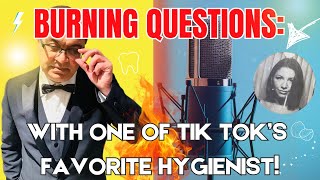
Krista Ambrusen, a dental hygienist with 10 years of experience, shares practical oral health tips with host Puneet Nanda. Skip alcohol-based mouthwash, try water flossers with warm water, and brush before bed to prevent overnight biofilm. Vitamin K2 may reduce tartar, and mouth taping can improve saliva protection if you can breathe through your nose.
Chapters
So here with us is one of the best, one of the best hygienists in the nation, Krista Ambrusen. And welcome. Krista.
Thank you, thank you, thank you for joining us.
Krista, you know, people do not value hygienists, but let me tell you, more important than a doctor is a nurse, more important than a dentist is a hygienist. Because truthfully speaking, lately what I've seen in dental practices, even to a degree, once my dentist, the original dentist that I used to go to, he unfortunately retired, I had to choose another dentist. And when I went to him, I saw that most dentists, even though they are in business, they are looking for a problem solution. So they are looking for patients that they can drill and fill and build. They are not looking to educate you. Look at your tongue and say, oh, this could be possibly oral cancer. Or look at your give you tips how to not get cavities. Be in a situation where, so that you are not in a situation where you go there not just for cleaning but for, I mean to say where you go into their clinics just for cleaning and not necessarily going in for other problems. So that thing is gone. Those days of those dentists are gone. And I don't blame them because I know hygienists have been making a lot more money. I know in Los Angeles, Krista, there are hygienists who make up to $100 an hour, 70, 80, $100 an hour. And these clinics have become expensive place to go to. And I'm sure the insurance structure in America is so horrible at this point to where the insurance is not paying them. So I understand from the dentist point of view also he's just looking to rake in as many dollars as he can. So I believe that one has to be one of the guru of their own wellness because they have to be one of the members of their own healthcare team. If they are not, they are going to get dinged. There is no other way out. So looking at this entire perspective, I would like to thank you today for joining us. Thank you. Before we get into more detail, can you introduce yourself in summarized way to the audience there?
Absolutely. So once again, my name is Krista. I've been a registered dental hygienist for about 10 years now. So doesn't feel like 10 years but it really is something that I've loved teeth since I was three and so I pursued that passion since I was a little girl. You know, if you think about like the little elf on Rudolph, that's like, I want to be a dentist. That was me. I wanted to be in the dental field for such a long time. So I love teeth. I'm fascinated by them. But really, the great thing about being a hygienist is we are one of the only prevention specialists in the entire medical system in the United States. So we're the specialty that focuses truly just on preventing dental disease. And our goal is to have you not have to come see us as much when you come get your teeth cleaned. It's like, we want to help you create a lifestyle and create something that's sustainable for yourself. And especially now. You know, dental care is expensive, and dental care is not as easily accessible as it could be. So what I do now is I educate people on how to take care of their teeth online. You probably have seen me on TikTok. That's where I really talk a lot about just how to take care of your mouth. Because I realized, you know, as hygienists, we are so busy all the time. We're constantly going, going, going. And a lot of the times, patients are every hour on the hour or even less than that. A lot of hygienists don't have the time to educate like we used to, or we're just doing so much more in an appointment than what we used to. So I think that was where I saw this gap, and I realized I'm like, you know, I think more people need to learn how to take care of their mouths and be, as Dr. Fresh says, a guru for their own health. And that was kind of where my health journey started, where I was dealing with some skin issues, and I couldn't figure out what was going on. And I went to doctors. We were just trying to put band aids over things. And then I used my hygienist mind and focused on prevention and wellness. And that's sort of where I started to fall in love with a more ayurvedic, naturopathic, functional approach to things. And so that's kind of where my brain is at now. So, yeah, that's a little about me.
We're going to keep it very short answers, and I'm going to give you about eight or 10 questions. So these are going to be general questions. You just say your mind. You don't have to be right or wrong, just your mind, because you're one of the best. I expect nothing but the best. So number one thing, I'll start with the most controversial things to begin with. So number one thing, what is your opinion on alcohol based mouthwashes.
All right, well, alcohol based mouthwashes, ideally I look at them as hand sanitizer for your mouth. And if you ever remember when they said hand sanitizer is killing the good bacteria and the bad bacteria on your hands. Well, our whole entire body is full of good and bad bacteria. And the one thing that hand sanitizer does, it dries out your hands. It increased all of my skin issues on my hands when I was using it consistently. Think about what that does to your mouth. And we have such a dry mouth problem nowadays. Everyone has sensitivity in their teeth. Alcohol based mouth rinses aren't only just killing off the good bacteria, but they're also drying out your tissue, drying out your mouth and increasing your risk for a lot of different diseases as well. And that within itself is not ideal. So looking for something that's a little bit more mild and something that's much better with better ingredients. You know, my two favorites are peroxide and xylitol. Going to look for something, look for that.
Beautiful. And number two question would be now extending it back a little bit. You said. So why do you think ADA is still stuck up with a lot of alcohol based mouthwashes? Have ADA stamps on it. And I can't say anything because we own a mouthwash company. But what is your independent opinion? Why is ADA so still in agreement with them? Is it like the statin war where statins are being not recommended by most doctors the moment you have ldl? But now a lot of neo doctors are starting to see that as long as there is a particular type of ldl, a particular type of very, very small lipoprotein, that is the cause of the arterialsis in the arteries, that is the one that needs to be taken care of and not to general LDL. So there's a huge debate, but since that 1953 studies, the whole gamut is billions of dollars worth of statins have been sold. Is that the same case in this scenario?
I think in my opinion, see, I'm not 100% sure in my opinion, because I think that dentistry in general, my personal opinion is a little behind sometimes where I think we're very stuck in our ways. And so if something had helped someone at some point, we're like, yep, this is great. I mean we'll, you know, we'll talk about this probably in a little bit. But similar to fluoride, I think there's better options out there now and there's more education. But still getting that ADA seal of approval. I Think it's because it's been there for so long. I don't know if that's something that ADA just wants to march up and say, we want to take this from you. But I'm not sure. I think that it's just there is part of dentistry that still is stuck in certain ways. And I think if you were ever to use those mouthwashes, it's like using them in such small doses, like two weeks at the most, not using it as a daily rinse. But also the fact that it burns as well is why would you put something in your mouth that burns? It's not supposed to be. You're not supposed to feel pain. And I remember I used to have a contest with my sisters growing up that we would try to keep the mouthwash in our mouth as long as possible. And I was like, my eyes were tearing up, and I'm like, wait, this can't possibly be good for you if it burns that much. But I think it's just because we've been stuck in our ways for such a long time. And I think dentistry is finally evolving. We. Which I think is a good thing for a lot of us because we're finally realizing so many more systemic connections and making so many more breakthroughs with the oral microbiome and what it's doing to the rest of our body. And who would have thought the mouth is not connected. You know, it is. It's connected to the rest of the body.
So, yeah, people don't realize whenever there's pain, that means there is cell death.
Yeah.
And dehydration probably is causing that. But anyways, who am I to say that ADA is a big, big team. What is your opinion on fluoride?
I think this is such a hot topic right now, too, especially, you know, you being in California, and they just passed. They're having the EPA go and look back at their water and saying, you know, taking a look at what is fluoride really doing, and is it as beneficial as it needs? You know, do we really need it in our water systems? And this is a huge moment for dentistry because this is something that as, once again, was an industry standard. You know, you went, you got your fluoride varnishes, you use fluoride. And, you know, the big thing about fluoride is that it is one of the most studied. We do know that it's one of the most studied with teeth. But at the same time, now there are better options because there's also studies coming out that it could be detrimental Especially to developing children. And for any mom out there, you know, you want the best for your child. And I don't have children myself, but my best friends, all, you know, the ones that do have kids, are very much in agreement saying, you know, we want to do what's best for our kids. And if this is something that could be harming someone, it's not worth it. But I think the thing about fluoride, in my opinion, is even though it's studied and it's been great, what fluoride does is it just makes your tooth a little. A little bit more resilient to acidity. But that's putting a band aid on the problem and not getting to the root cause of what's going on. Is it your diet? Is it your mouth breathing? Is it your dry mouth? Is your medications? There's so many other things. Is it like, what is the acidity of your mouth? What are you eating? Are you snacking? There's so many different reasons that people get dental caries or cavities. It's not just because you're not putting fluoride on your teeth. And now with hydroxyapatite, we have such a better option, and something that's biomimetic, it matches our body. It's what our body is naturally producing because we have it in our teeth. And so it's giving us just a better option. And I think that is really been such a breakthrough in dentistry and been used in other countries for a while now. But I feel like the States are finally catching up.
What do you think of vitamin K2?
You know, I could go on about vitamin K2. I think it is a brilliant, brilliant vitamin. Actually, there's a great book called the Dental Diet for people who just want to dive into it a little bit more, that touches upon it. And that's where I first read about vitamin K2. But vitamin K2 is sort of that missing link, especially if you have those patients who build up a lot of tartar and a lot of like. Like a lot of that hardened calcified plaque, most of them could be deficient in K2 because K2 facilitates calcium movement and D3 synthesizes it, or you take calcium. But if you don't have that K2, it's the missing link that moves the calcium from the bloodstream, from the saliva, and it brings it to the bones where it's supposed to be. So I think vitamin K2 is amazing. And especially it's like every hygienist should know about it, because K2 could really make your job a lot easier, especially with all that tartar buildup and patients that do take it and even my dad takes it and he said that he used to build up a ton of calculus, a ton of tartar, and since taking it, he doesn't build up almost any at all. But think about that's happening in your mouth. And we know that the mouth is related to the rest of the body. What's going on in your arteries if that's what your teeth look like.
So I think you would not believe back in the day when I was young in India and my grandmom didn't know anything about like the details of what is K2 or what is D. But let's say if we were visiting a place where we did not have access to good water or brushing area, she would actually give me a piece of cheese or butter to actually eat and say, eat that if you can brush. So I didn't realize, I said, she's making me eat something for not rushing. But little did she know or little did I know at that time. It has loaded the butter and the grass fed butter because back in the day that's the only thing you could get nowadays.
Exactly. There was nothing fancy about it.
So it's loaded the cheese and the butter is loaded with vitamin K2 and that ensures that the plaque wouldn't stick to your teeth. So it's if you can't get hold of anything else, take a piece of cheese or butter. I would say it really works. It's an old grandmom's remedy, but it really works. So another thing that has really been catching fire is about mouth taping. What is your opinion on that?
I love mouth taping, which I was a chronic mouth breather as a kid. I was falling asleep in my high school classes because I didn't get good quality sleep. I do have restriction in my tug. I'm all about. My best friend's a myofunctional therapist. Like, I know so much about the benefit of being able to breathe through your nose. And I actually just listened to a podcast the other day that was talking about when you breathe through your mouth, you are naturally dehydrating yourself because you lose water when you breathe out. When you breathe through your nose, it hydrates that air and it actually helps hydrate you as well. So something I learned, I thought it was fascinating. But the thing about mouth tape, my one biggest thing is that make sure you can breathe through your nose first. I always say if you can mouth tape awake for three minutes, then you can mouth tape at night. But I always say, you know, if you can't breathe through your nose consistently for three minutes by yourself, go get checked first. That's always my thing is like I want to make sure that you're getting checked and make sure that you can't. You may not. You may have a deviated septum, you might have something going on up there, you might have some extra tissue or you might have some inflammation. So starting with being able to breathe through your nose and then you can practice that. There are so many different ways, I think. Patrick McKeon, he wrote the book the Oxygen Advantage, has exercises online that you can do to train yourself to breathe through your nose. But nasal breathing not only is so important when you sleep, and that's where the mouth tape comes in, but it's so important all the time because it helps with stimulating salivary production. So it helps keep your mouth more hydrated, more moisturized. It also helps with you getting into a deeper sleep. So when you mouth tape, you're helping your body go into rest and digest. But when you breathe your mouth, you go into fight or flight. So it's like you're running through a tiger, your entire night's sleep and no wonder you wake up exhausted. But then if you're also mouth taping, it helps with just keeping your teeth and your, your mouth protected because your teeth are going to be bathed in saliva all night. And also saliva has remineralizing properties. So it really helps the body knows what it's doing. So it's really helping protect your teeth. And if you have a high caries risk and you're breathing through your mouth, a dry mouth is an acidic mouth, so then you end up having more problems and also your gums become inflamed. And it's just a vicious cycle because until you can get that under control, you're going to constantly have bleeding, you're going to be coming back to the dentist all the time for your cavities. And also you're probably going to be kind of irritable. If you're breathing through your mouth as well, you may not feel really good. So that's a big thing, is making sure that you can breathe through your nose. If you can't go get checked. If you're snoring or having any sort of restrictions, make sure you get checked as well. There's so much more to it than just mouth taping. But I think for people who can breathe through their nose, oh my gosh, it can change Your life and it can make you sleep so much better. I mouth taped for years and then I finally trained myself that I don't need it every night. But I love the night's sleep I get when I use it.
So for the audience it is extremely important. What she just said that before you get into mouth taping, you need to ensure that you can actually breathe through the nose. And a lot of the times when you breathe through the nose and if your turbinators are swelled up or if there is some kind of restriction, this could be a problematic situation. You need to ensure that you can easily take that three minute test that she just talked about. So the next question would be, I would say what is your opinion on floss picks versus string floss versus water flossing?
So my opinion may actually be kind of different than the typical hygienist. A lot of hygienists are like string floss is everything. But I think that whatever you are going to use to clean between your teeth is the most important as long as you're doing it correctly. I think if anyone can use a floss pick or a flosser or you know, even the interdental brushes, as long as your teeth are clean and your gums are healthy, you could use a piece of hay. I could care less. I just want you using it correctly and then also making sure that you're doing it consistently. And so I always say to patients I kind of used their six month appointments as almost like a check in. So I would say, okay, well you know, use this, try to be consistent with it and if you come back and things are good, then we're going to just keep doing what we're doing. But if we come back and we need to tweak something, we need to tweak something. But my personal favorite though, I mean I do floss with string floss and then I use a water flosser because I think water flossers are one of the greatest inventions of all dentistry.
I 1% agree. If I had something that apart from a toothbrush that I need for sure, even if I didn't have oil pulling, I would say I need a water flosser.
Water flossing is everything. I think that I so when I practice I was checking, checking gums, AKA doing a periodontal charting, a full charting on every single patient, every visit. And I know they usually only recommend it's standard to only do it once a year. But my office, we were very on top of bleeding. We would count the points of Bleeding. And we'd have the patient go home and work on their home care and come back. Almost every person who water flosses and those who water floss twice a day, I really find it is the. It makes all of the difference in the world and inflammation. And I see that. And I am so impressed with what water flossers have done for the mouth. And there are still people out there saying that they are not good, that you shouldn't be using them. I'm like, no, use the water flosser twice a day. Get to the highest setting. Your gums will be able to handle it. But if it is a little tender, you can lower it and spend more time in those areas until you can handle the higher setting.
So a lot of people have bleeding gum issues and some people, when they start with the highest setting and they get scared. Can you kind of enlighten people on that setting mode of it and why they should, what they should do? I'll let you answer.
Yeah, I always say start on the lower setting first and use warm water because those are the two things that I find that if you don't do those things, you may never water floss again. Knowing that if you do have bleeding gums, you are going to keep it.
Away from the eyes.
What was that? Oh, keep it away from your eyes. You may splash something. You may need to try using it in the shower. If you have a handheld one, it's much easier, just a little less messy. But I think the biggest thing is that starting slow and, you know, just going around getting a feel for it. The best thing about a water flosser is you don't have to be as technique sensitive as dental floss. I see a lot of people causing what's called a floss cleft, which is like a paper cut in the point of the gums that can actually get infected if you floss. Just snap the floss between your teeth and you're not adapting it around each tooth. So I always say with the water flosser, it's less technique sensitive, just making little U shapes around each tooth. Tooth. Take your time. You have to refill it. That's okay. It's actually great because you'll just go around one more time. But I find that the people who see this, like, once you start seeing what's coming out of between your teeth, you'll probably never stop water flossing because it gets so much out. And the water flossers now are so effective before it has to be at about a 70 psi to be clinically effective at removing biofilm, which nowadays that was blow that out of the water. But in the past, I remember it, this isn't your, your grandmother's water flosser. That was just like a gentle stream. Now this has power, this is effective and it's portable and, and they're so incredible. But I think that when you start first, start slow, start on a low setting, work your way up. If you get a point, that hurts because I suffered from gingivitis for a long time. I just had a bout of it like two weeks ago because I wasn't feeling well and I was like, wow, I remember what it feels like for my gums to hurt when that happens. Just take your time. It's gonna happen a few times, but eventually giving it about two weeks, some people more, some people less. Depending on your healing, you will eventually help remove that bleeding. And if it doesn't stop bleeding, great conversation to have with your hygienist. That area may need to be cleaned a little bit more or it's just something that, you know, needs to be worked on and it eventually should get better.
And I'll tell you one thing, warm water is the key because yeah, when I originally started, I put cold water and I got so sensitive. This is back in the day and I did not use it for another year or maybe even more. So I would tell you warm water is the key.
Warm water, not too hot, not too.
Cold, not too cold, not too hot. And that water would be so soothing. It cleans you up really well. It also actually because of the energy in the electrons, because of the heat that is heated water, it actually goes and penetrates the biofilms and removes them really well. So I've seen that. And by adding a couple of drops of the essential oil based mouthwash that we, we have, the concentrated one, what it does is it literally acts as a little soap, but not soap, and actually ensures that the cleaning is a lot better. Plus sometimes just regular water becomes a little boring. So. But you have to be very careful not to add more than two or three drops.
Yeah.
Not only can it mess up the system, it can also. It doesn't, it doesn't help. So more is less is more. In this case, I would say. So that's it. Another question that is burning is a lot of people actually write, I don't brush at night. How important is brushing at night? So can you tell?
Yes. So I understand that so many people on a day to day basis, I mean, I'm guilty of it too. Even though I'm a hygienist, there have been times where I am so tired I just fall asleep. And actually, this is a good example. If you've ever used. Usually when you drink soda, you know that fuzzy feeling, if you can feel that fuzzy feeling on your teeth, that is biofilm, and that's what we call plaque or biofilm. And it is live bacteria that is so microscopic, but it has built up to a point where now you can feel it. And so that is what happens at night. So what ends up happening is your mouth becomes warm, it becomes dark and it becomes damp. And if anyone has ever taken a, a biology like a microbiology course, when you did lab, you had to grow bacteria in a warm, dark and damp room and bacteria thrives there. So that what ends up happening is it multiplies overnight. So whatever you've eaten, if you have not removed it from your teeth, the bacteria has a field day. It eats all the food that we eat. And so it's just eating all the food. And a lot of it is fermenting. So what it does is it releases acid. If it's a acid reduced, like acid producing bacteria, that, that's what's causing cavities. And also if you've left your teeth like that and then your mouth breathing at night, your mouth becomes more acidic, your teeth are now more soft and more at risk of breaking down. So that bacteria is hanging out in there, releasing acid onto an already susceptible tooth. You're just producing a cavity in your sleep over time and it is just creating the perfect environment for bacteria to just thrive. So if you're not brushing at night, you're not removing all of your day's worth of, of food. It's not, it's going to just sit there and just ferment in your mouth. I always say it's like dirty dishes. Have you ever had a sink full of dishes and you don't clean them and then they start to get smelly? It's also going to increase your bad breath as well. And I also think about when it comes to not brushing before bed, you are just almost guaranteed to have morning breath, which no one likes morning breath. It's kind of gross. And you're also just, you're putting your mouth at risk. And also all those bacteria, not the ones that cause cavities, but there's ones that cause gum disease. And your body is going to be like, wow, there's a foreigner here, there's an invader, and we have to send the immune system there. So Your gums are going to get more inflamed, you're going to get more bleeding, you're going to get more issues overall because of the fact that these bad bacteria and these pathogenic bacteria are just having a great time. So, so if you brush before bed, you're just reducing that load so your body's immune system doesn't have to kick in and help you out and you're just giving your teeth a chance to rest. Because also during the day we're talking, our tongue's moving. At night we're still, we don't have that sort of cleansing effect that we do during the day while we're going through our day to day motions. So it's so important. Please brush your teeth before bed.
And if you don't, we're nearing our end of the time, but I have two other questions, so let's keep it quick and simple.
Perfect.
Well, the number one question, the one of the second last questions is what do you think of teeth whitening, whitening in general? Number one, whitening in a dental office versus white strips. Can you quickly give us a quick.
Yeah. So I think teeth whitening is the most affordable and underrated way to, to improve a smile. And I think that so many people are not looking at that option before they jump to veneers, crowns, restorative work, when if your smile was whiter, you might be really, really happy with it. I love teeth whitening, I think it's amazing. But the interesting thing is that teeth whitening is kind of similar. It depends on, you know, the product itself. But when there's a good product over the counter, it's not that different than in office whitening besides the concentration, hydration. So in office dental whitening is just a 40, usually like a 35 to 40 hydrogen peroxide. It's fast, but sometimes fast isn't always better. It can increase sensitivity, it can sometimes work, but sometimes not be as effective. And you usually still have to do something at home anyways. But I find that over the counter white strips, I mean, I am a huge fan of the Guru Nanda one, so I can say that. But I find they're the same ingredients, usually just about a little under 10%, some more, some less, but it's still hydrogen peroxide based and I think that they're still a great option. And slow and steady wins the race in my opinion. So if you whiten slower, the result is going to, you're going to be able to control the result a little bit more and also a lot Less sensitivity in my opinion as well.
When I was young, I did not have the reasoning that acid actually is the major cause of causing cavities. I used to think it's the sugar, it's, it's the acid, it's the demineralization effect of the acid, which most people do not know even till today. So I literally messed up my enamel. So I'm very wary of using the white strips I oil pull for that purpose so that I can keep my teeth white because I actually am big coffee drinker. I, I just, I, it's, it's one of the bad habits I have. But thank God I, I, I do not, I indulge in too much wine or other alcoholic stuff, but coffee is something that I need to decrease. But in the meanwhile, what do you think about teeth whitening and sensitivity? Very quickly. And then we have the last question about oil pulling.
So a lot of sensitivity that comes from whitening is always temporary. It's something because what ends up happening is the hydrogen peroxide, when it penetrates the tooth, it opens the pores of the tooth. So the, the pores of the tooth are now open, which means that stimuli can travel back and forth. And also hydrogen peroxide is slightly dehydrating, very slightly, but can be a little dehydrating to the tooth temporarily. Once the teeth get their saliva back, that's when they rehydrate, they're going to be okay. But sometimes people get sensitivity. Everybody is different. And also depending on the ingredients in the whitening itself, if there's no added sort of rehydrating agent, such as, you know, a coconut oil or added water content, it's going to create, it could be more sensitive. But a lot of the times it's just because the pores are open and once you stop whitening, it's going to be, it's going to go away. And some people only get it for the first day or the second day and then it goes away altogether. But it's usually just because the pores are open. It's almost like, you know, you opened your door and there's a breeze versus if the door's closed. So that's what you know, that's where the sensitivity usually comes from. And some people get concerned. But I always say it's, it's temporary, it's going to go away, if anything. And you can use oil pulling to help with that, or you can use something that hydrates the tooth. So make a difference.
I have a lot of questions, but I'll come To the. I have two more questions, but I'll stick to the more important one. What is your honest, got to honest opinion about oil pulling? And do not please think because I'm asking, you have to answer it certain way. So if it is bad, if it is good, what is your real honest opinion on oil pulling? And simultaneously not just oil pulling or tongue scraping as well.
Okay.
So together technique.
So you know, I'm a big fan of oil pulling and I love the concept of oil pulling because it was something that's very simple, something all natural. But when I started out learning about it, I was like, I cannot oil pull for 30 minutes. Like I can't stop talking for maybe five. So I really needed something that was more optimized for the day to day person. But I think what oil pulling, I had patients that would do it. And their teeth, the way their enamel was, it was just smooth. It was fantastic. And they were never really having a lot of issues because coconut oil, the. It's the lauric acid in coconut oil that helps break up biofilms. It's very, it helps soften the plaque to make it easier to remove. So I think oil pulling as a concept is fantastic. But I think that, I mean, I know that Guru Nanda, I've been using the Guru Nanda products. It's been a year now. And I, I love the oil pulling because I find my teeth just feel so good and so clean after. So yes, I'm talking to you.
Point. You said because it's smooth, most people don't realize when their enamel is not smooth. That means there is some biofilms that are sticking on their enamel. And by actually using the oil pulling even for a couple of days, you'll see that your enamel becomes literally marble smooth. And that smoothness also ensures that the bad bacteria or the plaque is not sticking on it. Can you elaborate this one? Because you said the word smooth, which is not a lot of people forget that. Not a lot of dentists or RDH know about it, but you know about it. So elaborate it.
Yeah, I mean the concept of just a more hydrated tooth. And I would actually, if I had the option to either use mouthwash or oil pull, I would actually oil pull due to the help like the hydration of the mouth, hydration of the tissues, it's more natural. And I find that we have such a dry mouth epidemic right now too. So people's mouths are so susceptible all the time. The more hydration you can add, I think about oil cleansing your face and using lotions and using things that hydrate. I think hydration is so important. It's a missing link in what we have in dentistry. We have so much hypersensitivity and so much dry mouth and inflammation that I think that oil pulling just really makes a difference there. And even if it wasn't for the teeth, then it would be for the tissues. And I think we don't. Sometimes we look at just the teeth, we forget the tongue, the cheeks and the back of the throat. And I think those areas are so important as well, because it's the entire mouth that we're trying to clean, not just cleaning the teeth. So if you brush, great. If you floss, great. But what about the tongue? What about the cheeks? What about where the bacteria is floating around as well? So I think that that leads to tongue scraping. I think tongue scraping, oil pulling and tongue scraping. Granted, it's a 3,000 year old concept and method, but it's still so effective and just very gentle to the mouth as a whole. So I love it.
So I know I could go on with you forever. Maybe we'll do a part two of. We can do a part two podcast because I have so many other questions that I put out that I need to ask. But thank you so much for coming. Can you give us one shameless plug? Anything you want to say, anything for next 60 seconds, maybe 90 seconds. Even if you want to promote yourself, even if you want to say anything, just say it.
Okay, well, one, if you want to, if you really found this fascinating, you can follow me on TikTok. It's @Christa Amberson. I'm sure you can put that in the show notes.
Put in the links.
Put it in the links. Yeah, you can follow me on Tik Tok. I am just myself on there. And also, you know, I think the biggest thing is, is that the mouth is connected to the rest of the body and if you neglect the mouth, you're neglecting your body and you could go and work out and be the healthiest person in the world, but if you don't clean between your teeth, forget all of that. So I, that's, that's all I've got to say though. But just, you know, know, taking care of yourself, self care is also taking care of your mouth as well. So thank you.
And by the way, for people who actually think of hygienists like this, anybody in the office, dental office, no, think of them as the smartest people in the room, literally, because they are the ones who are helping you be the guru of your own wellness. So thank you, Krista. Thank you for being here.
Thank you.
And actually, thank you for the education to a lot of people. I hope to see you back again in part two.
Sounds good. Thank you.