Hollywood’s Secret to a Perfect Smile Revealed!
A ~30-minute YouTube interview (host Puneet Nanda) with Beverly Hills cosmetic dentist Lawrence (Larry) Rifkin about cosmetic dentistry practice and philosophy. Rifkin describes his Beverly Hills practice and VIP suite, explains tooth anatomy and how bleaching (hydrogen peroxide / carbamide peroxide) removes surface stains, and warns about "bleachorexia" (addiction to whitening). He covers sensitivity causes and prevention, compares at-home strips vs office bleaching, explains veneer types and minimal-prep requirements, gives a typical veneer turnaround (~2 weeks) and cost range ($2,500–$4,000 per tooth), and notes long-term veneer durability (his own veneers nearly 40 years). He emphasizes oral cancer screening, daily oral hygiene, and the link between oral and systemic health, and shares celebrity/anecdotal work (movie prostheses for Ed Helms, snap-on appliances for Laurence Fishburne). Contact details and virtual consultation options are provided.
Questions this video answers
Over 25 years at the current location.
An addiction/obsession with teeth whitening—excessive desire to keep whitening beyond reasonable limits, linked to body-dysmorphic tendencies.
Hydrogen peroxide or carbamide peroxide (oxidation removes surface enamel stains).
About 1 to 1.5 hours (three applications commonly).
About two weeks for the complete process (can be accelerated in special cases).
Chapters
Hello, everybody. Today we have Lawrence Rifkin, often called Larry Rifkin, one of the most famous dentists, cosmetic dentist, a beauty smile dentist from Beverly Hills, California. Could you expect less? Beverly Hills is where all who's who go for getting even better looking. Hollywood is directly connected to Beverly Hills and he is one of the most prominent guys who's been there forever. He's like a film texture when it comes to dentistry. I have heard about you quite a bit, Larry, from a podcast I listen in the Ring with me and John where you were talking about dental health situation. Plus, you know everybody, whether they are living in Alabama or Albuquerque, they all have this bleachorexia that I've heard about you. So I do want to come back to those two topics.
Sure, anything.
I know that people like Debbie Mazar and Lisa Katara and Ion Grufford have always talked about you in the media all the time. Let's get started. Thank you. Today, Larry, do you want to introduce yourself? Who better than you? Yourself?
Well, you're very kind, Dr. Fresh. You're an amazing innovator yourself. So I'm humbled by and honored by this beautiful little interview and podcast to your audience. I'm Lawrence Rifkin or Larry Rifkin. People can call me anything they want. That's fine. I have a lot of experience and joy and passion for what I do in cosmetic dentistry and working with also cosmetic surgeons. I have a private practice here in Beverly Hills. I've been here for my gosh, I can't even count to you. Over 25 years in this location and quite an established, fun, enjoyable following of patients and other doctors and a team of specialists that I work with, including my own laboratory. I have basically two offices. This is one of my offices. And then across the hall on the same floor, I have my VIP suite, which is everybody's a VIP just by the way. But the, the reason for that suite is because it has more extreme privacy. There's only one, there's two treatment rooms and only one patient comes in when they want to. Anybody can be in that suite if they have a need for privacy because maybe they're a celebrity or maybe they're having a long procedure done. Maybe they're all day with an anesthesiologist and some very extensive unusual reconstruction cases. Then we have that kind of comfort, convenience, privacy, peace, which there's always should be peace in the office. But this is even another level of that. And you know, there's concierge services. I'm fortunate enough to have enough following that for many years, that I have people that come from me internationally, from around the world, which is an honor and a joy. But I believe I've earned it to some degree. You know, I'm not the only dentist that does this kind of work, but I think I take my profession to the extreme as far as comprehensive care, both in health and cosmetics, and the two go together.
We'll spend about 30 minutes today because we want to keep the thing very interesting and brief.
Thank you.
Yeah, we'll stick to certain points. I've put up a few questions, but one question that I was actually at a dental office the other day with my cousin. There was a lady sitting there, she was in her 40s, and I saw that all her gums were bleeding. It was a very good friend of mine, probably you know him. And the first thing she asked the periodontist is, doc, how do I get my teeth white? They don't look white enough. Means, is this some kind of a Hollywood thing or is this all over the country?
Well, I think part of it is extremism and part of it is basically we all want to help ourselves health wise. So whether we're going to the gym or we're doing better hair, makeup and all these cosmetic procedures, I think whitening, teeth whitening just removes stain. It doesn't can't really over whiten your teeth. It just basically removes the surface stain that's absorbed by the enamel. So I don't think it's. It's extreme. And I think it is all over the country. I do lecture pretty much everywhere. And I know the public. We're so interconnected. We're on the Internet. Hundreds, thousands of people are watching this probably. And so they're all educated. We're educated on so many different things. And sometimes it's misinformation and sometimes it's good quality information, but I don't think it's extreme. But you mentioned something about the gum tissue, so go ahead.
What is bleachorexia? That was one keyword when I searched on you. Bleachorexia. Word comes over. Tell me about that.
The show Good Morning America came to me and called me and says, do you experience these people that just are like addicted to teeth whitening? And we called it bleach orexia, like anorexia and anything else, it's just over the top. So, yes, it does exist. It's pretty, pretty rare. But people think, you know, a little is good, a lot is better or more is more, and sometimes more is not more, more is less. Sometimes you can, it can be a little bit destructive. Teeth whitening is pretty innocuous, but people that, that just can't get their teeth white enough, they have some sort of cosmetic self esteem issue. And that's another level of body dysmorphia. Sometimes, you know, people just can't. The anatomical change won't correct the self esteem mental trauma that they might have experienced in their lifetime. And no anatomical dental treatment, cosmetic surgery can correct that. That's more of a psychological issue. But bleachorexia is an addiction to whitening.
And do these people actually whiten with white strips at home or do they come to you and they want whitening treatments done every other week or every other month or whatever?
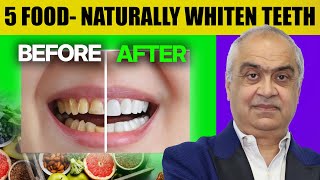
They do all of it. They buy every new product that prom promises 10 shades whiter, 30 shades white. It's like dividing up a pie. I can divide it in four slices or 100 slices is still one pie, you know, and you can only get it so white. So they, they do it in every way possible. Yes, we do in office whitening. And it can be very effective depending upon the type of stain. If it's internal staining from tetracycline or fluorosis, it's not really going to affect the outside color of the tooth, which may not be surface stain, it's internal. So bleaching affects the outside. It's an oxidation process to remove the surface stain that's been accumulated from coffee, tea and various beverages and foods.
So doc, tell us about the anatomy of a teeth. What is the first layer, what is the second layer? Imagine, I don't know anything. How does whitening actually happen? And are these at home white strips according to you, honest to God truth, okay to do or the whitening that you do in the office, is it okay to do? What is your honest to God opinion about it?
All right, I got a lot of opinions. I'll try to make it brief because I know we only have 30 minutes. All right. The anatomy of the tooth is from the inside out. There's the nerve and blood vessels inside the tiny canal and little pulp chamber in the center of the tooth. Outside of that is what we call dentin. Dentin has nerve fibers from the inside pulpal tissue going out to the level of the enamel. Enamel is the top part of the crown, the crown which is outside of the gum tissue until the gum tissue recedes and then more of the root becomes exposed. If you get recession, the enamel has no nerves in it. So it's pretty much like a Fingernail or hair, it has no nerve to it. Once you get past the the enamel layer internally, you get to the dentin, which does have nerves and can become sensitive. We have things that desensitize teeth, which is to harden the surface so it's more cavity resistant. Enamel is the most cavity resistant. Dentin is not the outside layer, which is usually above the gum. Tissue is subject to the staining properties of food and beverages. That usually goes into the little pores. The microscopic texture of the enamel, if you look at it under a microscope. And these little nanoparticles of staining materials from tea and coffee, etc. Embed in there the bleach itself, which is usually some sort of formulation of hydrogen peroxide, which or what we call carbamide peroxide, which makes it into a thicker gel. So it sticks to the surface of the enamel, attaches to it and it oxidationally pulls out those stains and the little pores and texture on the enamel. And that's basically how it works. The white strips themselves have the same formula, but it's just a more mild concentration. In the office we can use a higher concentration to accelerate the bleaching process. So in a shorter time because we protect the gum tissue and from the higher concentration of peroxide with a barrier. So it takes longer with the white strips. The negative about the white strips is that it only goes so far to the canine teeth. When we smile, we usually show premolars and molars on the sides. So there's a limitation to where it goes. Okay. And then some other negatives about it. We are reluctant to use any product in, let's say a female pregnant woman's mouth. If she might swallow some of the peroxide. I don't really think it causes a problem. But we're very careful not to cause any problems with the medication or any kind of topical ointment that's not totally safe, you know, or non irritating in a woman that's pregnant. So the office takes about an hour and a half if you do little trays. It's the other way to do gels with a lower concentration. You could do it at home. It does cover all of the teeth.
We make one sitting or more.
In the office it usually takes one setting, but usually it depends on the amount of stain. Of course it's dose and time related. The exposure time of the gel peroxide oxidation on the enamel surface. In the office it usually takes about an hour to an hour and a half. Three applications and it pulls out most of the stain. Sometimes we can do prolonged multiple sessions, but it shouldn't take more than a few.
So, Doc, what about the sensitivity? Like, a lot of people get very sensitive either to the white strips or even after they visit a dental office, they come back and they have sensitivity. What causes the sensitivity? Is the enamel? Is it the dentin or is it the open nerves? What is causing the sensitivity?
It's a very good question. It's usually if you get recession and you go beyond the enamel to the root surface, which has nerves in it, that's where some sensitivity can occur. If you have fillings or crown or restoration that is not completely sealed the tooth from the inside or a cavity, that's another source of penetration of the gel into a sensitive area that has nerves in it, it does go away. So there's nothing permanent about the sensitivity, but it usually is. Most penetration between either the recession, decay, fillings that don't seal, or crowns that don't feel. And sometimes there are what we call micro cracks in the enamel where just like any other crystalline structure, it can create little cracks over stress, over time, chewing, banging, whatever. So. But it does go away. Does go away. It's not permanent.
This sensitivity goes away. That's great. And this would happen even with the white strips or at the dental office?
Correct.
Is there a way to avoid that?
That's a good question. Yes. Sometimes on patients that are sensitive, we use some sort of topical fluoride gel to harden and desensitize the teeth. There are certain toothpastes, you probably have some in your line, that can help desensitize the teeth prior to teeth whitening and that can set the patient up to be able to whiten their teeth without the fear of sensitivity. That's a good question.
Great. And Doc also wanted to know, let's. Let's get into your life a little bit. What inspired you to specialize in cosmetic dentistry? Because it's a very unique field. Normally people want to drill and fill and build. What inspired you to do cosmetic dentistry?
Oh, that's a. That's a question that I look back historically. So why did it become. How did I get here? Before I was a dentist, I was in college, and even in high school, I loved art. So I always used to draw and sculpt and build things and models. So I have this art side of me that likes to create. I observe nature. I look at amazing artists that have created. I've just watched the show on Da Vinci. Incredible person. So I was always enamored by that. I played drums in a band, so I Have this side of me that's a bit on the creative side. And I didn't think I wanted to be a dentist, but my uncle was a dentist and I had the opportunity to earn a little bit of money on my summers and weekends and work in his dental laboratory. And so I found out, wow, these are things where I can work with my hands and I can build and be creative and that, that I enjoyed that. But when I got out of dental school, there was very little cosmetic emphasis at that time in 1976, 77 and lo and behold, veneers came along and bonding was starting to be able to be predictable. So I saw, wow, this is great. And I had a very quick story. My dental assistant had very dark tetracycline stained teeth. She was a cute young lady. She couldn't get a date. She was very self conscious. And I said, you're so cute. She says, she came to me, says doc, please, can you please put crowns on my teeth to change the color? And I said, gosh, you know, I understand how you feel about the discolored teeth but, but it seems to me against my ethics to grind down teeth to put crowns on them for the color because they're healthy teeth. She says, I know, but my life is, is I'm just so sad about I can't smile. And veneers came along and I said, well, I was empathetic with her. I said, I'll put crowns on, but why don't we try these veneers? There's much more conservative and if they don't work, we can still go to the crowns. I lo and behold, I tried it. And very, very early on pioneering when veneers were not really proven. And everybody said, including myself, I don't think these are going to work, they're going to fall off. It's not going to look good. I was shocked. It was such a beautiful transformation. She had tears in her eyes and that emotional connection to the patient's self esteem by improving and reconstructing or just re beautifying somebody that had a true blemish, not over the top, wanting to just be different. A cosmetic obsession pointed me in that direction. And so I loved helping people, I loved helping them look better. And many of us, including me, I have two veneers just wanted a little tweak or a little improvement. Sometimes we need a big makeover or reconstruction. So that drove me my art background and seeing what the connection would be with a patient, how important their smile is to them. And then I started studying more of the psychological impact of how important it is for us to smile. You know, there's a neurological feedback between smiling. It's hard to be sad if you smile. Okay? I say think about something sad and smile. They don't, there's a disconnect, you can't do it.
Since we are on that topic, talk about the mental aspect. Because initially I talked about, I'd listen to your podcast. What was that connection between dental health and mental aspect?
Well, first of all, there's a health issue. Okay? There is the mental aspect. If you don't smile, you're not as interactive. If you're covering your mouth or you don't want to smile on a photograph, you can't be as happy as if you really do smile. Look at your great smile. You got a great smile, you feel happy. Actors I know do the opposite. They try to create the mood and the facial expression. And sometimes it's a reverse. If I say to you, like I said, try to think of something sad and smile, you can't. If you're an actor and you want to do a sad dramatic scene, they say slow down your breathing, don't smile. Get slumped down in your posture. You get to this low energy state where you're not smiling. You can't smile because it's going to reverse the process and you'll feel sad. So the opposite, the mental perspective, the mental effect effect of smiling with teeth that you're not ashamed of, you're proud of, your gums don't bleed. You mentioned that before. So important to have the health because there's also the biological aspect of bacteria into both orally and systemically but mentally, the ability to smile improves not only your self esteem, but think how you are with interpersonal relationships. Think in business, if you're going for an interview and your breath is bad and you don't like to smile and someone's going to think you're really not that kind or energetic. They may be reluctant to hire you for a job. Or if you're having a romantic opportunity and you want to smile and meet somebody, isn't it nice to be have a happy, friendly face in front of you, not a sad face?
Absolutely. So doc, one other question I had is cosmetic dentistry is often associated with Hollywood smiles. Like everybody talk about Julia Roberts and her smiles. What are the most a common procedure that can be performed to get that perfect smile and that are very safe. If we're talking of veneers, I heard that there are veneers nowadays that are very, very thin. You don't have to chip the teeth.
Yeah.
Is that true?
There is. Okay, so let's go through the first thing with the Hollywood smiles. The list of common procedures are teeth whitening and sometimes a little chip bonding. If it's very conservative, there's not much wrong with the smile. But whitening and gum tissue health is very important. Okay. So cleaning your teeth, removing the stain, fixing little minor chips. Great. Okay. Sometimes teeth are a little rotated, but they're pretty teeth and they're a little bit crowded. Sometimes orthodontics, removable or invisalign types of orthodontics or full orthodontics may be the next step in orthodontics. The last one, which is probably more underneath the whitening, more common. Because veneers can solve a lot of problems. Not everything, at least esthetically. Veneers are very common. And when we get to the question about very thin veneers, there's marketing and there's reality. Okay. And so you have to be able to be a good reviewer of what they are promising. So the no veneer preparation where you don't sand anything on the teeth is not really. It's not the best opportunity because when you do a veneer or any filling, you want to get rid of bacteria, I'm always going to come back. Link health and hygiene to restorative work and cosmetic work. So if you do a minor little edge seam, that means you carve into the tooth. I mean, microns, 100 microns, that's a minimal prep. A human hair is 100 microns. You have to have a certain amount of thickness of veneer, like a contact lens on your eye, a certain thickness to achieve color, translucency, texture and form. And if you don't take away that, you have to have minimal prep. And I use a microscope. So depending on the tooth position, I'm trying to take away at least. The least amount is usually 0.5 millimeters. Okay. And that is enough for the thickness of the porcelain to be aesthetic and to be realistic and strong enough. And it takes away the minimum amount of enamel which we have maybe let's say in the front tooth, a millimeter and a half of enamel, maybe 2 millimeters. And we're taking away 0.3 to 1.0 millimeters, depending on where the tooth is. So the dentist who looks at your teeth and evaluates your teeth, who will take models of your teeth and figure out what are the teeth shape should be like and how do we prepare the teeth and make beautiful temporaries From. From the design, you can, as you can see here, will take away the minimal amount of tooth structure to be realistic and achieve the aesthetic goals that you want to achieve, it has to be done that way.
And do these veneers last forever? How much is the time that these veneers last?
That's a great question. Okay, well, it depends on a number of factors. I have two veneers on my laterals. Would you believe they've been there almost 40 years? Almost 40 years, yes. So a couple facts.
Are these Lumineers, like I heard here about this brand, or is there any specific brand that you use, or is it just any veneers?
Okay, another great question. Lumineers is a marketing brand that promotes no preparation, no sanding of the teeth at all. So if you have really small, tiny teeth with spaces and the gum tissue fills the space, you can put on a porcelain to make them bigger to the normal size. But at the edge, where it meets the gum tissue, where there's no reduction of the tooth structure, it's going to be fat. So if you think on more like a microscopic way in large space and you look at bacteria underneath the gums, bacteria are 5 microns. You can't even see them. Okay. And they accumulate along the edge. So it's a ledge of accumulation of bacteria that cause inflammation and go through your body and cause decay. So Lumineers is a brand. It's not the type of porcelain. It's not like buying a shoe or a car. Everything is probably should be best made custom.
Custom, custom.
So porcelain is usually what we call monolithic or one thickness of porcelain that's stained on the outside to give the color variation. Or it's built like in layers, like a cake, like a natural tooth like we described. What is a tooth? It's pulp, dentin, enamel. All those different layers, like windows have color beneath them. And the thickness of the enamel layer will determine what color comes through. So veneers should be custom made. Every mouth is different and thickness and no preparation. Veneers are not my.
And how long does it take to make veneers? And how much does it cost, approximately? I know you in Beverly Hills probably have to charge decent amount, but because Your offices are 10 times more expensive than somebody in Albuquerque. But give us a little bit range so that my audience would know.
Sure, that's a great question. All right. Usually how long it takes to make a veneer, if you go through the steps, like I say, the wax up, then the temporaries and then the permanent veneers is usually about two weeks. To do it with artistic. No rushing, you know, art takes time. Okay? Function takes time. It's not just about the look, it's how they fit and all of that. The preparation of the dentist has to be precise. The laboratory finishing has to be precise. That's why we both use a microscope and we don't try to promise it too quickly. Can we do it within a week? Yes, it's possible. I have certain cases, we just dedicate our lab staff to work only 100% on that time, all the time, until it's finished. The price range, even though Beverly Hills is obviously the overhead is higher on every aspect. The rent, the staff, the prices, is not the major reason for a price difference. The price difference usually is involved with the effort and the time, with the artistry and to get the result that most patients want. Want when they're disappointed with what was done before. Because I get a lot of patients that come to me, their gums are bleeding or they don't like the color, or things are kind of off in proportion and now they have to do it a second time. That's the most expensive veneer because doing it twice is more than once. So I would say the range of costs in this area is between $2,500 per tooth and $4,000 per tooth. And that is based upon the challenge of the bite, the challenge of the gum tissue, the artistry and ability to create a result that's predictable, that somebody wants to get the perfect results. I don't shortcut anything. I'm sure most people will say I don't take any shortcuts, but I go through a PowerPoint design. I go through the health foundation first. I go through the steps of not only design, but as I showed you, what we call the wax up, the design, three dimensional design, the temporary design, to be able to have what I call my system of aesthetic predictability. People don't want to have surprises from some laboratory that doesn't know the doctor, doesn't know the patient, doesn't know their lip level, doesn't know their smile line, doesn't know their gum tissue. And they just make porcelain. You pick a shade, here's the shade. A one, a two. No. Each tooth has ten shades to it. It has texture, it has translucency, and it has to fit within the gum tissue and the frame of the lips and the entire face. And that's why I work with a lot of cosmetic surgeons. Some patients don't need veneers. They need an upper Lip lift. Some people need their lip fillers dissolved. Some people don't need a lip lift and they do need veneers. So you have to know selectively, diagnostically, how do we determine what a patient needs? And that's where my focus has been in the last 10, 15 years. To look at the entire face. Facial aesthetics. People come to me to have a better smile, of course, but they also want to look their best and that sometimes involves other aspects of their facial features.
So, doc, we have a few minutes left. Instead of me asking more questions, I want you to talk about anything that you know that is very important to you. Let us know. Or any funny incidents that you believe that happened in your 25 plus years of being in this office or any celebrity incidents. Because people are always curious about celebrities, you know.
Okay, I'll try to do both. Okay. Number one, I just want to from the health and medical standpoint, before I get into some funny stories as a patient and when you're out there, wherever you are in the world, your dentist should be always be checking for oral cancer. Number one, that's life impacting. That's number one.
Very important, very important. One of my friends, unfortunately my classmate, he ended up going away. He was my age, he was in my class for 12 years. And I wish somebody would have detected it earlier. So thank you for educating. This is so important.
It's life saving. More important than my veneers or anything else. So my patients come to me four times a year for cleaning. Every other time I am checking their restorative work and their bite and everything else. My hygienist and I are always checking for oral cancer. We have devices that kind of predict maybe some tissue changes. It's not always cancer, but if we find something and we catch it early, as we know with any kind of cancer, sometimes it's curable, sometimes it's controllable. Sometimes the treatments are much more mild and less life threatening than some of the other treatments. So that's important. Rest of it is bacteria which may not be causing cancer, cause a lot of other diseases. And we're linking oral bacteria to systemic diseases. So that's why it's important for your personal hygiene at home, which I give advanced oral hygiene lessons and have them demonstrate to me and make sure that they, they are doing a good job beyond what we do here. Four times a year is not enough. You got to do it every day. And using the right products and the right tools, the right floss, the right brush, the right mouth rinses, everything is important not just for your mouth. The whole body is affected because the mouth is the greatest portal of entry that I know of, of bacteria and microbes. And also, you know, when you sleep, when we lie back, we aspirate our saliva. So when we inhale saliva with bacteria in it into our lungs, we are now self infecting our lungs. There's a lot of things to that. Now for the funny stories. Fortunately for me, I've been able to work on a lot of celebrities. I've been called into studios to. To do some minor work for patients. I have a number of celebrity patients. I've done some special effects. Okay. So if you. Anybody remembers the movie, the first movie, the Hangover.
That tooth goes away. Yeah.
Yeah. So Ed Helms is the. He allows me to talk about the story. He's actually talked about it himself. He came to me one day, and he has a healthy mouth. He had an implant on one of the crowns in the front, and it wasn't really that attractive. And we were planning on replacing it with something much more beautiful and natural looking. And he came to me, he says, hey, I got this script. And he says, I'm playing a role of a dentist, and we go out this night on a bachelor night in Las Vegas, and we accidentally take this drug, and we got to kind of go goofy. The script says, I. I pulled my own tooth out, which is kind of ridiculous for a dentist. He says, how can we make this happen? Because we don't want to put, like, black ink on a tooth and make it look like we're missing it. He says, what do you think we could do? I said, you know, Ed, I think we can unscrew, take off just the crown, not the implant. It's totally healthy. And we can put in, like, a false gum tissue. So you'd be missing the tooth for the movie. It would look totally legitimate and 100%. And then we'd make these little removable appliances so you can go out and be social and not look like you're missing a tooth. So we did that. And if anybody's seen the movie, his tooth, I have. Yeah. So the crown really came off and. And we put it back on and finished it. And he has a beautiful smile now. He's a super funny, talented man. And that was one great experience. Another one, which is not necessarily funny, but it's kind of very, very interesting. My patient, Laurence Fishburne, who everybody knows, a major iconic actor, he has a big gap between his teeth, which. It looks attractive for him. And you do too, but he played a role, a different character. Nelson Mandela, you know, the. The president of South Africa at the time. And he. Nelson Mandela does not have a gap. So he says, how can we. I got to get into character. I can't have the gap and play him. I said, okay, I'm going to make these artificial little snap on type of veneer prosthesis so it closes the gap. You look like Nelson Mandela. And so I did that. So I said, well, how many you want me to make? You want me to make a backup of one or two? He says, oh, heck, no. I'm going to South Africa for six months to do this movie. He says, I can't be coming back and forth If I lose one or two. I said, how many want? I want 10. I said, but, you know, it costs more. He says, do you realize on a set, if I can't play the role, we have to cancel a day? It's like losing $100,000, maybe more. He says the cost of it is. Is minor, even though it's not that much cost. I've never had those kinds of requests. So that's another interesting story. And then I've had others as well. Boxing, mouth guards, sports appliances and things like that.
It would have been funny if Jake Paul or Mike Tyson would have lost.
Oh, that was another crazy fight. We all have our opinion on that. I don't want Mike Tyson's glove up here. I have a lot of boxing and memorabilia and sports memorabilia as a team dentist for the Lakers. And I have all that along. Along with my sculptures. You know, I sculpt. Right.
I always say, you can't be a cosmetic doctor, whether it is rhinoplastic. I know Dr. Kanodia. He's a great rhinoplastic. You have to be an artist, and otherwise you cannot do that cosmetic, because cosmetic is art, literally. Thank you, doc, for spending some time with me today. Where is your office? Like, please tell us so that the audience, in case they are in Los Angeles area, or if they are even anywhere around the globe, let's say they are in Dubai or anywhere. How do they contact you?
Well, I'm happy to help anybody. If they've never come to me as a patient, that's fine. I love doing that. I have many virtual consultations either on Zoom or something like this platform, or even FaceTime on my phone. And we talk all the time with my staff, wherever they are. I try to help them answer their questions like we're doing here, so they can reach me. Should probably look up my instagram which is Dr. Lawrence Rifkin. Lawrence is spelled with you. D R, L, A U, R, E, N, C E Rifkin. R I F, k I n DDS or it's drlawrencerifkin.com is my website and if they wanted to reach my office, it's 310-273-0200. My staff is fully aware of how to help and transfer the information to me. Answer questions, like I said, virtually. You don't even. You're welcome. And I would love for you to come visit my office. I have a really fun office. It's got shows the technology shows the sculpture. See my wonderful staff who are so lovable, be helped or we can do it on phone for the next consultation and then, yeah, come ask me any question that you want. And my final note is again, like I said before, your oral hygiene is systemic hygiene. Use the right products, use the right techniques. See your dentist and dental hygienist regularly to prevent problems. You'll be spending a lot less time, a lot less money, and you'll be improving your health much, much more so. And you are amazing. Doctor, I want to thank you so much one last time and your audience.
Thank you. And you know, I always say an ounce of prevention is better than a pound of cure, so absolutely agree. Thank you, doc.