Sleep Apnea Truth Your Dentist Doesn’t Talk About!
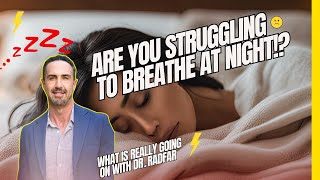
Dr. Rad, a dentist, explains how sleep apnea shows up in your mouth: dry mouth, scalloped tongue, enamel erosion, grinding. He says custom oral appliances work better than CPAP because people actually wear them, and describes how they're fitted with intraoral scans and adjusted over time.
Questions this video answers
22 years
2009 (crash), and in 2010 he made his first mandibular advancement appliance for himself
About 30% compliance
Approximately $2,500 to $7,000
About $245 for a two-night home sleep study
Chapters
Welcome, Dr. Rod. So nice to have you here. Dr. Rod is a famous sleep dentist. It is a privilege to have him today. Dr. Rod, would you give your few second introduction if you can?
My name is Dr. Dar Rad Far I go by Dr. Rad and I'm a dentist, 22 years in practice. I have a very big passion for better sleep. Most of you who haven't heard my story yet, I fell asleep with the wheel and crashed my car. 2009, not knowing that I had sleep apnea. I was feeling more tired throughout the day. I had other certain symptoms that were clear signs, but I kind of ignored it. No one really told me about it. And so I dived into getting a home sleep test, tried the machine called the CPAP machine, couldn't wear it. And in 2009, in 2010, excuse me, I became my first patient by making a mandibular advancement appliance and a mouthpiece to help position my jaw so I can breathe better, snore less, which I'm sure people appreciate in my family and whatnot. And ultimately I've helped a few thousand patients since then with their sleep troubles.
So, doc, of course I have a list of questions today for you. But prior to that, I would tell you my own quick thing. I was diagnosed with sleep apnea. I was always yawning. Like everybody would see me, I was yawning. And incidentally, when I lost a lot of weight and I went through that weight loss program. Not program, but like my own ayurvedic ashram weight loss thing, that all went down for me. But I do know that I still have it and maybe one day I need to come to you and probably get that thing made because I hate CPAP machines and I haven't ever, ever used it and it's probably junked out, so I don't know what to do with it. So, doctor, thank you for being here today. I will start with one quick question because sleep is something. I was listening to Brian Johnson, who's a big hot star when it comes to hacking your own health. And the number one thing he says is if you're not sleeping, no amount of pharmacy or no amount of supplements or no amount of anything else can help you. And oral health is also related to sleep. So how does oral health impact sleep quality since you're a dentist? Let's start with that and then we'll come to other questions.
Yeah, when I saw this question, I really liked it because does oral health really impact sleep or does sleep impact oral health? And really, as Dentists, we can see how sleep impacts oral health. That was the real power that dentists have. You can actually look in someone's mouth, or even if you're not a dentist, your own mouth. And if you're noticing that you have more dry mouth because you're mouth breathing, or you have grinding of your teeth where your lower front teeth are wearing down because you're grinding your jaw forward to open up more air for yourself, almost like a CPR kind of jaw thrusting or grinding forward. If you have acid erosion or acid reflux. Acid erosion means the enamels being worn down, and now you have a little bit more of the yellow showing and the enamels not showing as bright white as it used to. All these could be indications of sleep apnea. So a lot of times we can look in the mouth, look at the size of the tongue. If the tongue has scalloping on the sides, it looks like they have a bunch of ridges. That's your tongue being thrust up against the teeth in the middle of the night while you're trying to get more air, opening your own airway way subconsciously as a fight or flight response. So a lot of times we can see the effects of sleep on our oral health. If you have, you know, poor hygiene and all these other things that, you know, impact other medical conditions, such as diabetes, such as heart disease, and they've even related poor hygiene or bleeding gums to Alzheimer's and dementia, in a sense, slew of other issues, not to mention autoimmune issues, because your immune system is constantly fighting bacteria in your mouth. That's why I love your products so much, because they help so much with removing the plaque and getting that microbiome of bacteria in a more neutral level so your body's not constantly fighting infection. So sleep really affects more your oral health as opposed to your oral health, really truly affecting your sleep.
So that's a very nice point you just made. I'm gonna compact it for my listeners. Is a good sleep means you have better oral health rather than better oral health means you have good sleep. So sleep affects not only just your other physiological situations in your body, it also affects your oral health, which is the number one place where your entire body system starts from. So can poor dental care contribute to sleep disorders like sleep apnea? Or is sleep apnea just an animal of its own because of overweight or because of other issues? Means I'm specifically talking to you. Can the poor dental hygiene also affect sleep?
Yeah. So the poor dental hygiene. I've had patients that you know, floss after every meal, they brush two or three times a day, they water, floss, and they still have sleep apnea. It doesn't affect it. But a poor dental, let's call it malocclusion, if your jaw is too far back, we call it overbite. That makes the tongue be further back because the tongue is attached to your lower jaw. So the further back the lower jaw is and the upper jaw is more forward, the tongue's closer to the back of the throat. So that can cause sleep apnea issues. If your jaw is too narrow, there's too much crowding of the teeth, not enough room for the teeth. If there's not enough room for the teeth, there's not enough room for your tongue. Right? So the tongue doesn't have a place to sit against the roof of the mouth. If the jaw is too narrow and it falls back, if it starts vibrating against the back of the throat, that causes snoring. And that suction of the tongue falling back because there's not enough room can cause sleep apnea. So really poor malocclusion, poor dental, let's call it anatomy, can affect that. Now, some of these kids that I see between the ages of 4, 5 to 12, we put them in expanders right away. Grow, expand that arch, make that palate higher, give more room for the tongue to sit. As I always say when I talk to a parent about the kid, I said, we're not just creating more room for the teeth to come in so we don't have to pull teeth. We're actually creating room so that the tongue can sit somewhere and correcting that overbite as much as possible so that we have a less chance that your son or your daughter snores or has sleep apnea. Because you mentioned weight. In a lot of patients, losing weight helps them. But I myself, when I had my car accident, I was 160 pounds and I'm 6ft tall. So don't judge a book by its cover. It's my anatomy of my jaw. I didn't have expansion when I was a kid, so I have a very narrow jaw. So the tongue doesn't have a place to sit. It likes to fall back. So definitely your dental condition can affect your sleep if it's not corrected through some sort of orthodontics.
I've seen some people biting on some sponge like thing all the time, and they said it's been given to them by their dentist and so that they can improve this jawbone. I don't know what that is, but what is that?
So that's called mewing. Mewing's taken off just as much as you have taken off in TikTok. It's become super popular. And unfortunately, I don't. I hope dentists are not giving it, but they have. I've heard some dentists have been recommending it. It's basically giving you some sort of almost like a contraction of the muscles. You could do it with chewing lots of gum, for example, but they have these rubber things that you put in your mouth, and you kind of clench on it and chew on it several hundred times a day if you can, to make your masseter. Your cheek muscles stronger so you have a more defined jawline. But guess what? That does cause TMJ and jaw problems. Right? So we are already stressed. We're already. And if you clench and grind your teeth already and you're making these muscles that allow you to clench and grind your teeth even stronger, you're going to be breaking teeth and coming in for crowns and chipped teeth with fillings and whatnot. And jaw pain. And I've seen jaw pain as early as. As young as 16, 17 years old, because they're mewing, trying to get that jawline. And then all of a sudden, with stress and anxiety and all the other things, the jaw starts developing what we call tmd Temporomandibular disorder. So stay away from doing any sort of extra work on your jaw.
I'm gonna ask you a few questions, and don't mind me being, like, vague about them, but what are the biggest myth about sleep hygiene that you.
So sleep hygiene is associated with? For example, don't drink coffee eight hours before bedtime.
That's what I do.
Pouring is even worse than caffeine for your heart. But try not to be on your phone or your electronics before you go to bed. I know, we're all guilty of it. I'm there watching your TikTok videos until I go to bed, you know, or my own videos, Right. To see. To see how they're doing. And so, you know, it's really tough to be able to get off our phone electronics. The blue. Eliminating the blue light. If you can eliminate that, that improves sleep hygiene. Dr. Huberman and some of these guys have done some research talking about how getting sunlight in your eyes in the morning. Direct sunlight is obviously bad for your eyes, but in the morning it's a perfect angle. It helps increase your natural melatonin levels when it gets to nighttime so you can fall asleep naturally.
It's a part of yoga. And I'VE been doing that, but it's.
Part of a great sleep hygiene program. And also going to bed at the right time consistently, you know, it's a myth. Oh, I could go to bed at 12:30 and still get good sleep. No, you're still going to be up at 6am handling your kids, trying to get ready for work. So it's really a good idea to. It's a myth that you can fall asleep later and get still good enough sleep. Try to get asleep to sleep at the proper consistent time. Most people get to sleep between 9 to 11 o'. Clock. That's a pretty good time to get your full seven to eight hours.
What is breathing and sleep? How are they connected? Give us a little bit easy to understand language for my listeners.
So breathing is the key to everything. When it comes to yoga and meditation, concentrate and focus on your inhalation and exhalation. As you and I have spoken about, breathing is huge and lack of oxygen, meaning when you're not breathing enough air going in, whether you're a mouth breather or in general you have sleep apnea, meaning that there's some sort of obstruction. Oxygen or breathing increases your heart in a stressful environment to pump oxygen oxygenated blood to your brain. So there's a cardiovascular or overworking of your heart. That's why it's related to high blood pressure and heart attack and stroke. And you know, you get into this stressful environment which increases your stress hormones, which you know, has a powerful impact on anxiety, on cancer risks going up and decreased life expectancy without breath, without the proper amount of breath. And these home sleep studies do measure that. By the way, they have a pulse oximeter to see what your oxygen, oxygen saturation really is. Does it dip below 90%? Are you really suffocating? So really breath is so important. It's the number one thing that gets kind of analyzed or evaluated when someone is not sleeping well and yawning the next day or is tired throughout the day or has all these medical issues already, like high blood pressure, heart arrhythmias, maybe a history of stroke or cancer. And so it's really important to be able to get the proper amount of oxygen in.
So like for example, me, I sleep on my stomach a lot of the times and I went to my chiropractor and he was like, don't sleep on the stomach. Sleep like as if you were in a dead body pose, like a corpse's pose. So what is the best position to sleep? What do you say?
So you know, it's Been evaluated by gastrointestinal doctors and proper function of your digestive system to sleep on your left side. That is kind of like the best side to sleep on. The worst to sleep on is on your back because of the gravity pulling the jaw back, tongue back, hitting against that back of the throat, which increases your risks.
So the chiropractors wrong.
Yeah. Chiropractor is not accurate by saying sleep on your back.
Maybe he actually said, if you keep sleeping on your back, you'll have. I'll have to put brace on your neck.
Yeah, yeah. So I would highly recommend, you know, maybe your spine could be all, you know, aligned if we're sleeping on our backs or what. Or on our stomachs or whatnot. But unfortunately, if you're going to be leading to a path of sleep apnea, you may not be around to even enjoy your spine being in the right position. So breath is more important. Breathing and sleeping well is more important than any position for your bones and your body. And there are pillows out there that can help make sure that your spine is even when you're sleeping on your side, the side sleeping pillows, but definitely left side or even sometimes right side sleeping is more powerful to be able to make sure that we don't have higher risks of obstruction of breathing.
So I've also heard in Ayurveda that they say if you sleep on your left side, your heart is actually on the lower side, so that the blood can come easily. And they also say the colon, the descending colon is on the left side. So basically it's the motion or the stool is going in the right direction. Is that. And does that correspond to what you're saying?
Yeah, the digestive, the circulation, all that is much, much better. Let alone the fact that your jaw is really falling more to the side a little bit, as opposed to falling back due to gravity when you're on your back. So back sleeping is a definite no, no if you snore or if you, especially if you drank some alcohol at night, which is also a sleep hygiene thing, you don't want to drink too much alcohol a couple hours before bedtime because then your mouth is dry, the tongue is along with everything else in your. In your body after you drink. Alcohol is very relaxed and it's not in control and it's not as taut as it could be. And so that super relaxation of the tongue can really, really affect. Cause even more sleep apnea. I have patients who wear OURA rings and I tell them, I go try, you know, drinking some wine and wear it compared to the night that you don't. And then try comparing it to wearing your mouthpiece. So one of the biggest things I stress, if you're having a good evening, you're having a few drinks and you're into that, or let's be real and be adults here, there's a lot of people who are doing marijuana gummies now to fall asleep that also it's a very, very big, relaxing kind of feeling. A mouthpiece or a CPAP machine is crucial. It will increase your apneatic events. When you take these sleep aids, including Melatonin, Benadryl, Tylenol, pm, Advil, pm, Xanax, anything that you take that shuts the body and the mind line and makes you more like a limp noodle, you need to keep that airway open with a mouthpiece called the sleep appliance or a CPAP machine.
So have you actually seen somebody wearing a mouthpiece and their blood pressure going better like or CPAP machine means. I know most people hate to wear CPAP machine. I was talking to somebody who works at a CPAP machine company and he said that compliance is less than 30%. So how much is the compliance in the mouth guard that you make and your kind of mouthguard that you were talking about, is it different from the regular mouth guard that we put just to ensure that there is no teeth grinding?
Correct. Yeah. So your question about the CPAP, it is about 30% or so completely compliance. And unfortunately that's way too low. So you have about 70% of people who gave it back or don't wear it sitting, grabbing dust in the closet. And so wearing a mouthpiece to help you position your jaw forward and keep it that way requires a custom fitted mouthpiece upper and a lower with little attachments on the side so the jaw doesn't fall back too hard. You can still open, you can still, still move left and right or even come forward. You just can't allow that jaw. It's positioned more of an edge to edge or slightly under bite so that you can keep that airway open. They do have some of the over the counter ones that they sell on Amazon and on the Internet. Unfortunately, those are not custom made. They're not. They're a little more bulky. But I've had some patients try it, at least try to keep it in. And they wake up, they're like, wow, that felt so much better. Or their bed partner is like, wow, you didn't snore last night. Go see Dr. Rad. We need to make sure it's A custom fitted one. And a lot of times now the medical insurance are covering it, Medicare is covering it. As long as you have a sleep study that shows that you have even the mildest form of sleep apnea, the oral appliance. Now depending on deductibles can be covered. So, you know, but nothing beats a custom oral appliance compared to a CPAP because you are looking at in the high 80s percentage wise that people are consistently wearing it every night to be compliant, by the way, with CPAP is wearing it for only four nights a week, for five hours a night, four and a half hours a night that's technically deemed compliant. What happened to the other three days or three nights? What happened to the other couple hours of sleep that people take it off to go to the restroom, come back, they don't want to mess, putting back on, and it's like they're up already, it's 3:34 in the morning. So traveling, you know, it's so hard to take with you on a plane or camping or. And the cleaning, the cleaning, the cleaning is so hard to do every day you gotta clean it. The mouthpiece, just, you know, spray it, clean it and you're good to go.
What do you spray it with? Like, what do you clean it with?
The mouth guard actually have my own product, it's called Rad Fresh because as you know, Dr. Rad, everything's rad. Rad Fresh is a little spray that I use to clean.
Is it hydrogen peroxide or whatever it has?
It has about a little bit of peroxide, food grade peroxide. It has your infamous coconut oil in there, some xylitol and some distilled water and peppermint oil. So it's a natural way of helping keeping these guards, sports guards, night guards, sleep appliances clean. We do need to make sure those are so easy to do relative to cleaning the CPAP machines, which can really cause respiratory infections if you don't keep them clean.
So again, coming back to the same question, I think we lost that. The mouth guards that you boil and bite, the simple ones that you get for like $20, $30 on Amazon, versus the mouth guard that you make custom fitted that will keep your jaw in the lower jaw in front. What is the big difference between those two?
So the boil and bake ones typically are just to protect your teeth. It's for patients who clench and grind their teeth. It's not an upper and a lower. It's just an upper for example, or a lower. And unfortunately, if they're squeezed, if you can squeeze them. They're actually not rock hard. That acts as a mewing toy, which activates your muscles to clench harder. So you're protecting your teeth with these over the counters. Hopefully. By the way, they're BPA free. Most boil and make materials are not BPA free. So you're putting a ingredient that's toxic in your mouth grinding on it. And you're at 98 to 99 degrees Fahrenheit in your mouth and these plastics are breaking down and you're swallowing. And we can dive into microplastics on another time. We all know how much plastics we're ingesting, right? And so I am very against over the counter stuff. Unless you're using it to, you know, play football or hockey or something like that. It should not be used even to protect your teeth from clenching. Get it properly evaluated and done by a dentist.
And how long does it take to make the ones that you make for sleep?
Yeah. So typically an impression or a scan takes. Takes 5, 10 minutes to do in the office. And then it gets it done by that automatic machine.
Like you don't have to give the impressions that. I hate that.
No more gooey. Let's see how your gag reflex is. And if you throw up your breakfast in the trash bag. None of that. There's an intraor camera now that we scan, that we use. And a lot of dentists have this camera now that you scan the teeth, you scan the bite and it goes to the lab in a couple of years. Weeks later, we get the custom fitted appliance, we try it in, make sure everything fits okay. And those appliances are adjustable. If you would imagine, my apnea may be worse than yours. Right, doc? So we can manipulate the lower part of that appliance for sleep to bring it forward by millimeter increments to give you more room, more air. So I give the patient at a starting position and then a week later you come back. I ask what your bed partner said. Things if you don't have a bed partner, there's an app that you can download for free that records snoring called Snore Lab. I give that out. I tell patients to download that just to hear with and without the appliance. And of course then we crank the appliance more, depending on if there's a need, you'll feel different, you'll feel more energy. If it's working, you snore less. As we talked about it, you don't get up to go to the restroom as much because you don't have frequent nighttime, you're urination that fear breathing causes urination. You have less headaches, you're more sharp and you know, at the end of the day having more energy for everything that we do is priceless, right? So you're dreaming more. These are all positive indications that the mouthpieces are working. And then of course we can do a home sleep study with the mouthpiece in comparing it without when you did it earlier with within and comparing both those home sleep study to make sure the efficacy is there.
And how much does it cost approximately? Dr.
So typical custom made oral appliances, depending on the dentist and their skill set, cost anywhere between $2,500 to $7,000 cash fee. Again, most medical insurances are covering this. So the cost of the medical implications. There was a study done that if someone's left untreated for sleep apnea for more than five years, the amount of medical expenses, forget about the agony of the diseases that come from it, go up into the 300 to $400,000 of damages, so to speak, that the person goes through from a heart attack, from cancer risk, from acid reflux issues, from depression and anxiety, the medications that you have to be on, all these add up, let alone the lifestyle, the lack of being able to sleep next to your bed partner, something called sleep divorce. Nowadays that's a thing. People are sleeping in different rooms, right, and they're married, but they, they say goodnight and they go to a different. So it's like green roommates as opposed to, you know, true, let's call it partners in life. And those are priceless. And so I do believe that sure, the appliance custom fit, the time for the doctor to do this for you and the response, responsibility, which is so amazing, is valuable. So something like the price point between 2 to 7,000. I've heard certain doctors charging as much as 7,000 patients have absolutely no problem when they get.
How much do you charge, Dr. Rod?
50 at my practice.
Great. And at the end we'll let you actually tell the people about exactly your office and details. But can the dental alignment affect snoring or sleep disturbance? Like when you wear these dental devices, the one that you make, this can mess up your dental alignment.
Two questions there. The dental alignment initially, as we discussed earlier, can affect your sleep. There's a lot of crowding of the front teeth. The jaw is usually more narrow. You need to have the jogs expanded. You can do that surgically or if you're under a certain age, typically under 28 years old, there's expanders that could be done by the orthodontist to be able to expand the jaw. We talked about if the jaw is too far back on the bottom compared to the top, called really big overbites. Right. That could. If that's corrected through orthodontics or surgery, it could really alleviate the sleep apnea because by definition, the tongue follows the lower jaw since it's attached to it. So keep it away from the back of the throat by bringing the jaw forward permanently. Now, the quote unquote side effects can be eliminated with the sleep appliance by wearing something in the morning for about two minutes or so, called the morning aligner. Morning aligner looks like a little retainer that you bite into in the morning. So it manipulates the jaw to go back because the muscles are being stretched for six to seven hours with a slightly forward position of the lower jaw. So you take the appliance out, you put the morning aligner in for about two, three minutes. Then you go about. Some people put it in and go and take a shower and come out. And by then the muscles will retrain itself to realign itself to go back into proper position. Of the few thousand patients that I've already treated, I would say I remember at least a handful that their jaw went more forward, they weren't wearing their morning aligner, and now they're edge to edge. Or some of them who were edge to edge with their front teeth have an underbite and I throw my hands up in the air and go, well, at least you're still on this planet. At least your health isn't at risk. And as a dentist, I don't want any side effects. But the 13 medical comorbidities or associations with sleep apnea, kind of you pick and choose your battles. I think we're okay, especially if you're using your morning aligner.
So is there a commonality between teeth grinding and poor sleep as well? Like, for example, I grind my teeth. Does that mean I'm also sleeping poorly?
Yeah, great question. Because about half of the patients who grind their teeth is because they're not getting enough oxygen. It's a fight or flight response and the grind patterns look differently. So when I teach dentists on how to incorporate sleep apnea and scarring treatment, through my seminars, I show pictures of how the teeth look due to stress grinding or grinding because you're not breathing well, and the breathing while grinding. Most of the time, the lower front teeth are the one that's wearing down. The back teeth are not as worn down as the front teeth because you're moving your jaw forward. Kind of like doing your own appliance. Right? Bringing your jaw forward so the tongue can get away from the back of the throat. Now if I stress you out a lot because of taxes and election and Covid that we went through and family issues, you're going to be grinding more left and right and that figure 8 kind of movement that destroys mostly the molars and the teeth in front of the molars called the bicuspid. So you can kind of tell usually if it's front teeth is sleep, back teeth only is depending on the person's bite is more stress induced. But when I see if you came to my office, the first question I would say is not are you grinding your teeth? I would say how well do you sleep at night? When I see grinding patterns and if you tell me I sleep like a baby, I sleep great. Okay, perfect. Then you're grinding your teeth because of stress and we need to just make you a night guard to. We've kind of ruled out the issue of sleep apnea because that sleep appliance will reduce your clenching and grinding because it opened up your airway. And when you're wearing that sleep appliance, doc, the cool thing is if life is stressing you out as well, you've got a double whammy. You're already protecting your teeth with the appliance because it has a dual purpose of opening the airway and protecting your.
Teeth for everybody to understand. So if somebody is stressed out because of problems in life, then they are grinding their molars. Right. And if somebody is grinding their molars and stressed out, they still could be sleeping well, but they're hurting their oral health. Absolutely, absolutely. Versus in case they have sleep apnea, then they are mostly grinding their front tooth and they are also not getting a good sleep. What is your opinion on diet?
Yeah, the more acid food based stuff that we eat or drink causes more acid reflux. That can cause regurgitation and affect inflammation of your airway that can affect your breathing at night. And again, we talked about how sleep apnea can induce more reflux. Right. Because you have this extra effort in breathing. So the acidic foods out there can really affect your teeth. I'm a big believer in water swishing after anything of pineapples, orange juice, carbonated water, I grab regular water, swish it around a little bit. If I don't have anything around for hygiene purposes just to dilute the acidity off my teeth. So I'm a big anti be Careful with, you know, I drink Lacroix, I drink Pellegrino, I don't drink soda or I drink Diet Coke. It's not just the sugar, it's the carbonation. The acidity is near 3.1 pH, which is so low that it can affect not only your breathing passages, but also your teeth as well.
Wow. So basically I say nowadays people are trying to get away from wine or whiskey or alcohol in general, and they are sipping sparkling water for 3, 4 hours in a party. So they are actually doing themselves a pretty big disfavor, especially when it comes to oral health. Yeah.
And you don't want to go rush and brush your teeth right after you have acidic carbonated beverages. You want to really dilute the water. Excuse me, with water. Because you're scrubbing the acidity, you're wearing down your enamel. So I have a lot of patients over the last few years that said just what you said. Oh, I'm not doing, I'm just doing soda now. Club soda or carbonated water. But my teeth are getting sensitive to cold.
Why?
Well, the enamel starting to get Swiss cheese, bunch of holes in it, micro holes. So pro enamel toothpaste, like Sensodyne, if you're into that, hydroxyapatite toothpaste paste. Really important to be able to remineralize the enamel if there's already some damage that's done.
So basically sparkling water itself, it has lower ph and that causes demineralization, which basically creates nanopores. Got it.
I know some of the listeners are like, man, I can't even do sparkling water. I mean, again, not three a day. You can maybe have three a week, but definitely not two or three a day. That I'm hearing from some of my patients that used to drink soda and they're so excited. Sure, yeah. You're not having the high fructose corn syrup, the aspartame, all the sugar if it's non diet. But definitely try to at least rinse with your mouth with some even alkaline water would be better because that is a 9.5 ph. So it could neutralize the acidity in your spit and your saliva. Don't forget to rinse also with water when you're, when you're drinking coffee. You know, we all drink one to nine cups of coffee today because we're trying to stay up and do so much that's acidic. Not only will it help your teeth stay whiter, when you swish the water around and you can just drink the water, you don't have to spit it out. It's just your own saliva. So dilute the acidity, dilute the stains. Do a couple swishes when you're in between drinks or at the end of the drink so that you can not damage your entire.
Now, snacking is becoming a big habit nowadays and people are snacking all the time. And I, I felt that back in 2020 when Covid was around. I was snacking, I was eating citrus fruit. I have an orange tree behind my house. I was eating citrus fruit and not swishing really harmed my enamel. Didn't think I, I don't know, my mind was lost a little bit. But that really messed me up on enamel part. And I believe a lot of people probably should learn from at least my mistakes and probably they made their own. But for sure, swishing water, I add a pinch of salt and in, in water, lukewarm water is. It's amazing. And I, I have exactly the same habit now. At least now. So thank you doc for your time today. Any shameless plugs you have or any final advice you can. Please tell us the name of your dental clinic you're in. Thousand Oaks, which is about 45 minutes from LAX Airport, north of LAX Airport. What is the name of your dental office?
My office is in Thousand Oaks, California. It's 805-dentistry 805dentistry.com. You can find me on social media, YouTube, TikTok, all that. Just type in Dr. Rad or Dr. Dar Rad Far and you can DM me. I respond to the DMs myself through Instagram, through Facebook. I love to help. We could even set you up for a home sleep study without through teledentistry or telemedicine. You don't have to necessarily come to the office then once you get the results. I know of sleep doctors and dentists all across the country that I can send you to so that you can get treated based on the severity of the sleep. Yeah, sleep is super important for I have a passion for it. I almost died from the accident and after seeing a few thousands of patients that I've treated and helped, I see the commonality and most people are just letting it go. It's so easy now to do the test at home. You don't have to go to a lab if it's not with me or find a sleep physician. Google it. Or your intern, your primary care doctor, and they will guide you hopefully to be able to get a home sleep test.
Thank you, doc. And how much is the sleep home sleep test, approximately the Home sleep studies.
Again are covered by medical insurance, but if you have a really bad deductible, absolutely. Like no coverage, they typically charge $245 for a two night sleep study and that's interpreted and scored by a board certified sleep physician from this country. Meaning it's valid to be able to get approval for a CPAP machine or an oral appliance. Because now we have a sleep study on hand that has diagnosed you with a sleep physician saying that you have mild, moderate or severe sleep apnea.
Do you have a website that people can actually go to to look up for the sleep study to begin with? And later on maybe you have a reference system in case somebody's living in Cincinnati or somewhere else, you can direct them to a particular dentist because it's obviously impossible for them to come to California.
With respect to that, going on my office website, 805dentistry.com and going in the chat section and sending me a message. Is there the best way dot com?
Yeah, the number, 805dentistry.com, 805805dentistry.com Great.
Yeah, we're in the 805 here, the area code. So my phone number is 805 dentist. When you type that in, you reach my office. I got lucky with that phone number. So if you can contact me through my office again through social media is probably also the other way. Just look up Dr. Rad or Dr. Dar Rad Far R A D F A R. You'll see me everywhere.
Thank you, Doc. Thank you for your time today.
Thank you so much.
Spend time with us and I'm sure my listeners would be very obliged for your time today.
Thank you. And I love your products. Thank you so much for creating them.
Absolutely. Thank you, Doc. Sam Sa. Sam.