This One Mineral Your Brain Needs Daily!
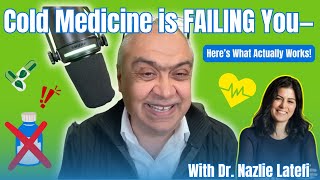
Transcript of a YouTube interview with Dr. Nazli Latifi, founder of Bioventa and a PhD neuroscientist. She describes her background, the scientific rationale and formulation of Bioventa (an immune-complex product containing lactoferrin, lysozyme and a version with aspirin), summarizes a placebo-controlled randomized clinical trial (n=159) showing symptom improvement, and discusses marketing, distribution, and preventive uses.
Chapters
Even animal brains as well. It's just, you know, life is so interesting and complex and mysterious.
Welcome, welcome, welcome, Dr. Nazli. Nazli Latifi is her name and she actually built a business called Bioventa and she is herself a PhD in neuroscience and she really believes immunity is everything. She is very similar to me in some regards. Welcome, Dr. Nazli. Please tell us about yourself. Also tell me, where is the name Nazli Latifi from? What is your background? Like, are you a first generation entrepreneur, second generation entrepreneur? Give us all the details.
My Nazli is a Persian name and my parents immigrated from Iran in the 1960s. My grandfather actually was an entrepreneur in Iran and my father was very creative and entrepreneurial himself as well. So I guess I would say what does that make me? Like, first generation American, second generation American. But I think the entrepreneur part is pretty much in my blood.
Beautiful. I think a lot of Persians I've seen are entrepreneurs. I think it is kind of in the DNA. Lebanon and Persia, these were the trading communities. And whenever I've met people from that region, they are mostly big entrepreneurs. So you hold well to your DNA. Tell us about your childhood. Like, how did you grow up? Where did you grow up? What made you even decide to go into neuroscience and do PhD? That's a pretty big commitment.
I grew up always going outside. I grew up on the water. I'm a really avid swimmer. I'm very comfortable in the ocean. I grew up on the east coast on the water, but we used to take frequent vacations to the west coast and Hawaii. I've just always been in awe of nature. And, you know, that's something that I get from my family as well. It's always been important to us to be outside and to be healthy and be in nature. So that's definitely something that I got from my upbringing and interest in science has been more of an academic thing for me. I actually like many other subjects as well. But it was one of the most interesting for me because it had the aspect of and discovery and always finding novelty, which I found very exciting.
What made you get into neuroscience and why PhD in neuroscience?
Well, you know, they say that the human brain is one of the most complex things in the universe and, you know, the least understood. So there is and there was and there still is. And I think there's going to be for a long time a lot of opportunity for discovery of, you know, the human brain and how it works and even animal brains as well. It's just, you know, life is so easy, interesting and complex and mysterious.
Why PhD? Again?
Just because I love research and I love discovering.
And were you teaching as a professor somewhere in a university? Which university did you go to?
I did my PhD at McGill University, and I just taught mainly as a TA. I never became a professor. Then my entrepreneurial spirit took over when I finished my PhD and I went into the business world a little bit.
And then started my company as a woman. And being an entrepreneur, was it very easy for you to do it? Was it your family wanted to support you? What made you get into entrepreneurship? And I guess you have this product called Bioventa Guy. Why Bioventa? What inspired you to get into a product like Bioventa, which is mostly meant for immunity and respiratory defense response? Tell us a little bit more about that.
Yeah, so Biovanta came about because I was always interested in, especially when the bird flu started coming about, I was always interested in, you know, how can we do better to prevent people from getting respiratory diseases? And also, it's a very strong link to my PhD because I was studying adhesion molecules, synaptic adhesion molecules, in the vertebrate nervous system. Those are the same types of molecules that are used as receptors for respiratory viruses. You know, the aha moment came when I was reading about that, and I just, you know, put it together that maybe we can, you know, use this science to help design something better. You know, I did a lot of research and, you know, to make sure that it was feasible, you know, because I had some business training from working in business for a couple of years in the investment world. And, you know, the first thing that you do is what's called due diligence. And you, you know, you research the feasibility of a business and whether anybody has done it before. So I did that. I read over 3,000 patents, and it became clear that this was a really big opportunity. And I was very surprised to learn that nobody had taken advantage of this before because the science was there. It's just we formulated it into something that could be made into a product.
So what is Bioenta? Tell us about that.
So Bioventa contains what's called an immune complex, which is a mix of bioactive peptides, lactoferrin, and lysozyme, which are powerful natural molecules that are part of our innate immune system. So they line our respiratory lining and our gut lining to prevent us from getting infected with all the microbes that are in the air that we're breathing and the food that we're eating, and they stimulate macrophages and dendritic cells. So these early immune responses that are very, very important part of the immune response before the antibodies get a chance to kick in. Because it takes your body about a week to form antibodies and by that time you could already be very sick. That's basically what our immune complex does. And the strategy behind Biovanto got you.
And I see that in your product you also have drug facts saying aspirin 325 and it's a ID where your pain reliever and fever reducer as well. So are you kind of adding your proprietary complex to aspirin? What is the benefit of that? Why both together and what are you marketing? The natural part of it or the togetherness of it?
So actually we just completed a clinical trial which was published in plos One, very prestigious peer reviewed journal, and we tested the aspirin containing product, which is classified as a drug, as well as the supplement product, which does not contain aspirin and it's called classified as a supplement. Both work equally well to reduce symptoms. And we met our primary and secondary endpoints very well. The aspirin and the reason for the aspirin and aspirin is qualified as a drug by the fda. So that's why we had to add those drug facts. But aspirin has chemicals called salicylates, which interact directly with COX1 and COX2, enzymes that are directly part of the inflammatory pathway that's involved in respiratory, respiratory symptoms, the ones that cause respiratory symptoms, and works much better than any of the other NSAIDs. And actually there's more scientific research around aspirin for respiratory symptoms than the other NSAIDs. So that was the thought process for, you know, the rationale for adding aspirin. But it works with the Biovanta spray, which is Zold, and the lozenges, which have the immune complex that strengthen the respiratory lining and have the lysozyme and lactoferrin.
So basically you use the immune complex to line the mucous membrane with lactoferrin and lysozymes. These are enzymes, I'm guessing, and these are already existent. You're actually adding more of them so that your general mucus could actually act against those bad bacteria that are going to cause infection. And then you also have wintergreen oil as well as menthol, as little irritants or maybe some kind of antimicrobial agents that would probably help. A lot of companies nowadays are doing active ingredients together with natural ingredients just to get the drug claims so that they can call out some Major call outs. Is that what incites you to do that?
What do you mean by call out?
Like for example, aspirin. You can call out pain reliever and fever reducer because it's already a monograph of fda. Is, is that the reason you're doing that too? Or is there a specific goal of adding the two together to actually get a better result?
Well, it's, it's both. It's, I mean we're, we're calling out because aspirin is a pain reliever and fever reducer, but it also works specifically on the biochemical pathway that is involved in respiratory inflammation. And I referenced this in the paper. So previous studies have used aspirin alone to treat respiratory symptoms and they see an improvement of 25 to 30% with aspirin. It was technically with aspirin and vitamin C, but we can assume that the aspirin was the active ingredient there because other vitamin C studies have not shown results after somebody is sick. Aspirin alone we can assume is 25 to 30% effective based on previous studies. But in our study where we had the aspirin with the spray, so the complex as well as the anti inflammatory component of the aspirin, we see improvements of 70%. And this is a placebo controlled, randomized, very well designed spring study that followed all modern guidelines for, you know, ethical design.
How many patients was the study done on?
We had 159 total.
Pretty good size study. Was it done in the United States or was it done overseas?
It was done in the United States in six major cities. So it was multi center randomized and placebo controlled.
So where do you sell the product right now? And who's your main customer? Is it the kids, is it women, adults? Who is your main customer?
I think we have, we have customers across all demographics. It's, we don't specifically focus on a kids product yet. So I wouldn't say it's specifically targeted towards kids. But yeah, I think people that are most likely to be informed, proactive about their health, you know, searching for natural alternatives. But there are also a lot of people, people that might not necessarily gravitate towards the natural, but they like our efficacy.
So where do you sell it now?
Oh, we're selling it nationwide in cvs, Walgreens, several other pharmacies, Mother's Market, Publix, and on our website you can put in your zip code and see which retailer carries it in your area. But I always recommend going on Amazon because we're also selling on Amazon and our website, you know, it's always well stocked on Amazon. You, you don't have to worry if they carry it in your particular store.
As a woman entrepreneur, tell us, how did you get all that distribution? Did you start from scratch? Did you have money to go and hire a bunch load of salespeople? How did you do that?
Well, yeah, so we did have a sales team and I actually started the company with my husband who is a businessman. We had a definitely a sales team that definitely helped us. But the thing that, that was most relevant and the thing that most of the retailers were looking for and they were impressed by was our scientific efficacy. So I think that, you know, regardless of being a woman or anything, if you, I think, really try to do something new and innovative and you put your best foot forward, I think a lot of people are going to be there to help you. Yeah.
And how did you market the product? Where do you market it today? Like, do you use television? Social media?
We've done a few television commercials, but mainly right now we're on social media. Although we're not really pushing that hard on the marketing front. We've invested a lot of money in the science and you know, after this paper comes out, we're hoping to gain more credibility that way, you know, with the scientific community and in the media that way with people that are looking.
For something like have you tried advertising on Instagram or TikTok?
Yes, definitely we have, we have an Instagram that's very active. We're working on growing it.
Have you thought about going on YouTube and starting your long form YouTube channel and educating the people on your science?
Yes, I have. Yes, I have. Doing that as well. I have a lot of interviews that I have with other scientists as well. And I'm also actually also thinking about starting a podcast.
That would be amazing. That would be amazing. Apart from that, what do you think of why natural kind of caught your attention? Like you went through PhD, you probably. Was this a formulation that came to you through your thesis or was it something you learned from your mom or your like heritage? Why natural?
Well, so I just think, well from my heritage and you know, my mom has always been a big believer in like, you know, when you get sick, you have to treat it right away. So she's a big proponent of always like blowing your nose and which is not that popular in the west for some reason they think it's bad for you. But I never had sinus infections or anything, so that's, that's one. But also just as a scientist, I think, you know, it's really given me an appreciation of how complex things are, especially how complex scientific problems are. And a lot of times you have multiple pathways and multiple signals working together. And it's not really simple that, you know, you can have like one pharmaceutical ingredient to solve the problem. And inflammation is a major example of that. We have many different inflammatory pathways. Inflammation is actually a protective response. It's just when it goes too far far that you know, if or it becomes chronic, that it can cause you problems. I also also think that that's where the natural molecules come in, because molecules like lactoferrin and lysozyme have a way of balancing inflammation in a way that helps you heal and still keep the beneficial antiviral aspects of it going. So, for example, you know, people that have asthma, a lot of times they'll be prescribed steroids and that's just to shut down everything. But it also weakens their immune system. Right. So I mean, to answer your question, I think that, yes, I'm a scientist, always will be, but that doesn't mean that, you know, I think that the best approach is always to something by blocking one specific signal with a very specific pharmaceutical. I don't think that that's always the answer. And I think that, you know, medicine should really appreciate the complexity of different systems a little bit more, which is something that natural remedies do try to do.
What role does inflammation play in like a respiratory issue, like cough, cold, allergy? And why is reducing it naturally so impactful? Isn't it just a symptom or is it actually a problem?
The underlying reason for all respiratory symptoms is actual inflammation. And for example, everything that's on the market, especially in the over the counter category, like dextromethorphan, guaifenesine and pseudoephedrine, these all work on our nervous system to stop us from feeling the signals to stop, to constrict the blood vessels, to kind of put a band aid on the congestion that we're feeling. It's not really a solution to the underlying inflammation, which is what the root cause is of respiratory symptoms.
So for example, whenever I start to get a little bit cough or even slight cold, I take rabitucin, day formula or day and night formula or whatever I feel. Next day, morning, I'm very dry. I'm like literally whole night. I can't, my mouth is dry, My entire system is very dry. What is the reason? How is your product different?
So Robitussin, the one you take, I think, what does it have? Dextromethorphan probably.
Yes.
Yes. Well, they actually are dry. It is drying out your mucous membranes and it's probably also actually killing some of the cells that are lining your throat. We did a published study in 2021 and we showed that a lot of these ingredients actually are very harmful to the respiratory lining because it's like a barrier, you know, sort of like the gut barrier. Exactly like the gut barrier. It's the same cells and it's very delicate. It's only a couple of cell layers thick. So these harsh ingredients can damage them. And like I said, they're doing nothing for the underlying inflammation and they are drying you out, which is not what you need when you want to heal.
So basically I thought mucous membrane is the one that helps you on the other end, they are trying to dry it out versus you are actually adding lactoferrin and lysozyme into the mucous membrane, kind of making it stronger force to resist the bad bacteria. So why do they do that? And why couldn't they get simple facts correct that okay, they need to preserve the mucous membrane?
Well, that's a really interesting question. And it's because we didn't really have a way of studying the mucous membranes until recently. You know, in the past, shortly after we started our company, shortly before we started a company about 10 years ago, there's some new technology that they can grow three dimensional living respiratory organs that we can look at and study and see how it works. And this was really key to us developing our treatments and for us to analyze the biochemical pathway that's involved in the inflammation and how to treat it. So I think part of the reason is that we didn't have the tools. And before we had the tools, the best thing that we could do was basically give people Robitussin or whatever, you know, that would immediately give the sensation of doing something because we didn't really know better.
So.
So, yeah, I think.
Sorry. So give me an easy answer that my followers could understand. How does that work versus how does your product work? What is the difference, in very simple words, for very common person to understand?
Oh, in very simple words, most of the other products on the market really try to numb your pain and block you from feeling anything, but they're not doing anything to actually heal you. And in the process, these ingredients could be damaging your respiratory lining.
Very interesting, very interesting. So we are basically taking them to numb ourselves while our body tries to fight the problem. But they're also making sure while numbing ourselves, they're actually de arming us so that we get a little bit extra sick than we should because the mucous membrane is getting dried up versus this should not be the case. Even if we did nothing, we probably would get better sooner. Is that a correct answer?
Yeah, the best. Yes, definitely. And the best thing you can do, for example when you're congested, it's so simple is to just drink a big glass of water. It's going to immediately decongest you, you know, And I mean people would rather take a mucinex which has been proven not to work in many studies, than just drink a glass of water. I mean, I know like, you know, we travel to outer space, we use, we can send tourists to outer space. It's like, you know, science is amazing, right? But it doesn't mean that, you know, we don't need to revisit things, you know, from time to time and everything that's out there is working because it's not.
So basically there's maybe a couple of billion dollars worth of Rabetus and Mucinex and all these adjunct agents getting sold that people are chucking in the moment they feel a little cold so that they can shorten the cold is actually in a way harming them more. Plus it's delaying their progress, just making them feel good by numbing the problem. Am I right?
Yes, it is, but it's actually more interesting than that. I forgot to mention these ingredients and this is so interesting because ironically my, my neuroscience degree comes back to this. All these ingredients are known to be serotonin reuptake inhibitors. What that means, you know, in simple terms is those are basically the same class of drugs that antidepressants are. I have a theory that these might be boosting people's moods when they take them and enhancing the placebo effect.
So basically they help enhance the serotonin levels in the body. Serotonin is a feel good hormone just like dopamine. And it makes you feel I'm getting better. So it gives you a fake sense of getting better situation. So it is like a antidepressant in a way. Because I've seen whenever patients take antidepressant and they take all these anti allergics and all these antihistamines, they both have dry mouth as a common symptom. So this could be because of drying of the mucus, could be somehow be the reason for that. Why do they have dry mucus? Do you have any idea or is that beyond your preview?
I think it's these hormones actually serotonin These, not these hormones, these neurotransmitters have effects on levels of lysozyme and lactoferrin. So, you know, there's been some studies that, for example, people that take. And also hormones have an effect that people that take these have differences in their levels of lactoferrin and lysozyme and in their mucus. And this is very important because it makes them more susceptible to getting sick. The composition of mucus is very important and very tied to the health of the rest of the body.
Understand? And so whenever there is a bug that, let's say, goes into my nose, let's say it's a bird flu, Whatever got you into this business? What is the pathway? How does the infection start and how does it become big? Can you explain it?
Yeah. So another reason for that, the lining and the lactofen and lysozyme are so important is because respiratory viruses first bind along the inside of your nose and throat. That's where their receptors are that they land in, and that's where they first infect. And you have what's called toll like receptors and alarming as part of your early defenses that activate signals, activate different cytokines and increase levels of lactoferrin and lysozyme to activate macrophages and other early immune cells to basically, in simple terms, sequester the virus right away. So that's why, for example, when we had the COVID pandemic, a lot of people would be asymptomatic, but they could see, still take a nasal swab and have virus detected in their nose. That's just a real world example of how, you know, that's where it all first starts. It's in your nose and throat.
So personally, what I was doing during that time was I was taking a tablet of zinc, a tablet of vitamin D and a tablet of magnesium, and a sachet of vitamin C. These four things I took for four to five months literally every day, and I did not get sick. Now, I also obviously did not go blatantly out shaking hands with people and doing other things, but I did not get sick. And at the right time, I did get vaccinated. I did not want to not follow the rules, but they kind of prevented myself from initial wave with just these four supplements. So what is your opinion on that?
That's perfect. That's perfect. This is perfect.
And I kept myself hydrated, to say the least.
That's perfect. I did. I did very similar to you. And that's great. As part of a daily regimen so zinc and vitamin C, they've been studied. They won't help you when you're actually after you're sick, but as part of a daily regimen and to, you know, keep your defenses. It's fantastic. And there's a lot of science behind. Behind vitamin D, and it's strengthening your immune system, especially your innate immune system, the first line of defense, the macrophages, the dendritic cells, and also balancing your inflammation so that, you know, you have a lower level of inflammation, so that when you do get sick and those alarm signals which signal inflammation are triggered, your body will be better able to react. And so that's mainly vitamin D and magnesium, and then zinc also helps with that, but also really strengthens the tight junctions which help to strengthen the barrier in your respiratory lining and also in your gut lining.
So your product, Bioventa, is it more. Once you get sick, you take this.
So it's both. We did the trial for people that were sick that had cold for two days or less, and it was very, very effective. We do believe it can prevent you from getting sick, but we didn't actually do the trial on the prevention. That will be the. The next trial that we do. But I personally always travel with the immunity spray and lozenge, which are dietary supplements, so you. You could technically take them every day.
Thank you, Dr. Nazli. I know it's been 40 odd minutes almost and 37 minutes, and it didn't even feel like I could keep talking to you. I'll give you 60 seconds to have your shameless plug. Whether you want to promote your business, whether you want to say a quote or a phrase, please feel free to say that.
Yeah. So, you know, we're really passionate about making a difference in people's lives and helping people stay healthy. We really did a lot of research over 10 years in formulating this product to make it the best for preventing and treating respiratory disease. And, you know, we urge listeners to please do research into what you're using. And, you know, take a look at our research at Biovanta and consider having it with you every day to protect yourself from any of the viruses that are floating out there. And there's bound to be new ones, unfortunately, in this day and age that we're living in right now.
You got it. Thank you, guys, for listening in today. If you're looking to get Bioenta, it's available on Amazon. And thank you, Dr. Nazli, for your time. Thanks a lot.
Thank you so much.