I Know I Need to Stop — So Why Do I Resent Being Told To?
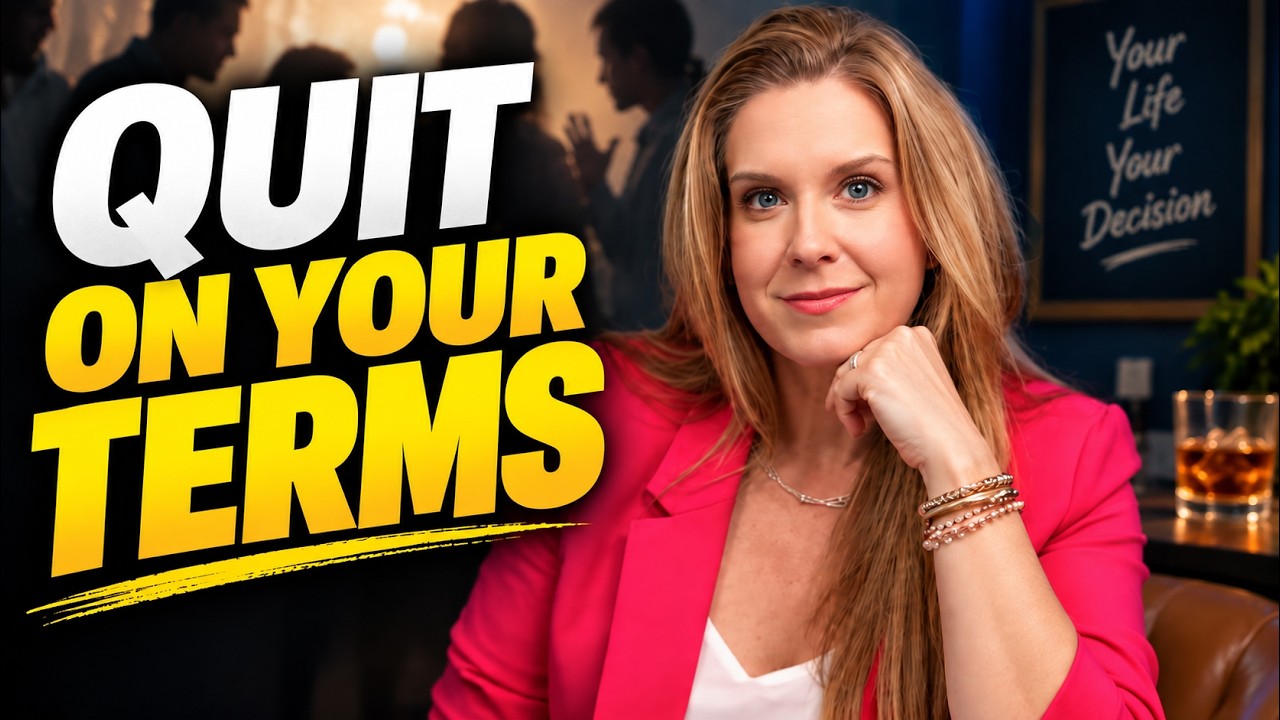
In this self‑help video Amber Hollingsworth explains why people often resist change when it is imposed by others, a phenomenon known as psychological reactance. She shows how the brain can shift from evaluating a problematic behavior (e.g., drinking, gambling, pornography) to defending personal freedom against perceived control, which can keep a person stuck in a power struggle rather than addressing the underlying desire for change. Amber then guides viewers through a structured self‑assessment worksheet that scores four life domains—relationships, responsibility, physical/emotional wellbeing, and self‑regard—on a 1‑to‑10 scale. She emphasizes rating based on typical patterns rather than best or worst days, and then asks viewers to gauge their satisfaction with each score and imagine whether they would be content with that version of themselves three years from now. By reframing the decision from “my partner/parents/doctor is forcing me” to “what kind of person do I want to be and how does my current behavior align with that vision,” she offers a third option beyond external control or substance control: autonomous, values‑driven motivation. The video ends with a call to subscribe and a pointer to a follow‑up video that provides step‑by‑step instructions for implementing the desired life changes.
Chapters
There's nothing quite like being told that you have to do something or else to make your brain immediately go, oh, hell no. Even if 5 minutes before you were thinking the exact same thing, you could be sitting there thinking, yeah, I probably do need to cut back, or maybe this really is getting out of hand, or I'm getting tired of this. And then somebody else steps in and puts an or else on it. Like your partner says, if you don't stop drinking, I'm leaving. Your probation officer says, if you fail another drug test, I'm filing a violation. Your parents say, if you're going to keep using, you can't live here anymore. And suddenly, excuse me, now you're a constitutional scholar defending your God-given right to drink or use or pornography or whatever it is. She can't tell me what to do. That drug test is ridiculous. My parents are trying to control me. I'm a grown adult. This is my life. And the crazy thing is, some of those complaints are probably actually legitimate, but in about 30 seconds, your brain has completely changed the subject. 5 minutes ago, you were evaluating your drinking, your drug use, pornography, your gambling, whatever, and now Now you're evaluating everybody else's behavior. That shift will keep you stuck for a really long time because once this becomes a battle over who gets to control you, it is very hard to hear those quieter thoughts underneath all that rebellion. You know, like those thoughts that say, what do I actually want? Because whether you change or not should be based on what you want your life to look like, not how mad you are at the person that's pushing you. I really hope you're paying attention right here because this is huge. You can genuinely want your life to change and You'll fight the very changes that help you simply because you're so focused on proving that nobody gets to control you. And if you don't recognize what's happening, you can stay stuck in a fight you don't even really want to be having. Once you see this, the whole decision starts to look different. When human beings feel like somebody's trying to take our freedom away, we tend to push back. There's actually a psychological term for this. It's called reactance. Don't worry, you don't need to remember that word. Just remember this. The more somebody makes you feel like you have to do something, the more your brain suddenly wants to do the exact opposite, even when part of you agrees with them. Let's say you genuinely think, yeah, my drinking has gotten out of hand. And at the exact same time you think, but screw you for telling me I have to stop. Both of those thoughts can exist at the same time. And if you don't recognize that this is happening, you'll spend months, sometimes years fighting for something you're not even sure you still want because eventually you're not even making a decision about the alcohol or the smoking anymore. You're making a decision about control. You're thinking, is my husband being fair? Are my parents overreacting? Does my doctor understand my situation? Why does everybody keep treating me like a child? Why do they get to decide what's best for me? And again, some of those questions may be worth asking. You know, like maybe your wife really is controlling. Maybe your parents really do overstep. Maybe everybody's exaggerating. I'm not asking you to pretend that everybody else is right. That would defeat the whole point of this video. I'm asking you to notice when all of that becomes a giant distraction From the question that really matters, which is, what do you want? Okay, this next part, this is where I really want you to pay attention because this is where we stop talking about everybody else and start figuring out what you actually want. For a minute, mentally take everybody else out of this. Take your spouse out, take your parents out, your kids, your doctor, your boss. Take your counselor out, the probation officer. Take anybody who's been nagging, begging, threatening, monitoring, lecturing, worrying, giving you their opinion about your drinking or substance use, take them out for just a minute and ask yourself, what do I actually want for me? And I don't mean, do I want to call myself sober? Do I want to go to AA? Do I want to go to rehab? Do I want to admit everybody was right? Those questions have way too much baggage attached to them. I'm asking you something bigger. Who do you want to be? Maybe you want to feel like a good partner. Maybe you want to be the kind of dad your kids can depend on. Maybe you want to be a good provider. Maybe you want to be emotionally present. Maybe you want to be trustworthy. Maybe you want to feel sharp Maybe you want to wake up without that knot in your stomach wondering what you said the night before. Maybe you want to stop hiding things, or you want to stop apologizing, or you want to feel good about yourself, or you just want to feel like you're running your own life again. Those are your goals. Your spouse doesn't get to decide them. Your parents don't. Your doctor doesn't. And I definitely don't. You do. You're the one that decides that. Now, don't check out on me here because I already know the argument that your brain's about to make, and I Partly agree with it. You might be thinking, okay, Amber, but I can drink and still be a good father. Absolutely. There are millions of good fathers who drink alcohol. That's not the question. And this distinction is really big. Okay? Don't ask yourself, can a person drink alcohol and be a good father? That question is way too easy. Ask yourself this: drinking the way I've been drinking, to the degree that I've been doing it, can I be the partner I want to be? Maybe the answer is 9 out of 10. Maybe it's 7. Maybe it's 4. I don't know. I'm not here to give you the score. You are. That's what makes this useful because people get trapped in this yes or no argument. I'm not a bad father. Okay, maybe you're not, but honestly, that's kind of a low bar. We're not asking, am I technically a bad dad? We're asking, am I being the kind of parent I actually want to be? Maybe you're a 7 out of 10. Fine. Then ask yourself, am I satisfied with that 7? Maybe you are, and that's great information. But maybe you look at that 7 and you think, no, I'm capable of being a 9. Now we've got something worth looking at. And this is the part of the video I don't want you to just listen to and the background while you're doing something else, because I want you to actually measure this. I'm going to put together a worksheet to go with this exercise, because once you see these numbers sitting in front of you, it gets a whole lot harder to hide behind vague statements like, I'm doing fine, or my life isn't that bad, or even everything is terrible. We're going to look at the actual pattern. We're going to start with relationships. Think about it like this: dependability, emotional presence, patience, honesty, trustworthiness, how you handle conflict, how connected you are to the people that you love. Here's the question, okay? Ranking or using the way You have actually been doing it. How close are you to the people you want to be in those areas? Score yourself from 1 to 10. Then let's look at the next category, which is like responsibility. It has to do with money, work responsibilities. You want to ask yourself these kinds of questions. How reliable are you? How focused, productive? How responsible are you with money? Are you following through? Are you performing at the level you're capable of? And again, 1 to 10. Then look at your physical and emotional wellbeing, your energy, your sleep, your mental clarity, your emotional stability, patience, stress tolerance, physical How do you feel in the morning? How much control do you feel like you have over yourself? Score that. And then there's one more category. And honestly, I think this one is probably the most important. How do you feel about you? Do you trust yourself? Do you keep your promises to yourself? Are you living according to your own values? Are you proud of the choices you're making? Are you pursuing things that matter to you? Do you feel like your life is expanding or shrinking? Do you like Who you're becoming. Again, you want to measure those things 1 to 10. Now, before you start handing yourself a bunch of 9s, I want to put one guardrail in place for this exercise. Don't grade yourself based on your best behavior. You know exactly what I'm talking about. The week after the giant blowup, when suddenly you were home every night, you're helping with dinner, you're drinking less, you're super patient, you were getting stuff done around the house, basically like employee of the month in your own home. That's not the whole picture. But I also don't want you to grade yourself about your absolute worst night. That's not fair either. We're looking at the pattern. Think about the last few months, the good days, the bad days, the average days, the weekends, the work nights, the super ordinary Tuesday nights that nobody remembers. What is the big picture? We're not trying to beat you up here. We're trying to get an accurate account. Now here's where the exercise gets really interesting. The number itself isn't even the most important part. Once you have your scores, you ask yourself, how satisfied am I with this version of myself? Maybe you look at the relationships and things. Honestly, I'm probably about a 6. Okay. How satisfied are you with a 6? Maybe you say, 6 is fine with me right now. Fair enough. But maybe you know you're capable of being an 8 or a 9, and you don't like showing up as a 6. If so, that matters. And there's one more important question I want you to answer before you decide what any of these scores mean. Honestly, this may be the most revealing question in this whole exercise. We know that with repeated substance abuse or any addictive behavior, really, tolerance is going to develop, which means people are going to need more of it over a longer period of time to get the same effect. There's a very real possibility that the pattern you're dealing with is going to get worse. But you know what? Forget that for a minute. I'm going to make the argument as favorable to continued drinking or using as I possibly can. Let's say it does not get worse at all. Let's say your addictive behaviors stay exactly where they are today. Same amount, same frequency, same argument, same morning, same stress, same effect on your motivation, Same impact on your relationships, same everything. No catastrophe, no dramatic rock bottom. Nothing gets worse. Would you be satisfied living the exact version of your life 3 years from now? That's the question. Because sometimes we get so focused on whether something is bad enough that we completely forget to ask whether it's good enough. You don't have to prove that your life is falling apart before allowing yourself to want something better. You don't have to prove that alcohol has ruined everything. You can simply decide, this version of my life isn't the version I want. Now I'm going to ask you one more question, and stay with me here because I'm not about to guilt-trip you with your spouse or your kids. That would defeat the whole point of this video. Ask yourself this: who else has to live with this version of me? Maybe it's your wife, your husband, your kids, your parents, your employees, your friends, people who depend on you. And then ask, is this the version of me I want people I care about to experience, not do they think I'm good enough? No, we're not handling them a scoreboard. This is your scoreboard. Maybe you score yourself a 6 as a wife. Maybe you personally can live with that 6, but your husband is also living with that 6. Is that the version of yourself that you want to give to him? Not the version that they're demanding, the version you want to bring to the relationship. You see, When you change your thinking like that, it is an absolute game changer because then it puts everything back into your corner. It gives you ownership of your decisions, which will help you think a lot more clearly. It gets you out of that whole power struggle control thing. Now let's put all this together because this is where that original or else starts to feel very different. Your wife says, if you don't stop smoking, I'm leaving. You may still think that matters. You're probably still kind of angry about You probably still dislike the way she handled it. You probably think she's being controlling, and some of that may be true, but you don't have to settle that argument before deciding what you want for yourself. Instead of, my partner's forcing me to quit, try, my partner's made a decision about what they're willing to live with, and now I get to make a decision about what I'm willing to live with. That's different. Your doctor may be telling you something you don't want to hear. Your employer may be setting a condition that you hate. Your parents may be setting a boundary you think is unfair. Probation may be giving you absolutely no wiggle room whatsoever. You can hate that situation. You can resent it. You can wish it were different. And you can still ask yourself, what do I want my life to look like from here? Maybe what you really want is to perform at a higher level or to trust yourself again or to feel proud of yourself. Maybe you just want peace. Then the question becomes drinking or using or gambling or smoking, whatever it is, The way that you've been doing it, how well does that fit with the life you actually want? Not did my wife win? Not were my parents right? Not did somebody force me? If you remember nothing else from this video, remember this. You do not have to choose between being controlled by somebody else or being controlled by the substance. There's a third option. You can step back, get honest about who you want to be, look honestly at how close you are to being that person right now, and then Then make a decision that belongs to you, because if you're going to make a change, I don't want you doing it because somebody backed you into a corner. I want you to be able to say, I know what I want, I know who I want to be, and I'm going to start making decisions that move me closer to that person. It's a completely different kind of motivation. So if you're feeling pushed into a corner right now, don't spend all your energy fighting whoever's pushing you. Refocus. Who do you want to be? How close are you to being that person right now? How satisfied are you with that version of yourself? And if absolutely nothing changed, would you still be satisfied living this way 3 years from now? You don't have to make a decision because somebody else says your life isn't good enough. You get to decide whether this is the version of your life and this is the version of you that's good enough for you. And if you have come to the point where you've decided you want to change If this video made a change for you, I want you to do 2 things. First, subscribe to this channel if you're not already, because it's my job to help make sure you stay 5 steps ahead of addiction and live the life that you want to live. And secondly, I want you to check out this video I'm putting right up here on the screen for you, because it's going to give you some step-by-step instructions on how to go about getting that life that you want.
More from Amber

Are You Accidentally Fueling Addiction? #addictionrecovery #addictionawareness

Addiction Lies to Them First #addictionawareness #addictionhelp #addictionstruggles