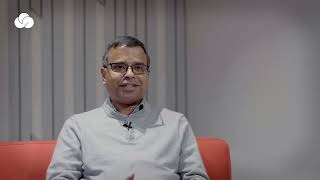
Advaitha Jagruti: Awakening The Spirit Of Adi Shankara In Indian Youth | Dr. Ravishankar Gundlapalli

Dr. Ravi Shankar Gundlapalli (Raviji) gives a keynote at the Global Festival of Oneness 2024 on "Advaita Jagruti — Awakening the Spirit of Adi Shankara in Indian Youth." He defines "jagruti" as energetic awakening, distills eight aspects of Adi Shankara's spirit (oneness, removing divisions, seeking a guru, leadership/parampara, discipline, compassion/service, scholarly conviction, openness to learn), and frames an eight-part "go-to-youth" strategy to awaken those qualities across India's youth: create/reuse content (conferences, AI tools), promote curated readings, enable Q&A platforms ("Advaita Pe Charcha"), integrate Indic education with modern curricula/certifications, run immersive tours/yatras and camps, revive temples/local centers ("My Temple"), and scale mentoring/guru access. He emphasizes India's demographic dividend (~700 million under-25s), cultural software metaphor (Sanatana "ware"), and concrete initiatives already active (Global Festival of Oneness ~5 years; Jagati Yatra; Know Your Roots foundation). The talk closes with a bhajan (Baja Govindam) and a call to awaken heritage-rooted leadership among youth.
Questions this video answers
Approximately 700 million.
32 years (as stated in the talk).
By the age of 16 (as stated in the talk).
About five years.
Approximately 300–350 experts (as stated in the talk).
Chapters
Foreign.
Namaskara to all this is your host Soumya and welcome everyone to yet another session from Indika Moksha on the account of Global Festival of Oneness 2024. This is a month long festival on Adi Shankaracharya Bhagavad Pada covering various aspects and topics of Adhvaitha Vedanta. Today's topic is Adhvaita Jagruti Awakening the Spirit of Adi Shankara in Indian Youth by Dr. Ravi Shankar Gundalpalli Ji. Welcome Ravi Shankar Ji. Now let me introduce the speaker to you. Dr. Raviji deeply values his roots in Sanatana Dharma and considers Jagatguru Adi Shankaracharya as his mentor and also works closely with Brahma Rishi Sama Vedam Shanmukha Sarmagaru. Raviji is a technology entrepreneur. He is the founder of Mentor Cloud and also an author and a global keynote speaker on topics of mentoring, entrepreneurship and Bhagavad Gita. Raviji assisted in creating this Global Festival of Oneness which is a month long conference starting on Shankara Jayanti in order to spread the life and works of Adi Shankaram. Raviji also founded Know youw Roots foundation with his wife Vaani to rejuvenate and spread the essence of Sanatana Dharma among the modern generation. Raviji is an IITM alumni with a PhD from University of Michigan. He is from Vijay Baada and currently resides in Silicon Valley. With that introduction over to you Raviji.
Namaskaram.
Sankarachary.
Thank you Soumya Ji for your kind introduction. And thank you to all the organizers of the Global Festival of Oneness for inviting me to share my thoughts on.
Some of the aspects that I am personally inspired by Adi Shankara.
So today the topic I've chosen is really the essence of this conference is how do you create a massive awareness about the life and works of Jagatguru Adi Shankara Adhvaitha Jagruti. So I'm going to be first speaking about different terms in my topic and then sharing my thoughts on how we can achieve it in today's day and age. Let me start with the word Jagrati. There may be many, many of you who may not know the true meaning of Jaagruti. So Jaagruti means awakening. Not simply awakening but with energy. You know sometimes you awake people just like hey, can you get up? But awakening with energy means really awakening them so that they they come back to the full consciousness with lot more.
You know, awareness about what's happening around them. So I Want to spend time on what Jagruti is. Now you can awaken something that is either someone who is alive, but maybe they are sleeping now. The sleeping, I will use the word either they are sleeping in real or metaphorically sleeping that they are not aware of. You know, what is happening around them. So that's what you cannot awaken something that is, that is not alive. Like you can't awaken a stone or something like that. Right? And awakening also means if there is a thought or an energy that exists, but the owner or the carrier of that energy does not know that they have that thought or energy inside them. That also is what we can awaken. If the energy doesn't exist, there's nothing to awaken. So just want to make sure that we have a good understanding of what awakening with energy means or the word Yaagruti. Let me give you some examples.
We all went through the pandemic. The virus actually awakens the body's immune system. Otherwise the immune system is there, but an external impulse or input suddenly creates that kind of awakening of, of the body's immune system. And again.
Inside a community or a family, when there is a crisis, suddenly people come together. So what? So what I feel is it awakens what I call the collective spirit or the connective spirit of a family or a community. Let me give you a more positive example. You know, a good leader, whether you are a CEO or, or you are the, you know, head of a business unit, you have the potential to awaken the genius of your people just by being there, just by talking about what your vision is for the business unit or the company. And a wise leader of Jnani can awaken the inherent oneness in society. And this whole festival is to celebrate what Jagatguru Adi Shankara did several hundred years ago to create that oneness, the Adhvaitha. Now I'm going to not be talking about the Adhvaitha because there are many, many other talks and about explaining what Advaita is, is non duality. Dvaita is 2. Advaita is non duality. And there are many talks that I encourage all the listeners today to learn more. And at least I mentioned in my, in my opening keynote on this conference is get curious because we're celebrating it for a month long. You know, there's so much to learn. So get curious and join classes and join conferences like this so you can learn more. So we'll only touch upon these things at a very high level. So now we talked about what Jagruti really is about is awakening with energy. Now let me share my view of what is the spirit of Adi Shankara that I'm talking about. What is it that I have gathered by, by you know, studying his works as well as you know, reading what is called Adi Shankara Digvijiyam. There are many, many you know books that talk about Adi Shankara's work and it's usually referred to as, you know, Digvi jiyam and Madhavariya. Digvijiyam is one that is very popular.
And I have identified eight aspects which I call the spirit of Shankara. Right, so if you abstract Adi Shankara's works what are those attributes that we can emulate? One is this, this idea of oneness. Aham Brahmasmi One of the first scholars to say I am, I am Brahman. That means when everybody is saying it so there is no difference between me and Brahman, I am Brahman. Aham Brahmasmi. Again there are lot of scholars who have explained what this means at length. So that is one of the fundamental aspects of what Adi Shankara is about. The second is if you study his works and his life story. He had a deep desire to remove the divisions because we refer to Adi Shankara as an avatar who came in at a very critical time in the evolution of India or Bat. There were so many religions, so many differences among societies and he had this desire to remove those divisions and unify people at the, at the end of his avatar. Really India is what it is today. It's because of all the work that he has done. So the spirit of Shankara we have to always remember that desire to do something in the society by you know, doing this specific work. Again there is another talk about what can we learn from Adi Shankara. There are you know, 10 different aspects. So I encourage you all to learn more about each of these points that I'm making today. And the third, the spirit of Shankara is you know, his search for the guru, you know, his life story, you know, right? Starting from Kaladi he walks all across to find this guru not only to seek knowledge but also guidance or mentorship. You know his guru tells him exactly what his mission is, asks him to go to Varanasi and actually you know, start writing bashiyams after his education is done. So the spirit is this constant seeking of a guru which we all need to do. We all need to look for a guru to seek knowledge and also who can really show us what our life purpose really is.
And the fourth which we see in a Lot of leaders is this vision to establish a process or a systems or what I call the leadership parampara that should exist beyond us. You know, there are, for example, if you look at Adi Shankara, his establishment of the four Mutams, each mutam having a specific vision statement, each one having a CEO if you will. And how that parampara continues even after several hundred years in each of the Mutams is just phenomenal. Just to study, if you want to look, if you want to look at a strong leadership model that organizations can learn from, we have to look no further than each of the Mutams.
Across India that Adi Shankara established. So this vision should be that whatever I do, it should not end with me. It should continue even after me.
The fifth aspect of Adi Shankara spirit is this discipline. Now he only walked on this planet in his physical body for just 32 years and he finished most of his work of writing Bhashyams, treatises, what is referred to as Prasthanatrayam by the age of 16. And then the story says that Veda Vyasa comes and says, your work starts now. So I'm going to give you a additional time on this planet so you can, you can, you can actually unify people by walking across the country and, and, and really, you know, making sure that people have one understanding of what Advaita really is. Now to write so many treatises, so many basyams, walk across the country six times, it takes intense discipline all while, you know, performing his, you know, regular sort of, you know, rituals.
And so it is very important when, when, when we are talking about the Adi Shankara spirit that there has to be that sense of discipline because I consider our life as a gift and how do we make the most out of it.
Is, is really what we can learn from Adi Shankara. And the next one is this compassion to serve people. Again there is the, you know, episode of Kanakadara Stotram and many other stories in Adi Shankara Digvijiyam that we see constant examples of, you know, uplifting society, helping people, you know, who are in need. Again this is also an essence of Adi Shankara that had, that I have personally, you know, liked. And number seven is strong conviction of the understanding of his, of all our scriptures and our dharma. It takes a lot of courage and you know, conviction to walk across the country and really engage in debates with various scholars at that time to really bring them on to one path of Advaita. So whatever we learn, we should learn it well and we should Be very convinced and really have the authority to be able to speak about it. That is another aspect of the Adi Shankara spirit and last one that I want to highlight now there are many, I'm just extracting eight that I felt are sort of relevant to this, to this talk today is openness to learn from anyone. There are many, many stories of this. Adi Shankara's interaction with many gurus and as well as the intense debate with Mandana Mishra there are examples of.
His willingness to engage and learn. Even the episode with Chandala and how he's actually is open to other people's thought. Now this is a very, very fundamental trait that all of us can emulate because we cannot assume we know it all. There's always something that we don't know. So we always have to have the openness to learn. So if I look at we talked about Jagruti, which is awakening the spirit and awakening what? The spirit of Adi Shankara, the spirit of oneness, the desire to bring people together. The desire to learn and to really know why we are here on this planet. Can I do something to leave a legacy.
That outlasts all of us? Can we have that discipline and time management so that we make the most out of this janma that we have and having compassion to one another and feeling very strongly in whatever the subject is. It could be engineering, it could be programming, it could be literature or it could be our scriptures. How do we know something really well that we can stand on it and teach other people and also engage in a conversation? And of course that openness to learn because this ocean of knowledge is just unlimited. There's so much to learn. So we always have to have that mindset of willingness to learn from, you know, from each other. So these are what I mean by the eight aspects of Adi Shankara spirit. So we talked about Jagruti, we talked about Adi Shankara spirit. Next comes the Indian youth because the topic was awakening the spirit of Adi Shankara in Indian youth. Now if you really look at, in India Today, there are 700 million people.
I just want to pause there because that's, that's a huge number. 700 million young people who are below the age of 25 in India right now. Just to get a perspective on that number that equals the total population of America which is where I am right now. Brazil, South Africa and Japan. Now US, Brazil and South Africa are the, are the, you know, you know, G20 countries right now. India was a G20 president last year. South Africa is next year. Brazil is this year and US next. That's why I picked those G20 countries. So the total population of these countries equals just the youth population in India. So just look at the demographics advantage or what some people call demographic dividend. That means something that we can actually leverage to do something good. And since I am in technology, I talk about software. I always say that all of us who come from the Indian heritage have a software running in us. I, I call it SD version 10,000.05. You know, because you know there are a lot of evidences that our Indian heritage is over 10,000 years, sometimes even more because aporushiyam, our Vedas have. No, we don't. Nobody knows when they came out. But really I would like to say there is a software in us that came from our rishis, from our ancestors, from our parents, that is constantly refined. That's why since we understand the technology language, I say there is a version of software that is running in all of us. Now when I say it is really not software, I would like to call it sanatana, where not software, just to play on the words there. Because whether we, whether we know it or not, whether we like it or not, it is there in us, right? So I like to look at it as this, this so called awareness of Sanatana, you know, heritage or what I call Sanatana, where since most of us understand the technology language, it is already installed and it is visible in some z. Some people are using the software, whereas some people, you know, when I talk to young people, I use the more contemporary sort of words so that they can understand. But in a lot of people you need to really unzip that file and install it. And you know, those of you in technology will understand what I mean because when you want to download a software, you just download it, you unzip it and you install it. This awakening is what we are talking about is, is to unzip that software that's already in them and install it in various ways that we'll talk about today. Now just think again, this. Another example I give when I talk to young people is we all have either a laptop or a Mac or a desktop. There are so many technologies and softwares that actually run our Macs and laptops, but we don't know them all. We don't know them all. So what is important is to recognize when somebody comes and says, hey Ravi, do you know you can do this on your laptop? And that's when we realize, oh, so that is exactly what we are saying. This software that comes from our, from our Rishis and constantly refined through seekers and Rishis and our ancestors, our parents, all of it is in us. Again those of you, if you want to get curious, you will learn how our human biology evolves at every generation.
So again those you want to learn, you can see how our human body is constantly evolving and becoming smarter and smarter.
To make sure that we can survive and thrive in this current conditions. So again, just to get an idea that we are talking about something that's already there because remember Jagruti is something that you can awaken that's already there. It's not. I don't have to put something from the outside, I just have to open it up.
So now we talked about the Advaita Jagrathi and we talked about the Indian youth. And I also explained the eight aspects of what I call the spirit of Adi Shankara that, that we are talking about awakening and focusing on Indian youth which is of course it applies to Indians anywhere in the world because I want to focus on that because we all carries that software in us. So let me go into how do we do that? How do we do that? Again we can actually learn from none other than in Jagat Guru Adi Shankara himself. First we have to have a strong will to begin with. And I'm really happy. Over the last eight to 10 years there is a lot of movements that have come where there are different mutams, you know, so many different schools, so many classes that are happening that are leveraging technology. So there is a collective will to make this happen which I'll talk about and really understand the landscape again which is what Jagat Guru, when he walked across the country he had to understand.
What was the lay of the land look like.
And only then you'll be able to really figure out how to win over them. So today we all have to look at what are our youth learning versus not learning. Things have changed just in my lifetime.
What we used to be taught when I was in elementary school and middle school, high school are not being taught today. So we all have the responsibility to see, okay, what is in the system and what is not in the system. What are our youth aware of and not aware of. And I do this quiz a lot whenever I travel around the world. Lot of our own youth don't know about Jagat Guru don't know about lot of our scriptures because they're not being taught. And lot of books now, a lot of historians have really come out now in the last several years. Where really trying to bring out the true history of Bharat. So we need to understand, okay what are they aware of and not aware of and also what systems already exist. Now just in my own, you know, quest over the last few years I have found so many, so many people, so many mutam, so many universities who have that have come up including the Indic Moksha and Advaita Academy what it was called to really, you know.
Essentially make this happen. Right? So what Adi Shankara did in those days we should again we can learn from is to execute a multi pronged strategy. Right? Again I'm speaking the technology language. There's another talk by me, Adi Shankara as an entrepreneur because this is the in my view a way to reach young people who understand this language versus opening up a one of the slocums and talking about it. That stage comes next because first people have to become curious and they have to relate to what we are talking about. So Adi Shankara did a multi pronged strategy. First he had to really write the basyams, explain you know what for example Bhagavad Gita is, what are Brahma Sutras, Upanishads and so many. And then that was not enough. He had to actually have a strategy to walk across the country and engage in you know, debates which we'll talk about. So that's what I mean by now you know, those of us who are entrepreneurs and we keep hearing the word go to market. You know, if you're in sales and marketing you'll hear this a lot. When I speak I talk about go to youth, right? Not go to market because we are Talking about engaging 700 million young people in this awakening process. So I'm going to use the word gty.
What using the, you know, go to market. So sort of thought process that everybody talks about. How do you go to market? When you bring a new product, whether it is a new iPhone or a new food recipe or a new product, how do you bring it to market? So I'm talking about go to youth versus go to market. Okay. So I'm going to talk about since there are eight elements or eight aspects of Adi Shankara spirit I'm going to touch upon eight actions that we can take and some that we are already involved in, I am personally involved in and there's a large group of people involved in and some that are ideas that I want to share today that hopefully somebody will say yeah, I would like to work with you and let's make it happen. The first is, you know, when I moved from India into Silicon Valley. Of course I keep traveling back and forth. I realized that because remember that software I talk about the Sanatana, where is already there. Those are already in our everyday lives and vocabulary. You know, when I came first to the US people, if something good happens, you know, here everybody says, hey, you are God sent. It's very subtle, but I want you to reflect on it. People say you are God sent. Whereas in India we always say, hey, AAP bhagavan KE rupe. You know, Devudi lagavachav. If you speak Telugu, Devuddi lagavachev. Like you came like God. That's what we say. But in rest of the world that at least you know, to the best of my knowledge, they always say you are God sent. That means God is somewhere and he or she, whatever the gender is, he or she sent you to me to help in this particular situation. So here we actually already talk about the oneness. And this simple gesture of Sastanga. Namaskar is also an aspect that when we do this to gurus and I have not seen this in any other part of the world. I've traveled to over 14 countries and nowhere this culture exists. What does this mean? When I do the Sastanga in front of my guru, I'm saying I am bowing to the God in you, that there is God in you. And I'm essentially respecting that. It could be God in the form of knowledge or wisdom. But this culture is very unique to Bharat. Even the simple gesture of Namaskar is. Now of course, everybody has become a very worldwide gesture now. But even that shows that you and I are one. There are many interpretations of this one gesture that you know, I am God. Aham Brahmasmi, you also Aham Brahmasmi. I am essentially bowing to that person, that God in you. There also another interpretation that I am made of five elements. You are made of five elements, we are one. So there are multiple. Now these simple things, I like to bring it out so people know that it's already there. A part of the software is already operational. If you, if I can say that. So strategy number one is, you know, talk that this is already there, is that in, in our, in our everyday life. Second is definitely, you know, this conference we started five years ago is really to bring out all the experts. Now over the last five years we have probably gotten close to 300 or 350 different experts from all across the world who are studying different aspects of Indian scriptures, different aspects of Adi Shankara and, and really the conference like this has brought people out and are sharing. You know, for example, we have a Supreme Court, you know, judge talking about how he leverages Adi Shankara's debating principles in his everyday debates. And there are scholars, there are engineers, you know, recently we had an aerospace engineer, electrical engineers, leaders, you know, professors, all of them. A conference like this will bring out and since we are in the AI AI world right now, this content, once it is available, we can tag it, we can transcribe it, and we can actually build an AI engine. This is a project I'm working on because we are so used to things like chat GPT nowadays that every young person is going and asking, hey, where can I find this? What should I do now? Can you write me essay? All of those things. Imagine we have an AI technology that makes Adi Shankara's works and all the people's interpretations on demand using an AI tool. So second strategy to really awaken Indian youth is conferences like this that every year when we do this and then we celebrate for a month after, is to really create that content. Because again, those of you who know content creation is the most important. And that means you have to have conferences like this.
The third. Recently I met someone who gave me a list of books. He called them must read before you die. You know, these are books on Indian, Indian history, Indian scriptures. And you know, I changed it to must read before you graduate because all our young people, there are certain books that everybody should read. Now. This is one book that he told me. I believe it's a very. I haven't read the book yet. I just heard it. It's by Mr. Rupa Pai about Vedas and Upanishads. And there are, you know, 12 other books that this person has identified. I'm sure India is not short of books. There are many, many, many books. But you have to promote them in the modern format because the young people today, they don't have the patience. Not everybody. I'm talking about the majority. They want to see something in a much more modern format in an Instagram story or an interactive game or an animation. So there is that effort already going on where these books are being, you know, made available to youth in a way that they can consume. And very, very, very important that these books exist that we need to, you know, take it to all the young people in, in whatever format that when technology allows us, even this particular conference allows us to bring people from all over the world without having to travel and be in one place.
Continuing on There is another, another project that, that, that I'm contemplating called Adhvaita Pe Church. Now some of you might recognize because we need opportunities for youth to ask questions to sub to a modern guru. Now Sadhguru has something like this, but we need to expand that and maybe do it countrywide. And again this idea came from already Indian government has something called Pariksha Pechacha. So what a beautiful way for students to interact with our honorable prime minister and just have a conversation. So why not we have this kind of programs where young people especially who are so confused because they're not learning what they're supposed to learn, how can they have the opportunity to ask, you know, what does Advaita mean? Why do we have so many gods? Why do we have idols? What are these temples? What are these scriptures? So many simple questions that, you know, the good news is there are answers for all of them. And how do we create mechanisms that our youth have the opportunity to have the answers? Because if they don't have the answers, that's when they, you know, they can. They get carried away by another school of thought. Now Adi Shankara actually had this as one of his strategies. He had this idea of, you know, Vadvi vad or debating because he would go to a city or a town in those days and said, okay, let's have, you know, let's have a debate. And if I win, then you have to follow, you know, my school of thought and if you win, I will convert to your school of thought. It was very simple rule. And again, there are many talks on the most famous debate in Adi Shankara's, you know, life. The debate with Mandara Mishra that I believe has gone for several, several weeks. So like that he had many such debates all across the country at a time when there were 72, you know, I'm sure that there are more smaller ones, but there were 72 Vaidika and Avaidika religions in those time. Now how do you bring all of them together? So that's why while Adi Shankara used the vad vivad where there were scholars that you would sit across and have a conversation or a debate in today's world with the kinds of numbers we're talking about, can we create Advaita Pecharcha? That's the an idea Number four to awaken the Adi Sankra spirit and Adaita spirit in our, in our young people.
Number five is I'm a strong believer that modern education is important. We all have to know engineering, you know, construction, programming, you Know accounting, we all need that. We again you know, Adi Shankara and all the scholars always say we should get education and we should, we should generate wealth and we should be happy in our life. At the same time I believe that we should also get education on what I call B education and maybe introduce some certification. Because today if I, if I apply for a job as a project manager, you know, some companies ask do you have the PMP certification? It's called Project Manager Professional. Why can't we introduce a certificate for. I know what you know being Indian is. And I'm already working on it with, with some schools now. The when would this, when would this become very popular is when we entice colleges. Like if you have students who say they have this basic education, you know, encourage them by giving them admission. If, if there are you know, graduates who say I know what compassion is. Know I know how to, how to bring people together. I am, I am. I have this, you know, a good dharmic way of thinking, you know. So if you really look at all the spirit qualities as a CEO of a company I would love to hire such people who are compassionate, hardworking, disciplined, you know, a true team player, a good leader. Which, which company would not want all of that. So entice employers to recognize it and so that then it becomes a loop because we live in the world where people ask what's in it for me? So we have to create a different mechanism not just say it is good for you. It has to you know, give something in return. And recently I've had the privilege to. To. To attend a wonderful university called Rishihud University in you know, in Delhi and really amazed by what they are doing. They're actually, you know, combining the Bharati education with an MBA and a BBA and what they call, you know, they say they're creating you know, Rishi leaders which was very fascinating because what this, what they say is our Rishis did not all of them sit in a. In a forest and meditate. Some of them did but many of them are actually they took action. They were involved in, in. In building the large kingdoms. They were involved in building temples and universities and really advising the leaders in those times. So Rishi University already as is doing it just started about three years ago and my own alma mater IIT Madras recently started something called center for Indic Knowledge Systems. Of course Indig. Indic Moksha is another. Another academy like that. So really these efforts are coming in to really parallel. To parallel educate both on the. On Our heritage and our scriptures along with modern education. So that is another way to essentially reach Indian youth. And number six is, you know, organizing tours because we have to create an immersion experience of Indian youth in our heritage. It's not enough to just give lectures or a zoom call or, or, or a Google Meet. People have to experience it. Now the good news is there is something called Jagati Yatra which is incredible. A tour across the country of India taking lot of young people on a train. And there are mentors, there are scholars, there are sessions and really touching upon all the major places. I was so fascinated and I'm actually going to be working with them. So this is already in existence. We should really amplify all of these that are happening. There's also another yatra called Adi Shankara Yatra or Vedabarata Parikrama Yatra where a group of young.
Vedic pundits start in Kaladi and go all across India along the path what Adi Shankara took and really, you know, talk about Adi Shankara's work, do Abhishekams and things like that. So that also there. And you know, my wife and I have a foundation called Know youw Roots where we take young people from, especially from the US back to India. So this picture is, is from Madurai because this has to be immersive. It's, it's. We cannot just have it in a classroom. And this happens even when you're studying biology. For example, you are in a lab and if you, if you're studying nature, sometimes you go on a tour. So we need to create these kind of experiential tours at scale. So our youth are fully immersed in that, what I call the, you know, spirit of Adi Shankara, which is Advaita, which is our, which is, which is really a major portion of our Indian heritage.
Number seven.
I'm also, I also think we should do camps that, that are educational and also build communities. We ultimately, you know, like minded people come together. You know, in Silicon Valley, all the entrepreneurs, there are many organizations that bring all the entrepreneurs together so they can learn from each other. Now the good news is that, you know, last year the Ekat Madham opened in Onkareshwar which is a 108 foot statue of Adi Shankara and a beautiful place that are organizing camps, Adhvaitha Awakening Camps actually they call them, which is very interesting and bringing people and even taking them around India. So these camps exist and we actually have one of the program leaders, Mrs. Smriti Sharma, who's going to be speaking on the 7th of June on this topic. So these are happening right now. We need to do more. So that way you are connecting our young people to the software that's already in them.
And the last aspect, the number eight is India. And the land of Bharat is truly blessed with this culture of temples all across the country. All across the country. And even before rest of the world, you know, did not walk. We had such a good infrastructure that were not just places of worship, they were centers of excellence.
So we have to really create those centers so that locally, you know, youth can get involved in understanding our heritage and our history. Now I'm part of an initiative called My Temple where we are actually reviving local temples involving youth in those areas. Because we are talking about a large number of people, 700 million. So how do we create that they get involved in their own community. And recently I saw a talk some of you may recognize. This is the, you know, or ISRO chairman, Indian Space Research Organization. And he was the leader who put us on the moon. You know, many of, you know, you know, Chandrayaan and recently he talked about, you know, a temple should not be just a place for chanting, it should also be a place for transforming society. He talked about creating libraries and so that people can go and read. It used to be like that. We need to bring that culture back.
So when you do that, it basically you're, you're creating sort of awareness from ground up. This was the thinking of Adi Shankara when he established four MATAs in four corners of India and of course Kanchi Matam as well. After that the idea is not to have just one place but geographically distribute so that locally they can have an impact on, on the communities and people around them.
So again, this is a set of ideas, some already in execution and some that we are going to implement again to achieve that awakening.
Among the large number of youth. So let me wrap up to quickly summarize. The first one was highlight those things that are already in our life. Sometimes we don't realize, right? You know, that's why we have mentors, right? Mentors identify the blind spots. Or you can call it a coach and it is about other people saying, hey Ravi, did you know that you have this talent? So a lot of our young people need to be awakened that to things that are, that they are already. Let them know there is a software in them. Let them know the heritage that they come from and the words that they are using so that they recognize what they already have. And second is, you know, Conferences like this. And now Indica Moksha runs many, many conferences. Many, many, you know, panel discussions. I'm just amazed by how much they do. This is a way to bring out all the experts. They all need a platform. They're all doing their PhDs, and some of them, you know, I asked someone recently, one of the scholars, I said, do you do this full time? And he actually said, I do this for my lifetime. There are scholars like that who are doing this for their entire life. They don't have anything else. Just take a few open shirts and spend their entire life on it. We are able to identify them, bring them out, and to give them a platform to share their wisdom with us so that it can reach more people with the help of technology. We talked about must read before you die or must read before you graduate. All the books that we must make sure they are promoted now. There are incredible books, you know, for there is one book I recently came across called the Flight of Deities. There are. There are books by Mr. Sanjeev Sanyal on the real Indian history. Many, many other books they have not made into the Indian curriculum yet. But we should promote them so that people know the real history and where they come from. Right. If you don't know your roots, even if somebody cuts them, then you won't even know, but you will know much later. So just have this picture in your mind of a flower or a fruit. As long as it is attached to the plant or the tree, it is fresh and of course it ripens. Just like Guru Varukam, we say, you know, but the moment you pluck the fruit away from the roots, it slowly sort of withers and even the flower becomes very weak. So that's why this, the root I'm talking about is this, you know, energy connection that we have to our history and connecting our young people to where they come from is extremely important. And that means these kind of books are very important to. For young people to know.
Programs. There has to be, you know, ways for youth to ask questions. Because lot of, you know, lot of, lot of parents in today's world, when. When both of them are working or they themselves may not know all the answers. Which is why the Indian system has always encouraged matams. And having a guru, it's extremely important that you cannot learn everything on your own. I mean, can you read, you know, 20 books on medicine and call yourself a doctor? Can you read 10 books on engineering and say, I'm now an engineer? We all need someone to guide us, to put that knowledge in context. That's really important. So let us create those opportunities for youth to ask those questions to someone outside their near family. And talked about integrating education in a way that is recognized by colleges, by companies because that is that those are the traits that we really want in our children, in our youth. When I hire people, obviously it is very easy for me to evaluate their engineering skills or. But what I'm really looking for are good people. And you talk to any leader who is looking to hire people, the first thing is they're looking for good people, hard working people, people who are, you know, truthful, who are not going to play games, who are going to work hard, who have discipline, who can work in teams. These are all the attributes that we look for. And that's what all, all the eight spirits, eight elements that I talked about, they're all in that we talked about tours because immersion is important, not just telling. Let them experience it. And I have seen over the last few years we have, we have, we have taken thousands of NRAs to various Indian heritage sites and today they really feel the connection. So rather than telling, let them experience it. And in youth camps you can learn more. There are camps happening all across the country but we should do more because we're talking about a very, very large demography. And lastly this, creating local centers of excellence. While we have the four mutams, we already have the advantage of community temples and let's convert them into centers of excellence and centers of learning. So eight, I call it eight because we have eight directions. Four and four directions. So that's why I say for Astadikulu you have eight aspects. So we need to really look at multiple ways. Just like Adi Shankara did this multi pronged approach to really address a large number of people at a very critical time, at a very critical time that India can become what it used to be. Like the Vishwa Guru or the Vishwamitra that you hear is even at G20, India really stood up and said, one family, one planet, one future.
Is only country that can say something like that. We are all one. This oneness is inherent in everything we say and do. So.
I just want all of us, you know, let me just wrap up here. Just imagine, you know, a billion Indian youth, you know, really operating with the spirit of leadership, discipline, compassion, energy and creating the legacy in a way that outlasts them. Imagine just for a second what, what the impact of, you know, such a community will be. And I see that it can be what, what I, what I refer to as, you know, Shankara Mayam and it is, it is Shankar Maya means people like all of us work in the industry, you know, work in various companies, work in universities but be rooted in our heritage. Be rooted because that is where the strength comes. That is where we can be a role model for, for all the, you know, countries around the world.
So let me end with, with, with one of the compositions of Adi Shankara who we are talking about his spirit and to, to know his spirit you have to look at this what came out of his heart, you know so I will, I will sing this.
Baja Govindam, Govindam Bhaja Mudham.
Namaskaram and Pranams and thank you for listening and I hope this has awakened certain aspects of curiosity in each and every one of you and I hope together we awaken the spirit of Adi Shankara in all the 700 million plus young people especially in India. And with that we can inspire and impact the rest of the world. So we have a peaceful and a prosperity world for all. Vasudaika Kutumbakam thank you very much.
Thank you Raviji for that inspiring talk starting from the word Jagrati to giving us a glimpse of spirit of Adi Shankara to the Indian youth potential and the strategy that can be employed to inspire the youth towards Advaita. Thank you so much for the talk. Thank you viewers for your participation. Please join us for tomorrow's morning session from 7 to 8. Can we have the flyer? The topic for tomorrow's morning session is a Sanskrit talk an initiation on Brahma Sutras Akashadi Karanam.
By with one Raghavendra Aroli.
More from Dr.

Essentials of an Entrepreneur by Dr. Velumani Arokiaswamy, Founder of Thyrocare

Skills & Traits for Better Employability | Amritkaal Mentors – An Initiative by MentorCloud

What Leaders Look for First-Time Job Candidates | Amritkaal Mentors – An Initiative by MentorCloud

How to Innovate and Lead Wisely in Today’s World with Navi Radjou - An Initiative by MentorCloud

Crafting Your Academic Journey with Dr. Manish Kothari - – An Initiative by MentorCloud



Testimonial | Sanjeev Sharan | Catalyzing Growth From Within | MentorCloud Mastermind

How to Make a Mentee Feel Comfortable #mentorcloud #mentoring #coaching #wisdom #experience

Testimonial | Kellie Teal-Guess | Catalyzing Growth From Within | MentorCloud Mastermind