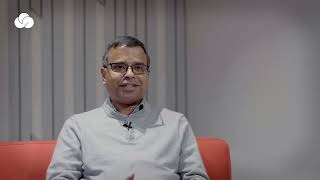
The man behind Srikanth Bolla ft. Ravi Gundlapalli

Dr. Ravi Gundlapalli mentored Srikanth Bolla to MIT admission; Bolla now runs a manufacturing company employing mostly differently-abled workers. A near-death plane incident where the front wheels lifted off the runway pushed Gundlapalli to scale mentorship through Mentor Cloud, a platform matching mentors and mentees globally.
Questions this video answers
1.2 seconds
Pratibha Patil
Srikanth Bola
More than 70%
To impact 100 million lives
Chapters
We were asked to take off and the front wheels were off the Runway in a matter of 1.2 seconds. 150 of us would have just, you know, burnt into ashes right then and there. The helicopter carrying the president of India at that time, Patiba Patil on the same Runway. The TVs were all saying thank God. President of India. Saved. How come nobody's telling? Ravi is saved.
Mr. Ravi Kunlapalli who is the CEO of an organization called Mentor Proud with.
The king of mentoring. And he has worked with several companies.
In the Silicon Valley before.
And he is also the author of book Mentorship.
He declared to the world that I am going to impact 100 million lives. And yet you chose to invest on creating a platform for mentorship. Why? Why is that?
Everybody needs a support system. This young man and he said sir, I want to go to MIT for my undergraduate. Didn't I just hear you? You're blind and you see your scene story. Fast forward few years he got into mit. I was able to get him an admission there and he's an entrepreneur now in India employing more than 70% of the differently abled people. Mentor Cloud is designed to have that borderless nature to it. I can learn from anyone. 100 million people exist in the world today and what the platform does is intelligently matches. I always believe in time investment because nobody has infinite time. I don't think anybody is self made. So when I see in the Fortune magazine and Forbes magazine 40 self made entrepreneurs I just laugh at it. Because they are sending a signal to all the other people who are aspiring entrepreneurs. Oh my God, these people are gifted. I am not the most successful people are silent. You are the CEO of your own life. So every human being that is is breathing right now is a CEO.
Welcome ladies and gentlemen. Welcome to the podcast the Ex Monk's Drive. I'm your host Gaurav Arora. Today we have a guest that I've been chasing for almost two years. In a world where we live in, most of us are takers. And here is someone who believes in giving, giving and giving. Here is someone who took a pledge to to impact 100 million lives. Today we are going to interview Mr. Ravi Kundlapalli who is the CEO of Mentor Cloud. And in our today's episode we are going to dig deeper into his entrepreneurial journey. We are going to understand and know what was that moment when he declared to the world that I am going to impact 100 million lives. The relationship around mentor and mentee and much more. Let's take a deeper dive and listen to this beautiful, beautiful, beautiful conversation with Ravi.
Hey, Ravi. Such a pleasure having you here finally.
Thank you so much. It's been, what, two years since we first talked about me being on your podcast? And here I am in India in Delhi, and I'm so pleased to be here and very excited to have a great conversation.
Happy you have mentioned two years. That's what I was telling. At times you just have to wait for a week to get somebody as a guest on your podcast. And at times it takes two years.
Well, it's not. See, you know, Universe has a way of making things happen. Things happen at the right time. You know, it's called Sankalpa.
Yeah.
When the time comes, things, things will happen.
Things will happen.
It was not intentional for me to delay this long, but I'm really glad, you know, to hear about X Monks and all the wonderful accomplishments you and your team have achieved. Thank you. And so now probably it's Universe's will that we talk today.
Absolutely. And as I mentioned, Ravi, it's an absolute delight and a privilege to have you.
Thank you.
There not has been even a single meeting.
Where I did not get anything that is worth reflecting on. I think that's the power, that's the experience, that's the sharing that you bring in any conversation. I'm so looking forward to this conversation as well.
Thank you, Gaurav. Again, conversation is a, you know, it is a two way street. So probably it's because of you.
Because.
I can't be talking to someone, you know, that doesn't equally resonate the ideas. And so I think it's. Conversation is always mutual. It requires two parties with good intentions, good integrity, to dance together and. To dance together.
Yeah.
Right. Yeah.
I was just going through and I was wondering on what should I be talking about? You are an engineer, you're an entrepreneur, you are an author, you are an investor, you are involved in community projects, you are a philanthropist, and there are so many projects that you are running. But something that took my attention where you mentioned that the intention is to impact 100 million lives.
Yes.
It's a loud statement. Right. I don't think that you would just wake up tomorrow morning and make this loud statement and make a declaration to the universe. What was that moment in your life?
Yeah. You're absolutely right. You know, this, this whole. The idea of impacting 100 million lives happened when I was given a chance to live. You know, I was once in Mumbai.
You said you were given a chance to live.
Chance to Live again. Okay, so, you know, all of us take this beautiful sort of gift of life for granted. But life is a gift and it can vanish any given day. We don't know. And the pandemic showed us that how some of our loved ones just disappeared for no fault of theirs. So few years ago, I was in Mumbai and I had this life changing moment when in a matter of 1.2 seconds, 150 of us would have just burned into ashes. But that didn't happen. So that was a big awakening moment for me.
Tell me, what was that?
Yeah. So we were on a plane and I finished my talk in Mumbai and I took the flight like anybody else, got the boarding pass and was going to Delhi. And we were asked to take off. And the front wheels were off the Runway. And right then and there, the helicopter carrying the president of India at that time, Patiba Patil, her helicopter was landing on the same Runway at about 100ft ahead of us. Now, at the takeoff speed, 100ft is about 1.2 seconds. And if the rear wheels were off the Runway, it was essentially game over because there's no way to brake it. But luckily, the rear wheels of the plane were still on the Runway. The front wheels were off the Runway. So our pilot saw, and immediately, even though the control tower said, go, he said, I'm seeing something I can't crash into. So he applied brakes. And those brakes on planes are designed for landing, not for takeoff, because takeoff speeds are much higher than landing speeds. So all the tires burst and we kind of dragged on the belly of the plane into the fields in Mumbai. And we didn't know what was going on. It was an emergency. They got the buses. We were in the terminal and was watching what exactly happened. There was animations. I'm like, oh, my goodness. So the thought came to mind is, why didn't this not happen? I felt like someone said, you have still some job to do. It's almost like I came to Delhi for some work, and if the work is not done, I will essentially stay longer. So I said, okay, somebody is telling me, you got to go back to the planet and finish your job. But what is the job now? That is where we need to reflect on. Because every life throws certain events at you. If you don't reflect on it, then you pretty much miss incredible opportunities. So I reflected on it. A few things came to mind. One is, okay, why did I get this chance? What is that? Unfinished homework. You know how in schools when your teacher says, you didn't finish your classwork stay on, stay after class. That's really how I felt it. All these ideas were going on in my mind and other more impactful thing was the TVs were all saying, thank God, President of India saved. And of course I'm grateful too for somebody at that level to survive. But there was a little bit of me saying, how come nobody's telling Ravi is saved? How come Ravi when this guy who has done so much for the world is still alive? That kind of reflected what could I have done for the world to miss me was really going on in my mind. That's when, you know, back then I think Facebook had about a billion users and I know many people on Facebook. Again, publicly I'm saying the lot of time wasted. I always believe in time investment because if you live your entire life looking at other stuff, when will you build your own stuff?
Yeah.
So I said 10% of Facebook audience, if I can get them to invest in themselves so they achieve their full God given potential. Because nobody has infinite time. And I did a lot of statistics. You know, a million PhDs can be done in a single day. If you look at the amount of time that people are spending on Facebook. Wow. Because I did a PhD, I know how much time it takes. That's the amount of time people are wasting on other things. Of course, there are a lot of good as well. So that that event really got me to think. And 100 million said, I think if this happens ever again, and if I do, you know, impact 100 million people, I'm sure the world will miss me.
Yeah, yeah. You know, in fact, the other day I was going through some data and it says that on an average an individual invests or spends around 20% of their time on social media. So that means on an average, if the average age of an individual is 80 years, let's assume so that means 16 years the person is on social media. Now, Ravi, here is a question I have. So you had this example of near death experience.
Here I'm reflecting. Why do we need to wait for such moments to knock at our door?
I definitely pray that nobody has to go through such extreme circumstances.
But at the same time.
Sometimes life throws things at you, but these things are happening on an everyday basis. There are so many examples where every day there are people around you that you can impact. The person who delivers your newspaper, the person who comes to help you, your own colleagues, your parents, your siblings. You know, there's so many ways you can impact them if only you take time to observe. So if you Begin the habit of reflecting. You know, one of my mentors once said, Ravi, experience is useless if you don't reflect on it. Right. If you're making, let's say, a new dish, you know, if you like cooking, if you keep on making the same dish every day, nothing happens. You won't improve the taste or anything like that. Only when you say, okay, what have I done? Okay, you need to analyze, you need to. And try to perfect it. So a little bit of observation, you know, just take a step back. Let's say towards the end of the day, who are all the people who came into your life? What could you have done different? Because people have completely forgotten to smell the flowers in a garden. They race through the garden, they race through life. Wake up in the morning, run, run, run. Eat, sleep. That's not what we are here for. But it's really, you know, stop to smell the roses. You know, I've told lot of my mentees, when you take a walk, get off those airpods, don't put your headphones, just walk, smell. Smell the nature. You know, look at the birds. Look. Look at the water flowing, hear the sounds and empty your mind. Know, don't. Don't be in, in your own world by being in a beautiful world.
Yeah, right. You know, this is so interesting, the conversation that we are having right now. A few days back, I was reflecting and I was reading something. Reading and reflecting, reading and reflecting. And the whole concept of materialistic world came so aloud in front of me and I looked at that world from a very different lens.
Materialistic world is where you start to look at the things that have a form, where you start to look at things which is materialistic in nature. So this cup is materialistic in nature.
Correct.
When you start to focus on that, what is not visible to you is the space which is holding that.
Yeah.
And the emptiness that you're talking about, I may call it spaciousness as well. And unless I have the spaciousness, I'll not be able to admire and appreciate what I have in my life. And if I continue to.
Move from one task to another, if I continue to move from one object to another, I'll never be able to experience the music.
Right.
And as you are saying, we don't have time to smell the roses.
Ravi, you could invest your time, energy, efforts, intelligence, the superpowers that you have been blessed with on 10 different things. And yet you chose to invest.
On creating a platform for mentorship. Why? Why is that? I mean, who are those people in your life.
Who have Influenced you, impacted you, assisted you to become the person that you are.
Okay, so two questions there. You know, all of us, there will be things, you know, when people ask me, Ravi, how do I find what my passion is? You don't search for it, it happens. So I say, when you are in the activity, when you lose track of time, that is what you are born to do. When you lose track of time, that's.
What you're born to do.
You're born to do. That means you are in resonance. You sometimes forget. My biggest forgetfulness is I forget to eat. I'm so involved in, you know, creating some best practices around mentoring or helping somebody sort of step and so on. So whatever action you are involved in that makes you lose a sense of time, that's what the universe is telling you you are born to do.
You use the word resonance and you also use the word universe. So it's resonance with the universe.
Correct?
Okay, correct.
So basically, the universe is always giving you messages if you don't listen. You know, again, I give examples. In this room right now, there is all kinds of radio signals, WI fi signals, but they're not impacting us because you're not listening to them. Life is also like that. It sends you signals unless you have your antennas up. The antenna of what your purpose is the antenna of why are you here? The antenna of what are your superpowers? Why did you wake up this morning if you don't have those antennas up? Those messages will be just going through you and you will not even catch it. So in my case.
It happened right after that incident I talked about. I was at ISB and I was giving a talk on igniting the genius of 500 million young Indians because I live in Silicon Valley and I've been invited to speak about igniting Indian youth. So I told my ISB organizing committee, why don't you invite some local youth also so that I want them to speak after I am done. So everybody was given a minute. So I had a 10th grader, girl, a person, 11th grade, to come and talk. One of them happened to be blind. And so he gave a beautiful talk. And it was ten o' clock in the night. And he and all the students who came to listen to these speakers wanted to see ISB. So they went in the bus at 10:00 o' clock in the night. And this man, this young man said, sir, I've already seen isb. Can I, can you be with me? I want to talk to you. I'm like, didn't I just hear you? You are blind and you see your scene first shock for me, of course. I said, yeah, sure, I'll stay back. I can see ISB any day. So we started talking and he said, sir, I have this big ambition. I want to go to MIT for my undergraduate. And you know, everybody is not supportive, but I want to prove myself. You know, I could not take the IIT Jee because they wouldn't allow me to take it. So can you help me to get into mit? So anyway, so he came just the next day to where I was staying in Hyderabad. I really saw an ambition, a big, bold ambition, of course, long story, fast forward few years he got into mit. I was able to get him, you know, an admission there. Some of our friends basically pooled money to get him to the us. You know, we got him all everything and you know, almost for four years he was like a mentee and a son. And he graduated from MIT with honours and is an entrepreneur now in India running a manufacturing company employing more than 70% of the people are sort of differently abled. Some of them are blind, some of them have only one arm.
And if I may ask, who is that?
Srikanth Bola.
Ah, From Hyderabad.
From Hyderabad, yeah. So Srikanth Bola, later on, you know, even Deshpandey, one of our common friends, you know, he was very supportive. And I saw someone who had an aspiration, almost like a seed. And all we had to do is put right amount of water, right amount of, you know, nurturing and then this person just blossomed and we have nothing to do. It's his life. So seeing other people flourish in their own garden really brought a lot of joy.
They say when the student is ready, the teacher appears. I think the same is applicable to a mentor as well.
When you choose your mentees, what is it that you look for that your heart says yes to, that your mind commits to be a catalyst in their life, just to be there, continue to water and as you see, the seed flourish.
Yeah. In fact, in my book, the Art of Mentoring, I have a whole chapter on what do great mentees do that mentors look for? You know, that, that commitment, trust, taking action to whatever I say. How serious are they? How sincere are they? How, how much gratitude do they have for the time that I'm spending on them? And, and because there are, you know, world is full of takers. They'll come and take, take, take stuff. But are they also giving? You know, I look at, are they mentoring others? Right. In this case, Srikanth was mentoring other people. He was part of the Lead India 2020 campaign, which was run by Dr. Abdul Kalam. So I saw him helping others. So I know that he appreciates the value of help. So that's what I look for. Are they mentoring other people? Are they helping other people? That means I can help them look for those sincere sort of signals. And because I'm spending my valuable time, you know, most people say time and money are the same, but they are not the same. Money can be made again, you know, if I give you 100 rupees, I'll make it somewhere else. Right. But time, this time on this particular morning is gone for all of us. So irreplaceable. So I always think, how do I use my irreplaceable time on someone where that actually matters?
It's not a question of only.
Money. It's a question of time, money, effort. And I also add one more word, which is hope.
Yeah, Right.
If I'm hoping something would get fruitified and I'm willing to invest there, invest myself, invest my being, that's, I think, really precious.
Yeah. It's the joy you get by seeing other people grow because of you.
Yeah.
I mean, just talk to any farmer. I mean, in fact, we just launched a new sustainability initiative and where we are planting, you know, fruit trees for every mentor mentee on our platform. I said grow, people, grow. Planet beautiful. We are all together. Right. So you see the joy of this farmer watching this plant grow and the fruits come and he's able to sell the fruit and earn a living for his family. That's the joy we all can get as mentors. When you see other people blossom, other people grow.
So, you know, you spoke about the trades that you look for in a mentee. And in fact, I was going through this book, I found this book quite fascinating. The art of mentoring, where you have shared different tools, you have shared different qualities and traits. Let me ask you another question here, Ravi. I'm sure you have had your own set of mentors in your life.
How do you find a mentor for yourself?
What do you look for?
Right. So in my book, first of all, thank you for, for, for all the kind words about the book. I define mentor, mentor and mentee in four words. A mentor is someone who shares with a sense of care.
Shares with a sense of care.
So share your wisdom with a sense of care. Not online, on a blog site or something, to another human being, because I care for you. So share and care are the two words for the mentor. For the mentee, it is trust. In that wisdom and act.
Trust and act. If you don't share and care, trust and act.
Four words for mentoring on both sides, right?
Beautiful.
So I look for people who have the wisdom I'm looking for because mentoring is a transfer of wisdom, right? Somebody's wisdom I'm seeking, you know, like a unicorn company, or if they've written a book that is widely known, or if they are a good leader, well respected, they have a certain wisdom. And I'm seeking that wisdom. It's like I'm going to River Ganga for some fresh water. Right? That's what I'm seeking. And so I'm looking for those people who are willing to share, who are also doing that with a sense of love and care for Ravi. They really want Ravi to flourish. They really want Ravi to grow. They want Ravi's journey to become wonderful and Ravi's company to be great. Ravi's family to be happy, everything. So I look for those who are those people. There are many people who are incredible entrepreneurs, build great companies, but they don't care. I don't seek those people. Or there are people who have lot of love, but, you know, they don't have the wisdom I'm seeking at this point in time. You know, like there will be many members in your family who care for you, but they may not have the wisdom that you are seeking at the moment. Now, there could be certain family aspects where their wisdom will be valuable. So look at these two. Who has the wisdom that can take you to the next step? And who are those people that genuinely have a care for you are the people that they look for.
And.
And if you reflect on that, when you look at people in your life, you will find that who are those people in your life who really shared whatever they knew with a sense of care without expecting anything in return? Beautiful. In my workshop, I talk about my third grade English teacher.
I was not studying in English medium when I started my education. So she used to buy English books and say, ravi, you should read it. And today for me to be an author and a speaker really goes back to.
The credit goes to.
Her credit goes to her. Mrs. Padma. She was missed at that time. And Professor Kaipa Prasad. Kaipa, who I really consider my mentor and really a true role model because he has brought in the aspect of indic wisdom. How do you stay rooted in your heritage but still, you know, continue to shine, continue to be a great leader in the corporate world.
So my professors, you know, Rajesh, that both of us know, who are generally sharing with the with caring.
Yeah.
I have at least nine to 10 people. You know, the CEO, former CEO of Zenefix, Mr. Jay Fulcher. Successful, but genuinely cares, genuinely giving me advice based on his experience.
Yeah.
You know Andy Cunningham. Andy worked with Mr. Steve Jobs. Now Andy, incredible, incredible wisdom because she helped Steve launch the Mac. Now she's working with me to launch Mentor Cloud.
Wow.
Right? So look at that. What did I do to. To really be. Be worthy of that kind of wisdom, that kind of affection?
Yeah. You know, as I'm just listening to you, Ravi, in fact, when you spoke about your third grade teacher, it reminded me of my third grade teacher. @ that point in time I could not speak properly.
And as they say.
That's how I used to speak. And then I was blessed with this teacher called Sudhamam. I think if not for her, I would not have been where I am today. And.
She used to tell me, gaurav, you're so good at drawing, you're so good at painting. How else can you express yourself? How can you express yourself with your words?
And she would ensure that I reach school half an hour earlier so that she can sit with me. And she was a drawing teacher. Then I came across this gentleman called Kadam sir. Now Kadam was a president awardee and he taught me English in literal sense. If not for them, I would not have been where I am. And then we spoke about Rajesh. He's been an extremely generous giver. One of the finest human beings that I have had the pleasure of meeting. Now if I look at finding these kind of people in your life, I think it's a blessing. If you don't call it blessing, what else? And yet I personally come across people and you know, I'm just reflecting and taking a pause here. My assumption is all of us come across people who have contributed to their lives. Whether they are aware of that or not, whether they are conscious of this or not, whether they acknowledge it or not. And yet I have come across a lot of, especially with due respect to entrepreneurs and other leaders in the corporate world, they claim that they are self made.
I have a very different view. I personally believe that there's nothing called self made. I would love to hear your views on.
This. Yeah, I agree with you. First of all, I'm glad you are reminding your teachers, wherever they are, God bless them. And I'm sure that they did it to so many people. So I don't think anybody is self made. Even as a human being, we are not self made. So it requires two people to Come together. So it's just so basic. So when I see in the Fortune magazine and Forbes magazine 40 self made entrepreneurs, I just laugh at it. Plus, not only do I laugh at it, they're actually committing a crime, in my.
Opinion. Yeah, it is a crime because.
They are sending a signal to all the other people who are aspiring entrepreneurs. Oh my God, these people are gifted. I am not. Now, to everybody listening to this podcast, millions of you out there who want to be entrepreneurs. Nobody self made. Yeah, every entrepreneur has had other people to help them, to guide them in their, in their investor pitches. They have supported them, they funded them, they have, you know, accepted their mistakes. So there's nobody self made. Don't believe this. Yeah, everybody needs a support.
System.
Beautiful. Just like a little plant we talked about. The plant requires soil, water, air, you know, some manure.
Everything. Yeah. You know, just because it's coming to you.
Complimentary does not mean that you have done it yourself. That's where the shift is. Because probably people are not paying to these people because they are generous. And when they are generous, you're not paying to them and you start to believe that you have done it all. You know, if I look at my career, if not for Marilyn, I would not have been where I am today. If not for Bob, if not for Richard. Now these are the people who have taught me, they have literally handheld me, they taught me how to walk. It's just that now I can speak does not mean that I'm a self made man. You know, also it reminds me, Ravi, this is so beautiful that all these beautiful memories are coming back. There was this gentleman that I used to go to and he used to teach me how to play with your voice.
And at one point in time he was in RJ.
And every time when I would compliment him, he would tell me this. He used to tell that, musse, you marry Itni Tarif nakar Muj se you marry Itni Tarif nakar. Najane kis kiska Banaya.
And for me that's like wow.
Wow.
Yeah. I mean the thought that comes to mind, you know, people who are giving give the example of the, you know, the sun that shines every day. The sun doesn't really, you know, wait for us. He or he keeps giving. Yeah, you know, nourishing, nourishing the planet for billions of years. It is our job as the taker to wake up in the morning, look at the sun and do a Surya Namaskar or have a sense of gratitude. Same thing to the mentors Mentors are not expecting anything. But it is your job as the mentee, as the receiver to thank. Right. It is your duty whether they, I mean, am I paying anything for the sunshine? Am I paying anything for clean water, for clean air? No. It is our sense of gratitude to say, thank God the water didn't have any germs today. Thank God the sun is up. Thank God we have.
Rain.
Yeah. So that's what, that's the gratitude emotion that is so inherent in the Indian heritage. That's what we say, be grateful because there's so many things you got without.
Paying. Yeah. One of my favorite words is shukrana, shukran, Shukran surabhi. Let's take one step forward here. You have worked with a lot of philanthropists and people who are involved in developmental work in diverse geographies. What differentiates one from another? Because one of the myths that people have is that if he's successful, he would have a screwed up life, personal life, and yet there are examples who have been able to balance the different dimensions of their life and yet continue to make a good living for themselves, continue to progress, grow, and yet create an impact in the world that they are a part.
Of. Yeah. You know, many years ago, I've read a book called Lessons from the Top. It's a very old book, Lessons from the Top. Lessons from the Top. It featured about 40 entrepreneurs, 40 highly successful CEOs. They talk about their upbringing, they talk about their value system, their education, their hard work, their sacrifices. But one of the things that really, that book really highlights is how almost all of them had very stable families. They had very stable ecosystems that they operated in. So they found a way to.
Balance the stable family that they were born into or the stable family that they are living.
In. It may not be always stable family born into, but they had, you know, successful marriages. You know, so my observation, you know, one name that comes to mind is, you know, this, that both of us.
Know.
Yeah. And I really respect him a lot. You know, he's been a great role model, an inspirer, a great mentor, a great philanthropist. You know, you never see the success in his words or in his eyes. He's as common as anybody.
Else. Very.
Unpredictable. Very unpredictable, unassuming. But we all know how many unicorns he has built, you know, how many billions he has actually given.
Away. In fact, at one point in time, as per Forbes magazine, he was the hundred wealthiest people walked on.
Earth. Yes. But when you, when you, when.
You see him walking, very unassuming, you.
Don'T see the wealth at all. So when I, when I look at the, when I remember the book based on your question and look at somebody right in front of us, someone like Desh Deshpande or another one. I met Mr. Heman Kanoria of Srei. You know, I see a human, I don't see an entrepreneur because that's the key. Never lose your humanity, never lose your compassion, never lose your.
Appreciation of the people around you. The company is an entity. It is registered, it comes and it goes. But people around you, you have to value those relationships and give equal importance. So when I look at success and when I look at mentors or role models, I look for these. They probably have lots of wealth, very successful, always in the media. But I always say, but are they compromising relationships? Are they being friendly to their friends and are they giving? So I look for giving. I look for stability of families. I look for their, you know, humanness, kindness and the.
Balance.
Right. Most successful people I've seen are humble. You don't even know because they don't speak about.
It.
Yeah.
Right. They don't have the need to impress the.
World. Yeah. The most successful people are silent. They don't need to. Right. Let. Let the world look at them and just look at the sun.
Again.
Yeah. It doesn't make any noise. It just shines.
It just shines. And we all look up and say, wow, that's. That's the kind of life I want to, you know, leave behind. Just.
Wow. I think that's the path that you're on to Ravi. The platform that you're creating now.
I think that's going to create that space for millions and millions of people to look up to those mentors who can contribute to their life. So let's make a shift towards the platform. Help me understand what is this platform that you're building on? What is the intention? What is it that we can, people can expect from that? How does that.
Work? Absolutely. So if you remember, I started the mentorship as a human relationship sharing care, trust and act. So that means humans have to come together. So what the platform does, while. Do people come together very informally, unstructurally. I always say this. This platform makes serendipity.
Happen.
Wow. Serendipity. I don't want to wait for serendipity. Make serendipity.
Happen. This platform makes serendipity.
Happen. Yeah, that's a tagline we should.
Use. So.
Beautiful. Right? So what does that mean? I bring, well, meaning people who are saying, oh, I would Love to share. And I also bring other people who say, oh, I would love to.
Learn. Would love to.
Learn. Right.
You know, I named the company Mentor Cloud because a cloud represents a curated version of water. Like on the ground you can have all kinds of polluted.
Sources. Not the cloud that comes from the software.
Industry. Nothing. My company's name was never meant for to be on Amazon cloud or as it is on the cloud.
Now.
Yeah. But the origin of Mentor Cloud is a cloud represents a curated version of water because the water can be very dirty on the ground, but then in the cloud it's very pure. So how can I create a community of people who are aspiring and a community of people who are willing to share their wisdom with those that are aspiring. I don't want everybody else. That's life. But 100 million people exist in the world today. And what the platform does is intelligently matches if Ravi is looking for how to publish the next book. And who are those people who have actually published a book that I can learn from? Because mentorship is transfer of wisdom. So we catalyze human to human interactions to make that wisdom flow from one human to.
Another. I love it when you're saying.
The transfer of wisdom is transfer of wisdom. Now, wisdom I define as knowledge in the context of where you are. Knowledge in context is wisdom. Knowledge alone is not enough. Knowledge in context is important. Now, since we are having this conversation in India, everybody knows Bhagavad Gita, right? Krishna and Arjuna's conversation is a mentoring conversation. Arjuna is an extremely bright warrior, well read, well skilled in everything. But in that context, he had a confusion. We all have confusions, right? There are two customers. Who do I go to? There are two potential partners. Who do I go to? Krishna helped Arjuna to remove that confusion and created clarity. So Arjuna himself can think whether to fight or.
Not.
And I love it. Ravi, last time during our one of those conversations, you mentioned that a mentors this mentee to have the acumen or the wisdom, when to use which.
Skill? Exactly. It is not the skill that's important, but when to use it. So that's why guru or a teacher is someone who gives you the skills. A mentor tells you when to use it. That's it. So a mentor, sometimes you need not spend 2 hours, 3 hours, just 15 minutes is good enough. I say in my book, a good mentoring conversation can last for 15 minutes. In fact, Bhagavad Gita was supposed to have lasted for seven minutes. That's is for us to understand what all they talked about, right? Expanded by Sage Veda Vyasa for 212 verses or so. So that is what happens. The platform creates these conversations. And whether it is sometimes one to one, sometimes one to many, so the technology allows people to meet them regardless of where they are in the world. The other property of a cloud, it's also boundaryless. Can you tell in the cloud where the water came from? Gurgaon or Haryana or Punjab? No. And the cloud can form on India and shower on some other country that on the ground may not even agree. So the cloud has this borderless sort of nature to it. Inherently, mentor cloud is designed to have that borderless nature to it. I can learn from.
Anyone. So since you spoke about the knowledge in the context of where the person is and also during the conversation you spoke about that, you go to the person who has the wisdom that you need right now. So would it be a fair assumption to make that in your life, in one's life, one can have different mentors that could serve this person to make progress and as, as you use the word, to achieve the full.
Potential? Yeah. In fact, in my book I talk about, you know, building your personal board of mentors because companies have a board of directors. So everybody listening, go look at any company that you really admire, whether it is PAYTM or Razorpay or any of the greatest companies, Swiggy or all the Indian brands or even Google or Apple, they have a board of directors. Each board member brings certain skill, operational skill, technology, financial, you know, strategic and so on. You need your own personal board of mentors. Somebody to help you with your relationships, someone to help you with your aspirations in your career. Somebody for your, for your own purpose and mission. Somebody to make sure your life purpose is being achieved. So build your personal board, build your support system and all of these people should be, should be supporting you. And that board can change. It happens in companies. Now if you. In fact, Prasad Kaipa once told me, you are the CEO of your own life. So every human being that is breathing right now is a CEO. This is a company. In fact, Sadhguru says an organization is like an organism. So you are a company of one. Build your support system and execute to the best you can with your support system to, to achieve the full.
Potential. You know, this is so beautiful that how you've been able to integrate the world of Silicon Valley that you come from and the wisdom from Bhagavad Gita, the insights from Sadhguru, you have been able to integrate it so well. You Know where the world where we live in, Ravi, it's overly obsessed with fast food. We just need everything at the click of a button. And as per my limited understanding, mentoring takes time. It requires huge amount of patience and people take their own sweet time to bring in, bring a shift in their life. It's like the trim tab, right? The trim tab is very, very small and yet it takes a lot of time to change the direction of the ship. So where would you fit in? In the fast paced world that we are a part of, where does mentoring fit in and how does that.
Find its.
Feet? Find its feet? Yeah, yeah. I mean, again, the social media that we talked about earlier in the conversation, right. It's instant gratification and Instagram and all of these are encouraging this, this desire to be, to get everything.
Instantly.
Yes. You know, especially in India, I'm seeing, you know, this, this thing like Zepto and Blinkit and Swiggy, everything is instant. But if you really ask people, hey, do you like your mom? Could mom cooked food? Of course. In any given day, yes, Swiggy is great. But you always enjoy nice meal that's made at home with love and care and so on. So I think mentoring has its place for those people who are willing to appreciate.
A combination of effort. Right. The effort that you put in and the joy you get. It's not about the eating part, it's the experience part of it. Right. So sometimes you need something quick. That's why your platform supports something called speed.
Mentoring.
Yeah. Call it the Swiggy of mentoring. I need something right now. I'm going to an.
Investor. I need to really know a quick.
Conversation. Quick conversation. 15 minutes, I'm done now. Sometimes I really want to sit in the restaurant and meet some people and really have a great conversation and get to know people. There's place for that too. So just like in the, in this fast food environment, there's also a place for restaurants. So similarly, sometimes you need a speed mentoring. Sometimes you need a person to work with for three to six.
Months.
Yeah. And really build your competency. Because when you do that, you are building competencies. Fast food does not build competencies. It meets the need. It is very transactional. But if you want to transform yourself. So these are the two words that come to mind. Transactional, transformational. If you, if you live your life completely on transactional stuff, you don't transform. If you want to transform yourself, transform your career, transform your life purpose, transform your potential, then you better invest in it. Give yourself time and the patience to really move. Like you mentioned a huge ship. The heavier the ship is, the longer it takes to.
Turn.
Yeah. A boat turns in two minutes. So do you want to be a boat or do you want to be a.
Ship? Yeah. So it takes time. Have patience, just wait. Ravi, thank you so much. And I think it has been an. A very enriching conversation, as always. Is there anything that I have not asked.
You? I mean, I have so many things in my mind, but I remember you started the conversation with, you're an engineer, you're an entrepreneur, you're an author. What is the common thread in all of.
This? What is the common.
Thread? What is the common thread? So I think that's something maybe interesting because it didn't come out of total confusion or basically running around. So I used the word flow as being an integral part of my life. You know, my PhD was in.
Subject of fluid mechanics where it dealt with flow of fluids. And my work.
Has been in supply chain management where it has been about flow of products.
And when this life changing event happened, when I almost died and luckily I survived, the idea of flow of wisdom just dawned on me. So today, mentoring is nothing but ensuring the flow of wisdom in the world. The human wisdom and all of them. The common element is.
Flow.
Yeah. And that's the common thread. So my career has been built on that fundamental sort of longing or sort of desire to be in the flow. And to make flow happen, you have to make flow happen. Even a river, sometimes it goes around. It sees the mountain, it goes around. And even if you want a river to flow, sometimes you have to remove the clutter. So I encourage everybody listening today, look at those obstacles that are stopping the flow of your natural energy. Stopping the flow for your own career to blossom with and take support. Asking for help is actually a sign of strength. It's not.
Weakness.
Yeah. Because in an exam, asking for help is a mistake. But in life, asking for help is a.
Strength. Beautiful, Beautiful, beautiful, beautiful. Thank you so much, Ravi. An absolute delight. Pleasure. Honor to have you on the.
Podcast. Thank you so much for having me on your show. And thank you for patiently waiting for two years for. For this to happen again when. When the time comes, things.
Happen. I don't mind waiting for another two years to have you back on this.
Show. Thank you so much. You're being very.
Kind. Appreciate it. Thank you so. Thank you so much, ladies and gentlemen, for patiently listening to this beautiful conversation. I'm sure you would have loved this conversation. As I'm just reflecting on this conversation of course. I've got so many takeaways starting from what does it take to be a mentor? What does it take to be a mentee? What is it that you would look for when you're looking for somebody that you could be a mentor to? What is it that you would look for when you're looking for a mentor for yourself? And something that stayed with me is am I listening? The universe is giving you signals. The question is am I listening? So thank you so much ladies and gentlemen. I would strongly request you to share this beautiful conversation with people, with your friends, relatives who you feel would get benefited from this conversation who might get flow in their life who would further strengthen listening in their life. Please do take some time to follow us on Apple, on Spotify, on YouTube and to take some time to rate and review us. And I look forward to meeting you again with yet another promising conversation next week with yet another promising profound guest. Take care. Stay.
Tuned. Bye bye.
More from Dr.

Essentials of an Entrepreneur by Dr. Velumani Arokiaswamy, Founder of Thyrocare

Skills & Traits for Better Employability | Amritkaal Mentors – An Initiative by MentorCloud

What Leaders Look for First-Time Job Candidates | Amritkaal Mentors – An Initiative by MentorCloud

How to Innovate and Lead Wisely in Today’s World with Navi Radjou - An Initiative by MentorCloud

Crafting Your Academic Journey with Dr. Manish Kothari - – An Initiative by MentorCloud


Advaitha Jagruti: Awakening The Spirit Of Adi Shankara In Indian Youth | Dr. Ravishankar Gundlapalli

Testimonial | Sanjeev Sharan | Catalyzing Growth From Within | MentorCloud Mastermind

How to Make a Mentee Feel Comfortable #mentorcloud #mentoring #coaching #wisdom #experience

Testimonial | Kellie Teal-Guess | Catalyzing Growth From Within | MentorCloud Mastermind