Skills & Traits for Better Employability | Amritkaal Mentors – An Initiative by MentorCloud

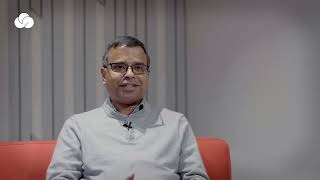
Recorded session from the Amrit Kaal Mentors series (hosted by Dr. Ravi Gundlapalli) featuring HR leader Sanjeev Sharan. The talk gives career and employability guidance for Indian youth, emphasizing mindset and character traits (dependability, commitment, initiative, honesty, teamwork) over technical skills alone. Sanjeev shares his career story (Hindi-medium background, early roles in telecom, international deputation), practical hiring/interview advice (be honest, know the industry, communicate content), mentorship importance, and tactical recommendations (stay 3–4 years to build value; act like a 'blotting paper'—absorb and filter knowledge).
Questions this video answers
A collection of more than 700 books.
68%.
800 rupees a month (reference to 1990s example).
Stay with a company for about three to four years to create value for yourself and the organization.
Chapters
Foreign.
Namaskaram and you know, welcome to Amrit Kaal Mentors. Today we are formally launching the Amrit Kaal Mentors Movement as a national movement to, to really, you know, empower you, all of the youth of India. Because when you are empowered, the country you're part of becomes empowered. Because our ultimate, you know, reason why we are doing this is, is to help India achieve its goal of becoming Vixit Bharat. I said in my opening comments, those of you who could not join India once had a GDP of over 37% of the world's GDP was India's share. And so we had to reclaim that and without losing our heritage. I kind of said, Sanjeev, that we should do groundbreaking work without breaking the ground because India comes from a very rich heritage. So really this movement is about making sure that you all become successful yet remain rooted from where we come from. So we have very carefully curated all the speakers for today to provide you some foundational guidance on how to become more employable, how to become successful, how to take charge of your own career, how to. Starting with Sadhguru and then Dr. Velmani. And now it's my distinct honor to.
Introduce.
A friend.
Sanjeev Sharon. We have got to know for about a year and a half now, but it almost seems like we have known for 10 years because of how quickly we have come to appreciate each other's work and how we think. So Sanjeev Sharon calls himself an animal lover, a writer and an NLP practitioner. So guys, he, he can read our minds and our words.
You know, a trainer and a speaker and author of a very interesting book called the Flip side of Management in Seven Funny Tales, is a profound reader and he told me he has a collection of more than 700 books which is just incredible. So shows his passion for reading, is associated as an honorary mentor and advisor on the boards of several institutions and currently he is the director of HR at a global telecom company, Z Telecom. In his role he has led the global. He's led the globalization project in China and over 30 years as HR leader, he has introduced several innovative compensation structures at various levels in the organization. He's a certified gold trainer from Z University Shenzhen in China. And you know, the reason he's here is because he has been benefited. He benefited from great mentors and leaders in all his. In his organizations where he has worked with that include Reliance Communications, mts, Koshika and Tata Press. So Sanjeev is here to talk about skills and career traits to enhance your employability. Okay, over to you.
Thank you Dr. Ravi. I am honored and fortunate to be here and very good morning Namaskar and thank you all for being to join this session.
This session is Act I. When Dr. Ravi shared about this session I was more than excited because I think I am a product of the the right mentorship. Whatever I am today.
Would not have been if I did not had the support and the guidance and the blessings of the mentors. I would say that my apnea capabilities is probably just because that the I was guided by supported by and handled by the mentors. So.
I today in this session. This is Amrit Kaal mentorship. It is a very ambitious project.
You know why?
Because India is one of the the largest has the largest population but also it has. It has the potential to become the largest talent house. And.
And we have the power of youth.
Which is not only here which has actually shown remarkable presence across the globe. Either working for the Fortune 500 or leading couple of the many of the Fortune 500. Whether it is the. The organizations, politics, sports, games everywhere. It is so youth has the power. And this what they all need is today is the right direction, right guidance and also the right opportunity.
While the education while you all are pursuing your. Your the courses, your colleges and everything. But trust me.
One of the most important thing about is this generation is that I would like to share some of the. The. I have some small PPTs which I think which will be of some help to you.
So when we talk about skill and character traits of the employability. So I have divided this whole session into three parts. Youth, what you are today. My professional journey which I will just try to connect it with. Why how we all are linked together. My hits and misses and how the mentorship and how I what were the things I where I why where I failed and where I could do something. And definitely way forward is something which is very important which you needed from this session.
That how you can be a preferred choice as an employee by the organization or even as an entrepreneur. Many of you would like to be an entrepreneur. Many of you might be opting to become a join an organization which you are reading yourself.
You know you are a generation of abundant information. That is the biggest difference between you and us. You have the power of information around us around you. Whether it is through Google or digital media or everything. But but everything comes with certain negative things. One is the confusion and pressure. And this is what it is the. The challenge which is there. When there is lots of information. Lots of things are there. You have you? It is not only available to you, it is available to others also. So now.
When within that information, within that knowledge and within thing how can you become the preferred one? Either as an. Either as an opportunity for the job or for the opportunity as an entrepreneur successful.
There is what things are going around you. You know this, this. This information, this pressure. This. There's so much of not in the things around you. It. There is. There are two kind of confusion and pressure. One is your. The suicidal pressure, peer pressure, ecosystem pressure and your self created pressure of high expectation as a student high expectation which is led to the increased competition. Because if you have you are dealing with the information, dealing with the knowledge. The same is happening with the others also. Trust me, when I got admission in Delhi University after my schooling plus two I had scored 68% and I got admission.
And currently.
A a student with 68% will not even think of applying because the cutoff marks are 90%. So because you people are the today's youth or today's generation has so much of knowledge, so much of information, so much of they are.
They are.
I would say they are. They are bubbling with the knowledge. So the competition is also there.
And.
There are also multiple career options and you have set your higher benchmarks. So what to do? The first is the fight with within you. What I want to do it is not with the fight with somebody else. You are struggling with the fight. This generation has a fight struggling within you also that what I need to do. And same as a professional. When you go as a professional as entrepreneur you go you have so much of the goals some so much of pressure of future goal planning, success concept, idea, strategy, business. So you have actually created created we you. We are. We are struggling and dealing with it. So sometimes I always say that I think our life was much better because we never had Google. We never had so much of things available on the tip. So we never knew lots of things. So when we never knew lots of things we were little more peaceful.
So. So currently as an. Even as an. As an HR professional in last 30 years what I have realized is that with working with the multiple generation that with the time the generation has is becoming very intelligent, very sharp, very ambitious.
But they also have lots of. They also need to. They want to grow fast.
I will just share something about myself and they. They believe that the at times how that. That these. These challenges, these pressures, these expectations or.
How how to deal with it.
I am from a very middle class family.
In fact interestingly I'm from. I Was born in Odisha, brought up in Bihar and did my schooling from there and worked in worked in multiple places like Rajasthan, Gujarat, Maharashtra, Delhi, China. Not the best. So in fact.
From a very small town from a Hindi medium background. Why I'm sharing it is that because just to help you that the language does not make much of a difference. I am from Hindi medium background. Did my 10th from Hindi Medium. I was the first person in my family to take up arts as a subject. Believe me when everybody. Everybody looked at the career people.
Engineer. Yes. I was the first person who decided not to appear for a government job and opted for a private organization. In fact I remember when I when with my first organization my. When I was staying hostel with my brother. My auntie suggested that why don't you take a helping hand from here. One of the very old cook who's there with us. So he will. He. He can go there and settle. And I said okay you come and we'll give you this much of salary plus we'll also since you have to just work in the morning and the evening only to cook so we will also I'll help you get a job in buying organization where and you will get this much of salary.
At that time it was said that you'll get around.
800 rupees a month. I'm talking about 90s. The guy was getting 100 rupees in Patna. His first response was.
So that was the mindset and against that mindset I was the first person who joined who opted for a thing.
In fact when organization when I was. In fact when I came into the profession when the first the country got privatized and opened the market the for the private telecom operator and started with Beijing. I was one of the first few first employees of Pigeon on the paging side.
Then things didn't stop there.
In fact in one of the organization I was the first organ When I was very well settled, very settled, very happily doing and it was in a rocking stage. Then I suddenly decided and took the offer as the first employee of one of the organization.
And in my current organization also I was one of the first Indian employee to be deputed for on a project for more than a year. And another one first non Chinese HR member to be certified as gold trainer. So this is not to say that what is my achievement. This is to say that just to tell you that number one is that the Hindi medium many of you would be from vernacular language or something from the middle class background, a lot less background. They are the deterrents in Our mind they are not the real deterrence.
12Th, 11th and 12th. When I did from the school which was an English medium I was the only student who had. Who finally decided after three months when the teachers and me we both couldn't understand how to deal with it because I had got. I got the admission. But they even knew what I was the only student in that batch who was reading Bhugol and Itehas instead of History and geography.
In the same class. And when everybody was reading the books in English I was answering it in Hindi. So it is all in us that how do we take it? Do we take it as an opportunity or do we take it as that? Okay, it is there. This is my thing. So.
The.
The lesson was that. What I realized gradually was that probably was that I knew what is my weakness. Most important thing was that I knew what is my weakness. I was not good in English at the time. My schooling was in Hindi. So my background was Hindi. So I was. I knew my weakness. So. And so I knew these my strengths also. So all throughout my life what I have worked on was that I worked. I played around the. And I. I chose to play on the strengths.
Whatever the strengths are there of mine, I'll work on it.
I will. And that is what I believe. Dr. Velumani also said. And it was beautiful, beautiful, beautiful. Beautifully. What he explained was that. That we have to as an individual we have to follow what is what we can do. What is our strength. And not just not that what the whole world is doing it because they have their own strength. They will go. You might not succeed. So.
Instead of working on this the something what I know what I aspire or I wish but I do not have the capability to do that. So you have. Remember you have 24 hours in a day, 365 days in a year. What you have is that. So use your resources, use your focus in the right direction instead of focusing on something which is.
Not there.
So this. This journey. Why it was the journey. What is why this journey. Why I wanted to share was that because number one.
India is a huge country. And it is a country of diversity.
But potential. What we have to identify is that play on our potential and work on it. And who can help and learn from it that and just be focused. Don't get focused. Don't get swayed. So the. When I started with that you are the. The generation of abundant information also because. And that is what leads to the confusion and because.
We get influenced.
Trust me, there are two things. Few things where you cannot. You cannot get confused. You should have the clarity and do not get influenced. Confused and influenced. One is in your career and one is your life. These are two things when you should not get confused. You should know what you want.
So.
We all as a youth, when as an organization, when we look for. What I've realized is that first 10 years. Trust me, I worked harder than my peers.
What made me see was that in spite of my drawbacks, in spite of my challenges. What is that I knew that I am a hard worker. I worked harder. My focus was on that working harder.
You won't believe in the couple of. In my first couple of the days I used to spend time spend night in the office itself. Because that was the only thing which was there which could have.
Gave me give me an edge over others. Is that. That Sanjeev Sharan is dependable. Is dependable. The moment you as a student or as an entrepreneur, as a professional. When you get that comfort of being.
Acknowledged as a dependable. Your life is sorted.
You can be. You can be. You can work with anyone. Second is continuous learning to upgrade my skills. Because I knew my challenges. I knew what is there, what I lack. So I have to work on my upgradation.
Trust me. In fact. In fact in the first job within eight months I got the promotion and my team sized and suddenly from us individual contributor it became an eight member team. So.
And.
I worked. I always believe we. I think as an every individual should work on worked on the believing on excelling instead of competing.
There is a.
There is. There is a very beautiful difference. There's a thin line difference between competing and excelling. That okay, competition is good. But there is a. You have to compete with yourself. You are the one who is to. You have to compete with. You have to set your own benchmarks. You can set the benchmark with anyone, but you have to set your own benchmark that I have to excel. I have to achieve that thing. So focus was always on excelling instead of competing. And believe me, that helps. That helps in be keeping you sane sanity. You are not into a rat race.
We got. We go haywire because we get into the rat race. Till date, I have always tried to be away from rat race. My principle in life has always been don't be into the. Don't try to work towards being the favorite of anyone. If you are dependable.
You have a better life, longer life. You can work with any of the seniors, any of the peers, any of the circumstances. But if you are into the favorite, you get Into a different kind of the. The environmental challenges and the. The organizational dynamics. So avoid being a favorite. And I have always worked towards that and I always trusted my.
Mentors. I really needed mentors. I knew that I have the things which are there with my strength. I knew my strength. So as an individual, when you know your strength, you also need to get it sharpened. Because currently when in your. With your generation, things are moving so fast. What it is what it was at 11:30, things would have been different at 11:50. At times it is so things are so fast. So, so one has to keep updating, keep upgrading and, and.
And people. People and whom you can trust, whom you can discuss, whom you can take advices, listen to everybody take advices. Advices are always, believe me, it is the. The world.
Because advices and then you can work on it.
Advices, take the advices. And I trusted my mentors. I always believe that the mentors are one. Trust and life make one thing. I always say that when you trust, you get trust. 90% time. When you trust somebody, you get trust. You people are pretty young. You people are in the colleges. Some of you would be just stepping or started your own business or something.
We will get the return of your trust.
So life is always a crossword. You have to keep juggling with it and trying things.
So now as a student, what you need is that you need something extra beyond your degree.
Because education system is a standard one. There are category A, category B colleges are there. But education system is there. And many most of you and everybody has their. Their stunt education system. And you all are working very hard now when you all are working very hard for that education. So there is always a competition. There are people around you who are might be at the same level or little ahead of you, little behind you. Now beyond that degree, when you go for the jobs, first I will touch about the jobs. Then that if you are aspiring to get a job, what extra do you need other than the degree? And second, I would also like to touch upon the. If those who want to start your own entrepreneur.
So something which is beyond your degree. As in when. Let me tell you, when I go for an interview last couple of years I have I just look at the CV once. But I don't carry the CV when I go for the interview. Before going for the interview I go through the cv but after that I don't carry that cv. And I think there are many professionals and senior HR people. They also try to follow the same. Not that carrying the CV or not carrying the CV it is actually it is something like that they would like to know something more in you. What is extra. What is different in you. And that is something which is you can get. So the most important thing for their jobs is that employability skills. Which is that in the current in the race. What is the differentiator? How do you stand out with amongst the others?
You know, there are two things which are. There is a soft skill switches and the skill and the aptitude. Currently.
Any organization and in the current economy when things are.
Very very. We are into the VUCA world. It's a extremely unpredictable. With nobody knows what will happen. And after covet things have actually changed. Has made it so so.
Fragile and so unpredictable that organizations are always under pressure. So the.
The remember one thing that what why it is different than our time. Or maybe around 10 years back and now it is that the patience level of the organizations have also.
Changed people. Organizations at times look for a two minute Maggie kind of thing ready to eat means.
Candidate. They will go for it. Because they also have their pressure of their bottom lines. So understand appreciate them also their challenges also that because.
Earlier the 10 year or 15 year of goals one can work on. Currently organizations work on five year goal. But they break it down to one year, two year, three year, four year. They think that and they would like to see the visible impact on it that how it is working. So they you they the most of the organizations they will prefer somebody who is either ready or it is.
It is on the way to be ready. Can be can be readied means you can work upon them. So.
You have something like. I would say that.
Which you just. It is. It is you. You don't say that it is fully prepared. But you also don't say that it is raw.
So same way.
The we all the organizations at times they look for somebody who is ready with the right attitude and the right skill. Now right attitude and aptitude. Is that somebody who is what the the organizations or the people would like to look at Is that your commitment level, your adaptability, your dependability.
They would like to assess your motivation initiatives. So these are the things which you they can assess it through the various.
HR tests which are there. The the softwares which actually actually.
Diagnosis and in the currently there are lots of organizations which are there which are working on these things who can. Who actually do the diagnosis like the doctors they do it.
Now These things these aptitude adaptability and ability to handle pressure. Self discipline self reg.
It is. These are the things which is. Which are.
In Some way it is not a part of the most of the colleges or their education systems.
The curriculum you have to develop build on it. These are the characteristics of an individual which you have to build upon it.
You'll say that boss, this is not the. The. The course and this is not the syllabus it is taught. Then why then from where I can learn it now here. So that will touch upon second is the soft skills when you go for it. Believe me, when you go again when you want to be at least look and that you are and you display and you demonstrate that you are a right fit. What you need is that they should have the right industry knowledge. When you go for an interview and when you go for any kind of pitching you should know what you're talking and. And what you're. And about whom you're talking. Suppose you are going for a FMCG organization you cannot and if you start talking about the I T organization or the telecom organization probably the immediately you are creating a disconnect first gate means some don't know we are not on the same page. So when you do go there, you do a homework Homework of what you are doing it. What. Which company is it? What is it? How can you about that organization. The more you know about the organization. Trust me. The the questions thrown by the panel or the interviewer. You'll be able to handle it and you'll be able to relate it. Both sides should be able to relate it.
First.
Three minutes will make the difference.
And.
The you have to have a better communication. Communication is not again about the language proficiency of language only. It's not about how.
Difficult or the. The clashed word.
I'll tell you in one of the panel one of the JD in one of the job description. In one of the.
The J.D. we said that. That we are looking for the. The. The good communication skill.
And when we went for the the one of the interviews we realized that the. The students they were. Some of them were actually were not communicating. They were. They were just sharing their own facts. So communication is listening also understanding also.
One of my senior, you know, he talks very less. But whenever he talks he talks authentic and he talks reasonable. So.
So from the. From many.
This communication skill would be very poor because he talks very less. He doesn't in one hour meeting probably he will talk for five minutes only. But whenever he will open his mouth. Trust me, you cannot ignore him. So communication is a content. It is the content. It is not the words or the. The fancy words or the fancy way or aggression it is the content which can be communicated in the right way.
Decently and elegantly. Also.
In an organization you have to understand we are running an organization, not a.
Campaign that one has to talk here. You have to talk with authenticity and information. Second is about the.
About the positive approach.
Practical knowledge.
I think one thing which I will always say that if you don't know something, tell it that I don't know it. You should not feel ashamed of it that you don't know it. Because the interview panel also knows. The organization also knows that you don't know everything. Nobody can know everything. But it is better to say that I don't know about it and ask that okay, can you explain it? But instead of playing around the words and then trying to answer it. When you don't know it, you will not be able to hit the right bullseye. So anyway, you will be caught. So it is better to be honest.
I have seen multiple times a candidate or employee getting selected.
Because the person was honest. So the organization realized that okay, these are the things the person she knows and these are the things doesn't know but has is honest. The said that I don't know. So these are the things the organization responsibility or the manager responsibility is to compensate it and to train it. So it is better to work with the.
The.
It is to better to work with a guy who is more. Who is honest and ready to learn.
And the team player. Trust me, team playing is the most important thing.
You don't. You. You don't need an organized. A very. A big star whom you will need another star to manage it.
So I'll tell you why because you might suppose you might have. There is a. There is a guy in our. Was it in our team. He was a superstar. Believe me. He was a superstar in one of the. The department.
But the only problem was that he was an individual player, a solo player. Never liked to work with others. And to manage that one has to have a very firm manager who. Whose half of the effort was to to drive that performance from him. So gradually one. One has to actually plan that. Okay, how to ease that person out. If you cannot change that change the. The elements of that person, then change the person. So organization definitely need. Because organization is.
You work for the organization.
Bottom line. Which. And the organization not only takes care of you as an individual takes care of the many employees and their families multiplied by four at least. So so many families and then indirect employees and the vendors partners and everybody. So it is better the most of the organization these days. They they prefer a team player instead of looking for a individual star.
Some things which are. Which in my. In my career which I have realized is that.
At times as an entrepreneur. As an entrepreneur also if you are going for entrepreneurship or you are going for your own for the. The when you join an organization what you should do it is that passion is fine, but over enthusiasm is disaster. Don't overboard it. Don't go for the over enthusiasm. At times over enthusiasm kills the things.
And secondly.
To show it is a human instinct.
I remember why I'm sharing it here because in my one of my assignment I went there and after one and a half months I realized that. That everything every proposal of mine is getting.
Is getting blocked or it is getting parked.
Because I believe that I came from. I joined that organization from a very professional organization and I wanted to bring the best practices from my previous organization to that organization. But initially for first one month it was fine. The people were keen to listen me out, hear me out, then discuss with me. But after one and a half months I started noticing that I am not getting that kind of listening or they are politely. They are trying to avoid me and my proposals are getting part of. So one of my. I went to my mentor, I said.
The things which I worked in my previous organization had actually brought lots of changes. But here these guys are not keen. I think I landed up in the wrong organization because I think they. They don't know what they are missing out. So my mentor, one of my mentor he said that it's not there. You have landed up with the wrong approach.
What you're trying to do it is that you're trying to.
This organization is 30 year old organization. They have their own structure and they have their. And if they have grown at the rate of around 10 to 12% annual growth and EBITDA has been always positive. That means their. Their foundation is fine. So.
They have to why they have to. They need to change. So first understand the organization dynamics and the culture and then suggest the changes which is applicable. Just don't come with the thing that okay, this was good in that organization. The same will be good here organization. And that probably that was an eye opener. Otherwise I would not have I. Otherwise that. That marriage would have gone into a. A sore end. So that's. This is the learning which I would like to share. That was my experience and one of the. The mentor who actually supported me at the right time.
Secondly is you have to. You have to differentiate what you want in life. There are two kind of growths One is the positional growth, one is the monetary growth. Sometime back I was reading and there was in one forum I was talking about that there are people who there are certain candidates they want to change the job because they want that. Okay. My designation will change.
And my salary will change.
So.
Remember one thing.
Designations do not signify the role content. So when you are going for any organization instead of focusing on the the designation focus on the whole content. Whether there is a meet in that role or not.
Because I remember in one of the one of the organization and somewhere somebody was sharing that they have in at one point of time they have the general manager for emails also couple of years back.
So for every activity there was a general manager. So the fancy designation doing the the low job. So it is not a growth.
And one of probably it it goes for both for the students as well as for the those who are aspiring to become an entrepreneur or aspiring to join is that learn to live with unlike minded people Please. This is not your family. This is an organization and you have to learn to live with it. And when you are and if you are an entrepreneur and if you're hiring somebody then it becomes more important that you have. You don't ex. Either you you select the person because it she or he talks the language you talk or to select the person she or he will bring value on board. So remember it is organizations employment is not a marriage where you have to like where you have to actually like the person for everything. Organization is where you have to like the person for the the performance.
In.
One of my. In one of my organization trust me one of my boss he was actually disliked by the CEO.
Means because of the behavioral issues. But you'll be surprised. They work together for five years. He was always rated as a very good performer. Only difference was that in the in whenever it was the the HR in the the the his department programs were there. The CEO will come will attend will be there but will not overstay for a day more or something for those out outbound programs. But for the other programs he would like he might choose to overstay. So that was the only difference. Otherwise from the performance perspective I think that was a beautiful example of working with unlike minded people. Both had the best of the professional integrity and the professional relationship. But personally probably they were not so good with each other. But for the organization interest they work together.
When in one of the university where I have I'm associated as a. So in one of the mentee she asked me that I wanted to get started her own business own startup and wanted to hire a cto. She said that what should I look for and what should I how what should I do that the CTO works with me and stays with me. So and that the that that lady was in her.
Was around was had just passed out from the college and CTO she wanted she was looking for around 15 to 17 years of age to experience. 15 17. So my suggestion to her was that see it is your choice but either you like you should be focused that what you you should have a very clear job description ready. You should discuss it with your the CTO and ensure that the CTO and you discuss only the business.
Be the.
Don'T you are at 26, 27 years and that guy would be around 40.
So you one has to be as a. As an founder you have to create an environment that it doesn't look like that you are controlling keep the flexibility. But as a founder definitely you would like to know what's happening around it. So create a reporting structure which is there. Reporting means the the data flow and the reports mis the analytics structure which is there which will which will give you a very clear view what is happening around you. What is happening in the business. Instead of going for the the micromanagement go from the data management which will make the life easier for both of you. Because you as a founder you have to learn to live with the senior people.
Working as your junior. So you have to ensure that how can you work and make them feel that they are they are respected also. So and.
It'S around three years. Both are working fine and their business is growing. So both are working fine. So what she created environment was that she understood that the professional would like to have the space of her or his with the right respect. So what as a founder or as an entrepreneur or as a manager one you should have that clarity that how you are managing the team without without intruding their their space.
And the the most important thing which I always say to anyone. Whether it is an employee whether an or it's a new journey or fresher or that.
Find try to find one good reason.
To enjoy that either that work or place or person.
No organization is perfect. No person is perfect. No employee is perfect. So you have to find out one reason to like is something the same like you have to identify one strength of that individual and play around with that. Then only you will actually enjoy. You will be retained. You will be able to perform and stay.
There are multiple careers. There are multiple opportunities. World economic Forum has. Has report has come. It has come out with many many interesting opportunities across and thing. So it is not only the AI or the data. It's a data mining, churning analysis, education, agriculture, logistic, delivery, retail, paramedical. Everywhere the opportunities are coming.
One has to just go for it, work with it and identify your strength and work towards it.
Now all this Gyan was there. Now how you can be a preferred choice. A preferred pick by the organization.
Three things. Learn from books. Believe me. Believe me books are for me books are the biggest stress buster. I have two stress busters. One is my pet and one is my book. At this stage also I spent at least. At least half an hour minimum half an hour I spend on reading books. Anything any book of your choice.
I've just finished the Shantanu Naidu. I'm sure after the even Ratan Tata's death. After that people were. Everybody talks about the the friend of Ratan Tata Shantan Naitu who was a animal lover. I was just reading his book and fantabulously extremely non political and extremely a person's emotions are are depicted in it. The kind of the relationship, what he had. The kind of friendship that trust and authenticity into that. So I'm thinking that Read, read, read read.
Every every page will give you something extra. So again it is. It is a. It is a one sided. So you will keep getting some information which is. You already have 90. You are already with have lots of knowledge. So books will add on some knowledge. Some information. If you are. If you want to go for the management side go read about the. There are lots of the Indian entrepreneurs, foreign entrepreneurs, international global writers are there. Enterpreneurs are there. Read about their life.
All have their own story. Like Dr. Velu Swami was talking about that he has his own story. After listening to him there are two. Three things. One or multiple things you will. You. You would have grasped. So today there are.
So many six to eight people are there. Each one of them will definitely come out with one or two points. So you are. By the end of this session you'll be richer by at least 12 to 15. New ideas, new thoughts, new points. Learn from your ecosystem. Believe me your parents, teachers, friends learn discuss with them. Second is and last is learn from mentors. Identify a mentor. I totally. I totally say that mentors. I believe that mentors you need it in this stage. Knowledge has no substitute. And knowledge is the only thing which will.
Make you stand apart from the crowd.
Why mentorship.
Arjun succeeded while Avhimanyu could Not you know why? Because Abhimanyu was from knowledge wise. He knew how to enter that. But he doesn't know how to come out of the chakra view history.
So chakra view say Bahar Anna he didn't know he was not taught.
So he failed. So your mentors, your guide.
They will while Arjuna knew how to enter the problem and come out of it. Believe me where you need the mentors, where you need so you need the mentors. When you are at the lowest.
When you are stuck somewhere then you need the mentor. And why do you need the mentor who can bail you out, help you out, guide you, tell you they might not handhold you, they will not sail for you, they will not swim for you but they will tell you how to do it. What to do, how to do is something a good mentor always does. What to do and how to do it is not instructional. You should have done this, no?
Is that how you can do it to come out of it? So like so meant so so that was something. So mentorship is something where it is that your your mentor is your friend.
Say if you have done something wrong tell him or her they then the person will be the the advocate will actually will be able to make the case and will fight for you. And doctor if you hide it then you will not get the right treatment. Then don't blame the doctor. So same way mentor doctor so there is an addition to that doctor, advocate and Vaqil and mentor.
Be honest to them, tell them what is it. They work as a friend, they work as a philosopher. They will tell you what is right, what is wrong and the most important thing they will guide you how to sail out of it.
So that is why mentorship is needed. So the whole session when I talked about it is I talked about is that so in the end I would say that act like a blotting paper. Blotting paper.
Blotting paper.
So.
Blotting paper is something which is absorbed. And one of my senior, a very respectable gentleman he said that.
Blotting paper absorb everything whatever the information knowledge is coming to you and then filter it as per your requirement. At least you will have the knowledge in your store and then you can use it. So blotting paper is like your is helping you to create your storage. So act like a blotting paper, absorb everything and then filter it.
And.
At the end I would say work on your strength. Believe me.
Again I would repeat that language City these are families back economic financial background. They are all your mental.
Blockades. They, they do not stop you or they do not prevent you. They are the excuses. If you work on your strength, with the right guidance, you can curve your career. Thank you. I hope I could connect and could share my thoughts. Thank you. Thank you Dr. Ravi.
Thank you. Sanjeev Ji, that was so brilliant.
I wish I was a 20 year old listening to you so that I can use all these tips to actually craft my career. It was very, very, very profound. I took a lot of notes and I hope all the young people really. If you look at the bullet points in your talk, you never talked about learn data science, become no Python, know the latest CNC machine you talked about. I wrote down attitude, commitment, level, dependability, motivation, initiative taking, honesty and integrity.
Here is a HR leader, folks. All the young people on the on. On the session HR leader telling you this is what we care about. Not that they don't care about the others. The others are important as well. But what, what differentiates between two people? One with a degree, one with a degree plus all of these qualities. Now there's a question that came up Sanjeev, that you know, how do you demonstrate these qualities? Because everybody has a degree. How do you recommend if there's a student out there in the first or second year, how will. How should they build all of this and how do they demonstrate to these skills to someone like you?
One is the building the skill. Is that building the skill. The first need is that your own intent to you really want to. To work on it. Second is that.
Identify the people, identify the sources from where you get it. So like team playing. I would say that.
One of my senior always used to say that the team playing, he would always say that the, the defense people, children, they are the better team players and better adjustable. So team playing and the.
The.
And the. Your commitment and sincerity is something which you have to learn from either from your seniors, your, from peers, from success stories, from your mentors, your guide. That's what I'm saying that the mentors are not the ones who are there to help you when you are at fire. They are the ones who will, they will keep it there for the journey. So there's a learning journey is there? So sources are there through by reading. So like if I have to learn about the discipline probably then I follow some of the books of which I had read earlier or.
Something which I don't have to do it. So I read, I refer to those, the books which I read about the failures.
And also the things which I. I am confused about. Then I Go to my mentors. So it is a journey. So I so these are the, the, the characteristics are something which you. One has to just identify that okay, this is my area. This I have to work on it. And then you, then you with open mind you do it. There is no.
There is nothing which is written about that. This will tell you something. Honesty. Nobody can tell you honesty. You can learn by your, by yourself. I, I, I, I thought this is not the right thing. In fact the. When I was in 8th standard in this one of the Puja Saraswati Puja we used to do it in there.
We saved some money at the last after this thing 200 rupees. And that's. I'm talking about when I was in eighth so 30 more than 40 years back. And so I got 50 rupees and I bought some sweets and ate. It was wrong.
And I failed after that. It was in February Satsati Puja was and March. I failed in eight subjects. So the learning from that was there that and from that date till date believe me I consciously I have not done anything which is dishonest because the lesson I learned from there. So you have to. Whenever you want to build on something you have to learn. Best thing is your own. You have to learn from your own mistakes and your parents and your mentors, your family. For your behavior characteristics. Nobody can be the better than your teachers, your mentors and your parents. They give you the right value. And one, one thing which I think you have touched is that very close to my heart is that I strongly suggest that the moral science classes should become the part of the curriculum even till the university level. Because the families are becoming micro now. There are no grandfathers, mothers staying together, grandparents. So the value system is not being inculcated to the child. So in the joint families it was different. So now you are the. I think the education system has to start thinking about that. They have to include the moral science classes up to.
Thing when you talk about it 5% at least you grasp. But if you stop talking about it, you are bound to ignore it.
Wonderful. Wonderful. There was one very tactical question about you know should in early career should you accept bonds and you know with employers. I don't know any any quick comment on that?
It depends on the individual. If I find that this organization is fine and I can get my career over here, I'm okay to it. One has to see that what is the transparency of that bond from the organization side and what is that and and where it is I and do I See the value in it. So as an organization like even if it is not a bond, but if I like the enjoying the working in the organization, I have spent so many years in the organization. So one has to see what value it is there and what is the transparency into it. In fact you have today, you have said yesterday only my nephew was here and he wanted to pursue his.
Ms. From the. So his organization is. Has offered that okay, if you sign the bond, we will allow you to do it from that thing and you have to work here for three years. So it depends on that what exactly. So he is. He has no issues in staying with that organization for next seven, eight years. So if that marriage is working out then this bond is just a piece of paper.
I'm sorry.
No, no, no. That's wonderful. In fact I'm just thinking to all the young people, right? I see a trend in India and I'm sure you see it too. Everybody after one and a half years, they get bored, they want to change. And I would tell all the young people on the call, if you find a good company, whether you sign a letter or not, have the bond in your mind. Because no career can be built in 18 months, two years. It takes time. It takes four years. I have stayed in all my companies for four years and I've learned so much. And so whether a company asks you for a bond, in which case if they are funding your mba, funding your international studies or if they're giving you something exciting, whether even to sign it or not, have that mentality that you, when you join a company, stay with them for three, four years. That is when you create value for you and create value for the organization. Okay.
Yeah. The other question is around what to remember when you go to a technical or HR interview. Any quick thoughts before we wrap up?
Be honest. What you know, speak what you don't know, say that. I don't know.
Love it.
Love it.
There are a lot of questions people are asking about how to build confidence. And I see this. I think we should do a whole session on it. Any people are saying, you know, I want to try. But somehow there is this feeling that people want to be right all the time, you know.
And I would just say, you know, just do it.
So what if you fall?
It's okay.
Exactly.
The knowledge, knowledge will only make you confident. So if you are going for any interview and you know this is the subject you should be profound and very strong in that knowledge is the only confidence builder. Your dress and other things doesn't make you so much. But yes, dress well, but knowledge will that. And for knowledge you have to have read as much as possible.
You have to have an edge over others because others are also reading.
So you have to do extra. Otherwise you should have born in our age when there was no Google.
No, I have so many comments that I would love to talk because there are so many questions. So if I can summarize.
Is all young people, don't work from home, go to the office. Don't ask this question because you are supposed to meet people. You're supposed to build relationships. Don't become lazy. Even if your company says three days a week, go to work unless you have some pressing need at home, unless you cannot go because you have a child or your parents are not well or you are not well, build human relationships. They'll go a long way. Okay? This is not convenience. People who in young age work from home, you will not have a job in a few years from now if nobody knows who you are, believe me, you will not have a job. I mean, so very, very simple. So I think, Sanjeev sir, your insights on the things that they should remember from taking advantage of all the people around them for working with unlike minded people, don't hang around with the same people, you get nothing.
You can go to movies, which is fine, go with your friends, but everything else, do it with people who can bring some diversity in your thought, open up a new sort of connection and so on. So Sanjeev, thank you so much. That was so brilliant. There are many questions and we don't have time because our next session is starting with Navi. So who is coming next? Alicia.
So next session is Navi sessions. Navi Rajos talking on this topic of how to innovate and lead wisely in the 21st century. But before that, Ravi, I just want to take one minute to express his sincere gratitude to Sanjeev sir because in a, I mean we all are in, in behalf of all the participants we have here because we all are in our early stages of career and listening what we have to do from a very high professional hr, HR person like you. It's. And in a world where all sort of information is being only accessible when we pay something, it's getting. We are getting it for free. So I really, really thank you so much for your, for your words. And you really break down this ent. In a very easy to consumable manner. You talked in our language. So thank you so much for that, sir.
Thank you.
And I'll just request that all These students, who are the participants, I would suggest them to go through the. All this, Attend all these sessions, because you will get at least something to learn from each one of them. You will not get this kind of platform where you have this. The versatile kind of the group which is there.
Thank you. Thank you, Sanjeev.
Thank you.
Thank you.
Thank you.
Thank you. By the way, Alicia handled all the collateral, all the designing of the. Of the flyers, the communication. So she is helping me, helping on the team, and she did a fantastic job. Alicia, wonderful. You're already doing something extraordinary because at the end, you said something about the extra. I remember one of my friends, you know, Naveen Lakur and Rajesh, told me, to be extraordinary, you have to do the little extra, otherwise you'll become ordinary. So starting today, do the little extra. Attend talks like this. Go meet some new people, go to your school, be a mentor, be a volunteer, take a project, help an old lady cross the street. Do something. Don't just sit around and listen to songs or something. And, you know, because if you want to absorb, like, the beautiful picture you told about the blotting paper, I also advise young people, take your headset off your ears, listen to people, listen to the environment. If you're always watching, always listening, then you are pretty much missing out on a world of opportunity. So, Sanjeev, thank you so much. Thank you for taking time to do this wonderful session. I would like to do another session with you where you get into some very specific topic that everybody is struggling with about building confidence. Maybe there is a whole talk in your mind about that. So thank you very much.
Thank you, Dr. Ravi. Thank you, Alicia. Thank you very much. Thanks. Thanks, everybody.
Thanks.
Bye.
More from Dr.

Essentials of an Entrepreneur by Dr. Velumani Arokiaswamy, Founder of Thyrocare

What Leaders Look for First-Time Job Candidates | Amritkaal Mentors – An Initiative by MentorCloud

How to Innovate and Lead Wisely in Today’s World with Navi Radjou - An Initiative by MentorCloud

Crafting Your Academic Journey with Dr. Manish Kothari - – An Initiative by MentorCloud



Advaitha Jagruti: Awakening The Spirit Of Adi Shankara In Indian Youth | Dr. Ravishankar Gundlapalli

Testimonial | Sanjeev Sharan | Catalyzing Growth From Within | MentorCloud Mastermind

How to Make a Mentee Feel Comfortable #mentorcloud #mentoring #coaching #wisdom #experience

Testimonial | Kellie Teal-Guess | Catalyzing Growth From Within | MentorCloud Mastermind