Abuse Prevention for Children: Empowering Your Kids to Understand Abuse..
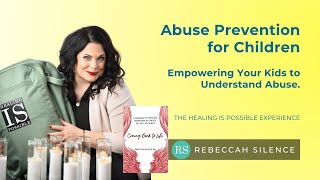
A solo spoken-word episode by Rebecca (Rebeccah) Silence aimed at parents and leaders about understanding, preventing, and healing abuse cycles so they are not passed to children. The presenter defines abuse as one form of trauma, explains how abuse cycles form (victim → powerlessness → either ongoing victim identity or becoming an abuser), and gives practical guidance organized around three actions: Educate, Advocate, Communicate. She uses personal stories (including a playground incident with her 7‑year‑old and her own abuse history), references her book Coming Back to Life, and offers exercises and resources (family coaching, intensives, Emotional Survival Kit) to empower children and caregivers.
Abuse is a conversation that I believe needs to happen more often. I'm Rebecca Silence. You're here at the healing is possible experience. And today I'm talking to parents and leaders that want to be better and do better for our children. Okay, we're going. Okay. Three, two, one. It's Domestic Violence Awareness Month and I wanted to take the time to do a show about what is abuse and what do we do about it and how do we do our best to make sure that abuse that we've experienced doesn't also happen to our children or abuse that we've seen other people experience. How do we prevent that from happening for our own children or the children we love? Today's show, it's a heavy topic, but it's a really, really important one. And I'm going to do my best to make this as simple and light as possible, knowing that this isn't an easy conversation for any of us to have the conversation about abuse and the reality of abuse and the cost and the consequences of abuse. This isn't an easy subject, but it is an essential subject for all of us to be educating ourselves on, in my opinion, whether or not we even have kids. So let's start easing in here and please do be sure to watch the entire episode because by the end I'm going to actually give you an exercise to take home and try with your children and then I will very much want to know how that goes. So let's start by just taking a deep breath and relaxing our nervous systems as much as possible. As you listen, I want you to consider there's no threat in this moment. There's no danger, we're safe. And what we're doing together is we're having a conversation to educate and empower you so that you can educate and empower your children to understand abuse cycles, to understand what to do if there ever is a real threat or a perceived threat. We want to prepare your children not from a place of creating more fear, but from a place of helping them connect to their own power so that they understand how capable they are around people that are unhealed, Acting out, lashing out, potentially violent. That's what we want. We want our children to understand what to do in the face of an emergency or a possible or real abusive scenario. I'm going to start with a story about something that just happened with my youngest only a few days ago. She's seven. She got kicked by a boy on the playground. My 7 year old is in black belt training. She's currently a Half yellow, half orange belt. She has the skills to defend herself and to protect herself. In this particular case, she was afraid to hurt the other child. She took it, she got kicked repeatedly, was afraid to tell the teacher, was afraid to use her karate skills. And it turned into a weekend of pretty major conversations with my husband and I, with our 7 year old, with her karate instructors, so that she doesn't have to ever be afraid of her power again. And I want us to think about, you know, how often, how normal is it for us to be afraid of our power more than anything else? Marianne Williamson talks about it. It's not our dark, it's our light that we fear. It's our greatness that we fear more than any fear of failure. And it's unnecessary. It's unnecessary to fear our power. And just like abuse cycles and abuse patterns can get passed on to our children, so can the modeling that we should fear our own greatness and our own power, or that our own greatness or our own power could ever be too much. It's a lie, it's a myth, it's bullshit. And it's unnecessary to be in that conversation with ourselves, modeling that for our children. So what we ended up doing with our 7 year old was validating, validating her concerns, validating her fears, and then helping her see that her power will never be anything for her to fear. We had great conversations with the school, we had great conversations with her karate instructors, we had great convers as a family. And in today's episode, I'm going to outline what those conversations were built on for you to bring into your home and into your families and into your relationships with your own children, starting immediately. So I have three pieces that we're going to be talking about today. I'm going to be talking about the importance of educate, the importance of advocate, and the importance of communicate today. Educate, advocate, communicate. These are the three steps to take with yourself, with your children, to begin to break the shackles, the chains, the cycles that just aren't necessary or appropriate for you, for your children or for your family anymore. They never were. But my work is about working with a person in the family system who's equipped and capable of breaking the abuse cycles, breaking the generational patterns, breaking the trauma patterns that continue to get passed on because they're just what's normal in the family. These cycles, they don't get passed on because anybody wants that. They get passed on because nobody knows what else to do and people just don't know how to break the cycles. So we're going to start with some education today that my goal is you're able to offer to your children this education piece. Okay, so we're starting with educate number one. No one is immune to trauma. If you're new to this show, if you're new to my work, I say this a lot, but I feel like I also can't say it enough. No one is immune to trauma. And trauma shows up in so many different ways, and it shows up in disguises and costumes sometimes as well. The worst thing that we can do is compare or contrast our trauma or abuse and with someone else's and just know abuse is just one form of trauma. Neglect is another form of trauma. Shaming is another form of trauma. There are infinite ways that trauma shows up. Abuse is one. And that's. That's specifically what we're focusing on today. So when I'm talking about abuse cycles, here's what I mean. Someone was violated, someone was perpetrated against, and they went into a place where they felt powerless. That's how the abuse cycle starts. Someone was abused. Someone's right to be treated with respect and honor was violated. And they became powerless to their abuser and to their situation. That's how it starts. I am no stranger to abuse. In my new book, Coming Back to Life, A Roadmap to Healing From Pain to Create the Life youe Want, I share a lot of my personal story to normalize what happens so much. You know, people that are abused, they often feel alone on an island or like something's wrong with them or like they're different from everyone else. After 15 years of private practice, after 22 years of working with human behavior, I will tell you, abuse is more common for all genders than we ever talk about. Right? Statistics are one in four people are abused on average. It happens so much more than that. That's just what's reported. And often people think because certain abuse is so much more serious, theirs doesn't count. And I'm here to say, horseshit, bullshit, your abuse counts and it doesn't need to get passed on to your children. So the abuse cycle starts because someone's right to be treated with dignity and respect and honor. It was violated. Now here's the part that isn't often discussed. The person who abused 100% of the time, 100% of the time was also abused. So it's easy to associate abuse with victim. Victim consciousness, victim mentality, victim identity. But the abuser was also abused. So one of two things happens when. When abuse happens the first is the person is feeling powerless, so they become a victim, meaning they identify as not wanting to ever be the person that would hurt another soul. That's the first thing that happens. That was my story. I never wanted to be the abuser. I never wanted to cause harm or pain. And to this day, that's one of my deepest wounds and triggers. Fearing that I caused harm, that I did damage, I never want to be that person. The problem was in identifying as a victim. For so long, I just kept re experiencing crisis after crisis, abuser after abuser. And in a weird way, it validated my need to not be abusive, but it kept me a victim and that was unnecessary. The second thing that can happen when someone is abused is they become the abuser. And I've never met someone that was the abuser that wanted to be. I just had a voice text conversation with a client just yesterday about how they are recognizing that because they refuse to be abused, they're seeing where they're more abusive than they would ever want to be. And with this person, it's subtle, it's not violent physically. It's not even clear that their behavior is abusive. But they've done enough work to know their behavior is disrespecting other lives. And they're putting themselves in the category of abuser because they don't ever want to be someone that disrespects another life. That's a mature, brave human being that I am honored to work with. They are saying, this cycle ends with me. It stops with me. I am not proud of my behavior and it doesn't need to be me or them. It doesn't need to be. I am either the abused or the abuser. There is so much more available, and that is the point of today's show, is to educate us all on there's so much more available than a power and control dynamic where someone's abused and someone's the abuser. And again, that can look like physical violence, emotional, mental, it can be spiritual. Abuse shows up in so many ways. But the bottom line is this is what I'm wanting to educate us all on today. An abuse cycle means that there's a human being being disrespected and there's a human being that is powerlessly trying to get their power back by disrespecting another life. It's never acceptable, ever. But it only happens because it happened to the abuser. And the victim continues to experience being victimized until they see the abuser as behaving from a place of innocence and then choosing to enforce boundaries and respect themselves in the face of whatever the other person is doing. So what I mean by that is we have the ability and capacity to respect ourselves no matter what another person is doing. We have the ability and the capacity to no longer identify as a victim or an abuser or to be a willing participant in abusive dynamics. And I don't care if it is, you know, so obvious that you're being called names or that fists are flying or kicks are, you know, happening and coming at you, or if it's just subtle and the person's energy is demeaning and dehumanizing and degrading. I don't care what level we're at, it's never appropriate and it's never necessary. So in educating ourselves so that we can educate our children about abuse cycles, I want them to understand other people's behavior never has anything to do with them. And when people are aggressive, abusive, whatever it is, they are sourcing from their own fear and their own powerlessness, and they're trying to take their power back ineffectively and inappropriately. And our children never have to participate, let alone be a willing participant in that cycle. I did not want my daughter deciding that because she can handle it, because she's strong enough, because she doesn't want to get people in trouble, whatever her little brain's reasons are. And all of this starts as young as seven years old, where we decide we don't want to make things worse. We don't want to get the person we love in trouble. We know we're strong enough to take it, and maybe we're going to take it. This was always my story so that other people didn't have to. That all starts so young. It's heartbreaking. And as parents, as leaders with the children in our lives, we can do better for them. We can educate them young. And I'm so proud that my husband and I are such a united front and a team on this. My daughter was saying things like, oh, I think he has a crush on me, so that's why he did it. And I said, hold on a second. Abuse isn't love. He wasn't careful with you. His behavior, kicking you on the playground, that wasn't caring about you. Someone has a crush on you, they care about you. If someone is saying their behaving inappropriately because they have a crush, no. If your children are making up that. That's the story about where someone's abusive behavior is coming from. Nip it in the bud. Love, care isn't ever abuse. And I grew up, this is so near and dear to my heart because I grew up thinking love was abuse. My sources of love were abusive. So it had me question my worth and my value. And it had me unconsciously deciding which I write and coming back to life, which you could also listen to on audio, the book Coming Back to Life, if you prefer audiobooks. I talk so much in the book about how confusing it was to think love meant abuse and to not just like, we can't go without food, we can't go without love either. Be willing to lose the love. So I accepted the abuse and the worst thing that I did innocently. I have a lot of compassion for my inner child. I was doing my best. I have a lot of compassion for the version of me in my 20s that was in a violent marriage because this is just what I knew and on some level expected. But the truth of the matter is love isn't abuse ever, ever, ever, ever. And we want to educate our children around that. Even if there are family members, even if there are people close to them that are behaving this way that they love, that behavior isn't ever coming from love and it isn't love and it's not acceptable. And I would rather our children learn that they can end a relationship respecting themselves versus take it ever any type of abuse, as subtle or obvious as it might be. So abuse cycles happen because two people are powerless, trying to desperately find a way to take their power back. One does not want to ever be the abuser and one doesn't ever want to be abused again. That's all that's happening. That's all that's happening in the way out is to respect ourselves again and to respect humanity enough to have the guts to say to someone being abusive, no, this isn't good enough for me. You're going to need to stop, you're going to need to shift. You're going to need to find a way to deal with your shit some other way that's actually healthy. I'm asking you to do better or I can't be in a relationship with you because I respect myself too much. I respect you too much to continue a relationship dynamic that is disrespectful to you and to me and that models disrespect and abuse to other people around us. I refuse. And our kids as young as 7, 5, 6, we can give them the words, we can give them the empowerment, we can give them the skill set of self respect so young. And if we don't. They're going to be playing out these patterns because patterns repeat until they heal. And it just takes one person deciding, no, no, I refuse to disrespect myself or humanity by engaging in abuse cycles. That's all it takes. And it starts to change the game. For all of the generations before us and all of the generations after us, abuse happens. It's way too socially accepted. It's way too normalized. We do way too much validating people's victim stories instead of saying, this isn't good enough for you. When are you going to start respecting yourself and saying enough is enough in the face of disrespect? We can all do better. We can all do better. And I put myself in that mix too. This is a day to day, moment to moment process to me, living into the paradigm where disrespect, abuse, not acceptable ever, ever, Never, ever, ever, never. And it's so subtle that sometimes it's easy to. To miss. Or it's so normal that sometimes it's easy to miss. Wait a minute. That was cruel. That was disrespect. That was the dig. That was someone trying to intimidate, manipulate, blame, or threaten me disguised as love. No, not good enough. Not good enough for me. Not good enough for my kids. Not good enough for humanity. No. That's where I want us. And it's possible the second part of today's conversation is about advocating. I want us advocating. And I will tell you right here, right now, your children's ability to advocate for themselves is directly correlated with your ability to advocate for you. And if you backburner you, if you don't honor and respect you loud and proud, invisibly in front of your children, you're modeling that. That is a skill that either it rocks the boat too much or it just doesn't exist. And that is not what we want. So you doing your work to heal through your own abuse, your own past, your own traumas, that is you beginning to advocate for yourself and your child. And it is never our fault. This is so important and this was so hard for me because both of my children have experienced things that I had hoped all of my work would prevent for them. But it doesn't work like that. Our children, they are on their own journey and it isn't ours. I remember saying to my oldest, you know, to my horror, in hindsight, are you just trying to live my life? She had made some choices that were not respecting her and she's about to turn 18. I didn't want her disrespecting herself like I did for so many decades. And there was a moment where she was making choices that, in my opinion, were disrespecting her and her worth. And I said to her, are you trying to live my life? And she looked at me and she goes, are you really making this about you right now? And I was. Correction in. Point taken. Holy shit. Thanks for using your voice with me. And that was a proud moment. Both my kids, they have voices. Both my kids, they have the understanding that they have a voice in any and all situations. And that is what I wanted. You know, my coach and I used to joke that I was so committed to silence. I married a man with the last name Silence. And I grew up thinking the quieter I was, the better things would be. The abuse wouldn't be as bad if I would just shut up and take it. And it's easy to project onto our kids our own past, our own history, our own pain, our own fears, our own experience of history repeating. But what I want us all to understand is all we can do is advocate for ourselves, do our own work, and then help our children learn how to advocate for themselves and how to have their voices and how to own their power and relax into their power no matter what. That's how pain patterns and generational healing cycles get knocked in a new direction, right? So I was grateful my daughter called me out. Her story is her story, and our stories shape us. The point of my work, whether you read my book Coming Back to Life, whether you order the do it Yourself in less than three hours, you can change your whole life course that I created for you called the Emotional Survival Kit. Or you ask to hire me to for today, family or couples intensives or private coaching work. However you want to work with me, just know that I will give you everything I've got to help you create the life you want and deserve. And I will teach you how to use trauma to your advantage. I will teach you how to heal generational pain patterns. And I will teach you how to use every part of your story as a way to build and design your most fulfilled, your most free, most inspired, happy and healthy life that's available. I don't care who you are. I don't care where you came from. I don't care what you have survived. I have been there. The worst type of childhood abuse should have had me removed from my house. Domestic violence, marriage, later multiple assaults throughout my life, sexual and otherwise. Then cancer. I have used it all to shape me. I have used it all as the perfect roadmap to create the life I want. And that is available for you too, and that is available for your children. And every generation does a better job. I am very clear my parents did the best they could and they did better than what they had gone through. And then I am very clear that I was the person that said this needs to stop with me. This, this type of way of accepting abuse and disrespect and dehumanizing ourselves and each other that I grew up with. It stops with me. And then my children get to have their own experience that isn't mine. And I don't need to project my experience onto them. I can be there for them as the most healed version of me, knowing there's nothing to fear and that we can get through this moment and use it to our advantage and that it can somehow, some way shape my child and help my child step into the life purpose and life they want that's available. When I go into school districts, countless at this point, my early career, I was a school counselor and then became a school counseling coordinator for a district in Las Vegas for a year for A K through 12 charter school district. Hey Coral Academy, Shout out to Choral Academy in Las Vegas. I wanted so much to work with the staff, to work with the parents, to work with the students on learning how to advocate for themselves. That was my number one goal and priority as a school counselor and as a school counseling coordinator. And one of the. One of the tricks and hacks that I would teach is very simply, there's nobody better than anyone here and there's nobody less than anyone here. We are equally important, sacred and special. And our society does not do a good enough job of seeing each other as equal, seeing each other as innocent, or seeing each other as worthy. And I think it is a crime that we all commit. We all commit this crime, every single one of us, where we're not seeing every human life as equally special, equally sacred, equally important and deserving of respect and love and honor. And it is a crime I refuse to continue to be a part of. The problem with I will always have privilege because I'm a white woman in America. That's nothing I can change. But I can use my privilege. I can be the megaphone that says this isn't good enough for any of us. I can correct my mistakes in real time. And we all can do that. And that is part of advocating. Advocating not just for ourselves and our own children, but for every child, for every life. We have to do better. We have to care more. We just do. We are part of the world that our children are growing up in. We are part of the standards that have been set. And we can each do better at demanding that the bar get higher. That when people are disrespectful, we become the squeaky wheel that unapologetically says, no, no, no, no, it's not good enough. No, this isn't good enough. Not for me, not for my kid, not for our world. We can all do better. And I don't want us to be afraid to make things worse. I want us to understand the power we each have to make things better. Better. Because we do. Your children will advocate for themselves when they feel safe, when they feel confident that there are actually people there that care. And that starts with you. When I was in schools, I would have every student tell me one to three people in the school that they felt the safest with. When I used to work in nursing homes, prior to working in school districts, we had a guardian angel program. I had each of my nursing home residents hooked up with one staff, Their guardian angel, their advocate, their resource. We can do this any, anywhere. We are at work, with our teams, especially at home, with our families, and especially for our kids. Ask them, ask them tonight who are the one to three people at school that you feel the safest talking to? I know my 7 year old has people at school that she feels safe talking to. But in this situation, picking her up from school Friday, she didn't want to tell any of them. She wanted to tell me. I immediately spoke with the principal, with my daughter, to let her know not only is this essential and really important and necessary and needed, but we can do it. We have the courage. This isn't fun, this isn't easy. Nobody wants to have this conversation. But the principal can't help if he doesn't know. And if you're ashamed of the truth of what's going on, you're part of the problem, not part of the solution. We're not trying to get anybody in trouble. We're trying to create a higher standard of excellence for what? The kids that you go to school with experience every day. That's what we're here to do. If it's happening, it's happening. If it's happening to you, it's happening with other kids. Let's be part of the solution. Let's tap into our courage, let's use our voices, let's be brave and let's ask for what is correct and right to be the outcome and that's what happened. I'm so proud to be a mom that wants to model respect, self respect and respect for all life. And I'm teaching my daughter how to respect her life and how to respect other people's life. And my husband is a united front with me on this mission. And we want for our children, for there to be a better, healthier experience of relationship and for there to no longer be an accepted, abusive dynamic that goes along with love or the experience of love for our children. It's so, so, so important. Your children have voices and they have courage in them and they just need to know it's okay. And one of the things that goes on, I see it all the time, where parents want their children to be powerful and advocating for themselves out in the world, but not at home. They don't have the time for it, they don't have the bandwidth for it. And whether they mean for that message to come across, their children feel that too much of the time. So let your children be powerful, be the squeaky wheel, be a pain in the ass, whatever it is at home so they're not afraid out there in the world. Please. That's part of advocating. Okay? And the final, most important part, I think of today's episode is the section on communicate. We really, really, really, really, really need to be careful and responsible and paying attention to how we're communicating. And it starts with how are we talking about ourselves? How are we talking to our spouses, our friends, our children? How are we talking? That's really important. The self deprecating ways that we talk to ourselves, that we dismiss ourselves, that we talk about ourselves. Our kids take on like gospel, like, okay, that's the right way to do it, what we're modeling. Our kids decide it's the right way. What gets a positive reaction, our children decide is what is right. If it's right to not make waves, then they're learning, don't make waves. And if I make waves, I'm bad, I'm wrong, I created a problem. If we're rewarding, they're just so easygoing and there's never an issue and they're never upset. They're going to think it's not okay to have a human experience and a human reaction to inappropriateness. We got to be careful with how we're talking and what we're saying and how we talk about ourselves and how we talk about them. Another big thing I see in my coaching practice with the family work is parents talking for their children all the time. What happens when we do that, oh, she's behaving this way because of X, Y, Z. Oh, she's capable of this, but these are her weaker areas. Or this is what he isn't that good at. Whatever we say about our kids, they decide it's true. I'm like, hold on, why are you speaking for your kid? And then I ask the kid, what do you have to say about this? Do you agree? And then the kid's afraid to challenge their parent. And then I got to say, listen, you're here with me because your parent wants to do better. It wouldn't be here if they didn't want to understand you better and to understand what's possible and healthier for everyone. So I'll ask the parent. Tell your kid they're not going to get in trouble for telling the truth about their world, their experience. Please tell them. Tell them there's nothing they could do or say to make you love them less. And that's an opening, and that's the beginning of a really healthy, honest conversation. And you can try it, too. Tell your kids, I want to know how you're experiencing me life, yourself. There's nothing you can say that you would get in trouble for. There's nothing you can do that would make me love you less. I don't want you scared. I don't want you feeling unsafe. I don't want you feeling anything but relaxed and peaceful and joyful. So if there's anything in the way of you feeling safe, relaxed, peaceful, or joyful, can we please talk about it? I can handle it. And we're a team and we can get through this together. Those are phenomenal conversation starters, Truly phenomenal. And your kids might push back. They might go, is this a trick? What is going on? Who are you and what have you done with my parent? But that doesn't mean that they shut you down. You just lovingly and gently let them know, no, no. I really do want to have this conversation. If you don't want to have it tonight, when do you want to have the conversation? In the next 48 hours, because I'm unwilling to not have this conversation with you. We're going to talk. I'm here for you. I want you relaxed, safe, peaceful, joyful. Period. End of story. Now, the key when you're communicating is you can't get defensive. And this is where hiring a coach or great therapist can be really important to have some type of mediator. You know, there as the neutral observer, seeing everyone is doing their best and facilitating the conversation in the right direction. I am available for family intensives. You just hire me for two straight days. We go into opening up Pandora's box, dealing with it, freeing up the family, and giving everyone a toolkit to use. I have countless families at this point that continue to write me about how the family intensive and coaching work has just changed everything for their family and it makes me so happy. I love working with couples more than anything though, I want parents healed so they can be their best for their children. That's what I want and the parent is responsible for communicating from a place of love and respect and from paying attention to these four no nos. I don't have a better way to say it Right Here are the no no's. Blame, threat, intimidation and manipulation. I'll say it again. Blame, threat, intimidation, manipulation. If any of those ingredients are going on in your communication, you've got healing work to do. Because let me tell you, blame, threat, intimidation, manipulation. It's abusive. Now, I'm going to end with a pretty profound thought that you may or may not agree with. And that's okay. I'm just going to plant these seeds. Take what you want, run with it. Take what you want and run with it. I'm never trying to be right. I just know what's right for me. And my goal here is to help you find what's right for you with your children especially. This is my big, bold thought that we're going to end with today. I don't want you to identify as someone who's capable of being abused. And I don't want you to define your children whether they've been abused or not, as a victim. I don't want you to speak to them as a victim. I don't want you to see them as a victim. And I certainly don't want you to dismiss them as a victim. If you see yourself as a victim, whether you mean to or not, you will inevitably see your children as victims if they're going through abuse. We're not victims. We're human beings. Life is happening. We're not helpless victims. Our kids need our most powerfully relaxed, strong support. They're not helpless needing our help, and they're not victims that need to be spoken to as such. And we're not victims either. It's a big conversation. It's a bold one. I get it. I have been a victim of so much abuse. I wrote a whole book. And I will tell you right now, that book, it couldn't possibly include everything I've gone through. It's just One book, there's nothing left out like I'm withholding. My point is, the book does its job. It paints the picture of moving from survival into thriving and what's possible in the face of the abuse that I have been through and endured and experienced. And my point is, you can come out the other side as you, the best of you, fully owning your power, unapologetically, unshakably whole in your greatness. That is healing. To speak, to communicate from a place of love, respect, hearing, seeing the person as the powerhouse, the greatness that they are, seeing our children in their greatness and speaking to their greatness, seeing everyone, every life we touch and speaking to their greatness, that is so healing and that is so respectful and that is so available to each and every one of you watching, that you can communicate from a place of respect and honor, speaking to their greatness, not seeing anyone as a victim. Now we can have compassion for what happened. I'm not saying dismiss the event, dismiss the experience, dismiss that this is really something the person is going through. We can validate, validate, validate, and then speak to the greatness and the power in the person to lead the situation. We all have the power, the capability and the capacity to lead from self respect, self love and honor in any and all situations. But our society, again, normalizes abuse cycles, leaving people victims, and it strokes people's victims and speaks to them as less than who they are. And I am not, not on my watch, going to suggest that that is a standard that does anything but more damage, damage, because it does more damage. So speak to and see your own greatness. Speak to and see the greatness in your child. Be a space where you're not defensive in the face of them telling you how, how they are experiencing you or their life. There's nothing to defend, there's nothing to fear. We can do better. And abuse no longer has to define us. Thank you for joining me today on the healing is possible experience. Thank you for having the courage to watch this episode and to be part of the solution, not the problem. You are the medicine the world needs. Every story can shape us into an even more extraordinary version of ourselves. Abuse doesn't have to ever mean less of a life. Abuse can be a teacher that helps us access the best of who we are as parents, as humans. We're responsible for what we're modeling for our children and normalizing for our children. I would love to hear your takeaways from this episode. I would love for you to share it with anyone that you think it could help. This show is brought to you by my gorgeous team and rebeccasilence.com the healing is possible experience is here every single Tuesday Tuesday to take you on a journey of hope and healing. The darkness is real, but so is the light. And the light is you. And healing is possible for me, for you, and for all of us, even in the face of abuse. Thank you for taking the time to be here. Thank you for watching. I love you and I will see you soon. Sam.
More from Rebeccah





Free 5-Day Live Online Bootcamp for Mothers, August 24–28 4 PM EST. Replays available #shorts



