Am I in an Abusive Relationship? These Are the Signs You Should be Aware of.
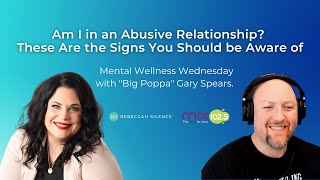
A recorded interview (Domestic Violence Awareness Month) with life coach and author Rebeccah Silence about recognizing and leaving abusive relationships. Silence shares her own experience leaving a physically and emotionally abusive marriage, lists signs of abuse (name-calling, controlling behaviors, financial/sexual/emotional abuse, conditional love), and urges listeners to seek immediate support (therapists, YWCA, coaches). She also references her book Coming Back to Life, the Emotional Survival Kit course, and a free trigger/trauma release masterclass.
People that are in situations that are domestic violence, but they may not realize that it's domestic violence. Can we start there?
The most important way to be able to know am I in an abusive environment? Is if you are in any way, shape or form, whether it's physically, mentally, emotionally, sexually, financially, being dehumanized, disrespected, or or made to feel less than or like you're even just too much. These are indicators that you are in an abusive relationship dynamic.
Mixed with a 2.5. The best mix from the 90s to now. Big pop in the afternoon Mental Wellness Wednesday. Life coach and author Rebecca Silence, the book that she's out now coming back to life. Get it wherever you get your books. Also, if you want to learn more about Rebecca, rebeccasilence.com Rebecca, how are you?
Well, I am very well and so happy to be here. Hi, everybody.
So to we're going to get serious today. It is Domestic violence awareness month and a lot of people don't like to talk about it because it's a. It can get a turn into a really dark conversation. But it's an important conversation that should be had and should be had more often. There are people that are watching this and listening that have gone through things. There are people that are going through things and know that they're going through things. But there are also people that, and this is where I want to start, people that are in situations that are domestic violence, but they may not realize that it's domestic violence. Can we start there?
Absolutely. And thank you for bringing this topic to our listeners today because it is so important. And I am an example of somebody that for years I was in violent environments, but it was so normal for me that it didn't even occur to me that anything messed up was happening. And yet it was so messed up. I am a woman who got out of a domestic violence marriage. I am not someone that will be speaking, speaking to you today from the perspective of reading about this topic. I've survived it and I've lived it. And I think the most important way to be able to know am I in an abusive environment is if you are in any way, shape or form, whether it's physically, mentally, emotionally, sexually, financially, being dehumanized, disrespected, or made to feel less than or like you're even just too much. These are indicators that you are in an abusive relationship dynamic. Now, an abusive dynamic before you, before.
You, before you continue. Can you give examples.
Yeah.
Of what that may look like?
Yeah. So I was being called names the first couple of years with my ex husband on the daily. But in a way where it was playful and he was acting like he was joking, that was the beginning. And there's, there's a spectrum here and it, and it builds, right? So it can be anything from name calling to controlling behaviors. My ex husband was saying, I don't want you to take this job. I don't want you, you know, waiting tables for extra money while you're in your master's program. It started out with name calling and some kind of controlling behaviors where he was trying to dictate what, what I was allowed to do and what I wasn't allowed to do. And we're partners and we're married. So I was confused about whether or not those behaviors were acceptable. And then it escalated into full blown, you know, cross hooks. And, you know, that was a very also difficult time because I'll be honest with a listening audience. I fought back. I didn't lay down and take it. I fought back. Me at five foot two, if I stand up straight, straddling this six foot two man and pummeling him. If you're going to hit me, I'm not taking it lying down. I mean, it was, it was so destructive. It was so, it was so not okay. This environment I was living in. And what happened for me was we had a night, my husband had drank too much and I got scared that he was going to go after my 2 year old. And for me, the saddest part about the story, but I think the most important part about the story as well is it took me seeing that my daughter was potentially being threatened and was in this environment for me to wake up and for me to get us out of the situation. I wasn't respecting or loving myself enough to have it even occur to me that I deserved better than being called names, that I deserved better than the controlling behaviors, the actual physical harm. I was so used to that that it just was what it was. And I had this belief system that love came at a cost, that if I'm going to get love, there are sacrifices that I need to make. I will be treated in ways that maybe don't feel great in the morning, in the moment, but will make all the difference because at least I have the love. So it took this night of me getting hit, fighting back, and then realizing my daughter was right here in the environment. She was asleep, but it didn't matter. She was energetically in the environment. So that was what prompted me to then leave the situation. And it was Terrifying and terrible because I had no self love, no self respect, and no belief in myself to be able to support my daughter and I on my own. And I knew that we'd end up going bankrupt. I was in a situation where the house, the cars, everything was in my name. And I knew if I left this, this was absolutely going to mean everything falls apart and has to get rebuilt from the ground up. And I didn't know I had it in me. But what I did know is that I wasn't ever going to have, have peace if I was keeping myself and my daughter in this situation. So we left.
So, number one, thank you for sharing because I know that it resonated with a lot of people right now and it was very brave of you to tell your story and I definitely appreciate that backtracking a little bit. I want to go from. You were talking about how just kind of it started with name calling and then it turned into behavior where it was controlling and, you know, it was saying, you can't do this, you know, I don't want you to do that. But controlling behavior could also be reactionary or getting yelled at if something is done instead of something else like that. Controlling behavior can come in a lot of different forms and it just kind of snowballs from there. Is that, is that fair to say?
Yeah. And here's a great way to kind of think about, is this controlling behavior or is this just somebody telling their truth and wanting to be received? So if in any way it's degrading, it's trying to keep you down, or it comes across as conditional love, like if you don't do what I want, I. I'm going to withhold love, or I'm going to punish you, or I'm going to escalate the amount of name calling, cruelty, meanness that I'm delivering here, that's not love and that's not healthy. If it's just, here's what I need, here's what I want, here's how I feel, even if you don't agree, I want you to hear me. That's intimacy and that's healthy. Right? But if you have to show up how I'm saying you need to show up, and then I'll love you or I'll be kind to you. And that is a messed up dynamic of power and control where you're being told be smaller or else if that is the energy, this is abusive and unhealthy. Now I want to also address that. It's possible even if someone is attempting to be abusive. If you're an adult, you don't even experience it as abuse. You just experience it as, no, thank you, no, I will not engage with this. I will not put up with this. And what I'm wanting is especially for women, but men too. Men are abused all the time in their relationships and that doesn't get talked about enough. Men are sensitive. Men care and love as much as we do. Watch Love is blind. Look at these gushy guys wanting love just as much as the women, right? It's not just women that get abused or are the love bugs. It's men too. So I don't care what your gender, I don't care who you are. If this dynamic is affecting you, if you are in an abusive environment, you've got to learn that it's in you to rise above what's going on and the circumstances and turn the volume all the way up on your power. Because abuse isn't love and you do not deserve it and you do not have to put up with it. And anybody that's afraid of losing the relationship more than they are afraid to stay sitting in the sandbox of abuse. I want to give you a wake up call today that there is nothing worth you staying in an abusive environment for. And you can actually be an adult that decides. It's a decision. You are no longer willing to see yourself as abused or to even engage with abuse. You respect and love and care about yourself in your life too much. And the other person, right? You engaging it is not healthy for the other person either. And the big, big, big message I also want everybody to hear today is that the aggressor, the abuser, they are just as powerless as their victims. They were abused. That's why they're behaving this way. We either in an abuse cycle, become the victim or become the perpetrator. Both are powerless and then either way we're screwed. If we stay in the dynamic, the abuser is unhappy, the abuser is in pain just as much as the victim and somebody needs to break the cycle. So if you're listening, if you're the person in the family that says no more, right? And we wouldn't be adults in abusive scenarios if we didn't in our childhoods learn this is normal, period, end of story. That doesn't blame our parents, but it's a fact. And you can be the one that says, I won't engage in this. I won't identify as abused or abusive. I recently did an episode on the healing as possible experience educating People on abuse for one straight hour. You can go to my YouTube channel and you can check it out. You can go to rebeccasilence.com today, sign up for and take my free trigger and trauma release method masterclass to give you access to your power again and to possibilities again. But no, it's not worth it. It's not health. And you're going to have to be the one to say, no, I deserve better if anything is going to change. And the best resource, one of the best in the country that I know of, is the YWCA In Utica, N.Y. before. Before.
Before you get there. Because that's actually. That actually is part of the answer that I want to ask now. I want to ask you about getting out of the situation.
Yeah.
And. And twofold. And it may be the same answer, but getting out of an abusive relationship where it has not gotten physical.
Yeah. And then.
And then getting out of an abusive relationship that is physical. It may be the same answer, it may not be. But I wanted to lay it out both ways in case there's separate answers.
Absolutely. So what I will say is that it doesn't have to get worse before you get brave enough to do something about the situation. Right. So no matter where you find yourself in the spectrum, and maybe you're the one that's being abusive in your listening, I have just as much compassion for you as I do for anybody in whatever capacity they find themselves in, in an abusive dynamic. Right. The point is, it needs to end. You don't need to model this for your kids. It can get health. But no matter where you are in the spectrum, you've got to be brave enough to say no more. You've got to be brave enough to decide, I'm no longer willing to live like this, and I'm begging you to be brave enough to not let it get worse before you'll do something about it. Right. So first of all, if you even have an inkling that you may be in an abusive situation, you've got to be brave enough to find support immediately, Find a therapist, find a coach, or contact the YWCA right away for support and someone to talk to about your situation. If it is physical, no question, you cannot be under the same roof. No question. It's time to separate yourself, get some help, get yourself out of the dynamic. And again, the YWCA is amazing to call for help and support with that. But no matter what you need support, you need to decide this is no longer acceptable and that you're willing to risk losing the relationship over losing yourself and your safety and the safety of your children if you have them. But get help and support. I have had therapists and coaches every step of the way along my journey to being fully me and owning my power fully. And when I decided to leave my ex husband, 40, I'm not even kidding, 40 women and their spouses showed up at my house to move my daughter and I, who was only two, we were in and out less than four hours. We had moved me out of this big house in Colorado into a tiny, shitty little apartment. Curtains were hung, new tires were on my car, everything was unpacked. I will never be able to thank those, those friends enough for being there. So if your friends don't know you're in trouble, they can't help but have a professional helping you too. Because emotionally there's a lot to process and there are patterns that even if you end the dynamic in the relationship you're in, they'll continue if you don't get help and healing emotionally around what's been going on. There are so many resources. My Emotional survival Kit course is a great do it yourself opportunity. In less than three hours, my book Coming Back to Life. I talk about this, I share my story, and on an even more intimate level, exactly what I did to get from where I was to where I am today. I was a shell of a person not believing I deserved better and very confused about love. I thought abuse was just a symptom of love, not the opposite, right? But love and abuse, they don't go in the same sentence. And you've got to love yourself enough to say I deserve better. And there are resources available. And don't wait for a cris. Do not wait for a crisis. Please. Love yourself, honor yourself, do your best, get support. And it all starts with a decision that I'm not willing to live like this anymore.
Love shouldn't hurt. It's Domestic Violence Awareness Month. We're talking with life coach Rebecca Silence on a mental wellness Wednesday to get the emotional survival Kit. And what was the other one? It was trigger.
So yeah, the free trigger trauma release method where in 20 minutes I will guide you back to possibility again. What gets so dark is when we can't see any solutions and they exist.
Rebecca silence.com for all of that information and you can also grab the book Coming Back to Life. It's available wherever you get your books. Rebecca, I think we helped a lot of people today and thank you for being so blunt and honest and sharing your story today.
Thank you all for listening. I love you. You deserve peace and love in a healthy way.
What she said.
More from Rebeccah





Free 5-Day Live Online Bootcamp for Mothers, August 24–28 4 PM EST. Replays available #shorts



