Breaking Out of Depression/Daily Habits for Family Serenity With Rebeccah Silence
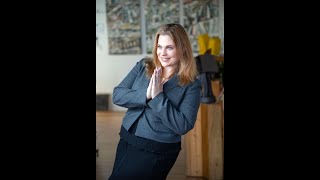
In this episode of the "Breaking Out of Depression" series, host Andy interviews Rebeccah Silence, a health self‑healing and relationship expert. Rebeccah shares her personal journey—from surviving domestic violence, a cancer diagnosis during pregnancy, and a history of trauma—to the development of her healing philosophy. She explains that depression and anxiety are symptoms of "high‑functioning unhappiness" and that all trauma can be healed and even leveraged. Central to her approach is the practice of emotional healing, which she frames around five core emotions (anger, fear, grief, joy, excitement) and the power of silence to access divine guidance. Rebeccah debunks common misconceptions, such as the need for a breakdown before breakthrough and the idea that other family members are the problem, emphasizing personal responsibility and the role of the other person as an access point for healing. She outlines concrete family habits for serenity: weekly date nights (with spouse, each child, and the whole family), regular movement and outdoor activities, and intentional listening processes that move from mind to heart to spirit. Spirituality is presented as co‑creation with God, not religious preaching, and is woven into daily practices like prayer, yoga, and silence. The conversation also covers challenges such as special‑needs family members, resistance to change, cultural or religious differences, and the impact of social media, offering compassionate, curiosity‑driven strategies. Rebeccah promotes her book "Coming Back to Life: A Roadmap to Healing from Pain to Create the Life You Want," her Emotional Survival Kit course, VIP coaching, and future projects including a TV show aimed at helping a million families. The episode concludes with calls to action, resource links, and a preview of the next guest.
Chapters
Ain't got no way I'm gonna make it without my Lord—no! Ain't got no way I'm going to make it without my Lord—no! Ain't got no way I'm gonna make it without my God,no! There ain't got no way—a'in'got no way—I'm go'na mak'eet... Amazing. Amazing. Amazing.
Please call a friend, call someone, tell them they can't miss this hour of breaking out of depression. Because there's going to be some very valuable and deep engaging nuggets for us to learn from, from someone else's experience. It is important for us to recognize that we need to interact, so post your questions, put your comments, and I'm sure that our guests will be only willing to respond in the appropriate manner and time. So I'm gonna do a bit of introduction, and wow, there is so much information here, but I'm gonna give her the opportunity to really testify in a moment about some of the stuff that she has gone through that has brought her to the place where she is now today. Her name is Rebeccah Silence, and she's a health self-healing and relationship expert. And she says, heal yourself so you can heal your family. The thing about Rebeccah is that she has been through a tremendous amount of experiences that has brought her to this place. I'm reading from her information and it says, Rebeccah Silence— tragedy did not silence Rebeccah. Rebeccah became Activity Director in a drug and alcohol rehab facility, and then work as a school counselor and counseling coordinator for an entire charter school district. And she's also responsible for finding her voice. So, my friends, without further ado, I'd love to introduce our guests for this special edition of Breaking Out of Depression. Rebeccah Silence.
Hello, Andy.
Thank you so much for having me.
Yes. Hello and welcome to this episode of Breaking Out of Depression. We are very excited to have you, Rebeccah. And I want to remind our audience of the importance of family. Family is so extremely important. That is why this episode is entitled Finding Calm in Chaos. Daily Habits of Family Serenity with Rebeccah Silence. So how are you doing, Rebeccah?
Well, I'm so well, and family is just important on so many levels. And what I want people to know is watch this episode to learn how to have a blast with family. It can truly be glorious, magically delicious, and more importantly, fun.
Wonderful. So I'm gonna begin by asking you this question. Can you share a moment of personal struggles that has actually led you to the passion that you have now for transforming family dynamics?
Yes. Thank you so much for asking me that, Andy. So I'm a cancer survivor. I was diagnosed with cancer in 2014 at 34 years old while I was pregnant with with my second baby, and I was only given a 5 to 10% chance to live. And I've been, you know, it's 2024, I've been in private practice for 16 and a half years. I've helped thousands upon thousands of families heal, and I started helping families heal in 2002, working at a psych hospital as a music therapy intern. But the cancer experience is what changed the game for me. I was teaching and coaching and facilitating for years, helping so many families achieve joy and bliss, but I was still suffering from what I call now high-functioning unhappiness myself because I was so achievement-driven and it was never enough. There was never enough accomplishments and achievements and Success was still very externally focused for me before my cancer diagnosis. And cancer, it was my ultimate seminar because I knew, wait a minute, Rebeccah, you can be your best when everything is going well on paper and you're living your dream come true life. I had a thriving business, an amazing second marriage. The first was domestic violence and I had gotten out with a 2-year-old. I had thought, arrogantly, all right, I beat my past. And then I got this cancer diagnosis and everything changed because the only thing that mattered was A, fighting for my life, but more importantly, B, how can I be peaceful, aligned with my soul, faithful, and the me I wanna be now when all of the deck is stacked against me? And I really did find myself and I went from an achievement fear-based paradigm of living and success to alignment with cancer. And it is so incredible to still be here. I still pinch myself. I feel like my only job now is to serve so that families can experience the bliss, not just that I give, you know, my clients the tools to access, but I'm living it, Andy. I live what I teach every day. And it is easy to be our best when life is going our way. And I have to live what I teach I have a 19-year-old, I have a 9-year-old, I have an amazing husband, but you know, life isn't always easy or preferential. And even with adversity, obstacles, humanity, everyone's emotions, we have a blast in my house and I have a blast in my body and in my life, no matter what.
There's so much hope coming out of what you just said and the passion about understanding what your real purpose is and your desire to just be there for people to help. And you're so proud of what you have accomplished with your family life as well. Mm-hmm. What's the most common misconception that people have about healing family trauma, particularly in the midst of depression And maybe the love of a lost one. Sure.
Well, and here's the deal. It isn't just the love of a lost one. How many of us are grieving relationships and the people are still alive? And that's part of the healing of the family trauma. So I think the number one misconception is that we have to live in spite of the trauma or that our trauma isn't that significant. And I really see depression and anxiety as symptoms of high-functioning unhappiness more than some diagnosis that we just have to live in spite of. And if you're drained, if you're exhausted, if you're unfulfilled, if you're bored, if you're irritated, irritable, frustrated, these are all signs that you're actually living in a trauma response without realizing it or without meaning to be. And trauma, it's so typically a disempowering conversation and one that we just think we have to live in spite of. But that's just not true. The truth is all trauma can heal. All trauma. All of it. And you can be the healed, free you who has cleared your past so that the healed you can be in charge of the mission called your life and can be the one leading your family life into more bliss and fun. The cycle can end for real. I wrote a book about it, Coming Back to Life: A Roadmap to Healing from Pain to Create the Life You Want, because again, I want the trauma conversation to be liberating. And what you can know for sure is that all trauma can heal, and all trauma can actually be used to your advantage.
So much. We'll get to the book in a little bit, but I want to touch on something that I'm sure is deeply emotional for you. It says the practice of emotional healing saved Rebeccah's life and she was reborn as was her healthy baby girl. And here's the part that I feel really strikes the most. She learned the art of co-creating her life with God day in and day out. Tell us a bit about that, Rebeccah.
Oh, I get emotional with you just reflecting that.
Oh my goodness.
Beautifully. You know, I believe that what saved my life was knowing how to regulate my emotions. And first, I had to know the difference between how I was coping with my emotions and what I was feeling about what was going on. I think there's a difference between our feelings and how we're coping with what's going on and the emotions underneath it all that we need to heal. So what I teach is that there's only 5 emotions. Everything else is learned. We're not born knowing how to be betrayed or rejected or abandoned or shameful or guilty or jealous, I could go on and on and on, or anxious or depressed, we learn this is how to cope, but we don't talk about it. It's not conscious. We're not thinking about I'm experiencing betrayal as a coping skill, but these feelings that were learned, they are the access point to the 5 emotions that underneath it all are always what we need to heal and move through and feel our way through to get access to our guidance and the Divine Guidance that I'm talking about, right? So I teach there's anger, there's fear, there's grief, there's joy, and there's excitement. Anger, fear, grief, joy, excitement. That's it. And underneath it all, what's going on is real, but there's an emotion to feel and to clear, and that is the practice of emotional healing. I have zero resistance to any of my emotions, and I know my willingness to be with the darker emotions allows me to have joy and excitement as the rule I live by. Joy and excitement aren't an exception in my life, they're the baseline. But I'm willing to be with all of the emotional weather fearlessly and fiercely. And when I'm willing to get from my feelings about what's going on to the emotion I need to feel, now I have access to God. And there's nothing for me to figure out and there's nothing for me to do except open myself to being willing to receive divine guidance. That is how I'm in a co-creation with God, and that is how I saved my life. God helped me access divine guidance and divine intelligence every step of the way. That's how I'm still here with a 5% chance to live against all odds.
Amazing. And we thank God for that. Truly amazing. Well, on that note, let me see if I can take this to the next level. There's a saying, and to some people it might sound like a cliché, but I know there's so much depth in that with regards to quality family time. The saying is, "The family that prays together stays together." And yes, it sounds like a cliché to many people, but there's so much depth in that for me personally, and I know for many, to understand that it is one of the things that dynamically can bring a deeper bond and a sense of togetherness and create that harmony with quality family time. Do some of these things come up with your, your, your, the people that you deal with on a daily basis in terms of that level of spirituality that they're supposed to look at? Yeah.
All my work is spiritual. And I don't think there's a right way to do it. I'm not here to preach religion. I'm not here to say this is what it means to be in a co-creation with God. But what I know is that it's possible to have a family that every individual, every soul is supported in their soul's journey. And to me, it's very important that everyone in the home is embraced and honored for being who they are on their soul's journey. Versus who they are expected to be. And I think that's part of breaking the generational trauma cycles. We think based on how we grew up, there's a right way to do family. There's just how to survive the family system you are growing up in. And so bringing a spirituality to the table allows for your family to know what that means to you and to have a way to give each other grace and love and support encouragement as we're all on our individual path. We lose ourselves in family because we're so afraid of losing the family. And what I want is for us to be unwilling to let our survival personality win. And I want kids to have healed parents. My mission in 2024 is to help a million families heal. I want kids to have healed parents, which means I, as a parent, can be available for you, my beautiful, gorgeous child, to be who you are, not who I need you to be for my sense of security.
So much for sharing, Rebeccah Silence. I have a comment from Gracie, and she says, he always helps us along the way. So long we accept the Lord, he will do anything for us. And she's coming from a place of personal experience. Thank you for your comment, Gracie. Wonderful. So Rebeccah Silence, in your experience, what is the first or initial step towards healing that probably most families kind of overlook? They miss it.
Yeah, well, I'm gonna give you 3 secrets actually, that again, in 16 and a half years of experience working with families, and there truly is not one case. I have a fact out of thousands in those 16 and a half years. Here are the 3 common secrets that I, I want to share with our beautiful audience today. So the first is this: number 1, we do not need a breakdown to breakthrough. So when it comes to healing, often we think that it needs to be dramatic, we need a breakdown to break through, or we take a moment It's just life being life. I don't think life happens to us. I don't think life happens for us. I think it's just happening. And then we get to decide who we're gonna be. But if we prolong the inevitable, once we're aware something's off, things will escalate if we don't address it. But you don't need to wait for that crisis or for a breakdown to be willing to be brave enough to be honest and say, hey, I need more. I want different. Here's how I'm feeling. Take the risk because it's your right to be fully expressed. Don't wait for a breakdown or believe the lie and the misconception that you need a breakdown to break through. That's the first one. The second one, and this is the biggest, you have to consider if you want to be healed and free You don't have to do anything, but if you want to be healed and free— and again, my definition of healing is freedom— you must know this: the other person is never the problem. The other person is the access point to where your healing lies. We have scapegoats in every family, and it's one of the most tragic things I've seen in all of my years of clinical experience. There is no scapegoat needed. There's you taking responsibility for what's going on with you internally and where your healing lies. The The other person isn't the problem. The trigger is the access point, and the relationship is the access point to where you still have a wound that's running and maybe even ruining your life that you didn't even realize was still in the mix. The other person is never the problem. The other person is never the problem. The other person is never the problem. Hear my voice. Remember my voice. The other person is never the problem. Now, that does not excuse bad behavior. That doesn't mean they're not really being a jerk. It's just what's going on with you internally. They didn't have the power to make that happen. You have the power to heal, to shift, and to feel how you want to feel no matter what. And that's the third secret. We already alluded to it earlier, but there's a big difference between your feelings about what's going on and the emotions you need to feel to be free.
Two things that really stood out to me here, Rebeccah Silence, is one, you said life is not happening to you, life is not happening for you, but you get to decide, you get to make the choice how you're going to manage yourself when life comes, because life just happens. That's huge. That's huge. And the second thing is the other person is not the problem. And I think you actually imply that the circumstance that the family is facing is not the problem either. It's how we choose to manage ourselves and allow our truth to become the thing that we deal with. Because we should be always seeking the process of healing. That is so divinely important. Thank you so much for sharing, Rebeccah Silence. So I just want to take a minute to remind our people in the audience, please put your comments, bring your questions. Rebeccah Silence is the expert here, and she will gladly respond and answer and make sense of what you probably cannot understand. Are grappling with at this time. I'd like for our producer to just put up a picture of the book that you have written. Thank you. Yes. Yeah, he's going to put it up. The process of you actually naming the book Coming Back to Life, was it that defiant moment, that experience? And what kind of research did you really do? Or did you take it all from your personal experience and put it into the book and decide, hey, this is it? Yeah.
I mean, obviously, I am a trauma survivor. I've survived incest. I've survived domestic violence growing up, growing up in an addictive home. I survived my own domestic violence marriage, and I beat cancer with a 5% chance to live. But the reason the book is called Coming Back to Life has nothing to do with my story. It has everything to do with every client I've ever had. Thousands say to me, Rebeccah, I just came back to life. There's life before you, there's life after working with you. And in so many of those cases, people didn't even know they weren't fully living. And for me, my greatest testimony of healing isn't everything I've survived, it's the life I've had now. I'm fully alive and fully present in every moment. And I'm focused on teaching my beautiful clients and audiences Fully living is the job. And there's no fully living when we're in survival and our past is running the show. And our response to the moment we're in is a reaction to the past. That's not living, that's surviving. Coming alive while we have life left, it's the greatest gift we can give ourselves and everyone we love. And I don't believe, Andy, that we wake up one day and we know who we are. I think we wake up one day and we know, I'm surviving. I can't put my finger on why, but I know there has to be more. From that place, we get to decide who we want to be. I created Rebeccah Silence. I grew up believing that silence was the solution, that if I could just take it, the abuse would be over faster. And then I married a guy with the last name Silence. I got out of that marriage after a few years. And I found my voice. I created the me I knew I was capable of becoming because I had a mission. I had a mission. I was not going to let my past win. I was going to let my past bring me fully alive. And that is what's possible for all of you. There is not a trauma out there that's unhealable or that justifies you half-living or going through the motions or living to die. We're here because we're meant to live and receive the good. And we've been through enough already, haven't we?
He has managed to get the book up on the screen there. Thank you. Yeah. And we've seen it there for a while. So Rebeccah Silence, what is the resounding message that you want folks to get out of the book? And what has been the response so far with regards to the publication?
Well, I'm so grateful to Health Communications Incorporated, my publisher, my agent, Lisa Hagen, for taking a chance on me and for taking a bet on this book. It's won several awards. It has sold more copies than I can even comprehend. And, you know, this This book is here to guide you home to you, the best of you, the highest, wisest you, the most healed you, the most free you, your way. And what I'm doing is I'm showing you how in the book to look at your patterns and actually break through, to look at generational trauma that you inherited that isn't your fault and to go, all right, I can actually break through this. I can actually use it to my advantage. And for all of us, we can use that trauma to our advantage.
It is so powerful what you're saying, because actually a lot of people believe that their past is like a burden. Yeah. And it is something that has created so many challenges for them. In their present scenario. And while some of that may be true, it also is a gentle reminder that if your past wasn't so good, it wasn't so healthy, it wasn't so becoming, look at where you are now. Especially if you have— already, yes. Right, exactly. So think about where you have been and where you are now and just consider yourself as an individual who has every opportunity, every right now to go to a better place every day. I tell some people that I deal with, look, look at yourself in the mirror every day and tell yourself, hello, it's a pleasure to meet you. But I look forward to meeting you 2 weeks from now, 3 weeks from now, and I know you will be a better version of who you are. Presently. We always have to think about how we can continue to overcome all the things that have created problems for us in the past, and we could look forward to now in the present. So I would like our producer now to play that video that is called Silence, and I just want to get your commentary on it, Rebeccah. Okay. Rebeccah Silence.
The number one hack to get free is silence. So many of you suffer in silence and you're afraid of being still and quiet and getting silent so that you can hear your own voice and your own truth. But here's what I need you to know: you getting willing to be silent is you being willing to access you at your highest and best. And from that place, you can access divine guidance and divine intelligence, which is only accessible 100% of the time. You don't need to fear the silence, and there's no threat to getting still with yourself. And the more uncomfortable you getting quiet and still with you is, my God, the more you need to and I know that's cliché, and I know that is said on repeat so many different ways by so many different people. But the number one hack to setting yourself free is getting comfortable with you. The number one hack to get free. Yeah, right.
So I'm working on my camera here. Forgive me for that. But you can hear me. Give us a bit of commentary on the power of what you're saying with regards to Rebeccah Silence and that total misunderstanding or misconception of the silence.
Yeah, well, it is difficult to be disconnected from our own spirit, and that is the source of what I call high-functioning unhappiness. I'm disconnected from me, my spirit, my essence. And, you know, back to the book real quick, the big thing I want people to, to take away after they read Coming Back to Life or after they take my courses or work with me privately is we must be more careful with each other's hearts. But if I can't even be comfortable in silence with me accessing my own heart, honoring my heart, nurturing my heart, my pure intentions, my essence connected to me, how could I be careful with other people's hearts? So healing starts in silence. And for me, I was in a cancer bed for a year with a new baby, with a 9-year-old saying, "Great, I don't have a dad and you're gonna die." And all I had was silence. And I loved myself in the silence. And I found peace in the silence, even with so much pain, even with so many external factors preparing me to die and telling me I was gonna die. And people I loved looking at me like I was gonna die and grieving me while I was still there. And silence saved my life. The access to the silence gave me access to God, which meant I wasn't alone ever again, and I haven't been alone ever since. Yes. Yeah, there's a whole chapter in my book, and I've had therapists running book clubs with their groups, and they just spend months on my forgiveness chapter alone in the book. So here's a little bit on forgiveness. I used to think that forgiveness was about getting to a place where every relationship was healed and intact and just kept going. And now I look at it a little differently because I do have boundaries today. And in so many cases, I really do believe all relationships can heal, just like all trauma can heal, but it does require two people. And here's the thing about forgiveness: I can forgive the person, but forgiveness is not for them, it's for me. And forgiveness is about getting back to that place where I'm loving as fully and as deeply and as fiercely as I did before I got hurt. We are conditionally loving so much in our society. It's so about, do you make me feel safe enough to be me? Do you make me feel safe enough to love you at my best, to show you the real me? Wrong direction. Forgiveness is about forgiving yourself and forgiving the situation and, and recognizing this person did their best at their capacity based on their level of awareness. But it's more about getting back to the you, you are, that vibrant, free, gorgeous you, and not letting anyone or anything threaten your alignment. That's the point of forgiveness. I'm aligned with my soul. I am right with my soul, and nobody can threaten that, and nobody can take that away from me. And I have family members that have abused me. That I have forgiven, that I wish so well. And you know you've forgiven when you're at this place of, oh my God, I just love you. And based on your behavior, I will be loving you from a distance. Or based on your behavior, guess what? You get access to me and we're going to reinvent the relationship. We can't go back to how it was, but we can reinvent. And I'm not afraid to love at a distance. And here's another quick hack. Please understand, so often if you're frustrated in your relationships, it's because you don't like you. You don't like the you that's adapting down in the name of trying to save the relationship. It's not about the other person. And the other thing is, here's, you know, a little bit of a controversial point, but just, just consider it's okay to grieve people that are still alive, to love from a distance and to stop thinking the other person's 100% capacity to love is the same as yours. I see it all the time. This person is giving you their 100% capacity to love you, but it's equivalent to your 5%. Don't compare and contrast. They're doing their best. And have standards. Have such freaking high standards for what it takes to get access to you and who you engage with and who you interact with and fall in love with everyone you meet. I love everyone I meet. I love fully. I love fiercely. And I know the real forgiveness work is always with me and always about letting go of attachment to how I think someone else should have behaved.
And sometimes that expectation is just so unreal because it simply does not exist. We have to focus on being the best that we can be, and we have to focus on loving people as much as we possibly can without that false sense of expectation that they're gonna meet our values and the things that we hold dear to us, that they're gonna share that equally. Ah, that's not the road that we need to go down. So at the end of the day, Rebeccah Silence, I'm thinking, how can families deal with a unique situation where there are differences in culture and probably even religious beliefs and that kind of thing, but their internal challenges within the family that may cause a blending or harmonizing to be a bit challenging? How can they manage that? How can they maneuver themselves and navigate themselves to deal with that and still have the family dynamics going?
Yeah, well, here's the deal. In those turbulent, difficult, and even just plain old BS moments, here's what I want you to practice: a listening process. I'm going to give you a listening us. We start listening to our mind. What's our mind saying? But see, this is where most traditional therapy fails us. We can't heal emotionally in the mind, but we do have to start there. We do have to check in with, what am I thinking? What am I believing? So that we can connect to our heart, and then we can start to feel. What am I feeling? What's the emotion underneath it? From there, we can connect to our spirit, and that's where we can access the guidance from the divine, whatever we believe that it is that's bigger than us, that's with us every step of the way, that has more data than we'll ever have. Mind, heart, you know, spirit. Then now I am that clear channel that's practiced the practice of emotional healing that I've created, and only from there Can I be with the person in front of me neutrally, with curiosity, with love and pure intention and a commitment to understanding them? And I don't need you to change for me to be okay. I'm already okay. Mind's clear, heart's clear, body's clear, spirit's clear. Now I can be present with you. And from there, there's nothing together we can't face, move through and conquer together. I've told my kids, from, you know, the youngest ages. There's nothing we can't face, move through, or conquer together. You're never alone. I'm right here with you. And instead of trying to fix it for them, manipulate the outcome, change them, I can just inquire, what do you need? What do you want? How do you feel?
Situation, Rebeccah Silence, where the family has a special needs individual, and it's kind of depressing because it changes the entire routine of how they do things. Some may have to take a day off or two from work and that kind of thing, and there may be a timetable where someone spends 2 hours and then they change and But you know, it could be a challenge because this person is a member of the family, but they can't help themselves in a normal, natural way because of their special needs. And that could bring some level of depression and anxiety. How do families manage that situation so that it doesn't become burdensome or creates an additional level of depression? Well, here's the thing.
Depression, mm-hmm. All it is Yeah, trusting the truth of who you are, what you need, what you want, and how you feel. Anxiety, rejecting the truth of who you are, what you need, how you feel. Okay, so I'm not saying these aren't real diagnoses and very serious. I've suicidal multiple times. I've been clinically depressed. It's a real thing. But again, it's a symptom. And we talked earlier about scapegoats, Yeah. So it's very easy if someone's special needs to make them the scapegoat, the reason why we're suffering. And the deal is I could look at cancer as a problem. Yeah. Or I could look at cancer as a gateway and an access point to the highest and best of me. I've coached so many families with special needs children or a special needs spouse, and sometimes it's a physical disability. Sometimes it's mental, sometimes it's emotional, but regardless, in my experience, the special needs individual is typically the most authentic. Mm-hmm. They're the leader. They're not denying the truth of who they are. They're not denying the reality of what they're up against, what they're facing, and they're typically more present than anyone else in the house. So if we can have compassion and if we can learn from them versus being in a story. And this is why I'm saying get silent, listen for the mind, right? Is the narrative of victim consciousness of poor us, this is our situation, or are we going, listen, I'm a lover of reality. Like Byron Katie teaches, the spiritual teacher Byron Katie, when I argue with reality, I lose, but only 100% of the time. So I can get, okay, I can't change reality. Who am I going to be? Who am I going to be? It's not about what am I going to do. It's not about strategy or mindset. It's about embodying the best of you. And the special needs healer in the family is so often the most honest, the most authentic, and the one we should be learning the most from.
How about a situation where one family member is putting up a resistance to change. Let's just say 9 out of 10, uh, have decided, okay, we need to go in this direction, these are the things we need to do to have more quality family time, to deal with whatever levels of negativity that may come in the way of the family. But this one individual, Rebeccah Silence, 'Nah, I'm not going with the flow. I don't agree with it.' How do we then deal with that kind of situation? What levels of approach should we take to deal with that?
Yeah, well, again, let's not make that person the scapegoat. They're the problem. They're the reason why nobody can get along. Nobody can finally find flow. It's about getting clear yourself and then asking questions, because more than anything in that case, it's likely a values issue. I have a kid, for example, that when I asked her at 13 what her core values were, she said, "Wild. I'm wild and you're glitter and I don't know how that can actually work, Mom." Like, okay, so she values wild. So, what does that mean to you? What's important to you? That squeaky wheel person in the family, the kind of cranky one, is often just not wanting to compromise or settle. So, I can say, "Great. I don't want you to compromise or settle." or be less wild for me, or to change who you are for me. What's important to you? And let's find not middle ground in a compromising way. I'm the coach that says please don't ever compromise, ever. Instead, negotiate to what I call the win-win. So I want to find the win-win. Here's what's important to me. What's important to you? Where's the solution? Where's the common ground that has us moving forward together. And it's— I find often that person is just feeling misunderstood, feeling like what matters to them isn't important to anybody else, and they're frustrated. So if they're frustrating, they care, right? When someone's frustrated, they care. Find out what they care about and genuinely care about understanding them and finding that solution that works works for both of you so you can move forward. And you can be very different, you can have very different values, and you can still find a way to be in it together, complementing each other, supporting each other's differences, but finding that common middle ground.
And on that note, I want to bring up on the screen the Thought of the Week, and I think you're gonna find it pretty fascinating. Ah, thought of the week. It says, God's creation is based on the concept of family. We are all part of one, which every member matters. I want to repeat that. God's creation is based on the concept of family. We are all part of one, which every member matters. And that is so very important, Rebeccah Silence, as you just highlighted a while ago. What are some of the things that you believe we need to look at with regards to the influx or the influence of social media? And there's a lot of unhealthy social media that is happening all over the place. Yeah. And how do parents particularly who want to hold high esteem with regards to good moral and ethical values? How do they manage the negativity that comes through the social media platforms with regards to the young ones whom they love and are willing to do almost anything to protect?
Yeah, you know, I just was talking to my 9-year-old over the weekend, and we were talking about anytime you're trying to fit in, it just doesn't end well. The goal is not to fit in, it's to fit in with you. So I think the sooner we can deliver that message to our kids, the better. But I also want to look at this quote and just break it down for a second because here's a problem in humanity. We defend picking and choosing who we are our best for. Hmm. We're talking about family, like it's just the people we live with or the family we come from so far today. But I want us to look at every human being as part of our human family. I want us to be careful with each other's hearts and to treat each other like you are another human who's God's creation, who's a gift regardless of how you're showing up right now in this snapshot of a moment. You are a gift. You are a child of God. Therefore, you deserve the best of me. That is my philosophy with every life I touch. And that is the value I do my best to instill into my children. And then I know they have free will and agency. And I think from there, when we're careful with each other's hearts, when we care about each other's hearts first because we care about our own and we're careful with our own, now I'm less of a vibrational match for all the white noise and all of the insanity on social media and hope hopefully that's true for my kids too. We engage with what we're a vibrational match for, Andy. Mm-hmm. The more we know how to source from our wholeness, how to be our best because it's who we are and what we do, not because we think it's the right thing to do or because we're trying to manipulate an outcome, but it's just who we are and what we do, the more we're part of healing the collective and solving all the madness And you know, there's this story called the Starfish Story. I don't know if you've ever heard of it, but it's a story about— Probably, yeah. —grandfather and the grandchild, and they're on a beach and there's all these starfish and the grandchild's one at a time throwing starfish into the ocean. And the grandfather says, what are you doing? You're never going to be able to save all of these starfish. And the child says, well, I just made a difference to that one and to that one and to that one. It's a beautiful story, the Starfish Story. And so I don't think we can solve all the nonsense of social media. But we can teach our kids how to connect to the truth of who they are, how to not be worried about or focused about trying to fit in, but instead fitting in with themselves, how to treat every life like it's valuable and important, and how to be our best because it's who we are. And that's it. This is just who I am and what I do.
Yeah, yeah, yeah. Wow. Wonderful. It has been an amazing time that we have spent thus far with Rebeccah Silence. But I want to ask her something now with regards to sporting activity. I don't know how much you are into sporting activities, but I've seen situations where parents are not so into sports and the children feel that they have to go outside and get the attention of someone else to take them to the park Maybe the parents are impaired with their movement or they're just not into sporting activities. But somehow that moment, that time spent out in the park, whether it's cricket or football or soccer or baseball or whatever, it somehow helps also to develop a greater bond between family members. And you find out things about your family members that you didn't even know. How important is the process of including that kind of family time through sporting events? Yeah. Can help also in the healing process.
You know, earlier you were asking about bringing God into the, into the home and prayer into the home. And just the other night, my husband and I and the 9-year-old, we were all doing yoga together and candles were lit and we were where we're moving our bodies. And I am an athlete. I, I don't necessarily identify as an athlete in my 40s the way I did as a young person. I was a skier, I was a distance swimmer, I ran a few marathons in my 20s. And the thing about moving your body is it's access to your spirit. The thing about movement is it's grounding and it helps us get more present first for themselves and then with each other. I live in Boulder, Colorado, so the hiking here, the skiing here, even just taking a walk in my neighborhood and the mountains are just, you know, God's majesty right there on blast every single day. There is something so powerful about getting outside, getting into our bodies, and moving. But again, here's the deal: if you try to force it, if you try to shame your kids for because sometimes it's actually the parents want to move with the kids and the kids would just rather be on their iPad, right? It isn't just the kid wants the parent to come outside and the parent's doing other things. It can all be true, but make time. My family has a rule. We do a family date day every single week, and I keep doing that. I date all 4 of them. Well, there's, there's 4 of us in the family, so I date myself every week. I do quality time just with me. I have a date with my husband every single Monday. We treat it like it's as sacred as church. I have a date with each of my kids separately, and then we do family date day. And sometimes that's cooking our kitchen. We call it Chez Fancy. We'll have a Chez Fancy night. We just cook together at home. We watch a movie. Sometimes it's a little more fun, a little more of an adventure out and about. But I prioritize being together and quality time, and I think that's where it's at. And then you can, again, you can have everyone alternate in the family who's planning the date. My husband and I alternate planning our date every Monday, every single week. We just did glassblowing class, then we did Scandinavian dance. You know, he did the glassblowing, I did the Scandinavian dance. I didn't even know Scandinavian dance was. I still— but we had fun, right? The point is, plan time together, quality time, and, and a date day of even just a couple hours as a family once a week. That's magic, and that's medicine, and that's a start. But move together, be together, get present together, live, come alive, come back to life.
It's so very wonderful and so very true. So Rebeccah, with regards to the work that you're doing now and the clients that you're dealing with, how do you get them to engage with your program so that they feel that level of trust and confidence and belief? Hey, if we actually do this, it is going to work. What is that process like for you?
Yeah, you know, I was so grateful for multiple reasons. To beat cancer and to come out the other side. I will have to, you know, not, not because I have to, because I choose to continue to go to get doctor's appointments, continue to get checked. But, you know, the, the thing about it is the book that I was so blessed to be able to— alive— to be alive to write, my course, the Emotional Survival Kit, and my private services that I offer my VIP coaching clients, whatever level of work you would want to do with me, the book alone could change your life and liberate you and set you free just by itself. My Emotional Survival Kit course, which you can get at rebeccahsilence.com, got all the fundamentals of what saved my life when I was sick, and what I've taught to individuals and couples and families of the years. 7 20-minute videos plus an amazing workbook that you can take as an individual and your partner or child can take as an individual, and then you can answer all the questions together. Amazing. The VIP services, they're there if you want that access to me on a regular basis to keep going, to keep creating. But that's the point. We heal to set ourselves free so we can create. And I want us all to have— what's the vision? What are we creating? What are we wanting to do with our lives? Not because all of a sudden you're going to get to that goal and it changes how you feel inside, but because it's your right to have a North Star to give you the motivation to be that best of you in the moments you don't feel like it. Because the goal isn't the absence of your humanity or the in the presence of challenges or obstacles or life being life. The goal is to stay your best. So for me, the book gave me that carrot, that North Star, that catalyst to be my best while I was creating it. And with my course, when I produce that, and the same with the TV show, I'm in the process of developing now. But have a goal. And however you want to work with me, rebeccahsilence.com has free resources. My YouTube channel is there for free. And then there are premium services and products that will change your life if you will let them, if you feel called to experience them.
Rebeccah Silence, with regards to how you are helping families to heal and to deal with some of the challenges that they face on a daily basis, because as my thought says, God's desire humanity basically is for us to live as families. And yeah, and sometimes it's kind of hard for us to do so because of so many differences and so many miscommunications, but we have to keep trying. We have to keep working and believing that things can happen and things can get better. I love the example you gave of the date nights, and it is so important. I think on a certain program I would have hinted that We have to do things like that intentionally, Rebeccah Silence. Yes, look at your calendar and say, hey, you know what, one week from today I'm gonna have a date night for the children, and then 3, 3 days after that, or another week, date night with my husband. Then I'm gonna have a date night with myself. But just keep on doing all these wonderful and positive things that can really give the family the opportunity to have quality time together.
Well, Andy, let me just quickly say some of it you're already doing. With my 9-year-old, she had dance every Wednesday night. Most people wouldn't think of that as a date night opportunity, right? But we go to dance together, then we would grab some tacos and play Guess Who every single Wednesday for 5 straight months. Wow. That's— oh, there's, there's ways to get creative and resourceful. And to turn into what you're already doing into a date.
Yep, that's right. That's right. So Gracie Vincent says, share the love.
And Gracie, be careful with each other's hearts, right? Yes. Yes.
All right. Wonderful. Wonderful. So, Rebeccah Silence, what is the future like for you? Are there any other projects in the making, maybe another publication, I don't know. But what does the future look like for Rebeccah Silence?
Well, what I'm working on now is working on a TV show. What we're gonna put together to really showcase how quickly the healing can happen. The healing can happen very, very fast. You don't get to keep it unless you nurture it, but the healing can happen quick. The pain started in a moment, it can end in a moment. Moment. So I'm working on a TV show, Andy, to just showcase what I mean by that and how my work works. And again, we're helping a million families heal in 2024. I've got so much that I want to share with those who want to be emotionally clear and emotionally regulated and actually high functioning and happy, not high functioning and unhappy or fearing that if they took on their happiness, that threatens the high-functioning part of their lives. You can be high-functioning and happy and healed and free. And the next big project is the show and to just introduce more and more and more people to the book, to the course, to my work. And there will be certainly more books as well. And me just living my best life and making it an adventure every single day.
Wonderful. Thank you so much. So we just saw about 5 and a half minutes to go, and I just want to remind our people about the thought for the week because I think it's very, very important. The thought for the week, just remember it: God's creation is based on the concept of family. We are all part of one which every member matters, equal importance across the board. So that we understand how we can have that kind of collective agreement with regards to love. And going forward, that can make a big difference in the future, the development and growth of the family, which is something that everybody should be on board with. Remember to purchase Rebeccah Silence's book. It is so important to understand Coming Back to Life. She says it's a roadmap to healing from pain to create the life you want. And that sounds really good and encouraging for me. Where can they get the book, Rebeccah? Is it on Amazon as well? What is the most—
I've got a link on rebeccahsilence.com, and Rebeccah has an H, rebeccahsilence.com, which gives you the links to all of your favorite book sellers, but you can get Coming Back to Life anywhere books are sold. Target, Barnes Noble, Amazon, any of your favorite places to buy a book will have it. There's also an audiobook of Coming Back to Life that is narrated beautifully by Libby McKnight. And yeah, enjoy, please enjoy. One of the biggest things men tell me, Andy, about their experience of coming back to life is it made them better fathers. What women tell me is that they found themselves and rediscovered their happiness again. And this book is also for anyone non-binary. You making your life goal, you know, yours is the goal. You making your life yours is the goal.
Okay, wonderful. Very good. So folks, remember, please drop an email if you need to get in contact with Rebeccah Silence or any one of the persons that have been on this program as we put together our resource directory of personal that have been here. Whatever information you need, whatever guidance you need, if you need to meet with Rebeccah, you want her services, you want her to just spend some time with you and give you some advice, give us that. Drop that email at lovebitsa@gmail.com or send us a WhatsApp at 1-869-664-43 65. I know our producer would like to have just a few words with Rebeccah Silence as soon as we log off, but in this moment I just want to remind us that we are going to be on next Tuesday, God's willing, on the 28th of May from 6:30 PM AST. And our guest is going to be a gentleman by the name of Mr. Philip Blackett. He is an author, consultant, and entrepreneur. And he's one of the individuals that had roles at FedEx, Goldman Sachs, Bank of America, Chick-fil-A. And he also holds a Master of Divinity and an MBA from the Harvard Business School. So he's going to be here speaking about how we can align ourselves with God with regards to relationship business, family, and basically our fate, which we are supposed to be very cognizant of as we continue to develop and grow. So I will quickly share on the screen what this gentleman looks like. He will be our guest. So tell a friend, tell a family member, tell someone, your co-worker, anyone who needs to get more information more knowledge, more inspiration on breaking out of depression. Our guest on the 28th will be Philip Blackett as he shares with us based on our relationship with regards to family, business, and our faith. So as we come to the end of this episode, again, I just want to apologize for the fact that my camera has just logged off and I can't see you and you can't see me, but I'm glad that you can hear my voice. I can. Yes, and we have the beautiful face of Rebeccah Silence on the screen, so that would make up for me not being here on the screen. And we want to thank you so much for your continued commitment and your support. Gracie Vincent, we want to thank you for your comments and all those who are in the background who are shy didn't ask a question or didn't make a comment, that's all right. We love you and we continue to look forward for your support and your prayers as we drive towards the future, as we build this community on Breaking Out of Depression. So as we go, please remember, do all you can within your power and your ability to continue to help yourself and others break out of depression. Bye for now, folks. Godspeed. God bless. We love you. Until next time. Yeah, stand by.
There ain't got no way, ain't got no way I'm gonna make it without my Lord. No, ain't got no way I'm gonna make it without my Lord. No, ain't got no way. Ain't got no way I'm gonna make it without my Lord, no. Ain't got no way I'm gonna make it without my Lord. Trouble lead my way, but daily hear me say, ain't got no way. Ain't got no way, ain't got no way, ain't got no way. The harvest is plenty, Lord, but the workers are so few. Ain't got No way I'm gonna make it without my Lord, no. Men are dying, Lord, there's just so much work to do.
More from Rebeccah





Free 5-Day Live Online Bootcamp for Mothers, August 24–28 4 PM EST. Replays available #shorts



