Dark Work Wins: What to Do When Marriage and Career Fall Apart
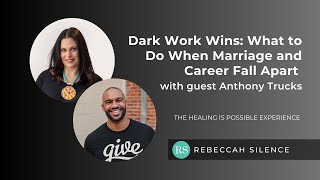
A recorded interview on the Healing Is Possible Experience (host: Rebeccah Silence) featuring Anthony Trucks, a former NFL player now motivational speaker/coach who describes his framework called "dark work." The conversation centers on emotional and identity healing: surviving and transforming after professional and relational collapse, doing hidden "dark work" to deserve and sustain a better life, and repairing a marriage that included divorce and an affair. Trucks shares personal history (foster-care childhood; NFL career; a low point leading to deep private work beginning around New Year's Day 2016), outlines practical stages of dark work (designing the dark → doing disciplined, out-of-character actions → emerging and competing for outcomes), connects dark work to breaking generational trauma, and closes with a specific homework assignment (ask someone to tell you what you need to hear and sit with it 48 hours).
Questions this video answers
New Year's Day, 2016.
Three children ("three kids total").
They were divorced for three years.
anthonytrucks.com
Have you given yourself credit for the fact that there's no dark moment or season of your life that you haven't just survived, but come out the other side? You land on your feet 100% of the time, but do you really own that? And more importantly, on an identity level, do you recognize you're so much more capable than then you give yourself credit for? These are some of the major points that Mr. Anthony Trucks and I will be talking about today.
Okay, we're going.
Okay.
Three, two, one.
Welcome to the healing is possible experience. I am your host, author, media personality, and emotional healing and relationship coach Rebecca Silence. This show is meant to take you on a journey so that you can have happier relationships, healthier relationships, and a happy, healthy family. The point of life is to connect to the best of who we are. And Anthony has. Has created the dark work. He's a former NFL superstar, an American ninja ninja warrior, and he's here today to share with us his beliefs and methods on the dark work and how to win, but also how to have an identity that actually matches the truth of who we are. So without further ado, welcome, Anthony, to the show. We are so honored to have you.
Well, thank you for having me. I appreciate the introduction. I agree with all of it. So a chat and a talk, and in hopefully not even hopefully, we will find a way to serve somebody's heart in some great way today.
Oh, please. Yes. I already have chills. One of the first questions I always ask Anthony is this, what does healing mean to you?
Oh, you know, I'm a literal guy. Right. I'm a guy that goes like that. I think in healing is to. To fix something broken. Right. Or fix something that is, I guess, injured, because I'm a guy that played professional sports, and so we had injuries, and healing's a part of the game. But while there are definitively things that are physical healing, there's also emotional healing, spiritual healing. Right. And if it's something that's out of whack, it's. It's bringing it not just. No, I think. I think healing is getting into the place where it was before it was broken. Right. You can always.
Beautiful.
But getting to the place where it was at before.
Yeah, I love that. I love that. And share with us the. The journey of you embracing and reinventing yourself through dark work. Let's. Let's just go right here. I mean, one of my taglines is the darkness is real, but so is the light. But how many moments and seasons, right, are we not remembering? There's Light because it feels so dark. Or I believe in so many cases, what I've seen in my private practice for over 15 years is in so many cases, I, I think a lot of people are actually more comfortable in the dark and the light gets confronting.
So share with us is a lot there because I think they could be problematic in the light. If you haven't done work in the dark, you know, because you're, you're shining a light on something and if the, if the painting isn't finished or haven't taken care of this thing or died, I don't want light on it. You know, I'm not done. I'm not ready. I'm not prepared. And so, like, I think people like to be in the dark because they can, they can hide the blemishes and the tarnishing and, or the, the lack of, you know, what they could have been doing they promised they would do. So people like to be there, but I don't think that. I think it pales in comparison to what it's like to step into the light with it all dialed in. When you look at people who we admire that are in the light, you know, those who are, who have good marriages and have healthy bodies and they have success in business, they love to be able to share and see. Not just to gloat and say, look at me and get, you know, the admiration, but also to say it's possible to give, to share. There's something that happens when you're able to give goodness other people that it feels very fulfilling. It's, it's the, you know, opposite of altruism. And so there's that piece to it. But yeah, I think there's a discussion because, yes, darkness. Darkness exists. I mean, there's, there's windows rare. And yes, while it is heavy and it's, it's, it's also the place where you can, you can garner the most pride to go into the light. Right? So if I, if I look at what I just talked about, I want to step in the light. I want to step in the light with pride and confidence and, and self esteem and this, this power, right? But that's only going to be possible based on the level of work, how difficult it was that I did when no one was watching. It was behind the scenes. It was difficult because when you do that, you step with a different chip on your shoulder. You have a different sense of ownership, a different, I would say, deservability in your head. Like if I, if I already earned this and I'VE done the work for it. I deserve this. I'll fight for it tooth and nail. So, for example, if I'm in a situation where I go, you know what? I want a great relationship. I really want to have a relationship where someone loves me. And if, you know, like what you did to take care of your body, what you said no to, what you said yes to for yourself, what you were consistent on, you were disciplined. You. Maybe you went to church and built a great relationship spiritually with your. Whoever your creator is. Maybe you've taken time to read and to learn and you've done stuff to work on, your own ability to manage yourself and your emotions and heightened situations. When you step into the light, you deserve someone to meet you there. You won't settle for somebody less. You won't settle for someone that diminishes that or takes from you or. So you'll stand your ground and say, this is not a relationship for me. And then by accident, which is an accident, you find that person because they've done that and they recognize that, and they'll also accept nothing less. And now, boom, you get this magical, amazing relationship. Now, it was because of relationship with you. And what you did in the dark.
That is so good. And I hear the word reciprocity when you do the dark work, what you get is reciprocity. You get to be met at the level you show up, but not because of some weird, manipulative, you know, bartering with the divine, but because it's truly aligned and a vibrational match. Yeah, I love this. So tell me if you would. And we were sharing before the show and talking before the show, and I shared with you, for me, those of you that are meeting me and joining our healing as possible, experience family for the first time. I'm a cancer survivor. I am not a happy go, lucky, positivity person. I just know how to access possibility in any and all seasons. But the moment I. I feel like was the darkest for me and where I met myself was my season of cancer. It was like a seminar that allowed me to recognize it's easy to be the best of who I am and to think I beat my past and came out the other side of it when everything's going my way, but it's in the moment where it feels like nothing's going your way. And, you know, that's when we get a chance to meet ourselves. I believe in our version of God, the divine. What was your darkest moment or season? And can you walk us through it?
Yeah, there's A whole lot of those, unfortunately. Unfortunately. Right.
Yeah.
I think you do find yourself. And I don't know if people realize this, but you find yourself, and you may not like yourself. You know, that's just. That's a reality and a truth. But that doesn't mean that you're bad. It just means that you may not like you. And you can fix it. If I. If I don't like how this omelet was made at the restaurant, I can send it back, have him remake it. If I don't like how I made my bed, I can remake my bed. Right. So just because you don't like something doesn't mean it's the end of world. So I'm gonna put that prefaced out there. But I do know for me, I had moments in time where I'd come home. Like, I'd done the NFL thing, right? Because my. My background. I grew up in foster care, was given away as a young kid at three, and battled a whole lot of craziness and ups and downs and left and right and, you know, into a journey we'll call. But then even after that journey, I still ended up in a place where the journey was still going, because life is going. So we'll skip to. We'll call it where I'm coming out of the NFL and I don't have a sense of self because I. I'm not the football guy I used to be. And I go, well, how do I be, you know, come to football? How am I better? And found myself in a situation where I had to navigate this. This guy who. Who wasn't living life. His full potential was a bad husband, a bad father, and. And realistically, I didn't. I didn't like him. And I spent a lot of time distracting myself with people, things, friends, parties, drinking, like, because I realized that when I was alone, I didn't like who I was alone with. So when you're in that position, you just avoid those things. This was a dark place for me. I wouldn't confront and find myself. And then at one point, I woke up on a. Three years, had my mom pass away, and just realizing I wasn't living to the standard that she had set for me. Realizing that my mom had passed away and, like, her son wasn't living the life that she had allowed him to kind of possibly build and create. So I got to fix this. And then I woke up on a day. It was New Year's Day, 2016. I look at the mirror, and I hated the guy. Look at. I I had, you know, this woman in the bed that I just kind of met, didn't speak my language, flown from Russia, you know, And I'm hungover. I got hook on my lungs. Just, like, I felt like this dirty guy, you know? And I go, I would never want my doct honor to be with a man like this. I would never want my boys. I have two. I have three kids total. I've never want my kids to be like, with my boys that emulate a man like me. I go, I gotta change them. And it was the first time that I stopped. Like, I stopped. When I say stop, like, everything came to a screeching halt. I replied to no women. I talked to no women. I went to no parties. I did not drink. I stayed home. I would go to work. I just come home and I would just sit there and I would journal and ask questions, and I would stare at walls and ask questions and, like, get answers I didn't want to hear, but knew I needed to hear. I got. I got to meet the guy, right? I got to find out who I was. I got to meet myself, and I didn't like myself. And then it was now a decision. Do I stay here, accept this, and just realize it's too hard to fix it, or do I go, no, I gotta. I gotta do some work. I gotta do some work to get out of this hole. I've done it before. I've done it when I was a kid in high school football. I've done it when I was in college football. I did it in the pros. I did it in my relationships at times that, like, I needed to do it again, like, the final time, hopefully, you know, So I dove in. I started doing things that, realistically, they didn't line up with my current character. And I say that because most people hear out of character is negative, but it's the best thing you can do. Sometimes out of character is into a new, positive, amazing character also, right? So that was the thing. I got to try some new things. So I started stepping in and doing things, having conversations with people, accepting things, apologizing for things, like all these little areas that were really uncomfortable. But over time, you start, like, finding out, like, you feel good about yourself. You start building yourself again. You start getting more confidence again. You start finding yourself in situations around good people, feeling like you belong in certain rooms. The more I did it, the better I felt. And at one point, I emerged into the world of what I do now, and I realized, you know what? Like, I can talk to this. I've done too much work in the dark to lose what I want in the light. I've done too much work on myself, too much work in my career, too much work in my relationship. And fast forward a few years. I remarried my ex wife. We have an amazing marriage. We were divorced for three years at one point. Because when I had that whole hiatus after football, like, I lost it all. I lost the marriage, lost everything. And the rebuilding of the process, finding myself in a better place was really what was, was a value to me to give to the world. And so now when I show up in the world, I'm talking from two places. One place I'm talking to is a place of what's possible, right? I'm a foster kid. I don't have very much. Statistically. 75 of inmates in prisons are former foster kids like me. So I'm not supposed to be doing what I do. And so I talked to a place and go, here's what's possible. I don't care what you did or how it worked out. If you work hard enough, which sounds cliche, but it is, you'll get there. Now, the work is different. The work is not always easy work. The work is calculated. It's, it's, it's sometimes stuff that feels like out of your skin, but that's what it is. Hard is relative to everybody. And it's, you have to do something you're not used to doing. But then two, I talk to the place of, of where they're currently at. I think what happens for a lot of folks is where I was at is you go, it's dark and I can do nothing about it. It's a very difficult place to be because I go, it's dark. I can't fix anything. Why even try? What's the point? It's not going to pan out. Like I'm just going to sit here and do this. And we spin deeper and deeper and deeper into depression and darkness. And I think it's what ends up having a lot of people homeless and out of jobs and not no friends. And because you just, you don't work, you're not fighting for yourself anymore. Because I get it. Nothing's panned out, so why even try? And for me, I went back to that guy and I go, well, all these things are going on. The marriage falling apart, the business wasn't doing very well. I wasn't a great parent. I was out of shape. I go, you know what? And all these things that are problematic. There is a common Denominator, me. So if I'm in this, either I'm creating it or I'm allowing it, or I'm affecting it in some way. So if I'm the common denominator, I can't be helpless. There's gotta be something I'm doing or can do or can stop doing to affect this positively. And that little seed grew into me looking at everything with that filter. Where was my fault in the marriage falling apart? Where is my fault in the business not being great? Where's my fault in the parenting? What statements have I said that I'm trying to convince myself, but if I'm honest, they're not true? I would tell myself as a father, I got a business to run. I can't make it over to the games, I can't make it to practice, and I gotta be here and make the money so I can pay the bills and. Right. But then you start thinking like, no, there's other ways to make money. There's other ways to set up processes, other ways to. To delegate clients. You. It's not true. And like, you're causing a problem. You're going to have your kids not know you and not like you if you don't figure this out. So these little things that are coming into the conversation that made me do different dark work. And so when you start doing that work and you start making some different changes and you start doing different actions, when it comes to later on, you fight differently for yourself. You show up differently in the light.
That's so beautiful. Will you share just a little bit more about what it took to be willing to do the dark work with your wife? I mean, you briefly shared here. I know a little bit more about the backstory. I think that's just another statistical anomaly. Right? Statistically, marriages don't recover the way yours has. And one of my major priorities is helping families and couples heal and get healthy. So will you go there a little bit more?
I'm happy to. That's the one that I wish she would do more podcasts with me and talks and it's not that anything bad. She's just like, it's not my world, you know, she's like, I love you. I love what you do. And she's like, share it with the world. She's like, but I'm just not going to. We are both products of divorced families. And there's like, statistics that go to, if you're divorced, your kids will be divorced. Right. There's this statistic that goes into it, how it Works. I don't know how, but something like, you know, 53% of people who are divorced, their kids also go through a divorce. Then in America you already start with 50% of marriages end in divorce to begin with. There's that piece of it. Then you have the aspect of I'm a foster kid. So like marriage relationship is not a big thing on what we end up doing. On top of that we have multiples, which means you have twins, you know, more than one kid. The statistics for multiples marriages failing is like 56 or 57% because it's just okay, so you have that going on and then adultery. My wife had an affair. And so like that fell apart. Right. So all these things heavily stacked against the ability for us to say if we're going to be successful in marriage. I mean, we're probably in the low single digits of statistics that would say this could possibly work out. And so what happened was we were 16 years old, we got together, we were kids. Having a kid at 20 years old. We went into this thing of life, had a couple more kids. NFL, it's fast paced. There's no stability. We don't even have like parents we can lean on and talk to. We're just running and gunning. And then it came to a point where like we hit a rocky point. We didn't have the skill sets necessary to communicate in a marriage. So she didn't communicate like, hey, you're gone every day from 6am to 10pm building your business. I'm at home with newborn twins and a four year old. I can't handle this now. She did communicate it, but not in a direct way that would have woken me up. But, but it was even, I don't know, even if she had, I don't know if that guy who I used to be hears it the way he needs to. So she stepped out not because she wanted to hurt me, but because she wanted to help her. It took me time to, to realize that one, but so she steps out and I hate her guts. I'm talking, I hate her like, you know, you ruined my family, ruined my life. You've, you know, taken from me with foster care, you know, took would create what didn't have for me to grow up so I have no family. All these things, it's her fault for a lot of years. Then I go through this window I just spoke to you about and what I explained to people, it's not that I, I don't like to say that I forgave her and everything Moved forward. I understood her. I understood that my mom would gave me away. People that stole from me in business, which she did. People don't typically do things to maliciously hurt you. They're doing them to selfishly serve them, and then it hurts you in the process. And so when you go there, you go, man, what would drive someone to have to seek something that would potentially hurt someone they love? Like, what would. And you go, man, there's a certain sense of. I don't want to say, I don't use the word pity, but there's an understanding, you know, as a sadness, I go, man. So what happened was her choice was crappy. Like, I'm not going to take anything from that. It was a crappy choice to make. And she'll also admit that. But it took two people in a relationship to get the marriage to that point to where she even thought she needed to make a decision and put it on the table. Right. That was my role. And so for me, the. The stepping back was going, I need to take ownership of my fault in this. Sounds odd to say my fault and her, you know, having an affair, like, how does that make sense? It just. If you understand it, you understand it. And if you can't yet, it's not going to be something that's going to be easy to accept. But once you do, your life frees itself, open more. Because now I can step in and go, you know what? I could. I can let go of this now. When we first navigated this, what happened was we'd gone through this, years of this, and she had kind of on her own terms, she had found God. I had tried to. We were together, kind of bring a church. She didn't want to go. She was Catholic, I'm Christian. She's like, I don't want to go. And in somehow in the interim between us, you know, being a part, like, she had this book that someone gave to her, and she started reading it on a morning where she was like, just felt the weight of the world on her and she kind of came to Christ in her own way, her own growth, her own thing. But separately and also simultaneously, we're finally both working on each other. And so she's like, hey, I want to take the kids to Costa Rica for a getaway for like three weeks. But I know you can't be away from the kids. Do you want to just come? I don't. We're not together. We'll be in different rooms, you know, like, yeah, let's go do it. So I'M I'm on the trip. I'm talking to a woman. Like, there's a girl. I kind of got back to the groove, and I'm talking this girl, just one. And so I'm, you know, talking, but I'm on this trip. And so everybody in Costa Rica speaks Spanish, so I don't have anybody to talk to. So we end up talking and we're talking for three weeks and you get a chance to understand who she is. It's like I explain it as I got to meet someone for the first time I'd known for 16 years. Different heart, different human, different perspectives. Like, she'd grown, like, massively as a human. We had these, like, genuine conversations about who we are, what was. And so it left very amicable, like, in a sense that we weren't together. We weren't even trying to get that point, trying to get together. We just, we left in a place where, all right, you know, we can, we can do the co parenting thing. It'll be great. Go home. And. And so there's a time when I had a date set up when I got back, and she knew about the day because I talked about it. We're having conversations, we're communicating well. And the day before the date, she comes and goes, hey, I just, I prayed on it and if I don't say this, I feel like I'm going to miss out and I'll regret it. She goes, but I want to try our marriage again. Now, what I didn't tell you is about 18 months into our divorce, we tried again for six months, we tried. It didn't work. We broke up again, right? So this has been the second time trying. And she tells me this and, and so first she ruins my date because I'm in my head, I'm like, well, you know, so today was all awkward. But then I came back and I go, look, I, I had a lot of people that supported me through the middle of our crazy and doing me wrong. She did some crazy stuff. And I go, I, I can't with good conscience go ahead and just go like, let's try again without their blessing. I said, these are people that were there to support me, and if this doesn't work again, I can't not have you and not have them. So I said, you have to get their blessing. And we left it at that. And I think like a month later, I took a trip to Portland, Oregon to do some work for, for, with a buddy and do some shot stuff. Like, two days I'm out there and do my thing. And I come back and I get some calls from my friends and go, man, I had a good conversation with her. I go, what are you talking about? It's a month later. I'd heard nothing about this. So that was what. Good conversation with who? With Christina? About what? Why were you talking to her? And they go, hey, I just, she, she called me out of the blue, said, you want to come up and talk with me? And I. All right, so. But all of them, like my best friend Jason, he is a hard nosed dude. He's a police officer. Like, he don't play around. He's like, I'm gonna tell you, bro. He's like, I talked to her and he says, I laid into her and she took it like a woman. He's like, I held, I held nothing back, bro. And he goes, I learned a lot about you. He goes, you're not perfect. He goes, but I didn't think I'd give it. But I said, I'm giving you my blessing to try again, man. Like, I think, I think it could work. And, and that was the catalyst to us, like, trying again. And, you know, we kind of eased back into it, had conversations, ups and downs, and a regrouping of it back together. But now like, my best friend loves her, you know, and yeah, everybody, you know, and she's awesome. My wife is incredible in what she does. I get to support her, she supports me. We have a, it's a creepy cool marriage. Not, not, you know, like, we're not perfect. We argue, we get, we budded. But there's, there's such a sense of understanding and depth. Like nothing could poke a hole in it. No one could step in, you know, but it's because of that darkness, because he went through that, that kind of crazy area. It's why it's so strong. And I've got the podcasts like Tom Bilyeu and his impact theory, you know, talking hundreds of thousand millions of people subscribe to his, his page and see the comments. People go, oh, he lost me when he said he's taking his wife back. I'm not, I'm not following anymore. And I go, man, it's crazy because, because if you listen to the core of it, it's not about I took her back. It's that that life opened up an opportunity for, to reconnect. I didn't go out there and say, let me take her back. Wasn't that. It was a journey to it. And that journey is where the gold's at. So the People who see it that way and just, just look at the face value they miss so much in terms of what life. Life is comprised of ups and downs and learning and growth and reasons and understanding. We're not going to sit here and say that it was a good choice she made and I'm not going to say that that at the core of it, I took her back just because I missed her. Like there was a journey we both had to go through to get to this point. We both have different work to do, but because of that, two things can happen. One, I can live a genuinely amazing, peaceful life with my children in my own home, which is not a normal thing for a kid growing up in foster care. And honestly isn't even the reason we got back together. They were no part of the conversation was the two of us, discussion wise. So I get to have an incredibly depth, a deep, amazing, amazing marriage. But also I get to lead and give an example to my kids of what to do in their lives that they can avoid some of the craziness we experience, right? I don't care what goes on. That's what I want to be grazed my kids and so for them, hopefully can see modeled for them my daughter what it looks like to love a woman. Like to love your wife so she knows what to expect and what she shouldn't allow. And for my boys to understand what it looks like to love a woman so they know how to do it and how not to do it, right? So that they can avoid headaches and hardships and heartbreak hopefully in the future. But those are the things that are catalyst to it. But on top of all that, third thing we'll say is the rest of the world gets to have an example of what it can look like. I'm not perfect. I'm one guy and billions of people, right? But I'm one guy that's navigated something that billions of people fail at.
Amen. And one of the questions I was very excited to ask you, Anthony, is how much do you believe dark work has to do with generational trauma? What I do, for example, I'll just say this boldly. Any couple out there where you're afraid that the marriage is too far gone or the heartbreak and the pain is so deep that it can't heal. I really want you to listen to possibility, not just for me, but with Anthony's story. But Anthony, what I was going to share is I've never had a case where someone in a marriage had an affair and that person didn't have a Parent that on some level had an affair.
Oh, yeah, that's for sure.
Right. Like, we repeat history. So when I think of you and the dark work, and I got my dark work bracelet on. Thank you so much. I wear it.
I was going to put it on. I didn't. It's upstairs next to my bed.
I got you. I got you.
I love it. I love it.
I got you. So, you know, even wait, I just have to show everybody. The box has a light in it. The darkness is real, but so is the light. Here's the thing. We learn how to cope with our pain, and we inherit pain that isn't even ours. And the fact that you have created such a remarkable paradigm foundation, different experience of family and marriage and parenting than what you had, that is what I think is so rare and so magnificent. And I just see the dark work being about generational trauma in our audience. Every client I have, they're the generational healer in the family. So I want to hear your thoughts on dark work in relationship to generational trauma. And then I want to move into an identity conversation.
Yeah, yeah. Well, the thing is, is in order to adjust those things, it's going to take work. And the concept of a dark work is it's the hard, you know, unsexy, misunderstood, ridiculed, sometimes, like, untrusted stuff you have to do that feels crazy, but that's the stuff you have to do. And I think all relationships have their own version of it. My wife is the puzzle I chose to solve. She is the one that is like, no other puzzle I gotta figure out. And I'm happy to figure it out. Right? But I like puzzles. I think human beings, we like to be in motion. So I like figuring things out. It's always fun. No, but she's my puzzle. And with that, I find that the work I have to do is going to be unique to me and nobody else. And even in a sense of, like, I don't, at this point, I don't even, like, kick off to friends and ask questions about, you know, or even complain like, she's doing this. I don't know what to hand. Like, I don't do that often. Here's why. Because that. That feedback I'll get will be based on somebody else's puzzle. Right? So if I tell him what. What happens, and not that it's a bad thing, I don't, like, hide it, but, like, if I find. If I tell him what happens, he gives me some feedback about his puzzle. I try to apply it to my puzzle. It won't fit. I cause more problems. I bend the pieces. Right. I'm like, now I've got more headaches, so I'm trying to like, solve the puzzle myself. And when you do that, and it's vice versa, you guys become the ones that figure out how to make everything fit. And that is the dark work. That's the stuff that nobody sees. It's unsexy. But it's why you can see us on social media happy, and you can see us holding hands in public and you can see our kids have joy and our household's peaceful. That's our light. But it's because of the things we do that you're not seeing that are behind the scenes. When we bar you, we bicker when we fight. Like that happens, you know. But because you understand that we're going to solve the puzzle and that's our intention, our energy, our effort, it properly moves forwards.
Yeah. And we get to decide who we're going to be, regardless of how it's been, regardless of what was modeled to us, regardless of what our fear and our ego and our survival self wants us to believe. And, you know, one of the formulas I teach couples is this formula of one plus one equals three. So where you're talking about, sure, there's this real breakdown that happened with your partner. You have your own opportunities to heal and expand and transform in the face of this and in the face of this, I really get to meet and become who I want to be. I don't think we wake up one day and we know who we are. I think we get to look at who we don't want to be and who we want to become. So there's me, there's you, there's us, and we get to co create. And this story, I just think, is such an incredible case study in possibility around generational healing and relationship and family healing. So thank you for sharing all that. And, you know, identity. You talk about dark work also, and I think especially as identity work. So can you define identity for us and speak to dark work in. In your identity way? Because I think we don't realize how deeply we identify with versions of ourselves that we became, but we don't have to continue to be.
Yeah, yeah. So. So think of it just to make this. We'll call it a metaphorical picture. Let's say we're all at the bottom of a hill and I want to get to the top of the hill. The top of the hill really is an identity shift. And what it looks like is It's I don't believe you can attain or sustain a dream above your current identity. There are certain habits, actions, perspectives, mindset that goes along with that identity, which then has that person instinctually do things in their life. Your identity, by definition for me, is who you are when you're not thinking about who you are. That identity is creating a life. And if that person does. That person likes to, I don't know, you know, get dough together and bake goods, they can be a baker. But if you're like, I hate bread, it can't be a baker, right? So the identity has to align with the things you do. Now, what I look at with dark work is I go, if it's the bottom of the hill, the top of the hill is that I need a vehicle to get me to the top of the hill. Dark works, that vehicle. It's what you do to optimize your identity for that peak performance in your life. And so what I look at is it's not enough to say, I want that, I really want to have it or I desire it. You have to get to a point where you instinctually just do the things that makes that become part of your life. The cool thing is, we've all done this before. The fact that we're all sitting here in some manner and someone could look at our life and go, how do you do that? And you go, oh, it's just. It's Friday afternoon. You know, that's the thing for us that happened because somewhere we did these things. Now we'll take it away from a. We'll call it philosophical sense. There is a wiring all have psychologically and neurologically in our brains that is actually our identity. And that's. It's only done through one way, which is experience. As an example, if I have a dog come in the room and I got bit by a dog and you didn't. Well, if a dog comes in, I'm freaking out. My experience tells me that my identity goes, I don't like dogs, they bite. I'm going to run away. Whereas you're going to go, oh, what a beautiful dog, right? So it's only by experience that wired me neurologically and psychologically based on experience. So what I look at is if the top of the hill is the identity, I want a great marriage, I want a great business, I want to be great in my career. Whatever it is, the only difference between where you're at and where you are, it's the experiences that you must subject yourself to to elevate Your identity to a level that operates, to have that. So when I step in and I work with people, it's not just saying, I want to give you new habits. I want to help you take actions. I want you to do them eventually so smoothly you forget you're doing them. It's just Friday morning, right? That's when you start living this really cool, abundant life. Because you're doing what's called effortless effort. You're given the effort, but it's just. It's who I am. It's my identity.
Right.
When you get to that level, life becomes some. It's. It's creepy how cool it is. Almost like I feel bad sometimes. Not. It's weird. I feel bad at how abundant my life is. Not because I feel bad in a sense of like I. I did something wrong to get it, but I feel bad because I. Everybody doesn't have this. And I feel almost guilty. Like, I want to give it. I want to give it to people. Because this is something where me giving to you does nothing but fill me back up. I take nothing from my life to give to this person, but it's because of things I can do so naturally, the conversations I can have, the way I can interact and shake hands and like these things I do, I go, this is. This is what I'm able to do because of how hard it was to build this. But it's so effortless now I get to live a life where I make great money, I impact great lives. My kids are happy to help. My wife feels protected and safe. My wife loves me. The actions that I'm doing for somebody stepping into my life would be, like, overwhelming, but for me, I built them so succinctly. It's effortless effort.
Yeah, well, and I think the who you are piece of it is so important, Right? Because how much of the dark work is about what you do and how much of is. It is about who you're being, but again, not to manipulate or achieve, but just because it's who you are and what you do on a beingness level.
Level. Yeah. It's in the being. That's where we get kind of dicey. People that go, it's a lot of talk of being and doing. Look at it like this, the way I look, every single person, every day gets up and they have a rhythm. They go to. They just. They wake up, brush their teeth, they do this thing, they drive their car, and we don't see ourselves. There's a statement I love, and it says, it's hard to see the label when you're inside the jar. We all have labels in a jar. You're pessimistic, you're optimistic, you're joyous, you're outgoing. Whatever these things are, they can be descriptions of you because it's your identity to the world. And we all think, ah, it's just who I am. No, some set of experiences created that in you and that's how you show up in the world. If you want something more, you can't do those same low level things and have a high level life. So what you have to do is go, I'm, I'm done being the low level person. I'm going to break out, do out of character stuff in the dark to eventually level up, to have this high level people go, well, how do you just level up? You just do things. No, no, no. You deposit things so much based on what's called investment bias. And as human beings, we have this meaning. When I've given to something, I expect something. It's just, that's why people live in relationships they shouldn't be in for too long. I've been in this relationship for the last eight years. I can't leave now, it'll be worth nothing. No, no, no, you, you have an investment bias. You think because you've been there, you have to have that. No, you've learned a lot. You can leave that and take all the lessons with you to the next person. Right? But also, if I invest money, I want something back and I want a higher run of money. But if I invest energy, effort, discipline, hard work, the return, pride, confidence, self esteem, a deservability for this is what I deserve in life now. So we're talking about is if you're operating at a low level that doesn't get the thing you want, what is the thing you want? Like who is the person that has the thing you want? What are they doing? And you may look at it and go, but I don't do that. I've never done it before. Yeah, I know. That's why you don't have what they have. We're aware of that right now. I go, how do you start doing that little by little by little? I don't like people going big. I say go small in a really big way. What's a small thing? You can do so succinctly, so consistently with discipline that eventually after a month, two months, three months of doing it, you wake up and go, no, no, no, that's who I am now. I am the person that always Every day comes outside and. And greets my neighbors. I used to hate my neighbors. Now every day I say hi to them because I want to be that person. I did it. It was hard. But now I can't imagine waking up in the morning and not doing it. Neither can they. Right? And what was once hard to do becomes hard not to do. And now it's easy. You do it. And lo and behold, you have this higher level life because the thing you're doing is bringing that to you, and it's easy to do that thing.
So is there a season of life beyond dark work? Like, is there a graduation, an emergence? Yeah. Will you talk about that?
So everything I'm talking to is a process we go through. I'm looking at my dark work experience. I have a tracking sheet. We have apps we use, and there's stages to it. The first thing, respecting the light, you plan, you structure, you create. And you must design the dark, which is going through and designing what the dark work is, how it works. And then from there, you actually emerge. Right? So when you emerge, it's kind of a twofold thing. The first thing is I want you to emerge, and I want you to compete with conviction for what you want. What I mean by that is I want you to the thing you were preparing for, I want you to go do it. If you were preparing for a Spartan race, you better go run the race. You know, if you're training in the dark for a triathlon, you better go to the triathlon. So a lot of us go, I'm preparing myself to get the promotion. Then go fight for the promotion. Compete for that thing with conviction because you've now invested. If you're biased in the right way because you've done the work, it's no brainer. I'm gonna go after that. Then you're gonna have what's called defining moments. These defining moments are the ones that make or break. They're the ones that you push ahead or you fall behind. I get the sale. I don't get the sale. I get the guy. I don't get the guy. And so I've looked at. In those moments, something unique has to happen. You have to d o y d draw on your dark, which means in that moment, I got to settle in and go, all right. All of a sudden, this moment's come to pass. It's on the line. What have I done? Have I done enough to feel like I can't not fight for this? And while I'm talking to this consciously, it's an unconscious process. What it really is, is I go, oh, no, no, I'm going this. No, I'm doing it instinctually. Your body goes, we spent the last six months doing this. There's no way. I'm not going to push for this. This is my job. And you push, all of a sudden you get the job, right? Because you're drawing on the darkness you did, the deposits you made. You're drawing on something stronger than the other person next to you that didn't do what you did or the level that you did it. There's no clear way to see it than, like a boxing match. You can sometimes watch a person against another person. They're in the rot in the ring, and they're both at the 9th or 12th round. They're both tired, but one of them has these eyes that are like, vicious and won't die down. One of them, just while they're tired, there is zero fight that, that has left their body. They're, they're, they're in there. That's not because they did enough runs. They're better conditioned. They took a supplement. It's because they know that they did five more miles than that person did every day. Because they know that they, that they went there and they didn't eat that bad food. They didn't go and party. They know that they didn't cheat and do drugs. They know that they got pushed by their coach that one or two days past the level of what they thought was possible. They know, they pushed. They know it. You don't get to beat me right now. And they're drawing on that darkness, that deposit in the best of ways, and they knock the person out. And so while your opposition might not always be another person, it could very well be yourself or the industry, or it could be the, I don't know, the world we're in. Maybe just for some reason, the business marketplace isn't great, but you push because you've done too much work. That's the mentality you have to bring to defining moments in your life once you've emerged out of the darkness. And at that point you can maintain and keep fighting. You might be in the light doing the work you did in the dark, but now I'm in the light doing it. And then at some point you'll go, I want more. And when you want more, you must revisit what dark work you must do to bring your identity to a level that can attain and sustain that vision you want. And you go back into it. The goal is to get people to the point of loving the process so very much.
Yeah.
But they don't mind spending time each day in the dark because like there's periods where you may tuck away for a month, two months away from the world. The people we admire the most have done this. You know, the Goggins of the world who nobody knew about him for years. Dudes in the dark doing his work and then the Wim Hofs of the world, right. But they emerge. You watch them, right? You see them. They'll come to the light, hop on a stage, but better believe they go and spend multiple days and weeks still in their darkness. That's who they are. They love that place. We love that, that pocket of you don't know what I'm doing. I may spend two or three hours a day doing it and then come back to the light. I'm not gone for three months, but I'm still firing up. I'm still doing my work to maintain this.
Right. Well. And I think there's a difference between the dark work from that trauma perspective or the dark work from the I don't feel deserving or worthy and I have low self self esteem perspective versus the dark work from the desire zone perspective where you're just not afraid to look at the dark, to be your own version of light in the dark and to just keep liberating yourself even more. I feel like that's the point, right? To be as free and as liberated and aligned as possible. And Anthony, I want to tell you, I had a client I was working with a few days ago. She's going through a very difficult divorce and they did all the work to leave no stone unturned. And it's just the right thing for them now. And I said to her, if you can survive survival, you can survive alignment.
Yeah. Yeah.
And I want to hear your thoughts on if anyone's out there afraid that if they just let themselves be in the light, the other shoe might drop. Or afraid that if they go there with anything that feels too much or too dark, it'll make things worse. What would you say?
You have to outwork it. And to be honest, sometimes it's better that way. Sometimes it's good to go put the thing out in the world because we, we think people care. They don't. They care about themselves, man. It'll be a short lived cycle of what's going on and you press on to the next part of life. Right. But it's better to get it out there, get it done with and then work in the background to build it. Because there's a lot of people that have done crazy, but they can build out of it, but they're willing to do the dark work. I was looking at something last night. Got him Carl Lentz. You know, Carl Lentz is. No, there's a Hillsong church was in New York. And during the pandemic, he was really big at his cool. He was leading a big church in New York. I think he was like Justin Bieber's, you know, pastor for a while. And he knows we know mutual people. I've not yet to meet this guy. And then you find out at one point in time, all of a sudden, like, he's. He's in trouble. What happens? Oh, well, he was cheating on his wife with one of the people at the church as the head pastor. Right. Doing. I think he was drinking a lot, all that kind of stuff. And then he kind of got tucked away, pulled back. And I haven't really heard much from him. Last week in a buddy of mine at a wedding out in. In North Carolina, I want to say it was. And at this wedding, Carl was there. I was like, oh, I haven't seen him for a while. So I went to his page to look at it, and it was. It was beautiful how he expressed and explained, like, what he'd done. He tucked away. He's not in the leadership role. Like, he's doing this thing, but he's owning it. Like, he's. He's transparently saying, like, this is what I did. This is how it's viewed. I've dealt with a lot of anger and, you know, vitriol, and it's been crazy, but we're still here. I'm honored to be able to have my wife with me. You know, 20 years of our marriage we're celebrating now, and it's a journey. He owned it. He put it out there. So, yeah, he was in the light and the other shoe dropped, you know, but he didn't die. I believe in a certain point in time, not that we'll say it was ever okay that he did that, but with the right work done by him, he'll be able to be of an amazing benefit to other people in the light or who in the dark don't want. Like, there's going to be a joy and a benefit to it. I see that. And so for people that are in that place, it's like, it's never as bad as you think. And the problem is, the longer you keep things in the dark, the longer you stay in Darkness. It's. There's difference of doing dark work and being in the dark. Being stuck in the dark, we'll call it. I can be stuck in the dark and do no dark work. Just be stuck there. That's. That's like prison. That's a crazy place to be. But the idea is when you are in the dark and you do the dark work, it gives you the opportunity to shine in the light again. But you have to do that work. And sometimes even finding out what that work is is first shining a light on it. If you're in the dark, it's like, let me get a flashlight. Oh, there's the hole I have to plug. I see where the water's rushing in. Right. You might have to shine a light on it real quick and go, okay, I see it. Now I know what to do. That'll allow me to get out of the darkness.
Yeah, well, and I think the more dark work, the more alignment. And the more alignment, the more you have the ability to connect to your inner light and. And allow divine guidance in your own soul's truth to just show you. And I think you said it earlier, but let's just revisit it briefly. We don't have to get so far ahead of ourselves. Right. It's just, what's the next? I call it follow your yes. What's the next. Yes, that's correct and aligned. Even if it's scary, but you know, it's living. It's going to bring you more alive. And I love the story you just shared because, again, you know, we're human. And I think a lot of behaviors that have us confronted, hating ourselves, hating other people, horrified. You know, these are inherited patterns that with dark work, you break through and you model for other people. It doesn't have to be this way. Right. And we don't have to go into shame. You talked about being stuck in the dark. I think one of the most toxic, most emotionally cancerous places we can go is identifying as the dark or letting our dark experiences, our dark behaviors now have us decide, this is it for me. I have to identify in the dark, because darkness, it can be liberating, but can also give us permission to disconnect and dissociate and just start to spiral down.
Yeah, it can. And you could get stuck in it because it's. It's. What do they say? The evil you know is better than the evil you don't?
Yeah.
You know, it's like, if I know this and I know what this. If I can learn to Endure this. I can survive in this. I'll handle it. And people do that for a lifetime. And you just, you think it's your existence, like you said, you, I. You identify with what your experiences of life every day. And until you change experience the setting of the environment, then that's just who you are. And you learn to accept it and sit in that space, but you never realize how much you're missing out on. And that's the scary part for a lot of people, because there's so much that's possible for a great life if they just stepped out. But part of it, it's like my wife had a friend who had never been in shape all her life, kind of by man in shape. My wife goes, how come she can't just get into shape? Like, why wouldn't she? Just so great. And I go, she's never had a taste of it. She does it. She does not connect it emotionally, what you are seeing. So the idea is you got to slowly build her into it to where she gets a little bit and a little bit and a little bit and eventually gets there and goes, oh, that's what it's like. Oh, I want to keep this. And that's the hard part for a lot of people. They don't. They don't see what's possible. They can't taste and touch and feel what it is or connect to it emotionally, so they can't work in that direction properly. And so for a lot of folks who are there, yeah, they'll get stuck in that place when the reality is, is you don't have to be. And I think I had this thought about, like, the idea is whenever you're leaving your, your current identity, it's like you've built this house, amazing house, you know, but the house is now decrepit, it's old, it's beat up. It's a scary, spooky house in the street during, you know, Halloween. And you go, I don't want to live in this house anymore. This identity sucks. I don't want to be here, but I don't want to be homeless, you know, I don't want to live on the street, so I can't leave, so I got to be. And I go, it doesn't have to be that way. What if you were to think about you're in this house, but what if you left it every day and you walked across the street in this open plot and you started building a brand new house, brick by brick, you know, structure by structure, board by board, You Know, wall by wall, little by least. But he kept going home between. I'm still this person trying this new thing. Eventually get to the point where you go, you know what, I'm gonna move out of this house. I'm not homeless, I'm gonna move out and I'm gonna go across the street in this beautiful, bright, brand new house. And so for us, identity wise, it's what it is. You may have crappy stuff going on life, I was a bad husband, bad father, I was all these things, but I left that house each day I would go, I'm gonna have a conversation with this person who I need to have a conversation, square that up. I go back to my life. You know what, I'm gonna, I'm gonna go across the street, I'm gonna start taking care of my body, I'm gonna start working out a little bit more and put an hour or two into that, you know, I'm going to start being a present father. I'm going to do this thing that as a present father. And little by little, I kept leaving this identity and going across the street and building new little pieces, new little rooms of this house. And eventually I left that house, I moved in across the street and I just take care of that house. Now I know the house across the street exists. So it makes me presently grateful for everything I have in this current house. But that's no longer my identity because I built a new one.
Yeah, well, and you can also do it with relationships as you've shared so beautifully. Right. It can be a whole new relationship, two completely different people, better for everything they've been through. This is such a beautiful conversation. One more big question and then I'd like to ask you to give us an assignment. I always love to end with homework. So how does forgiveness play into darkness?
So there's two parts of, well, this, you, and there's other people, Right. The forgiveness portion, I think part of it is forgiven for other people. I started realizing that most individuals who need forgiveness from me, the things they did that damaged a relationship, they weren't always maliciously intent. Like there wasn't this desire to really make me feel bad. And so like my mom, when she gave me way as a kid, she wasn't trying to get me to be beaten and starved and tortured and experienced craziness. She just, she didn't know how to take care of us. And so what happened was I got to this point where I go, wow, like this, this person, if I didn't know her, she wasn't My mom. That must really suck to feel like you are so incapable that you have to give your kids to somebody else to take care of them. Like, that sucks. And then to know your son grew up to go play college football, the NFL, like, it's got to be a heavy, shameful weight. And so I have, like, a. A compassion for it. Right. So it made it easier to forgive my wife and her things like, gosh, it must suck to potentially to sit in a situation where you know that you have to put your family on the line to get your needs fulfilled. It sucks to say it. It's weird to say it that way, but, like, I get it. The compassion settles in. So I started learning that a lot of the people, when they're doing things now, yes, some people suck and they do things intentionally because they're just bad humans. But the people that I care about, like, it sucks because there's situations where they just didn't have the tools they need in the moments. And so it led them a pathway that was not great. So it gives me an opportunity to have compassion, which helps with forgiveness. Forgiveness of self is different. It's different because we think we must punish ourselves for longer than. Than was necessary. You know, it. It's hard, but. But you have to find a way to realize not that you. You have to have something better, but you deserve something better. As human beings, we're supposed to. And sometimes the feeling better doesn't come from serving yourself. It sometimes comes from serving others. One of the best ways you can work towards forgiving yourself is going, if I want to feel better and I want to. I want to get that feeling of worthwhile and positive, I need to start giving to other people. I need to start giving of time, giving of energy, giving of whatever it is, because the more you give, the more you can climb out of that place and you can feel comfortable with having something good. Right. My wife doesn't feel guilty anymore because of what she did in the family years ago, but it's because she gives to me, to the kids, to her clients, to her business, to the world. Like, she gives. So there's. There's no stance for. To feel shame or guilt. There's nothing because she's done so much to rectify and fix it. So the forgiveness to herself didn't come through just I'm a forgive myself. It came through creating so she felt like she could forgive herself and she felt not guilty for what had happened. So forgiveness is an interesting monster on both sides of the coin.
Absolutely. My coach says there's no spiritual nutritional value to shame, guilt, worry. And I, I love that. And there's so much spiritual nutritional value to forgiveness. Okay, what's our homework?
Homework for today is this. I want you to. To. To do this. I want you to ask somebody. Doesn't care who it is. Ask somebody. Hey, I need you to tell me what I need to hear, not what I want to hear. And I need you to tell me the thing that you wish you could tell me but your word I would get too angry to hear. I just want you to say it. And when you say it, I am not going to respond to you emotionally anyway. For 48 hours. I can't refute it. I can't justify it. I just have to sit with it. Can you please tell me that thing knowing that I'm not going to get mad at you. I just want to know what it is. And what this does is it gives somebody a space to take a thing that could genuinely help your life and it also gives them a sense of security. You're not going to fly off the handle and freak out on them. But then what you'll find is for yourself when you circle back around to it. Let's say in, you know, 48 hours you're going to speak from a non emotional, logical place which will help you both navigate a solution of actions.
Amazing. Thank you. So many just gorgeous points. I hope everyone watching your heart's a little more open and you're feeling a little bit more of the light coming into you but also radiating from you. It is safe to source from light. It is safe to live in the light. And it's all right. The world needs us healed so we can make our most healed and biggest difference. And Anthony, again, thank you so much for joining us. This is the healing is possible experience. Healing isn't promised but it is possible. And not just for some of us, for all of us. We'd love to hear in the comments your biggest takeaways today and if you're up against it, visit rebeccasilence.com Take the free trigger trauma release method. Visit Anthony trucks.com Is that the website?
That's the one.
For more on this gorgeous leader helping us all do the dark work because it's our right to win in the light and we've done too much work in the dark to not win in the light. Love you all. Thank you for joining us. See you soon. Thank you. Anthony, welcome.
Sa.
More from Rebeccah





Free 5-Day Live Online Bootcamp for Mothers, August 24–28 4 PM EST. Replays available #shorts



